Factors of production · 生产要素
| English | 中文 | Pinyin · 拼音 |
|---|---|---|
| factors of production/ˈfæktəz ɒv prəˈdʌkʃn/ | 生产要素 | shēng chǎn yào sù |
| land/lænd/ | 土地 | tǔ dì |
| labour/ˈleɪbə/ | 劳动 | láo dòng |
| capital/ˈkæpɪtl/ | 资本 | zī běn |
| enterprise/ˈentəpraɪz/ | 企业家才能 | qǐ yè jiā cái néng |
| entrepreneur/ˌɒntrɪprəˈnjʊə/ | 企业家 | qǐ yè jiā |
| human capital/ˈhjuːmən ˈkæpɪtl/ | 人力资本 | rén lì zī běn |
Everything is made from four things
- A loaf of bread needs wheat fields, a baker, an oven, and someone who took the risk of opening the bakery.
- Economists group every resource into just four factors of production 生产要素 — and each earns its own reward.
一切都由四样东西制成
- 一个面包需要麦田、一个面包师、一个烤箱,和一个承担了开面包店风险的人。
- 经济学家把每一种资源归入仅仅四种生产要素(factors of production)——而每一种都赚取它自己的回报。
Factors of production lab · 生产要素实验室
Sort real resources by the factor of production they represent. · 按它们代表的生产要素对实物资源进行排序。
The four factors
Points on, inside and outside the production possibility curve
四种要素
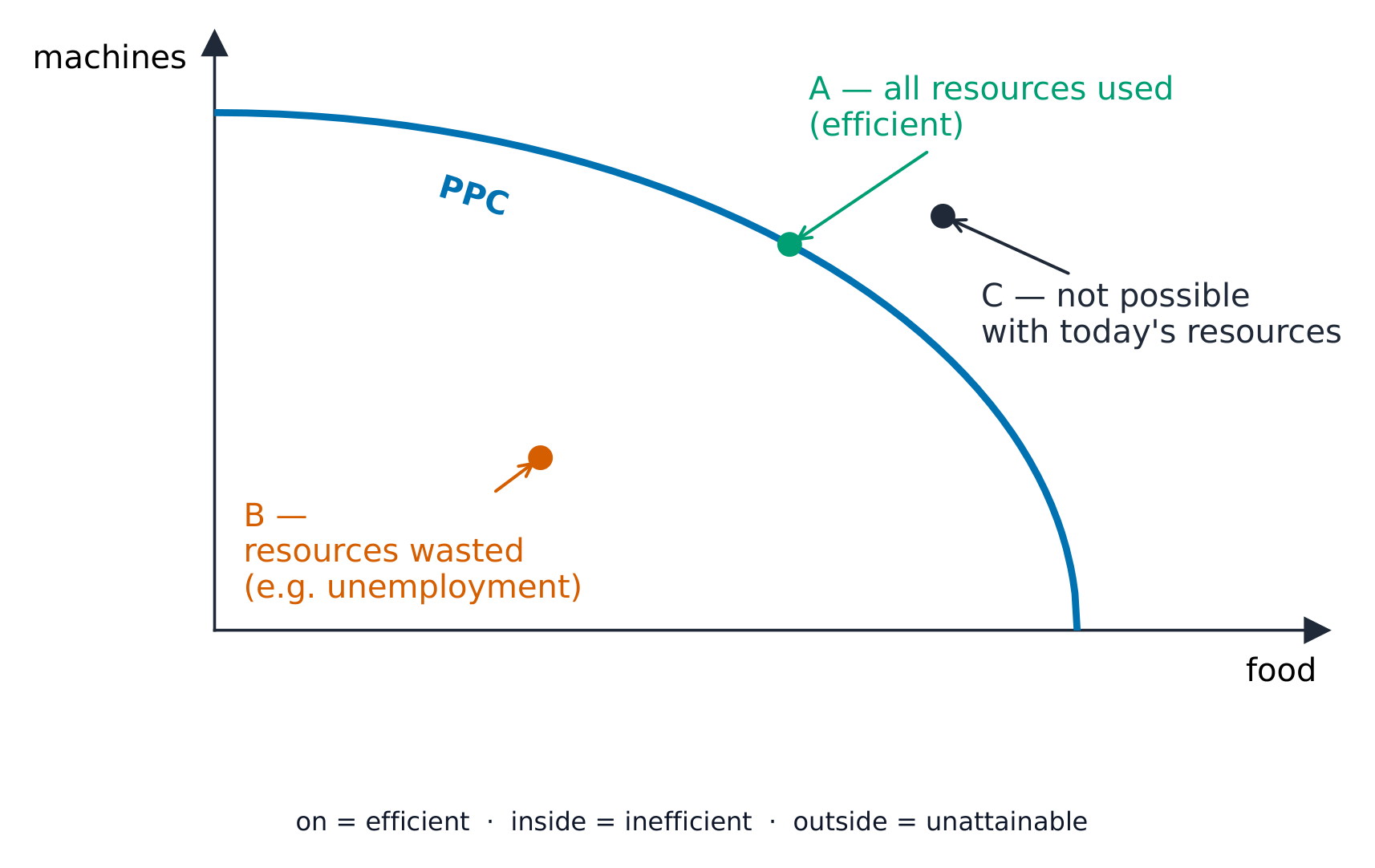
生产可能性曲线上、里面和外面的点
Match each factor of production to the reward it earns. · 将每个生产要素与其获得的报酬匹配。
Land earns rent, labour earns wages, capital earns interest, enterprise earns profit. · 土地获得地租,劳动获得工资,资本获得利息,企业家精神获得利润。
In economics, "capital" means: · 在经济学中,“capital”指的是:
Capital is man-made aids to production — not money (money just buys capital). · 资本是人造的生产辅助工具 — 不是金钱(金钱只是购买资本的手段)。
A factory machine is an example of which factor of production? · 工厂机器是哪个生产要素的例子?
A machine is a man-made aid to production — capital. · 机器是人造的生产辅助工具 — 资本。
The reward earned by the factor "land" is called ______. · 要素“land”获得的报酬称为 ______。
Land earns rent. · Land 获得 rent(地租)。
Enterprise is special
- The entrepreneur 企业家 combines land, labour and capital, takes the risk, and keeps the profit (or bears the loss).
- Without enterprise the other three factors sit idle — nobody brings them together.
The four factors of production and the reward each earns
企业家才能是特殊的
- 企业家(entrepreneur)组合土地、劳动和资本,承担风险,并保留利润(或承担损失)。
- 没有企业家才能,其他三种要素就闲置——没有人把它们集合起来。
The entrepreneur combines the other factors, takes the risk, and earns the profit. · 企业家整合其他要素,承担风险,并获得利润。
Enterprise organises land, labour and capital and bears the risk for a profit (or loss). · Enterprise 组织土地、劳动和资本,并为利润(或亏损)承担风险。
Quality matters, not just quantity
- More or better factors raise an economy's capacity:
- Human capital 人力资本 (education, skills) makes labour more productive.
- Investment in capital goods boosts future output.
"Capital" means tools, not money. In economics, capital is the man-made aids to production — machines, factories, computers — not cash. Money just buys the capital.
质量重要,不只是数量
- 更多或更好的要素提高一个经济体的产能:
- 人力资本(human capital,教育、技能)使劳动更有生产力。
- 对资本品的投资提升未来的产出。
“资本”指工具,不是钱。 在经济学中,资本是人造的生产辅助——机器、工厂、计算机——不是现金。钱只是买资本。
Education and skills that make labour more productive are called human ______. · 使劳动更具生产力的教育和技能被称为 human ______。
Human capital is the skills/education embodied in workers. · Human capital 是工人身上体现的技能/教育。
You've got it
- four factors: land (rent), labour (wages), capital (interest), enterprise (profit)
- the entrepreneur combines the others, takes the risk, earns the profit
- capital = man-made aids (tools/machines), not money; human capital = skills
你掌握了
- 四种要素:土地(租金)、劳动(工资)、资本(利息)、企业家才能(利润)
- 企业家组合其他要素,承担风险,赚取利润
- 资本 = 人造的辅助(工具/机器),不是钱;人力资本 = 技能