Halogenoarenes · 卤代芳烃
| English | 中文 | Pinyin · 拼音 |
|---|---|---|
| halogenoarene/ˈheɪləʊdʒnɔːren/ | 卤代芳烃 | lǔ dài fāng tīng |
| aryl halide/ˈɑːrɪl ˈhælaɪd/ | 芳基卤 | fāng jī lǔ |
| nucleophilic substitution/ˌnjuːklɪəˈfɪlɪk ˌsʌbstɪˈtjuːʃn/ | 亲核取代 | qīn hé qǔ dài |
| persistent/pəˈsɪstənt/ | 持久 | chí jiǔ |
| pesticide/ˈpestɪsaɪd/ | 农药 | nóng yào |
| bioaccumulate/ˌbaɪəʊəˈkjuːmjʊleɪt/ | 生物累积 | shēng wù lěi jī |
Halogens on a ring
- A halogenoarene 卤代芳烃 (aryl halide 芳基卤) has a halogen joined to a benzene ring.
- It is made by electrophilic substitution.
- It is far less reactive than a halogenoalkane.
环上的卤素
- 一个卤代芳烃(芳基卤)有一个连接到苯环的卤素。
- 它通过亲电取代制造。
- 它远比一个卤代烷活性低。
Halogenoarene lab · 卤代芳烃实验室
Compare halogenoarenes with halogenoalkanes.
The C–halogen bond in a halogenoarene is less reactive than in a halogenoalkane.
The ring's delocalised electrons strengthen the bond.
Making one
- An arene reacts with $\text{Cl}_2$ or $\text{Br}_2$ using $\text{AlCl}_3$/$\text{AlBr}_3$ as catalyst — the halogen replaces a ring hydrogen.
- benzene → chlorobenzene; methylbenzene → 2- and 4-chloromethylbenzene.
Benzene + Cl₂ with an AlCl₃ catalyst → chlorobenzene, by electrophilic substitution
制造一个
- 一个芳烃与 $\text{Cl}_2$ 或 $\text{Br}_2$ 反应,用 $\text{AlCl}_3$/$\text{AlBr}_3$ 作催化剂——卤素替换一个环氢。
- 苯 → 氯苯;甲苯 → 2- 和 4-氯甲苯。

苯 + Cl₂ 用一个 AlCl₃ 催化剂 → 氯苯,通过亲电取代
A halogenoarene is made by reacting an arene with a halogen and:
The halogen-carrier catalyst enables electrophilic substitution of a ring hydrogen.
Match each term to its meaning.
Each item links the term to its correct meaning.
Benzene reacts with Cl₂ using the catalyst AlCl₃ to form ____.
Electrophilic substitution replaces a ring hydrogen with chlorine.
Why it is unreactive
A halogenoalkane reacts easily by nucleophilic substitution 亲核取代 (polar C–Cl). A halogenoarene does not, for two reasons:
- a lone pair on the halogen overlaps the delocalised ring, giving the C–Cl bond partial double-bond character — shorter and stronger, so hard to break.
- the electron-rich ring repels an approaching nucleophile.
So chlorobenzene does not react with $\text{OH}^-$ under normal conditions, while chloroethane does.
Why a halogenoarene is much less reactive than a halogenoalkane
为什么它不活泼
一个卤代烷容易通过亲核取代反应(极性 C–Cl)。一个卤代芳烃不会,有两个原因:
- 卤素上的一个孤对电子与离域环重叠,给 C–Cl 键部分双键特性——更短更强,所以难断裂。
- 电子富集的环排斥一个接近的亲核试剂。
所以氯苯在正常条件下不与 $\text{OH}^-$ 反应,而氯乙烷会。

为什么一个卤代芳烃比一个卤代烷活性低得多
A halogenoarene is unreactive towards nucleophiles partly because:
The lone-pair overlap gives partial double-bond character, making C–Cl shorter and stronger.
The second reason a halogenoarene resists nucleophiles is that the ring:
The delocalised, electron-rich ring repels electron-rich nucleophiles.
Under normal conditions, with OH⁻:
The halogenoalkane (chloroethane) undergoes nucleophilic substitution; the halogenoarene (chlorobenzene) does not.
Lone-pair overlap with the ring makes the C–Cl bond in chlorobenzene easier to break.
Overlap gives partial double-bond character, so the bond is shorter and stronger.
Which is more readily hydrolysed by aqueous OH⁻ under usual laboratory conditions?
Chloroethane undergoes nucleophilic substitution. The aryl C–Cl bond is strengthened by overlap with the ring.
Useful but persistent 持久
- That same stability makes halogenoarenes useful — in pesticides 农药 (e.g. DDT), dyes and many synthesis intermediates.
- But being unreactive, they do not break down in the environment.
- So they persist and bioaccumulate 生物累积 up food chains — which is why several, including DDT, have been banned.
Many pesticides and herbicides are halogenoarenes — chlorine atoms bonded to a benzene ring.
有用但持久
- 同样的稳定性使卤代芳烃有用——在农药(例如 DDT)、染料和许多合成中间体中。
- 但由于不活泼,它们在环境中不分解。
- 所以它们持久存在并沿食物链生物累积——这就是为什么几个,包括 DDT,已被禁止。
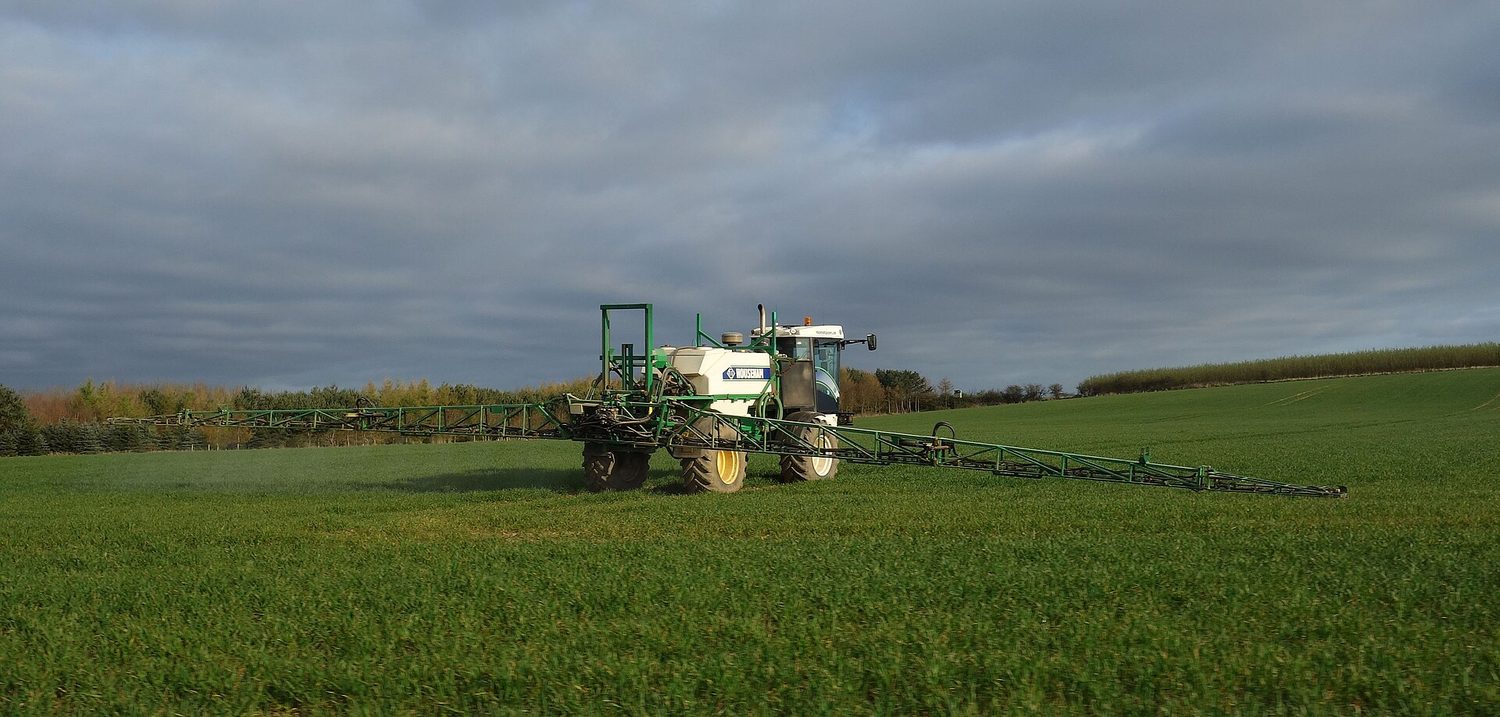
许多农药和除草剂是卤代芳烃——氯原子键合到一个苯环。
You've got it
- a halogenoarene is made by electrophilic substitution (arene + Cl₂/AlCl₃)
- it is unreactive to nucleophiles: the Cl lone pair strengthens the C–Cl bond, and the ring repels nucleophiles
- chlorobenzene does not react with OH⁻; chloroethane does
- that stability makes them useful (pesticides, dyes) but persistent pollutants (DDT was banned)
你掌握了
- 一个卤代芳烃通过亲电取代制造(芳烃 + Cl₂/AlCl₃)
- 它对亲核试剂不活泼:Cl 孤对电子强化 C–Cl 键,环排斥亲核试剂
- 氯苯不与 OH⁻ 反应;氯乙烷会
- 那稳定性使它们有用(农药、染料)但持久的污染物(DDT 被禁止)