Location and scale · 地点和规模
| English | 中文 | Pinyin · 拼音 |
|---|---|---|
| location/ləʊˈkeɪʃn/ | 选址 | xuǎn zhǐ |
| scale/skeɪl/ | 规模 | guī mó |
| infrastructure/ˈɪnfrəstrʌktʃə/ | 基础设施 | jī chǔ shè shī |
| incentives/ɪnˈsentɪvz/ | 激励 | jī lì |
| economies of scale/ɪˈkɒnəmiz ɒv skeɪl/ | 规模经济 | guī mó jīng jì |
| offshoring/ˈɒfʃərɪŋ/ | 离岸外包 | lí àn wài bāo |
Where to set up shop
- Two identical businesses can thrive or fail purely on where they locate.
- Choosing a location 选址 — and the right scale 规模 of operation — is a major strategic decision.
在哪里开店
- 两个相同的企业能纯粹因为它们在哪里选址而繁荣或失败。
- 选择一个位置——以及正确的运营规模——是一个重大的战略决策。
Location factor lab · 选址因素实验室
Classify why a business chooses one site over another. · 分类说明企业为何选择某一地点而非另一地点。
For a high-street retailer, the most important location factor is usually: · 对于高街零售商,最重要的选址因素通常是:
Retailers need footfall — closeness to customers. · 零售商需要客流量——靠近顾客。
Which are location factors? (Select all that apply.) · 哪些是选址因素?(选择所有适用项。)
Costs, infrastructure and incentives matter; the last does not. · 成本、基础设施和激励措施都很重要;但最后一项并非如此。
Factors affecting location
- Costs: land, labour, transport.
- Market: closeness to customers (vital for retail).
- Materials and labour supply, infrastructure 基础设施, and government incentives 激励.
A location decision weighs quantitative factors like cost against qualitative ones like nearness to customers
The optimum scale is the output with the lowest average cost
影响选址的因素
- 成本:土地、劳动、运输。
- 市场:与顾客的接近(对零售至关重要)。
- 材料和劳动供给、基础设施和政府激励。

一个选址决策权衡像成本这样的定量因素和像接近顾客这样的定性因素
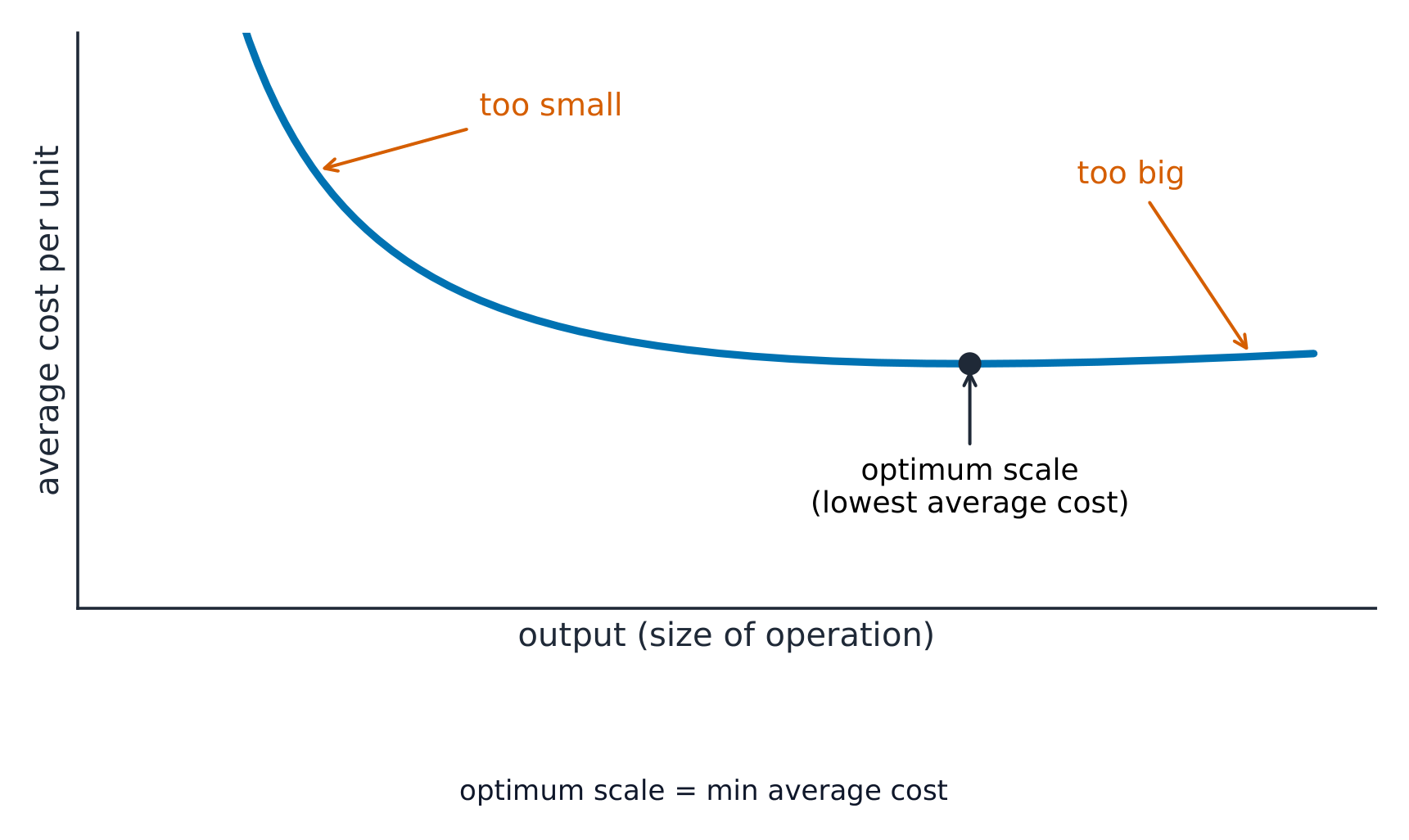
最优规模是有最低平均成本的产出
Operating at a larger scale can unlock: · 扩大运营规模可以释放:
Larger scale lowers average cost through economies of scale. · 大规模通过规模经济降低平均成本。
The maximum output a business is set up to produce is its ______ of operation. · 企业设计生产能力的最大产出是其______。
Scale links closely to economies of scale. · 规模与规模经济密切相关。
The scale of operation
- Scale is the maximum output a business is set up to produce.
- A larger scale unlocks economies of scale 规模经济 — but demands heavy investment and steady demand.
Worked example. A steel maker locates near a port and raw materials to cut transport costs; a coffee shop locates on a busy high street near its customers. The best location depends on the business.
运营规模
- 规模(scale)是一个企业被建来生产的最大产出。
- 一个更大的规模解锁规模经济——但要求沉重的投资和稳定的需求。
例题。 一个钢铁制造商在一个港口和原材料附近选址以削减运输成本;一家咖啡店在一条繁忙的商业街上它的顾客附近选址。最好的位置取决于企业。
Offshoring can cut costs but adds risks of distance, culture and control. · 外包可以降低成本,但会增加距离、文化和控制方面的风险。
Locating abroad trades cost savings for added complexity. · 海外选址是用成本节约换取复杂性增加。
Globalisation and location
- Firms increasingly locate offshore to cut costs or reach new markets.
- This is relocation/offshoring 离岸外包 — powerful, but it brings risks of distance, culture and control.
全球化与选址
- 企业越来越多地在离岸选址以削减成本或触及新市场。
- 这是搬迁/离岸外包(relocation / offshoring)——强大,但它带来距离、文化和控制的风险。
You've got it
- location factors: costs, market, materials, labour, infrastructure, incentives
- scale = maximum set-up output; larger scale unlocks economies of scale
- firms may offshore to cut costs or reach markets, accepting distance/control risks
你掌握了
- 选址因素:成本、市场、材料、劳动、基础设施、激励
- 规模 = 最大建立产出;更大的规模解锁规模经济
- 企业可能离岸以削减成本或触及市场,接受距离/控制风险