Energy and ATP · 能量与 ATP
| English | 中文 | Pinyin · 拼音 |
|---|---|---|
| energy currency/ˈenədʒi ˈkʌrənsi/ | 能量货币 | néng liàng huò bì |
| respiration/ˌrespɪˈreɪʃn/ | 呼吸作用 | hū xī zuò yòng |
| active transport/ˈæktɪv ˈtrænspɔːt/ | 主动运输 | zhǔ dòng yùn shū |
| anabolic/ˌænəˈbɒlɪk/ | 合成代谢 | hé chéng dài xiè |
| phosphorylation/ˌfɒsfɔːrɪˈleɪʃn/ | 磷酸化 | lín suān huà |
| chemiosmosis/ˌkemɪəzˈməʊsɪs/ | 化学渗透 | huà xué shèn tòu |
The cell's energy currency 能量货币
- Cells need a steady supply of energy, which they get from respiration 呼吸作用.
- Energy powers active transport 主动运输, movement, and anabolic 合成代谢 reactions (building big molecules).
- The molecule that delivers it is ATP.
细胞的能量货币
- 细胞需要稳定的 能量 供应,它们从 呼吸作用(respiration) 中获得。
- 能量为 主动运输、运动 和 合成代谢(anabolic) 反应(建造大分子)提供动力。
- 输送它的分子是 ATP。
Which is a use of energy in a cell? · 哪个是细胞中能量的一种用途?
Energy from respiration drives active transport, movement (e.g. muscle), and anabolic (building) reactions. · 来自呼吸作用的能量驱动主动运输、运动(例如肌肉)和合成代谢(建造)反应。
ATP is re-made from ADP and a ______ group. · ATP 由 ADP 和一个 ______ 基团重新制造。
Respiration provides the energy to re-attach the phosphate to ADP. · 呼吸作用提供能量把磷酸重新连接到 ADP。
The energy currency
- ATP is made from ADP + a phosphate; breaking that phosphate off again releases a small, usable burst of energy.
- It is the universal energy currency because it:
- releases energy quickly, in small amounts that match a cell's needs,
- is easily re-made over and over,
- is small and soluble, so it moves easily around the cell.
能量货币
- ATP 由 ADP + 一个磷酸 制成;再次断开那个磷酸释放一小份可用的能量。
- 它是 通用能量货币(universal energy currency),因为它:
- 以匹配细胞需求的 小 量 快速 释放能量,
- 容易一遍又一遍地 重新制造,
- 小而可溶,所以它在细胞中容易移动。
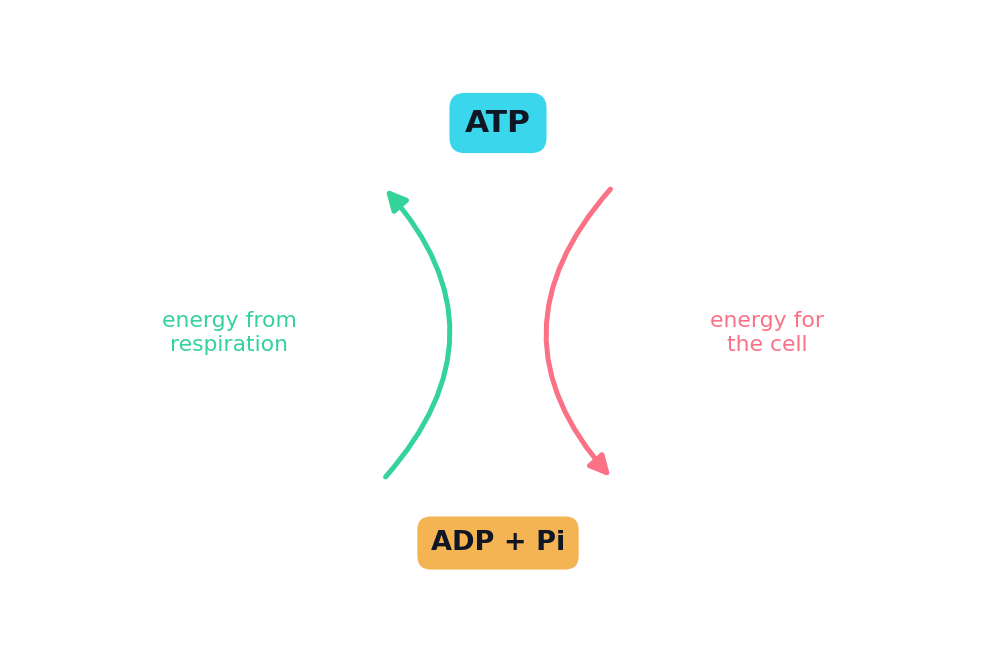
The ATP cycle · ATP 循环
Step around the loop. ATP is split to release a small burst of energy, then rebuilt by respiration — over and over. · 绕这个回路走。ATP 被分裂以释放一小份能量,然后被呼吸作用重建——一遍又一遍。
Why is ATP a good energy currency? · 为什么 ATP 是一个好的能量货币?
ATP gives small, quick bursts of energy, is re-made repeatedly, and is small and soluble so it moves easily. · ATP 给出小而快速的能量爆发,被反复重新制造,且小而可溶所以它容易移动。
ATP is made by adding a phosphate group to ADP, and broken down again by removing it. · ATP 通过向 ADP 添加一个磷酸基团制造,再通过移除它而被分解。
Adding a phosphate to ADP stores energy as ATP; removing it (hydrolysis) releases that energy. · 向 ADP 添加一个磷酸把能量储存为 ATP;移除它(水解)释放那能量。
Match each term to its meaning. · 把每个术语与它的含义配对。
ATP holds the energy; hydrolysis releases it (giving ADP + Pi); chemiosmosis is how most ATP is made. · ATP 储存能量;水解释放它(给出 ADP + Pi);化学渗透是大部分 ATP 被制造的方式。
How ATP is made
- by phosphorylation 磷酸化 — direct transfer of a phosphate group.
- by chemiosmosis 化学渗透 — across the membranes of mitochondria and chloroplasts.
During exercise, muscles need a constant supply of energy from respiration.
ATP 如何制造
- 通过 磷酸化(phosphorylation)——磷酸基团的直接转移。
- 通过 化学渗透(chemiosmosis)——跨过 线粒体(mitochondria) 和叶绿体的膜。

运动时,肌肉需要来自呼吸作用的持续能量供应。
Chemiosmosis makes ATP using: · 化学渗透用以下制造 ATP:
Chemiosmosis uses a proton gradient across the inner membrane to drive ATP synthase. · 化学渗透用跨过内膜的质子梯度来驱动 ATP 合酶。
Why ATP, not glucose
- ATP releases a small, usable packet of energy exactly where it is needed.
- Glucose holds far more energy, but releasing it all at once would be wasteful and damaging.
Worked example. A muscle contraction uses ATP directly, not glucose. Respiration steadily re-makes ATP from ADP, so a tiny pool of ATP is recycled thousands of times a day.
Lipids release the most energy per gram, then proteins, then carbohydrates
为什么是 ATP,而不是葡萄糖
- ATP 恰好在需要的地方释放一 小份可用的 能量。
- 葡萄糖储存多得多的能量,但一下子全部释放会浪费且有破坏性。
例题。 一次肌肉收缩直接使用 ATP,而不是葡萄糖。呼吸作用稳定地从 ADP 重新制造 ATP,所以一小池 ATP 一天被回收成千上万次。
You've got it
- energy (from respiration) powers active transport, movement, anabolic reactions
- ATP = ADP + phosphate; the universal energy currency (quick, small bursts; re-made; small + soluble)
- ATP is made by phosphorylation and chemiosmosis (across mitochondrial/chloroplast membranes)
你掌握了
- 能量(来自呼吸作用)为 主动运输、运动、合成代谢 反应提供动力
- ATP = ADP + 磷酸;通用能量货币(快速、小份;重新制造;小 + 可溶)
- ATP 由 磷酸化 和 化学渗透(跨过线粒体/叶绿体膜)制造