The immune response and memory cells · 免疫反应与记忆细胞
| English | 中文 | Pinyin · 拼音 |
|---|---|---|
| primary response/ˈpraɪməri rɪˈspɒns/ | 初次反应 | chū cì fǎn yìng |
| T-helper cell/tiː ˈhelpə sel/ | 辅助性T细胞 | fǔ zhù xìng T xì bāo |
| B-lymphocyte/biː ˈlɪmfəsaɪt/ | B淋巴细胞 | B lín bā xì bāo |
| plasma cell/ˈplæzmə sel/ | 浆细胞 | jiāng xì bāo |
| memory cell/ˈmeməri sel/ | 记忆细胞 | jì yì xì bāo |
| secondary response/ˈsekəndəri rɪˈspɒns/ | 二次反应 | èr cì fǎn yìng |
| clonal selection/ˈkləʊnl sɪˈlekʃn/ | 克隆选择 | kè lóng xuǎn zé |
The body fights back
- The first time a new pathogen enters, the response is slow.
- Several cell types work together to destroy it — and to remember it.
- That memory is what makes you immune next time.
身体反击
- 一个新病原体第一次进入时,反应是 慢 的。
- 几种细胞类型一起工作来摧毁它——并 记住 它。
- 那个记忆就是下次让你免疫的东西。
Memory cells make the secondary immune response faster and stronger than the first. · 记忆细胞使二次免疫反应比第一次更快更强。
Memory cells left from the first exposure react quickly when the same pathogen returns — the basis of long-term immunity. · 第一次接触留下的记忆细胞在同一个病原体回来时快速反应——长期免疫的基础。
The primary response 初次反应
- a macrophage engulfs the pathogen and displays its antigen.
- T-helper cells 辅助性T细胞 recognise that antigen, become active, and switch on other cells.
- matching B-lymphocytes B淋巴细胞 are selected; they divide into plasma cells 浆细胞 (which pour out antibodies) and memory cells 记忆细胞.
- T-killer cells destroy the body's own cells that are infected.
A blood smear: the large stained cells are white blood cells among the red cells.
初次反应
- 一个 巨噬细胞 吞没病原体并 展示它的抗原。
- 辅助性 T 细胞(T-helper cells) 识别那个抗原,变得活跃,并开启其他细胞。
- 匹配的 B 淋巴细胞(B-lymphocytes) 被选中;它们分裂成 浆细胞(plasma cells)(倾倒出 抗体)和 记忆细胞(memory cells)。
- 杀伤性 T 细胞(T-killer cells) 摧毁身体自己被感染的细胞。

一张血涂片:大的染色细胞是红细胞中的白血球。
The primary immune response · 初次免疫反应
Step through the specific response — the antigen is presented, T-helper cells switch on B-cells, and plasma cells pour out antibodies. · 一步步走过特异性反应——抗原被呈递,辅助性 T 细胞开启 B 细胞,浆细胞倾倒出抗体。
T-helper cells in the immune response: · 免疫反应中的辅助性 T 细胞:
T-helper cells recognise the presented antigen and activate B-lymphocytes and other cells. · 辅助性 T 细胞识别被呈递的抗原并激活 B 淋巴细胞和其他细胞。
Which cells actually secrete antibodies? · 哪种细胞实际分泌抗体?
Selected B-lymphocytes divide into plasma cells (which secrete antibodies) and memory cells. · 被选中的 B 淋巴细胞分裂成浆细胞(分泌抗体)和记忆细胞。
Put the primary immune response in order. · 把初次免疫反应按顺序排列。
Antigen presented → T-helper activated → B-lymphocytes selected → plasma cells make antibodies. · 抗原呈递 → 辅助性 T 激活 → B 淋巴细胞被选中 → 浆细胞制造抗体。
Match each cell to its job in the immune response. · 把每种细胞与它在免疫反应中的工作配对。
The macrophage presents, the T-helper switches things on, plasma cells make antibodies, and memory cells wait for next time. · 巨噬细胞呈递,辅助性 T 开启,浆细胞制造抗体,记忆细胞等待下一次。
Memory and the secondary response 二次反应
- Memory cells stay in the body for years.
- If the same pathogen returns, they launch a secondary response that is much faster and larger.
- The pathogen is destroyed before it makes you ill — long-term immunity.
记忆和二次反应
- 记忆细胞 在体内留存多年。
- 如果 同一个 病原体回来,它们发动一个 快得多、大得多 的 二次反应(secondary response)。
- 病原体在让你生病之前就被摧毁——长期免疫。
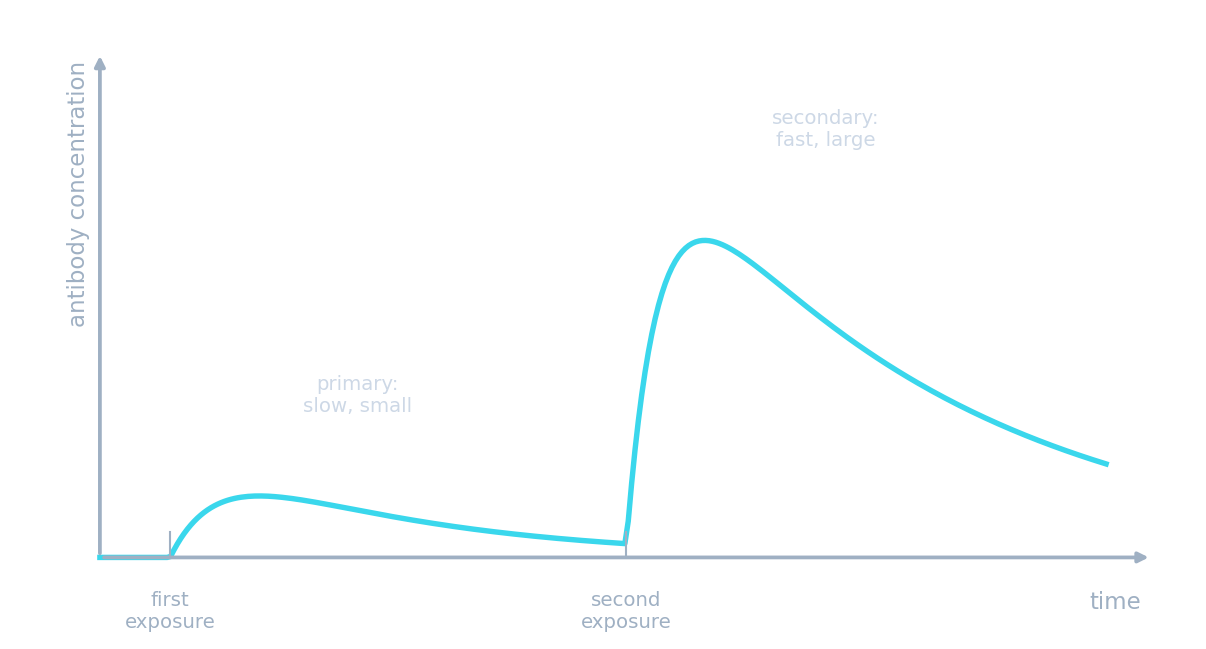
The secondary immune response is faster and larger because: · 二次免疫反应更快更大,因为:
Memory cells made in the primary response respond quickly and strongly when the same pathogen returns. · 在初次反应中制造的记忆细胞在同一个病原体回来时快速而强烈地反应。
Long-lived cells that stay behind to give a fast secondary response are ______ cells. · 留下来以给出快速二次反应的长寿细胞是 ______ 细胞。
Memory cells let the body respond before you even feel ill the second time — the basis of immunity. · 记忆细胞让身体在第二次你甚至感觉生病之前就反应——免疫的基础。
Clonal selection 克隆选择
- Each lymphocyte has receptors for one specific antigen.
- When that antigen appears, the matching lymphocyte is selected and divides rapidly to make an army of identical cells — clonal selection.
The one lymphocyte whose receptor matches the antigen is selected and cloned into many identical cells
克隆选择
- 每个淋巴细胞有针对一种特定抗原的受体。
- 当那个抗原出现时,匹配的淋巴细胞被 选中 并快速分裂,制造一支相同细胞的大军——克隆选择(clonal selection)。

受体与抗原匹配的那个淋巴细胞被选中,克隆成许多相同的细胞
You've got it
- primary response: macrophage displays antigen → T-helper activates → B-lymphocytes → plasma cells (antibodies) + memory cells
- T-killer cells destroy infected body cells
- memory cells persist; the secondary response is faster and larger
- that's long-term immunity — the pathogen is cleared before you fall ill
你掌握了
- 初次反应:巨噬细胞 展示抗原 → 辅助性 T 激活 → B 淋巴细胞 → 浆细胞(抗体)+ 记忆细胞
- 杀伤性 T 细胞 摧毁被感染的身体细胞
- 记忆细胞 留存;二次反应 更快、更大
- 那就是长期免疫——病原体在你生病之前就被清除