| Candidates should be able to: | Notes and guidance |
|---|---|
| 1 Describe how sensors, microprocessors and actuators can be used in collaboration to create automated systems | |
| 2 Describe the advantages and disadvantages of an automated system used for a given scenario | • Including scenarios from: – industry – transport – agriculture – weather – gaming – lighting – science |
自动化与新兴技术
IGCSE 计算机科学 · 第 6 主题
 10:22
10:22
Automated Systems
Picture a greenhouse at three in the morning. Nobody is there. The air warms up a little, and a window slides open all by itself. An hour later it closes…
英文讲解 · 内嵌中英文字幕
6.1
自动化系统

大纲
来源:剑桥国际大纲
一个自动化系统(automated system)是软件和硬件的一个混合,它感知并响应它环境(environment)中的数据,不需要人工干预(human intervention)。换句话说,它自己工作。
自动化系统的例子:
- 一个中央供暖(central heating)系统;
- 一个工厂里的化学过程(chemical process);
- 一个温室(greenhouse,用于种植植物);
- 一个停车场道闸(car park barrier)。
Sensors, microprocessors and actuators
三个部分在一个自动化系统中一起工作。
| 部分 | 工作 |
|---|---|
| 传感器(sensor) | 测量一个物理量(如温度或光)并发送数据 |
| 微处理器(microprocessor) | 把数据与存储值比较并做决定 |
| 执行器(actuator) | 接收一个信号并引起运动或动作(如打开一个阀门) |
循环像这样工作:
- 传感器把数据发送给微处理器。
- 微处理器把这个数据与存储值(stored values)比较并做一个决定。
- 微处理器把信号发送给执行器以采取行动。
例如,在一个温室里:一个温度传感器读取热;微处理器把它与想要的值比较;若太热,微处理器给一个执行器发信号以打开一扇窗。
考纲点名许多传感器类型(sensor types),每个读一个物理量——例如一个加速度计(accelerometer)(运动或倾斜)、一个湿度(humidity)传感器(空气中的水),和一个接近(proximity)传感器(附近的物体):
| Sensor | Measures | Typical use |
|---|---|---|
| temperature | heat | ovens, greenhouses, heating |
| light | brightness | automatic lights, cameras |
| pressure | force on a surface | alarm floor mats, touchscreens |
| infra-red / proximity | a nearby object | automatic doors, parking sensors |
| acoustic (sound) | sound level | noise monitors |
| humidity / moisture | water in air or soil | greenhouses, irrigation |
| gas | a gas being present | smoke and CO alarms |
| pH | acidity | pools, fish tanks |
| accelerometer | movement or tilt | phones, airbag triggers |
| magnetic field | magnetism | door contacts, compasses |
| flow / level | fluid flow or depth | pipes, tanks |
给一个场景挑传感器,选读正确物理量的那个:一个鱼缸需要 pH 和温度传感器;一扇自动门需要一个红外/接近传感器。
Advantages and disadvantages
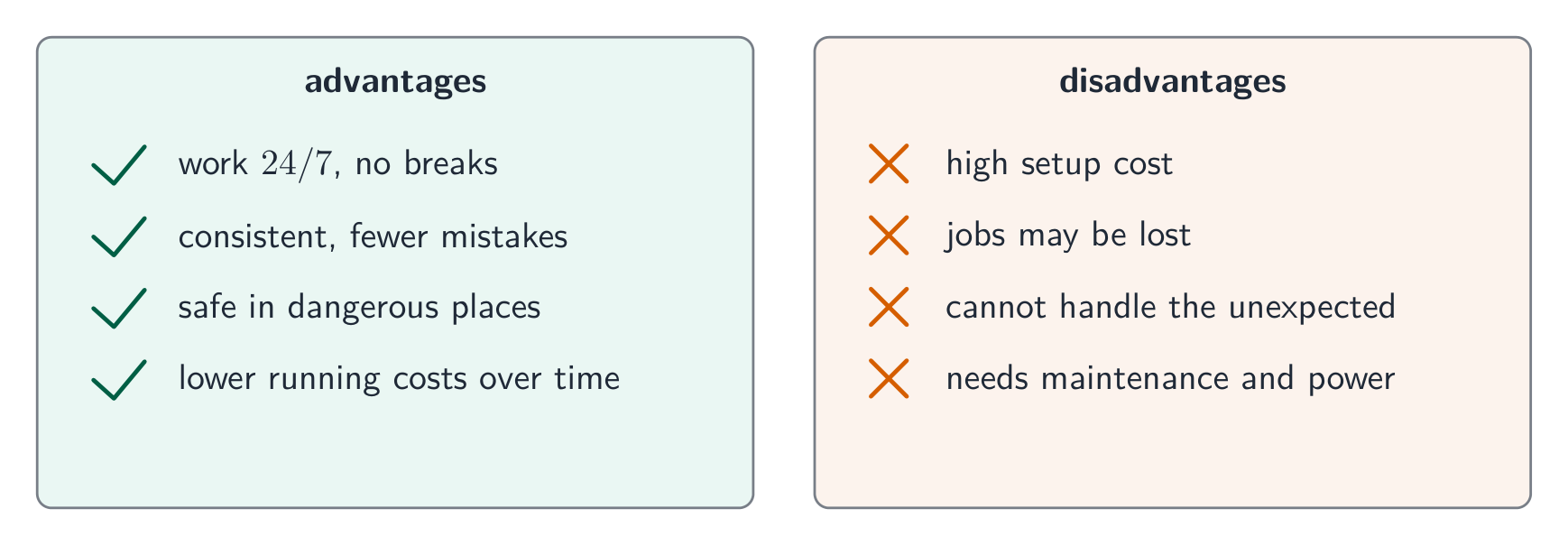
自动化系统被用于许多情况,如工业、运输、农业(agriculture,种田)、天气(收集数据)、游戏和照明。

| 优点 | 缺点 |
|---|---|
| 全天全夜工作,不休息 | 购买和建立花费很多 |
| 比人更快、更一致(consistent) | 能出故障并需要专家修理 |
| 能在对人不安全的地方工作 | 可能替换人们的工作 |
| 更少的人为错误 | 不能容易地对一个它们不是为之建造的情况作出反应 |
例题。 描述一个自动温室如何把温度保持在 25 °C。温度传感器持续测量温度,读数经模数转换器转成数字后送给微处理器。微处理器把读数与存储的 25 °C 这个值进行比较。如果温度高于它,微处理器就给执行器发信号,打开窗户或启动风扇;如果低于它,就打开加热器。然后整个回路不断重复。有两分几乎总是落在"与存储的(预设的)值比较"和"该过程重复进行"这两句话上 - 只写到"传感器告诉计算机"就停下的描述会丢掉它们。
探索
An automated control loop
Tap round the loop. An automated system senses, compares against a target, then acts — and because the action changes what it senses, it keeps correcting itself with no human needed.
词汇表
训练
| 英文 | 中文 | 拼音 |
|---|---|---|
| automated system/ˈɔːtəmeɪtɪd ˈsɪstəm/ | 自动化系统 | zì dòng huà xì tǒng |
| environment/enˈvaɪrənmənt/ | 环境 | huán jìng |
| human intervention/ˈhjuːmən ˌɪntəˈvenʃn/ | 人工干预 | rén gōng gān yù |
| greenhouse/ˈɡriːnhaʊs/ | 温室 | wēn shì |
| car park barrier/kɑː pɑːk ˈbærɪə/ | 停车场道闸 | tíng chē chǎng dào zhá |
| sensor/ˈsensə/ | 传感器 | chuán gǎn qì |
| microprocessor/ˌmaɪkrəʊˈprəʊsesə/ | 微处理器 | wēi chǔ lǐ qì |
| actuator/ˈæktʃuːeɪtə/ | 执行器 | zhí xíng qì |
| stored values/stɔːd ˈvæljuːz/ | 存储值 | cún chǔ zhí |
| sensor types/ˈsensə taɪps/ | 传感器类型 | chuán gǎn qì lèi xíng |
| accelerometer/əkˌseləˈrɒmɪtə/ | 加速度计 | jiā sù dù jì |
| humidity/hjuːˈmɪdɪti/ | 湿度 | shī dù |
| proximity/prɒkˈsɪmɪti/ | 接近 | jiē jìn |
| consistent/kənˈsɪstənt/ | 一致的 | yí zhì de |
| central heating/ˈsentrəl ˈhiːtɪŋ/ | 中央供暖 | zhōng yāng gōng nuǎn |
| chemical process/ˈkemɪkl ˈprəʊses/ | 化学过程 | huà xué guò chéng |
| agriculture/ˈæɡrɪkʌltʃə/ | 农业 | nóng yè |
6.2
机器人技术

大纲
| Candidates should be able to: | Notes and guidance |
|---|---|
| 1 Understand what is meant by robotics | • Robotics is a branch of computer science that incorporates the design, construction and operation of robots • Examples include factory equipment, domestic robots and drones |
| 2 Describe the characteristics of a robot | • Including: – a mechanical structure or framework – electrical components, such as sensors, microprocessors and actuators – programmable |
| 3 Understand the roles that robots can perform and describe the advantages and disadvantages of their use | • Robots can be used in areas including: – industry – transport – agriculture – medicine – domestic settings – entertainment |
来源:剑桥国际大纲
机器人技术(robotics)是处理机器人(robots)的设计、建造和操作的技术分支。
一个机器人有这些特征:
- 一个物理结构(physical structure,一个机械的(mechanical)身体,如手臂);
- 电子元件(electrical components,马达、传感器和线路);
- 可编程指令(programmable instructions)——它遵循一个能被改变的程序。
What robots do
机器人能执行许多作用,例如:
- 工厂设备(factory equipment)——建造汽车、焊接、移动重的部件;
- 家用电器(domestic appliances)——如一个机器人吸尘器(vacuum cleaner)。

| 优点 | 缺点 |
|---|---|
| 做无聊或危险的工作 | 购买和维护昂贵 |
| 快速而准确地工作 | 能替换人类工人 |
| 不疲倦或无聊 | 一个机器人有缺乏独立决策(lack of independent decision-making)——它只做它被编程去做的 |
一个机器人的一个关键限制是它不能自己思考。当某样意外的事发生时它不能做它自己的选择。
探索
Computing concept lab
Classify concrete examples by the computing idea they demonstrate.
词汇表
训练
| 英文 | 中文 | 拼音 |
|---|---|---|
| Robotics/rəʊˈbɒtɪks/ | 机器人技术 | jī qì rén jì shù |
| robots/ˈrəʊbɒts/ | 机器人 | jī qì rén |
| physical structure/ˈfɪzɪkl ˈstrʌktʃə/ | 物理结构 | wù lǐ jié gòu |
| electrical components/ɪˈlektrɪkl kəmˈpəʊnənts/ | 电子元件 | diàn zi yuán jiàn |
| programmable instructions/ˈprəʊɡrəməbl ɪnˈstrʌkʃnz/ | 可编程指令 | kě biān chéng zhǐ lìng |
| factory equipment/ˈfæktəri ɪˈkwɪpmənt/ | 工厂设备 | gōng chǎng shè bèi |
| domestic appliances/dəˈmestɪk əˈplaɪənsɪz/ | 家用电器 | jiā yòng diàn qì |
| vacuum cleaner/ˈvækjuːm ˈkliːnə/ | 吸尘器 | xī chén qì |
| lack of independent decision-making/læk ɒv ˌɪndɪˈpendənt dɪˈsɪʒn ˈmeɪkɪŋ/ | 缺乏独立决策 | quē fá dú lì jué cè |
| mechanical/mɪˈkænɪkl/ | 机械的 | jī xiè de |
6.3
人工智能
大纲
| Candidates should be able to: | Notes and guidance |
|---|---|
| 1 Understand what is meant by artificial intelligence (AI) | • AI is a branch of computer science dealing with the simulation of intelligent behaviours by computers |
| 2 Describe the main characteristics of AI as the collection of data and the rules for using that data, the ability to reason, and it can include the ability to learn and adapt | |
| 3 Explain the basic operation and components of AI systems to simulate intelligent behaviour | • Limited to: – expert systems – machine learning • Expert systems have a knowledge base, a rule base, an inference engine and an interface • Machine learning is when a program has the ability to automatically adapt its own processes and/or data |
来源:剑桥国际大纲
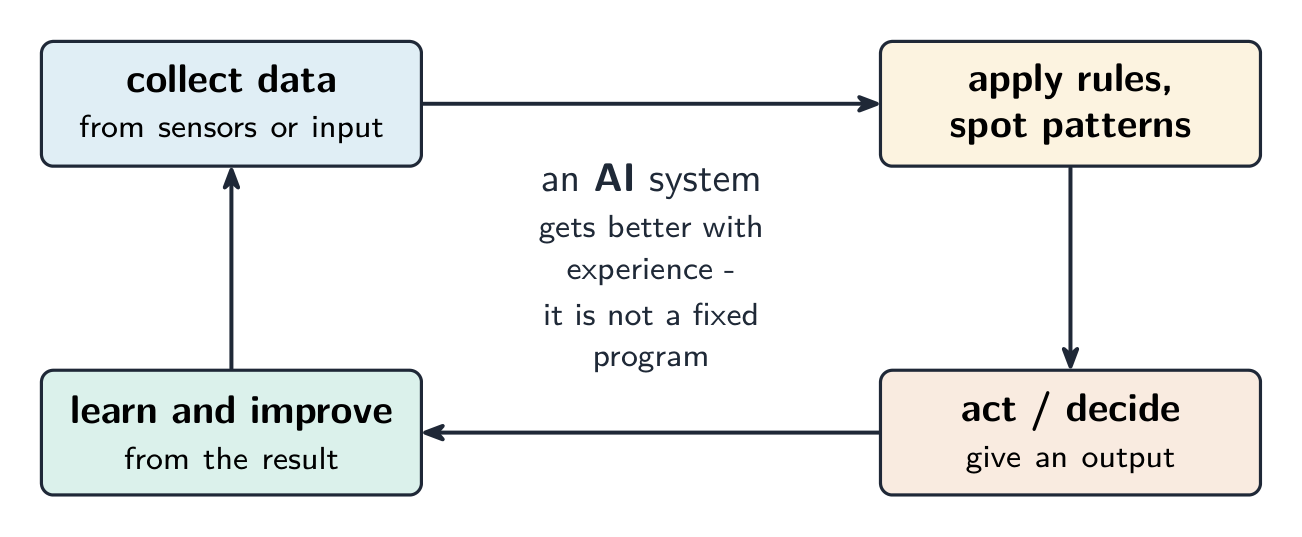
人工智能(artificial intelligence,AI)是计算机系统对人类智能的模拟(simulation)。这意味着一台计算机做通常需要人类思考的任务。
Characteristics of AI
AI 系统通常有这些特征:
- 它们收集数据以及使用那个数据的规则(rules);
- 它们有推理(reason,用规则算出东西)的能力;
- 它们有得出结论(draw conclusions)的能力,结论可能是近似的(approximate,一个最佳猜测)或确定的(definite,确定);
- 它们有从数据学习(learn)的能力;
- 它们有适应(adapt)的能力——随着它们得到新数据改变它们的行为。
Examples of AI
- 专家系统(expert systems)——像一个人类专家一样给出建议的软件(例如,帮助一个医生做一个诊断);
- 自然语言处理(natural language processing)——理解人类的语音或文本;
- 自动驾驶汽车(self-driving cars)。

Inside an expert system
一个专家系统存储人类专长并从中推理。它有四个部分:
- 一个知识库(knowledge base)——关于该主题的存储事实;
- 一个规则库(rule base)——一个人类专家会应用的"如果……那么……"规则;
- 一个推理引擎(inference engine)——把规则应用到事实上以得出一个结论;
- 一个用户界面(user interface)——向用户提问并显示结果。
界面从用户收集事实;推理引擎把规则库对知识库运行;而系统输出一个诊断或一个概率——就像用来帮助一名医生诊断疾病或找出一个汽车故障。
Machine learning
机器学习(machine learning)是一个从经验改进自己表现、无需被显式重新编程的程序。它在数据里找模式并适应:一个搜索引擎在排名结果上变得更好、一个语音助手更准确地识别口语命令,而一个扫地机器人逐渐学会一个房间的布局。
Narrow, general and strong AI

| 类型 | 它意味着什么 |
|---|---|
| 弱人工智能(narrow AI) | 只能做一个任务或一小组任务(例如,一个象棋程序)。今天所有的 AI 都是弱人工智能。 |
| 通用人工智能(general AI) | 能做一个人类能做的任何任务,在许多不同的任务之间切换。 |
| 强人工智能(strong AI) | 会像一个真实的人类心智一样思考并有意识。这还不存在。 |
探索
Computing concept lab
Classify concrete examples by the computing idea they demonstrate.
词汇表
训练
| 英文 | 中文 | 拼音 |
|---|---|---|
| Artificial intelligence/ˌɑːtɪˈfɪʃl ɪnˈtelɪdʒəns/ | 人工智能 | rén gōng zhì néng |
| simulation/ˌsɪmjʊˈleɪʃn/ | 模拟 | mó nǐ |
| rules/ruːlz/ | 规则 | guī zé |
| reason/ˈriːzn/ | 推理 | tuī lǐ |
| draw conclusions/drɔː kənˈkluːʒnz/ | 得出结论 | dé chū jié lùn |
| approximate/əˈprɒksɪmət/ | 近似的 | jìn sì de |
| definite/ˈdefɪnət/ | 确定的 | què dìng de |
| learn/lɜːn/ | 学习 | xué xí |
| adapt/əˈdæpt/ | 适应 | shì yìng |
| expert systems/ˈekspɜːt ˈsɪstəmz/ | 专家系统 | zhuān jiā xì tǒng |
| natural language processing/ˈnætʃərəl ˈlæŋɡwɪdʒ ˈprəʊsesɪŋ/ | 自然语言处理 | zì rán yǔ yán chǔ lǐ |
| self-driving cars/self ˈdraɪvɪŋ kɑːz/ | 自动驾驶汽车 | zì dòng jià shǐ qì chē |
| knowledge base/ˈnɒlɪdʒ beɪs/ | 知识库 | zhī shí kù |
| rule base/ruːl beɪs/ | 规则库 | guī zé kù |
| inference engine/ˈɪnfərəns ˈendʒɪn/ | 推理引擎 | tuī lǐ yǐn qíng |
| user interface/ˈjuːzə ˈɪntəfeɪs/ | 用户界面 | yòng hù jiè miàn |
| Machine learning/məˈʃiːn ˈlɜːnɪŋ/ | 机器学习 | jī qì xué xí |
| narrow AI/ˈnærəʊ ˌeɪ ˈaɪ/ | 弱人工智能 | ruò rén gōng zhì néng |
| general AI/ˈdʒenərəl ˌeɪ ˈaɪ/ | 通用人工智能 | tōng yòng rén gōng zhì néng |
| strong AI/strɒŋ ˌeɪ ˈaɪ/ | 强人工智能 | qiǎng rén gōng zhì néng |
6.3
考试技巧
- 学习控制循环:一个传感器测量一个量 → 微处理器把它与一个存储值比较 → 一个执行器采取行动;然后循环重复。
- 不要混淆各部分:一个传感器把数据发送进;一个执行器引起出的运动。
- 一个机器人遵循可编程指令,而当某样意外的事发生时它不能做它自己的决定。
- AI 模拟人类思考:它收集数据和规则、推理、得出结论,并能学习和适应。
- 知道 AI 级别:弱(一个任务;今天所有的 AI)、通用(任何人类任务)、强(有自我意识;还不存在)。
本主题的互动课程
逐步学习,并即时检测练习。