English
In about AD 250 Diophantus of Alexandria wrote Arithmetica, a collection of problems asking for the numbers that satisfy given conditions. Around 1637 the French lawyer Pierre de Fermat, reading a Latin translation, wrote in its margin that one such equation, $x^n + y^n = z^n$ for $n > 2$, has no whole-number solutions at all, and that he had a proof too long for the margin. It was finally proved by Andrew Wiles in 1994. Finding all the values that work, and only those, is the heart of two GRE response formats.
These questions ask you to:
- Answer "select one or more" questions by testing every option.
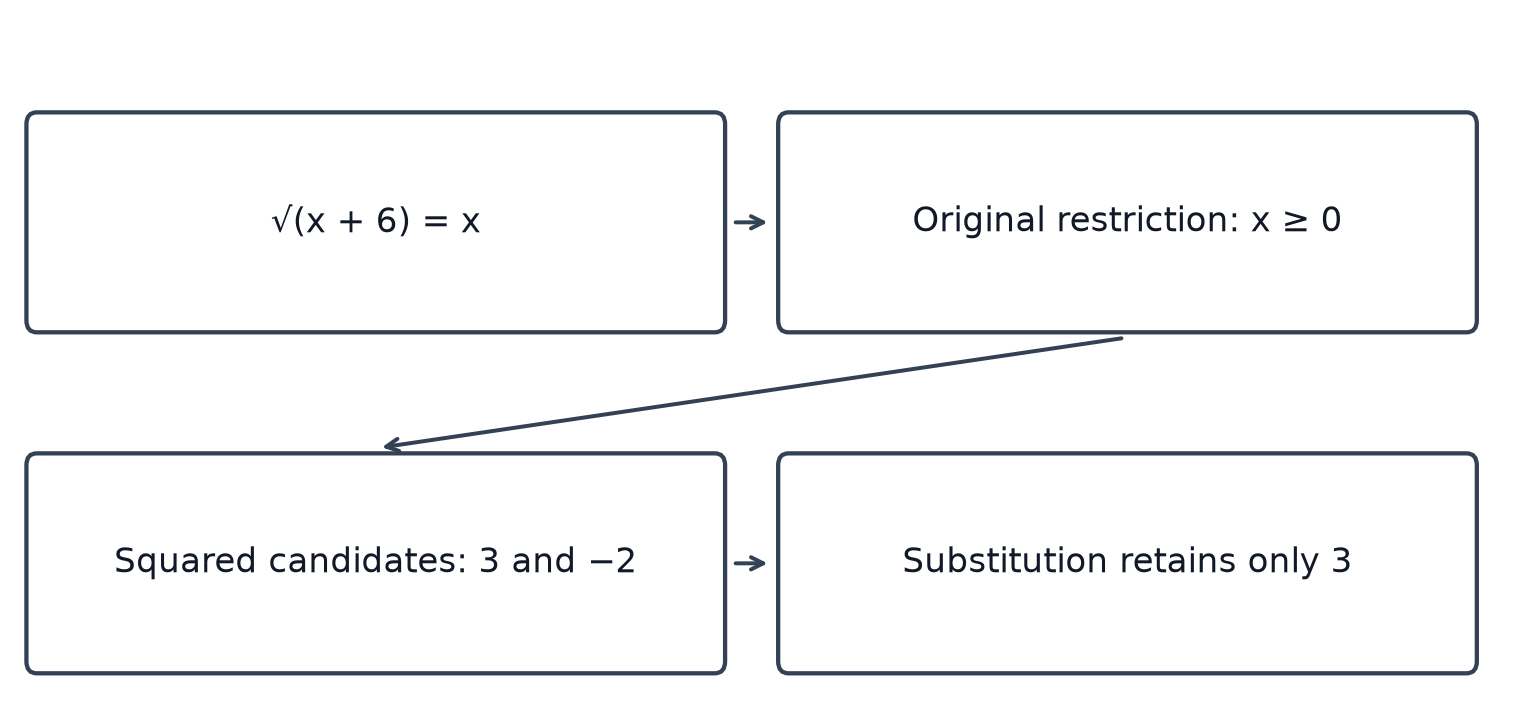
- Check each candidate solution 候选解 in the original conditions.
- Answer numerical-entry questions in the exact form asked, including rounding 舍入.