Kế hoạch học tập của bạn · Tiếp tục · Ôn tập →
首先 … 其次 … 最后 (first, second, finally)
Đã giới thiệuVị trí đã lưu của bạn vẫn nằm trong trình duyệt này. Việc tiếp tục sẽ không hoàn thành bài học hay trả lời các câu hỏi của nó.
Three steps to better Chinese
- A younger student asks you how to learn Chinese well. You give three tips in order.
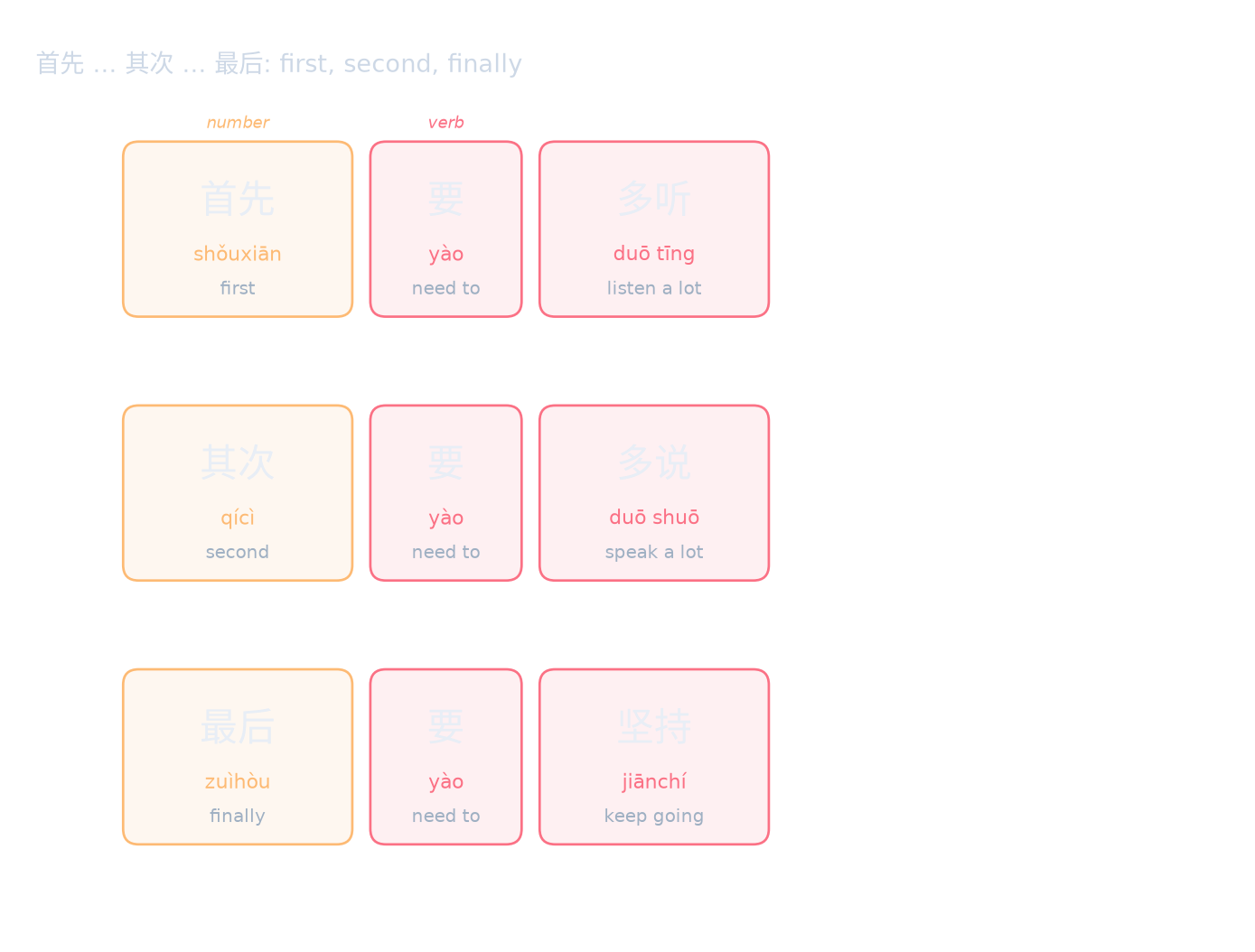
- first首先need to要a lot多listen听,second其次need to要a lot多speak说,finally最后need to要to keep at; to insist坚持。 — "First, listen a lot; second, speak a lot; finally, keep going."
- Goal: put points in order in speech and writing with first首先 … second其次 … finally最后 ….
first首先 … second其次 … finally最后
- first首先 (shǒuxiān) = first, second其次 (qícì) = second / next, finally最后 (zuìhòu) = finally. Each starts its own point.
- They are common in short essays and when giving advice or steps.
first首先need to要a lot多listen听,second其次need to要a lot多speak说。
Put the words in the order they are used in a list.
Độ khó 3/5 · 200 xu + phần thưởng nhỏ khi hoàn thành lần đầu tiên hôm nay
首先 (first), 其次 (second), 最后 (finally).
Complete: “First, listen a lot; second, speak a lot.” 首先要多听,____要多说。
Độ khó 1/5 · 100 xu + phần thưởng nhỏ khi hoàn thành lần đầu tiên hôm nay
其次 = second, the next point.
More than three points
- For more steps, add then / after然后 or again / then再: first首先to wash one's hands洗手,then / after然后切菜,finally最后to put放condiment调料。 — "First wash your hands, then cut the vegetables, and finally add the seasoning."
- first首先 can also introduce the most important point: first首先,I我need to要thank感谢everyone大家。 — "First of all, I'd like to thank everyone."
first of all首先,I我want to要thank感谢everyone大家。
首先,我要感谢大家 means "First of all, I'd like to thank everyone."
Độ khó 1/5 · 100 xu + phần thưởng nhỏ khi hoàn thành lần đầu tiên hôm nay
首先 can introduce the first and most important point.
second其次 means "second", not "after that in time"
- second其次 ranks points (the second reason, the second step); for "then" in a story, use then / after然后: ✓ I我to eat吃(completed / change)了breakfast早饭,then / after然后to go去to go to school上学。 ✗ I我to eat吃(completed / change)了breakfast早饭,second其次to go去to go to school上学.
- first首先 starts a list; don't use it for "at first (but later)": ✓ I我to start开始not不habit习惯,later; afterwards后来habit习惯(completed / change)了。 ✗ I我first首先not不habit习惯,later; afterwards后来habit习惯(completed / change)了.
“I ate breakfast, then went to school.” (a story) Which word fits? 我吃了早饭,____去上学。
Độ khó 1/5 · 100 xu + phần thưởng nhỏ khi hoàn thành lần đầu tiên hôm nay
Phê bình "then" in a story, use 然后. 其次 ranks points.
“At first I wasn't used to it; later I got used to it.” Which is right?
Độ khó 1/5 · 100 xu + phần thưởng nhỏ khi hoàn thành lần đầu tiên hôm nay
“At first … later” is 开始 … 后来. 首先 starts a list.
first首先 or first先?
- first先 goes after the subject, before the verb: I我first先to wash one's hands洗手。 — "I'll wash my hands first."
- first首先 usually starts the point (often before the subject) and sounds more like a list or speech.
Recap
- first首先 … ,second其次 … ,finally最后 … = first, second, finally (a list of points or steps).
- then / after然后 for "then" in a story; to start开始 … later; afterwards后来 for "at first … later".
Read the full reference: HSK 4 grammar — Conjunctions.
A friend asks how to make a good first impression at a job interview. Give three tips with 首先, 其次 and 最后.
Your answer need not copy the model. A partner or teacher must hear the spoken response to comment on pronunciation.