Relative masses
Đã giới thiệu| English | Ý nghĩa |
|---|---|
| atomic mass unit/əˈtɒmɪk mæs ˈjuːnɪt/ | đơn vị khối lượng nguyên tử |
| relative atomic mass/ˈrelətɪv əˈtɒmɪk mæs/ | khối lượng nguyên tử tương đối |
| relative isotopic mass/ˈrelətɪv ˌaɪsəˈtɒpɪk mæs/ | khối lượng đồng vị tương đối |
| relative molecular mass/ˈrelətɪv məˈlekjʊlə mæs/ | khối lượng phân tử tương đối |
| relative formula mass/ˈrelətɪv ˈfɔːmjʊlə mæs/ | khối lượng công thức tương đối |
| ionic compound/aɪˈɒnɪk ˈkɒmpaʊnd/ | hợp chất ion |
Weighing the unweighable
- Atoms are far too light to weigh in grams.
- So we compare every mass to one standard: carbon-12.
- This gives simple numbers for atoms, molecules and compounds.
Relative mass lab
relative atomic mass = weighted mean
Change isotope abundance and see the weighted mean move.
The weighted mean mass of an element's atoms, compared to carbon-12, is the relative ______ mass.
Độ khó 1/5 · 100 xu + một phần thưởng nhỏ cho lần hoàn thành đầu tiên trong ngày
Ar (relative atomic mass) accounts for the abundance of each isotope.
The standard and $A_r$
- The unified atomic mass unit 原子质量单位 (u) is exactly $\tfrac{1}{12}$ of the mass of a carbon-12 atom.
- The relative atomic mass 相对原子质量 $A_r$ is the average mass of an element's atoms (over all isotopes, weighted by abundance), compared with $\tfrac{1}{12}$ of carbon-12.
- The relative isotopic mass 相对同位素质量 is the mass of one isotope, same comparison.
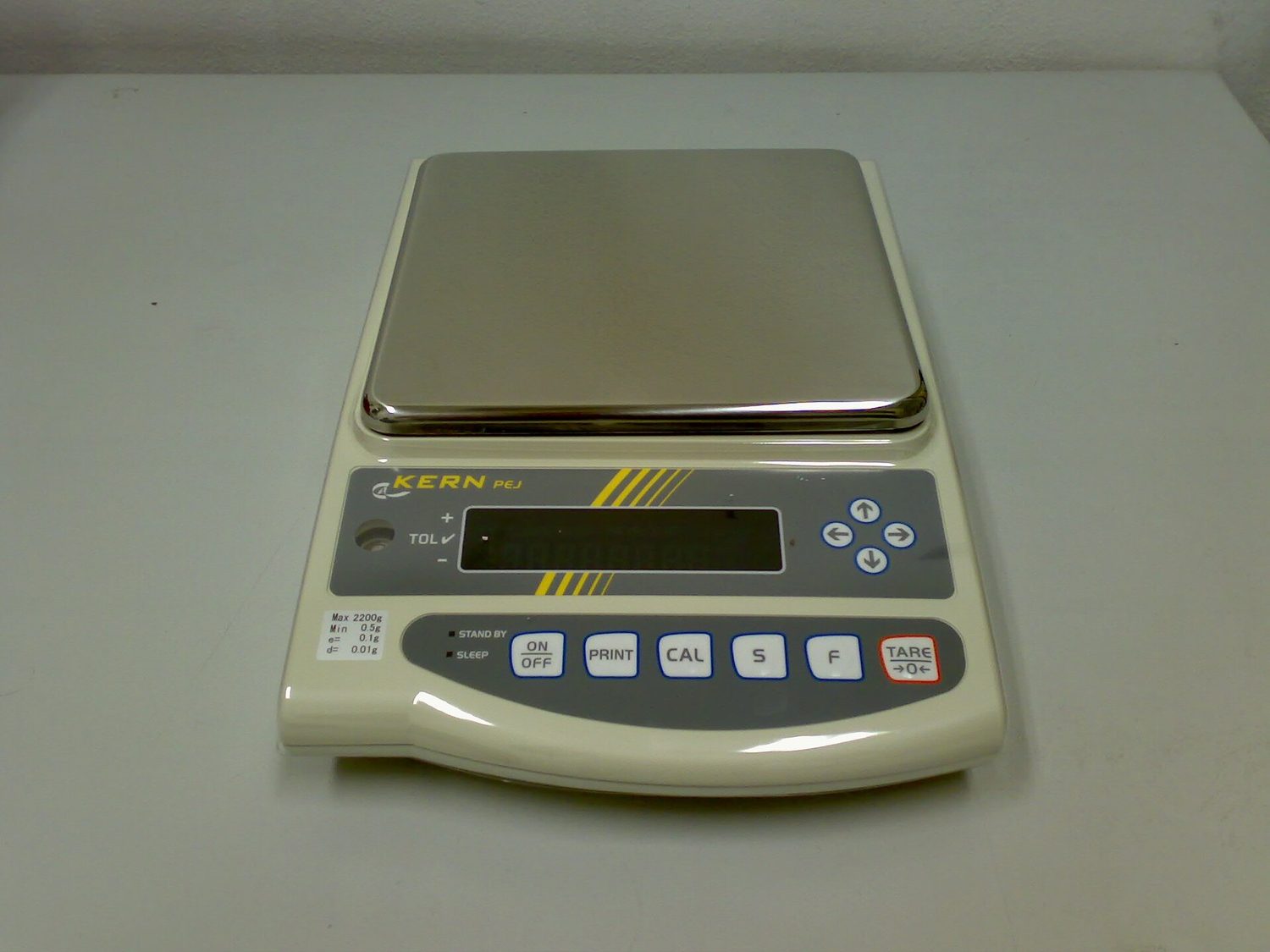
A laboratory balance measures mass for mole calculations
The relative atomic mass (Ar) of an element is:
Độ khó 1/5 · 100 xu + một phần thưởng nhỏ cho lần hoàn thành đầu tiên trong ngày
Ar is the average over all isotopes (weighted by abundance), measured against 1/12 of a carbon-12 atom.
$M_r$ and formula mass
- The relative molecular mass 相对分子质量 $M_r$ is the sum of the $A_r$ of all atoms in a molecule.
- The relative formula mass 相对式量 is the same idea for substances that aren't molecules (e.g. ionic compounds 离子化合物) — add the $A_r$ shown in the formula.
- Example: $M_r(\text{CO}_2) = 12 + (2 \times 16) = 44$.
The relative molecular mass (Mr) is found by:
Độ khó 1/5 · 100 xu + một phần thưởng nhỏ cho lần hoàn thành đầu tiên trong ngày
Mr is the sum of the Ar values of every atom in the molecule.
What is the Mr of CO₂? (Ar: C = 12, O = 16)
Độ khó 2/5 · 140 xu + một phần thưởng nhỏ cho lần hoàn thành đầu tiên trong ngày
Mr = 12 + (2 × 16) = 44.
What is the Mr of water, H₂O? (Ar: H = 1, O = 16)
Độ khó 2/5 · 140 xu + một phần thưởng nhỏ cho lần hoàn thành đầu tiên trong ngày
Mr = (2 × 1) + 16 = 18.
Match each term to its meaning.
Độ khó 2/5 · 140 xu + một phần thưởng nhỏ cho lần hoàn thành đầu tiên trong ngày
All relative masses are compared to ¹/₁₂ of a carbon-12 atom; molecules use Mr, ionic compounds use formula mass.
Ionic compounds have a relative molecular mass because they are made of separate molecules.
Độ khó 1/5 · 100 xu + một phần thưởng nhỏ cho lần hoàn thành đầu tiên trong ngày
False. An ionic compound is a giant lattice, not separate molecules, so we use relative formula mass: add the Ar values in its formula.
Keep your masses straight
- Relative atomic mass (Ar) is for atoms; relative molecular/formula mass (Mr) is the sum of the Ar values in a formula.
- Always read isotope data carefully — abundances must add up to 100%.
Worked examples
1. Chlorine is $75\%$ $^{35}\text{Cl}$ and $25\%$ $^{37}\text{Cl}$. $A_r = \dfrac{75 \times 35 + 25 \times 37}{100} = 35.5$.
2. $M_r$ of $\text{CaCO}_3 = 40.1 + 12.0 + 3 \times 16.0 = 100.1$.
You've got it
- masses are compared to $\tfrac{1}{12}$ of a carbon-12 atom (the unit u)
- $A_r$ = weighted average over isotopes; relative isotopic mass = one isotope
- $M_r$ = sum of $A_r$ of all atoms; formula mass = same for ionic compounds
- e.g. $M_r(\text{CO}_2) = 44$