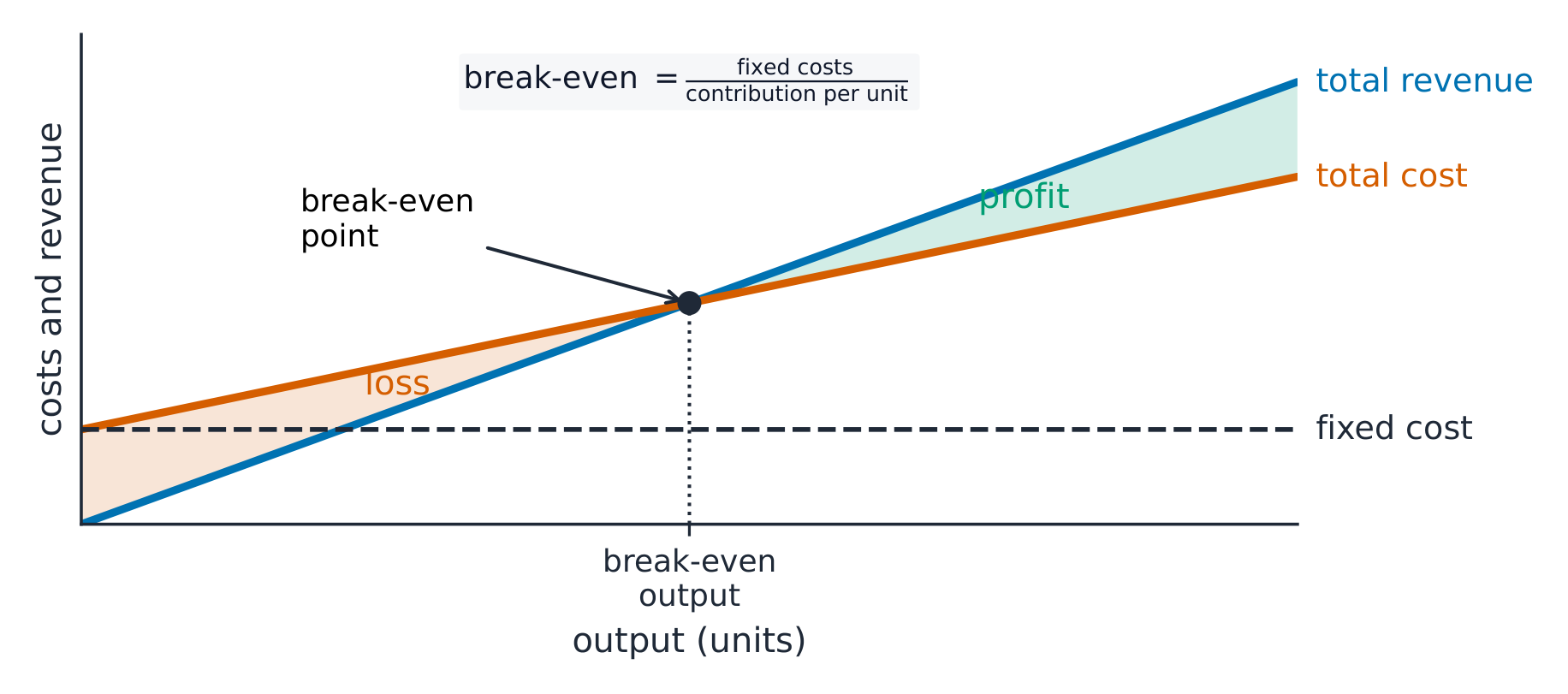
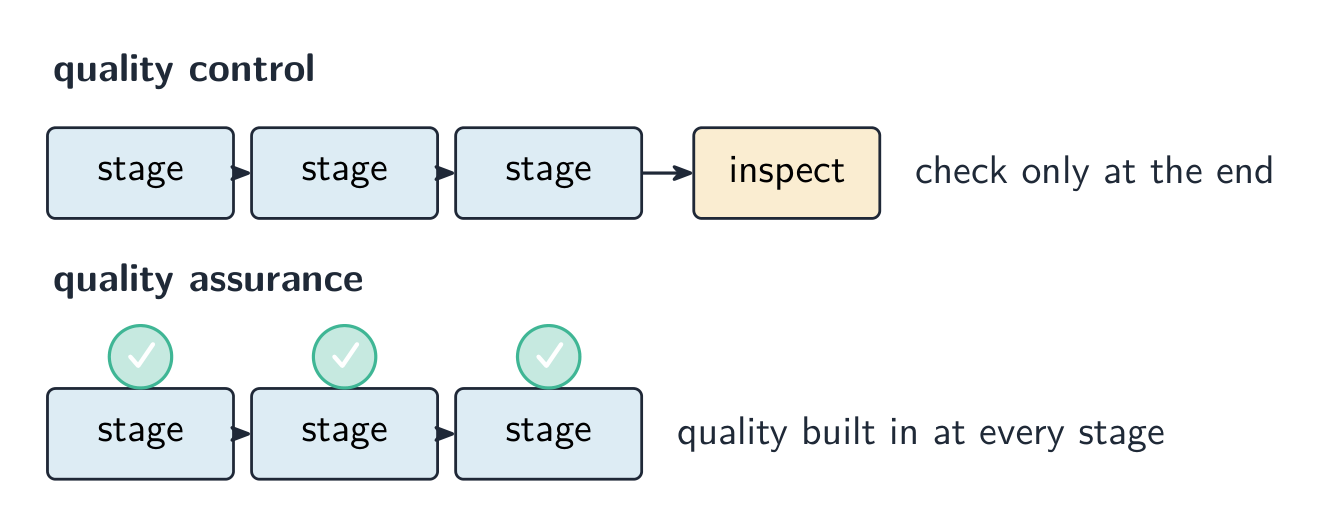
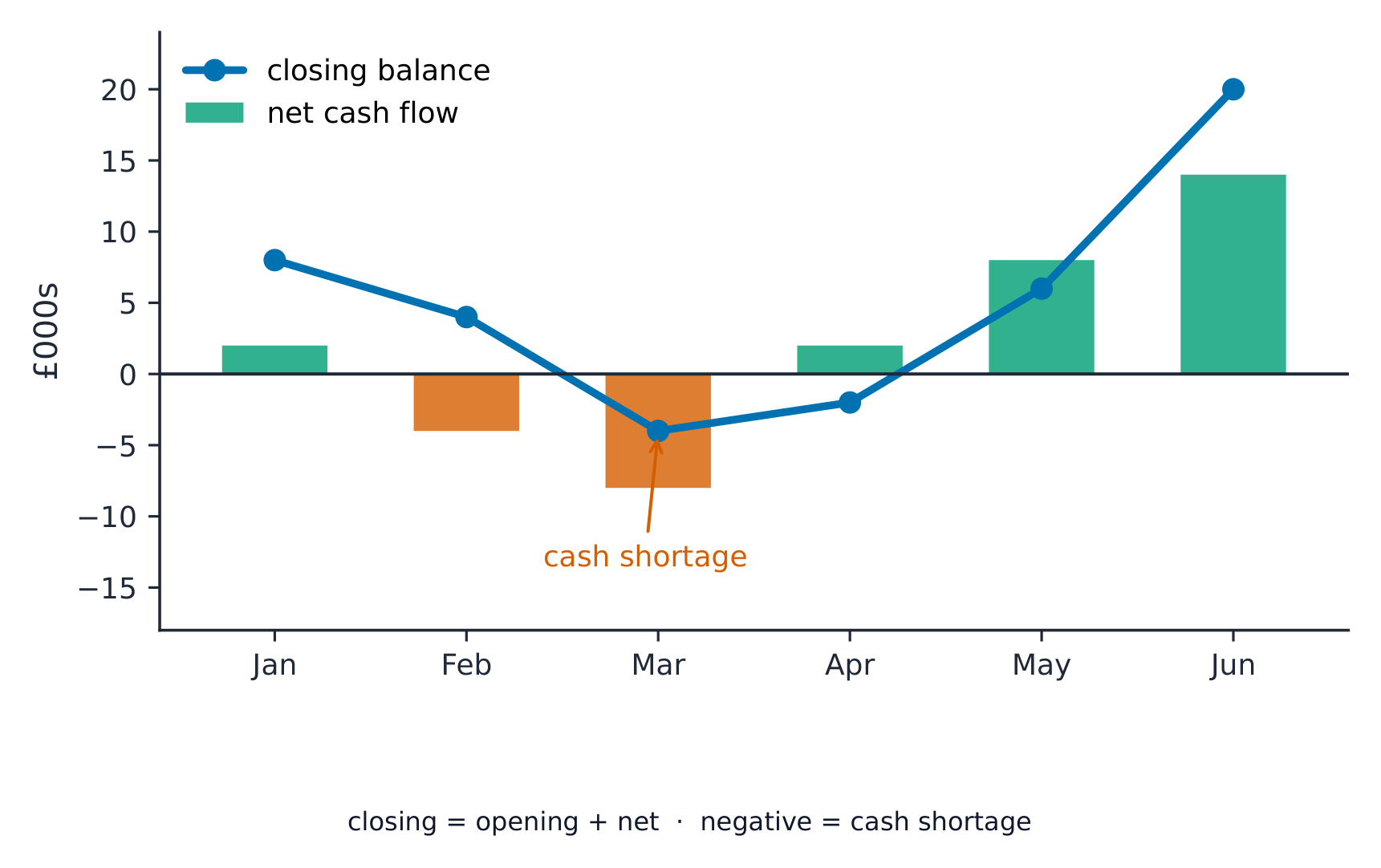
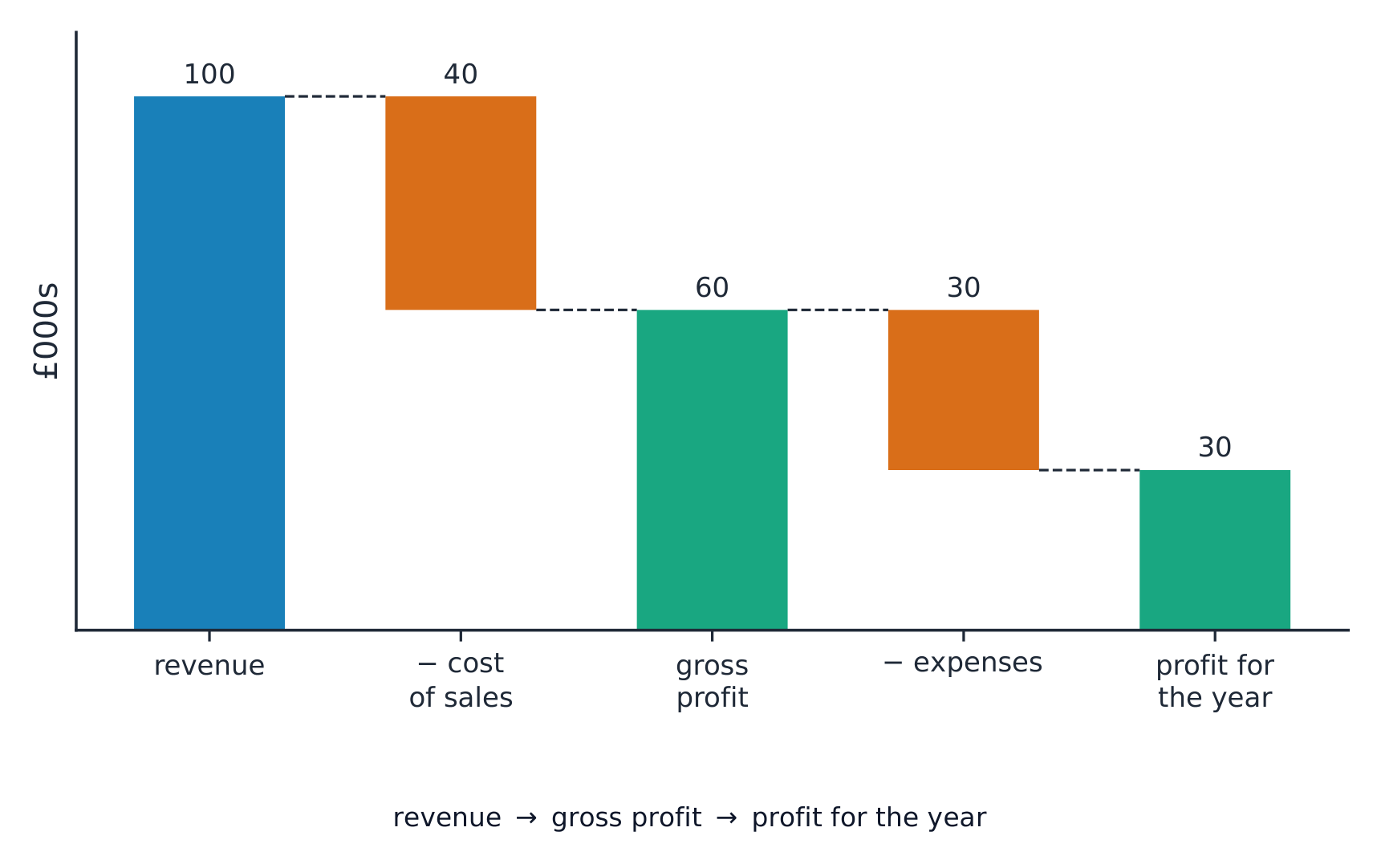
Khoa học Kinh doanh IGCSE (0450) có sáu chủ đề: hiểu hoạt động kinh doanh, con người trong kinh doanh, tiếp thị, quản lý vận hành, thông tin tài chính và quyết định, và tác động bên ngoài. Cả hai bài thi đều xoay quanh các tình huống ngắn.
Tình huống chính là bài thi. Một câu trả lời định nghĩa đúng thuật ngữ nhưng không bao giờ nhắc đến doanh nghiệp trong đề bài chỉ nhận được điểm kiến thức rồi dừng lại. Cùng một câu trả lời đó nếu gắn liền với doanh nghiệp cụ thể ấy — quy mô, thị trường, vị thế tiền mặt của nó — sẽ nhận thêm cả điểm áp dụng và phân tích.
Đọc kỹ đề bài hai lần trước khi viết; các chi tiết trong đó chính là điểm số.Nội dung tài chính — dự báo dòng tiền, hòa vốn, tỷ lệ đơn giản — là phần dễ chấm điểm nhất, vì nó đúng hoặc sai chứ không phụ thuộc vào đánh giá chủ quan.
What business activity is for · Hoạt động kinh doanh phục vụ mục đích gì
Syllabus · Chương trình
English
understand the purpose of business activity: combining factors of production (land, labour, capital, enterprise) to make goods and services that satisfy people's needs and wants
understand the economic problem: needs and wants are unlimited but resources are scarce, so choices must be made
understand opportunity cost: the next best alternative given up when a choice is made
explain the concept of added value (selling price minus cost of bought-in materials) and how a business can increase added value
hiểu mục đích của hoạt động kinh doanh: kết hợp các nhân tố sản xuất (đất, lao động, vốn, doanh nghiệp) để tạo ra hàng hóa và dịch vụ đáp ứng nhu cầu và mong muốn của con người
hiểu vấn đề kinh tế: nhu cầu và mong muốn là vô hạn nhưng nguồn lực thì khan hiếm, do đó cần phải đưa ra lựa chọn
hiểu chi phí cơ hội: phương án thay thế tốt nhất bị từ bỏ khi đưa ra một lựa chọn
giải thích khái niệm giá trị gia tăng (giá bán trừ đi chi phí nguyên vật liệu mua vào) và cách một doanh nghiệp có thể tăng giá trị gia tăng
hiểu tại sao doanh nghiệp thành công hoặc thất bại (ví dụ: kỹ năng quản lý, tài chính, cạnh tranh)
Source: Cambridge International syllabus · Nguồn: Chương trình Cambridge International
English
A business 企业 is an organisation that makes goods 商品 or provides services 服务 for customers 顾客.
Goods are physical things you can touch — bread, phones, cars.
Services are useful actions done for you — a haircut, a bus ride, a doctor's visit.
The purpose of business activity is to use resources 资源 to make goods and services, so that people's needs 需要 and wants 欲望 are met.
Needs are things you must have to live: food, water, shelter, clothes.
Wants are things you would like but can live without: a holiday, a games console.
Factors of production
To produce anything, a business brings together four factors of production 生产要素 — the resources needed to make goods and services.
Factor
What it means
Example
land 土地
natural resources
farmland, water, oil, minerals
labour 劳动力
the work of people
workers, managers
capital 资本
money and the man-made tools bought with it
machines, factories, vehicles
enterprise 企业家才能
the skill to bring the other three together and take risks
the owner's idea and effort
The economic problem
People's needs and wants are unlimited. But resources are scarce 稀缺 — there are not enough of them for everything. This is the economic problem 经济问题.
Because resources are scarce, you must always choose. You cannot have everything.
Opportunity cost
When you choose one thing, you give up the next best thing. The opportunity cost 机会成本 is the next best choice you give up.
Example: a business has some money and spends it on a new machine. Now it cannot also spend that money on a bigger shop. The bigger shop is the opportunity cost.
Added value
Added value 增值 is the difference between the price a business sells a product for and the cost of the raw materials 原材料 bought in to make it.
$$\text{added value} = \text{selling price} - \text{cost of bought-in materials}$$
A business can increase added value by:
raising the price, often through a strong brand 品牌 or better design,
lowering the cost of materials, for example by finding cheaper suppliers,
improving the product so customers will pay more.
Worked example. A furniture maker buys the wood and fabric for a chair for £40 and sells the chair for £110. The factory rent is £6,000 a month. Find the added value per chair.
The rent is a deliberate distractor. Added value counts only the cost of the bought-in materials, so rent, wages and other running costs stay out of it - they matter for profit, not for added value. Subtract only what was bought in to make the product, and never treat added value as if it were profit.
Why businesses succeed or fail
A business is more likely to succeed when it has:
good management 管理 — skilled leaders who plan well,
enough finance 资金 — money to pay bills while it grows,
a product customers want, and an edge over the competition 竞争 (the other businesses selling similar things).
A business may fail and close down when it runs out of cash, manages money badly, or cannot compete. Weak management and poor cash control are the most common causes.
Tiếng Việt
Các cửa hàng cạnh tranh trên phố thương mại: các doanh nghiệp sản xuất hàng hóa và dịch vụ để đáp ứng nhu cầu của mọi người.Doanh nghiệp sản xuất hàng hóa và dịch vụ để đáp ứng nhu cầu và mong muốn của con người
Một doanh nghiệp là tổ chức sản xuất hàng hóa hoặc cung cấp dịch vụ cho khách hàng.
Hàng hóa là các vật thể hữu hình bạn có thể chạm vào — bánh mì, điện thoại, ô tô.
Dịch vụ là các hành động hữu ích thực hiện cho bạn — cắt tóc, đi xe buýt, khám bác sĩ.
Mục đích của hoạt động kinh doanh là sử dụng tài nguyên để tạo ra hàng hóa và dịch vụ, nhằm đáp ứng nhu cầu và mong muốn của mọi người.
Nhu cầu là những thứ bạn bắt buộc phải có để sống: thức ăn, nước uống, chỗ ở, quần áo.
Mong muốn là những thứ bạn muốn có nhưng có thể sống thiếu: kỳ nghỉ, máy chơi game.
Yếu tố sản xuất
Để sản xuất bất cứ thứ gì, một doanh nghiệp quy tụ bốn yếu tố sản xuất — là tài nguyên cần thiết để tạo ra hàng hóa và dịch vụ.
Yếu tố
Ý nghĩa
Ví dụ
đất
tài nguyên thiên nhiên
đất nông nghiệp, nước, dầu mỏ, khoáng sản
lao động
công sức con người
công nhân, quản lý
vốn
tiền tệ và các công cụ nhân tạo mua bằng tiền đó
máy móc, nhà máy, phương tiện vận tải
doanh nghiệp
kỹ năng kết hợp ba yếu tố còn lại và chấp nhận rủi ro
ý tưởng và nỗ lực của chủ sở hữu
Bốn yếu tố sản xuất được kết hợp để tạo ra hàng hóa và dịch vụ
Vấn đề kinh tế
Nhu cầu và mong muốn của con người là vô hạn. Nhưng tài nguyên lại khan hiếm — không đủ để đáp ứng tất cả mọi thứ. Đây là vấn đề kinh tế.
Vì nguồn lực có hạn, bạn luôn phải đưa ra lựa chọn. Bạn không thể có được mọi thứ.
Chi phí cơ hội
Khi bạn chọn một điều gì đó, bạn phải hy sinh phương án tốt nhất tiếp theo. Chi phí cơ hội chính là lựa chọn tốt nhất mà bạn đã từ bỏ.
Ví dụ: một doanh nghiệp có một khoản tiền và dùng nó để mua máy móc mới. Bây giờ họ không thể dùng số tiền đó để mở rộng cửa hàng. Cửa hàng lớn hơn chính là chi phí cơ hội.
Chi phí cơ hội là lựa chọn tốt nhất mà bạn đã từ bỏ
Giá trị gia tăng
Giá trị gia tăng là sự chênh lệch giữa giá bán sản phẩm của doanh nghiệp và chi phí nguyên vật liệu mua vào để sản xuất ra nó.
$$\text{added value} = \text{selling price} - \text{cost of bought-in materials}$$
Giá trị gia tăng bằng giá bán trừ đi chi phí nguyên liệu mua vào
Doanh nghiệp có thể tăng giá trị gia tăng bằng cách:
tăng giá, thường thông qua thương hiệu mạnh hoặc thiết kế tốt hơn,
giảm chi phí nguyên liệu, ví dụ như tìm nhà cung cấp rẻ hơn,
cải thiện sản phẩm để khách hàng sẵn sàng trả nhiều tiền hơn.
Ví dụ minh họa. Một nhà sản xuất nội thất mua gỗ và vải cho một chiếc ghế với giá £40 và bán chiếc ghế đó với giá £110. Tiền thuê nhà máy là £6,000 mỗi tháng. Tìm giá trị gia tăng trên mỗi chiếc ghế.
Tiền thuê là yếu tố gây nhiễu cố ý. Giá trị gia tăng chỉ tính duy nhất chi phí nguyên liệu mua vào, nên tiền thuê, lương và các chi phí vận hành khác đều không nằm trong đó - chúng quan trọng đối với lợi nhuận, chứ không phải giá trị gia tăng. Chỉ trừ những gì được mua vào để làm ra sản phẩm, và tuyệt đối không coi giá trị gia tăng như lợi nhuận.
Tại sao doanh nghiệp thành công hay thất bại
Một doanh nghiệp có khả năng thành công cao hơn khi sở hữu:
quản lý tốt — lãnh đạo có kỹ năng và lên kế hoạch bài bản,
đủ tài chính — tiền để thanh toán hóa đơn trong quá trình phát triển,
sản phẩm khách hàng cần, và lợi thế so với cạnh tranh (các doanh nghiệp khác bán hàng tương tự).
Doanh nghiệp có thể thất bại và đóng cửa khi hết tiền mặt, quản lý tài chính kém, hoặc không thể cạnh tranh. Quản lý yếu kém và kiểm soát tiền mặt kém là những nguyên nhân phổ biến nhất.
Explore · Khám phá
Value added lab · Phòng thí nghiệm về giá trị gia tăng
Change the bought-in cost, the selling price and other costs to see how business activity creates value added. · Thay đổi giá vốn mua vào, giá bán và các chi phí khác để xem hoạt động kinh doanh tạo ra giá trị gia tăng như thế nào.
classify business activity into primary, secondary and tertiary sectors with examples
understand the changing importance of business sectors (de-industrialisation) in developed and developing economies
distinguish the private sector and the public sector and give the features of each
Tiếng Việt
phân loại hoạt động kinh doanh thành ba khu vực: khai thác, sản xuất và dịch vụ kèm ví dụ
hiểu sự thay đổi tầm quan trọng của các khu vực kinh doanh (suy thoái công nghiệp) trong nền kinh tế phát triển và đang phát triển
phân biệt khu vực tư nhân và khu vực công cùng nêu đặc điểm của từng khu vực
Source: Cambridge International syllabus · Nguồn: Chương trình Cambridge International
English
The three sectors
We sort all business activity into three groups, by how far the work is from the final customer.
Sector
What it does
Examples
primary sector 第一产业
takes natural resources from the earth
farming, fishing, mining, oil drilling
secondary sector 第二产业
makes goods from raw materials
building, manufacturing 制造业, food processing
tertiary sector 第三产业
provides services
shops, banks, transport, tourism
How the sectors change
The importance of each sector changes as a country grows richer.
In a developing economy 发展中经济体 (a poorer country building up its industry), the primary sector is often large — many people farm.
As the country grows, the secondary sector grows too.
In a developed economy 发达经济体 (a rich, industrialised country), most people work in the tertiary sector.
De-industrialisation 去工业化 is when the secondary sector shrinks and the tertiary sector grows. This has happened in many developed economies as factories move abroad.
Private sector and public sector
The private sector 私营部门 is made up of businesses owned by private people and groups. Most aim to make a profit 利润. The public sector 公共部门 is made up of organisations owned by the government, which aim to provide a service to the public.
Private sector
Public sector
Owner
private people and companies
the government
Main aim
usually profit
provide services to everyone
Examples
shops, factories, private firms
state schools, public hospitals, the army
Tiếng Việt
Ba khu vực
Chúng ta phân loại toàn bộ hoạt động kinh doanh thành ba nhóm, dựa trên khoảng cách từ công việc đến khách hàng cuối cùng.
Khu vực
Chức năng
Ví dụ
khu vực sơ cấp
khai thác tài nguyên thiên nhiên từ trái đất
nông nghiệp, đánh bắt cá, khai khoáng, khoan dầu
khu vực thứ cấp
chế tạo hàng hóa từ nguyên liệu thô
xây dựng, sản xuất, chế biến thực phẩm
khu vực thứ cấp
cung cấp dịch vụ
cửa hàng, ngân hàng, vận tải, du lịch
Hoạt động kinh doanh diễn ra từ khu vực sơ cấp cho đến khu vực tertiary
Sự thay đổi của các khu vực
Tầm quan trọng của từng khu vực thay đổi khi một quốc gia trở nên giàu có hơn.
Trong nền kinh tế đang phát triển (một quốc gia nghèo đang xây dựng ngành công nghiệp), khu vực sơ cấp thường rất lớn — nhiều người làm nông.
Khi đất nước phát triển, khu vực thứ cấp cũng mở rộng.
Trong nền kinh tế phát triển (một quốc gia giàu có, công nghiệp hóa), hầu hết mọi người làm việc trong khu vực tertiary.
De-industrialisation (phi công nghiệp hóa) là khi khu vực thứ cấp thu hẹp và khu vực tertiary mở rộng. Hiện tượng này đã xảy ra ở nhiều nền kinh tế phát triển khi các nhà máy chuyển sang nước ngoài.
Khu vực tư nhân và khu vực công
Khu vực tư nhân bao gồm các doanh nghiệp thuộc sở hữu của cá nhân và nhóm tư nhân. Hầu hết nhằm mục đích kiếm lợi nhuận. Khu vực công bao gồm các tổ chức do chính phủ sở hữu, nhằm mục đích cung cấp dịch vụ cho công chúng.
Khu vực tư nhân
Khu vực công
Chủ sở hữu
cá nhân và công ty tư nhân
chính phủ
Mục tiêu chính
thường là lợi nhuận
cung cấp dịch vụ cho tất cả mọi người
Ví dụ
cửa hàng, nhà máy, công ty tư nhân
trường học nhà nước, bệnh viện công, quân đội
Explore · Khám phá
Classify business activity · Phân loại hoạt động kinh doanh
Sort real firms by the sector they mainly belong to. · Sắp xếp các doanh nghiệp thực tế theo khu vực họ thuộc về.
Enterprise, business growth and size · Doanh nghiệp, sự tăng trưởng và quy mô
Syllabus · Chương trình
English
describe the characteristics of a successful entrepreneur (risk-taker, hard-working, innovative, confident, organised)
explain the contents and purpose of a business plan and how it helps a business raise finance
explain why and how governments support business start-ups (grants, loans, training, advice)
measure the size of a business (number of employees, revenue/sales, capital employed) and the limitations of each measure
explain why some businesses remain small and why/how businesses grow (internal/organic growth and external growth: mergers and takeovers, horizontal, vertical and conglomerate integration)
explain economies and diseconomies of scale (purchasing, financial, managerial, technical, marketing)
Tiếng Việt
mô tả đặc điểm của một doanh nhân thành công (chịu được rủi ro, chăm chỉ, sáng tạo, tự tin, có tổ chức)
giải thích nội dung và mục đích của kế hoạch kinh doanh cũng như cách nó giúp doanh nghiệp huy động vốn
giải thích tại sao và làm thế nào chính phủ hỗ trợ việc khởi nghiệp (trợ cấp, vay vốn, đào tạo, tư vấn)
đo lường quy mô của doanh nghiệp (số lượng nhân viên, doanh thu/bán hàng, vốn đầu tư) và những hạn chế của mỗi thước đo
giải thích tại sao một số doanh nghiệp vẫn giữ quy mô nhỏ và tại sao/cách thức doanh nghiệp mở rộng (tăng trưởng nội bộ/tự nhiên và tăng trưởng bên ngoài: sáp nhập và thâu tóm, tích hợp ngang, dọc và đa ngành)
giải thích lợi thế và bất lợi về quy mô (mua hàng, tài chính, quản lý, kỹ thuật, tiếp thị)
Source: Cambridge International syllabus · Nguồn: Chương trình Cambridge International
English
The entrepreneur
An entrepreneur 企业家 is a person who sets up a business and takes the risk of running it. Successful entrepreneurs usually:
are willing to take risk 风险 — to risk their own money on a new idea,
work hard and do not give up,
are innovative 创新 — full of new ideas,
are confident and good at making decisions,
are well organised, able to manage time, money and people.
The business plan
A business plan 商业计划书 is a document that describes the business and its future. It usually contains the business idea and objectives, the product, the market 市场 it will sell to, who will run it, and a plan for the money.
A business plan has two main uses:
it makes the owner think carefully and plan ahead,
it helps the business raise finance 筹集资金 — banks and investors want to see a plan before they lend or invest.
Government support for start-ups
A start-up 初创企业 is a brand-new business. New businesses create jobs and help the economy grow, so governments often support them with:
grants 补助金 — money given that does not have to be paid back,
low-interest loans 贷款 — money lent on easy terms,
training and advice for new owners,
lower taxes in the first years.
Measuring the size of a business
You can measure how big a business is in several ways. Each one has a weakness.
Measure
How it works
Limitation
number of employees 员工
count the staff
a high-tech firm can have few staff but large output 产量
revenue 收入 (sales)
the value of everything sold
a firm selling cheap goods may sell a lot yet be small
capital employed 所用资本
the total money invested in the business
hard to compare between different industries
Staying small or growing
Some businesses stay small on purpose: the owner wants to keep control, the market is small, or the product is specialised.
Businesses that want to grow bigger — to achieve growth 增长 — can do it in two ways.
Internal growth 内部增长 (also called organic growth): the business grows by itself, by selling more, opening new branches, or adding new products. It is slower but lower-risk.
External growth 外部增长: the business joins with another business. This is faster. It happens through a merger 合并 (two businesses agree to join into one) or a takeover 收购 (one business buys control of another).
External growth is classified by the kind of business that is joined.
Type
What joins
Example
horizontal integration 横向一体化
two firms at the same stage of the same business
two car makers join
vertical integration 纵向一体化
two firms at different stages of the same business
a car maker buys a tyre maker
conglomerate integration 混合一体化
two firms in completely different businesses
a car maker buys a food company
Economies and diseconomies of scale
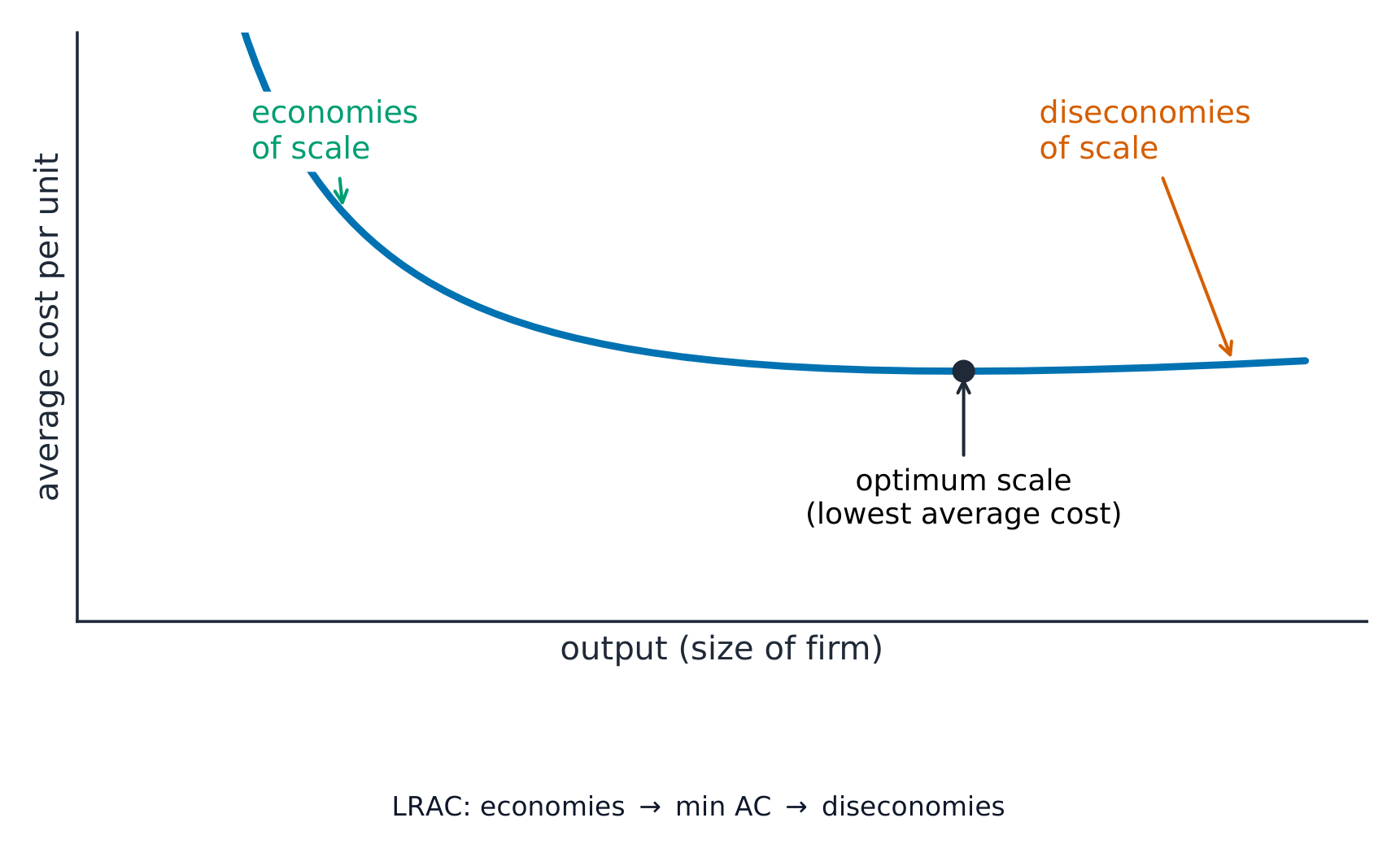
As a business grows, its cost per unit can fall. These savings are called economies of scale 规模经济.
Type
How the cost per unit falls
purchasing
buying large amounts of materials brings a lower price
financial
large firms can borrow money more cheaply
managerial
the firm can afford expert managers
technical
the firm can use large, efficient machines
marketing 营销
the cost of advertising 广告 is spread over more goods
If a business grows too big, the cost per unit can start to rise again. These are diseconomies of scale 规模不经济. They happen because communication 沟通 in a huge firm gets worse, workers feel less important and work less hard, and managers find the firm hard to control.
Tiếng Việt
Người khởi nghiệp
Một doanh nhân là người thành lập doanh nghiệp và gánh vác rủi ro khi vận hành. Những doanh nhân thành công thường:
sẵn sàng chấp nhận rủi ro — dám bỏ tiền túi của mình vào một ý tưởng mới,
chăm chỉ làm việc và không bao giờ bỏ cuộc,
sáng tạo — đầy ắp những ý tưởng mới,
tự tin và giỏi ra quyết định,
có tổ chức tốt, biết quản lý thời gian, tiền bạc và con người.
Đặc điểm thường thấy của những doanh nhân thành công
Kế hoạch kinh doanh
Một kế hoạch kinh doanh là tài liệu mô tả về doanh nghiệp và tương lai của nó. Nó thường chứa ý tưởng và mục tiêu kinh doanh, sản phẩm, thị trường sẽ bán hàng, ai sẽ vận hành, và kế hoạch tài chính.
Kế hoạch kinh doanh có hai công dụng chính:
giúp chủ sở hữu suy nghĩ kỹ lưỡng và lên kế hoạch trước,
giúp doanh nghiệp huy động vốn — ngân hàng và nhà đầu tư muốn xem kế hoạch trước khi cho vay hoặc đầu tư.
Hỗ trợ của chính phủ cho doanh nghiệp mới thành lập
Một start-up (doanh nghiệp mới thành lập) là một doanh nghiệp hoàn toàn mới. Các doanh nghiệp mới tạo ra việc làm và giúp nền kinh tế phát triển, vì vậy chính phủ thường hỗ trợ chúng bằng:
trợ cấp — tiền trao tặng mà không cần hoàn trả,
vay vốn lãi suất thấp — tiền cho vay với điều kiện dễ dàng,
đào tạo và tư vấn cho chủ sở hữu mới,
giảm thuế trong những năm đầu.
Đo lường quy mô của một doanh nghiệp
Bạn có thể đo lường quy mô của một doanh nghiệp theo nhiều cách. Mỗi cách đều có điểm yếu riêng.
Tiêu chí
Cách hoạt động
Hạn chế
số lượng nhân viên
đếm số nhân sự
công ty công nghệ cao có thể có ít nhân sự nhưng sản lượng lớn
doanh thu (doanh số)
giá trị của tất cả hàng hóa bán ra
công ty bán hàng giá rẻ có thể bán nhiều nhưng vẫn nhỏ bé
vốn đã sử dụng
tổng số tiền đầu tư vào doanh nghiệp
khó so sánh giữa các ngành nghề khác nhau
Giữ nguyên quy mô hay mở rộng
Một số doanh nghiệp giữ nguyên quy mô nhỏ có chủ đích: chủ sở hữu muốn kiểm soát, thị trường nhỏ, hoặc sản phẩm đặc thù.
Các doanh nghiệp muốn phát triển lớn hơn — để đạt được tăng trưởng — có thể thực hiện theo hai cách.
Tăng trưởng nội bộ (còn gọi là tăng trưởng hữu cơ): doanh nghiệp tự phát triển bằng cách bán nhiều hơn, mở chi nhánh mới, hoặc thêm sản phẩm mới. Quá trình này chậm hơn nhưng rủi ro thấp hơn.
Tăng trưởng bên ngoài: doanh nghiệp hợp nhất với một doanh nghiệp khác. Cách này diễn ra nhanh hơn. Nó xảy ra thông qua sáp nhập (hai doanh nghiệp đồng ý hợp nhất thành một) hoặc mua lại (một doanh nghiệp mua quyền kiểm soát của doanh nghiệp khác).
Tăng trưởng bên ngoài được phân loại dựa trên loại hình doanh nghiệp được hợp nhất.
Loại hình
Sự hợp nhất
Ví dụ
hội tụ ngang
hai công ty ở cùng giai đoạn trong cùng một ngành
hai nhà sản xuất ô tô hợp nhất
hội tụ dọc
hai công ty ở các giai đoạn khác nhau trong cùng một ngành
một nhà sản xuất ô tô mua lại nhà sản xuất lốp xe
hội tụ tập đoàn
hai công ty hoàn toàn thuộc các ngành nghề khác nhau
một nhà sản xuất ô tô mua lại công ty thực phẩm
Lợi thế và bất lợi về quy mô
Khi doanh nghiệp phát triển, chi phí trên mỗi đơn vị có thể giảm xuống. Những khoản tiết kiệm này được gọi là lợi thế về quy mô.
Loại hình
Cách chi phí trên mỗi đơn vị giảm
mua sắm
việc mua số lượng lớn nguyên liệu giúp giảm giá thành
tài chính
các công ty lớn có thể vay tiền với lãi suất rẻ hơn
quản lý
công ty có đủ khả năng trả lương cho các nhà quản lý chuyên gia
kỹ thuật
công ty có thể sử dụng máy móc lớn và hiệu quả
tiếp thị
chi phí quảng cáo được chia sẻ trên số lượng hàng hóa lớn hơn
Nếu doanh nghiệp phát triển quá lớn, chi phí trên mỗi đơn vị có thể bắt đầu tăng trở lại. Đây là bất lợi về quy mô. Điều này xảy ra do giao tiếp trong một tổ chức quá lớn trở nên kém hiệu quả, người lao động cảm thấy không còn quan trọng và làm việc không hết mình, cũng như các nhà quản lý gặp khó khăn trong việc điều hành.
Chi phí bình quân trên mỗi đơn vị giảm (lợi thế quy mô) rồi tăng (bất lợi quy mô) khi công ty mở rộng
Explore · Khám phá
Business case lab · Phòng thí nghiệm về tình huống kinh doanh
Classify real decisions so the main business concept becomes concrete. · Phân loại các quyết định thực tế để khái niệm kinh doanh chính trở nên cụ thể.
Types of business organisation · Các loại hình tổ chức kinh doanh
Syllabus · Chương trình
English
describe the features, advantages and disadvantages of sole traders, partnerships, private limited companies and public limited companies
explain the difference between unlimited and limited liability and between incorporated and unincorporated businesses
describe franchises, joint ventures and social enterprises and their advantages and disadvantages
explain the features of public sector business organisations (public corporations)
Tiếng Việt
mô tả đặc điểm, ưu điểm và nhược điểm của cá nhân kinh doanh, liên danh, công ty TNHH và công ty cổ phần
giải thích sự khác biệt giữa trách nhiệm vô hạn và trách nhiệm hữu hạn cũng như giữa doanh nghiệp có pháp nhân và không có pháp nhân
mô tả hệ thống nhượng quyền, liên doanh và doanh nghiệp xã hội cùng ưu và nhược điểm của chúng
giải thích đặc điểm của các tổ chức kinh doanh thuộc khu vực công (công ty nhà nước)
Source: Cambridge International syllabus · Nguồn: Chương trình Cambridge International
English
Liability
Liability 责任 means who must pay the debts 债务 if a business cannot pay them itself.
With unlimited liability 无限责任, the owner is personally responsible for all the debts. If the business fails, the owner may lose personal things, like a house or car, to pay them.
With limited liability 有限责任, the owner can only lose the money they put into the business. Their personal things are safe.
Incorporated and unincorporated
An incorporated 法人 business has a separate legal identity from its owners. The business itself can own things and be taken to court. Its owners get limited liability. Companies are incorporated.
An unincorporated 非法人 business is not separate from its owner in law. Sole traders and partnerships are unincorporated.
The four main types
A sole trader 独资企业 is a business owned by one person.
Advantages
Disadvantages
easy and cheap to set up
unlimited liability
the owner keeps all the profit
hard to raise finance
the owner makes all decisions
long hours, no one to share the work
private (accounts stay secret)
the business ends if the owner stops
A partnership 合伙企业 is owned by two or more people who share the work, the decisions and the profit. They usually sign a written agreement.
Advantages
Disadvantages
more owners bring more capital
unlimited liability (in most cases)
work and ideas are shared
the profit is shared
easy to set up
partners can disagree
one partner's mistake affects everyone
A private limited company 私人有限公司 (often "Ltd") is owned by shareholders 股东, but its shares cannot be sold to the public. The owners are often family and friends.
Advantages
Disadvantages
limited liability
more legal rules and paperwork
easier to raise capital than a sole trader
shares cannot be sold to the public
control stays in a small group
accounts must be shared with the government
A public limited company 公众有限公司 (often "plc") is a large company whose shares 股份 can be bought by the public on the stock exchange 证券交易所.
Advantages
Disadvantages
can raise very large amounts of capital
expensive and complex to set up
limited liability
accounts are fully public
well known, so easy to borrow
anyone can buy shares, so there is a risk of takeover
the original owners may lose control
Shareholders may receive a share of the profit, called a dividend 股息.
Other forms of organisation
Franchise 特许经营: a person (the franchisee 加盟商) pays to use the name, products and methods of an existing successful business (the franchisor 授权商). The franchisee gets a known brand, training and lower risk, but must pay fees and a share of the profit and has less freedom. Many fast-food chains work this way.
Joint venture 合资企业: two businesses agree to share the cost, risk and profit of one project, while staying separate companies.
Social enterprise 社会企业: a business that trades to help society or the environment, not only to make profit. Most of its profit is put back into its social aims.
Public sector organisation
A public corporation 国有企业 is a business owned and run by the government, such as a national rail or postal service. Its aims include giving an important service to everyone, not only making a profit.
Tiếng Việt
Trụ sở công ty: các doanh nghiệp có thể từ chủ hộ đơn lẻ đến các công ty cổ phần đại chúng khổng lồ.
Trách nhiệm pháp lý
Trách nhiệm pháp lý chỉ ra ai phải thanh toán nợ nếu doanh nghiệp không tự chi trả được.
Với trách nhiệm vô hạn, chủ sở hữu chịu trách nhiệm cá nhân đối với tất cả các khoản nợ. Nếu doanh nghiệp phá sản, chủ sở hữu có thể mất tài sản cá nhân như nhà cửa hoặc xe cộ để trả nợ.
Với trách nhiệm hữu hạn, chủ sở hữu chỉ có thể mất số tiền họ đã đầu tư vào doanh nghiệp. Tài sản cá nhân của họ được bảo vệ an toàn.
Được thành lập và không được thành lập
Một doanh nghiệp được thành lập có danh tính pháp lý riêng biệt so với các chủ sở hữu. Bản thân doanh nghiệp có thể sở hữu tài sản và bị đưa ra tòa án. Các chủ sở hữu hưởng trách nhiệm hữu hạn. Công ty là các doanh nghiệp được thành lập.
Một doanh nghiệp không được thành lập không tách biệt khỏi chủ sở hữu về mặt pháp lý. Chủ hộ kinh doanh cá thể và liên doanh là các doanh nghiệp không được thành lập.
Bốn loại hình chính
Chủ hộ kinh doanh cá thể là doanh nghiệp do một người sở hữu.
Ưu điểm
Nhược điểm
dễ dàng và rẻ để thành lập
trách nhiệm vô hạn
chủ sở hữu giữ toàn bộ lợi nhuận
khó huy động vốn
chủ sở hữu đưa ra mọi quyết định
giờ làm việc dài, không có ai chia sẻ công việc
riêng tư (báo cáo tài chính giữ bí mật)
doanh nghiệp chấm dứt khi chủ sở hữu ngừng hoạt động
Liên doanh do hai hoặc nhiều người sở hữu, họ chia sẻ công việc, quyết định và lợi nhuận. Họ thường ký kết thỏa thuận bằng văn bản.
Ưu điểm
Nhược điểm
nhiều chủ sở hữu mang lại nguồn vốn lớn hơn
trách nhiệm vô hạn (trong hầu hết các trường hợp)
công việc và ý tưởng được chia sẻ
lợi nhuận được chia sẻ
dễ dàng thành lập
các liên doanh có thể bất đồng quan điểm
sai lầm của một liên doanh ảnh hưởng đến tất cả
Công ty TNHH (thường viết tắt là "Ltd") do các cổ đông sở hữu, nhưng cổ phần của họ không được phép bán cho công chúng. Các chủ sở hữu thường là gia đình và bạn bè.
Ưu điểm
Nhược điểm
trách nhiệm hữu hạn
nhiều quy định pháp luật và thủ tục giấy tờ hơn
dễ huy động vốn hơn so với chủ hộ kinh doanh cá thể
cổ phần không được bán cho công chúng
quyền kiểm soát nằm trong tay một nhóm nhỏ
báo cáo tài chính phải được công bố với chính phủ
Công ty Cổ phần (thường viết tắt là "plc") là một công ty lớn mà cổ phần của nó có thể được mua bởi công chúng trên sàn giao dịch chứng khoán.
Ưu điểm
Nhược điểm
có thể huy động số vốn rất lớn
tốn kém và phức tạp để thành lập
trách nhiệm hữu hạn
báo cáo tài chính hoàn toàn công khai
nổi tiếng, nên dễ vay vốn
bất kỳ ai cũng có thể mua cổ phần, nên có nguy cơ bị mua lại
các chủ sở hữu ban đầu có thể mất quyền kiểm soát
Cổ đông có thể nhận được một phần lợi nhuận, được gọi là cổ tức.
Phân loại các loại hình doanh nghiệp theo trách nhiệm pháp lý: không được thành lập (vô hạn) và được thành lập (hữu hạn)
Các hình thức tổ chức khác
Franchise: một người (người nhận nhượng quyền - franchisee) trả tiền để sử dụng tên, sản phẩm và phương pháp của một doanh nghiệp thành công có sẵn (người cấp nhượng quyền - franchisor). Người nhận nhượng quyền có được thương hiệu đã quen thuộc, đào tạo và rủi ro thấp hơn, nhưng phải trả phí và một phần lợi nhuận, đồng thời ít tự do hơn. Nhiều chuỗi nhà hàng ăn nhanh hoạt động theo mô hình này.
Joint venture (liên doanh): hai doanh nghiệp thỏa thuận chia sẻ chi phí, rủi ro và lợi nhuận từ một dự án, trong khi vẫn giữ nguyên tư cách là các công ty riêng biệt.
Social enterprise (doanh nghiệp xã hội): một doanh nghiệp kinh doanh nhằm giúp đỡ cộng đồng hoặc môi trường, không chỉ để kiếm lợi nhuận. Phần lớn lợi nhuận được tái đầu tư vào các mục tiêu xã hội của mình.
Tổ chức khu vực công
Một public corporation (công ty nhà nước) là doanh nghiệp do chính phủ sở hữu và vận hành, chẳng hạn như đường sắt quốc gia hoặc bưu điện. Các mục tiêu của nó bao gồm cung cấp dịch vụ quan trọng cho mọi người, không chỉ đơn thuần là kiếm lời.
Explore · Khám phá
Choose the ownership form · Chọn hình thức sở hữu
Compare ownership, control and liability in real business types. · So sánh quyền sở hữu, quyền kiểm soát và trách nhiệm pháp lý trong các loại hình doanh nghiệp thực tế.
Business objectives and stakeholder objectives · Mục tiêu kinh doanh và mục tiêu của các bên liên quan
Syllabus · Chương trình
English
explain the objectives a business might have: survival, profit, growth, market share, customer service, social objectives
explain the objectives of a social enterprise (economic, social and environmental)
identify the main stakeholder groups (owners/shareholders, employees, customers, suppliers, government, local community, banks) and their objectives
explain how and why stakeholder objectives may conflict
Tiếng Việt
giải thích các mục tiêu mà doanh nghiệp có thể có: tồn tại, lợi nhuận, tăng trưởng, thị phần, dịch vụ khách hàng, mục tiêu xã hội
giải thích mục tiêu của một doanh nghiệp xã hội (kinh tế, xã hội và môi trường)
nhận biết các nhóm bên liên quan chính (chủ sở hữu/cổ đông, nhân viên, khách hàng, nhà cung cấp, chính phủ, cộng đồng địa phương, ngân hàng) và mục tiêu của họ
giải thích cách thức và lý do các mục tiêu của bên liên quan có thể xung đột
Source: Cambridge International syllabus · Nguồn: Chương trình Cambridge International
English
Business objectives
An objective 目标 is a goal that a business aims for. Common objectives are:
survival 生存 — staying in business, especially when new or in hard times,
profit — earning more than it spends; the main aim of most private firms,
growth — getting bigger, to be safer and earn more,
market share 市场份额 — the share of total sales in a market that one business holds,
customer service 顾客服务 — keeping customers happy so they come back,
social objectives — helping society or the environment 环境.
Objectives of a social enterprise
A social enterprise aims for three kinds of objective together:
economic — earn enough money to survive and grow,
social — help people, for example by giving jobs to those who find work hard to get,
environmental — protect the planet, for example by cutting waste.
Stakeholders
A stakeholder 利益相关者 is any person or group that is affected by a business or has an interest in it.
Stakeholder
What they usually want
owners / shareholders
good profit and a rising dividend
employees
fair pay, safe work, secure jobs
customers
good quality at a fair price
suppliers 供应商
to be paid on time, and regular orders
government
businesses to obey laws and pay tax 税收
local community 当地社区
jobs, but no pollution or noise
banks
to be repaid the money they lent
Why stakeholder objectives conflict
Stakeholders often want different things, so their objectives can conflict 冲突. A business cannot fully please everyone at once.
Owners want to cut costs, but the local community wants less pollution 污染. Cutting costs may create more pollution.
Customers want low prices, but suppliers want to be paid more.
Good managers try to balance these different objectives.
Tiếng Việt
Mục tiêu kinh doanh
Một objective (mục tiêu) là đích đến mà doanh nghiệp hướng tới. Các mục tiêu phổ biến bao gồm:
survival (sự tồn tại) — duy trì hoạt động kinh doanh, đặc biệt khi mới thành lập hoặc trong giai đoạn khó khăn,
profit (lợi nhuận) — thu nhập nhiều hơn số chi; là mục tiêu chính của hầu hết các doanh nghiệp tư nhân,
growth (tăng trưởng) — mở rộng quy mô, để an toàn hơn và kiếm nhiều tiền hơn,
market share (thị phần) — tỷ lệ tổng doanh số trên thị trường mà một doanh nghiệp nắm giữ,
customer service (dịch vụ khách hàng) — làm hài lòng khách hàng để họ quay lại mua hàng,
social objectives (mục tiêu xã hội) — hỗ trợ cộng đồng hoặc environment (môi trường).
Mục tiêu của doanh nghiệp xã hội
Một doanh nghiệp xã hội hướng tới ba loại mục tiêu cùng lúc:
economic (kinh tế) — kiếm đủ tiền để tồn tại và phát triển,
social (xã hội) — giúp đỡ con người, ví dụ như tạo việc làm cho những người gặp khó khăn trong tìm kiếm việc làm,
environmental (môi trường) — bảo vệ trái đất, ví dụ như giảm thiểu chất thải.
Stakeholders (Các bên liên quan)
Một stakeholder (bên liên quan) là bất kỳ cá nhân hay nhóm nào bị ảnh hưởng bởi doanh nghiệp hoặc có lợi ích liên quan đến doanh nghiệp đó.
Stakeholder (Bên liên quan)
Những gì họ thường mong muốn
owners / shareholders (chủ sở hữu / cổ đông)
lợi nhuận tốt và cổ tức tăng dần
employees (nhân viên)
lương bằng phẳng, nơi làm việc an toàn, việc làm ổn định
customers (khách hàng)
chất lượng tốt với mức giá hợp lý
suppliers (nhà cung cấp)
được thanh toán đúng hạn và nhận đơn hàng đều đặn
government (chính phủ)
doanh nghiệp tuân thủ luật pháp và đóng tax (thuế)
local community (cộng đồng địa phương)
việc làm, nhưng không có ô nhiễm hay tiếng ồn
banks (ngân hàng)
được hoàn trả số tiền đã cho vay
Các bên liên quan nội bộ và ngoại bộ đều có mối quan tâm đến doanh nghiệp
Tại sao mục tiêu của các bên liên quan xung đột
Các bên liên quan thường mong muốn những điều khác nhau, nên mục tiêu của họ có thể conflict (xung đột). Một doanh nghiệp không thể làm hài lòng tất cả mọi người cùng lúc.
Chủ sở hữu muốn lợi nhuận cao hơn, nhưng nhân viên muốn lương cao hơn. Lương cao hơn sẽ làm giảm lợi nhuận.
Chủ sở hữu muốn cắt giảm chi phí, nhưng cộng đồng địa phương muốn giảm pollution (ô nhiễm). Cắt giảm chi phí có thể dẫn đến ô nhiễm nhiều hơn.
Khách hàng muốn giá thấp, nhưng nhà cung cấp muốn được trả nhiều tiền hơn.
Các quản trị viên giỏi cố gắng cân bằng các mục tiêu khác nhau này.
Explore · Khám phá
Stakeholder interest lab · Phòng thí nghiệm quan tâm của bên liên quan
See how different stakeholders judge the same business decision. · Xem cách các bên liên quan khác nhau đánh giá cùng một quyết định kinh doanh.
Added value = selling price − cost of bought-in materials. A business raises it with a strong brand, better design, or cheaper materials.
Know the three sectors: primary (extracts raw materials), secondary (makes goods), tertiary (services). As a country develops, employment shifts from primary towards tertiary.
Unlimited liability (sole traders, partnerships) puts the owner's personal things at risk; limited liability (Ltd, plc) limits any loss to the money invested.
A stakeholder is anyone affected by the business, and their objectives often conflict — owners want profit, workers want higher pay, the community wants less pollution.
Economies of scale cut the cost per unit as a firm grows; growing too big brings diseconomies of scale (cost per unit rises).
Tiếng Việt
Added value (giá trị gia tăng) = giá bán − chi phí nguyên vật liệu mua ngoài. Doanh nghiệp nâng cao giá trị gia tăng thông qua thương hiệu mạnh, thiết kế tốt hơn, hoặc nguyên vật liệu rẻ hơn.
Biết rõ ba khu vực: primary (khu vực sơ cấp - khai thác nguyên liệu thô), secondary (khu vực thứ cấp - sản xuất hàng hóa), tertiary (khu vực tertiary - dịch vụ). Khi một quốc gia phát triển, việc làm chuyển dịch từ khu vực sơ cấp sang khu vực tertiary.
Unlimited liability (trách nhiệm vô hạn - đối với chủ hộ, hợp danh) đặt tài sản cá nhân của chủ sở hữu vào nguy cơ; limited liability (trách nhiệm hữu hạn - Ltd, plc) giới hạn mức thua lỗ ở mức số tiền đã đầu tư.
Một stakeholder (bên liên quan) là bất kỳ ai bị ảnh hưởng bởi doanh nghiệp, và mục tiêu của họ thường conflict (xung đột) — chủ sở hữu muốn lợi nhuận, công nhân muốn lương cao hơn, cộng đồng muốn giảm ô nhiễm.
Economies of scale (lợi thế quy mô) làm giảm chi phí bình quân trên mỗi đơn vị khi doanh nghiệp mở rộng; nhưng phát triển quá lớn sẽ dẫn đến diseconomies of scale (chi phí bình quân trên mỗi đơn vị tăng lên).
giải thích tại sao đội ngũ lao động được thúc đẩy tốt lại quan trọng (tăng năng suất, tỷ lệ vắng mặt thấp, tỷ lệ luân chuyển nhân sự thấp)
mô tả các lý thuyết về động lực: Taylor (tiền), Maslow (tháp nhu cầu), Herzberg (yếu tố vệ sinh và yếu tố thúc đẩy)
mô tả các phương pháp động lực tài chính: lương (theo thời gian/bao gồm cả theo sản phẩm), tiền lương cố định, hoa hồng, thưởng, chia sẻ lợi nhuận, phúc lợi phi tiền mặt
mô tả các phương pháp động lực phi tài chính: luân chuyển công việc, làm phong phú công việc, mở rộng phạm vi công việc, quyền tự chủ, làm việc nhóm, đào tạo, cơ hội thăng tiến
Source: Cambridge International syllabus · Nguồn: Chương trình Cambridge International
English
Motivation 激励 is the drive that makes people want to work hard. A well-motivated workforce 员工队伍 — all the employees 员工 in a business — brings real benefits:
higher productivity 生产率 — each worker produces more,
lower absenteeism 缺勤 — fewer workers stay away from work,
lower labour turnover 员工流动率 — fewer workers leave, so the business spends less time and money hiring and training new staff.
Motivation theories
Three thinkers explain what makes workers work hard.
Thinker
Main idea
Taylor
Workers are mainly motivated by pay. Pay them more for more work (piece rate) and they work harder.
Maslow
People have a hierarchy of needs 需求层次: five levels, from basic pay and safety up to respect and reaching your full potential. You must meet the lower needs before the higher ones can motivate.
Herzberg
Two groups of factors. Hygiene factors 保健因素 (pay, conditions, rules) do not motivate, but poor ones cause unhappiness. Motivators 激励因素 (achievement and responsibility) truly drive people to work harder.
Financial methods of motivation
These reward workers with money.
Method
What it means
wage 工资
regular pay, often by the hour or week
time rate 计时工资
pay for each hour worked
piece rate 计件工资
pay for each item made
salary 薪金
a fixed yearly amount, paid monthly
commission 佣金
pay based on how much you sell
bonus 奖金
an extra payment for good work
profit sharing 利润分享
workers get a share of the company's profit
fringe benefits 额外福利
extras like a company car, free meals or health care
Worked example. A factory pays a piece rate of £3 per item. Anya makes 210 items in a week. Ben is on a time rate of £12 per hour for a 40-hour week. Who earns more, and what risk does the piece rate carry? Anya earns 210 × £3 = £630. Ben earns 40 × £12 = £480, so Anya earns £150 more. But paying for each item made tempts workers to rush, so quality may fall and more items are rejected - which is why a piece rate usually has to be paired with quality checks. Show the calculation, then judge it: a question that asks who earns more and for an evaluation gives marks for the number and for the drawback.
Non-financial methods of motivation
These motivate without extra money.
job rotation 工作轮换 — workers switch between different tasks, so work is less boring.
job enlargement 工作扩大化 — adding more tasks at the same level.
job enrichment 工作丰富化 — giving more challenging tasks and more responsibility.
autonomy 自主权 — letting workers make some of their own decisions.
teamworking 团队合作 — working in small groups.
training 培训 and chances for promotion 晋升 — helping workers improve and move up.
Tiếng Việt
Tháp nhu cầu Maslow, với các ví dụ trong môi trường làm việc ở từng cấp độ.Nhân viên được động viên làm việc chăm chỉ hơn, nâng cao sản lượng
Motivation (động lực) là sự thúc đẩy khiến con người muốn làm việc chăm chỉ. Một workforce (lao động) được motivation tốt — tất cả các employees (nhân viên) trong doanh nghiệp — mang lại những lợi ích thực tế:
productivity (năng suất lao động) cao hơn — mỗi công nhân sản xuất ra nhiều hơn,
absenteeism (tỷ lệ vắng mặt) thấp hơn — ít nhân viên bỏ công hơn,
labour turnover (tỷ lệ luân chuyển lao động) thấp hơn — ít nhân viên rời đi, do đó doanh nghiệp tốn ít thời gian và tiền bạc hơn để tuyển dụng và đào tạo nhân viên mới.
Lý thuyết về động lực
Ba nhà tư tưởng giải thích yếu tố khiến công nhân làm việc chăm chỉ.
Nhà tư tưởng
Ý chính
Taylor
Công nhân chủ yếu được thúc đẩy bởi tiền lương. Trả lương cao hơn cho nhiều việc hơn (theo sản phẩm) và họ sẽ làm việc chăm chỉ hơn.
Maslow
Con người có một hierarchy of needs (thang nhu cầu): năm cấp độ, từ tiền lương cơ bản và an ninh lên đến sự tôn trọng và đạt được tiềm năng tối đa của bản thân. Bạn phải đáp ứng các nhu cầu thấp trước thì các nhu cầu cao hơn mới có thể tạo động lực.
Herzberg
Hai nhóm yếu tố. Hygiene factors (yếu tố vệ sinh - tiền lương, điều kiện, quy tắc) không tạo động lực, nhưng nếu kém sẽ gây bất mãn. Motivators (yếu tố kích thích - thành tựu và trách nhiệm) thực sự thúc đẩy con người làm việc chăm chỉ hơn.
Tháp nhu cầu Maslow: con người đáp ứng nhu cầu thấp trước khi đáp ứng nhu cầu cao
Phương pháp tài chính để tạo động lực
Những phương pháp này thưởng tiền cho công nhân.
Method (Phương pháp)
Ý nghĩa
wage (lương giờ)
tiền lương định kỳ, thường tính theo giờ hoặc tuần
time rate (lương theo thời gian)
tiền lương cho mỗi giờ làm việc
piece rate (lương theo sản phẩm)
tiền lương cho mỗi sản phẩm chế tạo
salary (lương tháng/năm)
một khoản cố định hàng năm, trả theo tháng
commission (hoa hồng)
tiền lương dựa trên số lượng hàng bán được
bonus (thưởng)
khoản thanh toán thêm cho kết quả làm việc tốt
profit sharing (chia sẻ lợi nhuận)
công nhân nhận được một phần lợi nhuận của công ty
lợi ích phi tài chính
các phụ kiện như xe công ty, bữa ăn miễn phí hoặc chăm sóc sức khỏe
Ví dụ đã giải. Một nhà máy trả theo đơn giá là £3 cho mỗi sản phẩm. Anya sản xuất được 210 sản phẩm trong một tuần. Ben làm việc theo thời gian với lương £12 mỗi giờ, làm 40 giờ mỗi tuần. Ai kiếm được nhiều tiền hơn, và rủi ro của phương thức trả theo đơn giá là gì? Anya kiếm được 210 × £3 = £630. Ben kiếm được 40 × £12 = £480, nên Anya kiếm được nhiều hơn £150. Nhưng việc trả tiền cho từng sản phẩm tạo ra động lực để công nhân làm nhanh, do đó chất lượng có thể giảm xuống và nhiều sản phẩm bị từ chối - đó là lý do tại sao phương thức trả theo đơn giá thường phải đi kèm với kiểm tra chất lượng. Trình bày phép tính, sau đó đưa ra nhận xét: một câu hỏi yêu cầu xác định ai kiếm được nhiều hơn và đánh giá sẽ được chấm điểm cho cả con số cũng như nhược điểm.
Các phương pháp động viên phi tài chính
Những phương pháp này tạo động lực mà không cần thêm tiền mặt.
luân chuyển công việc — công nhân thay đổi giữa các nhiệm vụ khác nhau, giúp công việc ít nhàm chán hơn.
mở rộng công việc — thêm nhiều nhiệm vụ hơn ở cùng một cấp độ.
phong phú hóa công việc — giao những nhiệm vụ thử thách hơn và tăng trách nhiệm.
tự chủ — cho phép công nhân tự quyết định một số vấn đề.
làm việc nhóm — làm việc trong các nhóm nhỏ.
đào tạo và cơ hội thăng tiến — giúp công nhân cải thiện kỹ năng và thăng cấp.
Explore · Khám phá
Maslow's hierarchy of needs · Thang bậc nhu cầu của Maslow
People are motivated by a ladder of needs — a business motivates staff by helping them up it. · Con người được thúc đẩy bởi thang bậc nhu cầu — doanh nghiệp động viên nhân viên bằng cách giúp họ leo lên thang bậc đó.
Organisation and management · Tổ chức và quản lý
Syllabus · Chương trình
English
draw and interpret simple organisational charts; explain hierarchy, chain of command, span of control and delayering
explain the role and functions of management (planning, organising, coordinating, commanding, controlling)
describe leadership styles: autocratic, democratic and laissez-faire, and when each is appropriate
explain the role of trade unions in business
Tiếng Việt
vẽ và phân tích sơ đồ tổ chức đơn giản; giải thích cấp bậc, chuỗi ra lệnh, phạm vi kiểm soát và cắt giảm tầng lớp quản lý
giải thích vai trò và chức năng của quản lý (lập kế hoạch, tổ chức, điều phối, chỉ huy, kiểm soát)
mô tả các phong cách lãnh đạo: chuyên chế, dân chủ và bỏ qua, cùng thời điểm phù hợp cho từng phong cách
giải thích vai trò của công đoàn trong doanh nghiệp
Source: Cambridge International syllabus · Nguồn: Chương trình Cambridge International
English
Organisational charts
An organisational chart 组织结构图 is a diagram that shows how a business is organised — who reports to whom. It shows several ideas:
hierarchy 层级 — the levels of staff, from the top down.
chain of command 指挥链 — the line along which orders pass down from managers to workers.
span of control 管理幅度 — the number of subordinates 下属 (people directly below) that one manager controls.
delayering 扁平化 — removing one or more levels to cut costs and speed up messages.
A long chain of command (a "tall" structure) slows messages down. A wide span of control gives one manager many people to watch.
Functions of management
The five main jobs (functions) of management 管理 are:
planning 计划 — setting aims and deciding how to reach them,
organising 组织 — arranging people and resources,
coordinating 协调 — making different parts work together,
commanding 指挥 — giving instructions and guiding staff,
controlling 控制 — checking that targets are met.
Leadership styles
A leadership style 领导风格 is the way a manager leads people.
Style
How it works
Best when
autocratic 专制型
the leader decides alone and gives orders
a crisis, or with new and untrained staff
democratic 民主型
the leader asks staff for ideas before deciding
staff are skilled and want a say
laissez-faire 放任型
the leader sets goals, then lets staff work freely
creative, expert teams
Trade unions
A trade union 工会 is a group of workers who join together to protect their shared interests. A union can bargain for better pay and conditions, support a worker in a dispute, and push for safer work.
Tiếng Việt
Các nhà quản lý tổ chức và dẫn dắt lực lượng lao động để doanh nghiệp đạt được mục tiêu.
Sơ đồ tổ chức
Một sơ đồ tổ chức là sơ đồ mô tả cách một doanh nghiệp được sắp xếp — ai báo cáo cho ai. Nó minh họa nhiều khái niệm:
hệ thống phân cấp — các cấp bậc nhân viên, từ trên xuống dưới.
chuỗi chỉ huy — đường dây truyền lệnh từ các nhà quản lý xuống công nhân.
phạm vi kiểm soát — số lượng bộ phận trực thuộc (người nằm ngay bên dưới) mà một nhà quản lý giám sát.
cắt bỏ các tầng trung gian — loại bỏ một hoặc nhiều cấp độ để giảm chi phí và tăng tốc độ truyền tin.
Chuỗi chỉ huy dài (cấu trúc "cao") khiến thông tin truyền chậm lại. Phạm vi kiểm soát rộng nghĩa là một nhà quản lý phải giám sát nhiều người.
Sơ đồ tổ chức thể hiện dòng lệnh và phạm vi kiểm soát của từng quản lý
Chức năng của quản lý
Năm công việc chính (chức năng) của quản lý là:
lập kế hoạch — đặt ra mục tiêu và quyết định cách thực hiện,
tổ chức — sắp xếp con người và nguồn lực,
phối hợp — đảm bảo các bộ phận hoạt động cùng nhau,
chỉ đạo — đưa ra chỉ thị và hướng dẫn nhân viên,
kiểm soát — kiểm tra xem các mục tiêu có được đáp ứng hay không.
Phong cách lãnh đạo
Một phong cách lãnh đạo là cách một nhà quản lý dẫn dắt mọi người.
Phong cách
Cách vận hành
Tốt nhất khi
tập quyền
nhà lãnh đạo tự quyết định và ra lệnh
trong khủng hoảng, hoặc với đội ngũ mới chưa được đào tạo
dân chủ
nhà lãnh đạo xin ý kiến nhân viên trước khi ra quyết định
khi nhân viên có kỹ năng và muốn có tiếng nói
tự do hoàn toàn
nhà lãnh đạo đặt mục tiêu, sau đó để nhân viên làm việc tự do
đối với các nhóm sáng tạo, chuyên gia
Công đoàn
Một công đoàn là tập hợp các công nhân liên kết lại để bảo vệ lợi ích chung. Công đoàn có thể thương lượng để có mức lương và điều kiện tốt hơn, hỗ trợ công nhân trong tranh chấp, và thúc đẩy môi trường làm việc an toàn hơn.
Explore · Khám phá
Choose the ownership form · Chọn hình thức sở hữu
Compare ownership, control and liability in real business types. · So sánh quyền sở hữu, quyền kiểm soát và trách nhiệm pháp lý trong các loại hình doanh nghiệp thực tế.
Recruitment, selection and training · Tuyển dụng, tuyển chọn và đào tạo
Syllabus · Chương trình
English
describe the recruitment process: job analysis, job description and person specification
compare internal and external recruitment and selection methods (application forms, CVs, interviews, tests)
describe types of training: induction, on-the-job and off-the-job, and their benefits/limitations
explain why a business may need to reduce its workforce (redundancy and dismissal) and the legal controls over employment
Tiếng Việt
mô tả quy trình tuyển dụng: phân tích công việc, mô tả công việc và tiêu chuẩn ứng viên
so sánh phương pháp tuyển dụng và tuyển chọn nội bộ với ngoại bộ (biểu mẫu xin việc, CV, phỏng vấn, bài test)
mô tả các loại đào tạo: hướng dẫn ban đầu, đào tạo tại chỗ và ngoài chỗ, cùng lợi ích/hạn chế của chúng
giải thích vì sao doanh nghiệp có thể cần giảm số lượng nhân sự (cắt giảm nhân sự và sa thải) cũng như các kiểm soát pháp lý liên quan đến việc làm
Source: Cambridge International syllabus · Nguồn: Chương trình Cambridge International
English
The recruitment process
Recruitment 招聘 is finding and attracting people to apply for a job. Selection 选拔 is choosing the best person from those who apply. The process starts with three documents:
job analysis 工作分析 — studying what the job involves,
job description 工作描述 — a list of the duties and tasks of the job,
person specification 人员规格 — the skills, qualities and qualifications the right person needs.
Internal and external recruitment
Internal recruitment 内部招聘 fills the job with someone already in the business. It is cheaper and quicker, and the person is already known, but it brings in no new ideas.
External recruitment 外部招聘 fills the job from outside. It brings new ideas and skills, but it costs more and takes longer.
Common selection methods include the application form 申请表, the CV 简历 (a short summary of a person's education and work history), the interview 面试, and skills tests 测试.
Training
Training improves workers' skills. There are three main types.
induction training 入职培训 — given to new workers, to learn about the business and their role.
on-the-job training 在职培训 — learning while doing the job, beside an experienced worker.
off-the-job training 脱产培训 — learning away from the workplace, for example at a college.
Type
Benefits
Limitations
on-the-job
cheap; uses real tasks
the trainer stops their own work; bad habits can pass on
off-the-job
expert teaching; no work distractions
costs more; the skills may not fit the exact job
Reducing the workforce
Sometimes a business must cut staff numbers.
Redundancy 裁员 — the job is no longer needed, for example because a machine now does it. It is not the worker's fault.
Dismissal 解雇 — the worker is removed for a good reason, such as breaking rules or poor work.
Most countries have employment laws 劳动法 that protect workers. They cover a fair contract of employment 雇佣合同, safe conditions, fair pay, and protection from being sacked unfairly.
Tiếng Việt
Một doanh nghiệp phải tuyển dụng, đào tạo và động viên đủ người có kỹ năng phù hợp.
Quy trình tuyển dụng
Tuyển dụng là tìm kiếm và thu hút người ứng tuyển vào vị trí việc làm. Tuyển chọn là lựa chọn người tốt nhất trong số những người ứng tuyển. Quy trình bắt đầu bằng ba tài liệu:
phân tích công việc — nghiên cứu nội dung công việc bao gồm những gì,
mô tả công việc — danh sách các nhiệm vụ và trách nhiệm của công việc,
yêu cầu về nhân sự — các kỹ năng, phẩm chất và trình độ mà người phù hợp cần có.
Các bước của tuyển dụng và tuyển chọn, từ phân tích công việc đến chọn người tốt nhất
Tuyển dụng nội bộ và ngoại bộ
Tuyển dụng nội bộ bổ sung nhân sự từ những người đang làm việc trong doanh nghiệp. Chi phí thấp hơn và nhanh hơn, và người đó đã được biết rõ, nhưng nó không mang lại ý tưởng mới.
Tuyển dụng ngoại bộ tuyển dụng từ bên ngoài. Nó mang lại ý tưởng và kỹ năng mới, nhưng tốn kém hơn và mất nhiều thời gian hơn.
Các phương pháp tuyển chọn phổ biến bao gồm biểu mẫu xin việc, CV (tóm tắt ngắn gọn về học vấn và lịch sử làm việc của một người), phỏng vấn, và các bài kiểm tra kỹ năng.
Đào tạo
Đào tạo nâng cao kỹ năng cho công nhân. Có ba loại chính.
đào tạo nhập môn — dành cho nhân viên mới, để tìm hiểu về doanh nghiệp và vai trò của họ.
đào tạo tại chỗ — học tập trong khi làm việc, cạnh bên một công nhân có kinh nghiệm.
đào tạo ngoài chỗ làm — học tập xa nơi làm việc, ví dụ như tại trường cao đẳng.
Loại
Lợi ích
Hạn chế
Tại chỗ
rẻ; sử dụng công việc thực tế
người huấn luyện dừng công việc của họ; thói quen xấu có thể lan truyền
Ngoài chỗ làm
giảng dạy chuyên sâu; không bị phân tâm bởi công việc
tốn kém hơn; kỹ năng có thể không khớp hoàn toàn với công việc cụ thể
Cắt giảm nhân sự
Đôi khi một doanh nghiệp phải cắt giảm số lượng nhân viên.
Gián việc — công việc không còn cần thiết nữa, ví dụ như vì một chiếc máy đã thay thế nó. Đây không phải lỗi của công nhân.
Sa thải — công nhân bị loại bỏ do lý do chính đáng, chẳng hạn như vi phạm quy định hoặc hiệu suất làm việc kém.
Hầu hết các quốc gia đều có luật lao động bảo vệ người lao động. Luật này bao gồm hợp đồng lao động công bằng, môi trường làm việc an toàn, mức lương hợp lý và bảo vệ khỏi việc bị sa thải không chính đáng.
Explore · Khám phá
Human resources decision lab · Phòng thí nghiệm quyết định nguồn nhân lực
Classify HR actions by the job they do inside the workforce. · Phân loại các hành động HR theo công việc họ thực hiện bên trong lực lượng lao động.
explain the importance of effective communication and the features of good communication
compare one-way and two-way communication and internal and external communication
describe communication methods and barriers to effective communication and how to reduce them
Tiếng Việt
giải thích tầm quan trọng của giao tiếp hiệu quả và các đặc điểm của giao tiếp tốt
so sánh giao tiếp một chiều và hai chiều, cũng như giao tiếp nội bộ và bên ngoài
mô tả các phương thức giao tiếp và rào cản đối với giao tiếp hiệu quả, cùng cách giảm thiểu chúng
Source: Cambridge International syllabus · Nguồn: Chương trình Cambridge International
English
Why communication matters
Good communication 沟通 means information is sent, received and understood correctly. It helps workers know what to do, cuts mistakes, and makes people feel valued.
The communication process has five parts: a sender 发送者, a message 信息, a medium 媒介 (the way it is sent), a receiver 接收者, and feedback 反馈 (the receiver's reply, which shows the message was understood).
Types of communication
One-way communication 单向沟通 — information flows in one direction only, with no reply (for example, a public notice).
Two-way communication 双向沟通 — the receiver can reply and give feedback. It is usually better, because it checks understanding.
Internal communication 内部沟通 — between people inside the business.
External communication 外部沟通 — between the business and outside people, like customers 顾客 or suppliers 供应商.
Barriers to communication
A communication barrier 沟通障碍 is anything that stops a message getting through clearly. Common barriers include:
a message that is too long or unclear,
a poor medium, such as a weak phone line,
language differences between sender and receiver,
a receiver who is not paying attention.
To reduce barriers: keep messages short and clear, choose the right medium, and ask for feedback to check the message was understood.
Tiếng Việt
Tại sao giao tiếp quan trọng
Giao tiếp tốt nghĩa là thông tin được gửi đi, nhận về và hiểu đúng cách. Nó giúp người lao động biết phải làm gì, giảm thiểu sai sót và khiến mọi người cảm thấy được tôn trọng.
Quy trình giao tiếp có năm phần: một người gửi, một thông điệp, một kênh truyền (cách thức gửi), một người nhận và phản hồi (lời đáp của người nhận, cho thấy thông điệp đã được hiểu).
Thông điệp chảy từ người gửi đến người nhận, và phản hồi xác nhận rằng nó đã được hiểu
Các loại hình giao tiếp
Giao tiếp một chiều — thông tin chỉ chảy theo một hướng duy nhất, không có phản hồi (ví dụ: thông báo công cộng).
Giao tiếp hai chiều — người nhận có thể trả lời và đưa ra phản hồi. Thông thường nó tốt hơn vì nó kiểm tra xem thông điệp đã được hiểu hay chưa.
Giao tiếp nội bộ — giữa những người bên trong doanh nghiệp.
Giao tiếp ngoại bộ — giữa doanh nghiệp và những người bên ngoài, như khách hàng hoặc nhà cung cấp.
Rào cản giao tiếp
Một rào cản giao tiếp là bất cứ điều gì ngăn chặn thông điệp được truyền đạt rõ ràng. Các rào cản phổ biến bao gồm:
một thông điệp quá dài hoặc không rõ ràng,
một kênh truyền kém hiệu quả, chẳng hạn như đường dây điện thoại yếu,
sự khác biệt ngôn ngữ giữa người gửi và người nhận,
người nhận không chú ý.
Để giảm bớt rào cản: giữ cho thông điệp ngắn gọn và rõ ràng, chọn kênh truyền phù hợp, và yêu cầu phản hồi để xác nhận thông điệp đã được hiểu.
Explore · Khám phá
Communication route lab · Phòng thí nghiệm con đường giao tiếp
Watch a message move from sender to feedback and see where noise can enter. · Xem một thông điệp di chuyển từ người gửi đến phản hồi và xem tiếng ồn có thể xuất hiện ở đâu.
Link motivation to its benefits: higher productivity, lower absenteeism, and lower labour turnover.
Match each theory: Taylor (pay / piece rate), Maslow (a hierarchy of needs — lower needs before higher), Herzberg (hygiene factors stop unhappiness; motivators drive real effort).
Separate financial methods (wage, piece rate, salary, commission, bonus) from non-financial ones (job rotation, job enlargement, job enrichment, autonomy).
On an organisation chart, know the chain of command (the line orders travel down) and the span of control (how many people report to one manager).
Distinguish redundancy (the job is no longer needed — not the worker's fault) from dismissal (the worker is removed for a reason such as breaking rules).
Tiếng Việt
Liên kết động lực với lợi ích của nó: năng suất cao hơn, tỷ lệ vắng mặt thấp hơn và tỷ lệ chuyển đổi lao động thấp hơn.
Gắn mỗi lý thuyết với nhau: Taylor (lương / tiền thưởng theo sản phẩm), Maslow (thang nhu cầu — nhu cầu cơ bản trước nhu cầu cao hơn), Herzberg (yếu tố vệ sinh ngăn ngừa sự bất mãn; yếu tố động lực thúc đẩy nỗ lực thực sự).
Phân biệt các phương pháp tài chính (lương, tiền thưởng theo sản phẩm, lương cố định, hoa hồng, thưởng) với các phương pháp phi tài chính (xoay chuyển công việc, mở rộng công việc, làm giàu công việc, tự chủ).
Trên sơ đồ tổ chức, hãy nắm rõ chuỗi quyền lực (đường dây lệnh truyền xuống) và phạm vi kiểm soát (bao nhiêu người báo cáo trực tiếp cho một quản lý).
Phân biệt cắt giảm nhân sự (công việc không còn cần thiết — không phải lỗi của người lao động) với sa thải (người lao động bị loại bỏ do lý do như vi phạm quy định).
explain the role of marketing: identifying and satisfying customer needs, maintaining/increasing sales and market share, building customer loyalty
explain why customers are important and the costs of losing them
distinguish niche and mass markets and explain market segmentation and its benefits
Tiếng Việt
giải thích vai trò của marketing: xác định và đáp ứng nhu cầu khách hàng, duy trì/tăng trưởng doanh số và thị phần, xây dựng lòng trung thành của khách hàng
giải thích vì sao khách hàng quan trọng và chi phí khi mất đi họ
phân biệt thị trường ngách và thị trường đại chúng, đồng thời giải thích phân khúc thị trường và lợi ích của nó
Source: Cambridge International syllabus · Nguồn: Chương trình Cambridge International
Marketing 营销 is the work of finding out what customers 顾客 want, then making, pricing, selling and promoting products to meet those wants at a profit.
Marketing has several roles:
find out and satisfy what customers want,
keep and increase sales 销售额 and market share 市场份额,
build customer loyalty 顾客忠诚度 so buyers come back again.
Why customers matter
Customers bring in the money, so keeping them is vital. Losing customers is costly: the business loses their future spending, and it must spend a lot on advertising 广告 to win new ones. It is usually far cheaper to keep a customer than to find a new one.
Niche and mass markets
A market 市场 is all the buyers and sellers of a product.
A niche market 利基市场 is a small part of a market with special needs, for example left-handed tools.
A mass market 大众市场 is a large market with many similar buyers, for example soft drinks.
Market segmentation
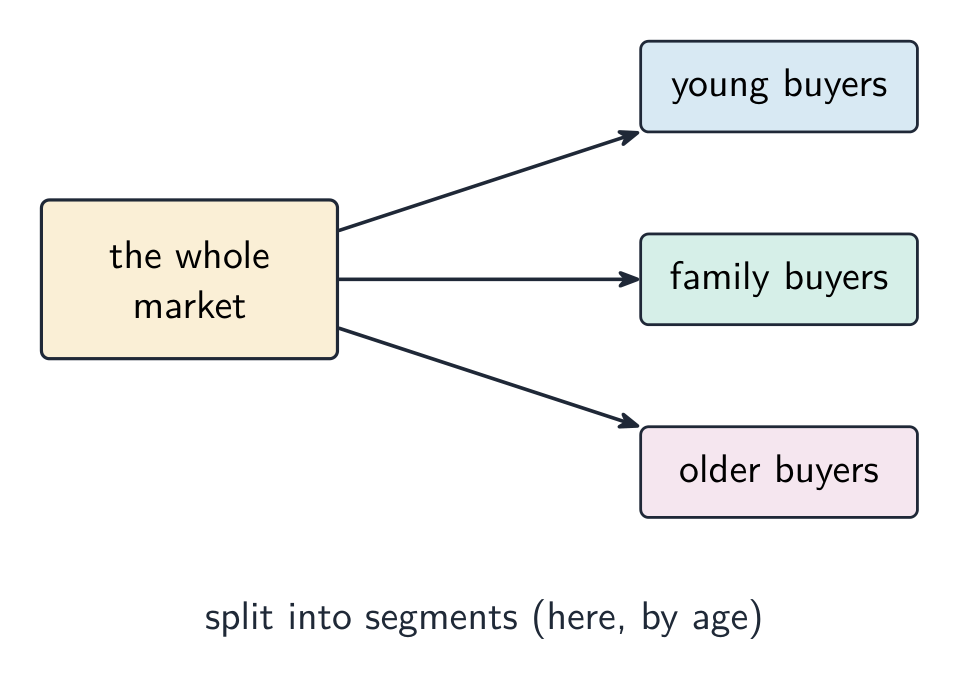
Market segmentation 市场细分 means splitting a market into groups of buyers who share something, such as age, income, gender or location. Its benefits:
the business can design a product to fit each group,
it can aim its advertising at the right people,
it can spot gaps in the market.
Segmentation splits the whole market into groups of similar buyers
Explore · Khám phá
Marketing mix lab · phòng thí nghiệm mix tiếp thị
See which part of the marketing mix changes in each real decision. · Xem phần nào của mix tiếp thị thay đổi trong mỗi quyết định thực tế.
distinguish primary (field) and secondary (desk) market research and their methods
explain sampling and the need for accurate, reliable data
present and interpret market research data (tables, charts, graphs) to support decisions
Tiếng Việt
phân biệt nghiên cứu thị trường sơ cấp (ngoài thực địa) và thứ cấp (trong văn phòng) cùng các phương pháp của chúng
giải thích lấy mẫu và nhu cầu thu thập dữ liệu chính xác, đáng tin cậy
trình bày và diễn giải dữ liệu nghiên cứu thị trường (bảng biểu, biểu đồ, đồ thị) để hỗ trợ quyết định
Source: Cambridge International syllabus · Nguồn: Chương trình Cambridge International
Market research 市场调研 is collecting information about customers, rivals and the market, to help make good decisions.
Primary research collects new data; secondary uses existing data
Primary and secondary research
Primary research 一手调研 (also called field research) collects new information directly, for the first time. Methods include questionnaires 问卷, interviews, surveys and tests. It is up to date and fits the exact need, but costs time and money.
Secondary research 二手调研 (also called desk research) uses information that already exists, such as government reports, websites and past sales records. It is cheap and quick, but may be old or may not fit the need.
Sampling and reliable data
A business cannot ask everyone, so it asks a small group, called a sample. Sampling 抽样 must be done with care. If the sample is too small or not typical, the data 数据 will not be reliable, and decisions based on it may be wrong.
Using research data
Research results are shown in tables, charts and graphs. You should be able to read them — for example, find the most popular product, or see how sales change over time — and use them to support a decision.
Explore · Khám phá
Market research cycle · Chu kỳ nghiên cứu thị trường
Follow how a business turns customer data into a marketing decision. · Theo dõi cách doanh nghiệp biến dữ liệu khách hàng thành quyết định tiếp thị.
explain the four elements of the marketing mix (product, price, place, promotion)
product: the product life cycle and extension strategies, branding and packaging
price: pricing methods (cost-plus, penetration, skimming, competitive, promotional, dynamic) and influences on price
place: channels of distribution (wholesaler, retailer, direct, e-commerce)
promotion: advertising, sales promotion and the role of technology (internet, social media) in the marketing mix
Tiếng Việt
giải thích bốn yếu tố của bộ công cụ marketing (sản phẩm, giá, nơi bán, xúc tiến)
sản phẩm: vòng đời sản phẩm và chiến lược kéo dài, thương hiệu và bao bì
giá: các phương pháp định giá (cộng thêm vào giá vốn, thâm nhập, bóc lột, cạnh tranh, khuyến mãi, biến động) và các yếu tố ảnh hưởng đến giá
nơi bán: kênh phân phối (nhà phân phối, nhà bán lẻ, trực tiếp, thương mại điện tử)
xúc tiến: quảng cáo, khuyến mãi bán hàng và vai trò của công nghệ (internet, mạng xã hội) trong bộ công cụ marketing
Source: Cambridge International syllabus · Nguồn: Chương trình Cambridge International
The product life cycleAdvertising on giant screens — promotion is one of the four Ps of the marketing mix.
The marketing mix 营销组合 is the four main choices a business makes about a product. They are often called the four Ps: product, price, place and promotion.
The marketing mix combines the four Ps
Product
The product 产品 must meet customers' needs. Two ideas matter here.
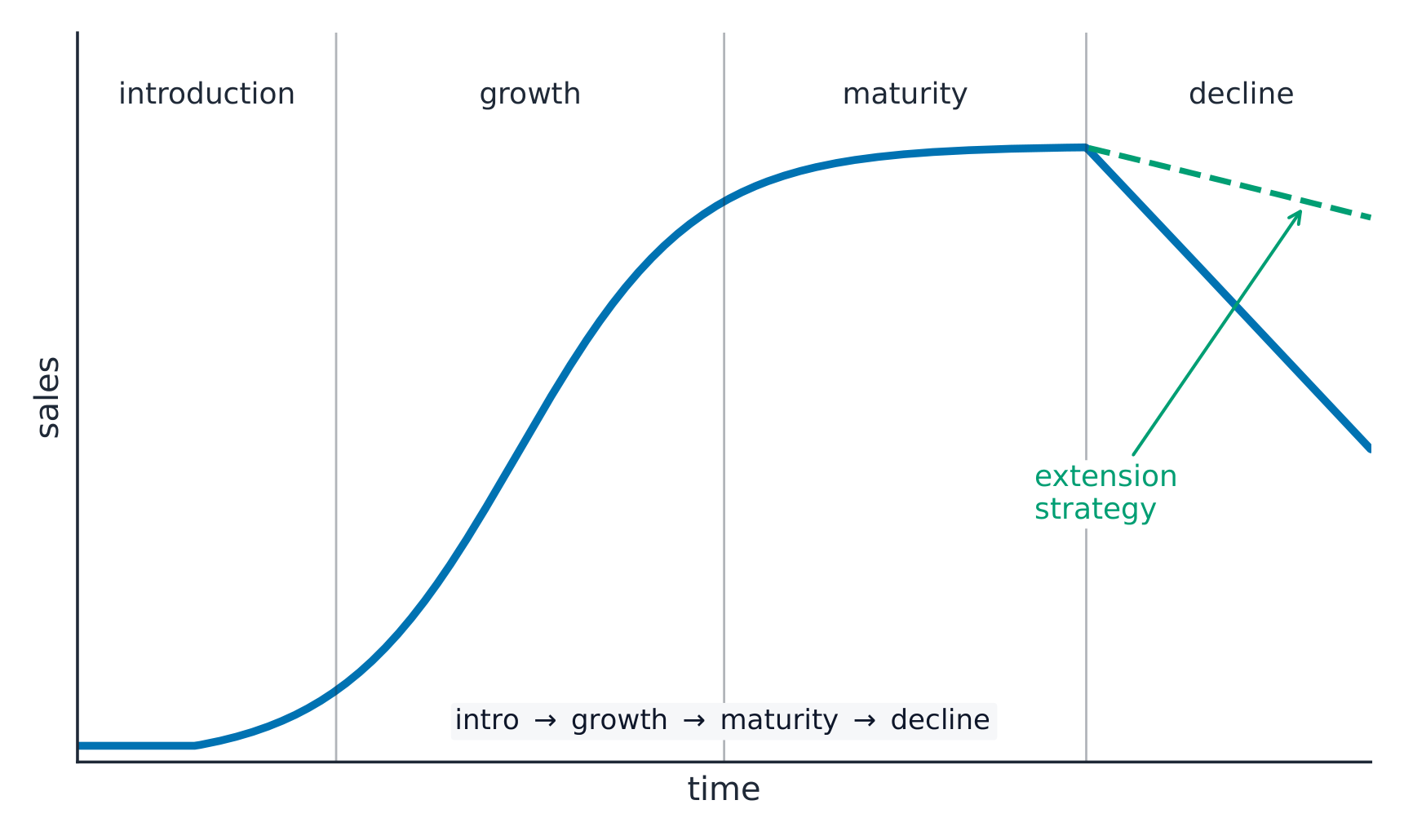
The product life cycle 产品生命周期 describes the sales of a product over time, in four stages: introduction, growth, maturity and decline. When sales begin to fall, a business can use an extension strategy 延长策略 — such as a new design, a new advert, or selling in a new market — to keep the product selling.
Sales of a product over its four life-cycle stages, with an extension strategy in maturity
A strong brand 品牌 (a name, logo and image that customers recognise) and good packaging 包装 (the wrapping that protects the product and attracts buyers) both help a product sell. Building a brand is called branding.
Price
The price 价格 is what the customer pays. A business can choose from several pricing methods.
Method
How it works
cost-plus pricing 成本加成定价
add a fixed share of profit on top of the cost of making the item
penetration pricing 渗透定价
set a low price to enter a market and win customers fast
price skimming 撇脂定价
set a high price at first for a new, special product
competitive pricing 竞争定价
set a price close to rivals' prices
promotional pricing 促销定价
cut the price for a short time to lift sales
dynamic pricing 动态定价
change the price automatically as demand changes, as airlines do
The right price also depends on the cost of making the product, on what customers will pay, on rivals' prices, and on the product's stage in its life cycle.
Worked example. One firm launches a smartphone using technology no rival has. Another enters a crowded soft-drinks market. Which pricing method suits each, and why? The smartphone is new and special with no direct competition, so use price skimming: charge a high price at first to recover the development cost from customers who must have it, then lower it as rivals catch up. The soft drink faces many established rivals, so use penetration pricing: a low price wins customers quickly and buys market share, and it can be raised later. Match the method to the market conditions - a pricing strategy is only right or wrong relative to the competition and the product's stage in its life cycle.
Place
Place 地点 is about how and where the product is sold, so it reaches the customer at the right time. The route a product takes from maker to customer is called a channel of distribution 分销渠道.
Many channels use a wholesaler 批发商 (buys large amounts from makers and sells smaller amounts to shops) and a retailer 零售商 (a shop that sells to the final customer). A business can also sell directly 直销 to customers, or online through e-commerce 电子商务.
A short channel gives more control; a longer channel reaches more buyers
Promotion
Promotion 推广 means telling customers about a product and persuading them to buy it. It includes:
advertising — paid messages on TV, online, on posters and so on,
sales promotion 促销 — short-term offers like discounts, free gifts, or "buy one get one free".
Technology now plays a big part. The internet 互联网 and social media 社交媒体 let a business reach many people cheaply, target the right customers, and sell all over the world.
Explore · Khám phá
The marketing mix (4 Ps) · Hỗn hợp tiếp thị (4 Ps)
The marketing mix is the four decisions a business blends to sell a product well. · Hỗn hợp tiếp thị là bốn quyết định mà doanh nghiệp kết hợp để bán sản phẩm tốt.
explain how a marketing mix can be used to achieve marketing objectives
explain legal controls related to marketing (consumer protection, misleading promotion)
explain the opportunities and problems of entering new markets in other countries
Tiếng Việt
giải thích cách sử dụng bộ công cụ marketing để đạt được mục tiêu marketing
giải thích các kiểm soát pháp lý liên quan đến marketing (bảo vệ người tiêu dùng, quảng cáo sai lệch)
giải thích những cơ hội và thách thức khi mở rộng sang các thị trường mới ở nước ngoài
Source: Cambridge International syllabus · Nguồn: Chương trình Cambridge International
A branded shop window: branding helps a product stand out from rivals.
A marketing strategy 营销策略 is a plan that uses the four Ps together to reach the business's objectives 目标. The four Ps must fit each other and fit the target customers. For example, a high-price luxury product needs high-quality packaging, expensive shops and image-based adverts.
Legal controls on marketing
Many countries have legal controls 法律管制 that protect buyers:
consumer protection 消费者保护 laws stop the sale of unsafe or faulty goods,
rules ban misleading 误导 promotion — adverts that lie about what a product can do.
Selling in other countries
A business can grow by entering an international market 国际市场 in another country.
Opportunities: many more customers, higher sales, and spreading risk across markets.
Problems: different languages and tastes, higher transport costs, foreign laws and tariffs 关税 (taxes on imports), and strong local competition 竞争.
Explore · Khám phá
Ansoff strategy lab · Phòng thí nghiệm chiến lược Ansoff
Sort growth choices by product and market risk. · Sắp xếp các lựa chọn tăng trưởng theo rủi ro sản phẩm và thị trường.
Learn the four Ps of the marketing mix — product, price, place, promotion — and remember they must fit each other and the target customer.
Primary research collects new data (surveys, questionnaires; up to date but costly); secondary research uses existing data (cheap and quick but may be out of date).
Know the product life cycle (introduction, growth, maturity, decline) and that an extension strategy revives falling sales.
Match the pricing methods: penetration (low, to enter a market), skimming (high, for a new product), plus cost-plus, competitive, promotional and dynamic pricing.
A niche market is small and specialised; a mass market is large, with many similar buyers.
describe the methods of production: job, batch and flow production, and their advantages/disadvantages
explain productivity and how it can be increased
explain lean production and just-in-time (JIT) inventory control and the management of inventory
explain how technology has changed production
Tiếng Việt
mô tả các phương pháp sản xuất: sản xuất theo đơn hàng, sản xuất theo lô và sản xuất dây chuyền, cùng ưu/nhược điểm của chúng
giải thích năng suất và cách tăng cường nó
giải thích sản xuất tinh gọn và kiểm soát tồn kho đúng thời điểm (JIT) cũng như quản lý tồn kho
giải thích công nghệ đã thay đổi quá trình sản xuất như thế nào
Source: Cambridge International syllabus · Nguồn: Chương trình Cambridge International
Stock control: the sawtooth chart
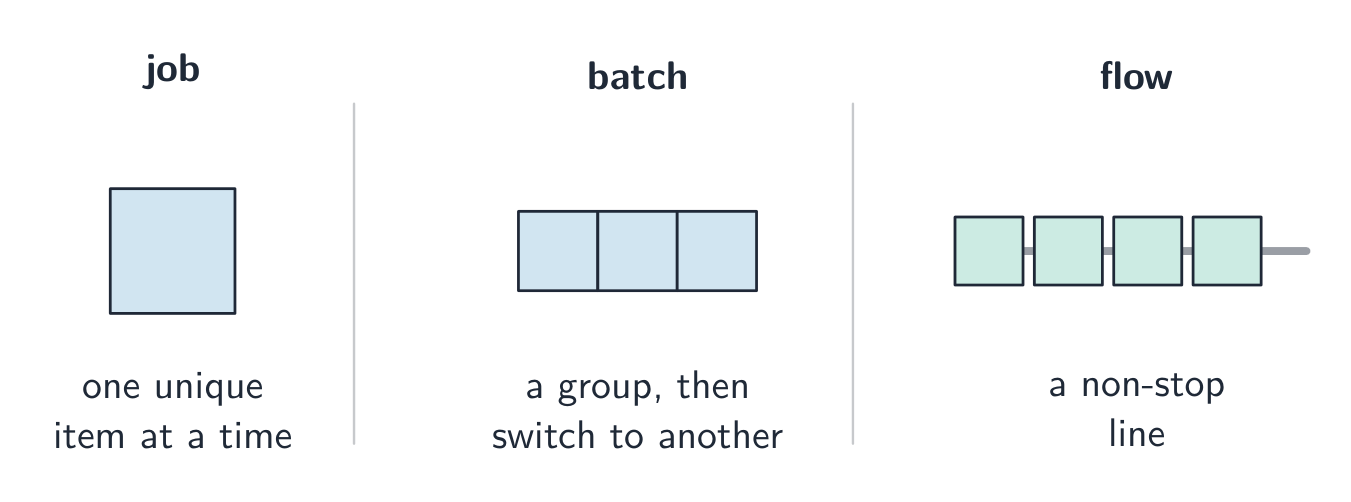
Production 生产 means turning materials and labour 劳动力 into finished goods and services 服务. There are three main methods.
A car assembly line: making many identical products on a moving line
Method
What it is
Good for
Drawback
job production 单件生产
making one item at a time, to order
special, one-off items: a wedding cake, a ship
slow and costly per item
batch production 批量生产
making a group of the same item, then switching to another group
bakeries, clothes in different sizes
machines stand idle while switching
flow production 流水线生产
making goods non-stop on a moving line
mass-made goods: cars, drinks
costly to set up; work can be boring
The three methods of production
Productivity
Productivity 生产率 measures how much each worker or machine produces in a set time. Higher productivity lowers the cost per item. A business can raise productivity by:
training workers,
using better machines and technology 技术,
improving motivation 激励,
organising the work better.
Productivity is output per worker in a set time; raising it lowers the cost per item
Lean production and just-in-time
Lean production 精益生产 means cutting all waste — wasted time, materials, space and effort — while keeping quality.
One key method is just-in-time 准时制 (JIT). With JIT, materials arrive just as they are needed, and finished goods are sold quickly, so the business holds very little inventory 库存 (its stock of materials and goods). This saves storage cost, but one late delivery can stop production. Good management of inventory keeps enough stock to meet demand, but not so much that money is tied up or goods go out of date.
Just-in-time holds little stock with frequent deliveries; just-in-case holds a buffer of stock
Technology in production
Technology has changed production. Automation 自动化 (machines and robots doing tasks), computer design and online ordering all make production faster, cheaper and more exact. But machines cost a lot to buy and can replace workers' jobs.
Automation: industrial robots weld and assemble car bodies — faster and more exact than by hand, but they cost a lot and replace some workers
Explore · Khám phá
Methods of production · Phương thức sản xuất
A business picks job, batch or flow production to suit its product and order size. · Doanh nghiệp chọn sản xuất theo đơn vị, theo lô hoặc dây chuyền tùy phù hợp với sản phẩm và quy mô đơn hàng.
Worked example. A factory has fixed costs of £8,000 and variable costs of £2 per unit, and makes 1,000 units. Find the total cost and the average cost per unit.
The break-even 盈亏平衡 point is the level of output where total revenue exactly equals total cost: the business makes no profit and no loss. Below it the business makes a loss; above it, a profit.
Each item sold gives an amount towards covering the fixed costs. This amount is the selling price minus the variable cost of one item (sometimes called the contribution 贡献 per unit).
$$\text{break-even output} = \frac{\text{fixed costs}}{\text{selling price per unit} - \text{variable cost per unit}}$$
A break-even chart 盈亏平衡图 plots total cost and total revenue against output. The two lines cross at the break-even point 盈亏平衡点.
The break-even point is where total revenue equals total cost — left of it is loss, right of it is profit
The margin of safety 安全边际 is how far the actual output is above the break-even output.
$$\text{margin of safety} = \text{actual output} - \text{break-even output}$$
Worked example. A product sells for £15 with a variable cost of £5 per unit, and the firm's fixed costs are £8,000. Find the break-even output, and the margin of safety if the firm actually makes 1,200 units.
The contribution per unit is $\text{\pounds} 15 - \text{\pounds} 5 = \text{\pounds} 10$, so
A large margin of safety is safer, because sales can fall a long way before the business makes a loss.
Limits of break-even analysis. It assumes that all output is sold, and that the selling price and the costs stay the same at every level of output. In real life these often change, so break-even is only a guide.
Explore · Khám phá
Break-even · Hòa vốn
Break-even is where total revenue crosses total cost. · Hòa vốn là nơi doanh thu total cắt ngang tổng chi phí.
explain the factors affecting the location decision of a manufacturing business and a service business
explain the factors a business considers when locating in another country and the role of legal controls
Tiếng Việt
giải thích các yếu tố ảnh hưởng đến quyết định vị trí của doanh nghiệp sản xuất và doanh nghiệp dịch vụ
giải thích các yếu tố mà doanh nghiệp xem xét khi đặt trụ sở ở nước ngoài, cùng vai trò của các kiểm soát pháp lý
Source: Cambridge International syllabus · Nguồn: Chương trình Cambridge International
Where a business locates — like this distribution centre — affects its costs and service.
Locating a business
Where a business sits affects its costs and its sales. A manufacturing 制造业 business (one that makes goods) looks at:
nearness to raw materials 原材料, because heavy or bulky materials cost a lot to move,
nearness to customers and the market 市场,
the cost and size of the land,
a supply of suitable labour,
good transport links,
government grants offered in some areas.
A service business (one that sells services, such as a shop or a hair salon) looks more at being close to customers, passing foot traffic, nearby shops, and the rent.
Locating in another country
A business may produce or sell abroad in order to reach new customers and bigger markets, pay lower wages or rent, get nearer to raw materials, or avoid tariffs 关税 (taxes on imports) by making goods inside the country. But it must then deal with different laws, languages and customs, and follow the legal controls 法律管制 of both countries.
Match the production methods: job (one-off items to order), batch (a group, then switch to another), flow (non-stop mass production on a line).
Learn the formulas: total cost = fixed + variable; average cost = total cost ÷ output; total revenue = price × quantity; profit = total revenue − total cost.
Break-even output = fixed costs ÷ (selling price − variable cost per unit). How far actual output is above break-even is the margin of safety.
Break-even analysis assumes everything made is sold at one fixed price and cost, so it is only a guide.
Quality control checks finished goods at the end; quality assurance builds quality in at every stage.
5
Financial information and decisions · Thông tin tài chính và quyết định
explain why businesses need finance (start-up capital, expansion, working capital, cash-flow problems)
distinguish short-term and long-term finance and internal and external sources of finance
describe sources of finance (retained profit, sale of assets, owners' savings, bank loan/overdraft, share issue, debentures, leasing, hire purchase, trade credit, microfinance, crowdfunding, government grants)
explain the factors that influence the choice of source of finance
Tiếng Việt
giải thích vì sao doanh nghiệp cần tài chính (vốn khởi nghiệp, mở rộng, vốn lưu động, vấn đề dòng tiền)
phân biệt tài chính ngắn hạn và dài hạn, cũng như nguồn tài chính nội bộ và ngoại bộ
mô tả các nguồn tài chính (lợi nhuận giữ lại, bán tài sản, tiết kiệm của chủ sở hữu, vay ngân hàng/vay quá hạn, phát hành cổ phiếu, trái phiếu, thuê tài chính, mua trả góp, tín dụng thương mại, vi mô tài chính, gây quỹ cộng đồng, trợ cấp chính phủ)
giải thích các yếu tố ảnh hưởng đến lựa chọn nguồn tài chính
Source: Cambridge International syllabus · Nguồn: Chương trình Cambridge International
English
Finance 资金 means the money a business needs. A business needs finance to:
start up — start-up capital 启动资金 to buy equipment and stock before it earns anything,
grow — money for expansion 扩张, such as new shops or machines,
run day to day — working capital 营运资金 to pay wages and suppliers while waiting for customers to pay,
survive a cash-flow 现金流 problem, when more money is going out than is coming in.
Sources of finance
Finance can be short-term 短期 (paid back within a year) or long-term 长期 (over several years). It can come from inside the business (internal) or from outside (external).
Source
Internal / external
Notes
retained profit 留存利润
internal
profit kept in the business, not paid out
sale of assets 资产
internal
selling things the business no longer needs
owners' savings
internal
the owners' own money
bank loan 贷款
external
borrowed money, repaid with interest 利息 over time
bank overdraft 透支
external
the bank lets the account go below zero, for short-term needs
issuing new shares 股份
external
only for limited companies; raises money but shares out control
debentures 债券
external
long-term loans to a company that pay interest
leasing 租赁
external
renting equipment instead of buying it
hire purchase 分期付款
external
buy now and pay in monthly parts
trade credit 贸易信贷
external
pay suppliers later, for example after 30 days
microfinance 小额信贷
external
small loans for tiny businesses in poorer areas
crowdfunding 众筹
external
many people each give a small amount, often online
government grants 补助金
external
money from the government that need not be repaid
Choosing a source
The best source depends on how much money is needed and for how long, the cost (interest and fees), the size and legal type of the business (only companies can sell shares), and how much risk and control the owners will accept.
Tiếng Việt
Ngân hàng là nguồn tài chính bên ngoài quan trọng của doanh nghiệp, thông qua vay và cho phép rút quá hạn.Vốn tài chính cần thiết cho việc khởi nghiệp, vận hành hàng ngày và phát triển
Tài chính nghĩa là số tiền mà doanh nghiệp cần thiết. Doanh nghiệp cần tài chính để:
khởi sự — vốn khởi sự để mua trang thiết bị và hàng tồn kho trước khi kiếm được tiền,
phát triển — tiền cho mở rộng, chẳng hạn như cửa hàng mới hoặc máy móc,
vận hành hàng ngày — vốn lưu động để trả lương và thanh toán cho nhà cung cấp trong lúc chờ khách hàng trả tiền,
sống sót qua vấn đề luồng tiền mặt, khi tiền ra nhiều hơn tiền vào.
Nguồn tài chính
Tài chính có thể là ngắn hạn (trả lại trong vòng một năm) hoặc dài hạn (trong vài năm). Nó có thể đến từ bên trong doanh nghiệp (nội bộ) hoặc từ bên ngoài (bên ngoài).
Nguồn
Nội bộ / Bên ngoài
Ghi chú
lợi nhuận giữ lại
nội bộ
lợi nhuận giữ lại trong doanh nghiệp, không phân phối
bán tài sản
nội bộ
bán những thứ doanh nghiệp không còn cần nữa
tiết kiệm của chủ sở hữu
nội bộ
tiền riêng của chủ sở hữu
vay ngân hàng
bên ngoài
tiền vay, được trả lại kèm lãi suất theo thời gian
cho phép rút quá hạn
bên ngoài
ngân hàng cho phép tài khoản âm, phục vụ nhu cầu ngắn hạn
phát hành cổ phiếu mới
bên ngoài
chỉ áp dụng cho công ty cổ phần; huy động tiền nhưng chia sẻ quyền kiểm soát
chứng khoán trái phiếu
bên ngoài
khoản vay dài hạn dành cho công ty với lãi suất định kỳ
thuê
bên ngoài
thuê thiết bị thay vì mua
mua trả góp
bên ngoài
mua ngay và trả theo từng tháng
tín dụng thương mại
bên ngoài
trả chậm cho nhà cung cấp, ví dụ sau 30 ngày
tài chính vi mô
bên ngoài
khoản vay nhỏ cho các doanh nghiệp siêu nhỏ ở khu vực nghèo
gọi vốn cộng đồng
bên ngoài
nhiều người đóng góp một số tiền nhỏ, thường qua mạng internet
trợ cấp chính phủ
bên ngoài
tiền từ chính phủ không cần hoàn trả
Nguồn vốn đến từ bên trong doanh nghiệp (nội bộ) hoặc bên ngoài (ngoại bộ)
Lựa chọn nguồn
Nguồn tốt nhất phụ thuộc vào số tiền cần thiết và thời gian sử dụng, chi phí (lãi suất và phí), quy mô và loại hình pháp lý của doanh nghiệp (chỉ công ty mới có thể bán cổ phiếu), cũng như mức độ rủi ro và quyền kiểm soát mà chủ sở hữu sẵn sàng chấp nhận.
Explore · Khám phá
Sources of finance lab · Phòng thí nghiệm về nguồn tài chính
Choose the best type of finance by time, risk and ownership. · Chọn loại hình tài chính phù hợp nhất dựa trên thời gian, rủi ro và quyền sở hữu.
Cash flow and working capital · Luồng tiền mặt và vốn lưu động
Syllabus · Chương trình
English
explain the importance of cash and the difference between cash and profit
construct, complete and interpret a cash-flow forecast (inflows, outflows, net cash flow, opening/closing balance)
explain working capital and how a business can overcome cash-flow problems
Tiếng Việt
giải thích tầm quan trọng của tiền mặt và sự khác biệt giữa tiền mặt và lợi nhuận
xây dựng, hoàn thiện và phân tích dự báo dòng tiền (dòng tiền vào, dòng tiền ra, dòng tiền ròng, dư nợ đầu/cuối kỳ)
giải thích vốn lưu động và cách doanh nghiệp khắc phục các vấn đề về dòng tiền
Source: Cambridge International syllabus · Nguồn: Chương trình Cambridge International
English
Cash-flow forecast
Cash is not the same as profit
Cash 现金 is the money a business can use right now. Profit 利润 is revenue 收入 minus costs over a period. A business can be making a profit yet still run out of cash — for example, if customers have not paid yet. Running out of cash can force even a profitable business to close.
The cash-flow forecast
A cash-flow forecast 现金流预测 predicts the money coming in and going out each month. It uses:
inflows 流入 — money coming in (sales, loans),
outflows 流出 — money going out (wages, rent, materials),
net cash flow 净现金流 — inflows minus outflows,
opening balance 期初余额 — the cash held at the start of the month,
closing balance 期末余额 — the cash held at the end of the month.
Worked example. A shop expects inflows of £12,000 and outflows of £9,000 next month, and starts the month with £2,000 in the bank. Find the net cash flow and the closing balance.
Working capital is the money available for day-to-day running. It is the current assets 流动资产 (cash and things soon turned into cash) minus the current liabilities 流动负债 (debts due within a year).
To overcome cash-flow problems, a business can arrange an overdraft, delay paying suppliers, ask customers to pay sooner, sell spare assets, or cut spending.
Tiếng Việt
Dự báo dòng tiền
Tiền mặt không giống với lợi nhuận
Tiền mặt là số tiền doanh nghiệp có thể sử dụng ngay lập tức. Lợi nhuận là doanh thu trừ đi chi phí trong một khoảng thời gian. Một doanh nghiệp có thể đang tạo ra lợi nhuận nhưng vẫn hết tiền mặt — ví dụ, nếu khách hàng chưa thanh toán. Hết tiền mặt có thể buộc cả một doanh nghiệp có lợi nhuận phải đóng cửa.
Bán tín dụng tạo ra lợi nhuận trên giấy ngay bây giờ - tiền mặt đến muộn hơn nhiều
Dự báo luồng tiền mặt
Một dự báo luồng tiền mặt dự đoán số tiền vào và ra mỗi tháng. Nó sử dụng:
tiền vào — tiền flowing in (doanh thu bán hàng, vay),
tiền ra — tiền flowing out (lương, tiền thuê, nguyên vật liệu),
Ví dụ đã giải. Một cửa hàng dự kiến có tiền vào £12,000 và tiền ra £9,000 trong tháng tới, và bắt đầu tháng với £2,000 trong ngân hàng. Tìm luồng tiền mặt ròng và số dư kết thúc.
Một dự báo dòng tiền theo dõi số dư đóng cửa mỗi tháng, cảnh báo sớm về tình trạng thiếu hụt
Vốn lưu động
Vốn lưu động là số tiền có sẵn cho hoạt động hàng ngày. Nó là tài sản lưu chuyển (tiền mặt và những thứ sớm chuyển đổi thành tiền) trừ đi nợ lưu chuyển (nợ phải trả trong vòng một năm).
Để khắc phục vấn đề luồng tiền mặt, doanh nghiệp có thể sắp xếp cho phép rút quá hạn, trì hoãn thanh toán cho nhà cung cấp, yêu cầu khách hàng trả tiền sớm hơn, bán tài sản dự phòng, hoặc cắt giảm chi tiêu.
Vốn lưu động: tài sản lưu chuyển trừ nợ lưu chuyển
Explore · Khám phá
Cash-flow forecasting · Dự báo dòng tiền
A forecast of cash in and out each month warns a business of a cash shortage before it strikes. · Dự báo dòng tiền vào và ra mỗi tháng cảnh báo doanh nghiệp về tình trạng thiếu tiền mặt trước khi nó xảy ra.
Drag the monthly cash in, cash out and the one-off oven purchase — does the bakery stay out of the red all six months? · Kéo dòng tiền vào/tháng, dòng tiền ra/tháng và mua lò nướng một lần — liệu tiệm bánh có giữ được thế âm không trong cả sáu tháng?
identify the main features of an income statement: revenue, cost of sales, gross profit, expenses and profit for the year
explain how income statements are used by stakeholders
Tiếng Việt
xác định các đặc điểm chính của báo cáo kết quả hoạt động kinh doanh: doanh thu, giá vốn hàng bán, lợi nhuận gộp, chi phí vận hành và lợi nhuận sau thuế của năm
giải thích cách các bên liên quan sử dụng báo cáo kết quả hoạt động kinh doanh
Source: Cambridge International syllabus · Nguồn: Chương trình Cambridge International
English
An income statement 损益表 shows how much profit a business made over a period, usually a year.
Line
Meaning
revenue
money from sales
cost of sales 销售成本
the cost of making or buying the goods that were sold
gross profit 毛利润
revenue minus cost of sales
expenses 费用
other running costs: rent, wages, advertising
profit for the year 年度利润
gross profit minus expenses
$$\text{gross profit} = \text{revenue} - \text{cost of sales}$$
$$\text{profit for the year} = \text{gross profit} - \text{expenses}$$
Worked example. A business has revenue of £200,000, cost of sales of £120,000 and expenses of £50,000. Find its gross profit and its profit for the year.
$$\text{profit for the year} = \text{\pounds} 80\,000 - \text{\pounds} 50\,000 = \text{\pounds} 30\,000$$
Income statements are used by stakeholders 利益相关者: owners check the profit, lenders check whether their loans are safe, and managers look for problems.
Tiếng Việt
Một báo cáo kết quả kinh doanh cho biết doanh nghiệp đã tạo ra bao nhiêu lợi nhuận trong một khoảng thời gian, thường là một năm.
Dòng
Ý nghĩa
doanh thu
tiền từ bán hàng
chi phí bán hàng
chi phí sản xuất hoặc mua hàng hóa đã bán
lợi nhuận gộp
doanh thu trừ chi phí bán hàng
chi phí vận hành
các chi phí vận hành khác: tiền thuê, lương, quảng cáo
Lợi nhuận sau thuế năm
Lợi nhuận gộp trừ đi chi phí vận hành
$$\text{gross profit} = \text{revenue} - \text{cost of sales}$$
$$\text{profit for the year} = \text{gross profit} - \text{expenses}$$
Ví dụ minh họa. Một doanh nghiệp có doanh thu là £200,000, giá vốn hàng bán là £120,000 và chi phí vận hành là £50,000. Tính lợi nhuận gộp và lợi nhuận sau thuế năm của doanh nghiệp.
$$\text{profit for the year} = \text{\pounds} 80\,000 - \text{\pounds} 50\,000 = \text{\pounds} 30\,000$$
Báo cáo kết quả kinh doanh trình bày sự biến chuyển từ doanh thu xuống lợi nhuận sau thuế
Báo cáo kết quả kinh doanh được sử dụng bởi các bên liên quan: chủ sở hữu kiểm tra lợi nhuận, nhà cho vay xem xét khả năng an toàn của khoản vay, và quản lý tìm kiếm các vấn đề.
Statement of financial position · Báo cáo tình hình tài chính
Syllabus · Chương trình
English
identify the main classifications in a statement of financial position: non-current and current assets, current and non-current liabilities, and owners' equity/capital
explain how the statement of financial position is used
Tiếng Việt
xác định các phân loại chính trong báo cáo tình hình tài chính: tài sản không lưu động và tài sản lưu động, nợ phải trả lưu động và không lưu động, cùng vốn chủ sở hữu/vốn
giải thích cách sử dụng báo cáo tình hình tài chính
Source: Cambridge International syllabus · Nguồn: Chương trình Cambridge International
English
A statement of financial position 财务状况表 (also called a balance sheet) shows what a business owns and what it owes (its liabilities 负债) on one day.
non-current assets 非流动资产 — things kept for the long term: buildings, machines.
current assets — short-term items: inventory 库存, money owed by customers, and cash.
current liabilities — debts due within a year: an overdraft, money owed to suppliers.
non-current liabilities 非流动负债 — debts due after more than a year: a long-term loan.
owners' equity 所有者权益 — the money the owners put in, plus profit kept in the business.
It is used to check what the business is worth, how much it owes, and whether it can pay its debts.
Tiếng Việt
Sàn chứng khoán: các công ty cổ phần đại chúng huy động vốn bằng cách bán cổ phiếu cho nhà đầu tư.
Một báo cáo tình hình tài chính (còn gọi là bảng cân đối kế toán) cho thấy một doanh nghiệp sở hữu những gì và nợ những gì (nợ phải trả) vào một ngày cụ thể.
Tài sản dài hạn — những thứ giữ lại trong thời gian dài: nhà cửa, máy móc.
Tài sản ngắn hạn — các mục tiêu ngắn hạn: hàng tồn kho, tiền khách hàng nợ, và tiền mặt.
Nợ ngắn hạn — các khoản nợ đến hạn trong vòng một năm: khoản quá hạn, tiền nợ nhà cung cấp.
Nợ dài hạn — các khoản nợ đến hạn sau hơn một năm: một khoản vay dài hạn.
Vốn chủ sở hữu — số tiền mà chủ sở hữu bỏ vào, cộng với lợi nhuận giữ lại trong doanh nghiệp.
Báo cáo này được dùng để kiểm tra doanh nghiệp có giá trị bao nhiêu, nợ bao nhiêu, và liệu có đủ khả năng thanh toán nợ hay không.
Hai vế luôn cân bằng: tài sản = nợ + vốn chủ sở hữu
gross profit margin 毛利率 — gross profit as a percentage of revenue.
profit margin 利润率 — profit for the year as a percentage of revenue.
return on capital employed 资本回报率 (ROCE) — profit as a percentage of the capital employed 所用资本 (money invested). It shows how well the investment is used.
A higher percentage is better for all three.
Worked example. The same business (revenue £200,000, gross profit £80,000, profit for the year £30,000) has capital employed of £150,000. Find its three profitability ratios.
$$\text{acid test ratio} = \frac{\text{current assets} - \text{inventory}}{\text{current liabilities}}$$
the current ratio 流动比率 compares current assets with current liabilities. Around 1.5 to 2 is healthy.
the acid test ratio 速动比率 is stricter: it leaves out inventory, because inventory is not yet sold.
Worked example. A business has current assets of £40,000 (including £10,000 of inventory) and current liabilities of £20,000. Find its current ratio and acid test ratio.
Biên lợi nhuận gộp — lợi nhuận gộp dưới dạng phần trăm của doanh thu.
Biên lợi nhuận — lợi nhuận sau thuế dưới dạng phần trăm của doanh thu.
Tỷ suất hoàn vốn trên vốn đã sử dụng (ROCE) — lợi nhuận dưới dạng phần trăm của vốn đã sử dụng (số tiền đầu tư). Nó cho thấy việc đầu tư được sử dụng hiệu quả như thế nào.
Phần trăm cao hơn là tốt hơn cho cả ba loại tỷ lệ.
Ví dụ minh họa. Doanh nghiệp tương tự (doanh thu £200,000, lợi nhuận gộp £80,000, lợi nhuận sau thuế năm £30,000) có vốn đầu tư được sử dụng là £150,000. Tính ba tỷ lệ sinh lời của doanh nghiệp.
$$\text{acid test ratio} = \frac{\text{current assets} - \text{inventory}}{\text{current liabilities}}$$
Tỷ lệ thanh khoản hiện hành so sánh tài sản ngắn hạn với nợ ngắn hạn. Mức khoảng 1,5 đến 2 là lành mạnh.
Tỷ lệ thử nhanh nghiêm ngặt hơn: nó loại trừ hàng tồn kho, vì hàng tồn kho chưa được bán.
Ví dụ minh họa. Một doanh nghiệp có tài sản ngắn hạn là £40,000 (bao gồm £10,000 hàng tồn kho) và nợ phải trả ngắn hạn là £20,000. Tính tỷ số thanh toán ngắn hạn và tỷ số thanh toán nhanh.
Cash is not profit: a profitable business can still run out of cash if customers pay late. Watch the closing balance on a cash-flow forecast.
Separate internal sources (retained profit, sale of assets, owners' savings) from external ones (bank loan, overdraft, shares, leasing, trade credit).
Key formulas: net cash flow = inflows − outflows; closing balance = opening balance + net cash flow; working capital = current assets − current liabilities.
Profitability ratios (gross margin, profit margin, ROCE) — higher is better. Liquidity: the current ratio (healthy ≈ 1.5–2) and the stricter acid test (which leaves out inventory).
Only limited companies can raise money by issuing shares; a sole trader or partnership cannot.
Tiếng Việt
Tiền mặt không phải là lợi nhuận: một doanh nghiệp có lợi nhuận vẫn có thể hết tiền nếu khách hàng trả chậm. Hãy theo dõi số dư cuối cùng trong dự báo dòng tiền.
Phân biệt các nguồn nội bộ (lợi nhuận giữ lại, bán tài sản, tiết kiệm của chủ sở hữu) khỏi các nguồn bên ngoài (vay ngân hàng, khoản quá hạn, cổ phiếu, thuê mua, tín dụng thương mại).
Các công thức then chốt: dòng tiền ròng = dòng tiền vào − dòng tiền ra; số dư cuối kỳ = số dư đầu kỳ + dòng tiền ròng; vốn lưu động = tài sản ngắn hạn − nợ ngắn hạn.
Tỷ lệ sinh lời (biên lợi nhuận gộp, biên lợi nhuận, ROCE) — càng cao càng tốt. Thanh khoản: tỷ lệ thanh khoản hiện hành (lành mạnh ≈ 1,5–2) và tỷ lệ thử nhanh nghiêm ngặt hơn (loại trừ hàng tồn kho).
Chỉ các công ty giới hạn mới có thể huy động vốn bằng cách phát hành cổ phiếu; cá nhân kinh doanh độc thân hoặc hợp danh thì không.
6
External influences on business activity · Ảnh hưởng bên ngoài đến hoạt động kinh doanh
Every business is affected by external influences 外部影响 — things outside the business that it cannot control, such as the economy, the law and the environment. A good business watches these and plans for them.
Government and laws shape every firm: tax, interest rates and regulation are external influences
explain the business cycle (growth, boom, recession, slump/recovery) and its effects on business
explain government economic objectives and how taxation, interest rates, inflation, unemployment and exchange rates affect business
Tiếng Việt
giải thích chu kỳ kinh doanh (tăng trưởng, thời kỳ thịnh vượng, suy thoái, suy giảm/phục hồi) và tác động của nó đến doanh nghiệp
giải thích mục tiêu kinh tế của chính phủ và cách thuế suất, lãi suất, lạm phát, thất nghiệp và tỷ giá hối đoái ảnh hưởng đến doanh nghiệp
Source: Cambridge International syllabus · Nguồn: Chương trình Cambridge International
Interest rates, taxes, unemployment and inflation all affect business
The business cycle
The economy does not grow at a steady pace. It moves in a repeating pattern called the business cycle 经济周期, with these stages.
Stage
What happens
Effect on business
growth 增长
the economy is rising; people spend more
sales and profit rise; firms expand and hire
boom 繁荣
spending is very high
prices and wages rise; shortages appear
recession 衰退
spending falls; the economy shrinks
sales and profit fall; firms cut jobs
slump 萧条
a deep, long recession
many firms close; high unemployment 失业
recovery 复苏
spending starts to rise again
sales slowly improve
The business cycle moves through growth, boom, recession, slump and recovery
In hard times a business may cut costs, lower prices, or sell cheaper products.
Government economic aims and how they affect business
Governments try to keep the economy healthy. Their main aims are stable prices, plenty of jobs, steady growth, and a stable currency. To manage the economy, a government uses or watches several economic factors. Each one affects every business.
Economic factor
What it is
Effect on business
taxation 税收
money the government takes from incomes and sales
higher tax leaves people with less to spend, and cuts business profit
interest rates 利率
the cost of borrowing money
higher rates make loans dearer, so firms borrow and invest less, and customers spend less
inflation 通货膨胀
a general rise in prices
costs rise; if wages chase prices, the country's goods can become too dear
unemployment
the number of people without work
high unemployment lowers sales, but workers are easier to hire
exchange rates 汇率
the price of one currency in another
a change makes imports and exports cheaper or dearer (see below)
explain external costs and external benefits of business activity and the meaning of sustainable development
explain how business activity can damage or protect the environment and the role of pressure groups
explain ethical business behaviour and the possible conflict between ethics and profit
Tiếng Việt
giải thích chi phí ngoại vi và lợi ích ngoại vi từ hoạt động kinh doanh cùng ý nghĩa của sự phát triển bền vững
giải thích hoạt động kinh doanh có thể gây hư hại hoặc bảo vệ môi trường như thế nào và vai trò của các nhóm vận động
giải thích hành vi kinh doanh có đạo đức và những xung đột tiềm ẩn giữa đạo đức và lợi nhuận
Source: Cambridge International syllabus · Nguồn: Chương trình Cambridge International
Business activity can harm the environment, raising ethical questions for firms and governments.
External costs and external benefits
When a business acts, other people can gain or lose.
external costs 外部成本 are costs paid by other people or by society, not by the business — for example pollution 污染, noise and heavy traffic.
external benefits 外部收益 are gains for others — for example new jobs and better roads.
A business activity can create external costs and external benefits felt by other people
Sustainable development
Sustainable development 可持续发展 means meeting today's needs without harming the ability of future people to meet their own needs. A business can harm the environment 环境 — through waste, pollution, and using up resources — or protect it, through recycling, clean energy and less packaging.
Pressure groups
A pressure group 压力团体 is a group that tries to influence businesses and governments, for example to cut pollution. Pressure groups use the media, protests and boycotts. A business may change its behaviour to avoid bad publicity.
Ethics and profit
Ethical behaviour 道德行为 means doing what is morally right, even when no law forces it — for example fair pay, safe products, and no child labour. Acting ethically can cost more in the short term, so it may conflict 冲突 with profit. But it can also win loyal customers and a good name, which raise profit in the long term.
explain globalisation, its importance to business and the reasons for it
explain the role of multinational companies and their benefits and drawbacks to a country
explain how changes in exchange rates affect businesses that import and export
Tiếng Việt
giải thích toàn cầu hóa, tầm quan trọng của nó đối với doanh nghiệp và nguyên nhân dẫn đến hiện tượng này
giải thích vai trò của các công ty đa quốc gia cũng như những lợi ích và hạn chế của chúng đối với một quốc gia
giải thích thay đổi tỷ giá hối đoái ảnh hưởng đến các doanh nghiệp nhập khẩu và xuất khẩu như thế nào
Source: Cambridge International syllabus · Nguồn: Chương trình Cambridge International
Shipping containers: businesses trade with the wider international economy.
Globalisation
Globalisation 全球化 is the growing trade and movement of goods, money and people between countries, so the world acts more and more like one single market. It has grown because of cheaper transport, better communication, the internet, and fewer trade barriers such as tariffs 关税 (taxes on imports).
Multinational companies
A multinational company 跨国公司 has operations — factories, branches, or offices — in more than one country. (Simply exporting to other countries is not enough; the firm must actually operate there.)
Benefits to a country
Drawbacks to a country
new jobs and training
profits may be sent out of the country
investment and new technology
local firms may be forced out of business
more choice and lower prices
resources may be used up, or the area polluted
more tax paid to the government
a large firm can have too much power
Exchange rates and trade
An exchange rate is the price of one currency in another. A change affects businesses that import 进口 (buy from abroad) and those that export 出口 (sell abroad).
If the currency gets stronger (rises), exports become dearer for foreign buyers, so they sell less, while imports become cheaper.
If the currency gets weaker (falls), exports become cheaper and sell more, while imports become dearer.
A useful memory aid is SPICED: Strong Pound → Imports Cheaper, Exports Dearer.
How a stronger or weaker currency changes the price of imports and exports
Worked example. A UK firm exports a machine priced at £20,000. The exchange rate moves from £1 = 1.50 USD to £1 = 1.20 USD. What happens to the price a US buyer pays, and is that good for the exporter? Convert the UK price at each rate: at the old rate 20,000 × 1.50 = 30,000 USD; at the new rate 20,000 × 1.20 = 24,000 USD. The pound has weakened, so the machine is 6,000 USD cheaper abroad and the firm should sell more - good for an exporter. Check it against SPICED: a weak pound is the reverse of it, so exports are cheaper. Convert the actual figures rather than only reciting the mnemonic, and notice that the UK price never changed at £20,000 - it is the foreign price that moves.
Explore · Khám phá
International market lab · Phòng thí nghiệm thị trường quốc tế
See how access to world markets changes quantity and price pressure. · Xem cách tiếp cận thị trường thế giới thay đổi áp lực về lượng và giá.
Learn the business cycle (growth, boom, recession, slump, recovery) and how each stage changes sales, profit and jobs.
Trace each economic factor to the business: higher interest rates → dearer loans, so less borrowing and spending; higher tax → people have less to spend; inflation → higher costs.
External costs (pollution, noise) fall on other people, not the business; external benefits (new jobs, better roads) help others.
Use SPICED for exchange rates: Strong Pound → Imports Cheaper, Exports Dearer.
Ethical behaviour can cost more in the short term (so it may conflict with profit), but it can win loyal customers and a good name that raise profit later.
Pick one and the site follows you — notes, papers, videos and practice all open on it. · Chọn một môn và trang sẽ điều hướng theo — ghi chú, tài liệu, video và bài tập đều mở ở đó.
Type to search notes, lessons, code, vocabulary and past-paper questions across every subject. · Nhập để tìm ghi chú, bài học, mã, từ vựng và câu hỏi đề thi cũ trên mọi môn học.