Understanding Social Engineering · ความเข้าใจเรื่องวิศวกรรมสังคม
Syllabus · หลักสูตร
English
Learning Objective 1.1.A: Identify common indicators of social engineering tactics.
1.1.A.1 Social engineering attacks employ psychological tactics to manipulate users into revealing sensitive information (elicitation), downloading a malicious file, or clicking on a malicious link. Social engineering can be performed in person but is often done by email, by text message, or through social media messages.
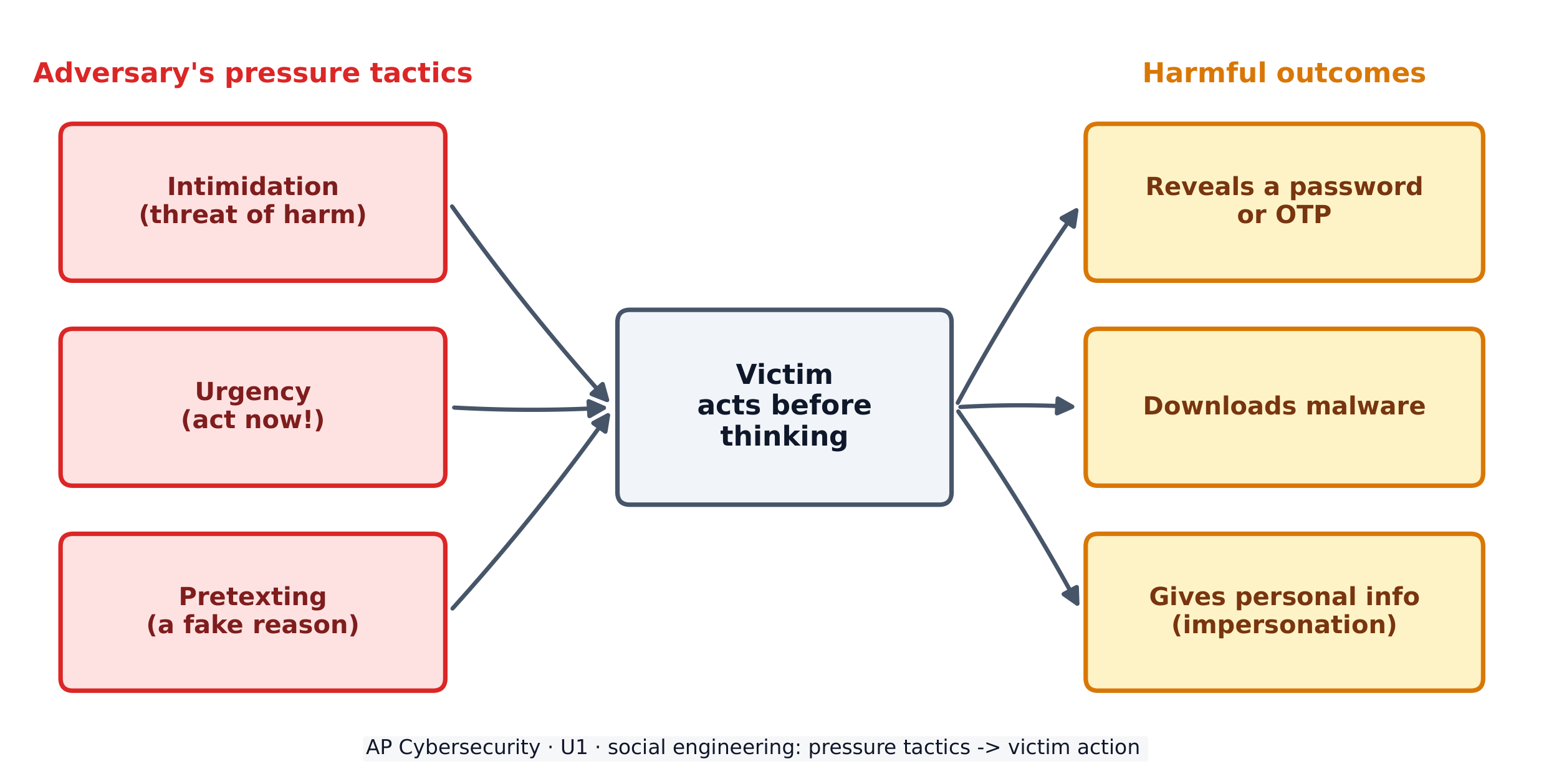
1.1.A.2 Adversaries often use psychological tactics like intimidation and urgency to achieve their goals. Intimidation is when an adversary threatens a target with negative consequences if they don’t comply. Urgency is when an adversary creates reasons why a target should act quickly.
Learning Objective 1.1.B: Explain how social engineering tactics influence victims to perform a desired action.
1.1.B.1 Social engineering tactics rely on common psychological principles that influence human behavior.
1.1.B.2 Intimidation leverages a natural human aversion to negative consequences. By drawing attention to possible negative consequences, adversaries use fear to incite targets to act.
1.1.B.3 Urgency leverages a natural human response to react quickly to time-sensitive needs. When targets detect a sense of urgency in a message, they feel pressured to respond or act quickly, which can prevent them from taking the time to consider whether an action is reasonable or safe.
Learning Objective 1.1.C: Describe possible impacts for victims of social engineering attacks.
1.1.C.1 Victims may give an adversary personal information that could lead to impersonation, such as name, phone number, address, workplace, pets’ names, or birthdate. These types of information, and information like them, are often used on websites as challenge questions to verify a user’s identity.
1.1.C.2 Victims may give an adversary secure information like a one-time password (OTP) or authentication login code, which could allow an adversary to log in to a service as the victim.
1.1.C.3 Victims may download malware or click a link that installs malware on their device, steals information from their web browser, or directs them to a website where their login credentials can be captured by an adversary.
1.1.C.3 เหยื่ออาจดาวน์โหลดมัลแวร์หรือคลิกที่ลิงก์ที่ติดตั้งมัลแวร์บนอุปกรณ์ שלה ดึงข้อมูลออกจากเว็บเบราว์เซอร์ของเธอ หรือนำเธอไปยังเว็บไซต์ที่ข้อมูลเข้าสู่ระบบของเธอถูกจับโดยผู้โจมตีได้
Source: College Board AP Course and Exam Description · แหล่งที่มา: คำอธิบายหลักสูตรและข้อสอบ College Board AP
English
Phishing: how a fake email steals a password
The weakest part of any computer system is often the human using it. Social engineering 社会工程学 is the art of tricking people into breaking security - giving away a password, opening a bad file, or clicking a bad link. The attacker (we call them an adversary 对手) does not need to break the code; they only need to fool a person.
Most social engineering happens by email, text message, or social media, though it can also happen in person or by phone. The goal is elicitation 套取信息 - getting sensitive information out of someone without them realising.
Adversaries lean on two powerful feelings:
Intimidation 恐吓 - the adversary threatens a bad result if you do not obey. Fear pushes you to act.
Urgency 紧迫感 - the adversary invents a deadline ("reply in the next hour or your account closes"). When we feel rushed, we stop thinking carefully about whether an action is safe.
The impact 影响 on a victim can be serious. They might reveal personal details (name, address, pet's name, birthday) that are later used to answer security challenge questions 安全问题 and impersonate 冒充 them. They might hand over a one-time password (OTP) 一次性密码, letting the adversary log in as them. Or they might download malware 恶意软件 that steals data from their browser.
Worked example. A phishing email reads: "Over 90% of staff have already verified their account - confirm yours in the next hour or lose payroll access." Two tactics are stacked here. "In the next hour" is urgency (a deadline that rushes you), and "over 90% of staff have already" is consensus (social pressure to follow the crowd). Naming each tactic - not just calling the email "suspicious" - is exactly what an exam answer needs.
Which social-engineering tactic is it? · กลยุทธ์การหลอกลวงผ่านสังคมชนิดนี้คืออะไร?
Intimidation threatens harm, urgency invents a deadline, consensus claims everyone else is doing it, and authority pretends to have power over you. · การข่มขู่ threats ความเสียหาย, ความเร่งด่วน สร้างdeadline, ความเห็นพ้อง声称ทุกคนทำ, และ อำนาจ Pretends มีอำนาจเหนือคุณ
Learning Objective 1.2.A: Identify common signs of a password attack.
1.2.A.1 In an online password attack, adversaries try logging in to a device or service using common passwords, common password patterns, or stolen passwords.
1.2.A.2 Signs of an online password attack include:
Many failed attempts to log in over a short duration
Login attempts at unusual times
Login attempts from unknown devices
Learning Objective 1.2.B: Explain how adversaries take advantage of weak authentication.
1.2.B.1 Many people use common patterns when creating passwords, such as:
Starting a password with one or two words, adding a two-digit number (often signifying a year), and putting a special character at the end
Including the names of family or pets in their passwords
Including personally significant dates in their passwords
1.2.B.2 Adversaries often construct a dictionary of possible passwords based on personal information gathered about a target (e.g., birthday, anniversary, names of pets and family) and use an automated tool to submit potential passwords.
Learning Objective 1.2.C: Explain how to make authentication stronger.
1.2.C.1 Users should create passwords that are long, random, and unique. A password manager can be used to generate and store strong passwords, or a user may create long, unique passphrases for their accounts.
1.2.C.2 When creating passwords, users should avoid names, dates, or other personally meaningful words or numbers.
1.2.C.3 When available, users should enable multifactor authentication (MFA), which will require the user to provide extra proof of identity—such as a one-time code—in addition to the password as an extra layer of security.
Source: College Board AP Course and Exam Description · แหล่งที่มา: คำอธิบายหลักสูตรและข้อสอบ College Board AP
English
A password attack 密码攻击 is any attempt to log in using guessed or stolen passwords. In an online password attack the adversary tries passwords against a real login page. The warning signs are visible in the logs:
many failed logins in a short time,
login attempts at unusual hours,
login attempts from unknown devices.
Adversaries succeed because people choose weak 弱 passwords. Common patterns include a word plus a two-digit year plus a special character (like Summer24!), or a pet's or family member's name. Because these patterns are so common, an adversary can build a dictionary 字典 of likely passwords from information gathered about you and let an automated tool try each one.
To make authentication 身份验证 stronger:
Create passwords that are long, random, and unique - a password manager 密码管理器 can generate and store them for you.
Avoid names, dates, and meaningful words.
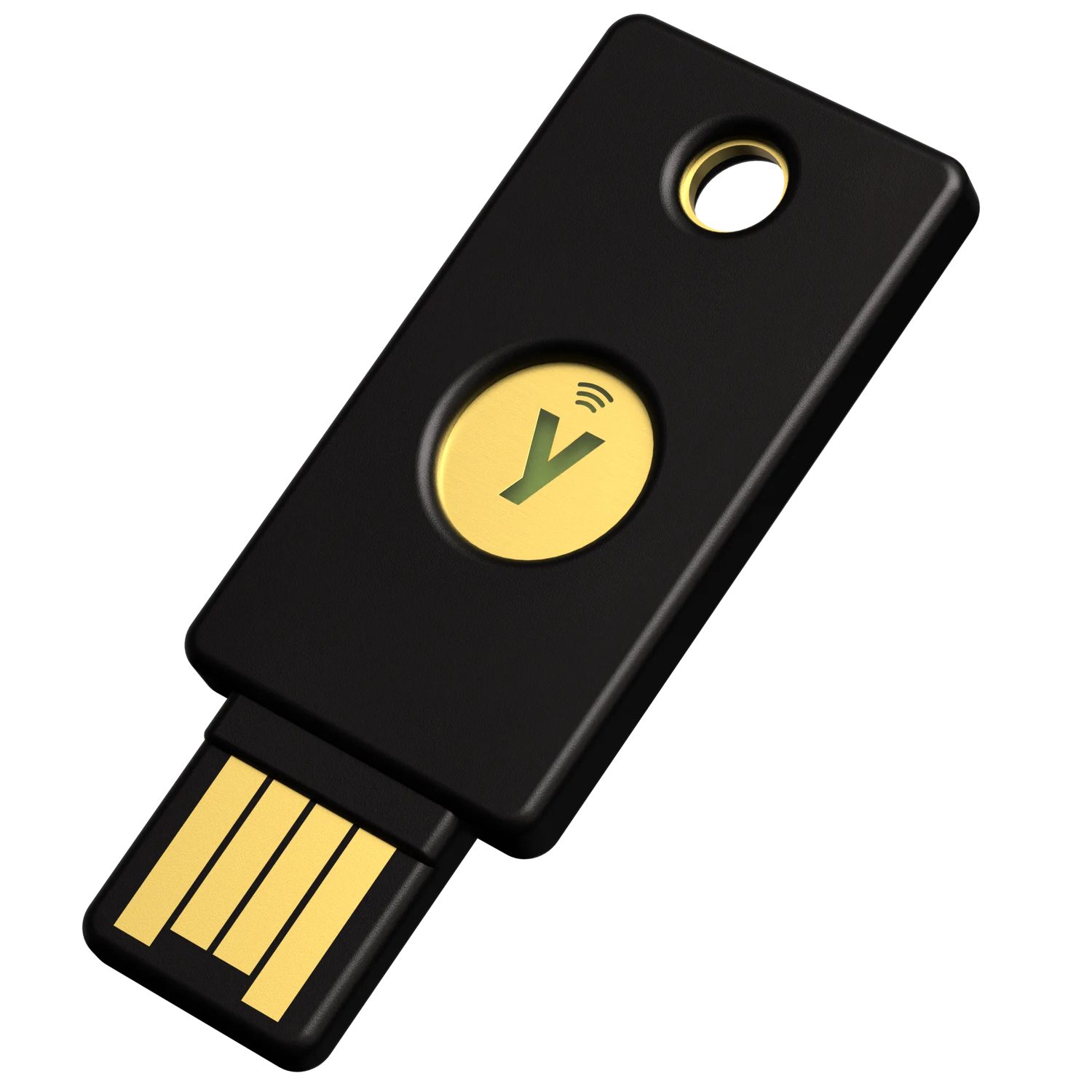
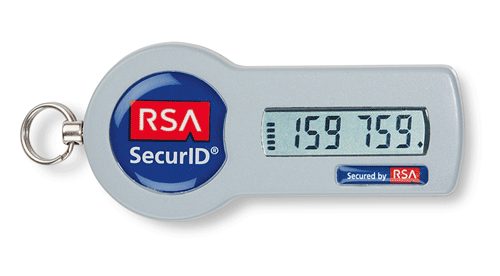
Turn on multifactor authentication (MFA) 多因素身份验证, which asks for extra proof (like a texted code) on top of the password.
Best Practices for Public Networks · แนวปฏิบัติที่ดีสำหรับเครือข่ายสาธารณะ
Syllabus · หลักสูตร
English
Learning Objective 1.3.A: Identify the type of adversary conducting a cyberattack.
1.3.A.1 Adversaries can be classified by their skill levels.
Low-skilled adversaries rely on malicious cyber tools created by others that can be purchased online. The tools they use exploit known vulnerabilities.
High-skilled adversaries have the capacity to create new malicious cyber tools or modify existing ones to adapt to new defensive techniques and tools. They also have the capacity to discover undocumented vulnerabilities, known as zero days.
1.3.A.2 Adversaries have a variety of motivations, including greed, desire for recognition, dedication to a cause, revenge, politics, or beliefs.
Learning Objective 1.3.B: Identify types of wireless cyberattacks.
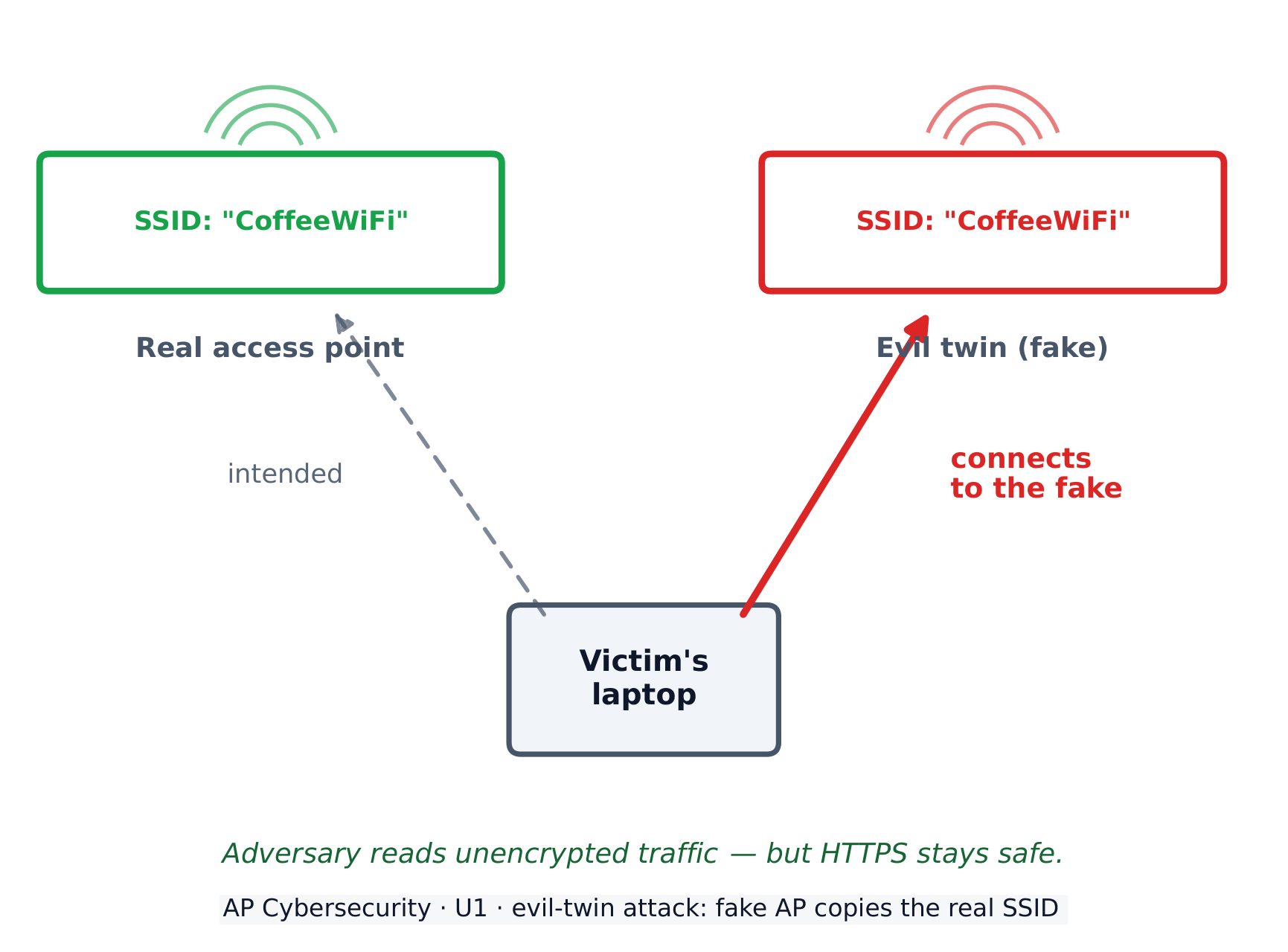
1.3.B.1 In an evil twin attack, an adversary sets up their own wireless access point (WAP) with a service set identifier (SSID) similar or identical to a target network; the adversary’s network is called the evil twin. Victims of this attack could select to unknowingly connect to the evil twin, allowing the adversary to capture their network traffic. The adversary cannot read traffic that uses an encrypted protocol like HTTPS.
1.3.B.2 In a jamming attack, an adversary floods an area with a strong electromagnetic (EM) signal in the same frequency range as the wireless network, which prevents legitimate traffic between the access point (AP) and users. This type of attack that prevents users from accessing resources is called a denial of service (DoS) attack.
1.3.B.3 In a war driving attack, adversaries try to detect wireless network beacons while driving or walking around a target. If a wireless signal is detected, the adversary can gather information about the type of wireless network used and find areas where the wireless signal extends outside the physical building.
Learning Objective 1.3.C: Describe actions individuals can take to increase protection of sensitive data when using the internet and Wi-Fi.
1.3.C.1 Individuals should verify that the name of any wireless network they join exactly matches the name of the network they intend to join.
1.3.C.2 Most internet protocols are encrypted to protect network traffic. However, individuals may consider the sensitivity of their data in choosing whether to join unencrypted Wi-Fi networks to protect vulnerable data such as DNS queries.
1.3.C.3 Individuals may consider using a virtual private network (VPN), which encrypts all their traffic to the VPN operator’s system. Although this action prevents a service provider from viewing traffic, the VPN provider can view the traffic.
ผู้โจมตีที่มีทักษะสูงมีความสามารถในการสร้างเครื่องมือไซเบอร์ร้ายแรงใหม่หรือดัดแปลงเครื่องมือที่มีอยู่ให้ปรับตัวเข้ากับเทคนิคและเครื่องมือป้องกันใหม่ ๆ พวกเขา还具有 capacity เพื่อค้นพบ vulnerabilities ที่ไม่มีเอกสาร记录下来 ซึ่งเรียกว่า zero days
1.3.C.3 บุคคลอาจพิจารณาการใช้ virtual private network (VPN) ซึ่ง will encrypt ทั้งหมด traffic ไปยังระบบของ VPN operator Although การกระทำนี้จะ prevents service provider จาก viewing traffic แต่ VPN provider สามารถ viewing traffic ได้
Source: College Board AP Course and Exam Description · แหล่งที่มา: คำอธิบายหลักสูตรและข้อสอบ College Board AP
English
Not all adversaries are the same. We classify them by skill: low-skilled attackers buy ready-made tools online and reuse known exploits 漏洞利用, while high-skilled attackers write their own tools and can discover brand-new holes called zero days 零日漏洞. Their motivation 动机 varies too - greed, revenge, politics, or belief.
Public Wi-Fi is a favourite hunting ground. Three wireless attacks you must know:
Evil twin 双胞胎恶意热点 - the adversary sets up a fake access point 接入点 with a name (SSID 服务集标识符) copied from the real network. Victims connect to the fake one, and the adversary reads their traffic (though encrypted 加密的 sites like HTTPS stay safe).
Jamming 干扰攻击 - the adversary floods the air with a strong radio signal so no one can connect. This is one kind of denial of service (DoS) 拒绝服务 attack.
War driving 战争驾驶 - the adversary drives around detecting wireless networks and where their signal leaks outside a building.
To protect yourself on public networks: check that the network name exactly matches the one you intend to join, prefer encrypted sites, and consider a virtual private network (VPN) 虚拟专用网络, which encrypts all of your traffic to the VPN operator.
Learning Objective 1.4.A: Explain how adversaries use AI-powered tools to augment cyberattacks.
1.4.A.1 Adversaries can use AI-powered tools that leverage existing voice and image samples of a person to create a digital avatar of that person. The use of these technologies enables adversaries to impersonate someone over the phone or even on a video call, which can lead to financial loss or the sharing of sensitive or private information. As more organizations adopt voice-based authentication, the impact of voice-impersonation has a larger potential impact.
1.4.A.2 Adversaries can use generative AI tools, like large language models (LLMs), to create convincing phishing messages in any target language. Because traditional phishing messages are sometimes written by non-native speakers of the target’s language, unnatural language is a feature that has been used to distinguish phishing messages from legitimate messages. However, with AI tools, adversaries can now craft phishing messages in any language that read as though they were written by a native speaker.
1.4.A.3 Adversaries can craft prompts that extract secure or sensitive information from LLMs. Secure or sensitive information in LLMs can come from user input and the large data sets used to train LLMs.
1.4.A.4 Adversaries can publish websites or modify existing websites to contain false information so that the false information will be included in the training sets for LLMs, causing the LLMs to repeat the false information.
1.4.A.5 Adversaries can perform reconnaissance on a target using AI-powered tools that scan the internet to gather information posted on social media and public websites.
1.4.A.6 Adversaries can use AI-enhanced coding tools to help them write new malware, modify existing application code to perform malicious activities, or to find vulnerabilities in large code bases.
Learning Objective 1.4.B: Explain how to protect against some AI-augmented cyberattacks.
1.4.B.1 Shared secrets with close friends and relatives that can be used to verify each other’s identities should be established. A secret word or phrase known only to two parties can be used to authenticate identities in high-stakes situations.
1.4.B.2 Multifactor authentication (MFA) should be enabled. If an adversary clones a target’s voice to access a system with voice authentication, requiring a second authentication factor could prevent an adversary from gaining access to accounts.
1.4.B.3 Personal or sensitive data should not be entered into any AI-powered tools, such as chatbots or virtual assistants. Some AI-powered tools feed user input back into the model to provide continuous training. Adversaries could extract data that users have included in prompts.
1.4.B.4 Output from AI-powered tools should be carefully evaluated. Verify information from AI-powered tools using reputable, stable, non-AI-based sources.
1.4.A.1 ผู้.attack者สามารถใช้ AI-powered tools ที่ leverage voice และ image samples ของบุคคลเพื่อสร้าง digital avatar ของบุคคลนั้น การใช้เทคโนโลยีเหล่านี้ช่วยให้ผู้.attack者 impersonate คนอื่นทางโทรศัพท์หรือแม้กระทั่งใน video call ซึ่ง可能导致 financial loss หรือการ sharing sensitive/private information เมื่อ organizations越多采用 voice-based authentication则 voice-impersonation impact越大
1.4.A.2 ผู้.attack者สามารถใช้ generative AI tools เช่น large language models (LLMs) เพื่อสร้าง phishing messages ที่น่าเชื่อถือ在任何目标语言中。因为传统的phishing messages有时由非目标语言的母语者编写,不自然的语言特征曾被用于区分phishing消息与合法消息。然而,借助AI工具,攻击者现在可以编写任何语言的钓鱼信息,使其读起来像是由母语者撰写的。
1.4.A.3 ผู้.attack者สามารถ crafting prompts เพื่อ extract secure หรือ sensitive information จาก LLMs Secure หรือ sensitive information ใน LLMs สามารถมาจาก user input และ large datasets ที่ใช้ train LLMs
1.4.A.4 ผู้.attack者สามารถ publish Websites หรือ modify existing websites ให้ contain false information เพื่อให้ false information นั้น被 included ใน training sets สำหรับ LLMs ซึ่ง会导致 LLMs重复 false information
1.4.A.5 ผู้.attack者สามารถ perform reconnaissance บนเป้าหมายโดยใช้ AI-powered tools ที่ scan internet เพื่อ gather information posted ใน social media และ public websites
1.4.B.3 ไม่ควรป้อนข้อมูลส่วนบุคคลหรือข้อมูลที่ละเอียดอ่อนลงในเครื่องมือanything powered by AI เช่น แชทบอทหรือผู้ช่วยเสมือน เครื่องมือบางtool that powered by AI นำข้อมูลผู้ใช้กลับเข้าไปในโมเดลเพื่อใช้สำหรับการฝึกฝนอย่างต่อเนื่อง ผู้.attackers could extract data that users have included in prompts.
1.4.B.4 ควรประเมินผลลัพธ์จากเครื่องมือpowered by AI อย่างระมัดระวัง ตรวจสอบข้อมูลจากเครื่องมือpowered by AI โดยใช้แหล่งข้อมูลที่มีชื่อเสียง มั่นคง และไม่ใช้AI-based sources.
Source: College Board AP Course and Exam Description · แหล่งที่มา: คำอธิบายหลักสูตรและข้อสอบ College Board AP
English
Artificial intelligence gives adversaries powerful new tools. With enough voice and image samples, an adversary can build a deepfake 深度伪造 avatar to impersonate someone on a call. Large language models (LLMs) 大语言模型 let them write convincing phishing 钓鱼 emails in perfect, native-sounding language - removing the clumsy wording that once gave scams away.
AI also helps adversaries on the back end: crafting prompts that pull secret data out of an LLM, planting false information on websites so it poisons an LLM's training data, scanning the internet to gather facts about a target, and even writing new malware.
You can defend against many AI-augmented attacks: agree on a shared secret 共享秘密 word with close contacts to verify identity, enable MFA (so a cloned voice alone cannot log in), never type sensitive data into a chatbot, and always double-check AI output against reliable, non-AI sources.
AI writes code, and that cuts both ways. Adversaries use AI-enhanced coding tools 人工智能辅助编程工具 to write new malware faster than they could by hand, to modify existing application code so that it performs malicious activity, and to scan a codebase for vulnerabilities 漏洞 to attack. The skill barrier falls: someone who could not previously write an exploit can now ask for one, so the number of capable attackers rises even when no new technique is invented.
AI ยังช่วยให้ฝ่ายตรงข้าม ทำงานเบื้องหลัง: สร้างคำสั่งดึงข้อมูลลับออกจาก LLM, ฝังข้อมูลเท็จในเว็บเพื่อทำลายคุณภาพข้อมูลฝึกสอนของ LLM, สแกนอินเทอร์เน็ตเพื่อรวบรวมข้อมูลเป้าหมาย และแม้กระทั่งเขียนมัลแวร์ใหม่
คุณสามารถป้องกัน MANY การโจมตีที่เสริมด้วย AI: ตั้งคำรหัสลับร่วมกันกับคนใกล้ชิดเพื่อยืนยันตัวตน, เปิดใช้งาน MFA (เพื่อให้เสียงที่ถูกเลียนแบบเพียงอย่างเดียวไม่สามารถล็อกอินได้), ห้ามกรอกข้อมูลสำคัญลงในแชทบอท, และตรวจสอบผลลัพธ์ของ AI เสมอเทียบกับแหล่งข้อมูลที่เชื่อถือได้ที่ไม่ใช่ AI
AI เขียนโค้ดได้ และสิ่งนี้เกิดขึ้นได้ทั้งสองด้าน ฝ่ายตรงข้ามใช้ เครื่องมือเขียนโค้ดที่เสริมด้วย AI เพื่อสร้าง มัลแวร์ ใหม่ได้เร็วกว่าทำเอง, แก้ไขโค้ดแอปพลิเคชันเดิมให้ดำเนินการที่ชั่วร้าย, และสแกนฐานโค้ดเพื่อหา ช่องโหว่ เพื่อโจมตี มาตรฐานความยากลดลง: คนที่เคยเขียน exploit ไม่ได้ ตอนนี้สามารถขอได้ ดังนั้นจำนวนผู้โจมตีที่มีความสามารถจึงเพิ่มขึ้นแม้จะไม่มีการเทคนิคใหม่ใดถูกคิดขึ้นเลย
Large language models (LLMs)/lɑːdʒ ˈlæŋɡwɪdʒ ˈmɒdlz/
โมเดลภาษาขนาดใหญ่ (LLMs)
1.5
Leveraging AI in Cyber Defense · การใช้ AI ในการป้องกันภัยไซเบอร์
Syllabus · หลักสูตร
English
Learning Objective 1.5.A: Explain how cyber defenders can leverage AI-powered tools to protect networks, applications, and data.
1.5.A.1 AI tools can review current security configurations, like firewall rules and access controls, and recommend more secure options. Recommendations should always be checked by a knowledgeable security technician before being implemented.
1.5.A.2 AI-powered tools can analyze application code to identify vulnerabilities and recommend mitigations. Recommendations should always be reviewed by a knowledgeable programmer before being implemented.
1.5.A.3 AI-powered tools can suggest rules for automated detection systems. Detection rules should always be reviewed by a knowledgeable detection engineer before being added to a system.
Learning Objective 1.5.B: Explain how AI-powered tools are enabling faster and more accurate threat detection and response.
1.5.B.1 Of the millions of digital events that happen on networks daily, some likely represent an adversary conducting malicious activity. Humans cannot carefully examine all those events to identify the malicious activity.
1.5.B.2 AI-powered tools can be trained to quickly analyze digital events and sort the events that are likely malicious activity from those that are harmless.
1.5.B.3 AI-powered tools can be programmed to alert human cybersecurity personnel when likely malicious activity is detected or to take specific corrective actions based on the type of malicious activity detected.
1.5.B.4 AI-powered tools enable threat-detection and response teams to catch malicious activity and intervene quickly to prevent loss, harm, damage, and destruction to digital infrastructure and data.
ไทย
วัตถุประสงค์การเรียนรู้ 1.5.A: อธิบายว่านักป้องกันไซเบอร์如何利用AI-powered tools to protect networks, applications, and data.
1.5.A.3 AI-powered tools สามารถเสนอกฎสำหรับระบบตรวจจับอัตโนมัติ กฎการตรวจจับควรได้รับการทบทวนโดยวิศวกรตรวจจับที่มีความรู้ก่อนเพิ่ม vào hệ thống
วัตถุประสงค์การเรียนรู้ 1.5.B: อธิบายว่าAI-powered tools如何 enabling faster and more accurate threat detection and response.
1.5.B.1 จากเหตุการณ์ดิจิทัลนับล้านที่เกิดขึ้นบนเครือข่ายทุกวัน บางเหตุการณ์อาจเป็นสัญญาณของผู้.attackers who are conducting malicious activity Humans cannot carefully examine all those events to identify the malicious activity.
1.5.B.2 AI-powered tools can be trained to quickly analyze digital events and sort the events that are likely malicious activity from those that are harmless.
1.5.B.3 AI-powered tools can be programmed to alert human cybersecurity personnel when likely malicious activity is detected or to take specific corrective actions based on the type of malicious activity detected.
1.5.B.4 AI-powered tools enable threat-detection and response teams to catch malicious activity and intervene quickly to prevent loss, harm, damage, and destruction to digital infrastructure and data.
Source: College Board AP Course and Exam Description · แหล่งที่มา: คำอธิบายหลักสูตรและข้อสอบ College Board AP
English
The same technology defends us. AI tools can analyse an application's own source code, identify vulnerabilities in it and recommend mitigations; they can also review firewall rules and access settings and recommend safer options - though a human expert must always check the advice before applying it. AI can scan application code for weaknesses and suggest detection rules.
⚠️ A recommendation is not a fix. The CED is explicit that the advice must be reviewed and implemented by a knowledgeable programmer: an AI tool can be confidently wrong about whether a flaw is exploitable, and applying a suggested patch without understanding it can introduce a new fault of its own.
Its biggest advantage is scale. A medium network produces millions of events every day - far too many for people to read. AI can quickly sort the harmless events from the likely-malicious ones, alert human staff, or take an automatic action. This lets defenders catch an attack and respond in seconds instead of days, preventing loss and damage.
That scale is what makes threat detection and response 威胁检测与响应 possible in practice: an AI system flags malicious activity as it happens, so the response team can intervene quickly enough to prevent loss, harm, or destruction of digital infrastructure — rather than reading the logs days later and finding out what was taken.
ไทย
เทคโนโลยีเดียวกันนี้ยังช่วยปกป้องเราอยู่ AI สามารถวิเคราะห์ซอร์สโค้ดของแอปพลิเคชัน, ระบุ ช่องโหว่, และ เสนอแนวทางแก้ไข; รวมถึงตรวจสอบกฎไฟวอลล์และการตั้งค่าการเข้าถึงและ เสนอทางเลือกที่ปลอดภัยกว่า - แม้แต่ผู้เชี่ยวชาญด้านมนุษย์ต้องตรวจสอบคำแนะนำก่อนนำไปใช้เสมอ AI สามารถสแกนโค้ดแอปฯ เพื่อหาจุดอ่อนและแนะนำกฎการตรวจจับ
⚠️ คำแนะนำไม่ใช่การแก้ปัญหา CED ชี้ชัดว่าคำแนะนำต้องได้รับการตรวจสอบและดำเนินการโดย นักพัฒนาที่มีความรู้: AI อาจผิดพลาดอย่างมั่นใจเกี่ยวกับความเป็นไปได้ที่จะถูกเจาะจง และการนำแพตช์ที่แนะนำไปใช้โดยไม่เข้าใจอาจทำให้เกิดข้อผิดพลาดใหม่ได้เอง
When a question asks you to rank risks, remember high risk = high impact AND easy to exploit. A parking-lot Wi-Fi leak matters less than an open internal port that lets an adversary spoof a device.
Learn the social-engineering tactics by name - intimidation, urgency, pretexting, authority, consensus, scarcity, familiarity - and be ready to spot which one an email is using.
Encryption still protects you on an evil twin: the adversary sees your traffic but cannot read HTTPS. Say what is exposed, not just "it's unsafe".
For "how to make authentication stronger", MFA is almost always part of the answer, plus long/unique passwords from a manager.
AI is dual-use: the same tool (LLMs, code analysis) appears on both the attack and the defense side. Read the question carefully to see which side it asks about.
2.1.A.1 Social engineers use psychological tactics to manipulate targets into taking a desired action.
2.1.A.2 Pretexting is when adversaries create a believable reason to contact a target.
2.1.A.3 Authority is when adversaries impersonate someone with power over a target or pretend to relay instructions from that person.
2.1.A.4 Intimidation is when adversaries state negative consequences if demands aren’t met.
2.1.A.5 Consensus is when adversaries create social pressure by making a target believe everyone else is doing a desired action.
2.1.A.6 Scarcity is when adversaries create a sense of limited availability.
2.1.A.7 Familiarity is when adversaries pretend to be or know someone close to a target to establish trust.
2.1.A.8 Urgency is when adversaries create a deadline that requires quick action by a target to avert negative consequences.
2.1.B
Identify types of adversaries.
2.1.B.1 Script kiddies are low-skilled adversaries who use tools developed by others without understanding how the tools work. They are often motivated by greed or a desire for recognition.
2.1.B.2 Hacktivists are motivated by social, political, or personal causes. They compromise computers and networks to support their cause or stop perceived harm, believing their goals justify their illegal methods.
2.1.B.3 Insider adversaries are unique threats because they have legitimate credentials and access to systems and data. They can be recruited by malicious third parties and can be motivated by greed or revenge.
2.1.B.4 Cyberterrorists are motivated by politics or beliefs and seek to disrupt entire communities, regions, or nations through cyberattacks (e.g., attacking a power grid, water treatment plant, or other civil infrastructure). They can act independently or on behalf of governments or criminal organizations.
2.1.B.5 Transnational criminal organizations seek financial gain primarily by deploying ransomware and stealing corporate intellectual property (IP) to sell in illegal markets.
2.1.C
Describe the phases of a cyberattack.
2.1.C.1 Cyberattacks aim to disrupt, harm, steal, or destroy devices, networks, or data. Adversaries work in phases, which may not all be used in every attack. The phases are:
i. Reconnaissance
ii. Initial access
iii. Persistence
iv. Lateral movement
v. Taking action
vi. Evading detection
2.1.C.2 In the reconnaissance phase of an attack, adversaries gather as much information as possible about their target, often using open source intelligence (OSINT), which is freely available information.
2.1.C.3 In the initial-access phase of an attack, adversaries establish a foothold on the target’s computer, often through social engineering or compromised or weak credentials.
2.1.C.4 After gaining access during an attack, adversaries establish persistence to maintain access without needing to regain it. They may use a command and control (C2) protocol to send commands to the device and receive output, often through malware like a remote access trojan (RAT) or rootkit.
2.1.C.5 In the lateral-movement phase of an attack, adversaries try to escalate their privileges by accessing computers and user accounts with elevated permissions to services and data.
2.1.C.6 In the taking-action phase of an attack, adversaries act on their objectives by collecting targeted data, exfiltrating it, and disrupting services or destroying data.
2.1.C.7 In the final phase of an attack, many adversaries try to evade detection by removing or editing log files and erasing other files they may have planted on devices (e.g., malware).
2.1.D
Describe the risk assessment process.
2.1.D.1 Risk occurs when a threat can exploit a vulnerability to compromise an asset.
2.1.D.2 An asset is anything valuable. Assets include financial resources, intellectual property, data, digital infrastructure, physical property, and reputation.
2.1.D.3 Risk assessment considers two factors:
The likelihood of an attack against a specific vulnerability
The severity of the projected damage from an attack against a specific vulnerability
2.1.D.4 The likelihood of a vulnerability being exploited depends on many factors, including:
The value of the target: Adversaries are more likely to attack targets they perceive as valuable.
The level of skill required to exploit the vulnerability (i.e., the difficulty): Vulnerabilities with well-documented exploits often require less skill and can be carried out by more adversaries.
The motivation and capabilities of likely adversaries: Highly motivated and skilled adversaries are more likely to be able to perform more complex exploits.
2.1.D.5 The severity of an attack is often measured by financial cost, which can also include reputational and operational impacts.
Illustrative examples for 2.1.D.5:
A hacktivist is passionate about illegal fishing practices supported by a local food production company. The main webpage of this food production company would be a high-value target for this hacktivist; defacing the webpage to expose the company’s support of illegal fishing would provide no financial gain to the adversary, but would allow them to raise awareness about an issue that motivates them.
2.1.D.6 The result of a risk assessment can be quantitative or qualitative.
Quantitative risk assessment assigns a numeric value to a vulnerability based on a numeric scale (e.g., 1–10) or quantifiable impact, which could be financial (e.g., a $10,000 annual risk).
Illustrative examples for 2.1.D.6:
Low, medium, high, severe
Unlikely low impact, likely low impact, unlikely high impact, likely high impact
2.1.D.7 Risk assessment documentation should include:
Vulnerable assets and their value
Descriptions of likely threats to the assets
Details of specific vulnerabilities for specific assets and how they would be exploited
An explanation of the severity of damage (financial, operational, reputational, etc.) if a specific asset were compromised, and the likelihood of that compromise occurring
A final rating, quantitative or qualitative, for each risk identified
Illustrative examples for 2.1.D.7:
Scaled score (e.g., 1–10)
Monetary value (e.g., a $10,000 risk vs. a$100,000 risk)
2.1.E
Identify strategies for managing risk.
2.1.E.1 Once a risk has been identified and assessed, an organization has four options for managing that risk:
i. Avoid
ii. Transfer
iii. Mitigate
iv. Accept
2.1.E.2 Risk avoidance stops the activity that is generating the risk. If the activity is a critical part of an organization’s mission or purpose, then avoidance is not possible.
2.1.E.3 Risk transference places the burden of the risk on another entity, such as an insurance company, a government, or consumers.
2.1.E.4 Risk mitigation implements security controls to reduce the likelihood or impact of a risk.
2.1.E.5 Residual risk is the risk that remains after an organization has gone through avoidance, transference, and mitigation. The residual risk is the level of risk that an organization is willing to accept. Risk acceptance acknowledges the fact that absolute security is unattainable.
2.1.E.6 To conserve financial resources and employee capacity, an organization will often favor solutions that are cost effective and easy to implement and maintain. Cost-effective solutions cost less to install and maintain than the expected loss from an attack.
2.1.F
Identify types of security controls.
2.1.F.1 Security controls address at least one of the following principles:
Confidentiality ensures that only authorized individuals, systems, or processes can access data. Systems lacking confidentiality are vulnerable to data theft or destruction.
Integrity ensures data are accurate and trustworthy. Systems lacking integrity are vulnerable to data manipulation.
Availability ensures data and services are accessible to authorized individuals when needed. Systems lacking availability may experience unexpected downtime.
2.1.F.2 Security controls can be classified by type.
Physical controls provide security in the physical space and include locks, fences, and cameras, bollards, and security guards.
Technical controls provide security in the digital space and include firewalls, anti-malware software, and encryption.
Managerial controls provide rules, guidelines, policies, and procedures that specify what security should be in place and include password policies, regular access reviews, and incident response plans (IRPs).
2.1.F.3 Security controls can be classified by function.
Preventative controls address potential vulnerabilities with the goal of stopping an adversary from attacking and include locks and encryption.
Detective controls help identify attacks when they occur and include intrusion detection systems (IDSs), cameras, and security incident and event management (SIEM) systems.
Corrective controls fix problems and help restore systems to an operational state and include vulnerability patching, repairing a broken card reader, and intrusion prevention systems (IPSs).
2.1.G
Explain why a defense-in-depth security strategy is necessary to optimally protect an organization.
2.1.G.1 A defense-in-depth strategy, or layered defense, uses multiple types of security controls to protect sensitive data and systems.
2.1.G.2 A defense-in-depth strategy allows an organization to address different types of threats, each with a security control most suited to mitigate it.
2.1.G.3 A defense-in-depth strategy allows for resilience in data protection so when one security control is bypassed by an adversary, another security control may still prevent access to the data or system or limit the damage done to the data or system.
2.1.G.4 Layers in a defense-in-depth strategy can include human, physical, network, device, application, and data.
Source: College Board AP Course and Exam Description · แหล่งที่มา: คำอธิบายหลักสูตรและข้อสอบ College Board AP
English
Before defending a system, you need a shared language. This section builds it.
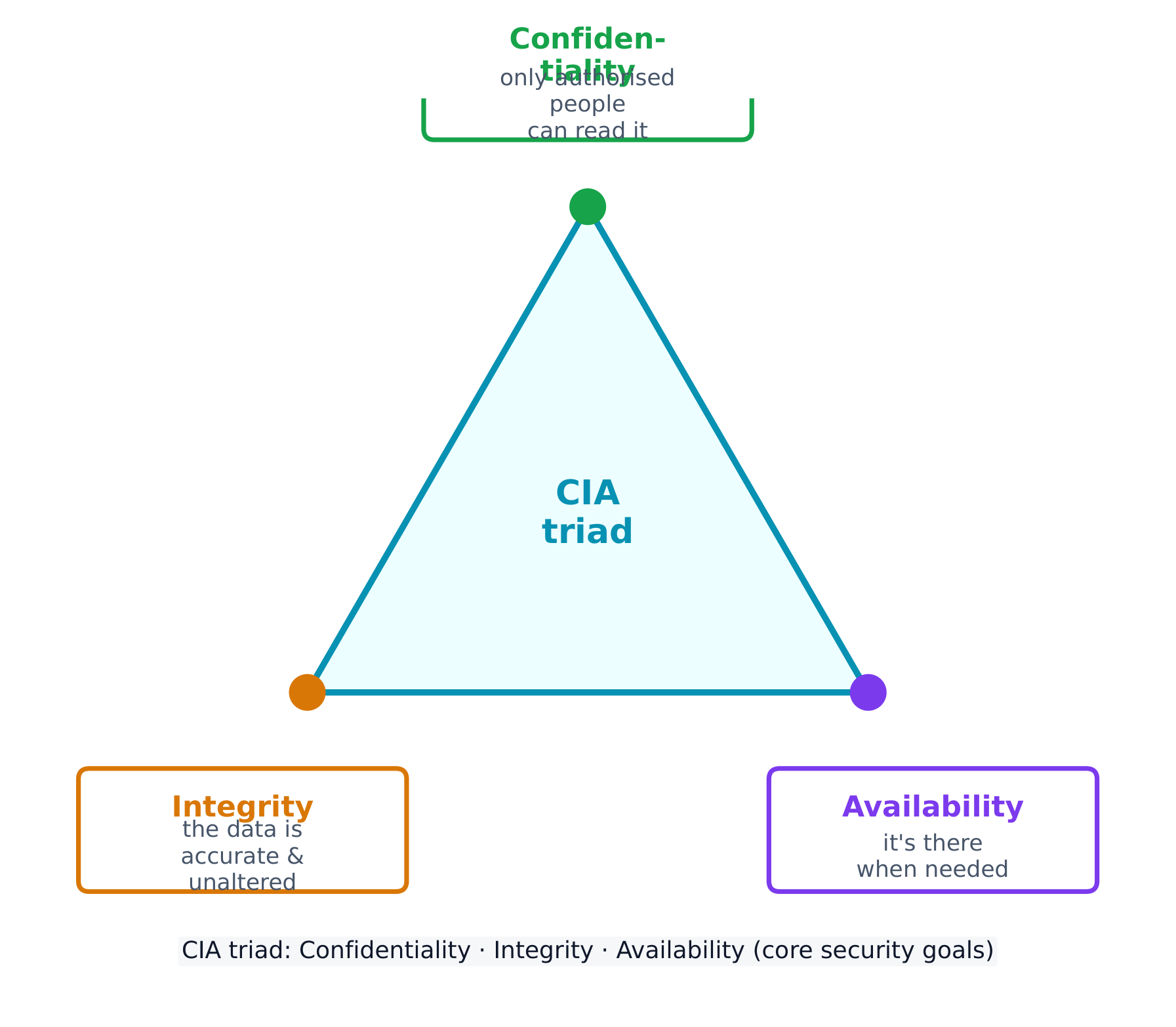
Every security control protects at least one part of the CIA triad 信息安全三要素 - the three goals of security:
Confidentiality 保密性 - only authorised people can read the data.
Integrity 完整性 - the data is accurate and unaltered.
Availability 可用性 - the data and services are there when needed.
Attacks come from different adversaries, classified by their goals. A script kiddie 脚本小子 reuses tools built by others for greed or recognition; a hacktivist 黑客活动分子 acts for a political, social, or personal cause; an insider 内部人员 already holds legitimate access and may act from revenge or greed; a cyberterrorist 网络恐怖分子 disrupts critical infrastructure like a power grid or water plant; and transnational criminal organisations 跨国犯罪组织 chase money through ransomware and stolen data.
Most attacks unfold in phases 阶段: reconnaissance 侦察 (gathering information, often from public OSINT 公开来源情报 sources), initial access, persistence, lateral movement 横向移动 (spreading to more systems by escalating privileges), taking action on the goal, and evading detection. Naming the phase an attacker has reached helps a defender choose the right response.
Social engineering: the seven tactics
Most attacks begin not with code but with social engineering 社会工程学 - psychological tricks that manipulate a person into doing what the adversary wants. The exam names seven tactics, and expects you to identify which one a scenario shows:
Tactic
The trick
Pretexting 借口
inventing a believable reason to make contact ("I'm from IT, verifying your account")
Authority 权威
posing as someone powerful, or relaying "the boss's" instructions
Intimidation 恐吓
threatening negative consequences if a demand is not met
Consensus 从众
claiming everyone else is already doing it, to create social pressure
Scarcity 稀缺
inventing limited availability ("only 2 left")
Familiarity 熟悉
pretending to be, or to know, someone close to the target
Urgency 紧迫感
imposing a tight deadline so the target acts before thinking
the common thread is that all seven bypass a target's judgement by triggering an automatic emotional response - fear, trust, haste, or the wish to fit in. The defence is the same each time: verify through a separate, trusted channel before acting.
A risk 风险 appears when a threat 威胁 can exploit a vulnerability 漏洞 to compromise an asset 资产 (anything valuable - data, money, hardware, reputation). We assess risk by weighing two things: the likelihood 可能性 of an attack and the severity 严重性 of the damage.
Likelihood itself depends on the value of the target (adversaries chase what looks worth stealing), the skill needed to exploit the vulnerability (a well-documented exploit needs little skill, so more adversaries can use it), and the motivation and capability of likely adversaries. Severity is usually measured in financial cost, but includes reputational and operational damage too.
The final rating can be written two ways, and the exam wants you to tell them apart:
quantitative 定量 - a number: a score on a scale (e.g. 1-10), or a money value (e.g. "a $10,000 annual risk").
qualitative 定性 - a label: low / medium / high / severe, or a grid such as likely-high-impact vs unlikely-low-impact.
A written risk assessment 风险评估 should record, for each risk: the vulnerable asset and its value, the likely threats, how the specific vulnerability would be exploited, the severity if it were compromised, and a final quantitative or qualitative rating.
Once a risk is measured, an organisation has four ways to manage it:
Avoid 规避 - stop the risky activity (only possible if it isn't essential).
Transfer 转移 - shift the burden to someone else, such as an insurer.
Mitigate 缓解 - add controls to lower the likelihood or impact.
Accept 接受 - live with the leftover residual risk 剩余风险, because perfect security is impossible.
Security controls are grouped two ways. By type: physical 物理 (locks, fences, guards), technical 技术 (firewalls, anti-malware, encryption), and managerial 管理 (policies and procedures). By function: preventative 预防性 (stop an attack, like a lock), detective 检测性 (spot an attack, like a camera), and corrective 纠正性 (fix and restore, like patching).
Worked example. A hospital stores patient records on an unencrypted server in an unlocked room. Rate the risk: the asset is highly sensitive (patient data, protected by law) and the vulnerability is easy to exploit (no encryption, no access control), so this is a high risk. Now classify one fix - a door lock: by type it is a physical control, and by function it is preventative (it stops entry before an attack even begins).
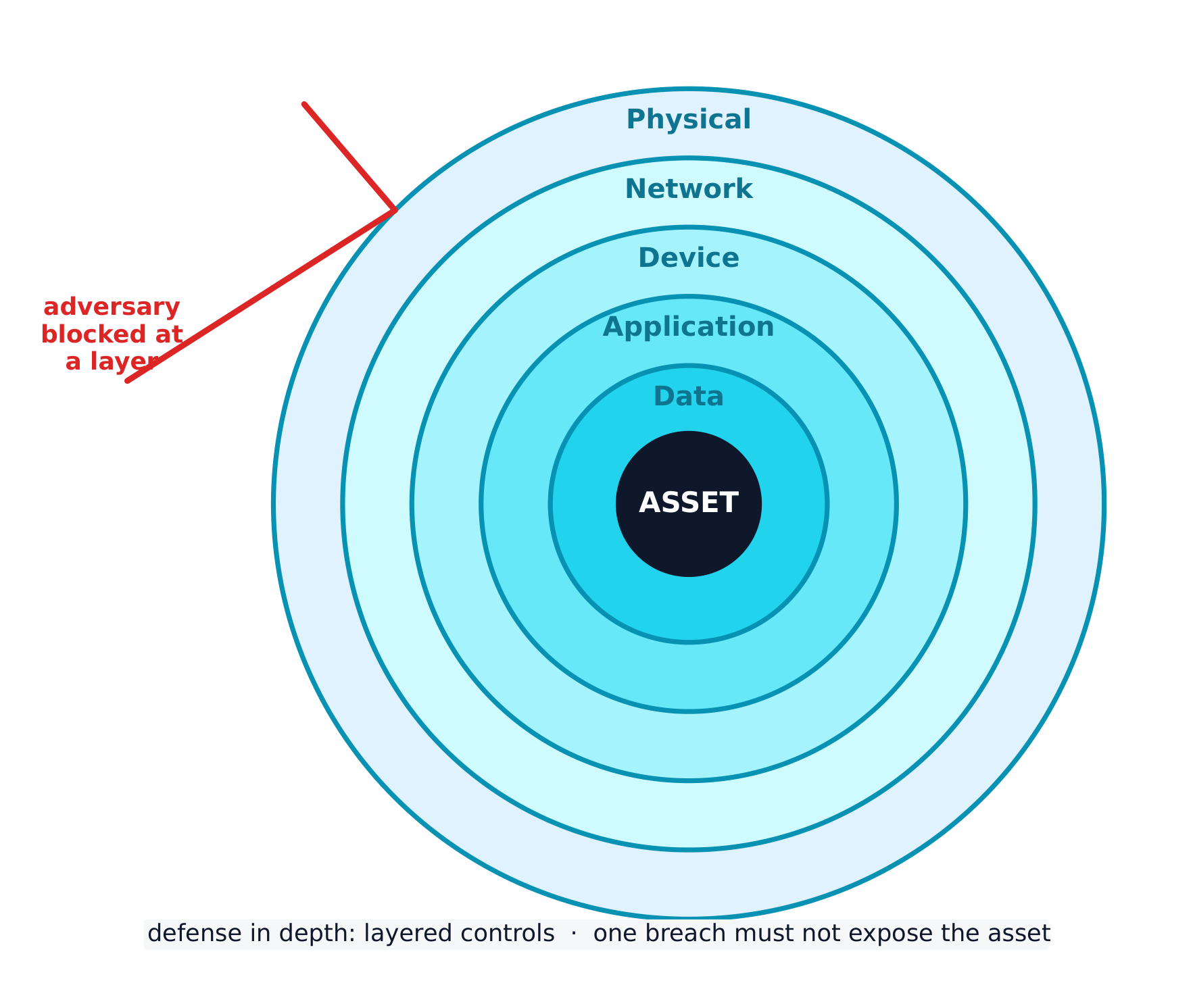
The best strategy layers many controls - a defense-in-depth 纵深防御 approach. If an adversary bypasses one layer, another still stands. Layers include human, physical, network, device, application, and data.
Defense in depth: หลาย layers ดังนั้นการ breach หนึ่งครั้งจะไม่ exposing asset
Explore · สำรวจ
Classify each security control by function · จำแนกการควบคุมความปลอดภัยแต่ละอย่างตามฟังก์ชัน
A preventative control stops an attack, a detective control spots one in progress, and a corrective control fixes the damage and restores the system. · การควบคุมเชิงป้องกัน ป้องกันการโจมตี, การควบคุมเชิงตรวจสอบ ตรวจจับการโจมตีที่กำลังดำเนินอยู่, และ การควบคุมเชิงแก้ไข แก้ไขความเสียหายและคืนระบบ
Explore · สำรวจ
Classify each security control by type · จำแนกการควบคุมความปลอดภัยแต่ละอย่างตามประเภท
A physical control guards the physical space, a technical control works in the digital space, and a managerial control is a rule, policy, or procedure. · การควบคุมทางกายภาพ รักษาสถานที่ทางกายภาพ, การควบคุมทางเทคนิค ทำงานในพื้นที่ดิจิทัล, และ การควบคุมด้านการจัดการ เป็นกฎ, นโยบาย, หรือขั้นตอน
Physical Vulnerabilities and Attacks · ช่องโหว่และความเสี่ยงทางกายภาพและการโจมตี
Syllabus · หลักสูตร
Learning Objective
Essential Knowledge
2.2.A
Identify common physical attacks.
2.2.A.1 Adversaries often use social engineering when conducting a physical attack.
2.2.A.2 Piggybacking is the name for an attack where an adversary uses social engineering to manipulate an authorized individual to grant the adversary access to a restricted area. Common piggybacking tactics include carrying something large to entice an authorized person to hold the door open, pretending to be an authorized person who has forgotten their access token, or pretending to be a maintenance person who needs to get into a certain area to perform an inspection or repair.
2.2.A.3 Tailgating is the name for an attack where an adversary gains unauthorized access to a restricted area by following close behind an authorized individual without that individual’s awareness or knowledge.
2.2.A.4 Shoulder surfing is the name for an attack where an adversary watches as a user accesses sensitive information so the adversary can use it later. Sometimes adversaries use a camera to record the target accessing the sensitive information for later analysis.
2.2.A.5 Dumpster diving is the name for an attack where an adversary goes through a target’s physical trash to look for information that could be used to help the adversary reach their goal.
2.2.A.6 Card cloning is the name for an attack where an adversary makes a copy of an authorized user’s access card so they can gain access to all the resources the user is authorized to access.
2.2.B
Explain how threats can exploit common physical vulnerabilities to cause loss, damage, disruption, or destruction to assets.
2.2.B.1 Threats include human adversaries seeking to cause harm or disruption as well as natural disasters. Natural disasters can cause physical damage or destruction to computers and data as well as disruption of digital services provided by computers.
2.2.B.2 Vulnerabilities are weaknesses or flaws that could allow an asset to be compromised. Common compromises include:
Unauthorized access to sensitive data or restricted physical spaces
Disruption of services
Theft or destruction of digital or physical resources
Unauthorized modification of data
2.2.B.3 When adversaries disrupt power to a device, the device and any services it provides become unavailable. To disrupt power, adversaries may damage fuses or breakers in an electrical box, unplug or cut electrical wiring, or damage power distribution systems like substations and transformers.
2.2.B.4 When adversaries gain access to an area with sensitive information, they can steal or copy sensitive information.
2.2.B.5 When adversaries gain physical access to a device and its ports, they can plug in a keylogger or external drive containing malware, which could allow them to collect data from a user or possibly even to gain control of the device. With direct physical access adversaries can also physically destroy a device, making the device itself, any data stored on it, and any services it provides unavailable.
2.2.C
Assess and document risks from physical vulnerabilities.
2.2.C.1 Physical access to devices can allow adversaries to bypass many technical controls and layers of security.
2.2.C.2 High risks from physical vulnerabilities arise when sensitive information or systems are exposed in physical spaces without sufficiently restricted and controlled access.
Illustrative examples for 2.2.C.2:
A server that stores customer data is in a room with no lock which is accessed via an unmonitored hallway.
2.2.C.3 Moderate risks from physical vulnerabilities arise when a noncritical or nonsensitive part of an organization is left unprotected in a way that it could act as a foothold for an adversary to gain initial access to other resources.
Illustrative examples for 2.2.C.3:
An office has a reception area beyond which access is controlled; the receptionist has a computer that connects to the office’s internal wireless network and the computer has exposed USB ports.
2.2.C.4 Low risks from physical vulnerabilities arise when a vulnerable asset is of low value and the vulnerability is unlikely to be exploited.
Illustrative examples for 2.2.C.4:
Employees in an office that requires badge access have laptop computers that they leave on their desks unattended when they all go to lunch together. The computers do not contain any sensitive information, but there are no cables securing the devices to the desks.
Source: College Board AP Course and Exam Description · แหล่งที่มา: คำอธิบายหลักสูตรและข้อสอบ College Board AP
English
Digital security means nothing if an adversary can simply walk in. Common physical attacks 物理攻击 often begin with social engineering:
Piggybacking 尾随(获许可) - tricking an authorised person into holding a door open (for example, by carrying a heavy box).
Tailgating 尾随(未察觉) - slipping through a secured door behind someone without their knowledge.
Shoulder surfing 肩窥 - watching someone type a password or read sensitive information.
Dumpster diving 翻垃圾搜集情报 - searching a target's trash for useful information.
Card cloning 门禁卡复制 - copying an access card to enter restricted areas.
With physical access, an adversary can cut power, steal or copy data, or plug in a keylogger 键盘记录器. We rate physical risk as high when sensitive systems sit in a space without controlled access, moderate when an unimportant area could act as a foothold 立足点 to reach other resources, and low when the asset is worthless and unlikely to be attacked.
Learning Objective 2.3.A: Identify managerial controls related to physical security.
2.3.A.1 Organizations should conduct employee security awareness training to educate employees about how they can contribute to the organization’s security by:
Detecting social engineering attempts like phishing
Not badging other people into restricted areas
Preventing device theft
2.3.A.2 Organizations should have a workstation security policy that outlines the measures necessary to protect a physical workplace. The policy may have tiers of workstation security based on the type of data handled at a workstation. Workstation policies often require:
Locking devices before leaving workstations unattended to prevent unauthorized access
Clearing sensitive documents off workstations before leaving them unattended (sometimes called a clean desk policy)
Using a privacy screen filter or other physical barrier to prevent others from viewing information on the screen
Connecting devices to surge protectors or uninterruptible power supplies (UPS)
Learning Objective 2.3.B: Determine mitigation strategies for risks from physical vulnerabilities.
2.3.B.1 To determine a relevant control, a cyber defender considers how an adversary could take advantage of a vulnerability to attack a system and how to prevent, detect, or correct the attack.
2.3.B.2 Installing physical controls like fencing, gates, and bollards around a building can deter adversaries from trying to physically access an organization’s buildings.
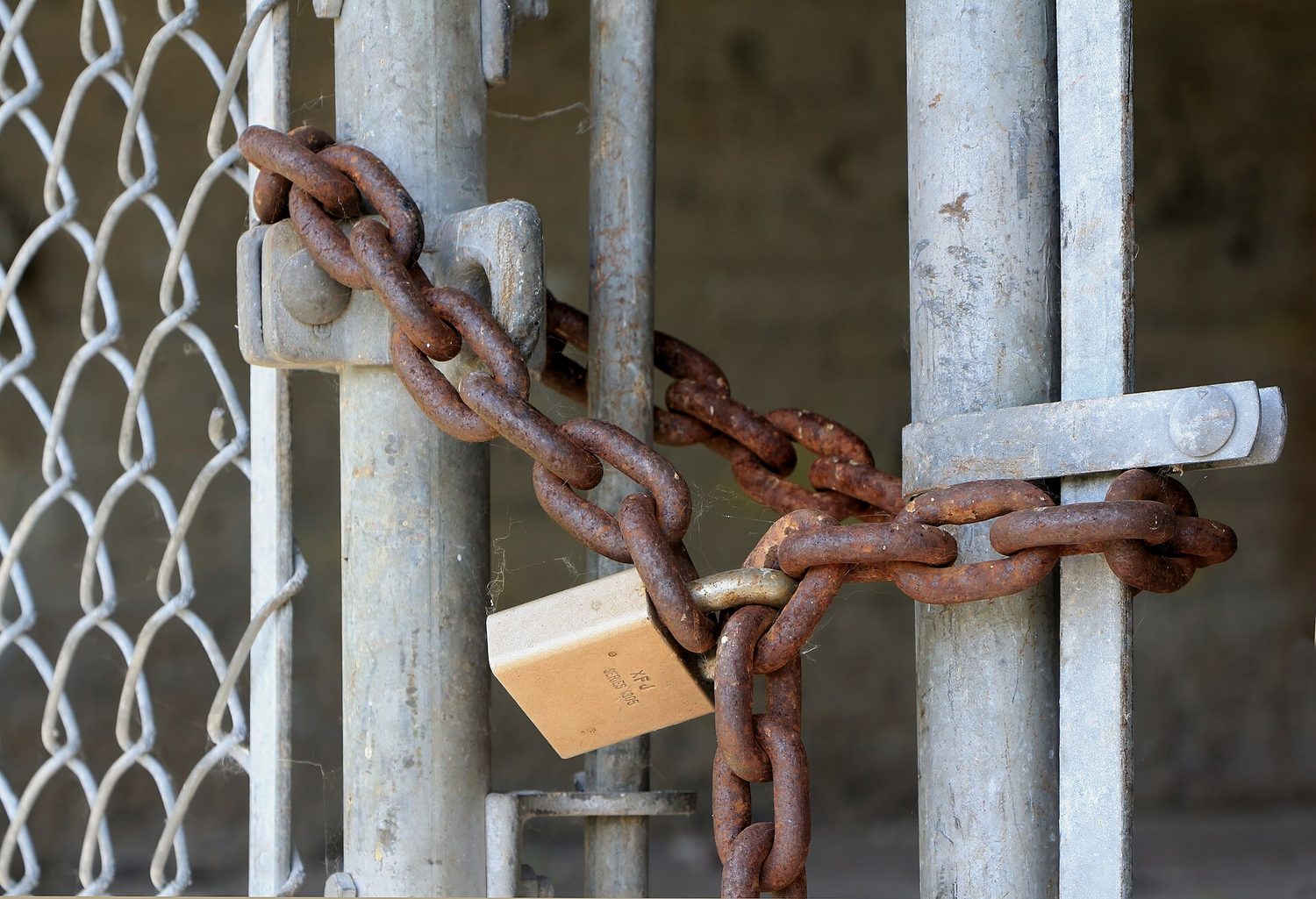
2.3.B.3 Locks on doors, server cabinets, and computers can prevent devices from being accessed or stolen.
2.3.B.4 Card readers can record which employee badges are being used to access different entries at specific times and deny access to unauthorized badges.
2.3.B.5 Access control vestibules and turnstiles can prevent an authorized person from intentionally or accidentally admitting an unauthorized person into a restricted area.
2.3.B.6 Organizations can disable USB ports to prevent external drives from loading malware onto a computer.
2.3.B.7 An uninterruptible power supply (UPS) provides a backup power source for a device in the event of a power outage. Organizations can also use power generators to provide power at a larger scale to a building or set of critical devices.
2.3.B.8 Organizations prioritize risk mitigations based on the severity of the risks and the cost of the recommended mitigations.
Source: College Board AP Course and Exam Description · แหล่งที่มา: คำอธิบายหลักสูตรและข้อสอบ College Board AP
English
Managerial controls come first: security-awareness training teaches staff not to badge strangers in, and a workstation security policy requires locking devices, clearing desks (a clean desk policy 清桌政策), and using privacy screens.
Physical controls then harden the building: fences, gates, and bollards 防撞柱 deter access; locks protect doors and cabinets; card readers 读卡器 log and restrict entry; an access control vestibule 门禁前室 (a two-door airlock) stops piggybacking; disabling USB ports blocks malware drives; and an uninterruptible power supply (UPS) 不间断电源 keeps devices running through an outage. Organisations prioritise these by matching the cost of a control to the severity of the risk.
2.4.A.1 Cameras can capture a visual record of an adversary’s malicious activity. The feed from a camera should be recorded and monitored for maximum effect. Recordings can be especially helpful in after-incident investigations.
2.4.A.2 Security guards can monitor activity in an area and respond to suspicious activity once detected.
2.4.A.3 Motion sensors can alert security to movement in an area.
2.4.A.4 Employees that work in a physical space are often the first to notice the presence of an unauthorized person and can alert security.
Learning Objective 2.4.B: Determine effective placement of security controls for detecting physical attacks.
2.4.B.1 When placing cameras, consideration should be given to visual coverage, angle, and the ability to be tampered with by an adversary. Consideration should also be given to what a camera in a specific area could capture an adversary doing and how that information would be helpful. Points of ingress and egress are often monitored by camera.
2.4.B.2 Motion sensors should be placed in areas where traffic is unexpected, like server rooms, or areas where sensitive materials are stored and few people have access. Motion sensors in high-traffic areas create many false alarms, making the alarms less likely to be taken seriously when there is a real security event.
2.4.B.3 Locks should be placed on all entries to areas containing sensitive information or systems. For areas with particularly sensitive information or systems, an organization could use an access control vestibule at the entry point to prevent piggybacking or tailgating.
2.4.B.4 Security guards can be stationary or patrolling. Stationary guards can provide constant protection for a specific area, entrance, or high-value item. Patrolling guards are more difficult for an adversary to plan around and can create time pressure for an adversary. Placing stationary guards at places that funnel traffic (e.g., entry gates, main entrances or lobbies, and entrances to more secure access areas) can be highly effective, while patrolling guards are better suited for perimeters and exterior areas.
Learning Objective 2.4.C: Apply detection techniques to identify physical attacks.
2.4.C.1 Cameras provide visual monitoring and a visual record of activity within a designated space. Cameras can be paired with facial recognition software that can provide alerts when unauthorized individuals enter controlled areas. Once a physical breach has been detected, defenders can use live and recorded camera footage to track an adversary’s path and actions.
2.4.C.2 Motion detectors work best when paired with cameras. When a security alert is raised because a motion detector has been activated, defenders can use cameras to check the space visually and verify a physical security breach.
2.4.C.3 When employees are required to use an electronic badge to unlock a door to a restricted area, a sensor can record how long the door was open. In reviewing entry logs for the door, potential piggybacking or tailgating can be detected by doors being open for longer than normal lengths of time.
Source: College Board AP Course and Exam Description · แหล่งที่มา: คำอธิบายหลักสูตรและข้อสอบ College Board AP
English
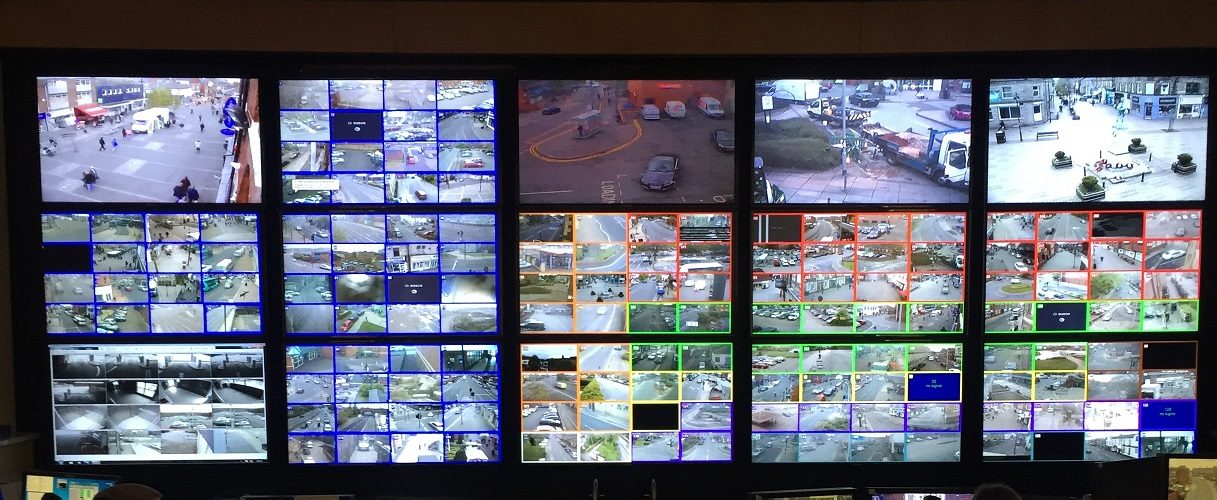
Some controls detect attacks rather than prevent them. Cameras record activity and help after-incident investigations; security guards respond to what they see; motion sensors 运动传感器 alert staff to movement; and employees themselves often notice an intruder first.
Placement matters. Cameras belong at points of ingress and egress 出入口 (entrances and exits). Motion sensors work best in low-traffic areas like server rooms - put them in a busy hallway and constant false alarms make everyone ignore them. Stationary guards protect a fixed high-value point, while patrolling guards are harder for an adversary to plan around. Reviewing door-open times in entry logs can even reveal piggybacking, because a door held open too long is suspicious.
Memorise the CIA triad and be ready to say which goal a control protects - encryption serves confidentiality, a hash checks integrity, a backup restores availability.
Know the four risk responses (avoid, transfer, mitigate, accept) and the two ways to classify controls (by type: physical/technical/managerial; by function: preventative/detective/corrective).
Distinguish piggybacking (with consent, tricked) from tailgating (without the person's knowledge) - exam questions test this exact pair.
For risk-rating questions, high risk needs both high value AND easy exploitation; a "foothold to other systems" is the classic moderate risk.
Defense in depth is the model answer whenever a question asks why one control is not enough.
Learning Objective 3.1.A: Identify common network attacks.
3.1.A.1 The address resolution protocol (ARP) is used by a default gateway on a network to establish a table that pairs internet protocol (IP) addresses with media access control (MAC) addresses. An ARP poisoning attack is when an adversary sends falsified ARP packets to the default gateway to modify the table so that the adversary’s device receives traffic intended for the target by linking the target’s IP address to the adversary’s MAC address. Faking a MAC address is called MAC spoofing. This is an example of an on-path attack (or man-in-the-middle attack), which is when an adversary interrupts a data stream between two parties, captures both parties’ data, and copies or alters the data before sending them on. Both parties think they are communicating directly with each other, but instead they are each communicating with the adversary who is secretly intercepting their messages.
3.1.A.2 A MAC flooding attack is when an adversary sends the target switch many Ethernet frames, each with a different MAC address. This can force the switch into broadcast mode, and the adversary can then collect all of the frames on the network (because they are being broadcast), which could allow the adversary to access sensitive information. This is an example of eavesdropping (or sniffing), which is when an adversary captures data in transit and can record and copy the data.
3.1.A.3 A domain name system (DNS) poisoning attack is when an adversary pretends to be an authoritative name server (NS) and plants a fake DNS record on a DNS server to redirect browser traffic to a malicious website designed to steal credentials. This is an example of credential harvesting, which is when adversaries set up a fake login site that looks like a real one. Unsuspecting users enter their real credentials, which the adversaries capture and use.
3.1.A.4 A smurf attack attempts to overwhelm a network with Internet Control Message Protocol (ICMP) requests. It is a type of denial of service (DoS) attack, which makes a system or resource unavailable to authorized users. During a smurf attack, an adversary sends many ICMP requests with the victim’s address to the network’s broadcast address. The network’s gateway then sends these requests to all devices on the network. Each device on the network replies to the victim’s address, creating a flood of traffic that can block legitimate messages. When multiple devices attack the same target simultaneously, it’s called a distributed denial of service (DDoS) attack.
Learning Objective 3.1.B: Explain how adversaries can exploit network vulnerabilities to steal, disrupt, or destroy network communication.
3.1.B.1 Adversaries can send malicious traffic into a network to flood it creating a DoS, to map the internal structure of the network, or to spoof a legitimate device. Networks without firewalls, or with improperly configured firewalls, are vulnerable to these types of attacks.
3.1.B.2 Adversaries that have compromised a device often attempt to leverage their access to compromise other devices on the local area network (LAN).
3.1.B.3 Adversaries that physically plug into a data port can gain access to a LAN through the switch port unless port security is enabled. This allows adversaries to launch DoS attacks or perform MAC flooding or MAC spoofing attacks.
3.1.B.4 Adversaries standing outside of physically secure spaces can pick up the signals and beacon frames from a wireless access point that is broadcasting outside the physical space. This allows them to gather information about the wireless network and to attempt eavesdropping and cryptographic attacks on it.
3.1.B.5 Adversaries can attempt to join networks to launch attacks from within the networks. Networks that do not authenticate devices and users make it easier for adversaries to join.
3.1.B.6 If there is an open network port, an adversary can plug a wireless access point into the port creating a rogue access point. The adversary could use this rogue access point to access the internal network wirelessly (maybe even from outside the physical space). This allows the adversary direct access to the LAN, bypassing any firewalls.
3.1.B.7 Adversaries can attempt to break wireless encryption and intercept, steal, or compromise data on a network.
Learning Objective 3.1.C: Assess and document risks from network vulnerabilities.
3.1.C.1 Vulnerabilities on a network can lead to adversaries being able to intercept and alter data in transit, launch DoS attacks, or move laterally on a network to gain access to more sensitive or critical systems. Network vulnerabilities can constitute a risk to confidentiality, integrity, and availability.
3.1.C.2 There are automated vulnerability scanners that can check networks, devices, and applications for known vulnerabilities. These scanners produce a report that often includes the vulnerabilities detected, their severity, and mitigation recommendations.
3.1.C.3 Successfully exploiting a network vulnerability often requires advanced technical ability and knowledge. This can impact the likelihood of an exploit.
3.1.C.4 High risks from network vulnerabilities allow an adversary to easily have a significant impact by capturing network traffic, spoofing a legitimate device on the network, or launching a DoS attack.
Illustrative examples for 3.1.C.4:
An organization has a single unsegmented internal network that is accessible via a wireless network with weak encryption, and on that network it has a server running its proprietary web-application.
3.1.C.5 Moderate risks from network vulnerabilities could include vulnerabilities that might give adversaries the ability to gain information about systems or devices on a network.
Illustrative examples for 3.1.C.5:
An organization’s external firewall is not configured to block external ICMP traffic.
3.1.C.6 Low risks from network vulnerabilities include vulnerabilities that would be difficult to exploit and would likely have minimal negative impacts on an organization.
Illustrative examples for 3.1.C.6:
An organization has wireless access points that broadcast a beacon frame, which contains the network service set identifier (SSID) and the wireless encryption protocols.
3.1.B.2 ผู้ไม่หวังดีที่ berhasil compromise อุปกรณ์มักพยายามใช้สิทธิ์ในการเข้าถึงนั้นเพื่อ compromised อุปกรณ์อื่นๆ ใน LAN
3.1.B.3 ผู้ไม่หวังดีที่เสียบสายเข้ากับพอร์ตข้อมูลสามารถเข้าถึง LAN ผ่านพอร์ตสวิตช์ได้ เว้นแต่จะเปิดใช้งาน port security สิ่งนี้ช่วยให้ผู้ไม่หวังดีสามารถดำเนินการโจมตี DoS หรือทำการโจมตี MAC flooding หรือ MAC spoofing ได้
องค์กรหนึ่งมีจุดเข้าถึงไร้สายที่กำลังส่งสัญญาณ Beacon Frame ซึ่งประกอบด้วย Service Set Identifier (SSID) และโปรโตคอลการเข้ารหัสไร้สาย
Source: College Board AP Course and Exam Description · แหล่งที่มา: คำอธิบายหลักสูตรและข้อสอบ College Board AP
A man-in-the-middle attackDDoS: a botnet floods a server
A network connects devices so they can share data - and every connection is a possible way in. You must know the classic network attacks and the tricks behind them.
ARP poisoning 地址解析投毒 - the address resolution protocol (ARP) 地址解析协议 pairs IP addresses with hardware MAC addresses 物理地址. An adversary sends fake ARP messages so traffic meant for the target flows to the adversary instead. This is an on-path attack 中间人攻击 (also called man-in-the-middle): the adversary secretly sits between two parties, reading and even altering their messages.
MAC flooding 物理地址泛洪 - flooding a switch 交换机 with fake MAC addresses forces it into broadcast mode, so the adversary can capture all traffic. This is a form of eavesdropping 窃听.
DNS poisoning 域名投毒 - planting a fake record on a domain name system (DNS) 域名系统 server redirects users to a malicious site to steal credentials (credential harvesting 凭据收集).
Smurf attack - flooding a network with ICMP requests aimed at the broadcast address, so every device replies to the victim. It is a denial of service (DoS) 拒绝服务 attack; when many machines attack at once it becomes a distributed denial of service (DDoS) 分布式拒绝服务.
Adversaries exploit weak networks to flood, map, or spoof devices. A physical data port with no port security lets an attacker plug in; an open port lets them install a rogue access point 非法接入点 that bypasses the firewall entirely. We rate network risk by impact and by how much skill the exploit needs.
To find weaknesses before an adversary does, organisations run an automated vulnerability scanner 自动漏洞扫描器: a tool that checks networks, devices, and applications against a database of known vulnerabilities, then produces a report listing each one found, how severe it is, and a recommended mitigation 缓解措施. Fixing the highest-severity items first is a core part of managing network risk.
Explore · สำรวจ
Identify the network attack from its evidence · ระบุการโจมตีเครือข่ายจากหลักฐาน
Each network attack leaves a distinct trace: ARP poisoning = one IP with two MACs; MAC flooding = a surge of new MACs; DNS poisoning = misdirected web traffic; smurf/DoS = a flood that blocks legitimate traffic. · การโจมตีเครือข่ายแต่ละชนิดทิ้งร่องรอยเฉพาะ: ARP poisoning = IP เดียวมี MAC สองตัว; MAC flooding = การเพิ่มขึ้นของ MAC ใหม่; DNS poisoning = Traffic web ที่ถูกเบี่ยงเบน; smurf/DoS = Flood ที่ขัดขวาง Trafficrees legitimate
Protecting Networks: Managerial Controls and Wireless Security
Syllabus · หลักสูตร
English
Learning Objective 3.2.A: Identify managerial controls related to network security.
3.2.A.1 A router security policy will set forth a minimum configuration standard for routers on an organization’s network and may include:
Banning local user accounts (All router logins must use an approved authentication server.)
Disabling unnecessary services (e.g., Telnet)
Requiring a firewall (An organization may opt for a firewall device separate from the router.)
3.2.A.2 A switch security policy will set forth a minimum configuration standard for switches on an organization’s network and may include:
Banning local user accounts (All switch logins must use an approved authentication server.)
Requiring port security to be enabled.
Using MAC filtering
3.2.A.3 A virtual private network (VPN) policy will detail the minimum security requirements for employees using a VPN to access an organization’s internal network, and it may include:
A list of roles within the organization that are allowed to use a VPN to access the organization’s internal network
Authentication requirements for employees using a VPN (e.g., public/private key system or MFA)
A prohibition against split tunneling (also called dual tunneling)
3.2.A.4 A wireless security policy will establish the minimum security requirements for wireless networks within an organization and may include:
Requiring users to authenticate to the wireless network through an extensible authentication protocol (EAP) connected to an approved authentication server
Requiring all wireless traffic to be encrypted using AES encryption with a minimum key length
3.2.B.1 Organizations can disable beacon frame broadcasting on wireless access points (WAPs) to make it harder for adversaries to find their wireless network and learn its basic properties.
3.2.B.2 Organizations can control the broadcast direction and signal strength of a WAP so the signal does not extend beyond the physical space the access point is meant to cover.
3.2.B.3 Organizations should enable strong wireless encryption protocols to ensure wireless frames are not readable by adversaries who might intercept them.
WEP, WPS, and the original WPA wireless encryption protocols have known vulnerabilities and are insecure.
WPA3 is currently the strongest wireless encryption algorithm.
3.2.B.4 Organizations can enable MAC filtering to prevent unauthorized devices from accessing the network, and they can require users to authenticate when joining a network.
3.2.B.4 องค์กรสามารถเปิดใช้งาน MAC Filtering เพื่อป้องกันอุปกรณ์ที่ไม่ได้รับอนุญาตเข้าสู่เครือข่าย และสามารถบังคับให้ผู้ใช้งานต้องผ่านการรับรองความถูกต้องเมื่อเข้าร่วมเครือข่าย
Source: College Board AP Course and Exam Description · แหล่งที่มา: คำอธิบายหลักสูตรและข้อสอบ College Board AP
Good network security starts with written policies that set a minimum standard: a router security policy and switch security policy ban local accounts and require port security; a VPN policy sets authentication rules and forbids split tunneling 分离隧道; and a wireless security policy requires strong encryption and authenticated access.
For wireless networks specifically, organisations disable beacon frames so the network is harder to find, control signal strength so it does not leak outside the building, enable strong encryption - WPA3 Wi-Fi 保护接入第三代 is the current strongest, while old WEP and the original WPA are broken - and use MAC filtering to allow only known devices.
Learning Objective 3.3.A: Identify techniques for segmenting a network.
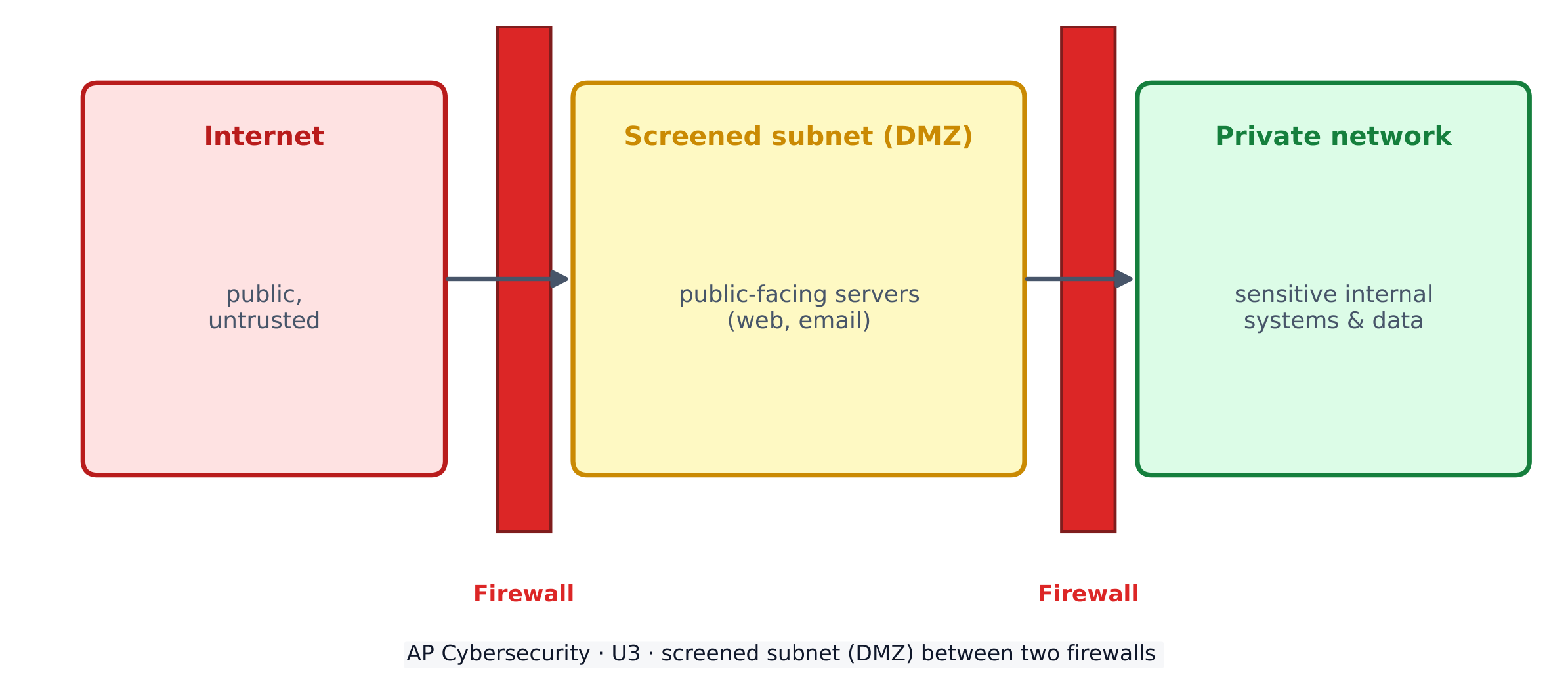
3.3.A.1 Firewall zones and rules can be used to create a screened subnet (also known as a demilitarized zone, or DMZ)—a network segment that sits between public, external networks like the internet and internal, private networks. A screened subnet is typically a lower security zone than the internal, private networks, and it typically holds an organization’s publicly facing resources, separating them from the internal network.
3.3.A.2 Subnetting can be used to create different subnets based on IP addressing. If a device is compromised by an adversary, subnets can contain a security breach to reduce the number of exposed devices.
3.3.A.3 Switches can be used to create VLANs, which logically separate devices physically connected to central switches.
3.3.B.1 Network segmentation refers to the process of dividing a network into smaller, isolated segments or subnetworks (subnets).
3.3.B.2 Dividing a network into smaller subnets isolates network traffic, which can prevent attacks on one subnet from impacting devices on other subnets.
3.3.B.3 Network segmentation can allow for different security policies and controls to be applied to different segments of the network, allowing for higher security zones and lower security zones.
3.3.B.4 Port security on a switch can prevent MAC flooding by limiting the number of addresses assignable to any single switch port.
3.3.B.4 ความปลอดภัยของพอร์ตบนสวิตช์สามารถป้องกัน MAC flooding ได้โดยการจำกัดจำนวนที่อยู่ MAC ที่สามารถมอบหมายให้กับพอร์ตสวิตช์แต่ละพอร์ต
Source: College Board AP Course and Exam Description · แหล่งที่มา: คำอธิบายหลักสูตรและข้อสอบ College Board AP
Network segmentation 网络分段 divides one network into smaller, isolated pieces (subnets 子网). If one subnet is breached, the damage is contained and cannot spread.
A key pattern is the screened subnet 屏蔽子网 (also called a DMZ 隔离区). It sits between the public internet and the private internal network, holding an organisation's public-facing servers in a lower-security zone - separated from the sensitive internal systems.
A screened subnet (DMZ) puts public servers between two firewalls, away from the private network
Segments can also be built with subnetting (by IP address) or VLANs 虚拟局域网 (logically separating devices on the same switch). Each segment can then get its own security policy - higher-security and lower-security zones.
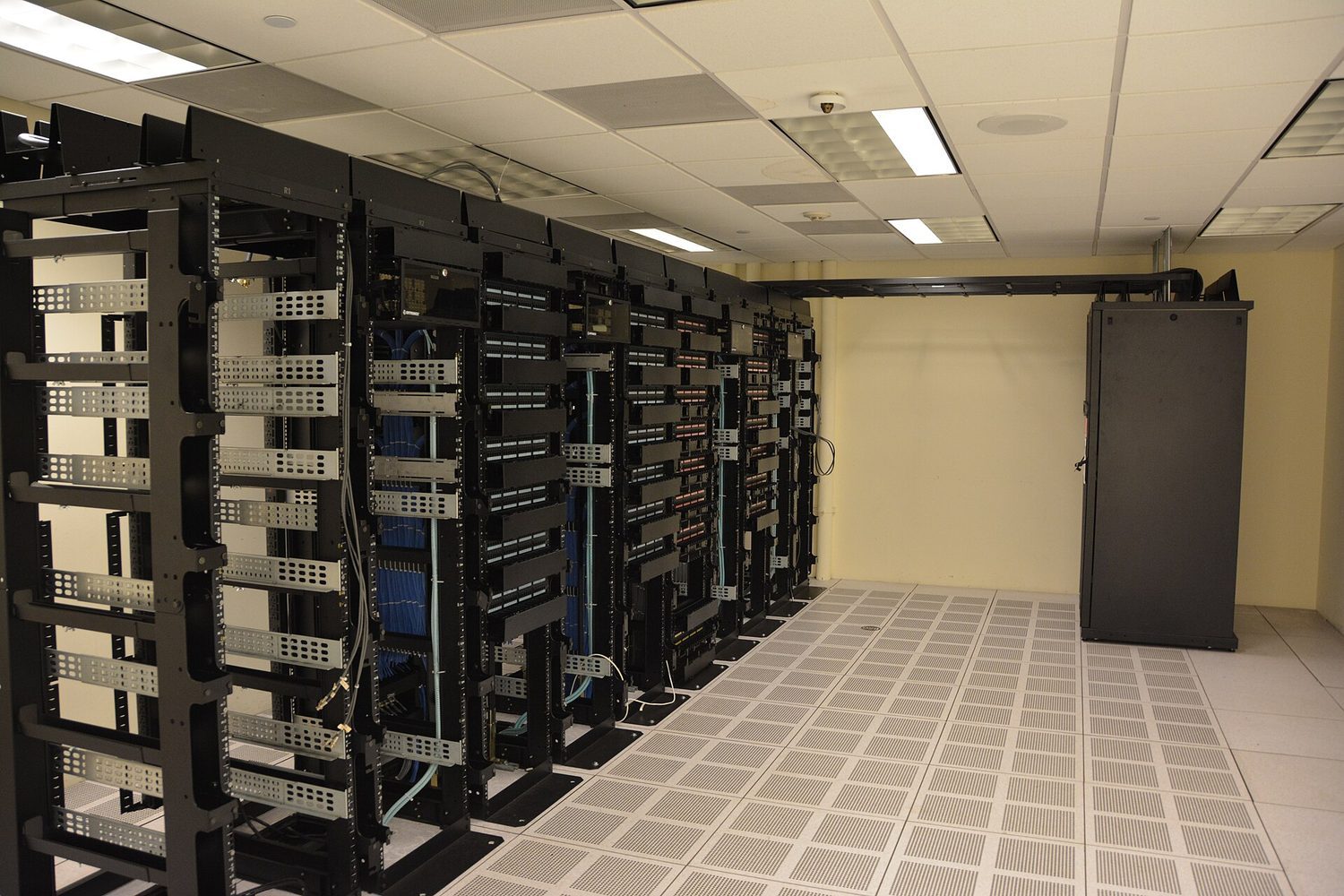
Server racks: network segmentation isolates systems so one breach does not open everything
Learning Objective 3.4.A: Identify types of network-based firewalls.
3.4.A.1 A firewall is used to allow or deny network traffic in or out of a network. The firewall itself is software that can be hosted on a standalone device or integrated into another network device, such as a router.
3.4.A.2 A stateless firewall filters traffic based on information in packet headers, such as IP addresses, ports, and protocols.
3.4.A.3 A stateful firewall (also known as dynamic packet filtering) tracks the state of network connections passing through the firewall and can filter according to connection-related rules in addition to the filtering done by a stateless firewall. This allows for more control over content allowed in and out of a network.
3.4.A.4 A next-generation firewall (NGFW) has both the capabilities of typical stateless and stateful firewalls and additional advanced features, such as intrusion prevention, deep packet inspection, and filtering by application type.
Learning Objective 3.4.B: Explain how a firewall uses an access control list to allow or deny traffic entering or leaving a network.
3.4.B.1 Network administrators create a set of rules, called an access control list (ACL), that a firewall uses to permit or deny inbound and outbound network traffic.
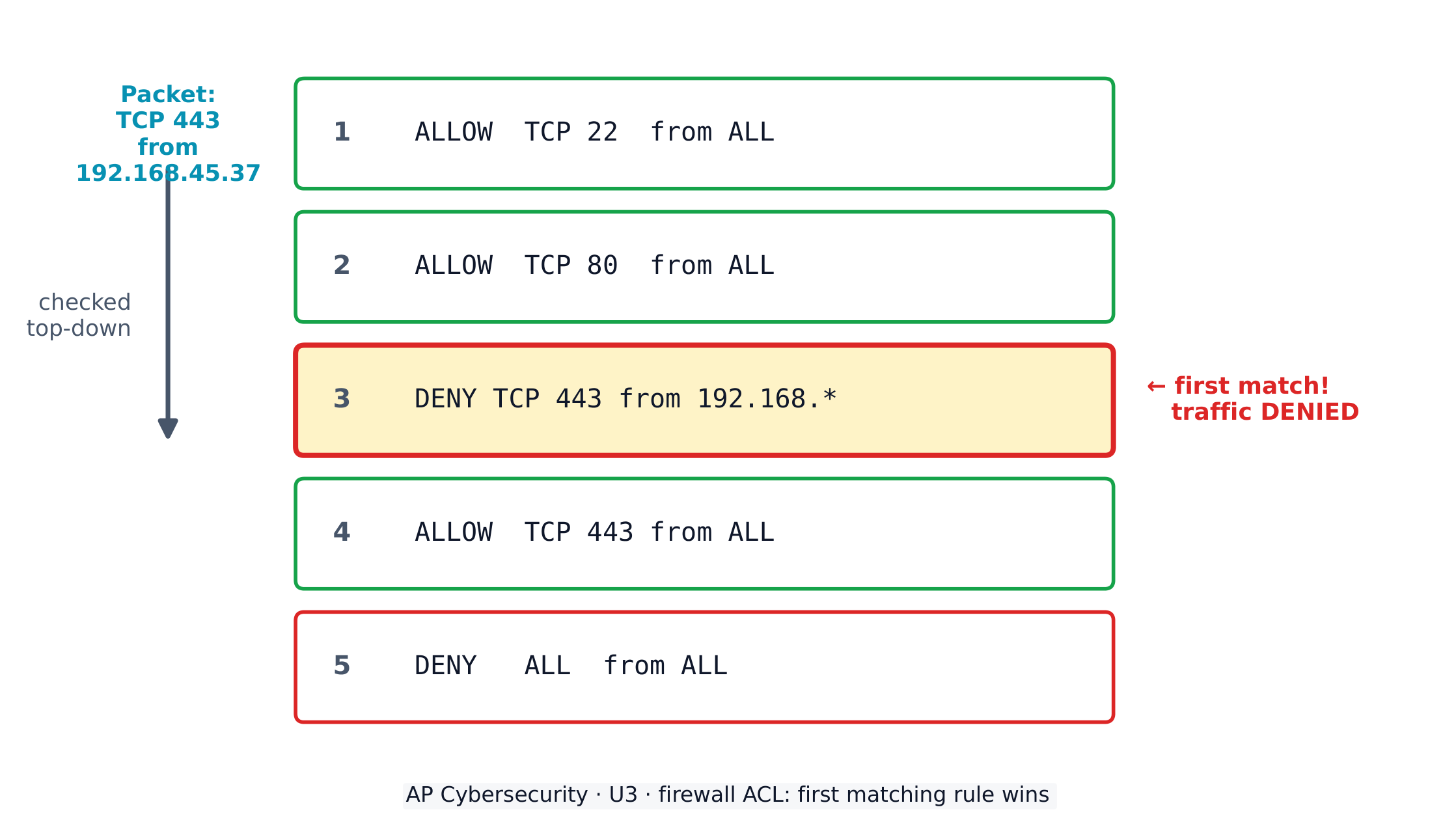
3.4.B.2 ACL rules are checked in order and the first rule that matches the criteria will be executed for the specified data.
3.4.B.3 A typical ACL will specify the direction of traffic (inbound or outbound), the criterion to filter by (IP addresses, logical port, service, or application), and the action to take (permit or deny).
Learning Objective 3.4.C: Determine the effective placement of firewalls in a network.
3.4.C.1 Each segment of a network should have a firewall to control the flow of data in and out of that segment.
3.4.C.2 Network segments may have different security needs based on the data and services within them. The level of security for each firewall can be set independently.
3.4.C.3 Each point of data ingress and egress between the internal network and the public internet should have a firewall.
Learning Objective 3.4.D: Configure a firewall to manage the flow of network traffic.
3.4.D.1 The requirements for a firewall will specify what type of traffic from which sources or to which destinations should be allowed or denied.
3.4.D.2 Specific rules for a firewall can allow or deny inbound or outbound traffic based on source or destination port or IP address, service, protocol, or application.
Illustrative examples for 3.4.D.2:
Allow inbound TCP port 22 from ALL; (this rule will allow all inbound TCP traffic with destination port 22, which is the designated port for the SSH protocol)
Deny inbound TCP port 80 from 192.168.1.0/24; (this rule will deny inbound TCP traffic with destination port 80 from IP addresses in the 192.168.1.0-192.168.1.255 range)
3.4.D.3 Rules are implemented in order, and changing the order of a set of rules can change which traffic is allowed or denied. Consideration must be given to the precedence of filtering priorities when establishing the order of rules.
Illustrative examples for 3.4.D.3:
This set of rules would allow SSH traffic and deny other inbound TCP traffic
Rule 1: ALLOW inbound TCP port 22 from ALL;
Rule 2: DENY inbound TCP ALL from ALL;
Reversing the order of those rules would deny all inbound TCP traffic including SSH traffic.
Stateful 有状态 - also tracks the state of each connection for finer control.
Next-generation (NGFW) - adds advanced features like intrusion prevention and deep packet inspection.
A firewall follows an access control list (ACL) 访问控制列表 - an ordered set of rules. Rules are checked in order, and the first match wins, so the order of rules changes which traffic gets through. Each rule specifies a direction, a thing to filter by (IP, port, service), and an action (permit or deny).
A firewall checks its ACL top to bottom; the first matching rule decides
Worked example. A firewall has Rule 3: DENY TCP 443 from 192.168.*, and lower down Rule 7: ALLOW TCP 443 from ALL. A user at 192.168.45.37 cannot reach port 443 - even though Rule 7 would allow them - because Rule 3 matches first, and the first match wins. The fix is to move the ALLOW rule above the DENY. This is why rule order, not just rule content, decides what traffic gets through.
Firewalls belong at every point where data crosses between zones - at each network segment and at every gateway to the public internet.
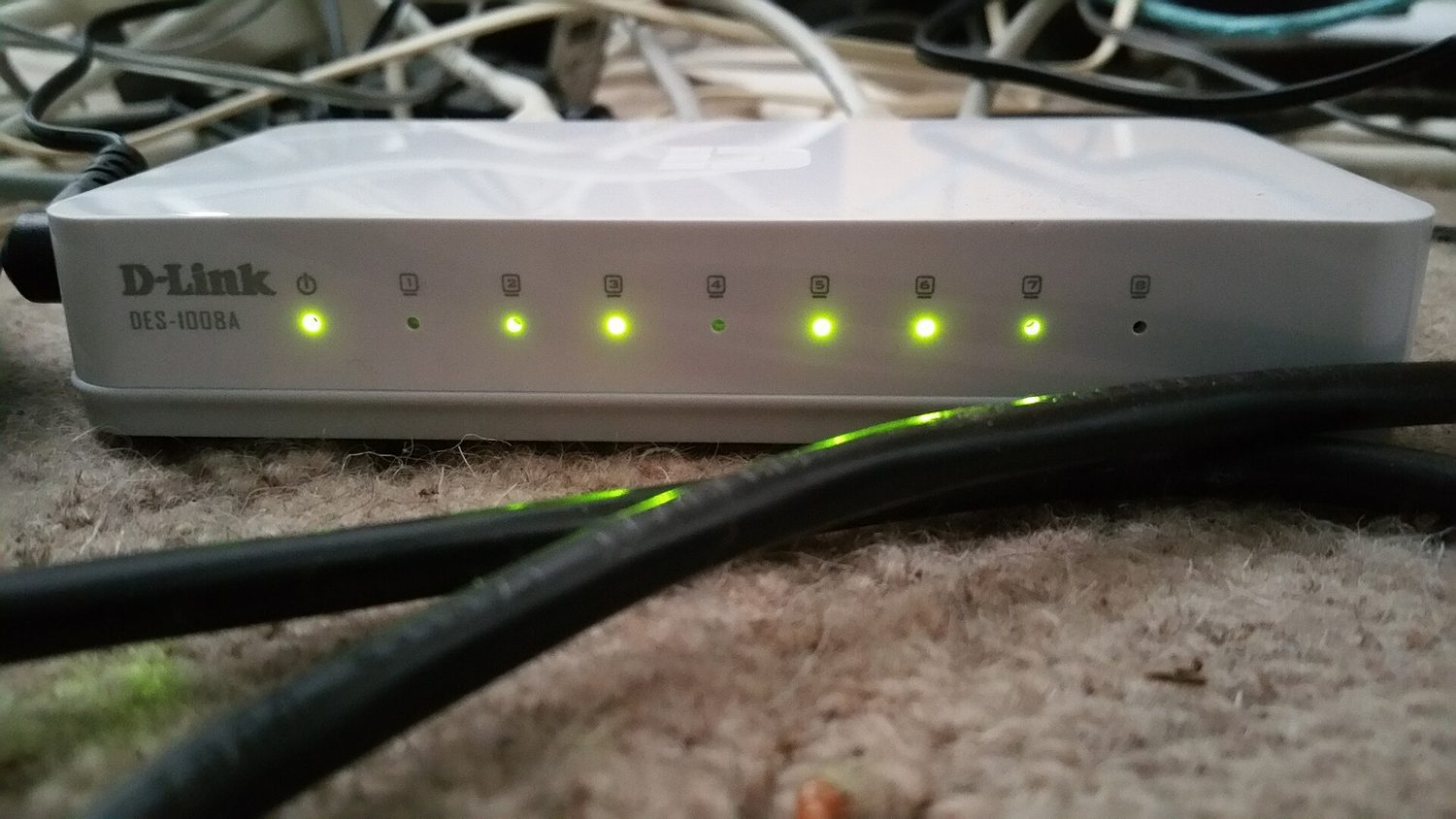
Real network hardware: a firewall is a device (or software) sitting where these cables meet the outside world
Learning Objective 3.5.A: Identify types of automated security tools used to detect network attacks.
3.5.A.1 Automated detection tools analyze data collected from an organization’s network and devices, such as switches and routers, servers, firewalls, and user computers. These data are often collected in a log file.
3.5.A.2 A network intrusion detection system (NIDS) is an automated tool that analyzes data to determine if malicious activity is taking place on a network. When an attack is detected, it generates an alert.
3.5.A.3 A network intrusion prevention system (NIPS) is an automated tool that, like an IDS, analyzes data to determine if malicious activity is taking place on a network. A NIPS can also mitigate or halt an attack by closing ports, blocking specific IP or MAC addresses, or rejecting specific protocols.
3.5.A.4 A security information and event management (SIEM) system collects and analyzes data from multiple sources (including firewalls, NIDS/NIPS, device logs, and application logs) to detect patterns that may indicate a cyberattack and raises an alert if a potential attack is detected. Security analysts investigate the alert to determine whether it represents a true threat and follow standard operating procedures to resolve or escalate the alert.
Learning Objective 3.5.B: Explain how organizations can leverage artificial intelligence (AI) to enhance threat detection and response.
3.5.B.1 Computers log every action that users take. Firewalls, IDS, IPS, and other network sensors log all the traffic passing through various points in a network. A medium-sized organization’s network is logging millions (or even tens of millions) of data points per day. Even a large team of humans is incapable of analyzing so much data.
3.5.B.2 Threat detection teams are creating AI algorithms to analyze large amounts of data and classify the data patterns as malicious or normal.
3.5.B.3 AI models for threat detection are based on probabilistic calculations; they report a percentage to indicate the likelihood that something is malicious.
3.5.B.4 Organizations determine their own thresholds for what percentage of likelihood of a threat results in an alert. If the threshold is set too high, real attacks may go undetected; if the threshold is too low, the security team will be overwhelmed with false alerts.
Learning Objective 3.5.C: Determine a network detection method.
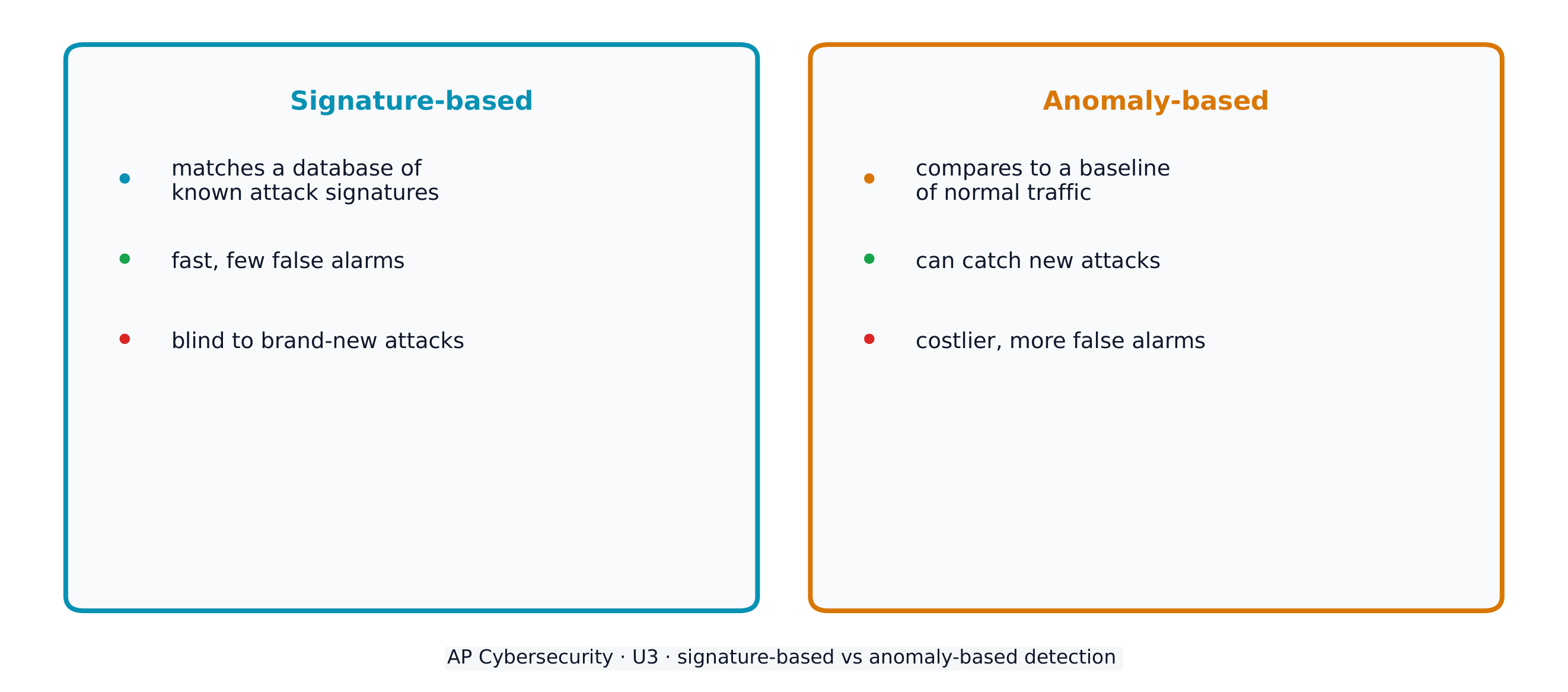
3.5.C.1 Volume of network traffic is a criterion for determining a detection method. Signature-based detection is more efficient for networks with high traffic volume. Signature-based detection compares detection data to a database of known indicators of compromise (IoCs), called signatures. Signature databases must be updated with IoCs for the latest attacks. Signature-based detection runs more quickly than anomaly-based detection.
3.5.C.2 Consistency of network traffic patterns is a criterion for determining a detection method. Anomaly-based detection is most effective on networks with consistent traffic patterns. Anomaly-based detection compares detection data to a baseline of recorded activity. Baselines must be recorded on uncompromised systems to establish expected data types and volumes. Anomaly-based detection triggers an alert or action when data types or volumes outside of a specified tolerance range are recorded. Anomaly-based detection relies on consistent patterns in network traffic to detect anomalous traffic patterns.
3.5.C.3 Degree of sensitivity or criticality of a network is a criterion for determining a detection method. Networks with more sensitive or critical data or services will likely consider a hybrid approach. Hybrid detection combines signature-based and anomaly-based detection. Hybrid detection is more expensive than using either signature- or anomaly-based detection alone, and hybrid-detection models generate more alerts.
3.5.C.4 Likelihood of novel attacks on a network is a criterion for determining a detection method. Signature-based detection cannot detect a new attack. When an organization suspects that adversaries are likely to attempt a new attack on a network, anomaly-based detection is the preferred method when the cost of hybrid detection is prohibitively high.
Learning Objective 3.5.D: Evaluate the impact of a network detection method.
3.5.D.1 Speed of detection is a factor in evaluating the impact of a network detection method. Faster detection enables faster response. Signature-based detection methods are faster than anomaly-based detection methods, especially on networks with high traffic volume.
3.5.D.2 Cost is a factor in evaluating the impact of a network detection method. Detection tools and ongoing costs need to be within a budget. Anomaly-based detection systems require more expensive hardware to operate than signature based. Hybrid detection is the most expensive option because it combines both anomaly- and signature-based methods.
3.5.D.3 False positive rate is a factor in evaluating the impact of a network detection method. Signature-based detection has almost no false positives. Anomaly-based or hybrid detection will have higher false positive rates. Impacts of high false positive rates include:
Time and resources are put toward investigating alerts for nonmalicious activity.
Alert fatigue is a condition that occurs when responders get accustomed to false positives and take alerts less seriously because they assume alerts are false positives before investigating them.
3.5.D.4 False negative rate is a factor in evaluating the impact of a network detection method. A false negative occurs when an adversary can bypass a detection system. Signature-based detection systems are easier to bypass than anomaly-based or hybrid systems. False negatives can result in adversaries causing loss, harm, disruption, or destruction to data and systems.
Learning Objective 3.5.E: Apply detection techniques to identify indicators of network attacks by analyzing log files.
3.5.E.1 Evil-twin attacks can be detected by regularly scanning for service set identifiers (SSIDs) that look suspicious or similar to local legitimate SSIDs. Signal triangulation can be used to locate and disable an access point broadcasting an evil-twin network.
3.5.E.2 Jamming attacks can be detected by recognizing that no wireless devices in a specific physical space are able to connect to a wireless network and by scanning for electromagnetic (EM) noise in the wireless range.
3.5.E.3 ARP poisoning attacks can be detected by monitoring network traffic for unusual ARP messages (particularly duplicate MAC address ARP packets) and checking the ARP table on the default gateway.
3.5.E.4 MAC flooding attacks can be detected by monitoring network traffic for an unexpected surge of Ethernet frames with different MAC addresses and checking the MAC address table on a switch.
3.5.E.5 DNS poisoning attacks are difficult to detect. However, if an organization’s website experiences an abrupt and otherwise inexplicable drop in traffic, DNS records should be examined as a potential cause.
3.5.E.6 Smurf attacks can be detected by watching network traffic for a sudden increase in ICMP requests sent to the network’s broadcast address.
3.5.E.7 Network-based IoCs are discovered when analyzing network traffic, often in the form of packet capture files. Indicators can be found in source and destination IP addresses, ports, and protocols. These can include:
3.5.E.4 การโจมตีแบบ MAC flooding สามารถตรวจพบได้ด้วยการตรวจสอบการไหลเวียนข้อมูลในเครือข่ายเพื่อหาการเพิ่มขึ้นของ Ethernet frames ที่มี MAC addresses ต่างๆ อย่างไม่คาดคิด และการตรวจสอบตาราง MAC address บนสวิตช์
3.5.E.5 การโจมตีแบบ DNS poisoning เป็นเรื่องยากที่จะตรวจพบ อย่างไรก็ตาม หากเว็บไซต์ขององค์กรมีปริมาณการเข้าชมลดลงอย่างฉับพลันโดยไม่ทราบสาเหตุที่ชัดเจน ควรตรวจสอบบันทึก DNS เพื่อหาความเป็นไปได้ว่าเป็นสาเหตุของการโจมตี
Source: College Board AP Course and Exam Description · แหล่งที่มา: คำอธิบายหลักสูตรและข้อสอบ College Board AP
When prevention fails, detection takes over. Automated tools read the log files 日志文件 that record network activity:
a network intrusion detection system (NIDS) 网络入侵检测系统 analyses traffic and raises an alert, but does not block;
a network intrusion prevention system (NIPS) 网络入侵防御系统 can also stop an attack by closing ports or blocking addresses;
a security information and event management (SIEM) 安全信息与事件管理 system gathers data from many sources to spot patterns.
There are two detection methods. Signature-based 基于特征 detection compares traffic to a database of known attack signatures - fast and low on false alarms, but blind to brand-new attacks. Anomaly-based 基于异常 detection compares traffic to a normal baseline 基线 and flags anything unusual - it can catch novel attacks but needs more resources and raises more false alarms. A hybrid approach combines both.
Examining captured traffic (packet-capture files), analysts hunt for network-based indicators of compromise 网络入侵指标 in the source and destination IP addresses, ports, and protocols. Four common ones: connections to known-malicious IP addresses, unauthorized network scans (an outsider probing your ports), unusual spikes or slowdowns in traffic, and mismatched port-application traffic (for example, non-web traffic flowing over port 80). These complete the host-, file-, and behaviour-based indicators a single device logs.
AI, thresholds, and alert fatigue
A medium network logs millions of events a day - far more than any team can read - so organisations train AI models to sort likely-malicious patterns from normal ones. These models are probabilistic 概率的: rather than a yes/no, each event gets a percentage likelihood of being malicious.
The organisation then sets a threshold 阈值 - the likelihood at which an alert fires - and that choice is a genuine trade-off:
set the threshold too high and real attacks slip through undetected;
set it too low and the team is overwhelmed with false alerts.
Too many false alerts cause alert fatigue 警报疲劳: responders get so used to false positives that they start assuming an alert is false before investigating it - so a real attack, when it finally comes, is waved away. This is exactly why a low false-positive rate matters: signature-based detection has almost none, while anomaly-based and hybrid detection trade a higher false-positive rate for the ability to catch novel attacks.
Signature-based detection matches known attacks; anomaly-based detection flags deviations from normal
network intrusion detection system (NIDS)/ˈnetwɜːk ɪnˈtruːʒn dɪˈtekʃn ˈsɪstəm/
ระบบตรวจจับการบุกรุกบนเครือข่าย (NIDS)
network intrusion prevention system (NIPS)/ˈnetwɜːk ɪnˈtruːʒn prɪˈvenʃn ˈsɪstəm/
ระบบป้องกันการบุกรุกบนเครือข่าย (NIPS)
security information and event management (SIEM)/sɪˈkjʊərɪti ˌɪnfəˈmeɪʃn ænd ɪˈvent ˈmænɪdʒmənt/
การจัดการข้อมูลและเหตุการณ์ด้านความปลอดภัย (SIEM)
Signature-based/ˈsɪɡnɪtʃə beɪst/
แบบลายลักษณ์อักษร
Anomaly-based/əˈnɒməli beɪst/
แบบความผิดปกติ
baseline/ˈbeɪslaɪn/
baseline
network-based indicators of compromise/ˈnetwɜːk beɪst ˈɪndɪkeɪtəz ɒv ˈkɒmprəmaɪz/
ตัวบ่งชี้การถูกบุกรุกที่อาศัยเครือข่าย
probabilistic/ˌprɒbəbɪˈlɪstɪk/
แบบ احتمالية
threshold/ˈθreʃəʊld/
阈値 (threshold)
alert fatigue/əˈlɜːt fəˈtiːɡ/
ความเหนื่อยล้าจากคำเตือน
3.5
Exam tips
For firewall-ACL questions, read the rules top-to-bottom and stop at the first match - a Deny rule above an Allow blocks the traffic even though the Allow exists lower down.
Pair each attack with its tell-tale sign: ARP poisoning = one IP with two MAC addresses; MAC flooding = a surge of new MAC addresses; DNS poisoning = an unexplained drop in web traffic.
Read packet captures for network-based IoCs: known-malicious IPs, unauthorized scans, traffic spikes/slowdowns, and mismatched port-application traffic.
Run vulnerability scanners to find known weaknesses proactively, and fix the highest-severity findings first.
Signature-based = fast, few false positives, misses new attacks (more false negatives); anomaly-based = catches new attacks, costs more, more false positives. Memorise this trade-off.
A screened subnet / DMZ holds public-facing servers between the internet and the private network - name it whenever a question separates public services from internal data.
WPA3 is the strong wireless encryption; WEP and original WPA are insecure.
Device Vulnerabilities and Attacks · ความเสี่ยงและความเสี่ยงของอุปกรณ์
Syllabus · หลักสูตร
English
Learning Objective 4.1.A: Identify types of computing devices.
4.1.A.1 Server computers are devices that provide one or more services to other computers (e.g., DNS, DHCP, FTP). Any computer can be a server, and in an enterprise environment servers typically have more processing power and storage than a personal computer.
4.1.A.2 Personal computers are devices that are designed to be used by one person for work or recreational purposes (e.g., word processing, graphic design, web browsing, and media production or viewing). These include desktop, laptop, and notebook computers.
4.1.A.3 Handheld computers (also called mobile computers or information appliances) are smaller than personal computers and run on battery power. These include tablets, smartphones, and wearable technology like smart watches.
4.1.A.4 Embedded computers are devices that are part of a machine. Embedded devices have specific instruction sets for interfacing with the specialized components of the machine they’re embedded in. Embedded computers tend to be slower and cheaper than other computers and have minimal storage.
4.1.A.5 Everyday devices with embedded computers are often called Internet of Things (IoT) devices. Embedded computers are found in transportation (e.g., cars, trains, and airplanes), devices that operate critical infrastructure (e.g., operating circuit breakers at electrical substations and pumps at water treatment plants), medical equipment (e.g., IV pumps, MRI scanners, pacemakers, and insulin pumps), and everyday devices like washing machines, coffee makers, and thermostats.
Learning Objective 4.1.B: Identify the type of malware used in a cyberattack.
4.1.B.1 Malware is malicious software that can damage or destroy a device or network, or allow an adversary access to a device and the data on the device.
4.1.B.2 Malware is often used as a tool to accomplish part of an adversary’s plan to achieve their ultimate goal(s). There are many types of malware, such as:
Viruses are malware that must be activated by a user executing or opening a file.
Worms spread from one computer to another without human interaction.
Trojans are malware embedded in other software that seems harmless. Remote access trojans (RATs) provide an adversary with remote access to the target system.
Ransomware encrypts a device’s files, preventing the user from accessing files on the device. The ransomware typically presents the user with a screen demanding payment and promising to give the user a decryption key for their files if the user pays within a fixed amount of time.
Spyware tracks a user’s actions on a computer and sends information back to an adversary.
A keylogger is software or hardware that logs the users keystrokes and sends the information back to the adversary. Adversaries can often extract usernames and passwords from keylogger data.
Logic bombs are set to trigger their effect only when a specific set of conditions are met; the conditions can include time and date, specific type or version of the operating system, character set the computer is using, etc.
A rootkit is sophisticated malware that gets into the target computer’s operating system and can control nearly every aspect of the system, including making the rootkit itself invisible to detection.
4.1.B.3 While most malware is a file or a collection of files, fileless malware is malicious code that lives in RAM and uses legitimate programs already installed on a device to compromise it.
Learning Objective 4.1.C: Explain how adversaries can exploit common device vulnerabilities to cause loss, damage, disruption, or destruction.
4.1.C.1 Adversaries can develop exploits for known vulnerabilities in software (including operating systems). Devices with unpatched software are vulnerable to these exploits, which could allow an adversary to crash a system, view user actions, enable or disable various services or components on the device (e.g., turning on a webcam or microphone), or even take control of the device to issue their own commands including commands to steal or destroy information on the device.
4.1.C.2 Adversaries can take advantage of weak authentication requirements by guessing a user’s password or using social engineering to get a user to divulge their password.
4.1.C.3 When systems don’t have a password on the basic input output system (BIOS) or unified extensible firmware interface (UEFI), an adversary can boot a computer into a special mode (e.g., “recovery mode”) that gives them higher-level privileges. Without BIOS or UEFI protection, adversaries can load their own operating system onto a device from an external drive and use specialized tools to alter or create user profiles, including changing user passwords.
4.1.C.4 Adversaries can load malware onto an external drive, and if autorun is enabled, then a device will run the malware when the external drive is inserted.
4.1.C.5 Adversaries can leverage open ports to connect to a device.
4.1.C.6 Adversaries can send malicious data to devices to disrupt them or attempt to take control of them. Devices that have no firewall (or a misconfigured firewall) cannot filter out this malicious data.
4.1.C.7 Adversaries often attempt to install malware on a device to disrupt or control it. Devices lacking anti-malware software are more vulnerable to this type of attack.
Learning Objective 4.1.D: Assess and document risks from device vulnerabilities.
4.1.D.1 Risk from device vulnerabilities can come from unauthorized access or malware that allow an adversary to impersonate an authorized user, remotely control a device, encrypt a device’s drive to ransom the data, or wipe a device’s memory, destroying data or rendering the device inoperable. The level of risk varies depending on the criticality of the device or the services the device provides or data it stores.
4.1.D.2 High risks from device vulnerabilities involve potentially compromising sensitive data or critical operations.
Illustrative examples for 4.1.D.2:
An organization has not installed the most recent update for their email server which included a patch for a known critical vulnerability.
4.1.D.3 Moderate risks from device vulnerabilities can arise from weak authentication requirements or from vulnerabilities that would be less likely to be exploited.
Illustrative examples for 4.1.D.3:
A water treatment plant has embedded systems controlling pumps. The pumps can be remotely accessed via username and password for remote management for the plant, but the devices do not require multi-factor authentication (MFA).
4.1.D.4 Low risks from device vulnerabilities are typically related to vulnerabilities that, if exploited, would have little impact.
Source: College Board AP Course and Exam Description · แหล่งที่มา: คำอธิบายหลักสูตรและข้อสอบ College Board AP
English
A device is any computer - a server, a personal laptop, a smartphone, or an embedded computer 嵌入式计算机 built into a machine. Everyday devices with embedded computers are called Internet of Things (IoT) 物联网 devices, and they run everything from water pumps to washing machines.
The four classes of device, and why the class matters
Class
What it is
Security consequence
servers
shared machines running services for many users
the highest-value target; one compromise reaches everyone
personal computers
desktops and laptops
general purpose, so they run anything the user installs
handheld computers 手持计算机 (also called mobile computers or information appliances)
smaller than a PC and running on battery power — smartphones, tablets, smart watches and other wearable technology
easily lost or stolen, and often carried across untrusted networks
embedded computers
a computer that is part of a machine — a car's engine controller, a thermostat, a medical pump
has a specialised instruction set for interfacing with its components, and tends to be slower, cheaper and to have minimal storage, so security features are often left out and updates are rare
That last row is the reason embedded and IoT devices appear so often in attack scenarios: the constraints that make them cheap are the same constraints that make them hard to defend.
The main threat to a device is malware 恶意软件 - malicious software. Learn the types:
Virus 病毒 - must be activated by a user opening a file.
Worm 蠕虫 - spreads by itself, with no human action.
Trojan 木马 - hides inside software that looks safe; a remote access trojan (RAT) 远程访问木马 gives the adversary remote control.
Ransomware 勒索软件 - encrypts your files and demands payment for the key.
Spyware 间谍软件 - secretly tracks what you do.
Keylogger 键盘记录器 - records every keystroke to steal passwords.
Logic bomb 逻辑炸弹 - triggers only when a condition is met (a date, a version).
Rootkit - deeply hides in the operating system and can even make itself invisible.
Most malware is a file, but fileless malware 无文件恶意软件 is different: it lives only in RAM 内存 and abuses legitimate programs already on the device, leaving no file for a scanner to find.
Adversaries exploit unpatched software 未打补丁的软件, weak passwords, unprotected BIOS/UEFI startup settings, and open ports. We rate device risk by the value and criticality of the device - a hospital's unpatched email server is high risk, while an employee's laptop with one unused open port is low.
ไทย
อุปกรณ์ (device) คือคอมพิวเตอร์ทุกประเภท - เซิร์ฟเวอร์, แล็ปท็อปส่วนบุคคล,สมาร์ทโฟน หรือ คอมพิวเตอร์ฝังตัว (embedded computer) ที่สร้างอยู่ในเครื่อง อุปกรณ์ทั่วไปที่มีคอมพิวเตอร์ฝังตัวเรียกว่า อุปกรณ์ Internet of Things (IoT) และ它们在运行 everything from water pumps to washing machines. (Note: The source text had a mix of English and Chinese here. Translating the meaning):它们运行从水泵到洗衣机等各种设备。
Name the malware from its behaviour · ตั้งชื่อนม้ลแวร์ตามพฤติกรรม
Each kind of malware has one defining trait: a worm self-spreads, a virus needs a user to run it, ransomware encrypts for money, and a rootkit hides deep in the OS. · มัลแวร์แต่ละชนิดมีลักษณะเด่นหนึ่งอย่าง: worm แพร่ขยายเอง, virus ต้องให้ผู้ใช้รัน, ransomware เข้ารหัสเพื่อเรียกค่าไถ่, และ rootkit ซ่อนลึกในระบบปฏิบัติการ
4.2.A
Explain why hashes (also called hash outputs, checksums, message digests, or digests) are used to store passwords.
4.2.A.1 A cryptographic hash function (also called a message digest function) is a mathematical algorithm that takes binary data of an arbitrary length, processes it according to a set of instructions, and outputs a fixed-length binary string called the hash (or checksum or message digest). Well known cryptographic hashes include:
MD5
SHA-1, SHA-256, SHA-512 (SHA stands for Secure Hash Algorithm)
NTHash
RIPEMD-160
4.2.A.2 An n-bit hash has $2^n$ possible outputs. The number of inputs is infinite, and so inevitably two different inputs will produce the same hash. This is called a collision.
4.2.A.3 Cryptographic hash functions have the following properties:
Hashes are collision resistant; it is difficult to find two different inputs to the same hash function that produce the same output.
Hashes have pre-image resistance; given a hash, it is infeasible to figure out the input that generated the hash.
Hashes are repeatable; the same input will always produce the same hash.
Hashes have a fixed length; the length in bits of the hash for a specific hash function is constant regardless of the size of the input.
4.2.A.4 Adversaries try to compromise hashing functions by forcing collisions in their output. If an efficient algorithm exists to force a collision for a specific hash function, then that hash function will be deprecated (no longer used in secure settings). MD5 and SHA1 are examples of deprecated hash functions.
4.2.A.5 Password-based authentication services shouldn’t store passwords in plaintext, so that if an adversary gains access to the user:password directory they won’t immediately know the passwords for all users. Instead, user passwords should be hashed and the hash stored in a database. When a user enters their password, it is hashed, and the hash is compared to the hash stored on file. If the hashes match, then the user is authenticated.
4.2.A.6 If two users had the same password, then their passwords would have identical hashes in the user:password directory. To prevent this, a few random bits (called salt) are hashed with a user’s password to generate the hash. Each user’s salt is unique, so even if two users have the same password they will have a different password hash because they have different salt.
4.2.B
Explain how password attacks exploit vulnerabilities.
4.2.B.1 If an adversary can compromise the password of a legitimate user, and that user’s organization has not enabled MFA or other authentication protections, then the adversary can act within that organization with all the access and rights available to the user.
4.2.B.2 Password attacks can be classified as online or offline.
Online password attacks attempt user:password combinations in an active authentication portal.
Offline password attacks have captured a user:password database and can run password attacks against the database on their own computer. This method bypasses any account lock out protections that may be in place.
4.2.B.3 Many users reuse the same passwords (or variations of the same password) for all the services and accounts they have, despite warnings not to. When an organization’s user database is stolen, the usernames, emails, and passwords are sold to adversaries or posted online. Adversaries often begin an attempt to compromise an account by trying stolen or leaked credentials for a target individual.
4.2.B.4 Many users set passwords that are easy to guess, and adversaries will attempt to guess common passwords for a user’s account. Password spraying is an attack where an adversary attempts a common password against many different user accounts.
4.2.B.5 Some services and devices (e.g., switches, routers, and IoT devices) are preconfigured with a default administrative user and password. Credential stuffing is an attack where an adversary attempts to gain access to these services or devices using common default credentials or account credentials that have been stolen.
4.2.B.6 Offline password attacks use automated hash-cracking tools to hash possible passwords and compare them against a captured hash. Although hashes can’t be reversed, an adversary can use these tools to hash many potential passwords and compare them to the target hash. If an adversary finds a hash that matches, they can use the password that generated the hash to login to the user’s account. Offline attacks include:
Brute force attacks, where an adversary uses an automated tool to test all the potential passwords that a user could have
Dictionary attacks, where an adversary uses an automated tool to test a list of common passwords
4.2.B.7 A rainbow table attack uses a list of common passwords to generate a rainbow table. A rainbow table is a table that contains each potential password and its hash. The table is then sorted by the hashes, and the adversary uses an automated tool to search the list of hashes for the captured hash. If the hashes match, then the adversary has found a password that generates the same hash, and the password will allow the adversary to login to the user’s account.
4.2.C
Determine the type of authentication used to verify the identity of a user.
4.2.C.1 Authentication mechanisms are technical controls that verify the identity of a user to ensure that only authorized users access a system. The proof the user provides to identify themselves is called a factor. Common authentication factors include:
Something the user knows (knowledge factor)
Something the user has (possession factor)
Something the user is (biometric factor)
Somewhere the user is (location factor)
4.2.C.2 Knowledge factors can be passwords, PINs, or answers to preselected challenge questions. For a knowledge factor to be effective it needs to be something an adversary can’t easily guess; however, knowledge factors that are difficult for an adversary to figure out can also be harder for a user to remember.
4.2.C.3 A possession factor is an object a user has that is unique to them, such as an access card, a bank card, a cell phone, or an authentication token. The more difficult it is for an adversary to obtain the object (or a copy of it), the more secure the possession factor is.
4.2.C.4 Biometric factors measure features of the human body and can include fingerprints, palm prints, facial recognition, iris or retina scans, or voice identification. Biometric factors are difficult for an adversary to duplicate because they are unique to an individual.
4.2.C.5 Location factors use information about Wi-Fi signals, GPS data, time zone settings, and even IP address information to make determinations about location. Rules can be established for allowing or denying access based on a location factor.
4.2.C.6 Multifactor authentication (MFA) is when a system uses more than one factor to authenticate a user. MFA is more secure than single-factor authentication because it requires the user to provide at least two separate factors of authentication.
4.2.D
Configure login settings to make a device more secure.
4.2.D.1 Requiring complexity in passwords is a login setting that can be configured. When enabled, users setting a new password must include at least one character from each character set. Passwords with characters from each character set are significantly harder for an adversary to crack than passwords that use characters from only one or two character sets. The main character sets often required are:
Uppercase letters (A–Z)
Lowercase letters (a–z)
Numeric digits (0–9)
Special characters (!”#$%&’()*+,-./:;<=>?@ [ \ ] ^_`{|}~)
4.2.D.2 Requiring a minimum password length is a login setting that can be configured. This means that users must have at least a certain number of characters in their password. The longer and more complex a password is, the longer it will take a digital tool to crack the password.
4.2.D.3 Requiring a maximum password age is a login setting that can be configured. When configured, users will receive a prompt to change their password a certain number of days after their last password change, usually every 90 or 120 days. If a user’s password has been compromised, changing it could prevent an adversary from gaining access to the user’s account. However, some national standards recommend that organizations not require users to change their passwords on predefined intervals to discourage users from developing password patterns (e.g., PasswordFall2028).
4.2.D.4 Requiring the system to store a certain number of previous user passwords is a login setting that can be configured. This prevents a user from reusing a password. Many organizations store users’ previous 5–10 password hashes to prevent reuse.
4.2.D.5 Requiring a lockout period after a certain number of invalid login attempts is a login setting that can be configured. This prevents an adversary from continuously randomly attempting wrong passwords. Many organizations lock a user’s account after 3–5 invalid login attempts. The period of the lockout varies.
Source: College Board AP Course and Exam Description · แหล่งที่มา: คำอธิบายหลักสูตรและข้อสอบ College Board AP
English
Multi-factor authentication
To store passwords safely, systems use a cryptographic hash function 密码散列函数 - a one-way maths algorithm that turns any input into a fixed-length string called a hash 散列值 (or digest). Hashes have three vital properties: they are collision resistant 抗碰撞 (hard to find two inputs with the same output), have pre-image resistance 抗原像 (you cannot work backwards to the input), and are repeatable (the same input always gives the same hash).
Real hash functions have names. The Secure Hash Algorithm (SHA) family – SHA-256 and SHA-512 – is today's standard. Adversaries attack a hash function by trying to force a collision (two different inputs with the same hash); once an efficient collision attack exists, that function is deprecated 弃用 (retired from secure use). MD5 and SHA-1 are the classic deprecated examples – never rely on them to protect data today.
A service never stores your plaintext password. It stores the hash; when you log in, it hashes what you typed and compares. To stop two identical passwords producing identical hashes, a few random bits called salt 盐值 are added before hashing, so every stored hash is unique.
Worked example. Two users both choose the password sunshine. Without salt, both stored hashes would be identical, so cracking one instantly cracks the other. Give each user a unique salt - say x7 and q2 - and the service hashes sunshinex7 and sunshineq2 instead. The two stored hashes now look completely different, so the adversary must attack each account separately. This is why a stolen hash database is far less dangerous when the hashes are salted.
Adversaries fight back with password attacks. Online attacks guess against a live login; offline attacks steal the hash database and crack it on their own machine (which bypasses any account-lockout protection). Techniques include:
brute force 暴力破解 - an automated tool tries every possible password in turn; guaranteed to work eventually, but slow, and it grows explosively with password length.
a dictionary attack 字典攻击 - the tool tries a list of common words and known passwords first, because most people pick guessable ones.
password spraying 密码喷洒 - one common password against many accounts (this dodges lockout, which counts failures per account).
credential stuffing 撞库 - reusing stolen or default credentials, exploiting that people reuse passwords across sites.
a rainbow table 彩虹表 - a precomputed table of passwords and their hashes, sorted by hash, so a captured hash can be looked up instead of recomputed.
Password policy settings
An administrator hardens accounts by configuring login settings - and the exam expects you to name them and say what each defends against:
Setting
What it does
The attack it slows
complexity 复杂度
require a character from each set (upper, lower, digit, special)
brute force / dictionary
minimum length 最小长度
require N characters - length matters more than anything
brute force (grows exponentially)
maximum age 最长有效期
force a change every ~90-120 days
limits how long a stolen password is useful
password history 密码历史
store the last 5-10 hashes, block reuse
stops recycling an old (possibly leaked) password
lockout 锁定
lock the account after 3-5 wrong tries
brute force / online guessing
One subtlety worth a mark: some national standards now advise against forced expiry, because regular changes push users into predictable patterns like PasswordFall2028. A password manager 密码管理器 solves the real problem - it generates and stores a long, unique password per site, so none is ever reused or guessable.
Authentication factors prove who you are, and fall into categories: something you know (a password), something you have (a token or phone), something you are (a biometric 生物特征 like a fingerprint or retina scan), and somewhere you are (a location factor). Using two or more is multifactor authentication (MFA) 多因素身份验证 - far stronger than a password alone.
Removable media, and the autorun problem
An adversary can load malware onto an external drive — a USB stick, a portable disc — and leave it where someone will pick it up. If autorun 自动运行 is enabled, the device runs a program from that drive the moment it is inserted, with no click required, so the malware executes before the user has decided to trust anything.
Two controls answer this, and the exam wants both named:
Disable autorun, so inserting a drive never runs anything by itself.
Prohibit users from connecting external drives or media at all — enforced by policy and by a technical control that blocks the USB ports — which is why so many secure environments physically or logically disable them.
ไทย
การยืนยันตัวตนหลายปัจจัย (Multi-factor authentication)เครื่องสแกนลายนิ้วมือ: การยืนยันตัวตนทางชีวภาพตรวจสอบสิ่งที่คุณเป็น (something you ARE), ซึ่งยากต่อการโจรกรรมหรือเดาของนักโจมตีมากกว่ารหัสผ่าน
ห้ามผู้ใช้เชื่อมต่อดูรฟ์ภายนอกหรือสื่อ เลย – enforced by policy และโดย technical control ที่บล็อกพอร์ต USB – ซึ่งเป็นเหตุผลว่าทำไมสภาพแวดล้อมที่ปลอดภัยจำนวนมากถึงปิดใช้งานทางกายภาพหรือทาง.logically them
Explore · สำรวจ
How a hash maps any input to a fixed slot · วิธีที่ hash映射ทุกอินพุตไปยังช่องความยาวคงที่
A hash function sends every input to a fixed-length output. The same input always lands in the same place (repeatable), and you cannot work backwards from the slot to the input. · ฟังก์ชัน hash ส่งอินพุตทุกอย่างไปยังเอาต์พุตความยาวคงที่ อินพุตเดียวกันจะตกอยู่ในตำแหน่งเดิมเสมอ (ทำซ้ำได้) และไม่สามารถย้อนกลับจากช่องนั้นไปหาอินพุตได้
Learning Objective 4.3.A: Identify managerial controls related to device security.
4.3.A.1 An acceptable use policy will describe the range of activities that are permissible, prohibited, or required by users on devices owned by an organization and may include:
Prohibiting users from accessing specific websites or types of websites (e.g., social media or gaming)
Requiring users to keep software updated
Allowing users to connect peripheral devices
Prohibiting users from connecting external drives or media
4.3.A.2 A password policy will detail the requirements for user passwords within an organization and may include:
A minimum or maximum password length
A minimum or maximum amount of time a user may keep the same password
A prohibition of password reuse
Rules for password construction (e.g., no dictionary words and character set requirements)
A suggestion to use secure password management tools instead of writing passwords down
4.3.A.3 A software installation policy will describe what (if any) software users are allowed to install on their devices and usually also a process for users to request specialized software they may need to perform their role, and it may include:
A prohibition against users installing software on their devices
A process for users to request new software needed for their role
A list of approved software for users
Learning Objective 4.3.B: Explain how anti-malware software can make a device more secure.
4.3.B.1 Anti-malware software (sometimes called antivirus software) has tools to quarantine and remove malware that can corrupt, spy on, or destroy a system. Malware contains indicators that make it detectable; these indicators are called signatures.
4.3.B.2 Anti-malware software has a database of malware signatures. It periodically scans the files on a device and checks to see if any of the files match any of the signatures in its database. If there is a match, the software quarantines and removes the malicious files.
Learning Objective 4.3.C: Explain why keeping a device’s operating system and software updated makes it more secure.
4.3.C.1 When vulnerabilities in operating systems and software are found, the vendor or organization that maintains the operating system software will fix it and send an update. A small update is called a patch.
4.3.C.2 Ensuring that a computer’s operating system and software applications are updated to the most recent version prevents adversaries from taking advantage of a known vulnerability.
Learning Objective 4.3.D: Configure a host-based firewall.
4.3.D.1 Host-based firewalls allow or deny traffic into or out of a single device. This provides an extra layer of security in case a host is connected to a compromised network.
4.3.D.2 A host-based firewall is software that runs on a device and follows a set of rules (an ACL) like a network-based firewall. Firewall rules are implemented in order, applying the first rule that matches.
4.3.D.3 A host-based firewall can also block specified types of outbound traffic. Host-based firewalls should always block ports or services not needed for a given device.
Illustrative examples for 4.3.D.3:
A host-based firewall is configured to block outbound FTP traffic. This prevents an adversary with remote access to the host from using FTP to exfiltrate a file to the adversary’s server.
4.3.D.4 The rules for a host-based firewall can allow or deny traffic based on source or destination port or IP address, service, protocol, or application.
4.3.D.4 กฎสำหรับไฟร์วอลล์แบบโฮสต์สามารถอนุญาตหรือปฏิเสธการรับส่งข้อมูลبناءตามพอร์ตต้นทางหรือปลายทาง หรือที่อยู่ IP บริการ โปรโตคอล หรือแอปพลิเคชัน
Source: College Board AP Course and Exam Description · แหล่งที่มา: คำอธิบายหลักสูตรและข้อสอบ College Board AP
English
Managerial controls set the rules: an acceptable use policy 可接受使用政策 lists what users may and may not do, a password policy sets length and reuse rules, and a software installation policy controls what can be installed.
Technical controls do the work. Anti-malware software 反恶意软件 keeps a database of malware signatures and quarantines any file that matches. Keeping the operating system and applications updated - installing each patch 补丁 - closes known holes before adversaries can use them. A host-based firewall 主机防火墙 controls traffic in and out of one single device, blocking ports and services it does not need.
Detecting Attacks on Devices · การตรวจจับการโจมตีบนอุปกรณ์
Syllabus · หลักสูตร
English
Learning Objective 4.4.A: Explain how to detect attacks against devices.
4.4.A.1 System processes and settings, login attempts, file download attempts, and user actions are logged by computing systems. These logs can be used to reconstruct circumstances leading up to and during a cyber incident.
4.4.A.2 An indicator of compromise (IoC) is evidence that an adversary has compromised a device or network.
4.4.A.3 Authentication logs (or auth logs) record every attempted login on a system. Analysis of authentication logs can reveal attempted attacks.
4.4.A.4 Host-based IoCs are discovered when analyzing logs and configuration settings. Indicators, such as the following, can be found in authentication logs, user activity logs, and system configuration files:
Unusual files being created or modified
Unexpected processes or services
Unauthorized changes to system configuration settings
Unauthorized software installation or update
4.4.A.5 File-based IoCs are discovered when analyzing files on a device. Indicators are usually found in executable files and can include:
Files whose hash matches known malware
File names that are known to be created by a certain piece of malware
File paths that are associated with malicious activity
4.4.A.6 Behavior-based IoCs are discovered when analyzing logs. Indicators can be found in authentication logs and access logs and can include:
Multiple failed login attempts
Unusual login times or locations
Unauthorized attempts to access sensitive data
Attempts to elevate user privileges on a system
Learning Objective 4.4.B: Determine controls for detecting attacks against a device.
4.4.B.1 Performance is a criterion for determining a detection method. Detection tools use system memory and processing power and can impact the performance of a device. Anomaly-based detection tools use more system resources than signature-based tools. Signature-based detection is a better option for devices with less powerful system resources. Many embedded devices do not have enough system resources to run any detection tools on the device.
4.4.B.2 Cost is a criterion for determining a detection method. Organizations that purchase detection software need to consider the cost of purchasing enough software licenses for the number of devices they need to monitor. Some organizations purchase an endpoint detection and response (EDR) service from a third-party vendor. Although these services are expensive, they provide a holistic, unified approach to threat detection for an organization’s devices; they typically include a centralized alert platform for monitoring possible attacks on devices.
4.4.B.3 Sensitivity or criticality of the device is a criterion for determining a detection method. Devices that store or process sensitive information or provide critical services are more likely to be targeted by adversaries and benefit from a hybrid-detection model to offer maximum protection, when possible.
Learning Objective 4.4.C: Evaluate the impact of a device detection method.
4.4.C.1 Speed and performance are factors in evaluating the impact of a detection method. Signature-based detection is faster than anomaly-based detection in general, and that effect is compounded on devices, which often lack the processing power to effectively run anomaly-based detection tools. Implementing resource-intensive detection tools on devices can degrade device performance.
4.4.C.2 Phase of the attack is a factor in evaluating the impact of a detection method. To carry out actions on a device, adversaries must first bypass a combination of physical- or network-layer protective, deterrent, and detective security controls. Detecting and stopping an attack at the device level can prevent adversaries from accessing sensitive data or disrupting critical services.
4.4.C.3 False positives versus ease of bypassing detection is a factor in evaluating the impact of a detection method. Most device-level detection tools are signature-based, and signature-based detection has a low rate of false positives. However, signature-based detection is easier for adversaries to bypass.
Learning Objective 4.4.D: Apply detection techniques to identify indicators of password attacks by analyzing log files.
4.4.D.1 Online password attacks can be detected in authentication logs. A single user attempting many wrong passwords is an indicator of an online password attack. If a user:password hash database has been compromised, all the user passwords in the database should be considered insecure and all users should be forced to reset their passwords.
4.4.D.2 If an authorized user is logging in from a different location or IP address than expected, or at a different time than normal, this can be an indicator that the user’s password has been compromised.
4.4.D.3 An indicator of password spraying is many users trying to log in within seconds of each other from one IP address or from unusual IP addresses.
4.4.D.4 An indicator of credential stuffing is a series of default user:password combinations being attempted on a device in quick succession, often from the same IP address.
4.4.D.5 Offline password attacks can’t be detected, because the attack takes place on the adversary’s computer.
4.4.D.2 หากผู้ใช้ที่มีสิทธิ์เข้าสู่ระบบจากสถานที่หรือที่อยู่ IP ที่ต่างจากความคาดหวัง หรือในช่วงเวลาที่ต่างจากปกติ อาจเป็นสัญญาณว่ารหัสผ่านของผู้使用该被 compromised
4.4.D.3 สัญญาณของการพ่นรหัสผ่าน (Password Spraying) คือผู้ใช้หลายคนพยายามเข้าสู่ระบบภายในเวลาไม่กี่วินาทีจากที่อยู่ IP เดียวกันหรือจากที่อยู่ IP ที่ผิดปกติ
4.4.D.4 สัญญาณของการเติมข้อมูลประจำตัว (Credential Stuffing) คือการลองใช้ชุดข้อมูลประจำตัวผู้ใช้:รหัสผ่านเริ่มต้นหลายชุดบนอุปกรณ์ในลำดับรวดเร็ว มักมาจากที่อยู่ IP เดียวกัน
Source: College Board AP Course and Exam Description · แหล่งที่มา: คำอธิบายหลักสูตรและข้อสอบ College Board AP
English
Devices log logins, file changes, and processes, and these logs reveal an indicator of compromise (IoC) 入侵指标 - evidence that an adversary got in. Host-based IoCs show up as unexpected processes or changed settings; file-based IoCs are files whose hash matches known malware; behaviour-based IoCs are things like many failed logins or unusual login times.
Choosing a detection method means weighing performance (signature-based is lighter, better for weak devices), cost (an endpoint detection and response (EDR) 端点检测与响应 service is powerful but expensive), and how sensitive the device is. Reading authentication logs exposes password attacks: many wrong passwords for one user signals a guessing attack; many users failing from one IP signals password spraying; a burst of default credentials signals credential stuffing. Offline attacks, though, cannot be detected - they happen on the adversary's own computer.
Speed is itself a security factor.Signature-based detection compares what it sees against a list of known-bad patterns, so it is faster than anomaly-based detection, which must first learn what normal looks like and then measure every event against that model. Anomaly-based detection catches attacks that have no signature yet, but it costs far more processing power — and on a device that lacks it, the effect compounds: the detection runs slowly, the device degrades, and the method ends up not being implemented effectively at all.
ไทย
อุปกรณ์บันทึกการเข้าสู่ระบบ การเปลี่ยนแปลงไฟล์ และกระบวนการ โดยข้อมูลเหล่านี้สามารถบ่งบอกถึง ตัวชี้วัดการถูกโจมตี (IoC) - ซึ่งคือหลักฐานที่แสดงว่าผู้ไม่ประสงค์ดีได้เข้าถึงระบบแล้ว IoC แบบโฮสต์ จะปรากฏเป็นกระบวนการที่ไม่คาดคิดหรือการตั้งค่าที่เปลี่ยนไป; IoC แบบไฟล์ คือไฟล์ที่มีค่าแฮชตรงกับมัลแวร์ที่รู้จัก; ส่วน IoC แบบพฤติกรรม เช่น การล็อกอินล้มเหลวหลายครั้ง หรือเวลาเข้าใช้ที่ไม่ปกติ
Know each malware type by its defining trait: a worm self-spreads, a virus needs a user, ransomware encrypts for money, a RAT gives remote control, a rootkit hides.
A hash is one-way and fixed-length; salt makes identical passwords hash differently. Never say a service "stores the password" - it stores the salted hash.
Name real algorithms: SHA-256/SHA-512 are current; MD5 and SHA-1 are deprecated because efficient collision attacks exist.
Match the password attack to its log signature: one user + many wrong passwords = guessing; many users + one IP = spraying; default credentials = stuffing.
Sort authentication factors into know / have / are / where, and remember MFA combines two or more - a fingerprint plus a password, not two passwords.
Offline password attacks cannot be detected because the cracking happens on the adversary's machine - a favourite exam "gotcha".
ไทย
รู้จักแต่ละ ประเภทของมัลแวร์ตามลักษณะเด่น: เวิร์มกระจายตัวเอง, ไวรัสต้องการการใช้งานจากผู้ใช้, แรนซัมแวร์เข้ารหัสเพื่อเรียกค่าไถ่, RAT ให้การควบคุมระยะไกล, รูทคิตซ่อนตัว
Application and Data Vulnerabilities and Attacks · ความเสี่ยงและการโจมตีด้านแอปพลิเคชันและข้อมูล
Syllabus · หลักสูตร
Learning Objective
Essential Knowledge
5.1.A
Explain how adversaries can exploit application and file vulnerabilities to cause loss, damage, disruption, or destruction.
5.1.A.1 An adversary can read any unencrypted files if they have access to the device or drive storing the files.
5.1.A.2 Computers have standard users and administrative users. Administrative users have access to control system settings and can typically access any files or applications on a system. If regular users are given administrative privileges on a computer, and an adversary can compromise a user’s account, then the adversary will have elevated privileges on the system.
5.1.A.3 When access control settings are weakly configured, many users often have permission to view and sometimes even edit files on a system. Adversaries can take advantage of weak access control settings to steal or destroy files or disrupt an application.
5.1.B
Explain how application attacks exploit vulnerabilities.
5.1.B.1 Applications are programs that run instructions on computers; they are executable data. Some applications run locally on a user’s computer, while other applications, like web applications, run on a server and are accessed by users through a network.
5.1.B.2 Many applications take user input through open-ended input fields where users can type characters (e.g., letters, numbers, punctuation). Developers should include user input checks in their application, such as numeric input when asked for a number of items, to ensure that the user input matches what is expected; the application should reject input outside of the expected parameters. This process of verifying that user input meets expected criteria before processing it is called data validation. Applications that fail to validate user input are vulnerable to injection-type attacks, where adversaries insert unexpected character strings in input fields to alter the behavior of a program.
5.1.B.3 Structured query language (SQL) is a computer language used to request information from databases and make changes to databases or entries in databases. Applications that query a database using unvalidated or unsanitized input from users are vulnerable.
5.1.B.4 An SQL-injection attack places SQL commands and control characters into a user-input field in an application, which can lead to a breach of confidentiality by causing the application to return more information than it should, or a breach of integrity by modifying or deleting data in the database.
5.1.B.5 Websites are written using hypertext markup language (HTML), and many websites use Javascript to create dynamic content on websites or web applications. Because Javascript commands run in the browser of the user visiting the website, those commands can access sensitive data stored in the browser like usernames, passwords, and cryptographic keys.
5.1.B.6 A cross site scripting (XSS) attack injects malicious code into a website that a user’s browser then executes. The malicious code can be embedded in a link the user clicks (a Type I or Reflected XSS attack) or it can be inserted onto a website through a comment field, forum post, or visitor log, which would affect any user visiting that website (a Type II or Stored XSS attack).
5.1.B.7 When applications take user input, that input is written to a buffer. A buffer is a designated section of computer memory with a fixed size. If the amount of data the user enters exceeds the size of the buffer, it can overflow into adjacent memory locations and overwrite other parts of the computer’s memory.
5.1.B.8 A buffer overflow attack feeds more data into memory than was allotted, which can cause a system to crash or to execute code outside the scope of a program’s security policy, effectively allowing the adversary to perform unauthorized actions on a computer, such as accessing, modifying, or deleting files.
5.1.B.9 The files that run web applications are stored in directories on servers. When users access web applications, their browsers send GET requests using hypertext transfer protocol (HTTP). A GET request accesses a file somewhere in the filesystem of the server.
5.1.B.10 In a directory traversal attack, adversaries modify URLs and GET requests to attempt to access sensitive data (e.g., usernames and passwords) on a server’s file system.
Illustrative examples for 5.1.B.10:
A web server stores images for a website it hosts in the /var/www/images/ directory. An adversary modifies a URL requesting an image to ../../../etc/passwd. The .. moves one directory up in the file system; so the three consecutive .. returns the path to the root, and from there the adversary is attempting to access the passwd file that would return a list of all the authorized usernames on the device.
5.1.C
Assess and document risks from application and data vulnerabilities.
5.1.C.1 Data security risks can involve a compromise of confidentiality when unauthorized persons can access sensitive data, integrity when data can be manipulated or altered from its intended state, and availability when data can be destroyed or encrypted to prevent others from accessing it.
5.1.C.2 High risks from data vulnerabilities often involve highly sensitive data (e.g., data that is governed by laws or regulations) that could be compromised through a highly likely exploit.
Illustrative examples for 5.1.C.2:
The company developing the next jet engine that will be used by the Air Force in its planes is storing the technical specifications for the engine on an unencrypted drive.
5.1.C.3 Moderate risks from data vulnerabilities often involve sensitive data not having strong enough encryption or strict enough access controls.
Illustrative examples for 5.1.C.3:
A company stores its customers’ PII in a spreadsheet, and the spreadsheet is encrypted using a small key.
5.1.C.4 Low risks from data vulnerabilities often involve less sensitive information being encrypted with shorter keys or having access controls that are not strict enough.
Illustrative examples for 5.1.C.4:
An organization’s CEO stores his private memos to his executive staff on a company share drive that is unencrypted and has no access controls.
Source: College Board AP Course and Exam Description · แหล่งที่มา: คำอธิบายหลักสูตรและข้อสอบ College Board AP
English
SQL injection
Applications 应用程序 are the programs that run on computers, and data is what they process - both are prime targets. If files are stored unencrypted, anyone with access to the drive can read them. If a normal user is given administrative 管理性 privileges, an adversary who steals that account gains sweeping power.
The biggest application danger is bad user input. When a program does not check what a user types, an adversary can slip in commands - an injection attack 注入攻击. Data validation 数据验证 (checking input meets expected rules) is the defense. Key attacks:
SQL injection SQL注入 - inserting SQL commands into an input field to read or change a database.
Cross-site scripting (XSS) 跨站脚本 - injecting malicious script into a website that runs in another user's browser.
What a SQL injection actually looks like
SQL is a language for querying a database, and its control words are always written in capital letters — SELECT, FROM, WHERE, IN, OR, AND. A login form usually builds a query by pasting what you typed into one:
An attacker types SQL into the field instead of a name. Two tricks do most of the damage:
A condition that is always true. Entering ' OR '1'='1 makes the WHERE clause true for every row, so the database returns every user.
A double dash, which begins a comment in SQL. Entering admin' -- ends the name string and comments out the whole rest of the line, including the password check, so the query becomes … WHERE name = 'admin' and the attacker is logged in as the administrator without a password.
The defence is not to filter for the word SELECT. It is to stop the input being treated as code at all: use parameterised queries 参数化查询 (also called prepared statements), where the database is given the query and the values separately and never mixes them, and add input validation to reject characters the field has no reason to contain.
Buffer overflow 缓冲区溢出 - sending more data than a memory buffer 缓冲区 can hold, so it overflows into nearby memory and may run the adversary's code.
Directory traversal 目录遍历 - using ../ sequences in a URL to reach files outside the intended folder, such as /etc/passwd.
We rate data risk by sensitivity: unencrypted military plans are high risk; customer data with a weak key is moderate; low-value data with short keys is low.
Protecting Applications and Data: Managerial Controls and Access Controls · การปกป้องแอปพลิเคชันและข้อมูล: มาตรการบริหารจัดการและการควบคุมการเข้าถึง
Syllabus · หลักสูตร
English
Learning Objective 5.2.A: Explain how the state or classification of data impacts the type and degree of security applied to that data.
5.2.A.1 Organizations implement specific security controls to comply with legal requirements based on the types of data they collect, store, process, and transmit.
5.2.A.2 Data can be classified by their state.
Data at rest are stored on a drive. It is important to protect the physical drive storing the data from destruction or theft. Data at rest can also be encrypted so that if an adversary steals it, they can’t immediately read the data.
Data in transit are being sent from one device to another. If the data are being transferred over physical media (e.g., cables) it is important to protect the media. Data in transit can also be encrypted so that if an adversary intercepts it, they can’t immediately read the data.
Data in use are being processed by software or a person. Access controls can be used to limit who or what has the ability to use data in different ways (e.g., view or edit). Data must be unencrypted to be used.
5.2.A.3 Organizations often categorize data according to their sensitivity and prioritize a higher degree of security for more sensitive information.
5.2.A.4 Laws and regulations can require certain types of data to be stored, transmitted, and handled according to specific rules.
Personally identifiable information (PII) is any data that allows someone to be identified and includes (but is not limited to): name, signature, phone number, address, biometric data (e.g., fingerprints), social security number, date of birth, and email address. The protection of this data is covered by many laws but most notably The Privacy Act of 1974 and for children under the age of 13 the Children’s Online Privacy Protection Act of 1998.
Protected health information (PHI) is any data related to an individual’s health, treatment, payment for healthcare at any time and includes (but is not limited to): test results, treatment records, hospital records, doctor visit notes, and health provider payment records. The protection of PHI is included in the Health Insurance Portability and Accountability Act of 1996.
Payment card information (PCI) is the data collected by organizations to process payments via cards (e.g., credit cards) and includes the following: name, account number, expiration date, address, and CVV code. The protection of this data is regulated by the Payment Card Industry Data Security Standard (PCI-DSS).
5.2.A.5 Organizations that collect regulated data will label them and have policies that comply with the legal or regulatory requirements for the safe storage, transmission, and handling of these data.
Learning Objective 5.2.B: Identify managerial controls related to application and data security.
5.2.B.1 A cryptography policy will describe the acceptable encryption protocols and key parameters for an organization and may include:
A list of encryption algorithms approved for specific uses
Minimum or maximum key lengths
Cryptographic key-generation requirements and parameters
Cryptographic key-storage requirements
5.2.B.2 A web application security policy will outline the requirements and parameters for testing and mitigating web application vulnerabilities in an organization, and it may include:
Parameters for when an application is subject to a security assessment
Timelines for remediating vulnerabilities based on level of risk
Parameters for how an application security assessment is to be carried out (e.g., using specific tools or according to specific frameworks)
Learning Objective 5.2.C: Determine an appropriate access control model to protect applications and data.
5.2.C.1 Access control enforces which users or applications (called subjects) can access, modify, add, or remove (called operations) which files or applications (called objects). Access control models describe how to determine which subjects have what type of access to which objects.
5.2.C.2 Role-based access control (RBAC) assigns every subject to a role and defines which roles have which types of access to which objects.
Illustrative examples for 5.2.C.2:
An example of a role at a company might be “accountant,” and one type of object could be the payroll software. Role-based access could be used to ensure that only subjects who are assigned to the role of “accountant” have access to the payroll software object.
5.2.C.3 Rule-based access control (RuBAC) checks a set of rules to determine what type of access a subject should have for a specific object and then allows or denies types of access based on the rules. This access control model is typically layered on top of another access control model.
Illustrative examples for 5.2.C.3:
There is a rule that prohibits subjects (even those who would normally have access) from accessing a certain database (the object) outside of local working hours. When a subject attempts to access the database, even if they are authorized to access it, they will be denied access if it is outside the time designated by the rule.
5.2.C.4 Discretionary access control (DAC) gives individual subjects the ability to set the type of access that other subjects have on objects they own. In DAC models some subjects are designated as administrators or super users, and they have the ability to override the access controls established by other subjects.
Illustrative examples for 5.2.C.4:
Bob creates a file (an object) and decides to give Alice permission to edit the file, to give Frank permission to view the file only, and to deny everyone else access to the file altogether.
5.2.C.5 Mandatory access control (MAC) follows strict rules for which types of access each subject level has for objects that are above their level, at their level, or below their level. Subject and object levels are assigned by an external administrator.
5.2.C.6 The Bell-LaPadula model is a MAC model that is often used by governments and military organizations to control the security of information. This model has the following two important properties:
i. The Simple Security Property states that subjects may not read objects that are above their level.
ii. The * (Star) Security Property states that subjects may not write to objects below their level.
These rules taken together are often summarized as “write up, read down” (WURD).
5.2.C.7 The principle of least privilege is the idea that entities should be given exactly as much access as they need to perform their function and no more.
Learning Objective 5.2.D: Configure access control settings on a Linux-based system.
5.2.D.1 Authorization is when an entity is granted permission to have a certain type of access to a resource. Access controls are put in place to control which users have what types of access to which data.
5.2.D.2 There are three types of access to a file in Linux that can be set, and they always come in the following order:
i. Read access allows a user to view the contents of a file.
ii. Write access allows a user to make changes to a file.
iii. Execute access allows a user to run a binary file such as a program.
These are abbreviated rwx, respectively. If a user only has read and execute permissions (not write), then it would display as r-x. The - symbol indicates the absence of that permission.
5.2.D.3 There are three default entities for which permissions are set and always in this order: (1) the file owner, (2) the file group, and (3) all other users. The three sets are displayed with no spaces (e.g., rwxrwxrwx).
5.2.D.4 To view the current permission settings for a file, use the command ls -l, which will show the current settings for the default entities. If there is a + symbol at the end of the permissions, this means that other permissions have been set for that file and it can be viewed with the getfacl command.
5.2.D.5 To modify the permission settings for a file, use the chmod command. This command can be used with the numeric method or the symbolic method.
5.2.D.6 To use chmod in the numeric method the syntax is chmod ### filename. Each of the three ### represents one of the three entities mentioned above (the owner, the group, other nongroup users).
The first # = the owner
The second # = the group
The third # = other nongroup users
The permission for each entity is determined by adding up the values for the types of access to be granted:
0 = no permissions
1 = execute
2 = write
4 = read
Therefore 3 sets permission to write and execute, 5 sets permission to read and execute, 6 sets permission to read and write, and 7 sets permission to read, write, and execute.
Illustrative examples for 5.2.D.6:
The command chmod 750 test would set the permissions for the owner to read, write, and execute, for the group to read and execute, and for everyone else to no access at all.
The command chmod 543 test would set the permissions for the owner to read and execute, for the group to read only, and for everyone else to write and execute.
The command chmod 777 test would set the permissions for all three entities to read, write, and execute for the file test.
5.2.D.7 To use chmod in the symbolic method the syntax is chmod entity +(or –) permission filename. The entities are the user owner, the group, and other nongroup users. Each entity is represented with a single letter.
u = user owner
g = group
o = others
a = all
Permission can be either added or removed to any combination of entities.
= add the permission
– = remove the permission
The permissions that can be set are read, write, and execute.
r = read
w = write
x = execute
Entities and permissions can be combined in a single command. To add the read and execute permissions for the group and user owner for a file called testfile, the command would be chmod ug+rx testfile.
ข้อมูลขณะพัก (Data at rest) คือข้อมูลที่จัดเก็บอยู่ในไดรฟ์ สิ่งสำคัญคือต้องปกป้องไดรฟ์ทางกายภาพที่จัดเก็บข้อมูลจากการถูกทำลายหรือถูกขโมย ข้อมูลขณะพักยังสามารถถูกเข้ารหัสเพื่อให้หากผู้โจมตีขโมยข้อมูลไปได้他们也无法立即读取数据。
ข้อมูลขณะส่ง (Data in transit) คือข้อมูลที่กำลังถูกส่งจากอุปกรณ์หนึ่งไปยังอีกอุปกรณ์หนึ่ง หากข้อมูลกำลังถูกถ่ายโอนผ่านสื่อทางกายภาพ (เช่น สายเคเบิล) สิ่งสำคัญคือต้องปกป้องสื่อเหล่านั้น ข้อมูลขณะส่งยังสามารถถูกเข้ารหัสเพื่อให้หากผู้โจมตีดักจับข้อมูลได้ They also cannot immediately read the data.
ข้อมูลขณะใช้งาน (Data in use) คือข้อมูลที่กำลังถูกประมวลผลโดยซอฟต์แวร์หรือบุคคล สามารถใช้การควบคุมการเข้าถึงเพื่อจำกัดใครหรืออะไรที่มีสิทธิ์ใช้งานข้อมูลในรูปแบบต่างๆ (เช่น ดูหรือแก้ไข) ข้อมูลจำเป็นต้องไม่มีการเข้ารหัสจึงจะสามารถใช้งานได
5.2.C.7 หลักการสิทธิ์น้อยที่สุด (Principle of Least Privilege) คือแนวคิดที่ว่าเอนทิตีควรได้รับสิทธิ์การเข้าถึงเท่าที่จำเป็นต่อการดำเนินงานเท่านั้น โดยไม่มีส่วนเกิน
วัตถุประสงค์การเรียนรู้ 5.2.D: ตั้งค่าการควบคุมการเข้าถึงบนระบบปฏิบัติการ Linux
เอนทิตีและสิทธิ์สามารถรวมอยู่ในคำสั่งเดียวได้ เพื่อให้เพิ่มสิทธิ์ read และ execute ให้กับ group และ user owner สำหรับไฟล์ชื่อ testfile คำสั่งจะเป็น chmod ug+rx testfile
Source: College Board AP Course and Exam Description · แหล่งที่มา: คำอธิบายหลักสูตรและข้อสอบ College Board AP
English
Data is classified by its state - at rest 静态数据 (stored on a drive), in transit 传输中数据 (moving between devices), and in use 使用中数据 (being processed). Data at rest and in transit can be encrypted so a thief cannot read it; data in use must be decrypted, so access controls guard it instead.
Some data types are regulated 受监管 - the law dictates how they must be stored, transmitted and handled - so an organisation must achieve compliance 合规 by matching its controls to the rules. The exam expects you to pair each data type with its governing law:
Regulated data
What it is
Governing law
personally identifiable information (PII) 个人身份信息
anything identifying a person: name, address, SSN, biometrics, date of birth
The Privacy Act (1974); COPPA for under-13s
protected health information (PHI) 受保护健康信息
health, treatment and healthcare-payment records
HIPAA (1996)
payment card information (PCI) 支付卡信息
card number, expiry, CVV, cardholder name
PCI-DSS
An organisation that collects regulated data must label it and hold policies that keep its storage, transmission and handling compliant - the higher the sensitivity, the higher the required degree of security.
Access control decides which subjects (users) may perform which operations on which objects (files). Four models:
Role-based (RBAC) 基于角色的访问控制 - access follows your role (all "accountants" reach the payroll software).
Rule-based (RuBAC) 基于规则的访问控制 - access follows conditions (only during business hours), layered on another model.
Discretionary (DAC) 自主访问控制 - the owner of a file decides who else may use it.
Mandatory (MAC) 强制访问控制 - a central administrator sets strict levels; the Bell-LaPadula model summarises it as "write up, read down".
A guiding idea across all models is the principle of least privilege 最小权限原则 - give each entity exactly the access it needs and no more.
On a Linux system, each file has three permissions - read (r), write (w), execute (x) - for three groups: the owner, the group, and others. The chmod command sets them with numbers, adding 4 (read) + 2 (write) + 1 (execute). So chmod 640 means owner read+write (6), group read (4), others nothing (0).
Worked example. A principal wants only herself to read and edit a file, her staff group to read it, and no one else to touch it. Read+write = 4+2 = 6 for the owner, read = 4 for the group, nothing = 0 for others, giving chmod 640 file. The listing then shows -rw-r-----. To also let the owner run the file as a program you would add execute (7 = 4+2+1), giving chmod 740.
Which access-control model fits the rule? · โมเดลการควบคุมการเข้าถึงแบบใดสอดคล้องกับกฎ?
Each access-control model has a different decider: RBAC by your role, RuBAC by a condition, DAC by the file's owner, and MAC by a central administrator's levels. · แต่ละโมเดลการควบคุมการเข้าถึงมีผู้ตัดสินใจต่างกัน: RBAC ตามบทบาทของคุณ, RuBAC ตามเงื่อนไข, DAC ตามเจ้าของไฟล์, และ MAC ตามระดับของผู้ดูแลระบบกลาง
Protecting Stored Data with Cryptography · การปกป้องข้อมูลที่จัดเก็บด้วยคริปโตกราฟิก
Syllabus · หลักสูตร
English
Learning Objective 5.3.A: Explain how encryption can be used to protect files.
5.3.A.1 The purpose of cryptography is to hide information. A cryptographic algorithm defines a process for encrypting and decrypting information. Encryption is the process of hiding the information, and decryption is the process of reversing the encryption to retrieve the original information.
5.3.A.2 An encryption algorithm defines a process for combining the information to be encrypted with a predefined key. The information to be encrypted is called the plaintext. The output of the encryption algorithm is called the ciphertext.
5.3.A.3 The number of possible keys that can be used in an encryption algorithm is called the keyspace. The larger the keyspace, the longer it will take an adversary to discover the correct key by random chance.
5.3.A.4 Cryptographic algorithms are classified by whether they use one key or two keys.
Symmetric encryption algorithms use the same key to encrypt and decrypt information.
Asymmetric encryption algorithms use two different keys—one to encrypt information and the other to decrypt information.
5.3.A.5 Cryptographic algorithms are also classified by whether they process information one bit at a time or in fixed-size chunks of bits.
Block encryption handles information in fixed-size chunks called blocks, producing an output block for each input block.
Stream encryption handles input information continuously, producing output one element at a time.
Learning Objective 5.3.B: Apply symmetric encryption algorithms to encrypt and decrypt data.
5.3.B.1 Computer-based encryption algorithms operate on binary data. The most common symmetric encryption algorithm is the Advanced Encryption Standard (AES). AES encryption is used to secure Wi-Fi transmissions, internet browsing, file encryption on disks, and hardware-level encryption on processors.
5.3.B.2 AES is a symmetric key block cipher that encrypts data in 128-bit blocks (16 bytes). AES can operate with keys of varying lengths. Longer keys produce more secure encryption but require more time to encrypt and decrypt.
5.3.B.3 Symmetric encryption and decryption can be performed using the command line, specialized software, or web-based tools.
On a command line interface, users can encrypt or decrypt with OpenSSL.
Specialized software like AES Crypt is an open source tool that can encrypt and decrypt files.
There are many web-based tools for encrypting and decrypting files.
5.3.B.4 Using OpenSSL in a CLI, a user can encrypt and decrypt a file using the following commands (note that the encryption key is derived from the password provided):
To encrypt a file named test with AES using a 128-bit key, use the command: openssl enc -aes-128-cbc -e -in test -k password -out test.enc
To decrypt the encrypted file using the same key, use the command: openssl enc -aes-128-cbc -d -in test.enc -k password -out text
5.3.A.5 อัลกอริทึมคริปโตกราฟิกยังถูกจำแนกตาม处理方式ของข้อมูล:要么逐位处理,要么以固定大小的数据块处理。——处理方式: Either ประมวลผลข้อมูลทีละบิต หรือประมวลผลเป็นกลุ่มข้อมูลที่มีขนาดคงที่ (chunks of bits)
Source: College Board AP Course and Exam Description · แหล่งที่มา: คำอธิบายหลักสูตรและข้อสอบ College Board AP
English
Symmetric vs asymmetric encryptionHashing and the avalanche effect
Cryptography 密码学 hides information. An encryption algorithm combines the plaintext 明文 with a key 密钥 to produce ciphertext 密文; decryption reverses it. The keyspace 密钥空间 is the number of possible keys - the bigger it is, the longer an adversary needs to guess. An n-bit key has a keyspace of $2^n$.
Symmetric encryption 对称加密 uses the same key to encrypt and decrypt. The standard is AES 高级加密标准, a block cipher 分组密码 that works on 128-bit blocks and secures Wi-Fi, browsing, and stored files. Because both sides need the same secret key, sharing that key safely is the challenge.
เครื่อง Enigma สับเปลี่ยนข้อความด้วยโรเตอร์ — ตัวอย่าง Awal ของการเข้ารหัสที่สามารถถูกทำลายได้
Explore · สำรวจ
Encrypt a message by shifting letters · เข้ารหัสข้อความด้วยการเลื่อนตัวอักษร
Encryption combines plaintext with a key to make ciphertext. In this simple cipher the key is the shift amount; only someone who knows the shift can decrypt the message back. · การเข้ารหัสผสมข้อความต้นฉบับกับกุญแจเพื่อให้เป็นข้อความรหัส ในระบบรหัสง่ายๆ นี้ กุญแจคือจำนวนการเลื่อน; มีเพียงคนที่รู้การเลื่อนเท่านั้นที่จะถอดรหัสข้อความกลับได้
Learning Objective 5.4.A: Determine the appropriate asymmetric key to use when sending or receiving encrypted data.
5.4.A.1 Asymmetric encryption allows users to communicate securely without prearranging a shared secret key.
5.4.A.2 When using asymmetric encryption, each entity that will be receiving data must first generate a key pair. Key pairs are binary strings of equal length that are generated at the same time through a mathematical process. One key is designated as the public key and the other as the private key. The keys are mathematical inverses of each other— each key reverses its partner. Either key can be used to encrypt information, but only the other key in the key pair will then be able to decrypt it.
5.4.A.3 Once the receiver generates the key pair, the private key must be stored securely. If the private key is exposed, shared, stolen, corrupted, or compromised the key pair must be deleted and a new key pair must be generated, because the security of the encryption algorithm rests on the security of the private key. The public key is published for anyone to view and use.
5.4.A.4 To send information securely to someone, the sender will use the receiver’s public key to encrypt the data and send it. Only the receiver who has the private key will be able to decrypt and read the information.
Learning Objective 5.4.B: Explain why the length of a key impacts the security of encrypted data.
5.4.B.1 Longer keys result in larger keyspaces. For binary keys, an n-bit length key has a keyspace of $2^n$.
5.4.B.2 Using an application to randomly guess an n-bit length encryption key means that on average an adversary will be able to guess the correct key in $2^n \div 2$ (or $2^{n-1}$) guesses.
5.4.B.3 Although longer keys are more secure, they also require more time to encrypt and decrypt messages.
5.4.B.4 Computational processing power and efficiency continue to improve, allowing software to guess keys faster. Key-length recommendations for both symmetric and asymmetric encryption algorithms are periodically increased to account for increased processing power.
5.4.B.5 Key-length comparison is only valid when comparing keys for the same cryptographic algorithm.
Illustrative examples for 5.4.B.5:
An AES 256-bit key is more secure than an AES 128-bit key.
An RSA 4096-bit key is more secure than an RSA 2048-bit key.
RSA and AES keys cannot be directly compared to one another in determining the level of security.
Learning Objective 5.4.C: Apply asymmetric encryption algorithms to encrypt and decrypt data.
5.4.C.1 Common asymmetric encryption algorithms include RSA and elliptic curve cryptography (ECC). Asymmetric algorithms are used in many applications, including digital signatures and digital certificates.
5.4.C.2 As with symmetric encryption, asymmetric encryption and decryption can be performed using the command line, specialized software, or web-based tools.
On a command line interface, users can encrypt or decrypt with OpenSSL.
Specialized software like RSA Encryption Tool is an open source tool that can encrypt and decrypt files.
There are many web-based tools for encrypting and decrypting files.
5.4.C.3 In a CLI, a user can generate an asymmetric key pair and encrypt or decrypt files as necessary.
To generate a 2048-bit RSA key pair and save the key to a file named rsa.pem use the command: openssl genrsa -out rsa.pem 2048
To extract the public key from rsa.pem into a file named public.pem, use the command: openssl rsa -pubout -in rsa.pem -outform PEM -out public.pem
To encrypt the file test using RSA encryption and the key file public.pem, use the command: openssl pkeyutl -encrypt -pubin -inkey public.pem -in test -out test.enc
To decrypt the test.enc file using the rsa.pem file, run the command: openssl pkeyutl -decrypt -inkey rsa.pem -in test.enc -out test
Source: College Board AP Course and Exam Description · แหล่งที่มา: คำอธิบายหลักสูตรและข้อสอบ College Board AP
English
Asymmetric encryption 非对称加密 solves the key-sharing problem with a key pair 密钥对 - a public key 公钥 anyone may see and a private key 私钥 kept secret. The keys are mathematical inverses: whatever one locks, only the other unlocks. To send you a secret, I encrypt with your public key, and only your private key can decrypt it - so we never had to share a secret in advance.
Longer keys mean larger keyspaces and more security, but slower encryption. Common asymmetric algorithms are RSA and elliptic curve cryptography (ECC) 椭圆曲线密码学, used in digital signatures and certificates. Remember: you can only compare key lengths within the same algorithm - an RSA 4096-bit key is not directly comparable to an AES 256-bit key.
Learning Objective 5.5.A: Identify the application security principles of secure by design and security by default.
5.5.A.1 Secure by design is an initiative that encourages companies to include security in all phases of product development including design. When organizations implement secure by design, security is a design principle not just a technical feature.
5.5.A.2 Secure by design includes three design principles:
i. Companies should take ownership of customer security outcomes. Companies should build products that meet the security needs of their customers.
ii. Companies should embrace radical transparency and accountability. Sharing relevant security-related product news and updates quickly increases security for everyone.
iii. Companies should build organizational structure and leadership to implement secure by design. Companies need leaders who are focused on security and have a security-first posture.
5.5.A.3 Secure by design includes the concept of secure by default, which is the idea that security features for software and devices should be enabled by default. Devices and software should be secure to use out of the box, with security features already enabled.
Learning Objective 5.5.B: Explain how user input sanitization protects applications.
5.5.B.1 When users enter input into an application, the application typically encases that input in special characters to process it. The characters that encase the user input are called control characters and include the single quote, the double quote, and the semicolon.
5.5.B.2 When creating a program that takes user input, programmers should use a function to verify that user input meets their expected criteria and does not include any control characters that could be used to manipulate the system. This verification function can sanitize user input by removing potentially malicious characters, or it can give the user an error and force the user to provide different input. This can protect against many application attacks, including:
SQL injection attacks
XSS attacks
Directory traversal attacks
ไทย
วัตถุประสงค์การเรียนรู้ 5.5.A: ระบุหลักการความปลอดภัยของแอปพลิเคชันแบบออกแบบมาเพื่อความปลอดภัย (secure by design) และความปลอดภัยโดยค่าเริ่มต้น (security by default)
5.5.A.1 Secure by design เป็นโครงการที่ส่งเสริมให้บริษัทรวมความปลอดภัยไว้ในทุกขั้นตอนของการพัฒนาผลิตภัณฑ์ รวมถึงการออกแบบ เมื่อองค์กรนำ secure by design มาใช้ ความปลอดภัยจะเป็นหลักการออกแบบ ไม่ใช่เพียงฟีเจอร์ทางเทคนิคเท่านั้น
5.5.A.2 Secure by design ประกอบด้วยหลักการออกแบบสามประการ:
i. บริษัทควรรับผิดชอบผลลัพธ์ด้านความปลอดภัยของลูกค้า บริษัทควรสร้างผลิตภัณฑ์ที่ตอบสนองความต้องการด้านความปลอดภัยของลูกค้า
ii. บริษัทควรยอมรับความโปร่งใสอย่างเต็มที่และความรับผิดชอบ การแบ่งปันข่าวสารและอัปเดตเกี่ยวกับผลิตภัณฑ์ที่เกี่ยวข้องกับความปลอดภัยอย่างรวดเร็วจะช่วยเพิ่มความปลอดภัยให้กับทุกคน
iii. บริษัทควรสร้างโครงสร้างองค์กรและการผู้นำเพื่อดำเนินการตามหลัก secure by design บริษัทต้องการผู้นำที่มุ่งเน้นความปลอดภัยและมีทัศนคติที่ความปลอดภัยเป็นอันดับหนึ่ง
5.5.A.3 Secure by design รวมถึงแนวคิดเรื่อง secure by default ซึ่งหมายถึง идеяที่ว่าคุณสมบัติความปลอดภัยสำหรับซอฟต์แวร์และอุปกรณ์ควรถูกเปิดใช้งานโดยค่าเริ่มต้น อุปกรณ์และซอฟต์แวร์ควรปลอดภัยในการใช้งานทันทีเมื่อออกจากกล่อง โดยมีการเปิดใช้งานคุณสมบัติความปลอดภัยไว้ล่วงหน้าแล้ว
Source: College Board AP Course and Exam Description · แหล่งที่มา: คำอธิบายหลักสูตรและข้อสอบ College Board AP
English
Two design principles keep applications safe from the start. Secure by design 安全设计 builds security into every phase of development, not as an afterthought. Secure by default 默认安全 means the product ships with its security features already enabled - safe straight out of the box.
Secure by design rests on three principles a company must adopt: (1) take ownership of its customers' security outcomes rather than shifting blame onto users, (2) embrace radical transparency and accountability – sharing security-relevant news and updates quickly so everyone becomes safer, and (3) build the organisational structure and leadership that makes security a first-class goal.
The key defense against injection attacks is input sanitization 输入清理. Certain special characters 特殊字符 - the single quote, double quote, and semicolon - can be used to manipulate a system, so a good program removes or rejects them before processing. Sanitization protects against SQL injection, XSS, and directory-traversal attacks alike.
ไทย
หลักออกแบบสองประการช่วยให้แอปพลิเคชันปลอดภัยตั้งแต่ต้น ออกแบบมาเพื่อความปลอดภัย (Secure by design) สร้างความปลอดภัยเข้าในทุกขั้นตอนการพัฒนา ไม่ใช่เป็นการแก้ทีหลัง ปลอดภัยโดยค่าเริ่มต้น (Secure by default) หมายความว่าผลิตภัณฑ์ออกมาพร้อมฟีเจอร์ความปลอดภัยที่ เปิดใช้งาน แล้ว ปลอดภัยทันทีจากกล่อง
设计理念 Secure by design rests on three principles a company must adopt: (1) ยอมรับความรับผิดชอบต่อผลลัพธ์ด้านความปลอดภัยของลูกค้า แทนที่จะโยนความผิดให้ผู้ใช้, (2) ยอมรับ ความโปร่งใสอย่างรุนแรงและความรับผิดชอบ – แจ้งข่าวสารและอัปเดตที่เกี่ยวข้องกับความปลอดภัยอย่างรวดเร็วเพื่อให้ทุกคนปลอดภัยมากขึ้น, และ (3) สร้าง โครงสร้างองค์กรและการนำ ที่ทำให้ความปลอดภัยเป็นเป้าหมายสำคัญ
Detecting Attacks on Data and Applications · การตรวจจับการโจมตีต่อข้อมูลและแอปพลิเคชัน
Syllabus · หลักสูตร
English
Learning Objective 5.6.A: Explain how to detect attacks on data.
5.6.A.1 Devices track and log when data are accessed and by whom. The process of recording and monitoring user activities is called accounting. Analysis of these logs can reveal malicious activity when an adversary attempts to access, copy, move, or delete data. Suspicious activity can include:
Accessing files that aren’t typically accessed
Accessing files or applications outside of a user’s normal patterns (including time of day, location, and device type)
Attempts to delete or copy sensitive files
5.6.A.2 A honeypot is a file that appears as if it contains valuable data (e.g., credit card information, PII, passwords), but the data in the file are fake. A system can alert defenders if someone attempts to access the honeypot. Since the honeypot is a fake file, there is no legitimate reason to be accessing it, and any attempted access would be an indicator of malicious activity.
5.6.A.3 Cryptographic hash functions can generate a digest for data and can reveal if data have been altered. If a file has changed unexpectedly, this can be a sign of malicious activity.
Learning Objective 5.6.B: Determine controls for detecting attacks against applications or data.
5.6.B.1 Cost is a criterion in determining detective controls. Detective controls like honeypots and using hash values to check data integrity are inexpensive. Some organizations invest in third-party data loss prevention (DLP) services, which monitor data access, usage, and transmission by users throughout the organization to detect suspicious activity; DLP services provide strong detection capabilities at a higher cost.
5.6.B.2 Sensitivity or criticality of data or applications is a criterion in determining detective controls. More sensitive or critical data or applications are more likely targets of an adversary and should be monitored more closely.
5.6.B.3 Classification of data is a criterion in determining detective controls. Data that have been classified as private, educational, healthcare, or financial often have legal or regulatory detection and monitoring requirements.
Learning Objective 5.6.C: Evaluate the impact of a method for detecting attacks against an application or data.
5.6.C.1 To operate at an effective speed, log analysis needs to be augmented with some automation. Honeypots offer near instantaneous detection capabilities.
5.6.C.2 Some DLP tools, honeypots, and realtime automated log analysis provide alerts as an attack is happening. These tools allow for a prompt response that can stop an attack before it does more harm. Retrospective log analysis and the use of cryptographic hashes to verify data integrity identify attacks after they have occurred.
5.6.C.3 False negatives can occur in applications and data attack detection. Cryptographic hash functions only detect if data have been altered. An adversary could view and steal data without altering it, and a cryptographic hash function would not detect this. Honeypots cannot detect adversaries that do not attempt to access them.
Learning Objective 5.6.D: Identify whether a file has been altered by verifying its hash.
5.6.D.1 Cryptographic hash functions can help identify changes in a file because they are repeatable: the same input always produces the same output for a given hash function.
5.6.D.2 Hashes can be calculated using the command line on a computer, a website, or specialized software.
In Windows Powershell, if a user wanted to generate the SHA256 hash for a file named testfile, they would use the command: Get-FileHash testfile -Algorithm SHA256
In BASH the same could be accomplished with the command: sha256sum testfile
In zsh, the common command line terminal on Apple computers, this could be accomplished with the command: shasum -a 256 testfile
5.6.D.3 A file can be hashed and its hash output recorded. Then it can be hashed again later, and the second hash output can be compared to the previous hash output for the same file. If a file’s hash changes, then the file was altered between when the first and second hashes were generated.
Learning Objective 5.6.E: Apply detection techniques to identify and report indicators of application attacks by analyzing log files.
5.6.E.1 SQL injection attacks can be detected by reviewing application and server logs of user input for SQL control words and symbols such as:
A single (') or double (") quote character
Boolean conditions like OR 1=1
A double dash (which indicates a comment in SQL): --
SQL control words (always in capital letters) like WHERE, IN, FROM
5.6.E.2 XSS attacks can be detected by reviewing user input for suspicious tags, particularly the tag.
5.6.E.3 For web applications, buffer overflows can be detected by checking the amount of data the user is sending to the web application in their request. The fields commonly checked are the URL length, cookie length, query string length, and total request length. Long strings in any of these fields can be an indicator of an attempted buffer overflow attack.
5.6.E.4 Directory traversal attacks can be detected by reviewing application and server logs. HTTP GET requests that include paths with sequences of ../ are indicators of an adversary attempting a directory traversal.
5.6.E.1 การโจมตี SQL injection สามารถตรวจจับได้โดยการทบทวน application logs และ server logs ของ user input เพื่อหา SQL control words และสัญลักษณ์ เช่น:
ตัวอักษร quotes แบบเดี่ยว (') หรือแบบคู่ (")
Boolean conditions เช่น OR 1=1
Double dash (ซึ่งบ่งชี้ถึง comment ใน SQL): --
SQL control words (ตัวพิมพ์ใหญ่ทั้งหมด) เช่น WHERE, IN, FROM
5.6.E.2 การโจมตี XSS สามารถตรวจจับได้โดยการทบทวน user input เพื่อหา tags ที่น่าสงสัย โดยเฉพาะ tag
Source: College Board AP Course and Exam Description · แหล่งที่มา: คำอธิบายหลักสูตรและข้อสอบ College Board AP
English
To detect data attacks, systems perform accounting 审计记录 - logging who accessed what and when. But logs are huge, so log analysis must be automated to run at a useful speed; a human reading raw logs is far too slow. A clever complement is a honeypot 蜜罐 - a fake file that looks valuable; since no one has a real reason to open it, any access is a clear, near-instantaneous sign of an attack. Watch especially for attempts to delete or copy sensitive files. Cryptographic hashes also help: re-hash a file and compare - if the digest changed, the file was altered.
Choosing detective controls means weighing cost (honeypots are cheap; a data loss prevention (DLP) 数据泄露防护 service is powerful but pricey) against the sensitivity of the data. To read a specific attack from logs, look for its signature: SQL injection shows OR 1=1 and --; XSS shows <script> tags; directory traversal shows ../ sequences; a buffer overflow shows unusually long input strings.
Checking that a file has not been altered
A cryptographic hash turns a file of any size into a short fixed-length value. Change one byte of the file and the hash changes completely, so comparing a downloaded file's hash with the one the publisher lists proves the file arrived intact. You do this at the command line:
Shell
Command
BASH (Linux, and most servers)
sha256sum testfile
zsh, the usual terminal on Apple computers
shasum -a 256 testfile
Both print the SHA-256 hash of testfile. If it differs from the published value by even one character, the file has been altered — by corruption in transit, or by an attacker who replaced it.
⚠️ A hash proves integrity, not authenticity. An attacker who can replace the file on a web page can usually replace the published hash beside it too; that is why a signed hash, or one fetched over a separate trusted channel, is stronger evidence.
Match each application attack to its evidence in a log: OR 1=1 / -- = SQL injection; <script> = XSS; ../ = directory traversal; very long input = buffer overflow.
Learn the four access-control models by their decider: RBAC = your role, RuBAC = a condition, DAC = the file's owner, MAC = a central admin. Least privilege underlies them all.
Read Linux permissions by adding 4+2+1 per group - chmod 750 = owner rwx (7), group r-x (5), others none (0). Practice converting both ways.
Symmetric = one shared key (fast, AES); asymmetric = a public/private key pair (solves key sharing, RSA/ECC). Encrypt with the recipient's public key.
Input sanitization is the single best answer for preventing injection attacks; a honeypot is the classic cheap detective control.
Pick one and the site follows you — notes, papers, videos and practice all open on it. · เลือกหนึ่งตัว และเว็บจะติดตามคุณ — หมายเหตุ, ใบงาน, วิดีโอ และการฝึกฝนจะเปิดอยู่ที่นั้น
Type to search notes, lessons, code, vocabulary and past-paper questions across every subject. · พิมพ์เพื่อค้นหาบันทึก, บทเรียน, โค้ด, คำศัพท์ และคำถามข้อสอบเก่าในทุกวิชา