| Learning Objective | Essential Knowledge |
|---|---|
1.1.A |
|
1.1.B |
|
1.1.C |
|
Introduction to Security
AP Cybersecurity · Topic 1
 7:55
7:55
Introduction to Security
You can build a perfect wall. Unbreakable encryption, a firewall on every port, patches applied the day they ship. And an adversary can still walk straight…
English narration · English + 中文 subtitles burned in
1.1
Understanding Social Engineering
Syllabus
Source: College Board AP Course and Exam Description
The weakest part of any computer system is often the human using it. Social engineering 社会工程学 is the art of tricking people into breaking security - giving away a password, opening a bad file, or clicking a bad link. The attacker (we call them an adversary 对手) does not need to break the code; they only need to fool a person.
Most social engineering happens by email, text message, or social media, though it can also happen in person or by phone. The goal is elicitation 套取信息 - getting sensitive information out of someone without them realising.
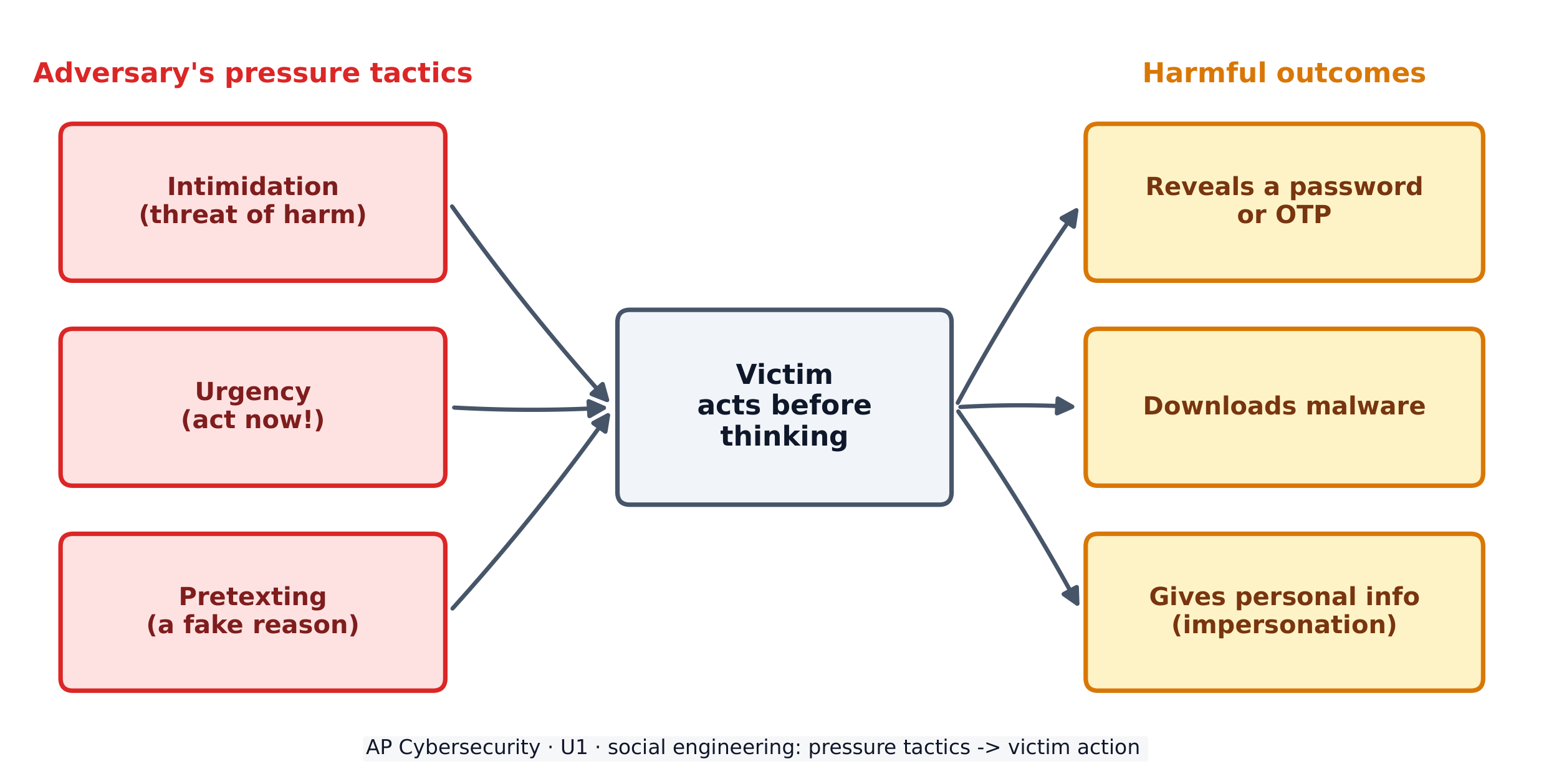
Adversaries lean on two powerful feelings:
- Intimidation 恐吓 - the adversary threatens a bad result if you do not obey. Fear pushes you to act.
- Urgency 紧迫感 - the adversary invents a deadline ("reply in the next hour or your account closes"). When we feel rushed, we stop thinking carefully about whether an action is safe.
The impact 影响 on a victim can be serious. They might reveal personal details (name, address, pet's name, birthday) that are later used to answer security challenge questions 安全问题 and impersonate 冒充 them. They might hand over a one-time password (OTP) 一次性密码, letting the adversary log in as them. Or they might download malware 恶意软件 that steals data from their browser.
Worked example. A phishing email reads: "Over 90% of staff have already verified their account - confirm yours in the next hour or lose payroll access." Two tactics are stacked here. "In the next hour" is urgency (a deadline that rushes you), and "over 90% of staff have already" is consensus (social pressure to follow the crowd). Naming each tactic - not just calling the email "suspicious" - is exactly what an exam answer needs.
Explore
Which social-engineering tactic is it?
Intimidation threatens harm, urgency invents a deadline, consensus claims everyone else is doing it, and authority pretends to have power over you.
Vocabulary
Train
| English |
|---|
| Social engineering/ˈsəʊʃl ˌendʒɪˈnɪərɪŋ/ |
| adversary/ˈædvəsəri/ |
| elicitation/ɪˌlɪsɪˈteɪʃn/ |
| Intimidation/ɪnˌtɪmɪˈdeɪʃn/ |
| Urgency/ˈɜːdʒənsi/ |
| impact/ˈɪmpækt/ |
| challenge questions/ˈtʃælɪndʒ ˈkwestʃnz/ |
| impersonate/ɪmˈpɜːsəneɪt/ |
| one-time password (OTP)/wʌn taɪm ˈpæswɜːd/ |
| malware/ˈmælweə/ |
1.2
Suspicious Website Logins
Syllabus
| Learning Objective | Essential Knowledge |
|---|---|
1.2.A |
|
1.2.B |
|
1.2.C |
|
Source: College Board AP Course and Exam Description
A password attack 密码攻击 is any attempt to log in using guessed or stolen passwords. In an online password attack the adversary tries passwords against a real login page. The warning signs are visible in the logs:
- many failed logins in a short time,
- login attempts at unusual hours,
- login attempts from unknown devices.
Adversaries succeed because people choose weak 弱 passwords. Common patterns include a word plus a two-digit year plus a special character (like Summer24!), or a pet's or family member's name. Because these patterns are so common, an adversary can build a dictionary 字典 of likely passwords from information gathered about you and let an automated tool try each one.
To make authentication 身份验证 stronger:
- Create passwords that are long, random, and unique - a password manager 密码管理器 can generate and store them for you.
- Avoid names, dates, and meaningful words.
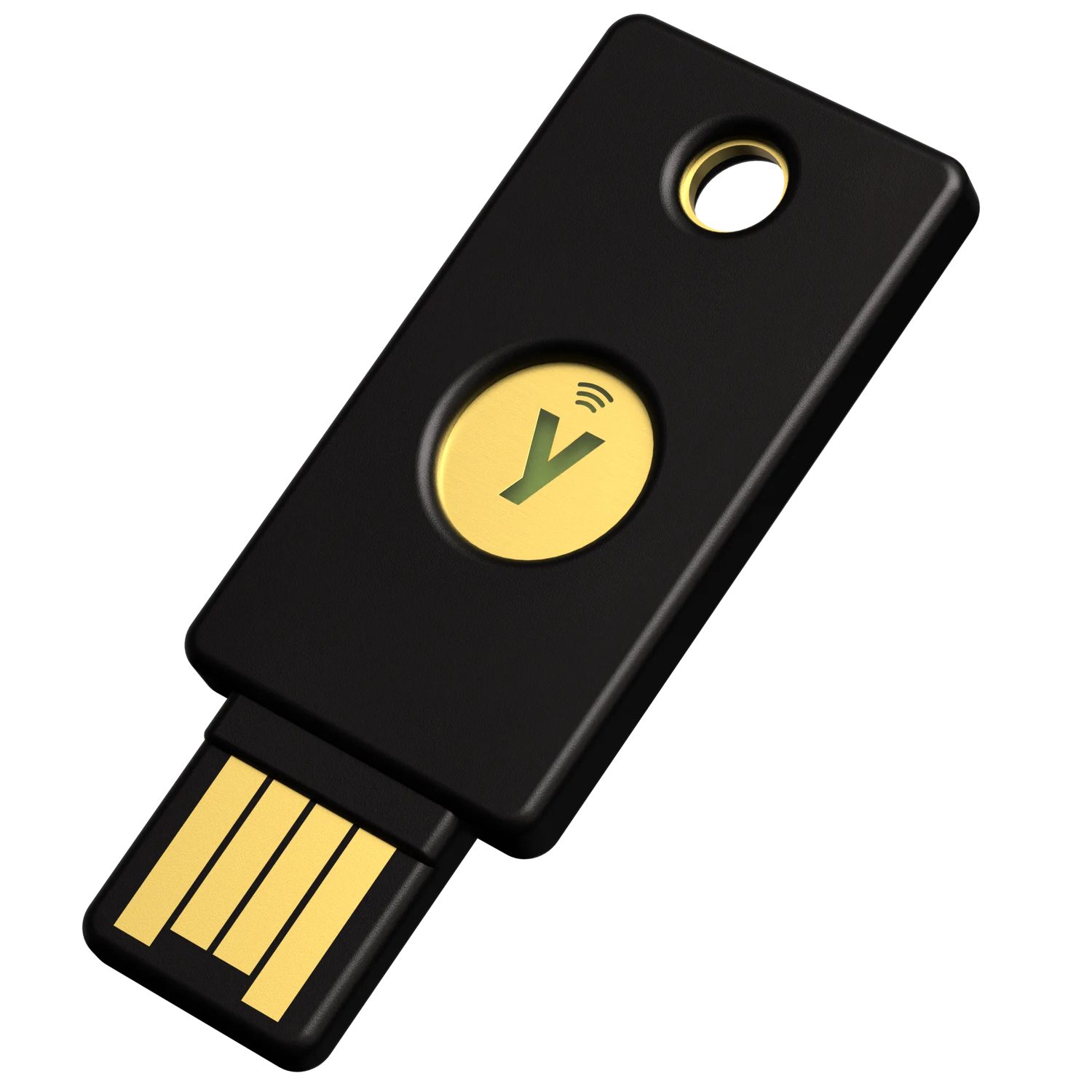
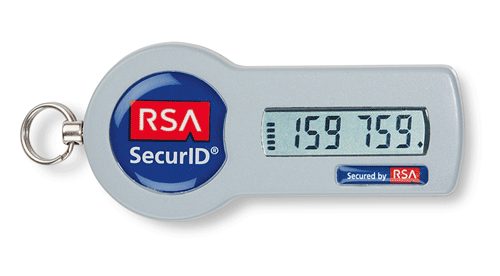
- Turn on multifactor authentication (MFA) 多因素身份验证, which asks for extra proof (like a texted code) on top of the password.
Vocabulary
Train
| English |
|---|
| password attack/ˈpæswɜːd əˈtæk/ |
| weak/wiːk/ |
| dictionary/ˈdɪkʃənəri/ |
| authentication/ɔːˌθentɪˈkeɪʃn/ |
| password manager/ˈpæswɜːd ˈmænɪdʒə/ |
| multifactor authentication (MFA)/ˌmʌltɪˈfæktə ɔːˌθentɪˈkeɪʃn/ |
1.3
Best Practices for Public Networks
Syllabus
| Learning Objective | Essential Knowledge |
|---|---|
1.3.A |
|
1.3.B |
|
1.3.C |
|
Source: College Board AP Course and Exam Description
Not all adversaries are the same. We classify them by skill: low-skilled attackers buy ready-made tools online and reuse known exploits 漏洞利用, while high-skilled attackers write their own tools and can discover brand-new holes called zero days 零日漏洞. Their motivation 动机 varies too - greed, revenge, politics, or belief.
Public Wi-Fi is a favourite hunting ground. Three wireless attacks you must know:
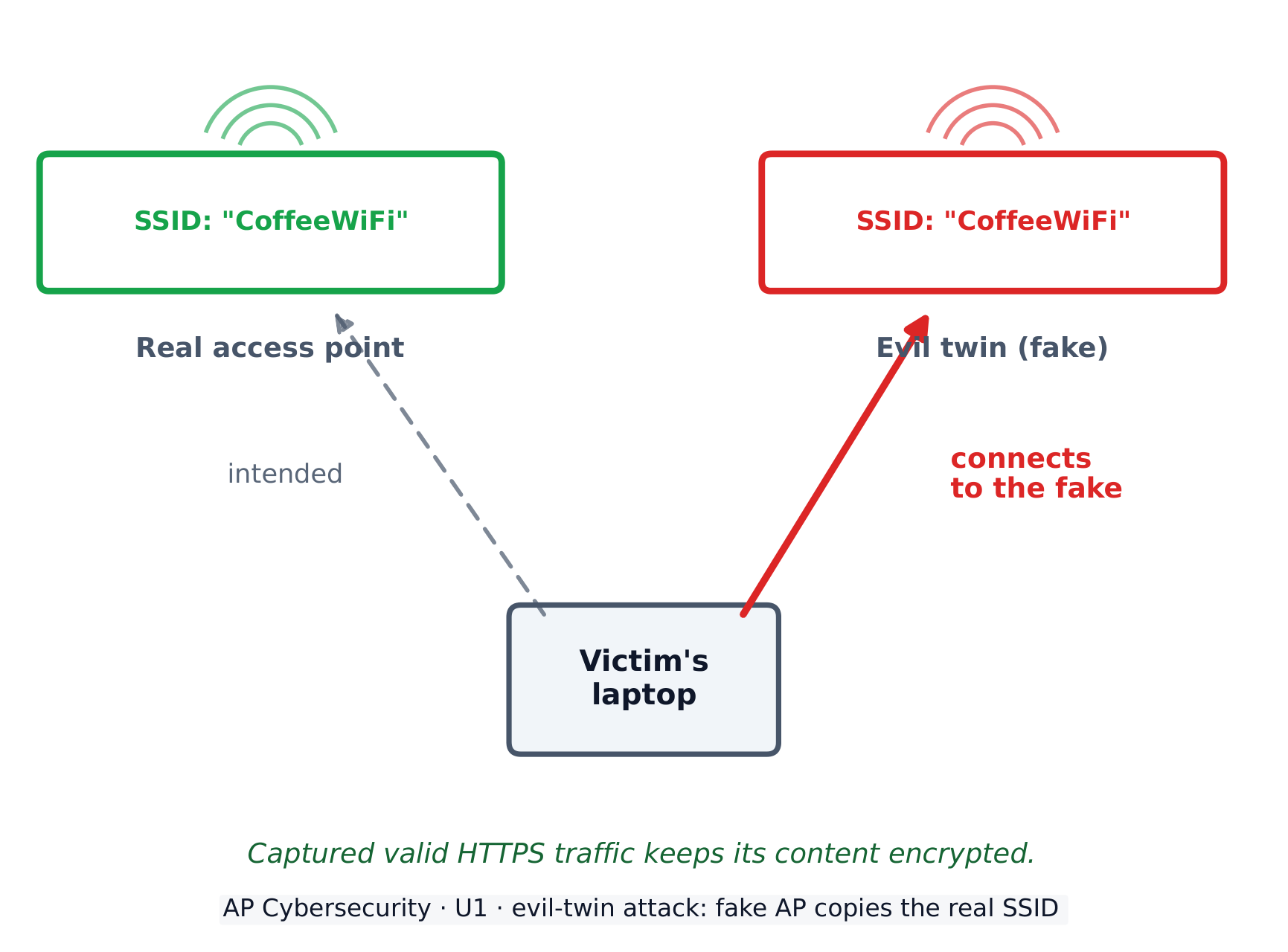
- Evil twin 双胞胎恶意热点 - the adversary sets up a fake access point 接入点 with a name (SSID 服务集标识符) copied from the real network. Victims connect to the fake one, and the adversary captures their traffic. Valid encrypted 加密的 HTTPS protects the content in transit; this does not prove the hotspot belongs to the school or make every destination trustworthy.
- Jamming 干扰攻击 - the adversary floods the air with a strong radio signal so no one can connect. This is one kind of denial of service (DoS) 拒绝服务 attack.
- War driving 战争驾驶 - the adversary drives around detecting wireless networks and where their signal leaks outside a building.
Try it — classify three separate incidents. A school confirms that (A) an unauthorised access point copies its SSID and captures students' traffic, (B) an adversary's transmitter emits a strong signal on the network frequency and prevents legitimate communication, or (C) an adversary drives around recording network beacons and where the signal reaches outside, without connecting. Identify the attack in each case and cite its mechanism.
Worked reasoning. A is an evil twin: it imitates the network's identity to attract connections. B is jamming: the interfering radio signal prevents access, producing denial of service. An outage alone would not prove jamming; the transmitter is part of the given evidence. C is war driving: it gathers wireless-network information without needing to join. Similar observations can be part of an authorised survey, so the purpose and permission matter.
Transfer. A student sees the correct SSID and says, "The name matches, so it must be the school's network. With HTTPS, nothing can go wrong." Explain both overclaims and suggest a separate identity check.
Worked answer. An evil twin can copy the name, so an exact name match is a check rather than proof of ownership. Follow trusted school connection instructions and confirm uncertainties with staff through a separate trusted channel. Valid encrypted HTTPS protects content in transit from someone merely capturing traffic; it does not authenticate the hotspot or make every destination trustworthy. A fake network can still interfere with access or direct users toward a phishing site.
To protect yourself on public networks: check that the network name exactly matches the one you intend to join, while remembering that this alone does not prove its identity; prefer valid encrypted HTTPS, and consider a virtual private network (VPN) 虚拟专用网络, which encrypts traffic carried through its tunnel to the VPN operator.
Vocabulary
Train
| English |
|---|
| exploits/ˈeksplɔɪts/ |
| zero days/ˈzɪərəʊ deɪz/ |
| motivation/ˌməʊtɪˈveɪʃn/ |
| Evil twin/ˈiːvl twɪn/ |
| access point/ˈækses pɔɪnt/ |
| SSID/ˌes es aɪ ˈdiː/ |
| encrypted/enˈkrɪptɪd/ |
| Jamming/ˈdʒæmɪŋ/ |
| denial of service (DoS)/dɪˈnaɪəl ɒv ˈsɜːvɪs/ |
| War driving/wɔː ˈdraɪvɪŋ/ |
| virtual private network (VPN)/ˈvɜːtʃuːəl ˈpraɪvət ˈnetwɜːk/ |
1.4
AI-Based Cybersecurity Attacks
Syllabus
| Learning Objective | Essential Knowledge |
|---|---|
1.4.A |
|
1.4.B |
|
Source: College Board AP Course and Exam Description
Artificial intelligence gives adversaries powerful new tools. With enough voice and image samples, an adversary can build a deepfake 深度伪造 avatar to impersonate someone on a call. Large language models (LLMs) 大语言模型 let them write convincing phishing 钓鱼 emails in perfect, native-sounding language - removing the clumsy wording that once gave scams away.
AI also helps adversaries on the back end: crafting prompts that pull secret data out of an LLM, planting false information on websites so it poisons an LLM's training data, scanning the internet to gather facts about a target, and even writing new malware.
You can defend against many AI-augmented attacks: agree on a shared secret 共享秘密 word with close contacts to verify identity, enable MFA (so a cloned voice alone cannot log in), never type sensitive data into a chatbot, and always double-check AI output against reliable, non-AI sources.
AI writes code, and that cuts both ways. Adversaries use AI-enhanced coding tools 人工智能辅助编程工具 to write new malware faster than they could by hand, to modify existing application code so that it performs malicious activity, and to scan a codebase for vulnerabilities 漏洞 to attack. The skill barrier falls: someone who could not previously write an exploit can now ask for one, so the number of capable attackers rises even when no new technique is invented.
Vocabulary
Train
| English |
|---|
| deepfake/ˈdiːpfeɪk/ |
| Large language models (LLMs)/lɑːdʒ ˈlæŋɡwɪdʒ ˈmɒdlz/ |
| phishing/ˈfɪʃɪŋ/ |
| shared secret/ʃeəd ˈsiːkrɪt/ |
| AI-enhanced coding tools/ˌeɪ ˈaɪ enˈhænst ˈkəʊdɪŋ tuːlz/ |
| vulnerabilities/ˌvʌlnərəˈbɪlɪtiz/ |
1.5
Leveraging AI in Cyber Defense
Syllabus
| Learning Objective | Essential Knowledge |
|---|---|
1.5.A |
|
1.5.B |
|
Source: College Board AP Course and Exam Description
The same technology defends us. AI tools can analyse an application's own source code, identify vulnerabilities in it and recommend mitigations; they can also review firewall rules and access settings and recommend safer options - though a human expert must always check the advice before applying it. AI can scan application code for weaknesses and suggest detection rules.
⚠️ A recommendation is not a fix. The CED is explicit that the advice must be reviewed and implemented by a knowledgeable programmer: an AI tool can be confidently wrong about whether a flaw is exploitable, and applying a suggested patch without understanding it can introduce a new fault of its own.
Its biggest advantage is scale. A medium network produces millions of events every day - far too many for people to read. AI can quickly sort the harmless events from the likely-malicious ones, alert human staff, or take an automatic action. This lets defenders catch an attack and respond in seconds instead of days, preventing loss and damage.
That scale is what makes threat detection and response 威胁检测与响应 possible in practice: an AI system flags malicious activity as it happens, so the response team can intervene quickly enough to prevent loss, harm, or destruction of digital infrastructure — rather than reading the logs days later and finding out what was taken.
Vocabulary
Train
| English |
|---|
| threat detection and response/θret dɪˈtekʃn ænd rɪˈspɒns/ |
1.5
Exam tips
- When a question asks you to rank risks, remember high risk = high impact AND easy to exploit. A parking-lot Wi-Fi leak matters less than an open internal port that lets an adversary spoof a device.
- Learn the social-engineering tactics by name - intimidation, urgency, pretexting, authority, consensus, scarcity, familiarity - and be ready to spot which one an email is using.
- Valid encrypted HTTPS protects content on an evil twin from passive capture; it does not authenticate the hotspot. Say what is protected and what risk remains.
- For "how to make authentication stronger", MFA is almost always part of the answer, plus long/unique passwords from a manager.
- AI is dual-use: the same tool (LLMs, code analysis) appears on both the attack and the defense side. Read the question carefully to see which side it asks about.
Interactive lessons on this topic
Work through it step by step, with instant-check exercises.