Ваш учебный план · Продолжить · Обзор →
Present simple — everyday habits
ВведеноВаше сохранённое положение остаётся в этом браузере. Возобновление не завершает урок и не отвечает на его вопросы.
 6:15
Английский язык A1 · Present simple
Present simple — это время вещей, которые всегда верны: привычки, рутина и факты. I walk to school (Я хожу в школу пешком). The sun rises in the east (Солнце восходит на востоке). My cat sleeps twenty… (Мой кот спит двадцать…)
Озвучивание на английском · переключаемые субтитры на английском и китайском языках
В этом уроке
| English |
|---|
| habit/ˈhæbɪt/ |
| every day/ˈevrɪ deɪ/ |
| usually/ˈjuːʒuːəli/ |
Present simple: рутина и факты
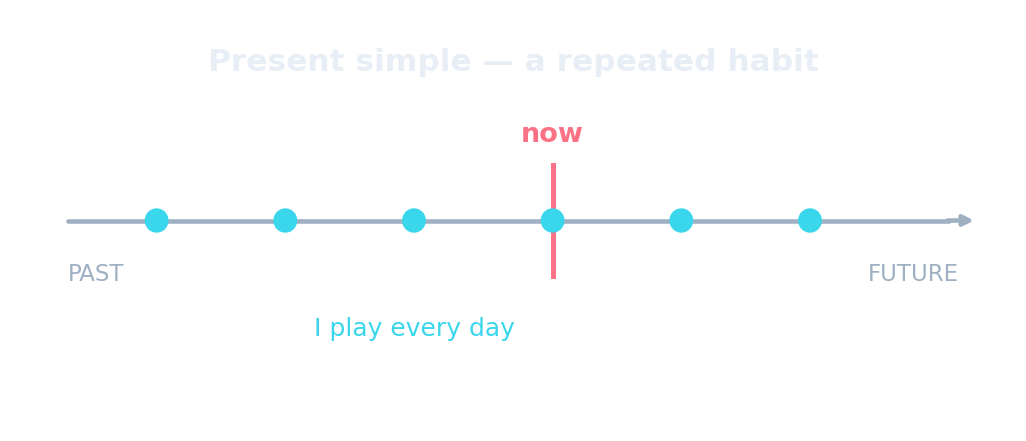
- Результат: опишите рутину или состояние, составьте отрицательное или полный вопрос и дайте краткий ответ. Начните с be; его вопросительная структура отличается от паттерна do/does, практикуемого здесь.
- Present simple может описывать привычки, рутины и состояния: I walk on Sundays. I like tea. Привычка не обязательно происходит каждый день. I get up at seven. The sun rises in the east. Это некоторые применения формы, но не единственные.
I drink tea every day. The tea does not get a day off.
Начальная форма глагола и окончание -s для he / she / it
- В этих утвердительных глагольных конструкциях I / you / we / they используйте начальную форму: I play. We work. Одно имя или существительное обычно требует формы третьего лица: He plays. Mina works. The bus stops here.
- Изучите форму, включая изменения правописания: go → goes; watch → watches; study → studies; have → has. Эти формы применяются к утвердительным примерам здесь; be и can имеют другие паттерны.
- “Salma works here” называет одного человека. “Salma and Kim work here” называет двух, как “they”. Выбирайте для полного подлежащего, а не только последнего имени.
- “study → studies” изменяет согласную + y. “play → plays” сохраняет y после гласной. “have → has” изменяется иначе; не применяйте одно окончание правописания ко всем глаголам.
Does the verb need -s?
These positive play/work examples use plays/works with he/she/it, and play/work with the other shown pronouns. One name follows the singular pattern too; be, can and questions have other forms.
Choose: He ___ football every day.
Сложность 1/5 · 100 монет + небольшой бонус за первое завершение сегодня
In this positive play example, “he” takes the third-person form “plays”: He plays football. Other verbs can form it differently, such as “have → has”.
Use the present simple for her usual routine: She ___ (go) to school by bus.
Сложность 1/5 · 100 монет + небольшой бонус за первое завершение сегодня
The requested present-simple third-person form is goes. Learn this spelling with the example; it is not a rule for every verb or every sentence containing she.
Translate into English: 我喜欢茶。
Сложность 3/5 · 200 монет + небольшой бонус за первое завершение сегодня
I → base verb: “I like tea.” (not “I likes tea”)
Use the present simple in this positive statement: Omar and Eva ___ (work) here.
Сложность 1/5 · 100 монет + небольшой бонус за первое завершение сегодня
The subject “Omar and Eva” names two people, like “they”. Use the base form “work” for the whole plural subject, not a singular form for the last name only.
Отрицания: don't / doesn't
- Используйте don’t с I / you / we / they и doesn’t с he / she / it или одним именем в этих основных рамках с глаголом действия: I don’t eat meat. He doesn’t like tea.
- После don’t / doesn’t используйте начальную основную форму глагола. Отрицательная форма меняет смысл высказывания; не изменяйте случайно лицо или временную ссылку.
- “Ken likes apples” становится “Ken doesn’t like apples”. “doesn’t” уже несет форму третьего лица, поэтому основной глагол — “like”, а не “likes”.
- “She has a bike” становится “She doesn’t have a bike”. Используйте начальную “have” после does; утвердительная “has” не остается в этой позиции.
Is this correct? “He doesn't likes tea.”
Сложность 1/5 · 100 монет + небольшой бонус за первое завершение сегодня
After doesn't, use the base verb: “He doesn't like tea.”
Make “Rae plays chess on Mondays” negative in the present simple.
Сложность 1/5 · 100 монет + небольшой бонус за первое завершение сегодня
Rae names one person, so use “doesn’t” and the base main verb “play”. The third-person form is carried by does, not repeated on plays.
Choose the present-simple negative of “Mira has a bag”.
Сложность 1/5 · 100 монет + небольшой бонус за первое завершение сегодня
After “doesn’t”, use the base form “have”. “has” fits the positive statement, not the main verb after does.
Вопросы: Do / Does …?
- Полные обычные вопросы yes/no с глаголами типа like/live используют Do / Does перед подлежащим и начальную основную форму глагола: Do you speak English? Does she live here?
- Другие рамки работают иначе: Is she tired? Can she swim? Who lives here? С can используйте начальную форму глагола, например “swim”; не принуждайте каждый вопрос к рамке do/does.
- “Mina drives to work” становится “Does Mina drive to work?”. Ответ может быть “Yes, she does” или “No, she doesn’t”. Согласуйте ответ с лицом и тем, является ли ответ утвердительным или отрицательным.
- В “Who lives here?” “who” обозначает живущего здесь человека, поэтому этот обычный нейтральный вопрос напрямую использует “lives”. Сравните “Who does she visit?”: “she” является подлежащим, тогда как “who” спрашивает, какого человека она навещает.
Turn “Sam walks to school” into a full ordinary yes/no question.
Сложность 1/5 · 100 монет + небольшой бонус за первое завершение сегодня
Use “Does” before the single-person subject and keep “walk” in its base form. Do not put the third-person ending on both verbs.
Ask which person lives on this road. Choose the ordinary neutral subject question.
Сложность 1/5 · 100 монет + небольшой бонус за первое завершение сегодня
“Who” asks about the subject here, so the ordinary question directly uses “lives”. This does not mean every question containing who has the same structure.
Распространенные ошибки
- Для простой предпочтительности здесь используйте “I like English very much” или “I very much like English”, а не “I very like English”. Проблема заключается в “very” отдельно перед “like”, а не во всех фразах, содержащих very near у глагола.
- ❌ “He go to school” → ✓ “He goes to school” в этом утвердительном предложении о рутине. После does основной глагол был бы “go”.
- “Do you like tea?” — это полный вопрос. “You like tea?” также часто используется в разговорной речи, например, для удивления или подтверждения. Здесь задания требуют полной модели do/does.
Match the verb to its he / she form.
Сложность 2/5 · 140 монет + небольшой бонус за первое завершение сегодня
The supplied forms are “watch → watches” and “go → goes”. “study → studies” changes consonant + y; “play → plays” keeps y after a vowel. Learn the forms in context rather than applying one spelling ending to every verb.
For a straightforward statement meaning “I like music a lot”, which of these supplied sentences uses the natural pattern?
Сложность 1/5 · 100 монет + небольшой бонус за первое завершение сегодня
I like music very much is natural. I very much like music is another natural order, though it is not one of these choices. The problem in I very like music is very alone before like, not a ban on every very phrase near a verb.
- Здесь мы практикуем настоящее простое время для описания привычек, состояний и фактов. Привычка не обязательно должна повторяться каждый день, а эта форма имеет и другие значения.
- Выберите форму для всего подлежащего и рамочного предложения. В утвердительных предложениях с основным глаголом единственное число требует формы третьего лица; после do/does используйте начальную форму основного глагола.
- Глагол be, модальный глагол can и обычные вопросительные предложения могут использовать другие конструкции. Попробуйте новую практику ниже, затем продолжайте с can: способность и просьбы. Эти упражнения не гарантируют самостоятельное владение языком или устную речь.
Инструкция по использованию перепроверена 21 октября 2026: British Council, present simple. Местная проверка источника; ожидает независимая проверка языка, ответов и участников обучения.
Write one English present-simple sentence about a daily routine of yours or an imaginary person. The routine happens every day; you do not have to include those exact words.
Сложность 3/5 · 200 монет + небольшой бонус за первое завершение сегодня
Example: “I get up at seven every day.”
Следите за всем подлежащим
- Следующие задания используют новых людей, группы и привычки. Определите, кто совершает действие, прежде чем выбрать форму утвердительного глагола.
- Сохраните требуемую конструкцию настоящего простого времени. Слово, называющее другого человека или место позже в предложении, не заменяет подлежащее.
Use one present-simple word for the usual routine: My brother ___ (cook) on Sundays.
Сложность 1/5 · 100 монет + небольшой бонус за первое завершение сегодня
My brother is one person. The positive statement uses the third-person form “cooks”.
Use the present simple for this usual arrangement: Anna and Lee ___ (share) a desk at school.
Сложность 1/5 · 100 монет + небольшой бонус за первое завершение сегодня
The complete subject names two people. Use base “share” for that plural group, rather than choosing for the last name alone.
Use one present-simple word for the regular arrival: Our train ___ (arrive) at nine every morning.
Сложность 1/5 · 100 монет + небольшой бонус за первое завершение сегодня
Our train is one train, so the positive statement uses “arrives”. Keep the regular arrival time.
You are addressing one person. Use the present simple: You ___ (write) to your friend every week.
Сложность 1/5 · 100 монет + небольшой бонус за первое завершение сегодня
“you” uses base “write” even with one listener. The number of listeners does not turn you into a third-person singular subject.
Use one present-simple word for the routine: She ___ (have) breakfast at six.
Сложность 1/5 · 100 монет + небольшой бонус за первое завершение сегодня
The positive third-person form of have is “has”. It is not made by simply adding s to have.
Two brothers share this routine. Complete the present-simple statement: They ___ (study) in the evening.
Сложность 1/5 · 100 монет + небольшой бонус за первое завершение сегодня
“they” uses the base form “study”. “studies” would fit a third-person singular subject in a positive statement.
Use one present-simple word for a repeated activity: Ari ___ (try) a new game each weekend.
Сложность 1/5 · 100 монет + небольшой бонус за первое завершение сегодня
Ari names one person. The consonant before y changes the third-person spelling to “tries”.
Use the present simple for this preference: He ___ (enjoy) music.
Сложность 1/5 · 100 монет + небольшой бонус за первое завершение сегодня
A vowel comes before y in enjoy. Keep y and add s for this positive he statement: “enjoys”.
Choose a full present-simple negative about Rin’s habit.
Сложность 1/5 · 100 монет + небольшой бонус за первое завершение сегодня
One person uses “doesn’t” followed by base “drink”. Do not use drinks after doesn’t or don’t with Rin in this target.
Choose do or does for the present-simple negative: My sister ___ not use this computer.
Сложность 1/5 · 100 монет + небольшой бонус за первое завершение сегодня
My sister is one person. Use “does not use” with a base main verb, rather than choosing do for the nearby word my.
Выберите полную рамку
- Прочитайте, требует ли задание отрицание, полный обычный вопрос или краткий ответ. Основной глагол после do/does требует начальной формы.
- Проверяйте не только грамматику, но и предполагаемый смысл. Отрицательный ответ нельзя заменить утвердительным просто потому, что его глагол согласуется.
Choose a complete present-simple negative for the speaker’s usual routine.
Сложность 1/5 · 100 монет + небольшой бонус за первое завершение сегодня
“I” uses “don’t” followed by the base “visit”. Do not add a third-person ending to either form in this sentence.
Choose a full present-simple negative about Maya.
Сложность 1/5 · 100 монет + небольшой бонус за первое завершение сегодня
Use “doesn’t have” with the one-person subject. The main verb after does is base have; time is the thing she lacks in this new context.
Choose Do or Does to start the full present-simple question: ___ they eat lunch at school?
Сложность 1/5 · 100 монет + небольшой бонус за первое завершение сегодня
Use “Do” with they and the base eat: “Do they eat lunch at school?”
Choose the full ordinary present-simple question about your uncle’s routine.
Сложность 1/5 · 100 монет + небольшой бонус за первое завершение сегодня
Your uncle names one person, so use does before it and base sing after it. Choose for the whole noun phrase, not for your as if it were the pronoun you.
Ask whether Leah is your teacher. Choose the complete ordinary question.
Сложность 1/5 · 100 монет + небольшой бонус за первое завершение сегодня
This identity description uses be. Put is before Leah: “Is Leah your teacher?” Do not add do/does to that frame.
You want to know which person teaches English. Choose the ordinary neutral subject question.
Сложность 1/5 · 100 монет + небольшой бонус за первое завершение сегодня
“Who” stands for the person doing the teaching here. Use “teaches” directly in this ordinary subject question; does teaches would duplicate the third-person forms.
Someone asks “Does Ben read at night?” Ben reads at night. Choose the complete positive short answer.
Сложность 1/5 · 100 монет + небольшой бонус за первое завершение сегодня
The question uses does for Ben. The matching positive short answer is “Yes, he does”. Keep does matched to he and keep the positive meaning.
Someone asks “Do your friends use this library?” None of them do. Choose the complete negative short answer for that group.
Сложность 1/5 · 100 монет + небольшой бонус за первое завершение сегодня
The phrase “your friends” names a plural group, represented by they. Use “No, they don’t” to give the supplied negative meaning.
Routine card — person: Lin; activity: call a friend; time: Fridays only. Choose a complete present-simple statement keeping those facts.
Сложность 1/5 · 100 монет + небольшой бонус за первое завершение сегодня
The Friday-only routine does not mean every day. Lin is one person, so the positive form is “calls”. Keep both that form and the supplied time limit.
Ask about Mira’s ability to cook using can. Choose the complete ordinary question.
Сложность 1/5 · 100 монет + небольшой бонус за первое завершение сегодня
Can has its own question frame: “Can Mira cook?” Do not add does, and use the base cook after can. This contrast does not assess spoken ability.
Перенос: используйте новый профиль
- Сохраните предоставленную информацию о человеке, группе и времени в путевке и профиле. Не придумывайте другую привычку, чтобы избежать сложной формы.
- Напишите английские утверждения и полный вопрос перед тем, как открыть образец. Сравните утвердительную форму с начальной формой глагола после does/doesn’t; подходящей может быть эквивалентная естественная формулировка.
A travel card says: Eli and I usually take the train; we do not cycle. Choose two present-simple statements preserving those facts.
Сложность 1/5 · 100 монет + небольшой бонус за первое завершение сегодня
The complete subject “Eli and I” refers to two people, like “we”. Use base “take” in the positive statement and “don’t cycle” for the stated negative habit. Keep both the train and no-cycling facts.
Nia lives near the park and does not work on Saturdays. Choose a full question about the first fact and a negative keeping the second.
Сложность 1/5 · 100 монет + небольшой бонус за первое завершение сегодня
Nia is one person. Does introduces the question, doesn’t introduces the negative, and both take a base main verb: live/work. Keep the park and Saturday facts.
Use this imaginary profile: Nora works in a library on Saturdays; Nora does not go to school on Sundays. Write two English statements and one full Does-question about the library routine.
Compare the subject, verb frame and supplied facts. Revise a mismatch. The model is one possible response, not automatic writing or speaking assessment.
Возврат и исправление
- Завтра выберите другую привычку. Напишите утверждение, сделайте его отрицательным и задайте полный вопрос. Попробуйте вспомнить до повторного чтения; это знакомая практика, а не новая проверка знаний.
- Исправьте оба финальных предложения, затем продолжайте с can: способность и просьбы. Разделите обучение на несколько занятий при необходимости; диапазон планирования предварительный до наблюдения за временем участника.
For a full ordinary present-simple question, is “Does she has a class on Friday?” correct?
Сложность 1/5 · 100 монет + небольшой бонус за первое завершение сегодня
Use the base have after does: “Does she have a class on Friday?” The positive statement “She has a class on Friday” is a different frame.
Repair these two English sentences, keeping have and ride as the main verbs and the Monday reference: Does she has a bike? She doesn’t rides it on Mondays.
Compare the subject, verb frame and supplied facts. Revise a mismatch. The model is one possible response, not automatic writing or speaking assessment.
Что пошло не так? Это увидит только команда сайта.