The Foreign Exchange Market
Introduzido| English | Significado |
|---|---|
| foreign exchange market/ˈfɒrən eksˈtʃeɪndʒ ˈmɑːkɪt/ | mercado de câmbio |
| equilibrium exchange rate/ˌiːkwɪˈlɪbrɪəm eksˈtʃeɪndʒ reɪt/ | taxa de câmbio de equilíbrio |
| exports/ˈekspɔːts/ | exportações |
| assets/ˈæsets/ | ativos |
Currencies have their own market
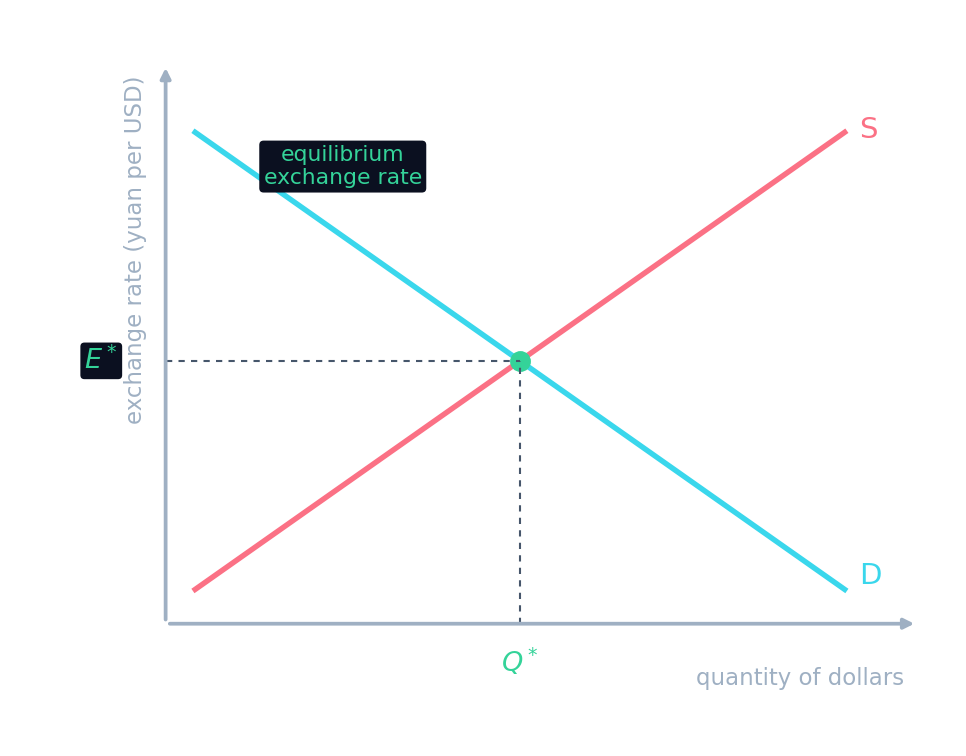
- Currencies are bought and sold in the foreign exchange market 外汇市场.
- We model it like any market: a downward-sloping demand curve and an upward-sloping supply curve.
- The "price" on the vertical axis is the exchange rate.
- The "quantity" is how much of the currency is traded.
Currencies are bought and sold in the foreign ______ market.
Dificuldade 1/5 · Moedas 100 + pequeno bônus na primeira conclusão hoje
The foreign exchange (forex) market.
Demand for US dollars comes mainly from:
Dificuldade 1/5 · Moedas 100 + pequeno bônus na primeira conclusão hoje
To buy US goods or assets, foreigners need dollars first.
Where demand comes from
- Demand for a country's currency comes from foreigners who need it.
- They need it to buy that country's exports 出口, or to invest in its assets 资产.
- Want American software or US bonds? You must get dollars first.
- More foreign buyers of US goods and assets → more demand for dollars.
Demand for dollars, or supply of dollars?
Demand for a currency comes from foreigners buying its exports or assets; supply comes from residents buying foreign goods or assets.
Supply of US dollars to the forex market comes from:
Dificuldade 1/5 · Moedas 100 + pequeno bônus na primeira conclusão hoje
Residents offer dollars to obtain foreign currency.
Where supply meets demand is the ______ exchange rate.
Dificuldade 1/5 · Moedas 100 + pequeno bônus na primeira conclusão hoje
The market clears at the equilibrium exchange rate.
Where supply comes from
- Supply of the currency comes from that country's own residents.
- They offer their currency to buy foreign goods and foreign assets.
- Americans wanting European cars supply dollars (to get euros).
- Where supply meets demand is the equilibrium exchange rate 均衡汇率.
A jump in demand for US exports will:
Dificuldade 1/5 · Moedas 100 + pequeno bônus na primeira conclusão hoje
Foreigners need more dollars to buy the exports, raising demand.
Anything that raises demand for a currency tends to make it appreciate.
Dificuldade 1/5 · Moedas 100 + pequeno bônus na primeira conclusão hoje
More demand at each rate pushes the equilibrium exchange rate up.
What makes a currency rise
- Anything that raises demand (or lowers supply) makes the currency appreciate.
- Anything that lowers demand makes it depreciate.
- Worked idea. The world suddenly wants more American software. Foreigners need dollars to pay, so demand for dollars shifts right. With supply unchanged, the equilibrium exchange rate rises — the dollar appreciates.
- Rising exports pull a currency up.
Worked example: the market for dollars
In the foreign exchange market for US dollars (price: yuan per dollar), show the effect of (a) Chinese consumers buying more US soybeans and (b) Americans buying more Chinese electronics.
- (a) Chinese buyers need dollars to pay for soybeans, so the demand for dollars shifts right: the dollar appreciates (more yuan per dollar).
- (b) Americans supply dollars to get yuan, so the supply of dollars shifts right: the dollar depreciates. In the market for yuan, the same event raises the demand for yuan, so the yuan appreciates.
More European tourists visit the USA. In the market for dollars:
Dificuldade 1/5 · Moedas 100 + pequeno bônus na primeira conclusão hoje
Tourists need dollars to spend in the USA.
Americans buying foreign bonds increases the supply of dollars in the foreign exchange market.
Dificuldade 1/5 · Moedas 100 + pequeno bônus na primeira conclusão hoje
They sell dollars to get the foreign currency.
Currencies trade in the foreign exchange market. Demand comes from foreigners buying a country's exports and assets; supply comes from its residents buying foreign goods and assets. Their intersection is the equilibrium exchange rate. More demand (e.g. a jump in exports) shifts demand right and the currency appreciates.
Write from 12 billion more dollars demanded
- Foreign buyers need 12 billion more dollars to pay for a jump in US exports.
- Say what happens to the dollar.
A jump in US exports means foreign buyers need 12 billion more dollars. What happens to the demand for dollars and to the dollar's value?
Foreigners must buy dollars before they can pay US exporters.
What does the export jump do?
Dificuldade 1/5 · Moedas 100 + pequeno bônus na primeira conclusão hoje
More exports mean more demand for the dollars that pay for them.