Money Growth and Inflation
Introduzido| English | Significado |
|---|---|
| quantity theory of money/ˈkwɒntɪti ˈθɪəri ɒv ˈmʌni/ | Teoria quantitativa do dinheiro |
| velocity of money/vəˈlɒsɪti ɒv ˈmʌni/ | Velocidade do dinheiro |
| price level/praɪs ˈlevl/ | Nível de preços |
| excessive money supply growth/ekˈsesɪv ˈmʌni səˈplaɪ ɡrəʊθ/ | Crescimento excessivo da oferta monetária |
| neutrality of money/njuːˈtrælɪti ɒv ˈmʌni/ | Neutralidade do dinheiro |
Where long-run inflation comes from
- A one-off shock can nudge prices, but what drives sustained inflation?
- The classical answer points straight at the money supply.
- Print money faster than the economy grows, and prices must rise.
- This is the quantity theory of money 货币数量论.
The equation of exchange
- The identity: $MV = PQ$.
- $M$ is the money supply; $V$ is the velocity of money 货币流通速度 (how often each dollar is spent); $P$ is the price level 价格水平; $Q$ is real output.
- It is always true: total spending $MV$ equals the money value of goods sold $PQ$.
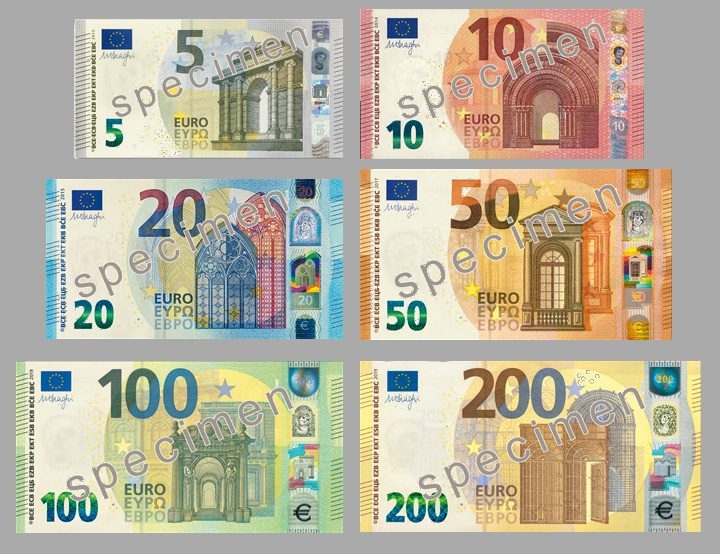
More money chasing goods: sustained money growth tends to raise the price level over time
The equation of exchange is:
Dificuldade 1/5 · Moedas 100 + pequeno bônus na primeira conclusão hoje
MV (total spending) = PQ (money value of goods sold).
V, how many times each dollar is spent in a year, is the ______ of money.
Dificuldade 1/5 · Moedas 100 + pequeno bônus na primeira conclusão hoje
The quantity theory assumes velocity is roughly constant in the long run.
The long-run assumptions
- Velocity $V$ is roughly constant — spending habits change slowly.
- Real output $Q$ is set by real resources — labour, capital, technology — not by how much money exists.
- With $V$ and $Q$ fixed, the price level $P$ moves in step with the money supply $M$.
- So excessive money supply growth 货币供给过度增长 causes long-run inflation.
Real or nominal in the long run?
In the long run, money is neutral: faster money growth raises nominal things (prices, wages) but leaves real output and employment unchanged.
Printing money faster than output can grow causes inflation in the long run.
Dificuldade 1/5 · Moedas 100 + pequeno bônus na primeira conclusão hoje
Too many dollars chase the same goods, so prices rise to soak them up.
In the long run, real output Q is set by:
Dificuldade 1/5 · Moedas 100 + pequeno bônus na primeira conclusão hoje
Money does not create real output; real resources do.
Inflation and the neutrality of money
- In growth rates: $\text{inflation} \approx \%\Delta M - \%\Delta Q$.
- Worked idea. If money grows 10% and real output grows 3%, inflation is about $10 - 3 = 7\%$.
- Double money growth to 20% (output still 3%) and inflation jumps to ~17% — but real output still grew 3%.
- That is the neutrality of money 货币中性: in the long run, more money changes only nominal things, not real output.
The money supply grows 10% and real output grows 3%, with velocity steady. What is the approximate inflation rate, in percent?
Dificuldade 2/5 · Moedas 140 + pequeno bônus na primeira conclusão hoje
Inflation ≈ %ΔM − %ΔQ = 10 − 3 = 7%.
The neutrality of money says that in the long run, more money changes:
Dificuldade 1/5 · Moedas 100 + pequeno bônus na primeira conclusão hoje
Real output is set by real resources, so extra money just raises prices.
Worked example: solving the equation of exchange
$M = 2{,}000$, $V = 5$ and real output $Q = 2{,}500$. Find the price level. Then find the new price level if the money supply rises to 2,400 while velocity and real output stay fixed.
- $MV = PQ$: $2{,}000 \times 5 = P \times 2{,}500$, so $P = 10{,}000 \div 2{,}500 = 4$.
- With $M = 2{,}400$: $2{,}400 \times 5 = 12{,}000$, so $P = 12{,}000 \div 2{,}500 = 4.8$. The money supply rose 20% and the price level rose 20%: real output did not change. This is the quantity theory and the neutrality of money.
Money grows by 8% a year and real output by 2%. With constant velocity, what is the approximate inflation rate, in %?
Dificuldade 2/5 · Moedas 140 + pequeno bônus na primeira conclusão hoje
8 − 2 = 6%.
Nominal GDP (PQ) is 6,000 and the money supply is 1,500. What is the velocity of money?
Dificuldade 2/5 · Moedas 140 + pequeno bônus na primeira conclusão hoje
V = PQ ÷ M = 6,000 ÷ 1,500 = 4.
The quantity theory of money ($MV = PQ$) says that, with velocity and real output steady, the price level moves with the money supply. So $\text{inflation} \approx \%\Delta M - \%\Delta Q$, and excessive money growth causes inflation. In the long run money is neutral — it changes only nominal things.
Write from the data: find the inflation
- The money supply grows 8 percent. Real output grows 2 percent. Velocity is steady.
- Find approximate inflation.
The money supply grows by 8 percent and real output grows by 2 percent. Velocity stays steady. What is the approximate inflation rate, in percent?
8 minus 2 is 6.
What is the approximate inflation rate?
Dificuldade 1/5 · Moedas 100 + pequeno bônus na primeira conclusão hoje
Money growth of 8 percent minus output growth of 2 percent is inflation of about 6 percent.