The immune response and memory cells
Introduzido| English | Significado |
|---|---|
| primary response/ˈpraɪməri rɪˈspɒns/ | resposta primária |
| T-helper cell/tiː ˈhelpə sel/ | linfócito T auxiliar |
| B-lymphocyte/biː ˈlɪmfəsaɪt/ | linfócito B |
| plasma cell/ˈplæzmə sel/ | célula plasmática |
| memory cell/ˈmeməri sel/ | célula de memória |
| secondary response/ˈsekəndəri rɪˈspɒns/ | resposta secundária |
| clonal selection/ˈkləʊnl sɪˈlekʃn/ | seleção clonal |
The body fights back
- The first time a new pathogen enters, the response is slow.
- Several cell types work together to destroy it — and to remember it.
- That memory is what makes you immune next time.
The secondary immune response is slower and weaker than the first.
Dificuldade 1/5 · Moedas 100 + pequeno bônus na primeira conclusão hoje
False. Memory cells from the first exposure react quickly, so the secondary response is faster and stronger. This is the basis of long-term immunity.
The primary response 初次反应
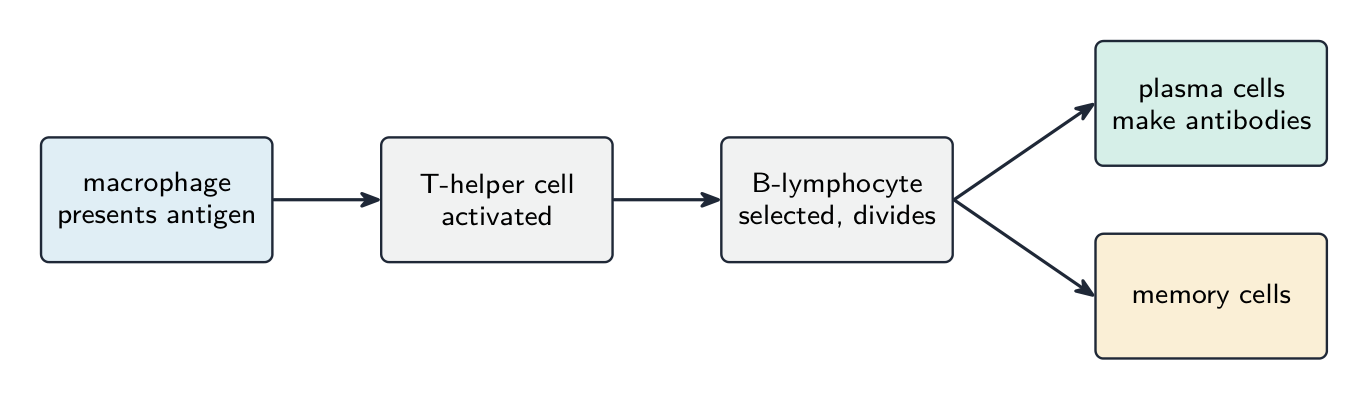
- a macrophage engulfs the pathogen and displays its antigen.
- T-helper cells 辅助性T细胞 recognise that antigen, become active, and switch on other cells.
- matching B-lymphocytes B淋巴细胞 are selected; they divide into plasma cells 浆细胞 (which pour out antibodies) and memory cells 记忆细胞.
- T-killer cells destroy the body's own cells that are infected.
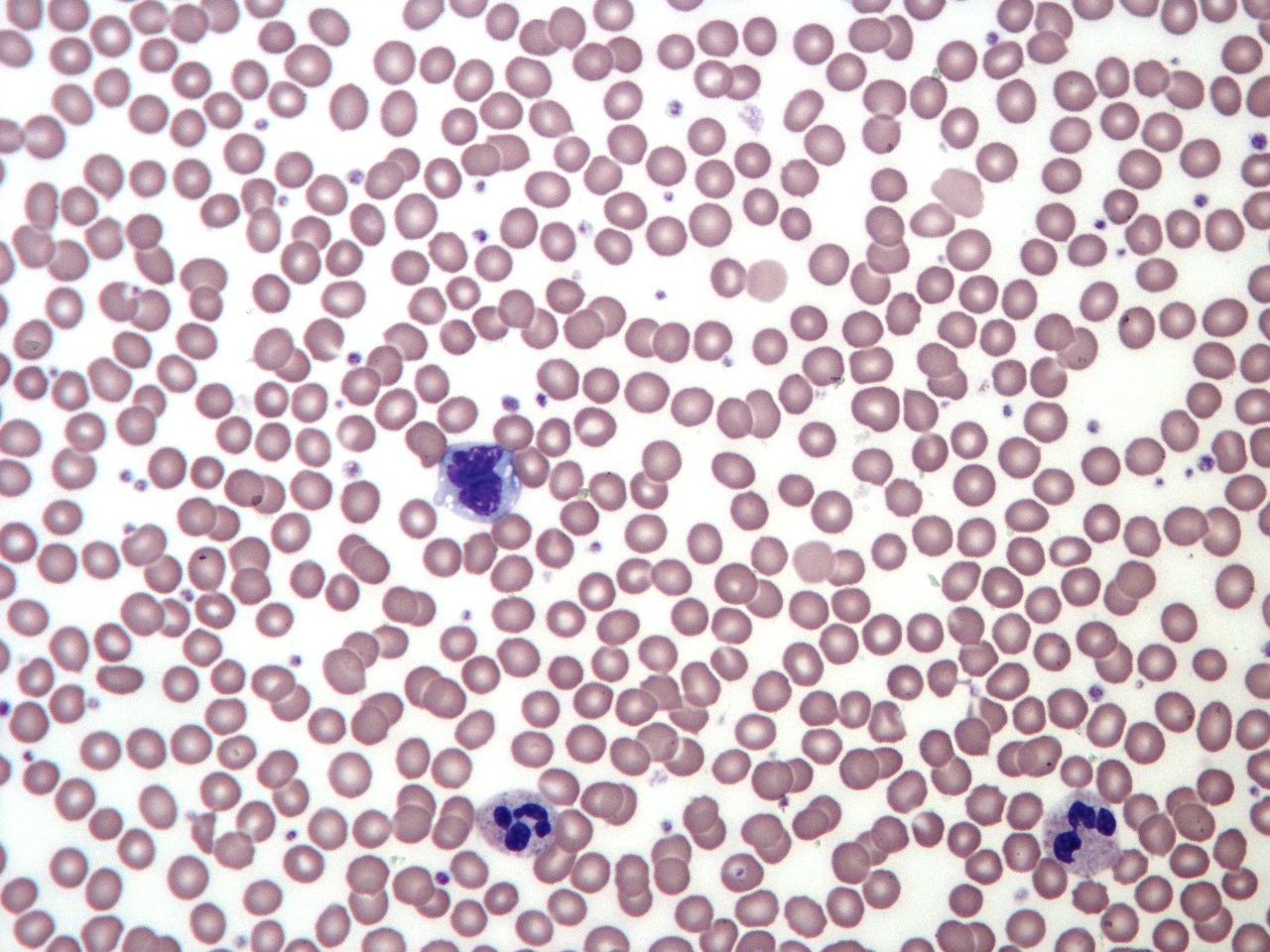
A blood smear: the large stained cells are white blood cells among the red cells.
A resposta imunológica primária
Step through the specific response — the antigen is presented, T-helper cells switch on B-cells, and plasma cells pour out antibodies.
T-helper cells in the immune response:
Dificuldade 1/5 · Moedas 100 + pequeno bônus na primeira conclusão hoje
T-helper cells recognise the presented antigen and activate B-lymphocytes and other cells.
Which cells actually secrete antibodies?
Dificuldade 1/5 · Moedas 100 + pequeno bônus na primeira conclusão hoje
Selected B-lymphocytes divide into plasma cells (which secrete antibodies) and memory cells.
Put the primary immune response in order.
Dificuldade 3/5 · Moedas 200 + pequeno bônus na primeira conclusão hoje
Antigen presented → T-helper activated → B-lymphocytes selected → plasma cells make antibodies.
Match each cell to its job in the immune response.
Dificuldade 2/5 · Moedas 140 + pequeno bônus na primeira conclusão hoje
The macrophage presents, the T-helper switches things on, plasma cells make antibodies, and memory cells wait for next time.
Memory and the secondary response 二次反应
- Memory cells stay in the body for years.
- If the same pathogen returns, they launch a secondary response that is much faster and larger.
- The pathogen is destroyed before it makes you ill — long-term immunity.

The secondary immune response is faster and larger because:
Dificuldade 1/5 · Moedas 100 + pequeno bônus na primeira conclusão hoje
Memory cells made in the primary response respond quickly and strongly when the same pathogen returns.
Long-lived cells that stay behind to give a fast secondary response are ______ cells.
Dificuldade 1/5 · Moedas 100 + pequeno bônus na primeira conclusão hoje
Memory cells let the body respond before you even feel ill the second time — the basis of immunity.
Clonal selection 克隆选择
- Each lymphocyte has receptors for one specific antigen.
- When that antigen appears, the matching lymphocyte is selected and divides rapidly to make an army of identical cells — clonal selection.
The one lymphocyte whose receptor matches the antigen is selected and cloned into many identical cells
Worked example: reading a vaccine graph
A child is vaccinated on day 0 and again on day 60. Antibody levels peak at about 10 units on day 14, fall, then peak at about 200 units on day 66. Explain the shape.
- First dose: a primary response. It takes time for the right B-lymphocytes to be selected and divide (clonal selection), so the peak is slow and small. Memory cells are made.
- Second dose: memory cells recognise the antigen at once, so the secondary response starts within days and is about 20 times larger (200 ÷ 10). This is why some vaccines are given as boosters.
Why is the antibody response to a booster faster than to the first dose?
Dificuldade 1/5 · Moedas 100 + pequeno bônus na primeira conclusão hoje
Memory cells divide quickly into plasma cells on second exposure.
Plasma cells are the cells that secrete antibodies.
Dificuldade 1/5 · Moedas 100 + pequeno bônus na primeira conclusão hoje
Activated B-lymphocytes divide to form plasma cells, which secrete antibodies.
You've got it
- primary response: macrophage displays antigen → T-helper activates → B-lymphocytes → plasma cells (antibodies) + memory cells
- T-killer cells destroy infected body cells
- memory cells persist; the secondary response is faster and larger
- that's long-term immunity — the pathogen is cleared before you fall ill
Write from this case
- A person meets a pathogen for the second time.
- Memory cells were made during the first infection.
How does the second response compare with the first?
Memory cells are ready before the second meeting.
Why is the second response faster?
Dificuldade 1/5 · Moedas 100 + pequeno bônus na primeira conclusão hoje
Memory removes the slow start.