IB 언어 ab initio 첫 평가 2020; 스페인어 중심. 이 보충 참고문서는 나열된 준비 결과만 다룹니다. 학교 선택, 전체 가이드 절차 및 필수 라이브 또는 녹화된 퍼포먼스는 별개의 항목입니다.
ser와 llamase를 사용하여 자신을 소개하십시오.
성/수 일치와 기본 질문을 정확하게 사용하십시오.
필요 전제: 제공된 어휘; 단수 및 복수; 질문과 답변.
방법 설명 및 선택
Me llamo는 이름을 알려주는 표현이며, soy는 정체성이나 역할을 설명합니다. ¿Cómo te llamas?은 친한 사람의 이름을 묻는 질문입니다.
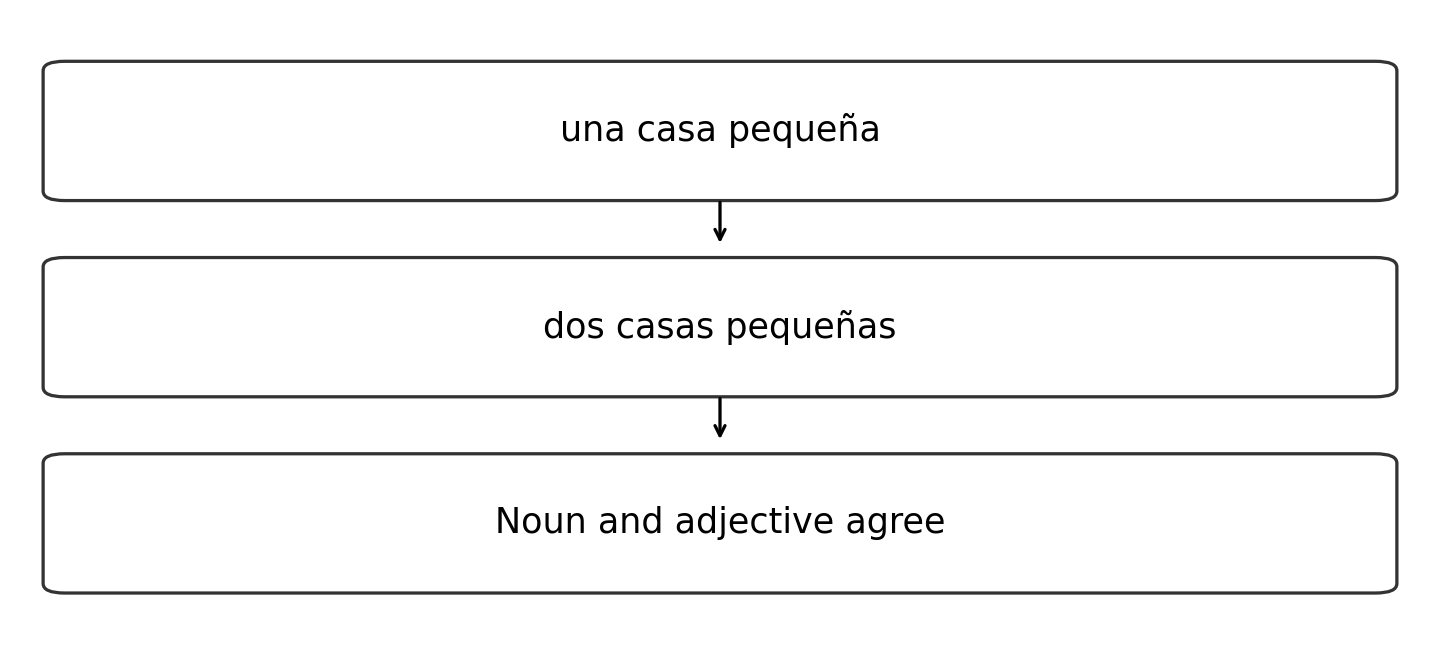
스페인어 형용사는 성(性別)과 수에 따라 일치하는 경우가 많다: un libro nuevo, dos casas nuevas.
Me llamo는 이름을 알려주는 표현이며, soy는 정체성이나 역할을 설명합니다.
“Me llamo Inés. Soy estudiante.” 이름 질문에는 영어로 직역하는 구조가 아닌 me llamo를 사용하여 답하십시오.
일치: la casa nueva; las casas newas. Estudiante는 “soy estudiante”에서 임의의 -a를 추가하지 않습니다.
제공된 단어와 함께 이 모델을 사용하신 후 다른 사람이나 사물로 적용하십시오.
원본worked 관계 도식; 전체 문구 및 조건을 읽으십시오.
기존 연습 예시: “Soy estudiante”에서는 estudiante에 성별 어미를 추가하지 않아도 됩니다. “La casa es nueva”는 여성형 단수 형용사를 사용합니다. 명사와 설명어가 모두 복수가 되면 “las casas son nuevas”로 변경하십시오.
완전한 원문 맥락
원본 스페인어 대화:
—Hola. ¿Cómo te llamas?
— Me llamo Inés. Soy estudiante. ¿Y tú?
— Me llamo Pablo. Soy estudiante también. Vivo en una casa pequeña.
— Yo vivo en una casa pequeña también. Tengo dos libros nuevos.
어휘: también = 또한; vivo = 나는 산다; pequeña = 작은; tengo = 나는 가지고 있다; libro = 책; nuevo = 새로운.
독립 연습 및 검증된 추론
이양 1
이름과 역할을 소개하고 상대방의 이름을 물어보세요. 원하면 가상의 교실 정체성을 사용할 수 있습니다.
추론: “Hola. Me llamo Elena. Soy estudiante. ¿Cómo te llamas?” 이 답변은 이름과 역할을 제시하고 적절한 질문을 합니다. 다른 이름도 허용되며, 정확한 암기된 이름이 아닌 구조를 평가합니다.
이양 2
“una casa pequeña”를 두 개의 작은 집으로, “dos libros nuevos”를 하나의 새로운 책으로 바꾸세요. 일치(agreement)에 대해 설명하세요.
추론: “Dos casas pequeñas”는 여성 복수 명사 및 형용사를 사용합니다. “Un libro nuevo”는 남성 단수 형태를 사용합니다. 제공된 규칙적인 패턴에서 형용사는 해당 명사와 일치하며, 모든 형용사나 명사가 단일 어미 규칙을 따르는 것은 아닙니다.
이양 3
모델을 사용하여 “¿Dónde vives?”에 답하고 하나 이상의 적절한 후속 질문을 하세요. 이것이 구두 대화의 증거가 되기 전에 어떤 과정이 필요함을 설명하세요.
추론: “Vivo en una casa pequeña. ¿Y tú?”는 간단하고 적절한 답변이자 반환 질문입니다. 실제 파트너가 응답해야 하며 학습자가 반응해야 하지만, 타이핑된 준비물은 spontaneous한 대화 또는 발음을 검증할 수 없습니다.
한계 및 향후 활용법
모든 명사의 어미가 성별을 예측하는 것은 아니며, 모든 형용사가 성별로 변하는 것도 아닙니다. 각 영어 단어를 기계적으로 번역하기보다 관사와 유용한 구문과 함께 단어를 배우세요.
여기에 있는 모든 과제는 공식 질문이나 신규 진단이 아닌, 작성자 지침이 포함된 공개 원본 연습입니다. 기존 보호되는 시험 및 모의고사는 별도로 분류됩니다.
어휘 카드 의미
일치(agreement): 동사나 형용사가 속해 있는 명사와 매칭되는 것.
ser: 정체성과 지속적인 특성을 나타내는 스페인어 동사입니다.
IB Language ab initio first assessment 2020; Spanish focus. This supplemental reference covers only the listed preparation outcomes. School selections, full-guide procedures and required live or recorded performance are separate.
Describe a routine and ask for practical information
Write a short message with an appropriate greeting, details and closing
Prerequisites: Present tense; clock times; greeting and closing.
Explain and choose the method
Present-tense verbs describe routines: estudio, vivo, tengo. A las 在……点 ocho gives a clock time.
A simple message should state why you write, the arrangement and any action needed from the reader.
A purposeful message 实用信息 gives the reader usable arrangements.
Include why, day, time, place, needed items and a question or request.
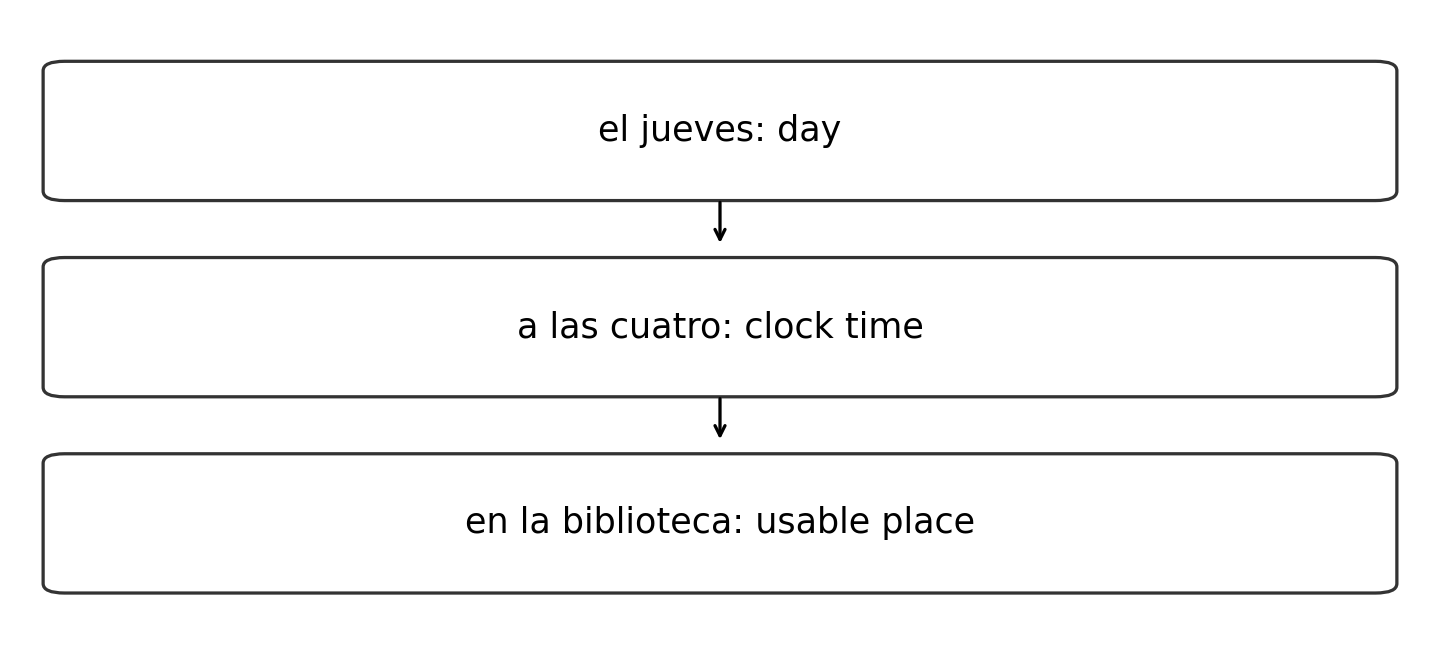
“A las cuatro” gives a clock time; “el jueves” gives a day.
Two complete original 70–150-word models are in the writing companion. The short phrase alone is not an exam-length response.
Original diagram of the worked relationship; read the full wording and qualifications.
Existing worked example: Hola, Ana. Nos vemos el jueves a las cuatro en la biblioteca 图书馆. ¿Puedes traer el libro? gives day, time, place and a request. For the current exam, expand the relevant task content within the 70–150-word range instead of repeating the greeting.
Complete original context
Original task A: Write a message to Ana inviting her to a study meeting. Describe your usual routine, give day/time/place, say what to bring, and ask her to confirm. Write 70–150 Spanish words.
Original task B: Write a short blog entry for classmates about a small neighbourhood market visit. Describe what you see, when you go, one preference with a reason, and one practical plan to reduce waste. Write 70–150 Spanish words. These are original practice tasks, not official prompts.
Independent practice and checked reasoning
Transfer 1
Plan task A, then write the whole message. Check greeting, routine, arrangement, request and closing.
Reasoning: The companion gives a complete original model with all five content cues and a checked word count 字数. Alternatives can use different plausible arrangements if they remain consistent and answer every cue in 70–150 words.
Hola, Ana:
¿Cómo estás? Normalmente tengo clase por la mañana y estudio en casa por la tarde. El jueves quiero estudiar contigo porque tenemos un ejercicio de español. Nos vemos a las cuatro en la biblioteca. La biblioteca está al lado de la escuela y es un lugar tranquilo. Puedes traer tu libro y un lápiz, por favor. Yo llevo mi cuaderno y una lista de preguntas. Después podemos hablar de nuestra rutina y practicar las horas. ¿Puedes venir? Escribe un mensaje para confirmar. Si el jueves no puedes, podemos vernos el viernes a la misma hora.
Hasta pronto,
Elena
Classroom model: 100 words. Greeting and closing; usual routine; study purpose; Thursday four o'clock library; book/pencil request; own materials; confirmation; consistent Friday alternative.
Transfer 2
Write task B. Underline the visible description, preference and reason, and practical waste plan.
Reasoning: The companion model describes people, fruit and a table; gives Saturday morning; prefers apples because they are easy to carry; and proposes a bag from home and a list to buy only needed food. Other accurate, coherent beginner responses are acceptable.
El sábado voy al mercado de mi barrio por la mañana. En el mercado hay una mesa con fruta y tres personas. Me gusta visitar este lugar porque puedo hablar con los vendedores y comprar comida para mi familia. Prefiero las manzanas porque son fáciles de llevar. Normalmente llevo una bolsa de casa para usar menos plástico. También preparo una lista antes de salir. Así compro solo la comida que necesitamos. La próxima semana quiero ir con mi amiga Ana. Después de comprar, podemos caminar hasta la biblioteca. Es una rutina sencilla, pero para mí es agradable y útil.
Classroom model: 99 words. Saturday morning; market description; preference and reason; bag/list waste plan; coherent next-week arrangement. Original personal scenario; no national cultural claim.
Transfer 3
Repair “Nos vemos jueves cuatro biblioteca” into a usable arrangement and add a polite request for a book.
Reasoning: “Nos vemos el jueves a las cuatro en la biblioteca. ¿Puedes traer el libro, por favor?” It supplies day, clock-time phrase, location 位置 preposition and a clear request. Do not assume a reader can reconstruct every missing relationship.
Limits and next use
The short model is a teaching sentence, not a complete exam-length response. No listening recording is provided here; teacher-supplied Spanish audio and live interaction remain necessary.
All tasks here are public original practice with authored guidance. They are not official questions or fresh diagnostics. Existing protected tests and mocks remain separate.
Vocabulary card meanings
purposeful message: A practical text written to get something done, such as an invitation.
biblioteca: The Spanish noun for a place where books are lent.
a las: The Spanish pair placed before a plural clock hour. The singular hour uses a different form.
IB 언어 ab initio 첫 평가 2020; 스페인어 중심. 이 보충 참고문서는 나열된 준비 결과만 다룹니다. 학교 선택, 전체 가이드 절차 및 필수 라이브 또는 녹화된 퍼포먼스는 별개의 항목입니다.
'hay'와 위치 언어로 보이는 디테일을 묘사하십시오
시각적 요소를 학습한 스페인어권 맥락과 연결하고 추후 질문에 응답하십시오
전제 조건: hay; 보이는 디테일; 위치 구문; me gusta/prefiero 및 이유.
방법 설명 및 선택
Hay는 '있다' 또는 '存在하다'를 의미한다. al lado of나 delante de와 같은 위치 구절은 물체의 배치를 명시한다.
묘사에서 시작하여 근거 있는 해석을 거친 뒤, 수업에서 배운 구체적인 문화 비교로 이어져야 한다.
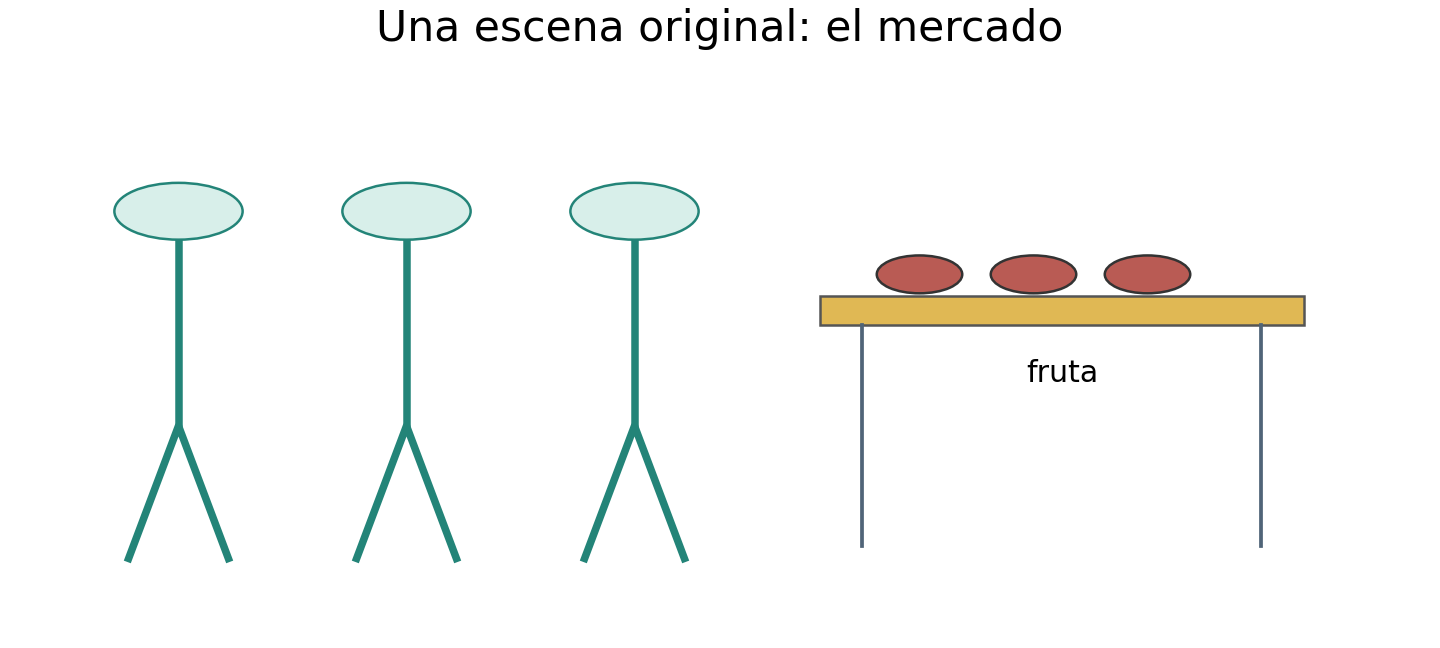
실제 원본 시장 일러스트를 사용하십시오. “이미지에는 세 명의 사람과 하나의 테이블이 있습니다”라고 말하십시오.
위치 표현으로는 al lado de(옆에)와 delante de(앞에)가 포함됩니다.
“Prefiero las manzanas porque son fáciles de llevar”는 이유를 함께한 선호도를 나타냅니다.
이미지만으로는 국적, 관계 또는 역사적 기원을 알 수 없습니다. 문화적 연결성은 구체적인 스페인어 권의 학습 맥락에서 유래해야 합니다.
원본worked 관계 도식; 전체 문구 및 조건을 읽으십시오.
기존 풀이 예시: En la foto hay tres personas en un mercado. Están al lado de una mesa은 원본 교실 시각 자료를 설명할 수 있습니다. 음식에 대한 추가 질문에서는 me gusta나 prefiero를 이유와 함께 사용할 수 있으며, 모든 스페인어 권 국가에 대한 주장을 피해야 합니다.
완전한 원문 맥락
원본 교사 독해 연습 대본:
“El sábado voy al mercado por la mañana. En el mercado hay tres personas al lado de una mesa. En la mesa hay fruta. Llevo una bolsa de casa porque quiero usar menos plástico. Prefiero las manzanas porque son fáciles de llevar. Después voy a la biblioteca.”
어휘: sábado = 토요일; mañana = 오전; fruta = 과일; bolsa = 가방; menos = 적게; después = 이후에.
제공된 시장 일러스트를 사용하여 묘사하십시오. 교사 독해 청취용 대본을 종료하십시오. 녹음본은 제공되지 않거나 인증되지 않았습니다.
독립 연습 및 검증된 추론
이양 1
스페인어로 두 가지 가시적 디테일을 묘사하고 하나의 위치 표현을 제시하십시오. 묘사와 unsupported 문화적 가정은 분리하십시오.
추론: “En la imagen hay tres personas. Hay fruta en la mesa. Las personas están al lado de la mesa.” 그림은 사람들이 스페인인이거나 친족이거나 특정 축제를 Celebrating하고 있음을 증명하지 않습니다. 실제 내용을 묘사하고 정체성을 추측하지 마십시오.
이양 2
“¿Qué prefieres y por qué?” 및 “¿Qué llevas al mercado?”에 일관된 짧은 답변을 제시한 후 추가 질문을 하십시오.
추론: “Prefiero las manzanas porque son fáciles de llevar. Llevo una bolsa de casa. ¿Qué prefieres tú?” accurate 선호도와 이유를 포함하는 다른 답변도 수용하며, 관련 추가 질문을 하십시오. 상호작용 증거를 위해 실상 파트너 응답이 필수적입니다.
이양 3
교사가 텍스트를 닫은 채로 대본을 읽은 후, 요일, 시간대, 다음 장소 및 가방을 가져간 이유를 명시하십시오. 그 후 구체적인 문화적 연결을 위해 여전히 필요한 것을 설명하십시오.
추론: 토요일; 오전; 이후에 도서관; 플라스틱 사용을 줄이기 위해. 특정 스페인어권 장소나 관행에 대한 신뢰할 수 있는 학습 출처가 문화 비교를 위해 여전히 필요합니다. 이 원본 그림이나 교사 독해 대본은 민족 풍속을 설정하지 않습니다. 녹음 및 전달 검증은 미완료 상태입니다.
한계 및 향후 활용법
문화적 연결고리는 구체적인 장소나 관행 및 신뢰할 수 있는 학습 자료가 필요하다. 스페인어 B는 영어와 다르며, 이 초급 과정은 다른 언어의 어휘, 문법 또는 청력 요구 사항을 충족하지 못한다.
여기에 있는 모든 과제는 공식 질문이나 신규 진단이 아닌, 작성자 지침이 포함된 공개 원본 연습입니다. 기존 보호되는 시험 및 모의고사는 별도로 분류됩니다.
어휘 카드 의미
mercado: 재화가 판매되는 장소를 의미하는 스페인어 명사입니다.
hay: 무언가가那里的存在来说明使用的西班牙语单词。