
Scope and prerequisites
IB Language ab initio first assessment 2020; Spanish focus. This supplementary reference covers only the outcomes listed below. Your school's text choices, the full guide's procedures and any required live or recorded performance are handled separately.
- Describe visible details with hay 有 and location 位置 language
- Link a visual to a studied Spanish-speaking context and respond to follow-up
Prerequisites: Hay; visible detail 细节; location phrases; me gusta/prefiero with reasons.
Explain and choose the method
Hay means there is or there are. Location phrases such as al lado de and delante de place objects.
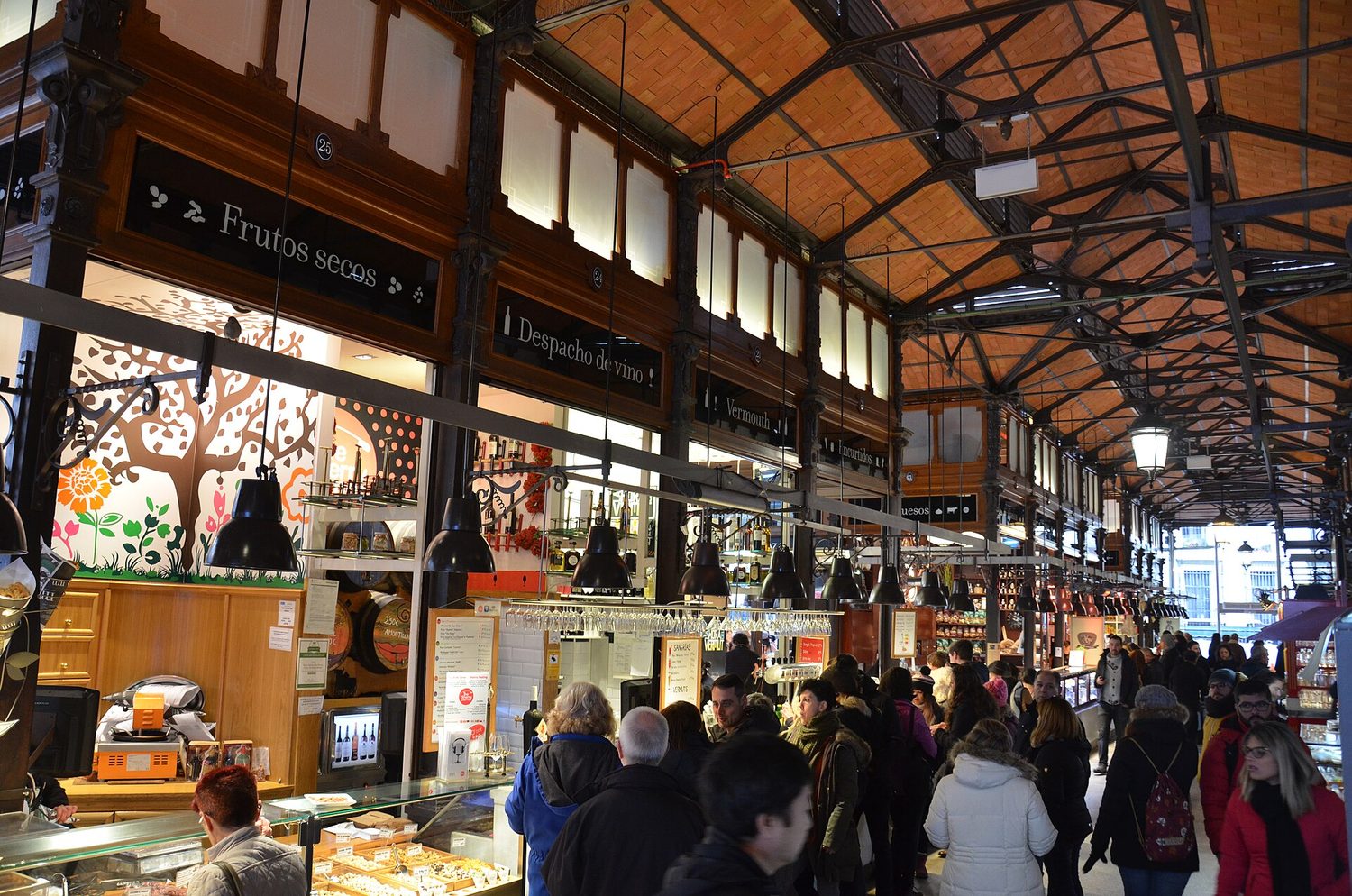
Build from description to a supported interpretation, then a specific cultural comparison studied in class.
Use the actual original market illustration. Say “En la imagen hay tres personas y una mesa”. Location phrases include al lado de (beside) and delante de (in front of). “Prefiero las manzanas porque son fáciles de llevar” gives a preference with a reason. The image alone supplies no nationality, relationships or historical origin. A cultural link must come from a specific studied Spanish-speaking context.
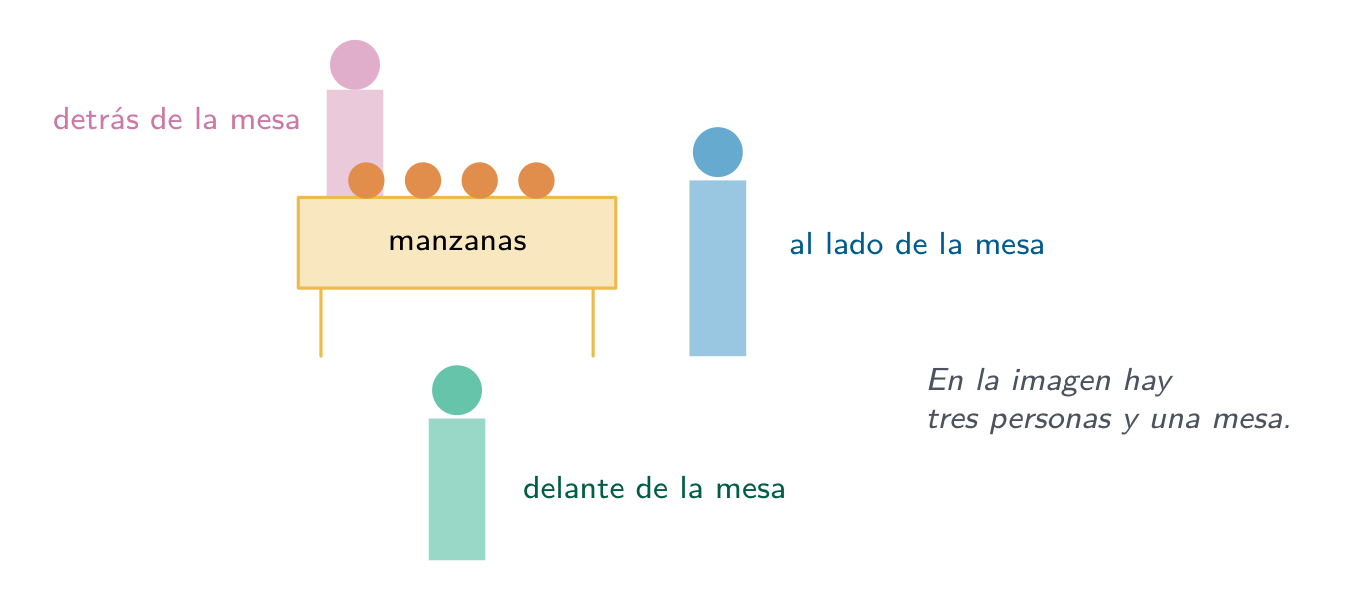
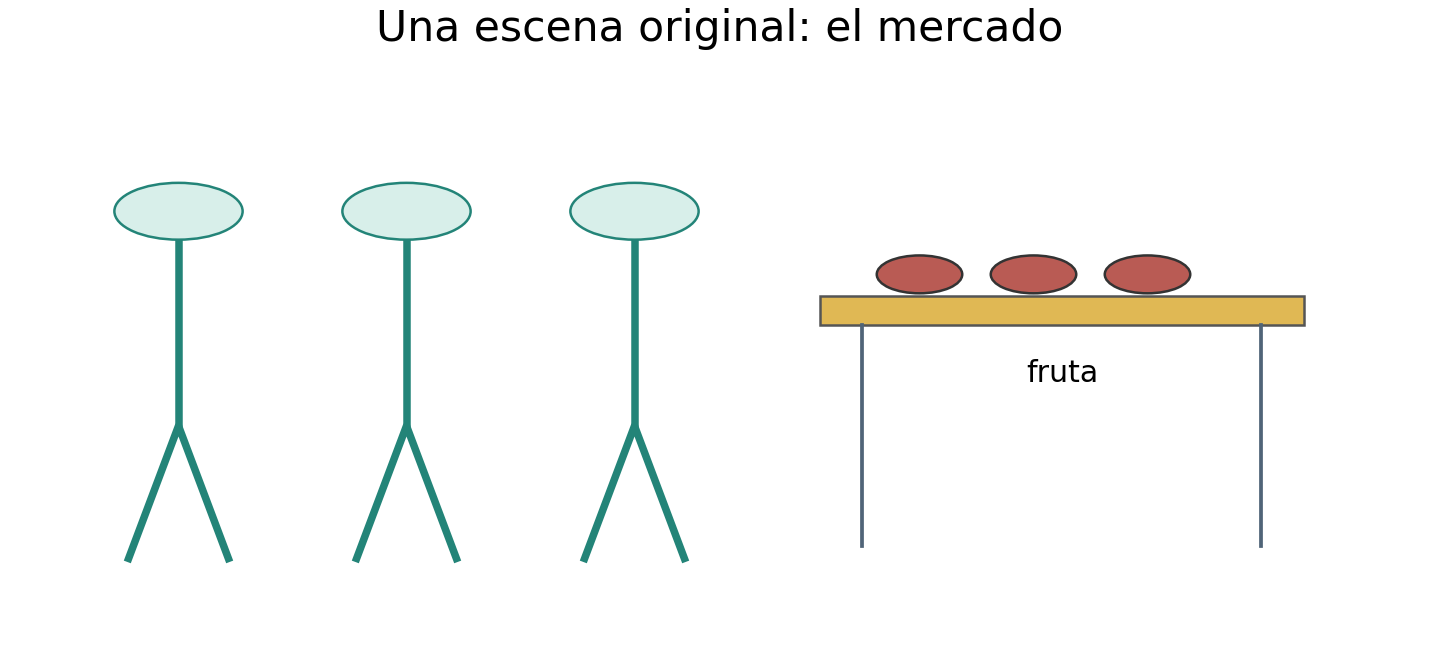
Worked example. En la foto hay tres personas en un mercado 市场. Están al lado de una mesa can describe an original classroom visual. A follow-up about food can use me gusta or prefiero with a reason, while avoiding claims about every Spanish-speaking country.
Practice material
Original teacher-read rehearsal 排练 教师朗读演练 script: “El sábado voy al mercado por la mañana. En el mercado hay tres personas al lado de una mesa. En la mesa hay fruta. Llevo una bolsa de casa porque quiero usar menos plástico. Prefiero las manzanas porque son fáciles de llevar. Después voy a la biblioteca.” Vocabulary: sábado = Saturday; mañana = morning; fruta = fruit; bolsa = bag; menos = less; después = afterwards. Use the supplied market illustration for description. Close this script for teacher-read listening; no recording is supplied or certified.
Practice with reasoning
Practice 1
Describe two visible details in Spanish and give one location phrase. Separate description from an unsupported cultural assumption.
Reasoning. “En la imagen hay tres personas. Hay fruta en la mesa. Las personas están al lado de la mesa.” The picture does not prove the people are Spanish, related or celebrating a particular festival. Describe its actual content rather than guessing an identity.
Practice 2
Answer “¿Qué prefieres y por qué?” and “¿Qué llevas al mercado?” using a coherent short response. Then ask a follow-up.
Reasoning. “Prefiero las manzanas porque son fáciles de llevar. Llevo una bolsa de casa. ¿Qué prefieres tú?” Accept other accurate preferences with reasons and a relevant follow-up. A live partner response remains necessary for interaction evidence 证据.
Practice 3
After a teacher reads the script with the text closed, state the day, time of day, next place and reason for the bag. Then explain what is still needed for a specific cultural connection 文化联系.
Reasoning. Saturday; morning; the library afterwards; to use less plastic. A reliable studied source about a named Spanish-speaking place or practice is still needed for cultural comparison. Neither this original picture nor the teacher-read script establishes a national custom.
Limits and next use
A cultural connection needs a specific place or practice and reliable learning material. Spanish differs from English B; this beginner course does not meet another language's vocabulary, grammar or listening requirements.
These are original practice tasks written for this course, not official exam questions.
Vocabulary card meanings
mercado: The Spanish noun for a place where goods are sold. hay: The Spanish word used to say that something is there.