
Scope and prerequisites
IB Language ab initio first assessment 2020; Spanish focus. This supplementary reference covers only the outcomes listed below. Your school's text choices, the full guide's procedures and any required live or recorded performance are handled separately.
- Introduce yourself using ser 是 and llamarse
- Use gender/number agreement 一致关系 and basic questions accurately
Prerequisites: Supplied vocabulary; singular and plural; questions and responses.
Explain and choose the method
Me llamo gives your name; soy describes identity or role. ¿Cómo te llamas? asks a familiar person's name.
Spanish adjectives often agree in gender and number: un libro nuevo, dos casas nuevas.
Me llamo gives a name; soy describes identity or role. “Me llamo Inés. Soy estudiante.” Answer a name question with me llamo, not a word-for-word English construction. Agreement : la casa nueva; las casas nuevas. Estudiante does not acquire an invented -a in “soy estudiante”. Use these models with supplied words before transferring to a different person or object.
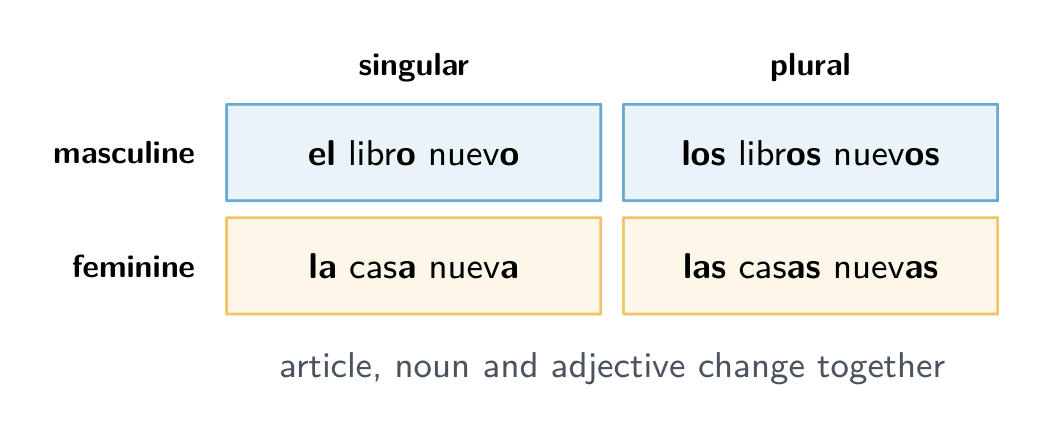
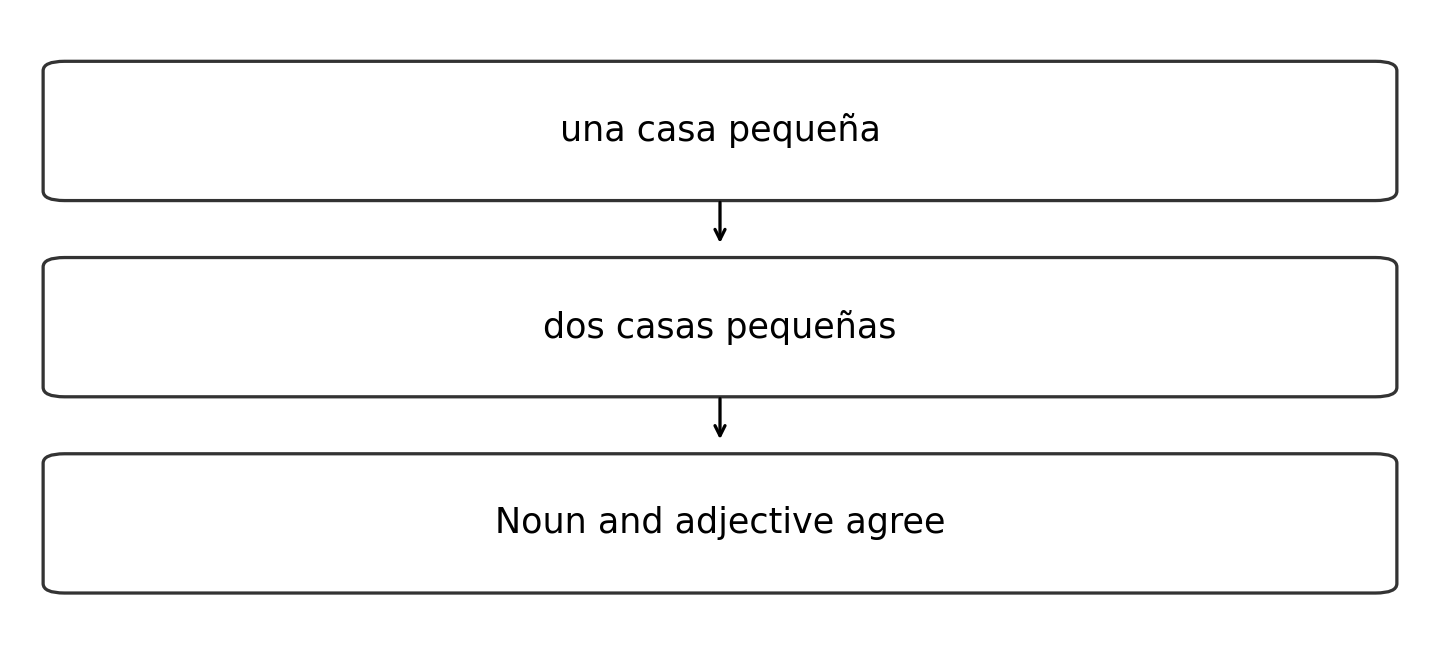
Worked example. Soy estudiante works without adding a gender ending to estudiante in this phrase. La casa es nueva uses a feminine singular adjective. Change to las casas son nuevas when both noun and description become plural.
Practice material
Original Spanish exchange: — Hola. ¿Cómo te llamas? — Me llamo Inés. Soy estudiante. ¿Y tú? — Me llamo Pablo. Soy estudiante también. Vivo en una casa pequeña. — Yo vivo en una casa pequeña también. Tengo dos libros nuevos. Vocabulary: también = also; vivo = I live; pequeña = small; tengo = I have; libro = book; nuevo = new.
Practice with reasoning
Practice 1
Introduce yourself with a name and role, then ask your partner's name. Use an invented classroom identity if preferred.
Reasoning. “Hola. Me llamo Elena. Soy estudiante. ¿Cómo te llamas?” The response gives name and role and asks a relevant question. Other names are acceptable; assess the structures, not an exact memorised name.
Practice 2
Change “una casa pequeña” to two small houses and “dos libros nuevos” to one new book. Explain the agreement.
Reasoning. “Dos casas pequeñas” uses feminine plural noun and adjective. “Un libro nuevo” uses masculine singular forms. The adjective agrees with its noun in this supplied regular pattern; not every adjective or noun follows one ending rule.
Practice 3
Answer “¿Dónde vives?” using the model, and ask one relevant follow-up. Explain what must happen before this becomes evidence 证据 of oral interaction.
Reasoning. “Vivo en una casa pequeña. ¿Y tú?” is a simple relevant answer and return question. A live partner must actually respond and the learner must react; typed preparation cannot certify spontaneous interaction or pronunciation.
Limits and next use
Not every noun ending predicts gender, and not every adjective changes for gender; learn articles and useful phrases with words rather than translating mechanically.
These are original practice tasks written for this course, not official exam questions.
Vocabulary card meanings
agreement: Matching a verb or an adjective to the noun it belongs with. ser: The Spanish verb used for identity and for lasting traits.