Skip to content
English Grammar · A1

Present simple

  • 8 Present simple
    8.1

    Habits and Third Person -s

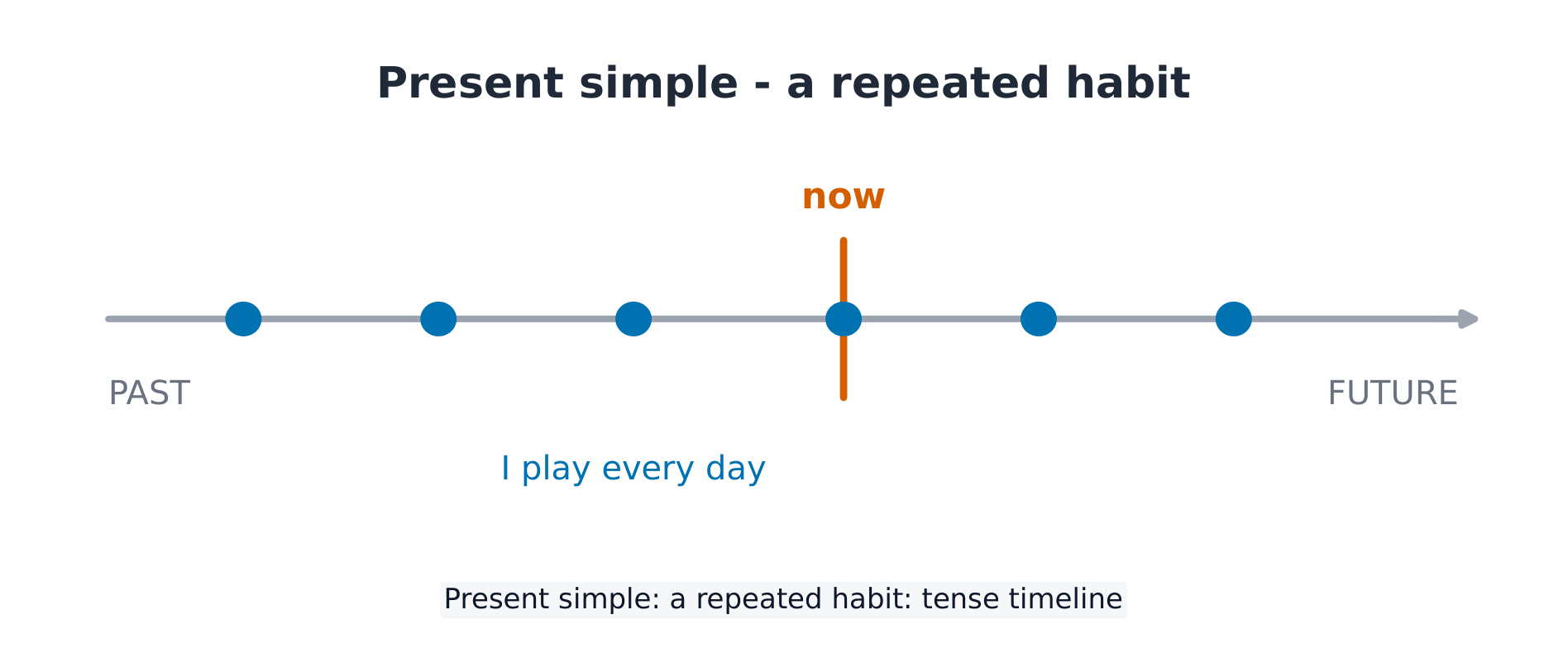
    Present Simple: Repeated habits

    Present simple (present simple) describes habits and facts. The base form is the infinitive (base verb).

    我I 喜欢like 茶tea.

    I like tea.

    When the subject is he / she / it, add -s to the verb:

    他He 踢plays 足球football.

    He plays football.

    Spelling rules:

    • Generally add -s: like → likes.
    • Words ending in -s / -sh / -ch / -x / -o add -es: go → goes, watch → watches.
    • Consonant + y ending: change y to i and add -es: study → studies.

    Note: Only he / she / it take -s; I / you / we / they use the base form: They like tea.
    8.2

    Negation and Interrogative

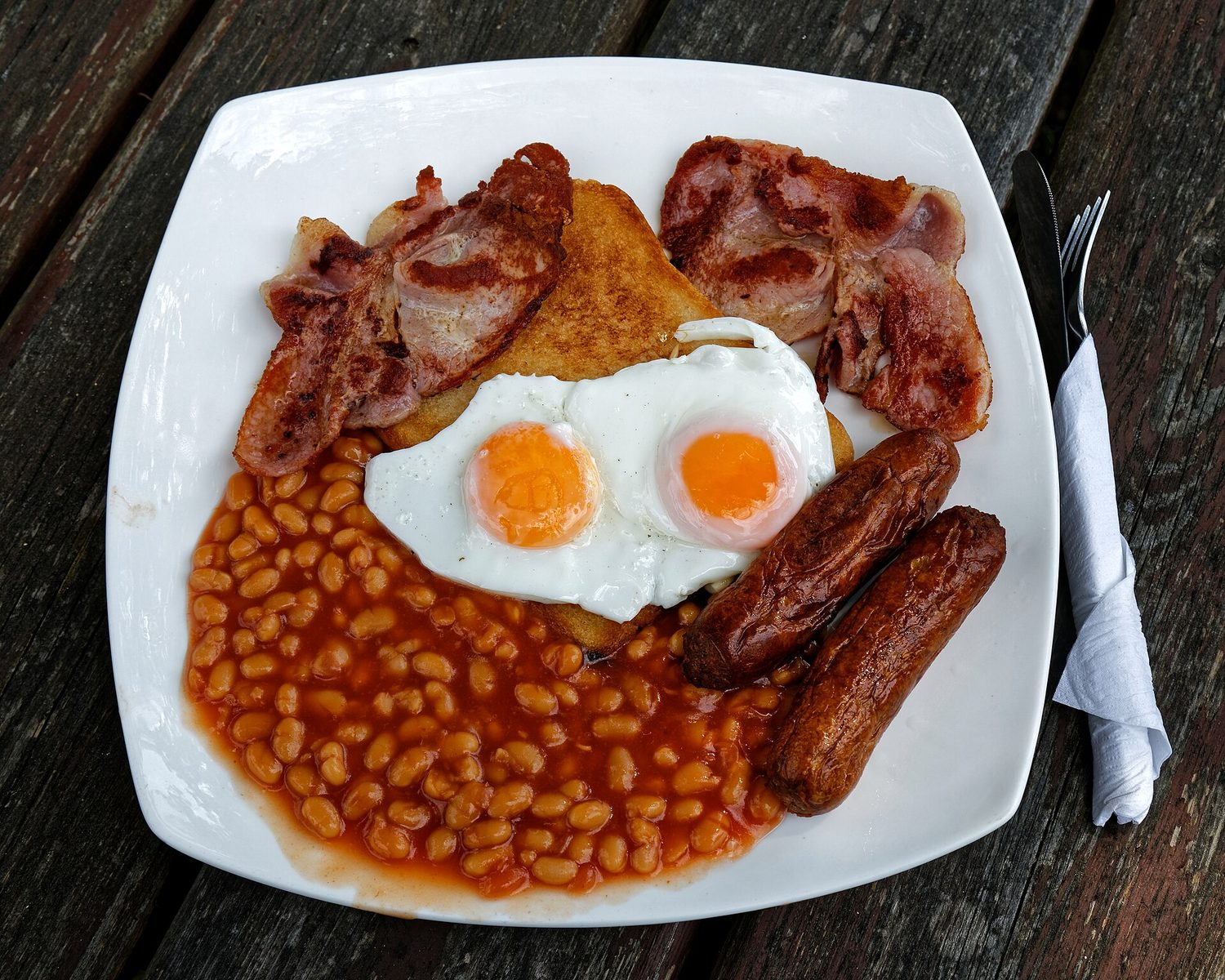
    Daily routine: I have breakfast every morning.

    For negatives and questions, use auxiliary verbs do / does (does for he / she / it).

    Negative: Subject + don't / doesn't + base verb.

    我I 不don't 喜欢like 咖啡coffee.

    I don't like coffee.

    Question: Do / Does + Subject + base verb ?

    (助动词)Does 她she 住live 这里here?

    Does she live here?

    Note: When using do / does, the verb returns to its base form (no -s): ~~Does she lives~~ ✗ → Does she live ✓.

    Common Errors

    • ❌ ~~He go to school by bus.~~ → ✓ He goes to school by bus. — Forgetting to add -s in third person singular is the most frequent error; check your work afterwards.
    • ❌ ~~She doesn't likes coffee.~~ → ✓ She doesn't like coffee. — When using does / doesn't, the verb returns to its base form.
    • ❌ ~~I very like English.~~ → ✓ I like English very much. — "Very much" in Chinese cannot be translated literally; very cannot directly modify a verb.
    • ❌ ~~You like tea?~~ → ✓ Do you like tea? — Questions must start with do / does; rising intonation alone is insufficient.

All topics · English Grammar · A1

Log in or create account

IGCSE, A-Level & AP