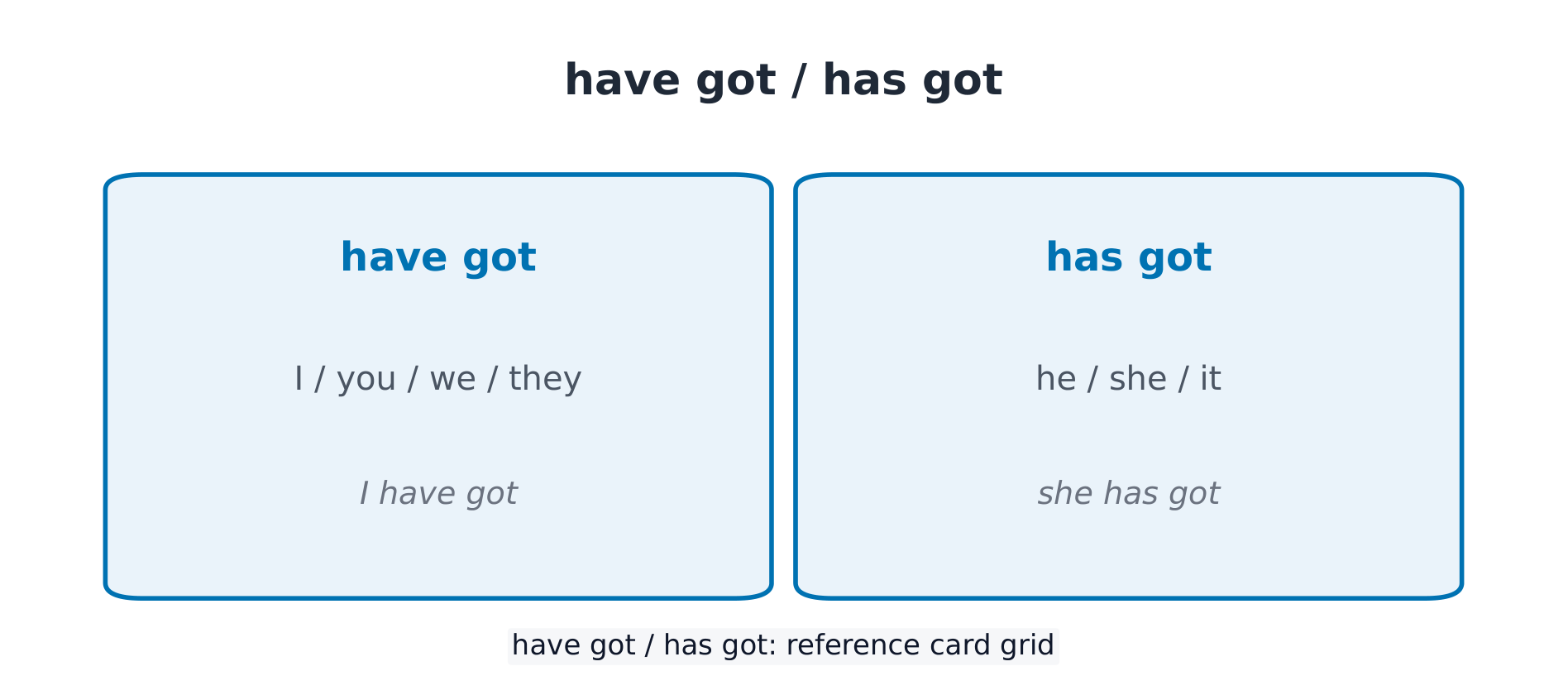
Negative: haven't got / hasn't got.
他He 没有hasn't got 一辆a 车car.
He doesn't have a car.
Question: Move Have / Has to the front of the subject.
(有吗)Have 你you 有got 一支a 笔pen?
Do you have a pen?
Short answer: Yes, I have. / No, I haven't.
Note: have got is mostly used for current possession; for past or habits, use regular have / had.
Common Errors
- ❌ ~~She have got long hair.~~ → ✓ She has got long hair. — Use has got for he / she / it.
- ❌ ~~I have got not a car.~~ → ✓ I haven't got a car. — Place not after have / has, then contract.
- ❌ ~~Do you have got a pen?~~ → ✓ Have you got a pen? / Do you have a pen? — Both question forms are correct, but never mix them.
- ❌ ~~Yes, I have got.~~ → ✓ Yes, I have. — Short answers end at have / has, without got.