Skip to content
Subjects

英语语法 · A1

  • 1 be 动词 (am / is / are)
    1.1

    am / is / are

    be 动词:am / is / are 随主语变化

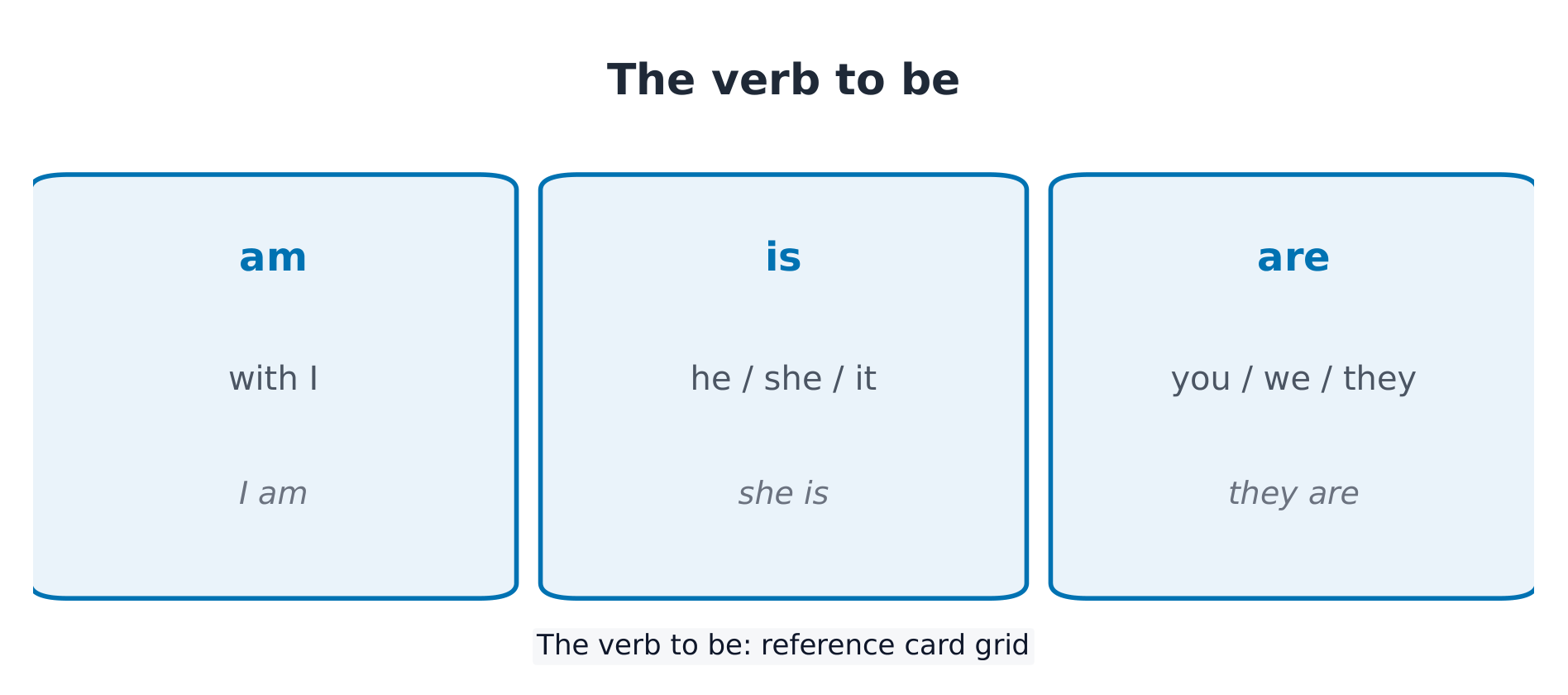
    be 动词 (the verb to be) 表示"是 / 在"。它随主语变化,有三种形式:

    • I → am
    • he / she / it → is
    • you / we / they → are

    I am 一名a 学生student.

    我是一名学生。

    She is 开心happy.

    她很开心。

    他们They (是)are 来自from 中国China.

    他们来自中国。

    注意 口语常用缩写:I'm、you're、he's、she's、it's、we're、they're。

    1.2

    否定与疑问

    否定: 在 be 动词后加 not(常缩写)。

    He 不是is not 一名a 老师teacher.

    他不是老师。(= He isn't a teacher.)

    疑问: 把 be 动词放到主语前面

    (是吗)Are you 准备好ready?

    你准备好了吗?

    简短回答:Yes, I am. / No, I'm not.

    注意 否定缩写:is not → isn't,are not → aren't;但 am not 只缩写成 I'm not(没有 ~~amn't~~)。

    常见错误

    • ❌ ~~He busy.~~ → ✓ He is busy. — 中文"他很忙"可以没有动词,英语句子一定要有 be。
    • ❌ ~~I am go to school.~~ → ✓ I go to school. — be 和普通动词不能叠用;"去"只需要 go。
    • ❌ ~~They is my friends.~~ → ✓ They are my friends. — 复数主语(you / we / they)用 are。
    • ❌ ~~I am agree.~~ → ✓ I agree. — agree(同意)本身是动词,前面不加 am。
    • ❌ ~~Are you ready? — Yes, I'm.~~ → ✓ Yes, I am. — 简短回答的末尾不能用缩写形式。
  • 2 主语人称代词
    2.1

    I, you, he, she, it, we, they

    主语代词与物主词

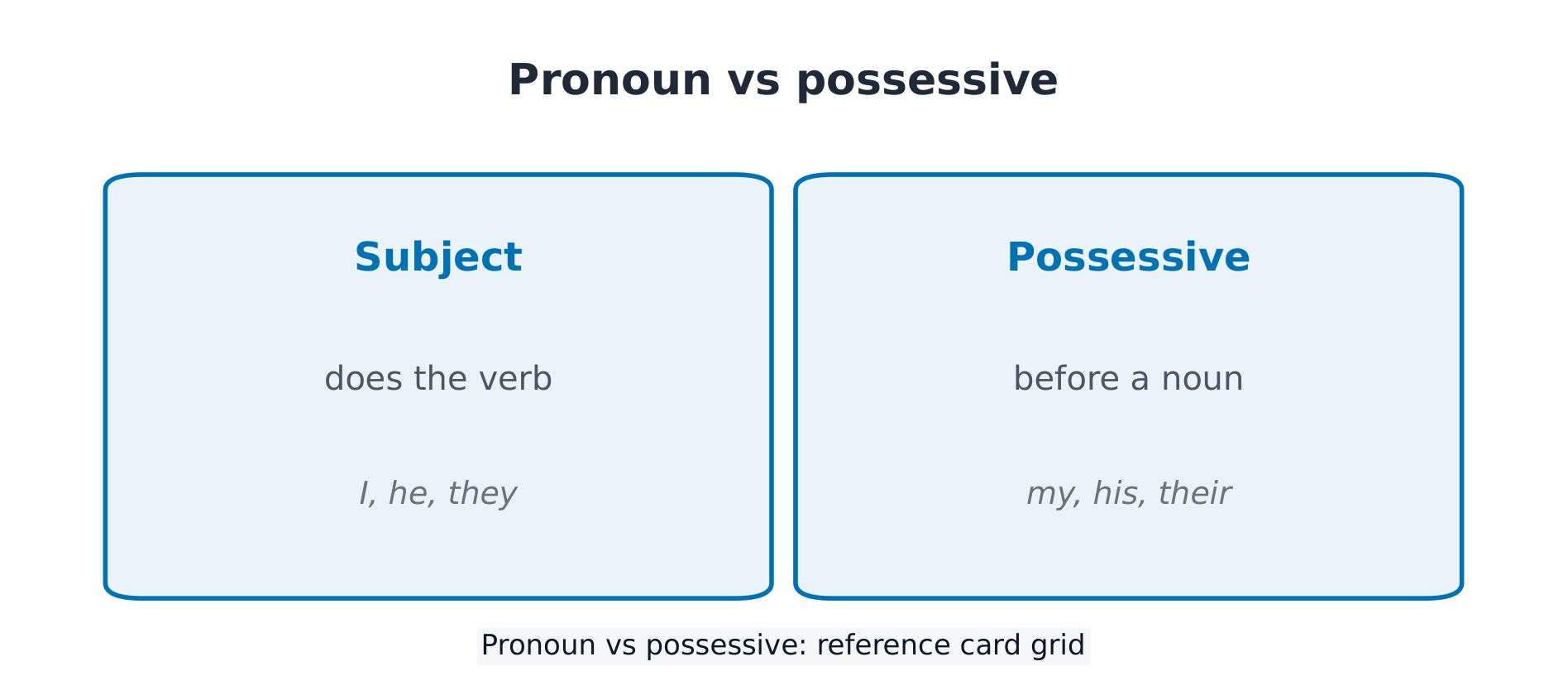
    主语人称代词 (subject pronouns) 用来代替主语,放在动词前面:

    • I(我)、you(你 / 你们)、he(他)、she(她)
    • it(它)、we(我们)、they(他们 / 它们)

    He is 我的my 哥哥brother.

    他是我哥哥。

    我们We 喜欢like 音乐music.

    我们喜欢音乐。

    用法要点:

    • I 永远大写,不管在句子哪里。
    • 东西、动物常用 it:This is my bag. It is new.(这是我的包,它是新的。)
    • 复数的人或物都用 they:The books are here. They are mine.(书在这儿,它们是我的。)

    注意 主语代词后面跟动词;别和后面要学的宾语代词(me、him、her…)弄混。

    常见错误

    • ❌ ~~My mother is a doctor. He is very kind.~~ → ✓ She is very kind. — 中文口语"他 / 她"同音,英语 he / she 一定要分清。
    • ❌ ~~Me am a student.~~ → ✓ I am a student. — 做主语用 I,不用 me。
    • ❌ ~~My friend he is tall.~~ → ✓ My friend is tall. — 主语说一次就够,不要"名词 + 代词"重复(中文"我朋友他……"的习惯带不进英语)。
    • ❌ ~~Is raining.~~ → ✓ It is raining. — 英语句子必须有主语;天气、时间、日期用 it 开头。
  • 3 物主限定词
    3.1

    my, your, his, her, our, their

    物主限定词:my / your / his / her

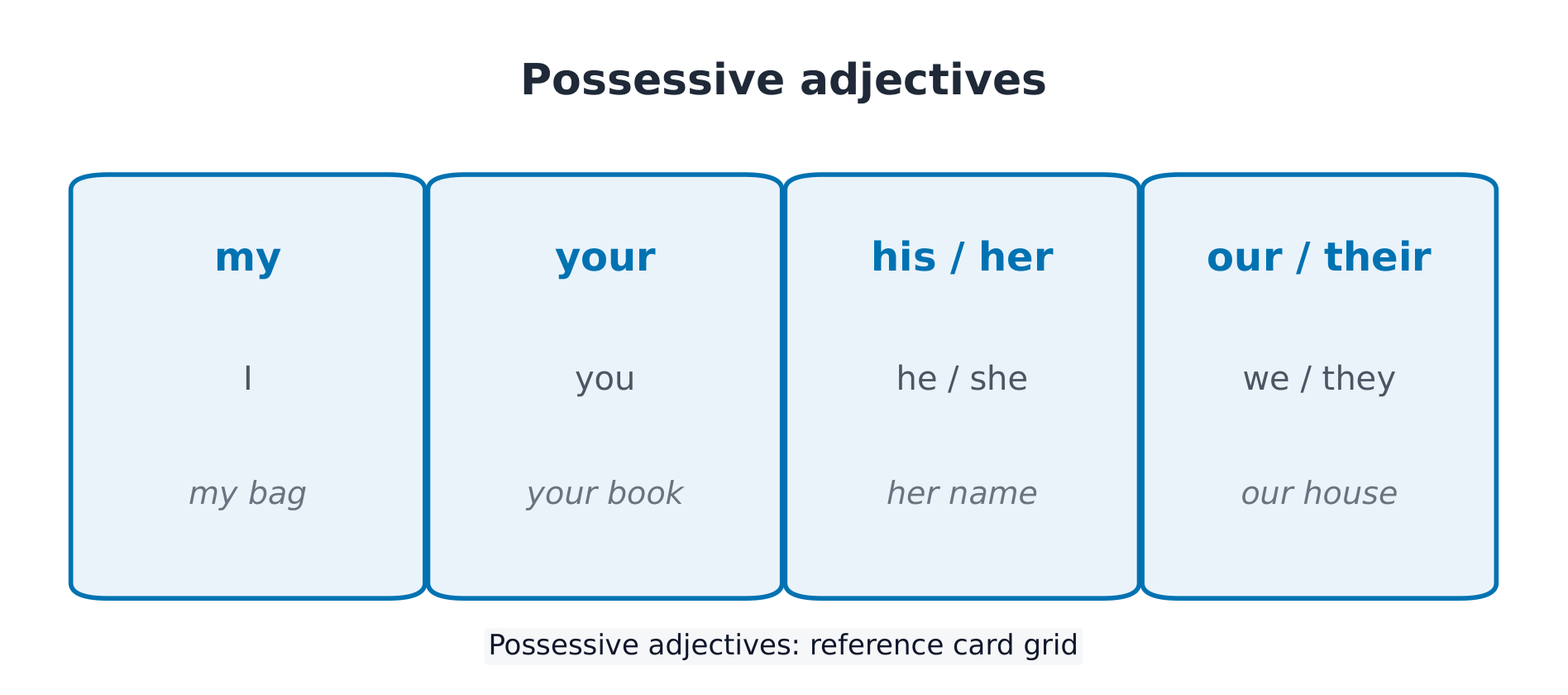
    物主限定词 (possessive adjectives) 表示"谁的",放在名词前面:

    • I → my(我的)、you → your(你的)、he → his(他的)
    • she → her(她的)、it → its(它的)、we → our(我们的)、they → their(他们的)

    This is 我的my bag.

    这是我的包。

    她的Her 名字name is 露西Lucy.

    她的名字叫露西。

    用法要点:

    • 物主限定词后面一定跟名词:my book,their house
    • 不随名词单复数变化:my book,my books(my 不变)。

    注意 小心区分 its(它的,无撇号)和 it's(= it is)。例如:The dog wags its tail.(狗摇它的尾巴。)

    常见错误

    • ❌ ~~This is she book.~~ → ✓ This is her book. — 名词前要用物主形式:he → his,she → her。
    • ❌ ~~He is me friend.~~ → ✓ He is my friend. — I 的物主形式是 my。
    • ❌ ~~The dog wags it's tail.~~ → ✓ …wags its tail. — it's = it is;"它的"是 its,没有撇号。
    • ❌ ~~Their is a park near here.~~ → ✓ There is a park near here. — their(他们的)和 there(有 / 那里)读音相同,写的时候别混。
  • 4 指示词
    4.1

    this 与 that

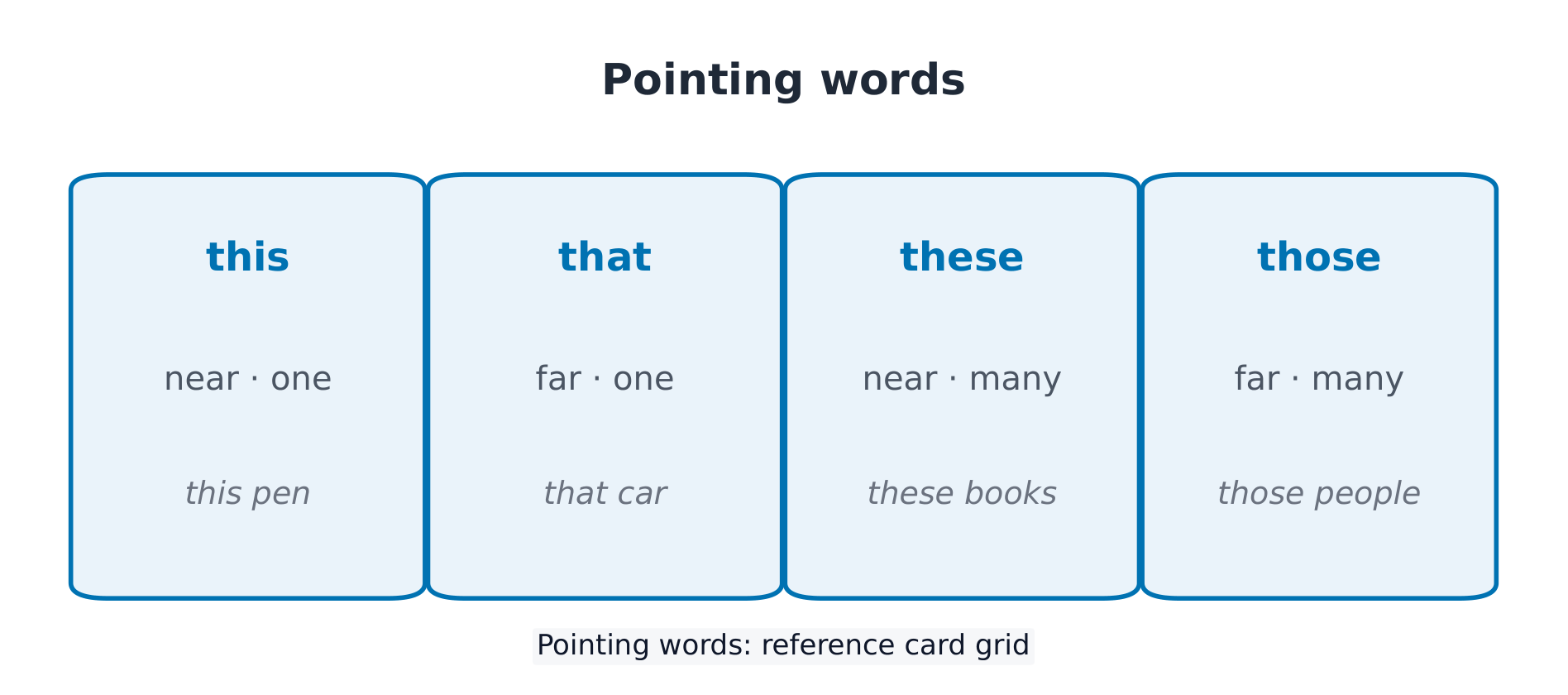
    近/远 × 单数/复数:this / that / these / those

    指示词 (demonstratives) 指出"哪一个"。单数用 thisthat:

    • this(这个):离说话人
    • that(那个):离说话人

    This is 我的my 手机phone.

    这是我的手机。(近)

    That is 你的your car.

    那是你的车。(远)

    4.2

    these 与 those

    复数用 thesethose:

    • these(这些):近。those(那些):远。

    这些These are 我的my books.

    这些是我的书。

    那些Those are 她的her 朋友friends.

    那些是她的朋友。

    对照记忆:

    • 近 → this(单)/ these(复)。
    • 远 → that(单)/ those(复)。

    注意 these / those 后面跟复数名词:these books,not ~~these book~~。

    常见错误

    • ❌ ~~these book~~ → ✓ these books — these / those 后面必须跟复数名词。
    • ❌ ~~This books are mine.~~ → ✓ These books are mine. — 名词是复数,指示词也要用复数形式。
    • ❌ 打电话时说 ~~I am Tom.~~ → ✓ This is Tom. — 英语在电话里自报姓名用 this is。
    • 记住配对:近处 this / these 常和 here 一起用,远处 that / those 常和 there 一起用。
  • 5 a / an 与复数
    5.1

    a 与 an

    a / an:看读音(辅音 vs 元音)

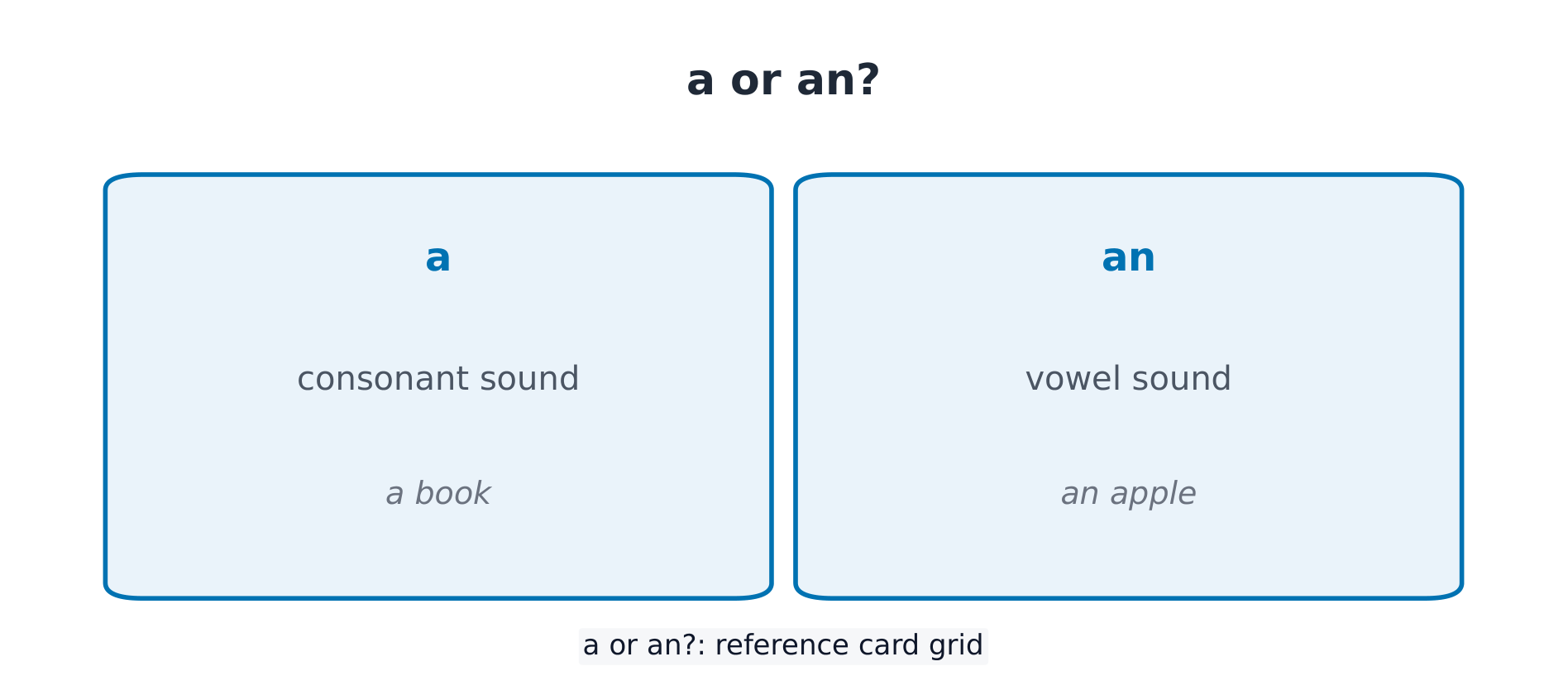
    aan 表示"一个",用在单数可数名词前。怎么选,看读音:

    • a + 辅音音:a book,a dog,a cat。
    • an + 元音音:an apple,an egg,an orange。

    I have 一个a pen.

    我有一支笔。

    She eats 一个an 苹果apple.

    她吃一个苹果。

    注意 看声音不看字母:an hour(h 不发音)、a university(读 "yu-")。

    5.2

    名词复数

    表示"不止一个"时,名词用复数,通常加 -s:

    • 一般加 -s:book → books,car → cars。
    • 以 -s / -sh / -ch / -x 结尾,加 -es:bus → buses,box → boxes。
    • 辅音 + y 结尾,y 变 i 加 -es:baby → babies,city → cities。

    I have two cats.

    我有两只猫。

    不规则复数(要背):

    • man → men,woman → women,child → children
    • foot → feet,tooth → teeth,person → people

    注意 复数名词前不加 a / an:~~a books~~ ✗ → books / two books ✓。

    常见错误

    • ❌ ~~I have dog.~~ → ✓ I have a dog. — 中文可以说"我有狗",英语单数可数名词前必须有 a / an(或 my、the 等)。
    • ❌ ~~an university~~ → ✓ a university;❌ ~~a hour~~ → ✓ an hour — 看读音不看字母:university 以辅音 /j/ 开头,hour 的 h 不发音。
    • ❌ ~~two book~~ → ✓ two books — 中文名词没有复数变化,英语数字后面的名词要加 -s,最容易忘。
    • ❌ ~~three childs~~ → ✓ three children — 不规则复数要单独背:men、women、children、feet、teeth、people。
    • ❌ ~~a people~~ → ✓ a person(一个人)/ people(许多人) — people 本身就是复数。
  • 6 there is / there are
    6.1

    单数与复数

    There is(单数)/ There are(复数)

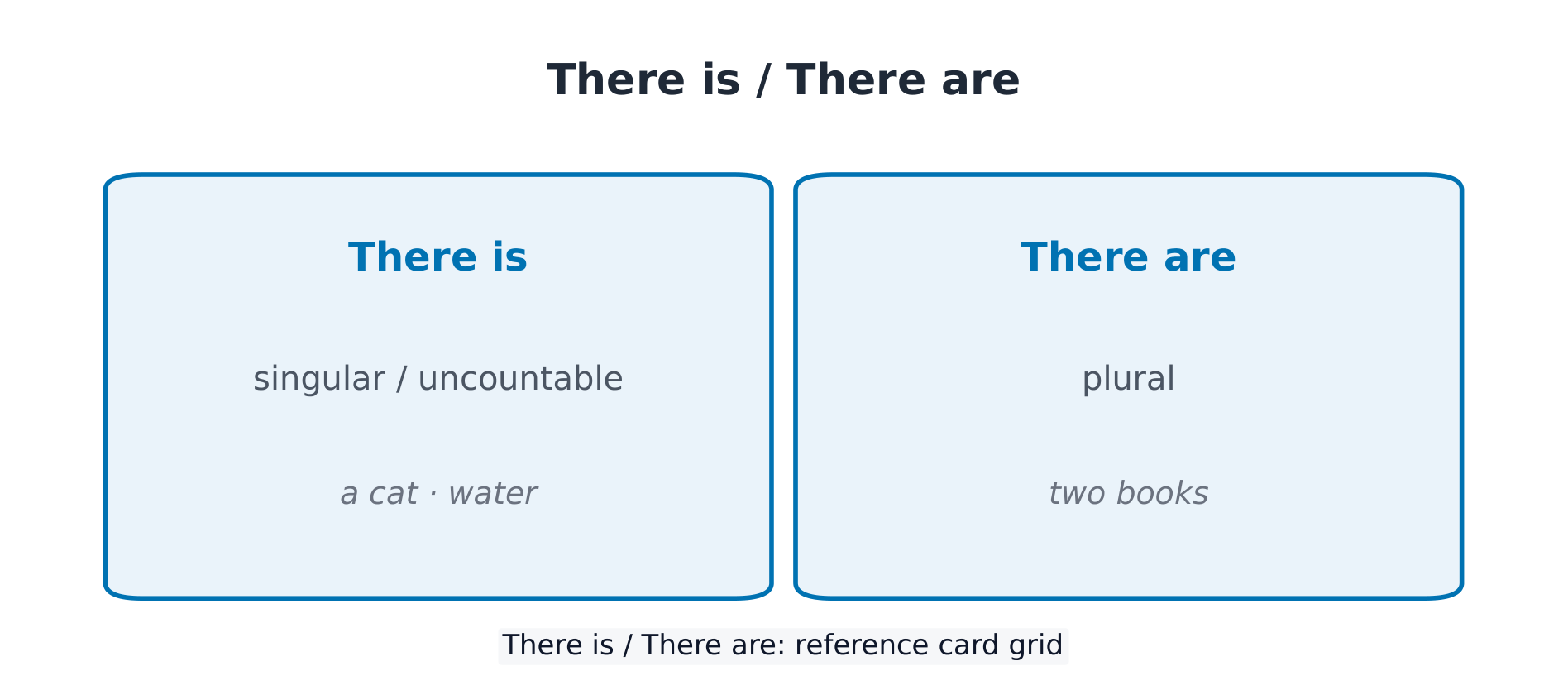
    there is / there are 表示"有"(某处存在某物)。

    • There is + 单数 / 不可数名词:There is a book.
    • There are + 复数名词:There are two books.

    (有)There is 一只a cat on (冠词)the 沙发上sofa.

    沙发上有一只猫。

    (有)There are three books on (冠词)the 桌上desk.

    桌上有三本书。

    注意 口语里 there is 常缩写成 there's:There's a problem.

    6.2

    否定与疑问

    否定: there is not / there are not(缩写 there isn't / there aren't)。

    (有)There 没有isn't 任何any 牛奶milk.

    没有牛奶了。

    疑问: 把 is / are 放到 there 前面

    (有吗)Is (有)there 一家a 银行bank 附近near 这里here?

    这附近有银行吗?

    简短回答:Yes, there is. / No, there isn't.

    注意 否定 / 疑问句里常用 any:Is there any water?(有水吗?)

    常见错误

    • ❌ ~~Here has many people.~~ → ✓ There are many people here. — 中文"这里有很多人"的"有"表示存在,英语用 there is / there are,不能直译成 have。
    • ❌ ~~There have a book on the desk.~~ → ✓ There is a book on the desk. — there 后面用 is / are,没有 there have 这种说法。
    • ❌ ~~There is two cats.~~ → ✓ There are two cats. — 后面的名词是复数,就用 are。
    • ❌ ~~There are a milk.~~ → ✓ There is some milk. — milk 不可数:用 there is + some,不能用 a。
  • 7 have got(表示拥有)
    7.1

    have got / has got

    have got / has got

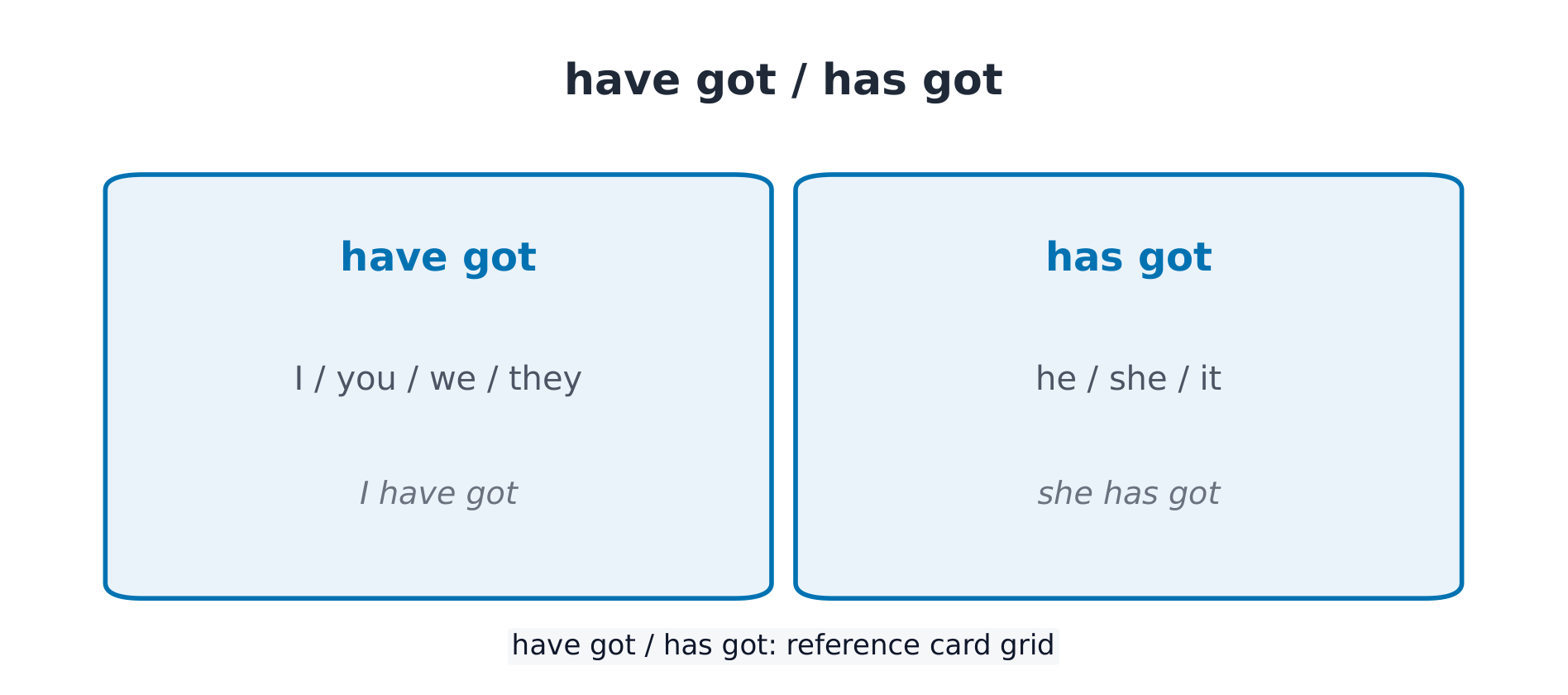
    have got 表示"拥有"(= have),在英式英语里很常见。

    • I / you / we / they → have got
    • he / she / it → has got

    I have got 一个a 兄弟brother.

    我有一个兄弟。(= I have a brother.)

    She has got 蓝色blue 眼睛eyes.

    她有一双蓝眼睛。

    注意 口语常缩写:I've got、she's got、they've got。意思和 have / has 一样。

    7.2

    否定与疑问

    否定: haven't got / hasn't got。

    He 没有hasn't got 一辆a car.

    他没有车。

    疑问:Have / Has 放到主语前面。

    (有吗)Have you got 一支a pen?

    你有笔吗?

    简短回答:Yes, I have. / No, I haven't.

    注意 have got 多用于"拥有"这一刻的状态;讲过去或habit时,还是用普通的 have / had。

    常见错误

    • ❌ ~~She have got long hair.~~ → ✓ She has got long hair. — he / she / it 用 has got。
    • ❌ ~~I have got not a car.~~ → ✓ I haven't got a car. — not 加在 have / has 后面,再缩写。
    • ❌ ~~Do you have got a pen?~~ → ✓ Have you got a pen? / Do you have a pen? — 两种问法都对,但不能混成一句。
    • ❌ ~~Yes, I have got.~~ → ✓ Yes, I have. — 简短回答只到 have / has,不再带 got。
  • 8 一般现在时(基础)
    8.1

    习惯与第三人称 -s

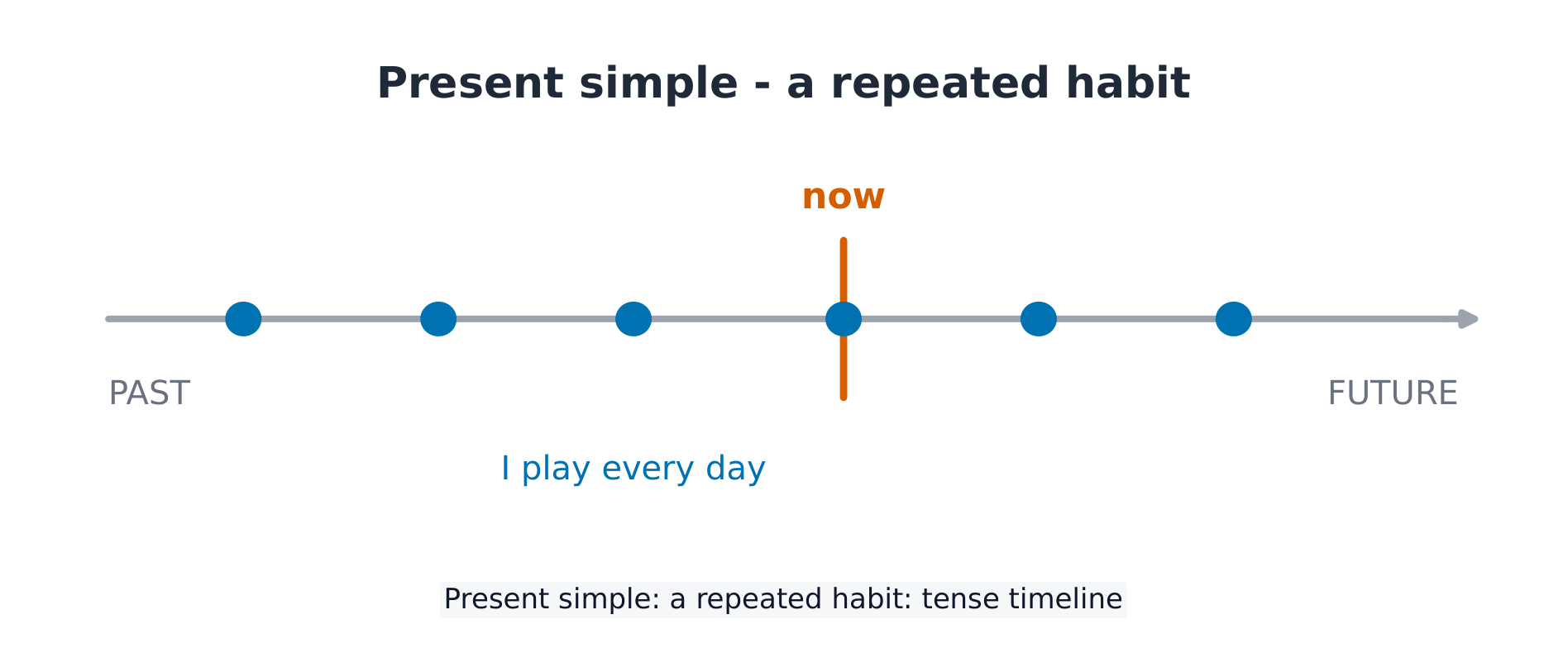
    一般现在时:反复的习惯

    一般现在时 (present simple) 讲习惯事实。基本形式就是动词原形

    I 喜欢like tea.

    我喜欢茶。

    主语是 he / she / it 时,动词加 -s:

    He plays 足球football.

    他踢足球。

    拼写:

    • 一般加 -s:like → likes。
    • 以 -s / -sh / -ch / -x / -o 结尾,加 -es:go → goes,watch → watches。
    • 辅音 + y,y 变 i 加 -es:study → studies。

    注意 只有 he / she / it 加 -s;I / you / we / they 用原形:They like tea.

    8.2

    否定与疑问

    日常习惯:I have breakfast every morning.

    否定和疑问用助动词 do / does(he / she / it 用 does)。

    否定: 主语 + don't / doesn't + 动词原形。

    I don't 喜欢like 咖啡coffee.

    我不喜欢咖啡。

    疑问: Do / Does + 主语 + 动词原形 ?

    (助动词)Does she live 这里here?

    她住在这里吗?

    注意 用了 do / does,动词回到原形(不加 -s):~~Does she lives~~ ✗ → Does she live ✓。

    常见错误

    • ❌ ~~He go to school by bus.~~ → ✓ He goes to school by bus. — 第三人称单数忘加 -s 是最高频的错误,写完回头检查一遍。
    • ❌ ~~She doesn't likes coffee.~~ → ✓ She doesn't like coffee. — 用了 does / doesn't,动词就回到原形。
    • ❌ ~~I very like English.~~ → ✓ I like English very much. — 中文"很喜欢"不能直译;very 不能直接修饰动词。
    • ❌ ~~You like tea?~~ → ✓ Do you like tea? — 疑问句要用 do / does 开头,不能只靠语调上扬。
  • 9 can(能力与请求)
    9.1

    能力与请求

    can:能力、否定、疑问

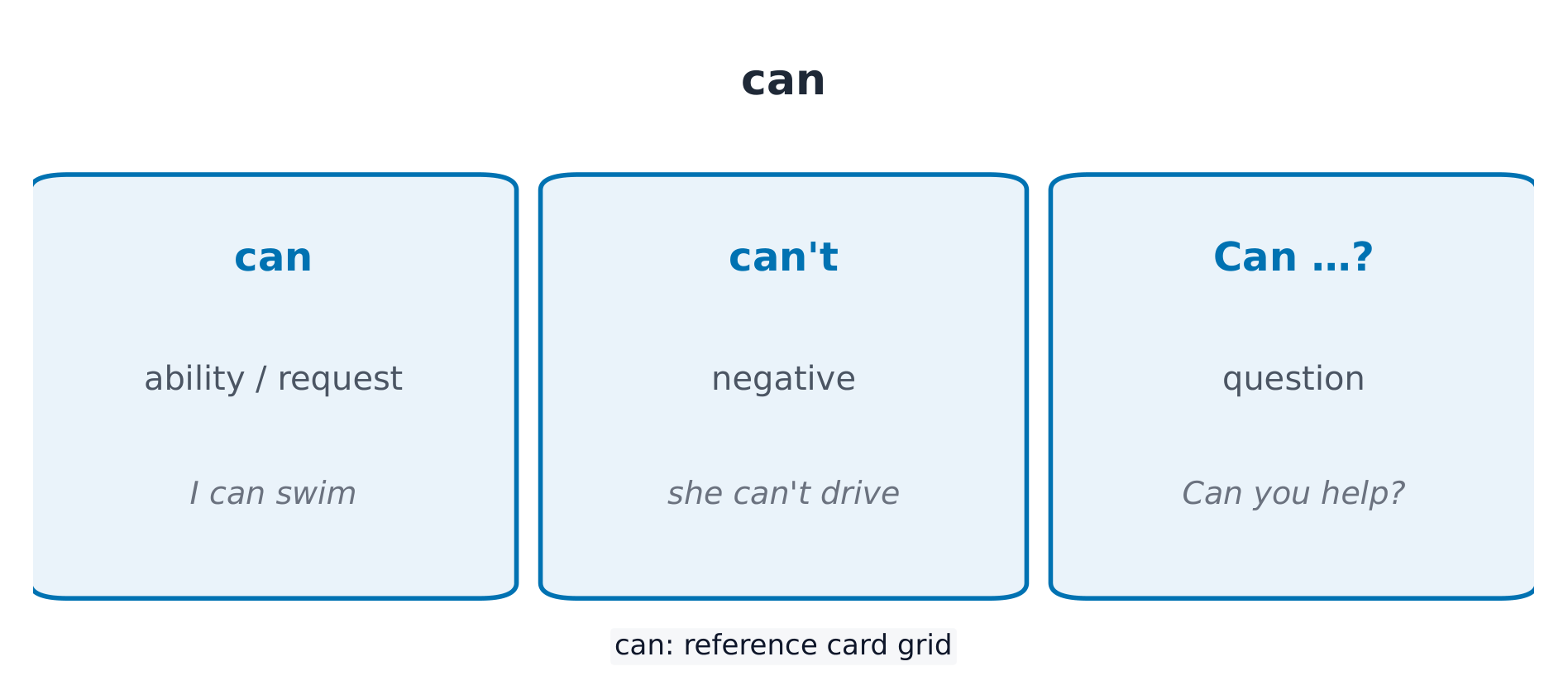
    can 表示能力("会 / 能")或用来请求。它后面跟动词原形,所有人称都一样。

    I can 游泳swim.

    我会游泳。

    Can you help me?

    你能帮我一下吗?

    注意 can 后面用原形:~~can to swim~~ ✗、~~can swims~~ ✗ → can swim ✓。

    9.2

    否定与疑问

    否定: cannot(缩写 can't)+ 动词原形。

    She 不会can't 开车drive.

    她不会开车。

    疑问:Can 放到主语前面

    Can he 做饭cook?

    他会做饭吗?

    简短回答:Yes, I can. / No, I can't.

    注意 can 没有 -s、没有 do / does:疑问直接用 Can he…?,不是 ~~Does he can…?~~

    常见错误

    • ❌ ~~She cans drive.~~ → ✓ She can drive. — can 没有第三人称 -s,所有人称同形。
    • ❌ ~~I don't can swim.~~ → ✓ I can't swim. — can 的否定直接加 not(can't),不用 don't。
    • ❌ ~~He can sings very good.~~ → ✓ He can sing very well. — can 后用动词原形;修饰动词用副词 well,不用 good。
    • ❌ ~~You can help me?~~ → ✓ Can you help me? — 请求别人时,把 can 提到主语前面。
  • 10 祈使句
    10.1

    命令与指示

    祈使句:命令、否定、请求

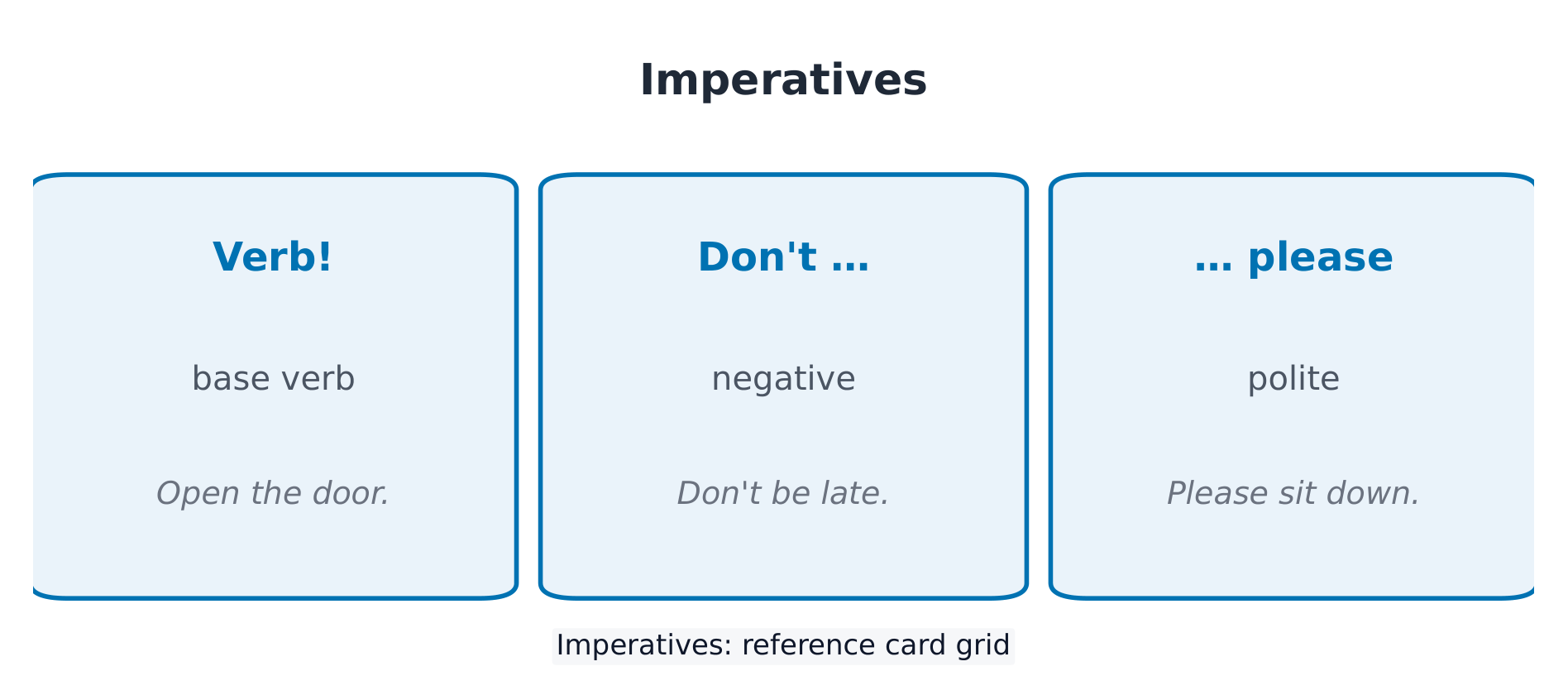
    祈使句 (imperatives) 用来下命令、给指示或提请求。直接用动词原形开头,不要主语

    打开Open (冠词)the door , please.

    请把门打开。

    Sit down.

    坐下。

    否定: 前面加 Don't

    不要Don't (是)be 迟到late.

    别迟到。

    用法要点:

    • please 更礼貌:Please come in.(请进。)
    • 也用于路线、说明:Turn left.(向左转。)Mix the eggs.(把鸡蛋打匀。)

    注意 祈使句不写主语:~~You open the door~~(命令时)→ Open the door.

    常见错误

    • ❌ ~~Please open door.~~ → ✓ Please open the door. — 祈使句里冠词照样不能丢。
    • ❌ ~~Don't to touch it.~~ → ✓ Don't touch it. — don't 后面直接跟动词原形,不加 to。
    • ❌ ~~No talk in class!~~ → ✓ Don't talk in class! / No talking! — 禁止做某事用 don't + 原形;no 后面要用 -ing 或名词。
    • ❌ ~~You sit down!~~ → ✓ Sit down, please. — 加了 you 的命令听起来很生气;想礼貌就加 please,或改问 Can you…?
  • 11 疑问词
    11.1

    what, where, who

    疑问词:问事物/地点/人/时间

    疑问词 (question words) 放在问句开头,用来问具体信息。

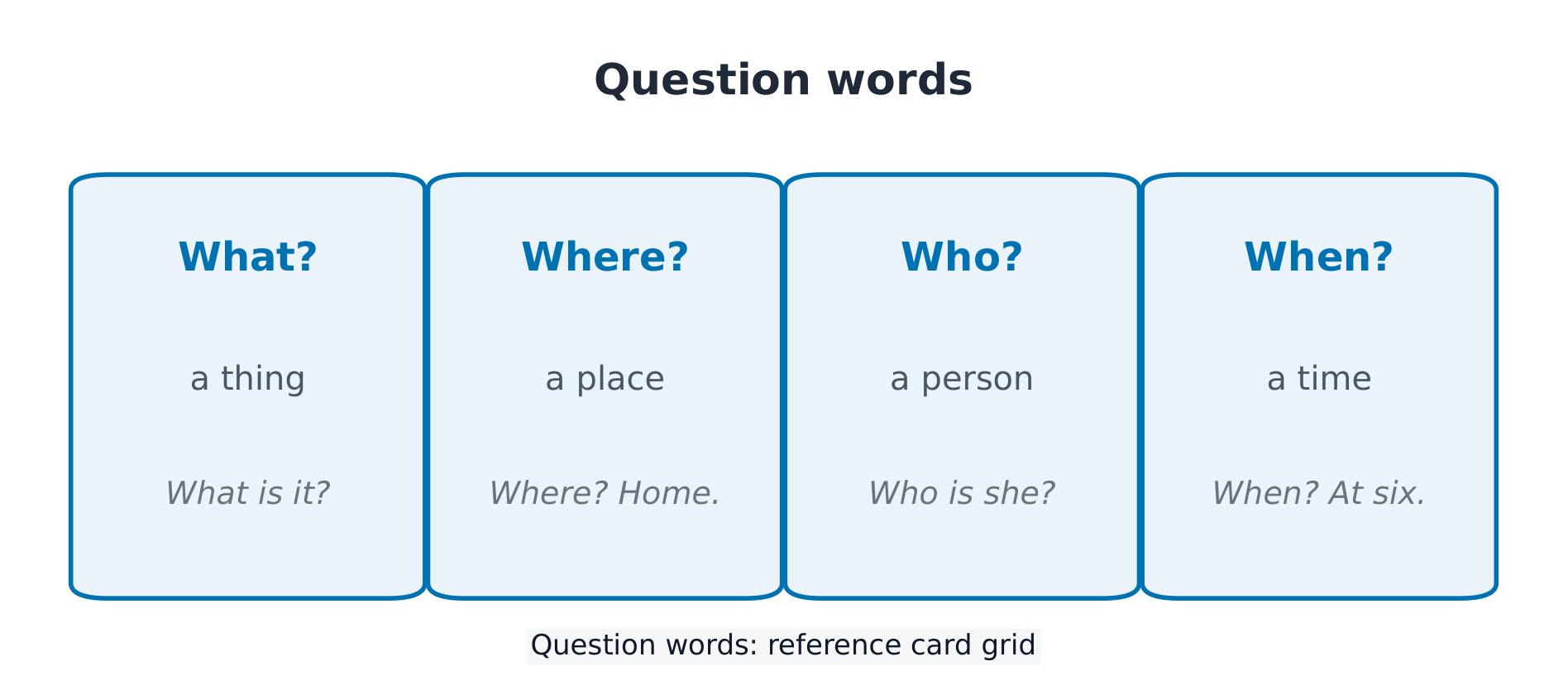
    • what(什么)、where(哪里)、who(谁)

    什么What is 你的your 名字name?

    你叫什么名字?

    哪里Where (助动词)do you live?

    你住在哪里?

    Who is 那个that 男人man?

    那个男人是谁?

    注意 疑问词后面常跟 be 动词或助动词 do / does:Where do you work?

    11.2

    when, why, how

    • when(什么时候)、why(为什么)、how(怎样 / 如何)

    什么时候When is (冠词)the 派对party?

    派对什么时候?

    为什么Why (是)are you 难过sad?

    你为什么难过?

    怎么How (助动词)do you 拼写spell it?

    这个怎么拼?

    注意 how 还能和形容词搭配问程度:How old are you?(你多大?)How much is it?(多少钱?)

    常见错误

    • ❌ ~~Where you live?~~ → ✓ Where do you live? — 疑问词后面还需要 do / does 或 be,不能直接跟主语。
    • ❌ ~~What means this word?~~ → ✓ What does this word mean? — mean 是普通动词:疑问词 + does + 主语 + 原形。
    • ❌ ~~Why you are late?~~ → ✓ Why are you late? — 句子里有 be 动词时,把 be 提到主语前面。
    • ❌ ~~How to spell it?~~ → ✓ How do you spell it? — 中文"怎么拼?"直译会丢掉主语和助动词,要补全。
  • 12 地点介词
    12.1

    in, on, under

    地点介词:in / on / under

    地点介词 (prepositions of place) 说明东西在哪里

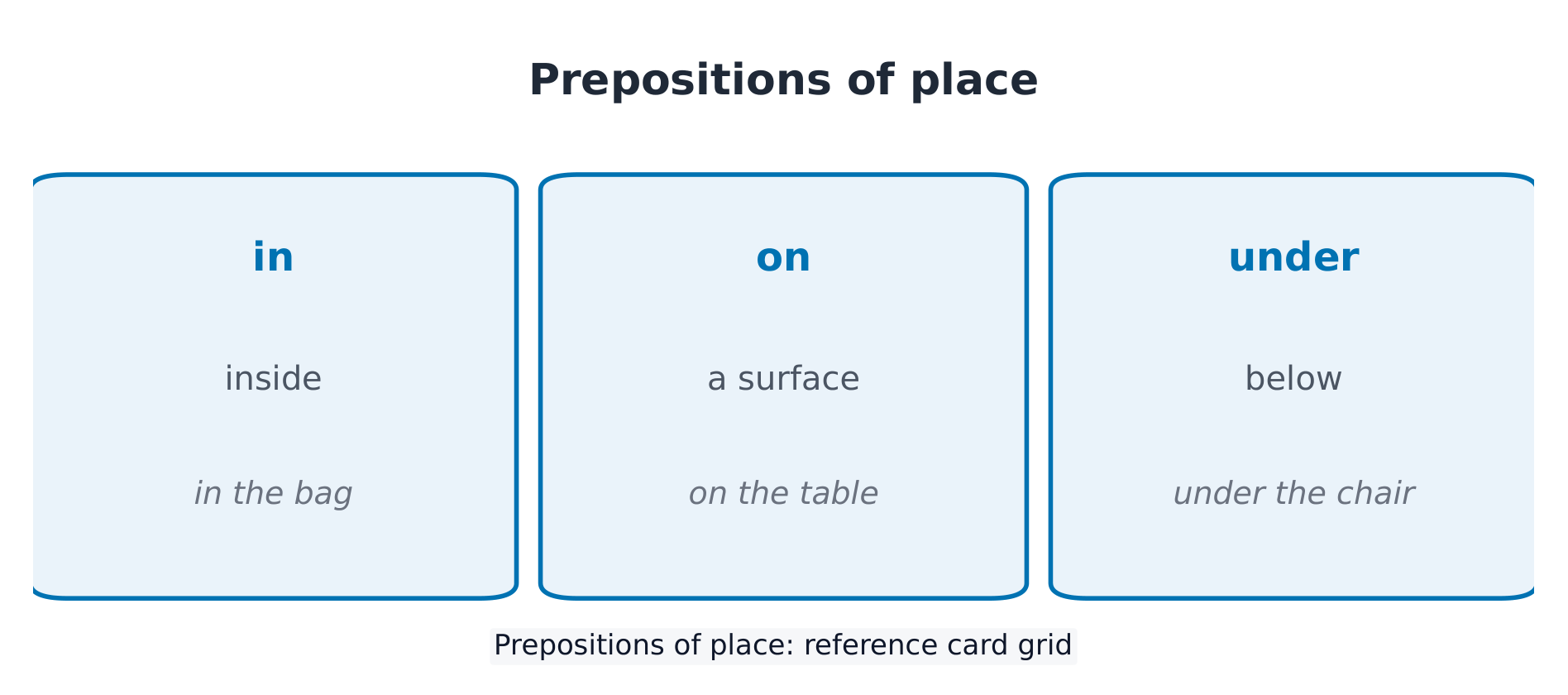
    • in(在……里面)、on(在……上面 / 表面)、under(在……下面)

    (冠词)The 钥匙keys are 在...里in (冠词)the 包里bag.

    钥匙在包里。

    (冠词)The book is 在...上on (冠词)the 桌上table.

    书在桌上。

    (冠词)The cat is 在...下under (冠词)the 椅子下chair.

    猫在椅子下面。

    12.2

    next to, between, behind

    • next to(在……旁边)、between(在……之间)、behind(在……后面)、in front of(在……前面)

    (冠词)The 商店shop is 旁边next to (冠词)the 银行bank.

    商店在银行旁边。

    She sits 之间between 汤姆Tom and 萨姆Sam.

    她坐在汤姆和萨姆之间。

    注意 between 表示"两者之间",后面常用 A and B:between the door and the window。

    常见错误

    • ❌ ~~The picture is in the wall.~~ → ✓ The picture is on the wall. — 挂在墙"上"是表面接触,用 on。
    • ❌ ~~I read it on the book.~~ → ✓ …in the book. — 书"里"的内容用 in;照片里的人也用 in the photo。
    • ❌ ~~The shop is next the bank.~~ → ✓ next to the bank — next to 是两个词,to 不能丢。
    • ❌ ~~between the door with the window~~ → ✓ between the door and the window — between 固定搭配 A and B。

Log in or create account

IGCSE & A-Level