Two pairs of time words. usually; normally平时 and usually / ordinary平常 both mean "usually, normally", but usually / ordinary平常 can also be an adjective ("ordinary"). after / from now on以后 and after之后 both mean "after"; after之后 is more formal and can start a sentence on its own (after之后,he / him他……).
Comparing similar time words
HSK 5 · Topic 28
 2:18
HSK 5 Grammar 28: Comparing similar time words
You tell a friend how your evenings usually go. 平时 and 平常 both mean usually, and before a verb you can swap them: 她平时坐地铁上班。 她平常坐地铁上班。 But only 平常 is also an…
English explanations + Mandarin examples · captions follow the spoken text
28.1
At a glance
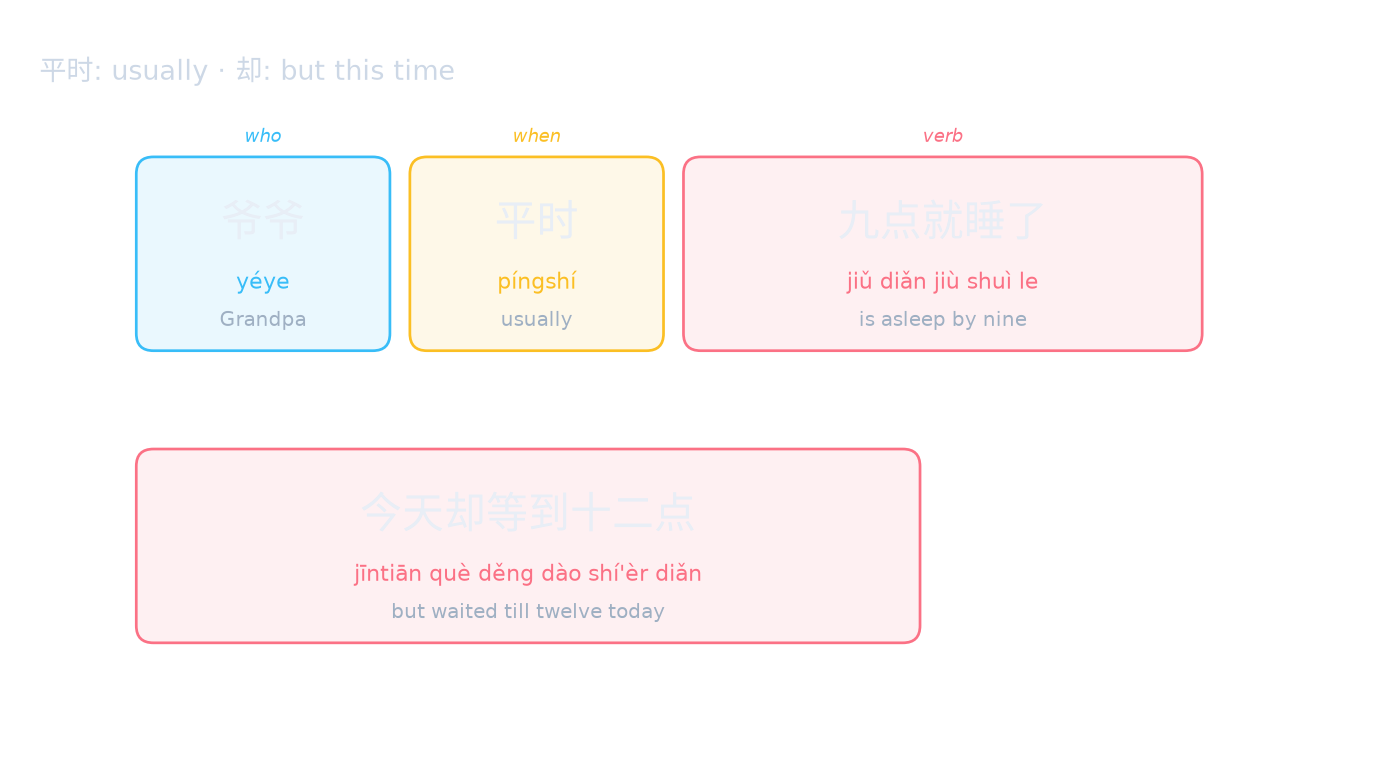
- 1. usually; normally平时 vs usually / ordinary平常 – usually / ordinary: father's father爷爷usually; normally平时九点then / just就to sleep睡(completed / change)了,today今天but; yet却all along / straight一直to wait until等到十二点。
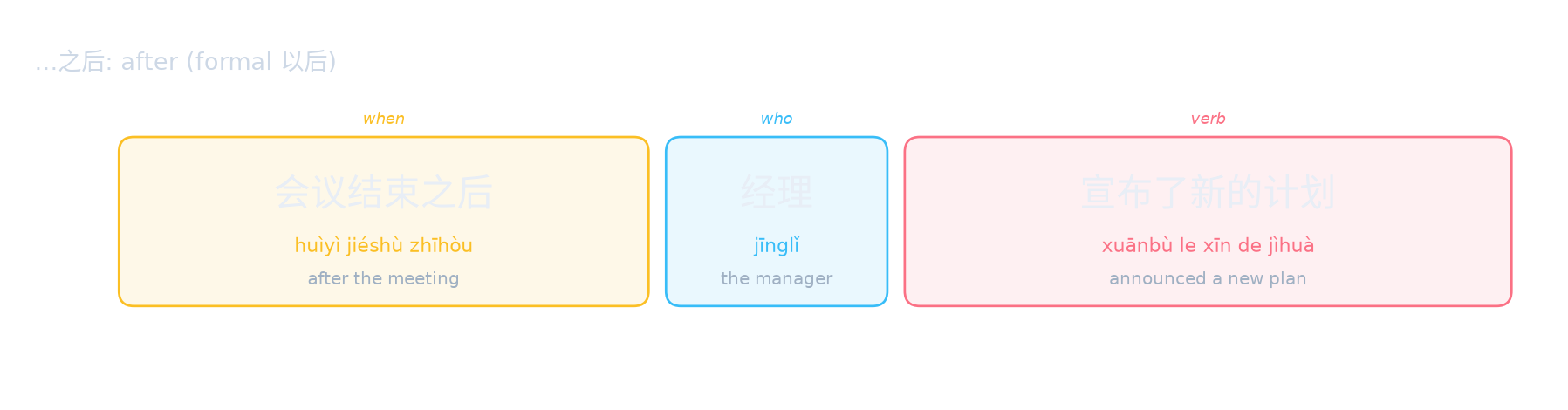
- 2. after / from now on以后 vs after之后 – after / afterwards: meeting会议to end结束after之后,manager经理to declare; to announce宣布(completed / change)了new新(modifier / structural particle)的plan计划。
28.2
1. 平时 vs 平常 (usually / ordinary)
Form: usually; normally平时 / usually / ordinary平常 + routine (usually) · degree / adjective linker很usually / ordinary平常 / usually / ordinary平常(modifier / structural particle)的 + noun (ordinary)
- father's father爷爷usually; normally平时九点then / just就to sleep睡(completed / change)了,today今天but; yet却all along / straight一直to wait until等到十二点。 Píngshí – Grandpa usually goes to bed at nine, but today he stayed up until midnight.
- I / me我usually / ordinary平常七点to get up起床。 – I usually get up at seven.
- this这to be / is是degree / adjective linker很usually / ordinary平常(modifier / structural particle)的matter事。 – That's a very ordinary thing.
How it works. Both can mean "usually, normally", and usually; normally平时 sets ordinary days clearly against a special occasion (usually; normally平时degree / adjective linker很busy忙,weekend周末only then / not until才to have time (to do sth)有空). Only usually / ordinary平常 is also an adjective, "ordinary".
| usually; normally平时 | usually / ordinary平常 | usually通常 | |
|---|---|---|---|
| usually | ✓ | ✓ | as a rule (more formal) |
| ordinary (adj.) | – | degree / adjective linker很usually / ordinary平常 | – |
| example | with / and跟usually; normally平时the same一样 | usually / ordinary平常(modifier / structural particle)的life; to live生活 | bank银行usually通常九点to open a door (lit. and…开门 |
Watch out
- wrong: degree / adjective linker很usually; normally平时 → degree / adjective linker很usually / ordinary平常.
Vocabulary
Train
| 汉字 | Pinyin | English |
|---|---|---|
| 平常 | píng cháng | ordinary; usually |
| 通常 | tōng cháng | usually |
28.3
2. 以后 vs 之后 (after / afterwards)
Form: event / time span + after / from now on以后 / after之后 · after之后,… (afterwards) · after / from now on以后,… (from now on)
- meeting会议to end结束after之后,manager经理to declare; to announce宣布(completed / change)了new新(modifier / structural particle)的plan计划。 Huìyì jiéshù zhīhòu … – After the meeting, the manager announced the new plan.
- we / us我们first先to go去(completed / change)了museum博物馆。after之后,we / us我们to go去to have a meal吃饭。 – We went to the museum first. Afterwards, we went to eat.
- after / from now on以后don't别to arrive late迟到(completed / change)了。 – Don't be late from now on.
- 三天after / from now on以后 / 三天after之后 – three days later
How it works. After an event or time span, after / from now on以后 and after之后 both mean "after"; after之后 sounds slightly more written. Standing alone at the start, they differ:
| Alone at the start | Meaning |
|---|---|
| after之后 / later; afterwards后来 | afterwards (in a past story) |
| after / from now on以后 | in the future, from now on |
Watch out
- In a past story, don't use bare after / from now on以后 for "afterwards": use after之后 or later; afterwards后来.
- not long (after)不久after之后 "not long after" is a fixed phrase.
Vocabulary
Train
| 汉字 | Pinyin | English |
|---|---|---|
| 宣布 | xuān bù | to declare; to announce |
| 博物馆 | bó wù guǎn | museum |
28.4
Practice
Cover the teaching pages before you answer. The answers are at the end.
1. usually; normally平时 vs usually / ordinary平常 (usually / ordinary)
1. Complete: “This is a very ordinary thing.” this这to be / is是degree / adjective linker很…………(modifier / structural particle)的matter事。
2. Which is wrong?
- A. with / and跟usually; normally平时the same一样。
- B. this这to be / is是degree / adjective linker很usually; normally平时(modifier / structural particle)的matter事。
- C. he / him他usually; normally平时degree / adjective linker很busy忙。
- D. he / him他usually / ordinary平常degree / adjective linker很busy忙。
3. Build: “He's usually busy; only at weekends is he free.”
Put in order: only then / not until才to have time (to do sth)有空。 / he / him他usually; normally平时degree / adjective linker很busy忙 / , / weekend周末
4. True or false? usually通常 is a little more formal than usually; normally平时. If false, correct it.
5. Your grandfather normally goes to bed at nine, but tonight is New Year's Eve. Use usually; normally平时 or usually / ordinary平常. Write your answer in Chinese, then say it aloud.
2. after / from now on以后 vs after之后 (after / afterwards)
6. Past story: “We went to the museum. Afterwards, we ate.” we / us我们to go去(completed / change)了museum博物馆。…………,we / us我们to go去to have a meal吃饭。
7. “From now on, please don't be late.” Which fits? ____请别to arrive late迟到(completed / change)了。
- A. later; afterwards后来
- B. then / after然后
- C. after之后
- D. after / from now on以后
8. Build: “Not long after, he returned home.”
Put in order: ,he / him他 / then / just就 / not long (after)不久after之后 / to return to one's home…回国(completed / change)了。
9. True or false? to finish class下课after / from now on以后 and to finish class下课after之后 mean the same. If false, correct it.
10. You are writing up what happened after a company meeting. Use after / from now on以后 or after之后. Write your answer in Chinese, then say it aloud.
28.5
Mixed practice
These questions mix the patterns and use new situations.
11. Find and fix the problem. A classmate reads to graduate毕业after / from now on以后 as "before graduating". Correct it, and say how after之后 differs.
12. Use it yourself. Say what you usually do at weekends, and what you will do after the meeting.
28.6
Answers and explanations
Mark your work, then correct each mistake in your own words.
1. usually; normally平时 vs usually / ordinary平常 (usually / ordinary)
1. usually / ordinary平常
Only usually / ordinary平常 is an adjective meaning “ordinary”.
2. B. this这to be / is是degree / adjective linker很usually; normally平时(modifier / structural particle)的matter事。
usually; normally平时 is a time noun (“usually, ordinary times”), not an adjective, so degree / adjective linker很usually; normally平时(modifier / structural particle)的matter事 is wrong. The adjective “ordinary” is usually / ordinary平常: degree / adjective linker很usually / ordinary平常(modifier / structural particle)的matter事.
3. he / him他usually; normally平时degree / adjective linker很busy忙,weekend周末only then / not until才to have time (to do sth)有空。
usually; normally平时 contrasts with the weekend.
4. True.
True. usually通常 (“as a rule, normally”) is slightly more formal than usually; normally平时 and often states general patterns.
5. Model answer: father's father爷爷usually; normally平时九点then / just就to sleep睡(completed / change)了,today今天but; yet却all along / straight一直to wait until等到十二点。
Check your answer:
- "Ordinary" takes usually / ordinary平常: degree / adjective linker很usually / ordinary平常, usually / ordinary平常(modifier / structural particle)的life; to live生活 ("An ordinary life"). Not degree / adjective linker很usually; normally平时.
- Both can mean "usually"; usually; normally平时 contrasts more clearly with a special occasion.
2. after / from now on以后 vs after之后 (after / afterwards)
6. after之后
Afterwards in a past story: after之后.
7. D. after / from now on以后
after / from now on以后 alone means “from now on, in future”: after / from now on以后请别to arrive late迟到(completed / change)了. after之后 needs a reference event (to finish class下课after之后), later; afterwards后来 is only for the past, and then / after然后 means “and then”.
8. not long (after)不久after之后,he / him他then / just就to return to one's home…回国(completed / change)了。
not long (after)不久after之后 + clause.
9. True.
After a clause, both mean “after”.
10. Model answer: meeting会议to end结束after之后,manager经理to declare; to announce宣布(completed / change)了new新(modifier / structural particle)的plan计划。
Check your answer:
- "Afterwards" in a past story: after之后 (or later; afterwards后来), not a bare after / from now on以后.
- "From now on": after / from now on以后, not after之后: after / from now on以后don't别to arrive late迟到(completed / change)了 – "Don't be late again."
Mixed practice
11. to graduate毕业after / from now on以后 is "after graduating". to graduate毕业after之后 means the same but sounds more formal.
12. Model answer. I / me我usually; normally平时weekend周末to be at home在家to read看书。to open; to drive开完会after / from now on以后,I / me我to go去library图书馆。
Review later. Tomorrow, use usually; normally平时 and usually / ordinary平常 in one sentence each.
Interactive lessons on this topic
Work through it step by step, with instant-check exercises.