Rencana belajar Anda · Lanjut · Tinjau →
反而 vs 却 (sebaliknya vs namun)
DiperkenalkanPosisi tersimpan Anda tetap berada di browser ini. Melanjutkan tidak menyelesaikan pelajaran atau menjawab pertanyaannya.
 5:54
HSK 6 Tata Bahasa 14: Pasangan Kata yang Mudah Tertukar
按照 dibandingkan dengan 根据. 按照 berarti sesuai dengan rencana; 根据 berarti berdasarkan bukti. Rencana dibandingkan dengan data. Lihat lembar kerja untuk bentuk lengkap, makna, dan batasannya.
Penjelasan bahasa Inggris + contoh Mandarin · caption mengikuti teks yang diucapkan
Dalam pelajaran ini
Yet versus instead
- You took a nap to feel better, but woke up even more tired.
- I / me我to sleep睡(completed / change)了one / a一(睡觉) sleep觉,yet却or / still还是very很tired累;not only不但没好,instead反而more更tired累(completed / change)了。 — "I took a nap, yet I'm still tired; far from better, I'm actually more tired."
- Goal: choose between instead反而 (the opposite of what you'd expect) and yet却 (a simple contrast).
yet却 = but, yet (a contrast)
- yet却 marks a contrast with the first clause; it goes after the subject: he他very很tired累,yet却to sleep睡not不(-ing) / (睡不着: fall asleep, zháo)着 — "He's very tired, but he can't sleep."
- The second part simply goes against what you'd expect, without being the opposite.
already已经spring春天了,the weather天气yet却still还very很cold冷。
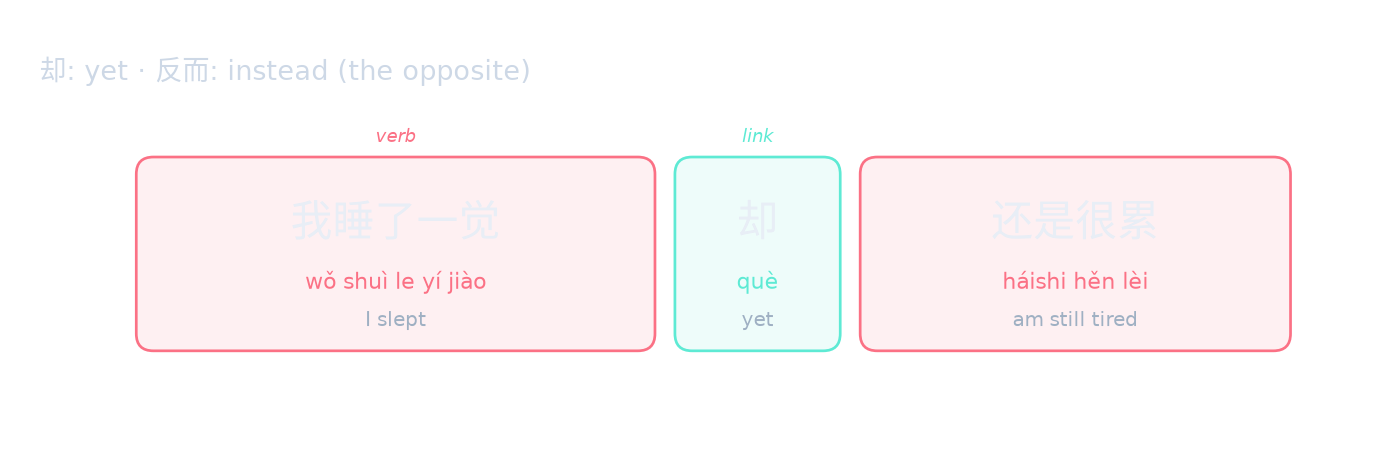
Build: “It's already spring, yet it's still cold.”
Kesulitan 3/5 · 200 koin + bonus kecil pada penyelesaian pertama hari ini
Subject + 却 + predicate.
instead反而 = instead, the opposite happened
- instead反而 says the result went the opposite way: took吃(completed / change)了medicine药,the illness病instead反而more更serious重(completed / change)了 — "After taking the medicine, his illness got worse instead."
- It often follows not only不但not不 / not only不但not / haven't没: he他not only不但没生气,instead反而to laugh笑(completed / change)了 — "He didn't get angry; instead, he laughed."
took吃了medicine药,the illness病instead反而more更serious重了。
Complete: “After the medicine, the illness got worse instead.” 吃了药,病____更重了。
Kesulitan 1/5 · 100 koin + bonus kecil pada penyelesaian pertama hari ini
The opposite of the expected result = 反而.
Contrast or reversal?
- A plain "but": yet却. The opposite of the expected result: instead反而.
- Both normally follow the subject: he他yet却…, he他instead反而….
- yet却 also marks a simple contrast; instead反而 can't: ✓ he他very很intelligent聪明,yet却not不to work hard / effort努力。 — "He's clever but doesn't work hard."
“He's clever, but he doesn't work hard.” Which fits? 他很聪明,____不努力。
Kesulitan 1/5 · 100 koin + bonus kecil pada penyelesaian pertama hari ini
却 marks a plain contrast after the subject: 他很聪明,却不努力. 反而 would mean the result goes against what was expected, and 因此 / 于是 show result or sequence.
Side by side
- he他very很got rich有钱,yet却not不happy快乐 — rich but not happy (contrast).
- he他got rich有钱(completed / change)了,instead反而not不happy快乐(completed / change)了 — he got rich, but instead became unhappy (the opposite of what you'd expect).
he他got rich有钱了,instead反而not不happy快乐了。
反而 normally goes after the subject, before the verb.
Kesulitan 1/5 · 100 koin + bonus kecil pada penyelesaian pertama hari ini
True. 反而 is an adverb: 他反而笑了.
Recap
- yet却 = but, yet (contrast); instead反而 = instead (the opposite of the expected result).
- Both after the subject; not only不但not不…instead反而… is the classic reversal frame.
Read the full reference: HSK 6 grammar — Comparing similar adverbs.
You took a nap to feel better, but woke up even more tired. Close the examples. Say a Mandarin response, then write it in Chinese. Explain briefly in English what the lesson’s pattern adds. Compare with the model, then change one detail and try again.
This is supported productive practice. Compare meaning and structure; your answer need not copy the model. A partner or teacher must hear the spoken response to comment on pronunciation.
Apa yang salah? Hanya tim situs yang dapat melihatnya.