English
Sensation 感觉 is detecting information from the environment and transducing 转导 it into neural signals the brain can use. Detection needs a certain absolute threshold 绝对阈限.
- The just-noticeable difference 最小可觉差 is the smallest change a person can detect.
- Sensory adaptation 感觉适应 is reduced sensitivity to an unchanging stimulus - you stop noticing a smell.
- Sensory interaction 感觉相互作用 means the senses work together. Synesthesia 联觉 is when one sense triggers another.
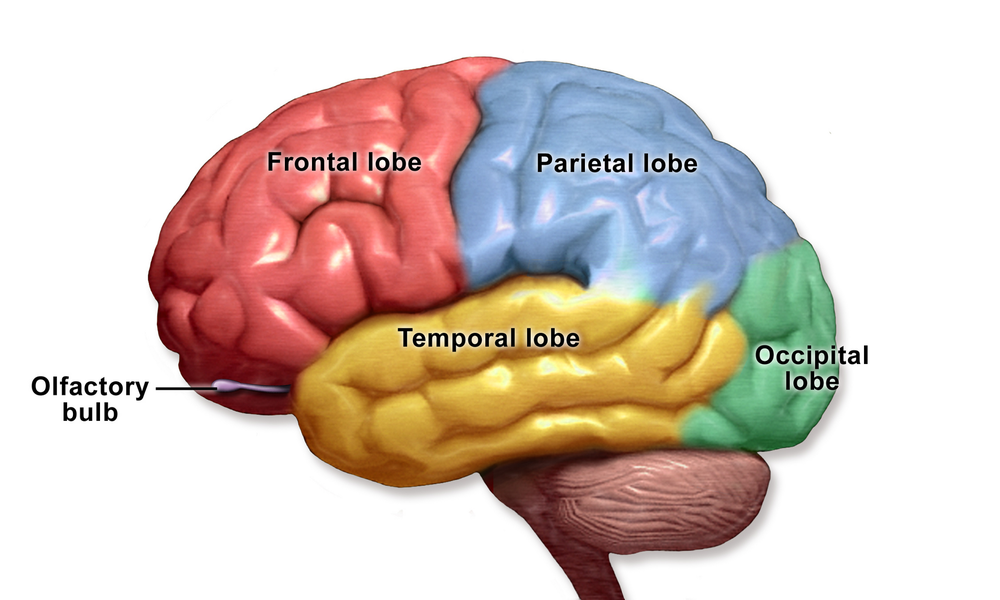
Vision. Light is focused onto the retina 视网膜 by the lens 晶状体 changing shape, a process called visual accommodation 视觉调节; when this fails the result is nearsightedness 近视 or farsightedness 远视. Rods 视杆细胞 lie in the periphery and detect shape and movement in low light. Cones 视锥细胞 sit in the fovea 中央凹 and detect colour and detail. Colour vision needs two theories: trichromatic theory 三色理论 (blue, green and red cones) and opponent-process theory 对立过程理论, which explains afterimages 后像. Damage to the occipital lobes can cause prosopagnosia 面孔失认症, or face blindness.
Hearing. Sound is air movement; wavelength gives pitch 音高 and amplitude gives loudness 响度. Pitch perception is explained by place theory 位置理论, volley theory 齐射理论, and frequency theory 频率理论. Sound localization 声源定位 tells us where a sound comes from. Hearing loss may be conduction deafness 传导性耳聋 or sensorineural deafness 感音神经性耳聋.
The chemical senses. Olfaction 嗅觉 is the only sense not relayed first through the thalamus. Gustation 味觉 covers sweet, sour, salty, bitter, umami 鲜味, and oleogustus 脂味. The two interact: without smell, taste is muted.
Touch, pain, and body position. Skin receptors transduce touch; "hot" comes from warm and cold receptors firing together. Pain is processed in body and brain, and gate control theory 闸门控制理论 explains why attention changes how much it hurts; phantom limb 幻肢 sensations show the brain's role. The vestibular sense 前庭觉 controls balance through the semicircular canals 半规管, and kinesthesis 动觉 is the sense of body movement.
Worked example (a real AP exam question). The 2025 Article Analysis Question asked students to "Identify the research method used in the study" and then to "Explain the extent to which the research findings may or may not be generalizable using specific and relevant evidence from the study." A full-mark answer to the second part names the limitation and ties it to evidence: "The findings may not generalize widely because participants were undergraduate students at one university, so the sample was not representative of the general population." Notice the shape: Explain needs a claim plus the evidence behind it. Naming the method alone answers part A, not part E.
Bahasa Indonesia
Sensasi adalah mendeteksi informasi dari lingkungan dan transduksi menjadi sinyal saraf yang dapat digunakan otak. Deteksi membutuhkan ambang mutlak tertentu.
- Perbedaan minimal terdeteksi adalah perubahan terkecil yang dapat dideteksi seseorang.
- Adaptasi sensorik adalah penurunan sensitivitas terhadap rangsangan yang tidak berubah - Anda berhenti menyadari bau.
- Interaksi sensorik berarti indera bekerja bersama. Sinestesia adalah ketika satu indera memicu indera lain.
Penglihatan. Cahaya difokuskan ke retina oleh lensa yang mengubah bentuk, proses ini disebut akomodasi visual; jika gagal hasilnya adalah miopi atau hipermetropi. Batang terletak di periferi dan mendeteksi bentuk serta gerakan dalam cahaya redup. Konus berada di fovea dan mendeteksi warna serta detail. Penglihatan warna memerlukan dua teori: teori trikromatik (konus biru, hijau, dan merah) dan teori proses lawan, yang menjelaskan bayangan sisa. Kerusakan pada lobus oksipital dapat menyebabkan prosopagnosia, atau buta wajah.
Pendengaran. Suara adalah pergerakan udara; panjang gelombang memberikan nada dan amplitudo memberikan keras suara. Persepsi nada dijelaskan oleh teori tempat, teori volli, dan teori frekuensi. Lokalisasi suara memberi tahu kita dari mana suara berasal. Gangguan pendengaran bisa berupa tuli konduktif atau tuli sensorineural.
Indera kimia. Penciuman adalah satu-satunya indera yang tidak diteruskan pertama kali melalui talamus. Rasa mencakup manis, asam, asin, pahit, umami, dan oleogustus. Keduanya saling berinteraksi: tanpa penciuman, rasa menjadi tumpul.
Sentuhan, nyeri, dan posisi tubuh. Reseptor kulit mentransduksi sentuhan; "panas" berasal dari reseptor hangat dan dingin yang menembak bersamaan. Nyeri diproses di tubuh dan otak, dan teori gerbang menjelaskan mengapa perhatian mengubah seberapa sakitnya; sensasi anggota tubuh hantu menunjukkan peran otak. Indera vestibular mengatur keseimbangan melalui saluran semi-sirkular, dan kinestesia adalah indera gerakan tubuh.
Contoh soal (soal ujian AP nyata). Pertungan Analisis Artikel 2025 meminta siswa untuk "Mengidentifikasi metode penelitian yang digunakan dalam studi tersebut" dan kemudian "Jelaskan sejauh mana temuan penelitian mungkin atau tidak dapat digeneralisasi dengan menggunakan bukti spesifik dan relevan dari studi tersebut." Jawaban nilai penuh untuk bagian kedua menyebutkan keterbatasan dan menghubungkannya dengan bukti: "Temuan mungkin tidak dapat digeneralisasi secara luas karena partisipan adalah mahasiswa sarjana di satu universitas, sehingga sampelnya tidak mewakili populasi umum." Perhatikan polanya: Jelaskan memerlukan klaim beserta buktinya. Menyebutkan metode saja menjawab bagian A, bukan bagian E.