Skip to content · ⁨דלג לתוכן⁩
Subjects · ⁨נושאים⁩

English Grammar · A1 · ⁨דקדוק אנגלי · A1⁩

  • 1 The verb to be · ⁨הפעל to be⁩
    1.1

    am / is / are

    English

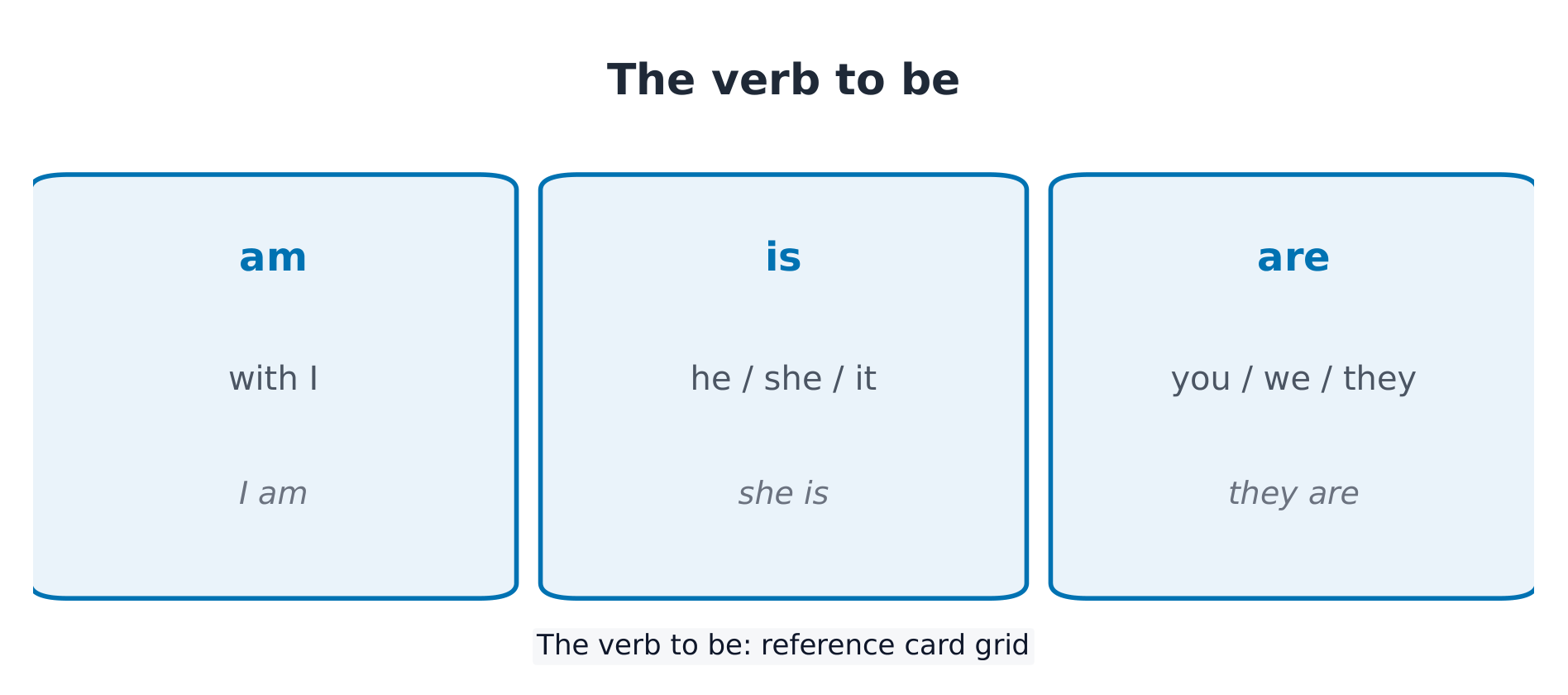
    The verb "to be" means "is / am / are." It changes according to the subject and has three forms:

    • I → am
    • he / she / it → is
    • you / we / they → are

    我I 是am 一名a 学生student.

    I am a student.

    她She 是is 开心happy.

    She is happy.

    他们They (是)are 来自from 中国China.

    They are from China.

    Note: Common spoken contractions: I'm, you're, he's, she's, it's, we're, they're.

    עברית
    be 动词:am / is / are 随主语变化

    הפעל to be (the verb to be) מבטא "להיות". הוא משתנה בהתאם לנשוא, ויש לו שלוש צורות:

    • I → am
    • he / she / it → is
    • you / we / they → are

    我I 是am 一名a 学生student.

    אני תלמיד/ת.

    她She 是is 开心happy.

    היא שמחה מאוד.

    他们They (是)are 来自from 中国China.

    הם מגיעים מסין.

    הערה: בדיבור יומיומי נהוג להשתמש בקיצורים: I'm, you're, he's, she's, it's, we're, they're.
    1.2

    שלילית ושאלית

    English

    Negation: Add not after the be verb (often contracted).

    他He 不是is not 一名a 老师teacher.

    He is not a teacher. (= He isn't a teacher.)

    Interrogative: Place the be verb before the subject.

    (是吗)Are 你you 准备好ready?

    Are you ready?

    Short answers: Yes, I am. / No, I'm not.

    Note: Negative contractions: is not → isn't, are not → aren't; but am not is only contracted to I'm not (there is no ~~amn't~~).

    Common Errors

    • ❌ ~~He busy.~~ → ✓ He is busy. — In Chinese, "He is very busy" can exist without a verb, but an English sentence must have a verb. Use be to link when the predicative is an adjective or noun and there are no other verbs in the sentence (He is busy); do not add be if the sentence already contains an ordinary verb (I go to school).
    • ❌ ~~I am go to school.~~ → ✓ I go to school. — Do not use be and ordinary verbs together; "go" alone suffices for "to go."
    • ❌ ~~They is my friends.~~ → ✓ They are my friends. — Plural subjects (you / we / they) take are.
    • ❌ ~~I am agree.~~ → ✓ I agree. — agree is itself a verb; do not add am before it.
    • ❌ ~~Are you ready? — Yes, I'm.~~ → ✓ Yes, I am. — Contractions cannot be used at the end of affirmative short answers (say Yes, I am); however, negative short answers typically end with a negative contraction (No, he isn't / No, I can't; first person is No, I'm not, as there is no amn't).
    עברית

    שלילה: מוסיפים not אחרי פעל to be (בדרך כלל מקוצר).

    他He 不是is not 一名a 老师teacher.

    הוא לא מורה. (= He isn't a teacher.)

    שאלה: מעבירים את פעל to be לפני הנשוא.

    (是吗)Are 你you 准备好ready?

    האם אתה מוכן?

    תשובות קצרות:Yes, I am. / No, I'm not.

    הערה על קיצורי שלילה: is not → isn't, are not → aren't; אך am not מתקצר רק כ- I'm not (אין ~~amn't~~).

    שגיאות נפוצות

    • ❌ ~~He busy.~~ → ✓ He is busy. — במנדרינית "הוא עסוק מאוד" יכולה להיות ללא פעל, אך במשפט באנגלית חייב להיות פעל. כאשר המשלים הוא תכונה או שם עצם ואין אחר פעל במשפט, משתמשים in to be כדי לחבר ביניהם (He is busy); אם במשפט כבר יש פעל רגיל, אין להוסיף to be (I go to school).
    • ❌ ~~I am go to school.~~ → ✓ I go to school. — לא ניתן לשלב to be עם פעל רגיל; "ללכת" דורש רק the verb go.
    • ❌ ~~They is my friends.~~ → ✓ They are my friends. — עבור נשוא רב-ספתי (you / we / they) משתמשים ב are.
    • ❌ ~~I am agree.~~ → ✓ I agree. — המילה agree היא כבר פעולה, ולכן אין להוסיף לפניה את am.
    • ❌ ~~Are you ready? — Yes, I'm.~~ → ✓ Yes, I am. — בתשובות קצרות חיוביות אין להשתמש בקיצור בסוף המשפט (אומרים Yes, I am); אך בתשובות קצרות שליליות לרוב משתמשים בקיצור השלילי (No, he isn't / No, I can't; עבור ראשון יחיד אומרים No, I'm not, כי אין מילה כזאת כמו amn't).
  • 2 Subject pronouns · ⁨ pronouns של נושא⁩
    2.1

    I, you, he, she, it, we, they

    English

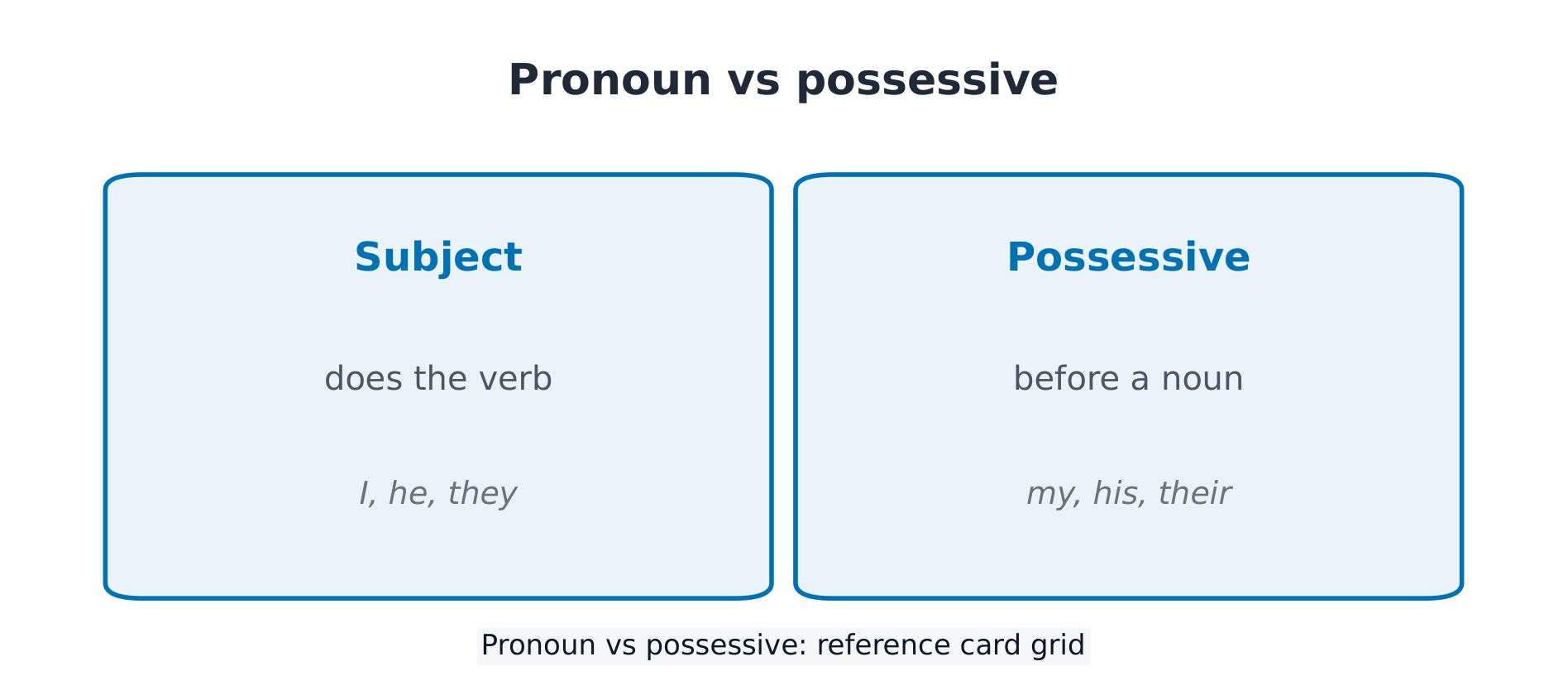
    Subject pronouns replace the subject and are placed before the verb:

    • I(I), you(you), he(he), she(she)
    • it(it), we(we), they(they)

    他He 是is 我的my 哥哥brother.

    He is my brother.

    我们We 喜欢like 音乐music.

    We like music.

    Key Usage Points:

    • I is always capitalized, regardless of its position in the sentence.
    • Things and animals commonly use it: This is my bag. It is new.(This is my bag. It is new.)*
    • Plural people or things both use they: The books are here. They are mine.(The books are here. They are mine.)*

    Note: Subject pronouns are followed by verbs; do not confuse them with object pronouns (me, him, her...) which will be learned later.

    Common Errors

    • ❌ ~~My mother is a doctor. He is very kind.~~ → ✓ She is very kind. — In colloquial Chinese, "he/she" sounds identical, but in English, he and she must be clearly distinguished.
    • ❌ ~~Me am a student.~~ → ✓ I am a student. — Use I for the subject, not me.
    • ❌ ~~My friend he is tall.~~ → ✓ My friend is tall. — The subject needs to be mentioned only once; avoid repeating "noun + pronoun" (the Chinese habit of saying "my friend he..." does not apply in English).
    • ❌ ~~Is raining.~~ → ✓ It is raining. — English sentences must have a subject; weather, time, and dates begin with it.
    עברית
    pronouns subject and possessive

    נשואי גוף (subject pronouns) משמשים כהחלפה לנשוא וממוקמים לפני הפעולה:

    • I(אני), you(את/ה, אתם/הן), he(הוא), she(היא)
    • it(הוא/היא), we(אנחנו), they(הם/הן)

    他He 是is 我的my 哥哥brother.

    הוא אחי הגדול.

    我们We 喜欢like 音乐music.

    אנו אוהבים מוזיקה.

    נקודות שימוש חשובות:

    • I תמיד באות גדולה, ללא קשר למיקום במשפט.
    • לדברים ולבעלי חיים משתמשים ב-it: This is my bag. It is new.(זה התיק שלי. הוא חדש.)*
    • עבור אנשים או דברים ברבים משתמשים ב-they: The books are here. They are mine.( הספרים כאן. הם שלי.)*

    שימו לב שאל נשואי הגוף מגיעה פעולה; אל תבלבו בינם לבין נשואי עבר (me, him, her וכו') שיתعلمו מאוחר יותר.

    שגיאות נפוצות

    • ❌ ~~My mother is a doctor. He is very kind.~~ → ✓ She is very kind. — בשפה הסינית המדוברת "הוא" ו"היא" נשמעים אותו דבר, אך באנגלית חובה להבחין בין he ל-she.
    • ❌ ~~Me am a student.~~ → ✓ I am a student. — כנשוא משתמשים ב-I, ולא ב-me.
    • ❌ ~~My friend he is tall.~~ → ✓ My friend is tall. — מספיק לציין נשוא פעם אחת, אין צורך בחזרה על "שם + נשוא" (הרגל הסינית "החבר שלי הוא..." אינה מתאימה לאנגלית).
    • ❌ ~~Is raining.~~ → ✓ It is raining. — למשפט באנגלית חייב להיות נשוא; עבור מזג אוויר, זמן ותאריך מתחילים עם it.
  • 3 Possessive adjectives · ⁨תוארי ריבוי⁩
    3.1

    my, your, his, her, our, their

    English

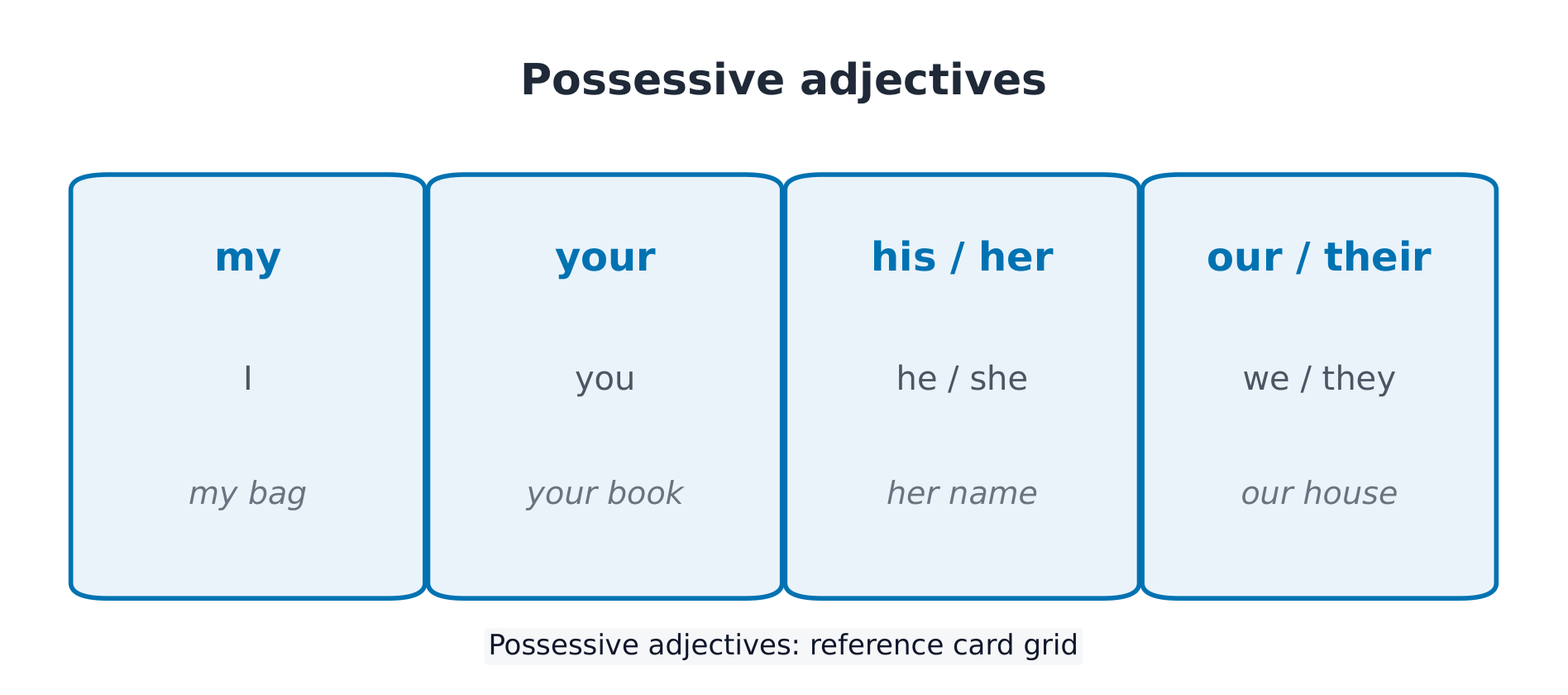
    Possessive adjectives indicate "whose" and are placed before the noun:

    • I → my(my), you → your(your), he → his(his)
    • she → her(her), it → its(its), we → our(our), they → their(their)

    这This 是is 我的my 包bag.

    This is my bag.

    她的Her 名字name 是is 露西Lucy.

    Her name is Lucy.

    Key Usage Points:

    • Possessive adjectives are always followed by a noun: my book, their house.
    • They do not change with noun number: my book, my books(my remains unchanged).

    Note: Be careful to distinguish its (its, no apostrophe) and it's (= it is). For example: The dog wags its tail.(The dog wags its tail.)*

    Common Errors

    • ❌ ~~This is she book.~~ → ✓ This is her book. — A possessive form must precede a noun: he → his, she → her.
    • ❌ ~~He is me friend.~~ → ✓ He is my friend. — The possessive form of I is my.
    • ❌ ~~The dog wags it's tail.~~ → ✓ …wags its tail. — it's = it is; "its" (possessive) has no apostrophe.
    • ❌ ~~Their is a park near here.~~ → ✓ There is a park near here. — their (their) and there (there/here) sound identical; do not mix them up in writing.
    עברית
    מקראי שייכות: my / your / his / her

    מקראי שייכות (possessive adjectives) מציגים "למי", ומוצבים לפני השם:

    • I → my(ה שלי), you → your(ה שלך), he → his(ה שלו)
    • she → her(ה שלה), it → its(ה שלו/ה שלה), we → our(שלנו), they → their(שלם/שלן)

    这This 是is 我的my 包bag.

    זהו התיק שלי.

    她的Her 名字name 是is 露西Lucy.

    שמה הוא לוסיה.

    נקודות שימוש חשובות:

    • אחרי מקראי שייכות חייב לבוא שם: my book, their house.
    • הם אינם משתנים לפי יחיד או רב: my book, my books (my נשאר ללא שינוי).

    שים לב: להבחין בין its (ה שלו/ה שלה, ללא סימן פסיקה) לבין it's (= it is). לדוגמה: The dog wags its tail (הכלב מנענע את זנבו).

    שגיאות נפוצות

    • ❌ ~~This is she book.~~ → ✓ This is her book. — לפני שם יש להשתמש בצורה המקראית: he → his, she → her.
    • ❌ ~~He is me friend.~~ → ✓ He is my friend. — הצורה המקראית של I היא my.
    • ❌ ~~The dog wags it's tail.~~ → ✓ ...wags its tail. — it's = it is; "ה שלו" הוא its, ללא סימן פסיקה.
    • ❌ ~~Their is a park near here.~~ → ✓ There is a park near here. — their (שלם/שלן) ו- there (יש / שם) נהגים זהה, אך בכתיב יש להבחין ביניהם.
  • 4 this, that, these, those · ⁨זה, זה, אלו, אלו⁩
    4.1

    this עם that

    English

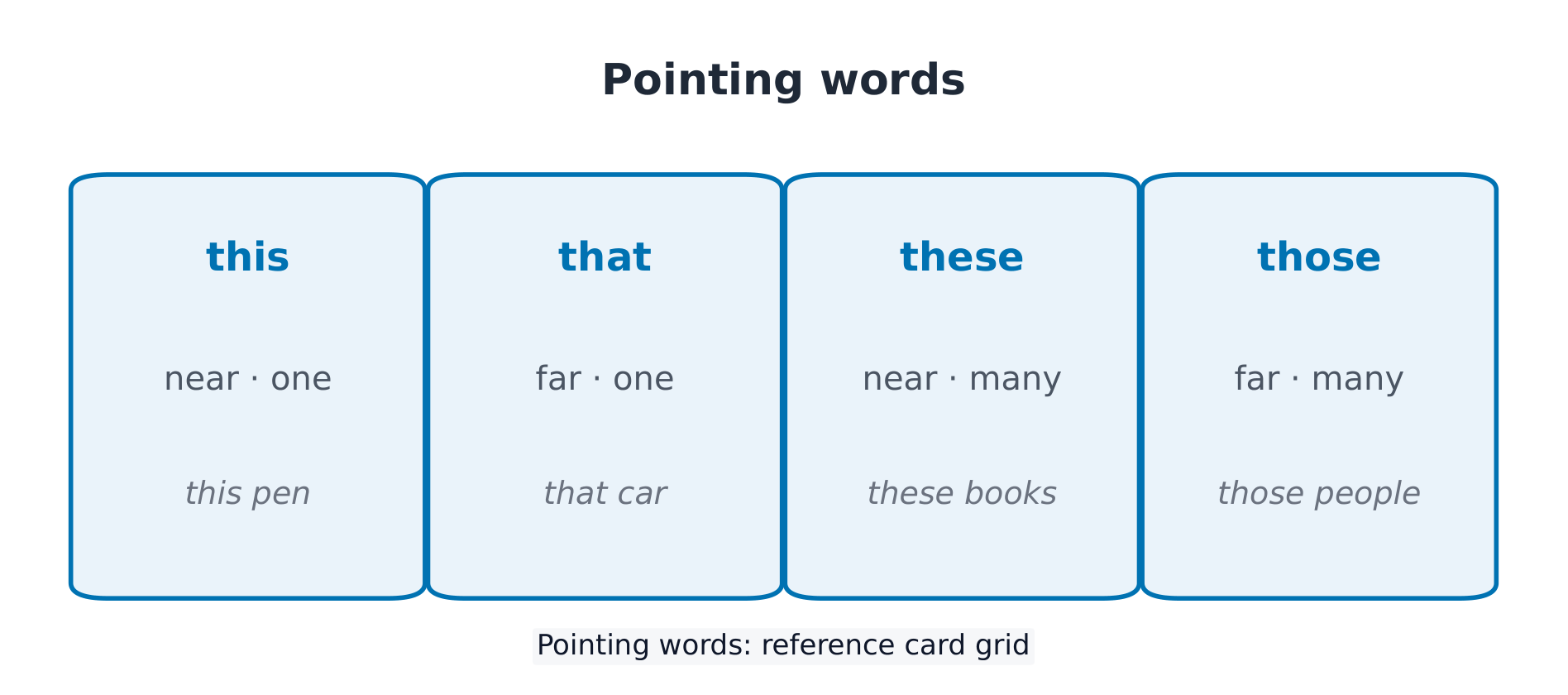
    Demonstratives point out "which one." Use this and that for singular:

    • this(this): Close to the speaker.
    • that(that): Far from the speaker.

    这This 是is 我的my 手机phone.

    This is my phone. (Close)

    那That 是is 你的your 车car.

    That is your car. (Far)

    עברית
    קרוב/רחוק × יחיד/רב: this / that / these / those

    מראשי איור (demonstratives) מציינים "איזה". ליחיד משתמשים ב-this וב-that:

    • this (זה): קרוב לדיבור.
    • that (זה): רחוק מהדיבור.

    这This 是is 我的my 手机phone.

    זוהי הטלפון הנייד שלי. (קרוב)

    那That 是is 你的your 车car.

    זוהי המכונית שלך. (רחוק)

    4.2

    these עם those

    English

    Use these and those for plural:

    • these(these): Close. those(those): Far.

    这些These 是are 我的my 书books.

    These are my books.

    那些Those 是are 她的her 朋友friends.

    Those are her friends.

    Contrastive Memory:

    • Near → this (singular) / these (plural).
    • Far → that (singular) / those (plural).

    Note: These / those are followed by plural nouns: these books, not ~~these book~~.

    Common Errors

    • ❌ ~~these book~~ → ✓ these books — Plural nouns must follow these / those.
    • ❌ ~~This books are mine.~~ → ✓ These books are mine. — If the noun is plural, the demonstrative must also be plural.
    • ❌ When introducing yourself on the phone, say ~~I am Tom.~~ → ✓ This is Tom. — In English, introduce yourself on the phone using this is.
    • Remember pairs: Near this / these are often used with here; far that / those are often used with there.
    עברית

    ברבים משתמשים ב-these וב-those:

    • these (אלו): קרוב. those (הן): רחוק.

    这些These 是are 我的my 书books.

    אלו הספרים שלי.

    那些Those 是are 她的her 朋友friends.

    הן החברים שלה.

    לשימוש בהשוואה:

    • קרוב → this (יחיד)/ these (רבים).
    • רחוק → that (יחיד)/ those (רבים).

    הערה: אחרי these / those בא שם-עצם ברבים: these books, לא ~~these book~~.

    שגיאות נפוצות

    • ❌ ~~these book~~ → ✓ these books — אחרי these / those חייב לבוא שם-עצם ברבים.
    • ❌ ~~This books are mine.~~ → ✓ These books are mine. — כשהשם-עצם ברבים, גם המילה המכוונת צריכה להיות ברבים.
    • ❌ בטלפון אומר ~~I am Tom.~~ → ✓ This is Tom. — באנגלית מתייחסים לעצמם בטלפון באמצעות this is.
    • זכור את הזוגות: this / these לרוב נמצאים יחד עם here, ו-that / those לרוב נמצאים יחד עם there.
  • 5 a, an and plurals · ⁨a, an ורבים⁩
    5.1

    a עם an

    English

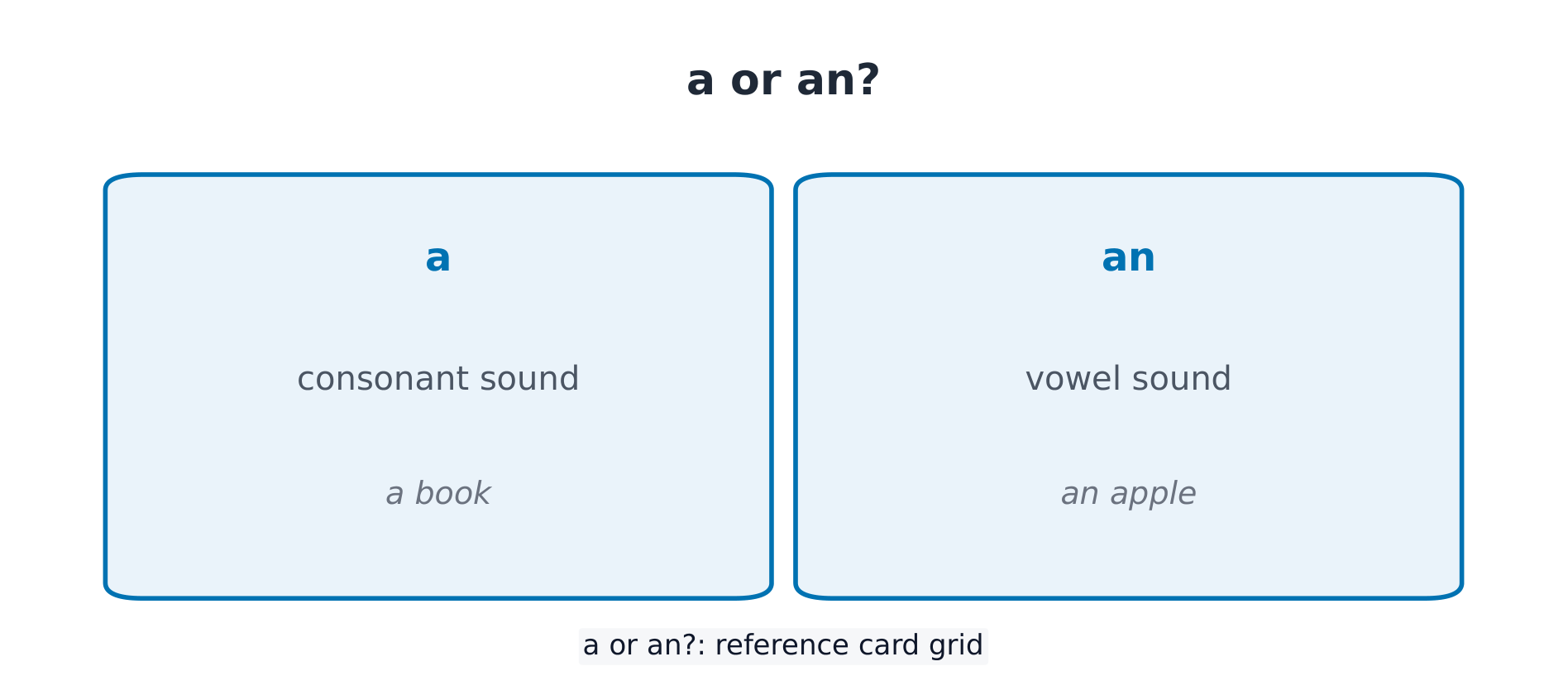
    a and an mean "one" and are used before singular countable nouns. How to choose depends on pronunciation:

    • a + consonant sound: a book, a dog, a cat.
    • an + vowel sound: an apple, an egg, an orange.

    我I 有have 一个a 笔pen.

    I have a pen.

    她She 吃eats 一个an 苹果apple.

    She eats an apple.

    Note: Look at the sound, not the letter: an hour (h is silent), a university (pronounced "yu-").

    עברית
    a / an: מבט על הניסוח (חצי-קוליות מול עיצורים)

    a ו-an מציינות "אחד" ומופיעות לפני שם-עצם ספור מדד. איך לבחור? מבט על הניסוח:

    • a + עיצור: a book, a dog, a cat.
    • an + קולית: an apple, an egg, an orange.

    我I 有have 一个a 笔pen.

    יש לי עט.

    她She 吃eats 一个an 苹果apple.

    היא אוכלת תפוח.

    הערה: הקשיב לנסיגה ולא לכתב: an hour (ה-h אינה נשמעת), a university (נקראת "יו-").

    5.2

    ריבוי שמות

    English

    To indicate "more than one," use the plural form of the noun, usually adding -s:

    • Generally add -s: book → books, car → cars.
    • Words ending in -s / -sh / -ch / -x add -es: bus → buses, box → boxes.
    • Consonant + y ending: change y to i and add -es: baby → babies, city → cities.

    我I 有have 两two 猫cats.

    I have two cats.

    Irregular plurals (must memorize):

    • man → men, woman → women, child → children.
    • foot → feet, tooth → teeth, person → people.

    Note: Do not use a / an before plural nouns: ~~a books~~ ✗ → books / two books ✓.

    Common Errors

    • ❌ ~~I have dog.~~ → ✓ I have a dog. — In Chinese you can say "I have dogs," but singular countable nouns in English must have a / an (or my, the, etc.) before them.
    • ❌ ~~an university~~ → ✓ a university; ❌ ~~a hour~~ → ✓ an hour — Look at pronunciation, not spelling: university starts with a consonant sound /j/, and h is silent in hour.
    • ❌ ~~two book~~ → ✓ two books — Chinese nouns do not change for plurality, but nouns after numbers in English require -s; this is easily forgotten.
    • ❌ ~~three childs~~ → ✓ three children — Irregular plurals must be memorized separately: men, women, children, feet, teeth, people.
    • ❌ ~~a people~~ → ✓ a person (one person) / people (many people) — people is inherently plural.
    עברית

    כאשר מתכוונים ל"יותר מאחד", משתמשים בריבוי, הנוסח הנפוץ ביותר הוא הוספת -s:

    • נוסיף -s באופן כללי: book → books, car → cars.
    • אם המילה מסתיימת ב-s / -sh / -ch / -x, נוסיף -es: bus → buses, box → boxes.
    • אם המילה מסתיימת בתווית קולית + y, ה-y משתנה ל-i ומוסיפים -es: baby → babies, city → cities.

    我I 有have 两two 猫cats.

    יש לי שני חתולים.

    ריבויים לא סדירים (צריך לזכור):

    • man → men, woman → women, child → children.
    • foot → feet, tooth → teeth, person → people.

    הערה: לפני שמם ברבים לא כותבים a / an: ~~a books~~ ✗ → books / two books ✓.

    שגיאות נפוצות

    • ❌ ~~I have dog.~~ → ✓ I have a dog. — בעברית אפשר להגיד "יש לי כלב", אך באנגלית לפני שם ספציפי בסcommunications יחיד חייב להיות a / an (או my, the וכו').
    • ❌ ~~an university~~ → ✓ a university; ❌ ~~a hour~~ → ✓ an hour — הקשיבו לנסיגה ולא לכתב: university מתחילה בקולית /j/, וה-h ב-hour אינה נשמעת.
    • ❌ ~~two book~~ → ✓ two books — בעברית לשם אין שינוי ברבים, אך באנגלית אחרי מספר יש להוסיף -s, זה מה שהכי קל לשכוח.
    • ❌ ~~three childs~~ → ✓ three children — ריבויים לא סדירים צריך לזכור בנפרד: men, women, children, feet, teeth, people.
    • ❌ ~~a people~~ → ✓ a person (אדם אחד) / people (רבים הרבה) — people הוא כבר בשם רבים.
  • 6 there is and there are · ⁨there is ו-there are⁩
    6.1

    יחיד וריבוי

    English

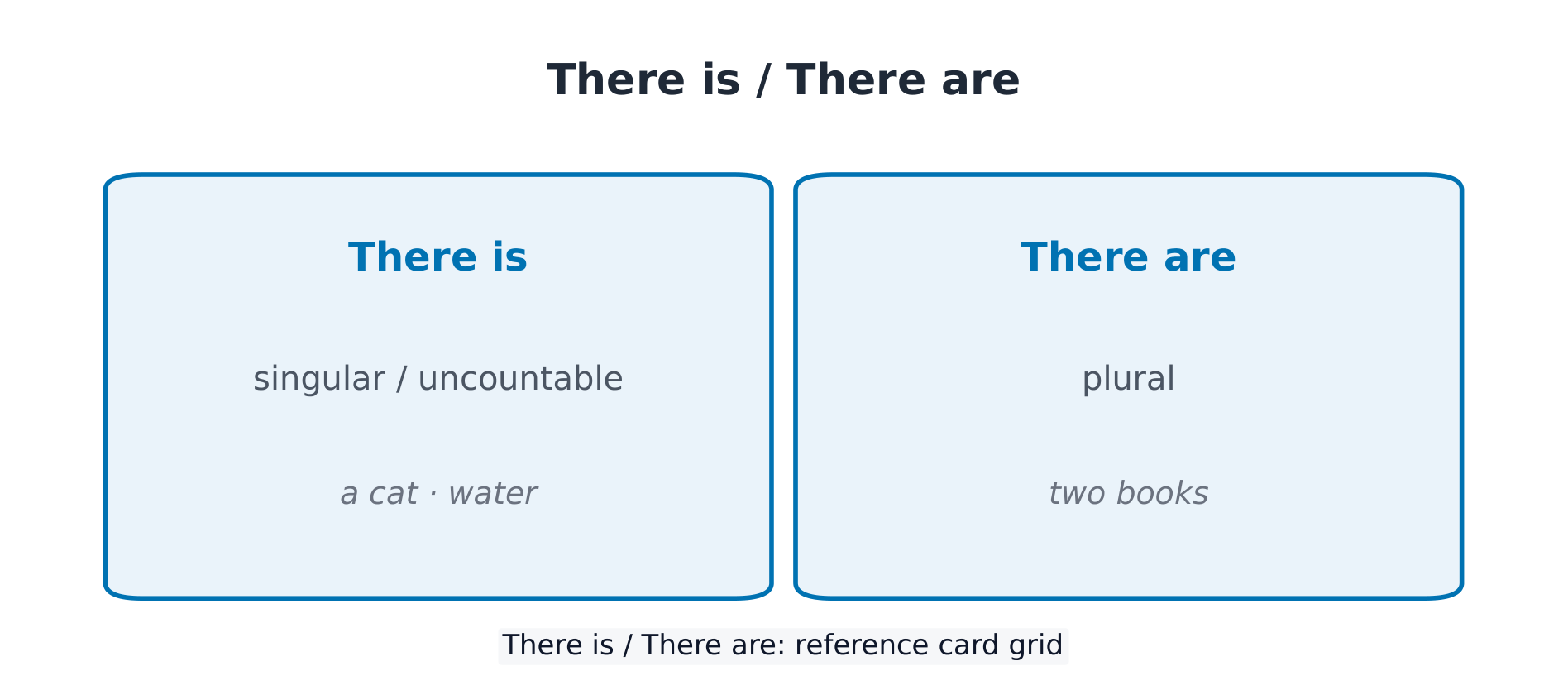
    there is / there are means "there exists" (something exists somewhere).

    • There is + singular / uncountable noun: There is a book.
    • There are + plural noun: There are two books.

    (有)There 有is 一只a 猫cat 在on (冠词)the 沙发上sofa.

    There is a cat on the sofa.

    (有)There 有are 三three 书books 在on (冠词)the 桌上desk.

    There are three books on the table.

    Note: In spoken English, there is is often contracted to there's: There's a problem.

    עברית
    There is(יחיד)/ There are(ריבוי)

    there is / there are מביעים "יש" (קיום של דבר במקום מסוים).

    • There is + שם יחיד / בלתי ספציפי: There is a book.
    • יש + שם: יש ספרים. יש שני ספרים.

    (有)There 有is 一只a 猫cat 在on (冠词)the 沙发上sofa.

    יש חתול על הספה.

    (有)There 有are 三three 书books 在on (冠词)the 桌上desk.

    יש שלושה ספרים על השולחן.

    הערה: בדיבור there is מתקצר לעיתים קרובות ל-there's: יש בעיה.

    6.2

    שלילית ושאלית

    English

    Negative: there is not / there are not (contracted as there isn't / there aren't).

    (有)There 没有isn't 任何any 牛奶milk.

    There is no milk left.

    Question: Move is / are to the front of there.

    (有吗)Is (有)there 一家a 银行bank 附近near 这里here?

    Is there a bank nearby?

    Short answer: Yes, there is. / No, there isn't.

    Note: Use any frequently in negative / question sentences: Is there any water? (Is there any water?)

    Common Errors

    • ❌ ~~Here has many people.~~ → ✓ There are many people here. — The "have" in the Chinese "There are many people here" indicates existence; use there is / there are in English, do not translate literally as have.
    • ❌ ~~There have a book on the desk.~~ → ✓ There is a book on the desk. — Use is / are after there; there have does not exist.
    • ❌ ~~There is two cats.~~ → ✓ There are two cats. — If the following noun is plural, use are.
    • ❌ ~~There are a milk.~~ → ✓ There is some milk. — milk is uncountable: use there is + some, do not use a.
    עברית

    שלילי: there is not / there are not(התקצרות there isn't / there aren't).

    (有)There 没有isn't 任何any 牛奶milk.

    אין חלב.

    שאלה: מניחים את is / are לפני there.

    (有吗)Is (有)there 一家a 银行bank 附近near 这里here?

    יש כאן בנק?

    תשובה קצרה:כן, יש. / לא, אין.

    הערה: בשליליים ובשאלות משתמשים ב-any: יש מים כאן?(יש מים?)

    שגיאות נפוצות

    • ❌ ~~Here has many people.~~ → ✓ There are הרבה אנשים כאן. — המילה "יש" בסינית (这里) מציינת קיום, באנגלית משתמשים ב- there is / there are, ואין לתרגם אותה באופן פשוט כ- have.
    • ❌ ~~There have a book on the desk.~~ → ✓ There is ספר על השולחן. — אחרי there משתמשים ב-is / are, הביטוי there have אינו תקין.
    • ❌ ~~There is two cats.~~ → ✓ There are שתי חתולים. — מכיוון שהשם הבא הוא רבים, משתמשים ב- are.
    • ❌ ~~There are a milk.~~ → ✓ There is some חלב. — חלב הוא לא נספד: משתמשים ב- there is + some, ולא ב- a.
  • 7 have got · ⁨יש לו/לה/איתו/ה⁩
    7.1

    have got / has got

    English

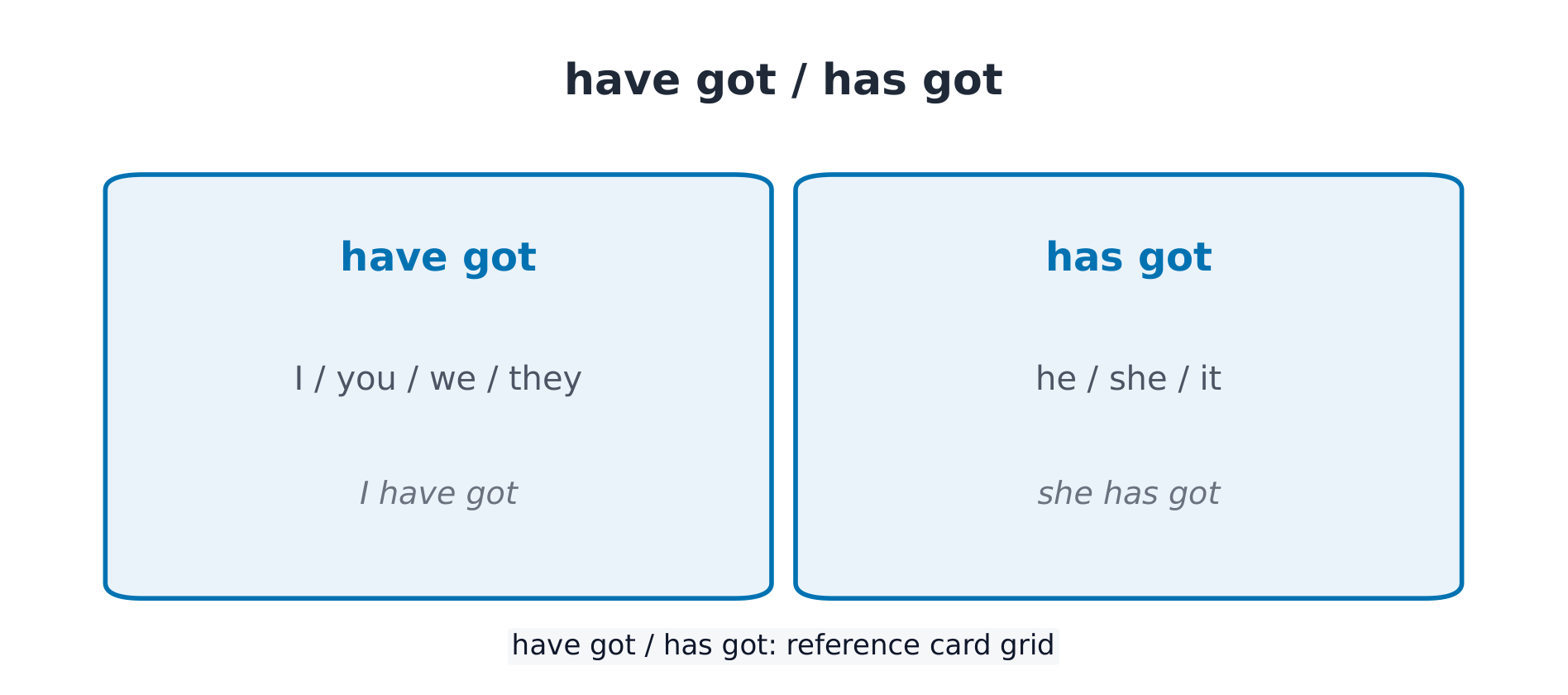
    have got means "to possess" (= have), common in British English.

    • I / you / we / they → have got
    • he / she / it → has got

    我I 有have got 一个a 兄弟brother.

    I have a brother. (= I have a brother.)

    她She 有has got 蓝色blue 眼睛eyes.

    She has blue eyes.

    Note: Often contracted in spoken language: I've got, she's got, they've got. Same meaning as have / has.

    עברית
    have got / has got

    have got משמעותו "ל拥有" (= have), והיא נפוצה מאוד באנגלית הבריטית.

    • I / you / we / they → have got
    • he / she / it → has got

    我I 有have got 一个a 兄弟brother.

    יש לי אח. (= I have a brother.)

    她She 有has got 蓝色blue 眼睛eyes.

    יש לה עיניים כחולות.

    הערה: בדיבור, נהוג לקצר: I've got, she's got, they've got. המשמעות זהה לhave / has.

    7.2

    שלילית ושאלית

    English

    Negative: haven't got / hasn't got.

    他He 没有hasn't got 一辆a 车car.

    He doesn't have a car.

    Question: Move Have / Has to the front of the subject.

    (有吗)Have 你you 有got 一支a 笔pen?

    Do you have a pen?

    Short answer: Yes, I have. / No, I haven't.

    Note: have got is mostly used for current possession; for past or habits, use regular have / had.

    Common Errors

    • ❌ ~~She have got long hair.~~ → ✓ She has got long hair. — Use has got for he / she / it.
    • ❌ ~~I have got not a car.~~ → ✓ I haven't got a car. — Place not after have / has, then contract.
    • ❌ ~~Do you have got a pen?~~ → ✓ Have you got a pen? / Do you have a pen? — Both question forms are correct, but never mix them.
    • ❌ ~~Yes, I have got.~~ → ✓ Yes, I have. — Short answers end at have / has, without got.
    עברית

    שליליה: haven't got / hasn't got.

    他He 没有hasn't got 一辆a 车car.

    אין לו רכב.

    שאלה: מניחים את Have / Has לפני הנושא.

    (有吗)Have 你you 有got 一支a 笔pen?

    יש לך עט?

    תשובות קצרות: Yes, I have. / No, I haven't.

    הערה: ביטוי have got משמש בעיקר למצב של "בעלות" כרגע; כאשר מדברים על עבר או הרגל, יש להשתמש בhave / had הרגילות.

    שגיאות נפוצות

    • ❌ ~~She have got long hair.~~ → ✓ She has got long hair. — עבור he / she / it משתמשים בhas got.
    • ❌ ~~I have got not a car.~~ → ✓ I haven't got a car. — המילה not נוספת אחרי have / has, ולאחר מכן מקצרים.
    • ❌ ~~Do you have got a pen?~~ → ✓ Have you got a pen? / Do you have a pen? — שתי השאלות נכונות, אך לא ניתן לשלב אותן באותה משפט.
    • ❌ ~~Yes, I have got.~~ → ✓ Yes, I have. — בתשובות קצרות נחזיר רק את have / has, ללא got.
  • 8 Present simple · ⁨זמן פשוט עתיד⁩
    8.1

    הרגלים ושלישי יחיד -s

    English

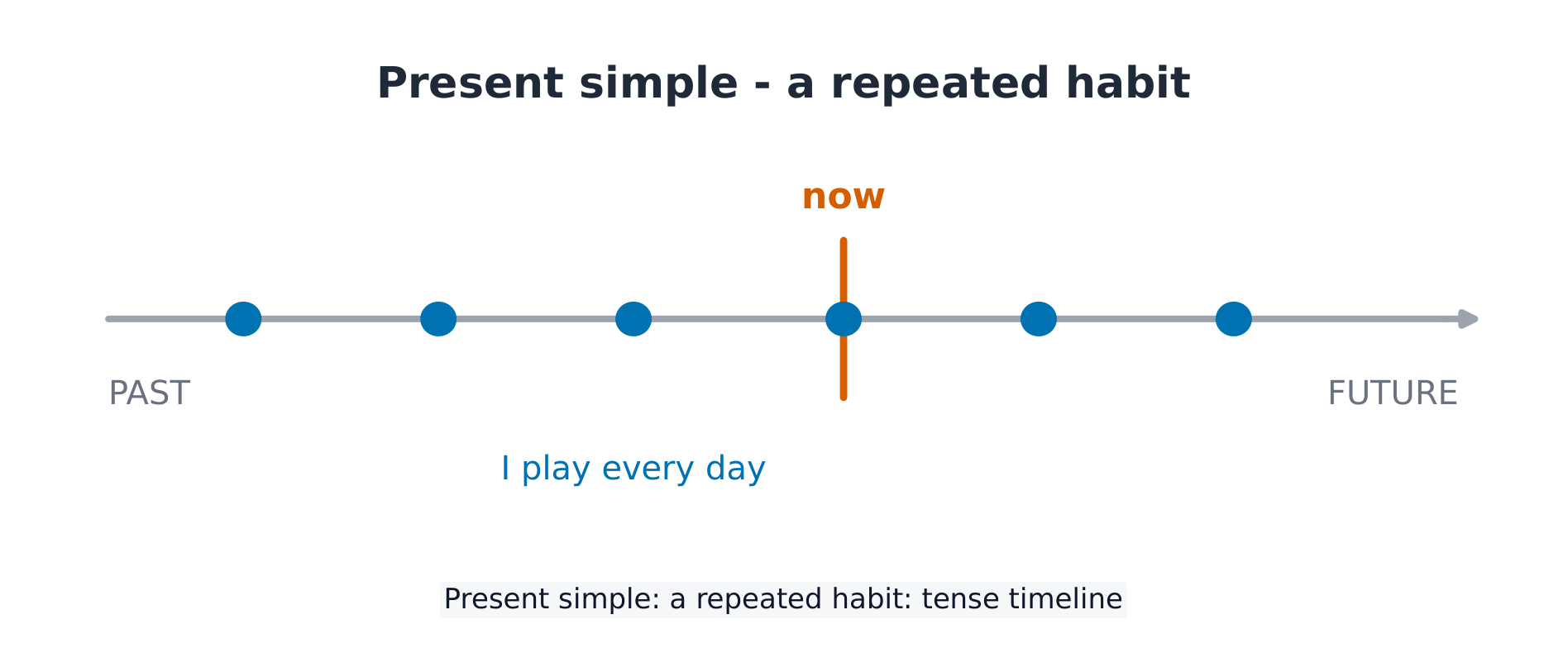
    Present simple (present simple) describes habits and facts. The base form is the infinitive (base verb).

    我I 喜欢like 茶tea.

    I like tea.

    When the subject is he / she / it, add -s to the verb:

    他He 踢plays 足球football.

    He plays football.

    Spelling rules:

    • Generally add -s: like → likes.
    • Words ending in -s / -sh / -ch / -x / -o add -es: go → goes, watch → watches.
    • Consonant + y ending: change y to i and add -es: study → studies.

    Note: Only he / she / it take -s; I / you / we / they use the base form: They like tea.

    עברית
    Present Simple: הרגל חוזר

    Present simple מתאר הרגלים ועובדות. הצורה הבסיסית היא שורש הפועל.

    我I 喜欢like 茶tea.

    אני אוהב תה.

    כאשר הנושא הוא he / she / it, מפעילים לפועל -s:

    他He 踢plays 足球football.

    הוא משחק כדורגל.

    כתב:

    • באופן כללי מוסיפים -s: like → likes.
    • פועלים הנגמרים ב-s / -sh / -ch / -x / -o, מוסיפים -es: go → goes, watch → watches.
    • קונסוננט + y, ה-y משתנה ל-i ונוסף -es: study → studies。

    שים לב רק he / she / it מקבלים -s; I / you / we / they נשארים בצורה המקורית: They like tea.

    8.2

    שלילית ושאלית

    English

    For negatives and questions, use auxiliary verbs do / does (does for he / she / it).

    Negative: Subject + don't / doesn't + base verb.

    我I 不don't 喜欢like 咖啡coffee.

    I don't like coffee.

    Question: Do / Does + Subject + base verb ?

    (助动词)Does 她she 住live 这里here?

    Does she live here?

    Note: When using do / does, the verb returns to its base form (no -s): ~~Does she lives~~ ✗ → Does she live ✓.

    Common Errors

    • ❌ ~~He go to school by bus.~~ → ✓ He goes to school by bus. — Forgetting to add -s in third person singular is the most frequent error; check your work afterwards.
    • ❌ ~~She doesn't likes coffee.~~ → ✓ She doesn't like coffee. — When using does / doesn't, the verb returns to its base form.
    • ❌ ~~I very like English.~~ → ✓ I like English very much. — "Very much" in Chinese cannot be translated literally; very cannot directly modify a verb.
    • ❌ ~~You like tea?~~ → ✓ Do you like tea? — Questions must start with do / does; rising intonation alone is insufficient.
    עברית
    הרגלים יומיומיים: I have breakfast every morning.

    לשליליה ולשאלה משתמשים במסייעת do / does(עבור he / she / it משתמשים בdoes)。

    שלילה: סובייקט + don't / doesn't + צורת מקור של הפועל。

    我I 不don't 喜欢like 咖啡coffee.

    אני לא אוהב/ה קפה。

    שאלה: Do / Does + סובייקט + צורת מקור של הפועל ?

    (助动词)Does 她she 住live 这里here?

    היא גרה כאן?

    שים לב ששימוש ב-do / does מחזיר את הפועל לצורה מקורית(ללא -s): ~~Does she lives~~ ✗ → Does she live ✓。

    שגיאות נפוצות

    • ❌ ~~He go to school by bus.~~ → ✓ He goes to school by bus. — שכחתי להוסיף -s בשלישי מספר יחיד הוא השגיאה הנפוצה ביותר, חובה לבדוק אחרי הכתיבה。
    • ❌ ~~She doesn't likes coffee.~~ → ✓ She doesn't like coffee. — לאחר שימוש בdoes / doesn't, הפועל חוזר לצורה המקורית。
    • ❌ ~~I very like English.~~ → ✓ I like English very much. — את "מאוד אוהב" מהצ'ינית אין לתרגם מילולית; very אינה יכולה לעמוד ישירות לפני פועל。
    • ❌ ~~You like tea?~~ → ✓ Do you like tea? — בשאלות חובה להתחיל ב- do / does, לא ניתן לסמוך רק על גבוהות טון。
  • 9 can · ⁨יכול⁩
    9.1

    יכולת ובקשה

    English

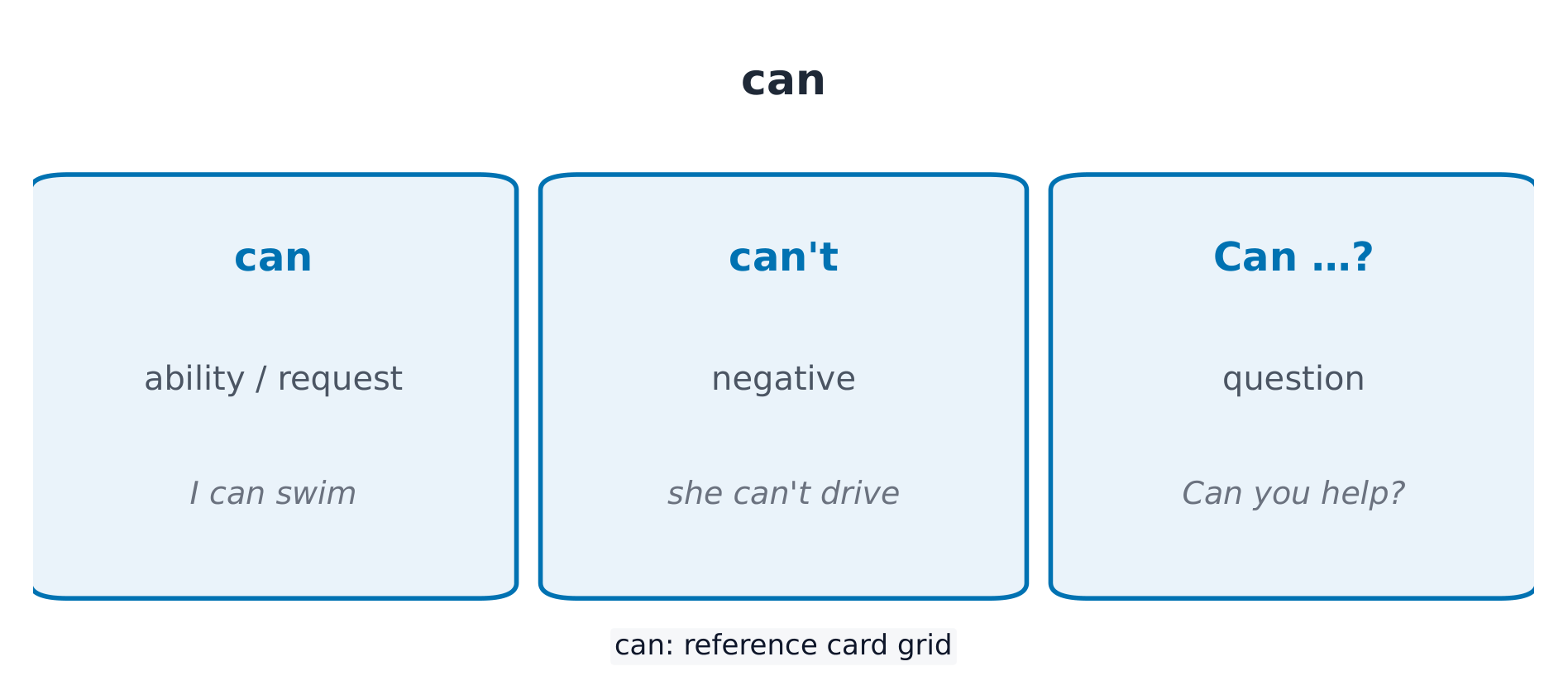
    can expresses ability ("know how to / be able to") or is used for requests. It is followed by the base form of the verb, and remains the same for all persons.

    我I 会can 游泳swim.

    I can swim.

    能Can 你you 帮help 我me?

    Can you help me?

    Note: Use the base form after can: ~~can to swim~~ ✗, ~~can swims~~ ✗ → can swim ✓.

    עברית
    can: יכולת, שלילה, שאלה

    can מבטאת יכולת("יודע / יכול") או משמשת לבקשה. אחריה תמיד עוברת צורת מקור של הפועל, לכל אדם זהה。

    我I 会can 游泳swim.

    אני יודע/ת לשחות。

    能Can 你you 帮help 我me?

    אתה יכול לעזור לי?

    שים לב שאחרי can משתמשים בצורה מקורית: ~~can to swim~~ ✗、~~can swims~~ ✗ → can swim ✓。

    9.2

    שלילית ושאלית

    English

    Negative: cannot (abbreviation can't) + base form of the verb.

    她She 不会can't 开车drive.

    She cannot drive.

    Question: Place Can before the subject.

    能Can 他he 做饭cook?

    Can he cook?

    Short answer: Yes, I can. / No, I can't.

    Note: can has no -s and does not use do/does: ask directly with Can he…?, not ~~Does he can…?~~

    Common Errors

    • ❌ ~~She cans drive.~~ → ✓ She can drive. — can has no third-person singular -s; it is the same for all persons.
    • ❌ ~~I don't can swim.~~ → ✓ I can't swim. — The negative of can is formed directly with not (can't), without using don't.
    • ❌ ~~He can sings very good.~~ → ✓ He can sing very well. — Use the base form of the verb after can; use the adverb well to modify a verb, not good.
    • ❌ ~~You can help me?~~ → ✓ Can you help me? — When making a request, place can before the subject.
    עברית

    שלילה: cannot(קיצור can't) + צורת מקור של הפועל。

    她She 不会can't 开车drive.

    היא לא יודעת לנהוג.

    שאלה: הניחו את Can לפני הנושא.

    能Can 他he 做饭cook?

    הוא יודע לבשל?

    תשובה קצרה: Yes, I can. / No, I can't.

    שימו לב: ל-can אין -s ואין do/does; בשאלה משתמשים ישירות ב-Can he…?, ולא ~~Does he can…?~~

    שגיאות נפוצות

    • ❌ ~~She cans drive.~~ → ✓ She can drive. — ל-can אין -s לשלישי אדם, ויש לו אותה צורה בכל האדם.
    • ❌ ~~I don't can swim.~~ → ✓ I can't swim. — השלילה של can נוצרת על ידי הוספת not (can't), ולא באמצעות don't.
    • ❌ ~~He can sings very good.~~ → ✓ He can sing very well. — לאחר can בא הפועל במקור; כדי לתאר פועל משתמשים במסביר well, ולא good.
    • ❌ ~~You can help me?~~ → ✓ Can you help me? — בבקשה מאחרים, מעלה את can לפני הנושא.
  • 10 Imperatives · ⁨ציון⁩
    10.1

    פקודות והנחיות

    English

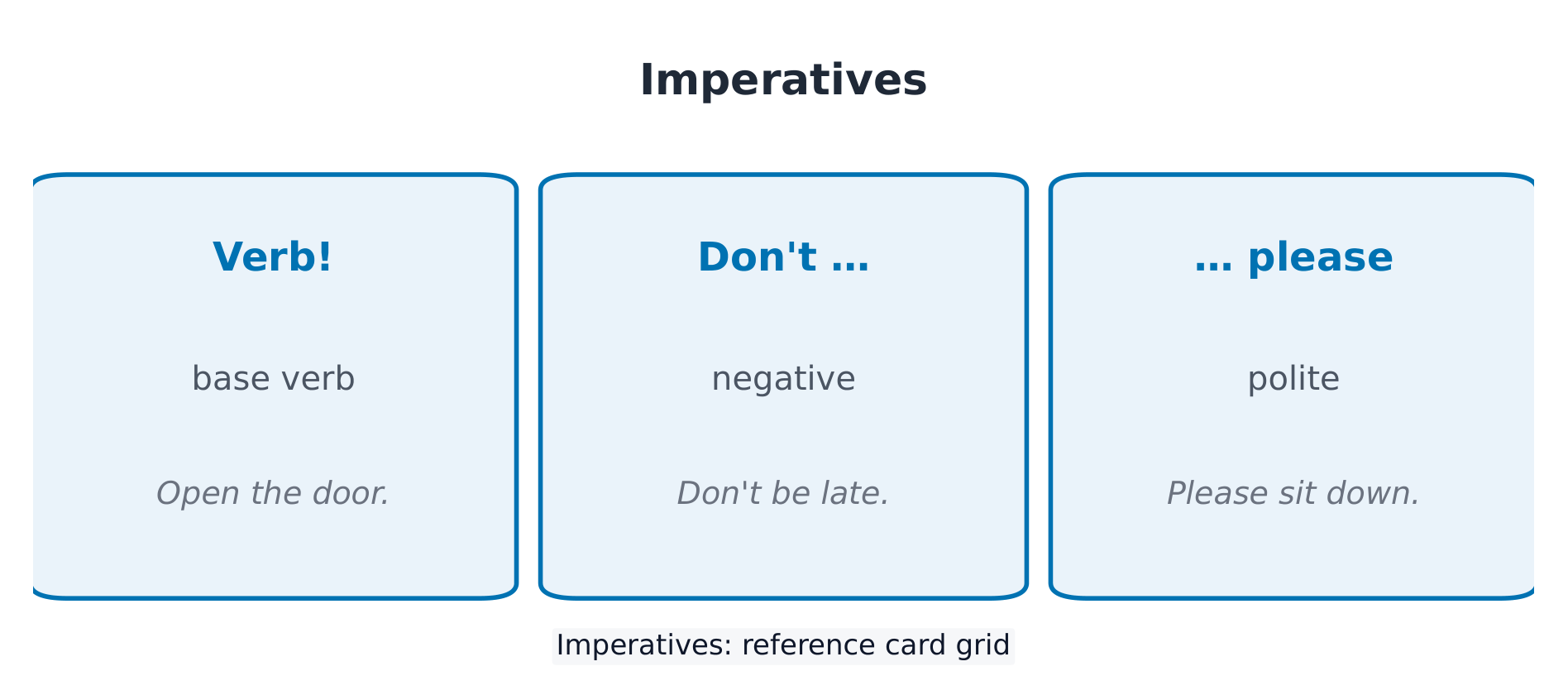
    Imperatives are used to give commands, provide instructions, or make requests. Start directly with the base form of the verb, without a subject.

    打开Open (冠词)the 门door 请, please.

    Please open the door.

    坐Sit 下down.

    Sit down.

    Negative: Add Don't at the beginning.

    不要Don't (是)be 迟到late.

    Don't be late.

    Key Usage Points:

    • Add please to be more polite: Please come in.
    • Also used for directions and instructions: Turn left. Mix the eggs.

    Note: Do not write a subject in imperatives: ~~You open the door~~ (for a command) → Open the door.

    Common Errors

    • ❌ ~~Please open door.~~ → ✓ Please open the door. — Articles must still be included in imperatives.
    • ❌ ~~Don't to touch it.~~ → ✓ Don't touch it. — Follow don't directly with the base form of the verb; do not add to.
    • ❌ ~~No talk in class!~~ → ✓ Don't talk in class! / No talking! — To prohibit an action, use don't + base form; after no, use -ing or a noun.
    • ❌ ~~You sit down!~~ → ✓ Sit down, please. — Adding you to a command sounds angry; add please for politeness, or change to Can you…?
    עברית
    משפט חובה: פקודה, שלילה, בקשה

    משפט חובה (imperatives) משמש להטלת פקודה, מתן הנחיה או הערת בקשה. מתחילים ישירות עם פועל במקור, ללא נושא.

    打开Open (冠词)the 门door 请, please.

    אנא פתחי את הדלת.

    坐Sit 下down.

    שבי.

    שלילה: מוסיפים לפניו Don't.

    不要Don't (是)be 迟到late.

    אל תאחרי.

    נקודות שימוש חשובות:

    • הוספת please הופכת את המשפט למדיניות יותר: Please come in. (אנא כניסי.)
    • משמש גם לעיתון דרכים והנחיות: Turn left. (פני שמאל.) Mix the eggs. (ערבבי את הביצים.)

    שימו לב: במשפט חובה לא כותבים נושא: ~~You open the door~~ (בפקודה) → Open the door.

    שגיאות נפוצות

    • ❌ ~~Please open door.~~ → ✓ Please open the door. — בגם במשפט חובה אין לפסול את נסר הגדר.
    • ❌ ~~Don't to touch it.~~ → ✓ Don't touch it. — לאחר don't מגיע ישירות הפועל במקור, ללא to.
    • ❌ ~~No talk in class!~~ → ✓ Don't talk in class! / No talking! — להבעת איסור על פעולה משתמשים ב- don't + מקור; לאחר no יש להשתמש ב- -ing או בשם.
    • ❌ ~~You sit down!~~ → ✓ Sit down, please. — הוראה עם you נשמעת כעוסה; כדי להיות מכובד יש להוסיף please, או לשנות לשאלה Can you…?
  • 11 Question words · ⁨מילות שאלה⁩
    11.1

    מה, היכן, מי

    English

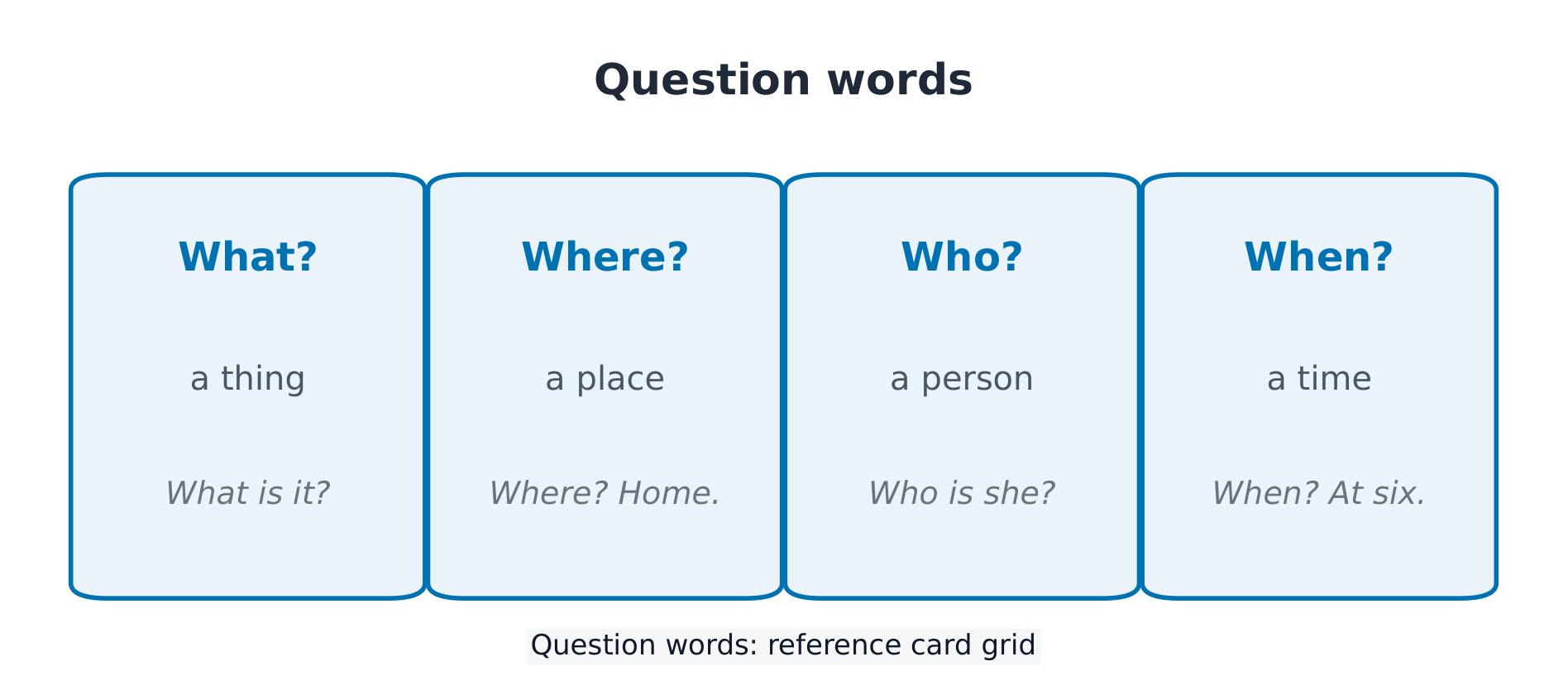
    Question words are placed at the beginning of a question to ask for specific information.

    • what (what), where (where), who (who)

    什么What 是is 你的your 名字name?

    What's your name?

    哪里Where (助动词)do 你you 住live?

    Where do you live?

    谁Who 是is 那个that 男人man?

    Who is that man?

    Note: A be verb or auxiliary do/does often follows the question word: Where do you work?

    עברית
    מילות שאלה: שאלות לגבי דברים/מקומות/אנשים/זמן

    מילות שאלה (question words) מופיעות בתחילת השאלה כדי לשאול על מידע ספציפי.

    • what(מה), where(איפה), who(מי)

    什么What 是is 你的your 名字name?

    מה שמך?

    哪里Where (助动词)do 你you 住live?

    איפה אתה גר?

    谁Who 是is 那个that 男人man?

    מי האיש ההוא?

    שימו לב לאחר מילת שאלה לרוב בא מתחום be או עוזר do / does: Where do you work?

    11.2

    מתי, מדוע, איך

    English
    • when (when), why (why), how (how / in what way)

    什么时候When 是is (冠词)the 派对party?

    When is the party?

    为什么Why (是)are 你you 难过sad?

    Why are you sad?

    怎么How (助动词)do 你you 拼写spell 它it?

    How do you spell this?

    Note: how can also combine with adjectives to ask about degree: How old are you? How much is it?

    Common Errors

    • ❌ ~~Where you live?~~ → ✓ Where do you live? — After the question word, you still need do/does or be; you cannot follow directly with the subject.
    • ❌ ~~What means this word?~~ → ✓ What does this word mean? — mean is an ordinary verb: question word + does + subject + base form.
    • ❌ ~~Why you are late?~~ → ✓ Why are you late? — When there is a be verb in the sentence, move be before the subject.
    • ❌ ~~How to spell it?~~ → ✓ How do you spell it? — A literal translation of "How to spell?" loses the subject and auxiliary verb; these must be added.
    עברית
    • when(מתי), why(מדוע), how(איך / באיזה אופן)

    什么时候When 是is (冠词)the 派对party?

    מתי המסיבה?

    为什么Why (是)are 你you 难过sad?

    מדוע אתה עצוב?

    怎么How (助动词)do 你you 拼写spell 它it?

    איך כותבים מילה זו?

    שימו לב how יכול גם להתאים לצירופים של תארים לשאלה על רמת הדבר: How old are you?(כמה גיל יש לך?) How much is it?(כמה זה עולה?)

    שגיאות נפוצות

    • ❌ ~~Where you live?~~ → ✓ Where do you live? — לאחר מילת שאלה נדרש also do / does או be, ואין ניתן לעבור ישירות למשפט.
    • ❌ ~~What means this word?~~ → ✓ What does this word mean? — mean הוא פועל רגיל: מילת שאלה + does + משפט + מקור.
    • ❌ ~~Why you are late?~~ → ✓ Why are you late? — כאשר יש במשפט מתחום be, מעבירים את be לפני המשפט.
    • ❌ ~~איך כותבים את זה?~~ → ✓ How do you spell it? — התרגום המילולי "איך כותבים את זה?" מאבד את הסובייקט והאנצ'ר, יש להשלים אותם.
  • 12 Prepositions of place · ⁨פועלי מקום⁩
    12.1

    in, on, under

    English

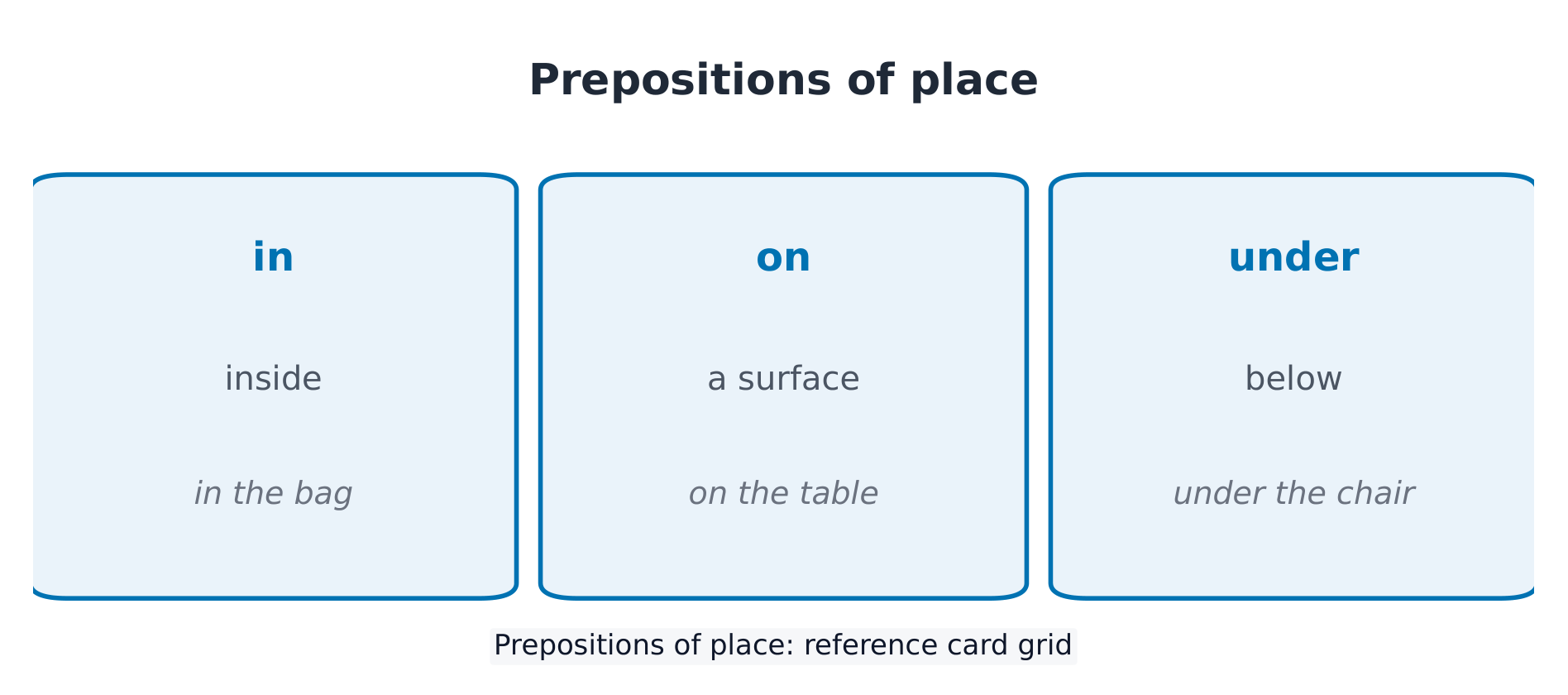
    Prepositions of place indicate where something is located.

    • in (inside...), on (on top of... / surface), under (below...)

    (冠词)The 钥匙keys 在are 在...里in (冠词)the 包里bag.

    The key is in the bag.

    (冠词)The 书book 在is 在...上on (冠词)the 桌上table.

    The book is on the table.

    (冠词)The 猫cat 在is 在...下under (冠词)the 椅子下chair.

    The cat is under the chair.

    עברית
    地点介词:in / on / under

    地点介词 (prepositions of place) 说明东西在哪里。

    • in(在……里面)、on(在……上面 / 表面)、under(在……下面)

    (冠词)The 钥匙keys 在are 在...里in (冠词)the 包里bag.

    钥匙在包里。

    (冠词)The 书book 在is 在...上on (冠词)the 桌上table.

    书在桌上。

    (冠词)The 猫cat 在is 在...下under (冠词)the 椅子下chair.

    猫在椅子下面。

    12.2

    next to, between, behind

    English
    • next to (beside...), between (between...), behind (behind...), in front of (in front of...)

    (冠词)The 商店shop 在is 旁边next to (冠词)the 银行bank.

    The shop is next to the bank.

    她She 坐sits 之间between 汤姆Tom 和and 萨姆Sam.

    She sits between Tom and Sam.

    Note: between means "between two," and is usually followed by A and B: between the door and the window.

    Common Errors

    • ❌ ~~The picture is in the wall.~~ → ✓ The picture is on the wall. — Hanging "on" the wall involves surface contact, so use on.
    • ❌ ~~I read it on the book.~~ → ✓ ...in the book. — Content "inside" a book uses in; people in photos also use in the photo.
    • ❌ ~~The shop is next the bank.~~ → ✓ next to the bank — next to is two words; to cannot be omitted.
    • ❌ ~~between the door with the window~~ → ✓ between the door and the window — between takes the fixed collocation A and B.
    עברית
    • next to(在……旁边)、between(在……之间)、behind(在……后面)、in front of(在……前面)

    (冠词)The 商店shop 在is 旁边next to (冠词)the 银行bank.

    商店在银行旁边。

    她She 坐sits 之间between 汤姆Tom 和and 萨姆Sam.

    她坐在汤姆和萨姆之间。

    注意 between 表示"两者之间",后面常用 A and B:between the door and the window。

    שגיאות נפוצות

    • ❌ ~~The picture is in the wall.~~ → ✓ The picture is on the wall. — 挂在墙"上"是表面接触,用 on。
    • ❌ ~~I read it on the book.~~ → ✓ …in the book. — 书"里"的内容用 in;照片里的人也用 in the photo。
    • ❌ ~~The shop is next the bank.~~ → ✓ next to the bank — next to 是两个词,to 不能丢。
    • ❌ ~~between the door with the window~~ → ✓ between the door and the window — between 固定搭配 A and B。

Log in or create account · ⁨היכנס או צור חשבון⁩

IGCSE, A-Level & AP