Skip to content · ⁨דלג לתוכן⁩

Biological Bases of Behavior · ⁨בסיסים ביולוגיים להתנהגות⁩

AP Psychology · ⁨פסיכולוגיה - AP⁩ · Topic 1 · ⁨נושא 1⁩

Video lesson for this topic · ⁨שיעור וידאו לנושא זה⁩ Open the video page · ⁨פתח את עמוד הוידאו⁩
18:17

בסיסים ביולוגיים להתנהגות

המורה מחלק את דף המבחן. לפני שאתם קראתם אף מילה, לבכם מהיר יותר הידיים שלכם קרות. אינכם בחרתם בכך.…

English narration · English + 中文 subtitles burned in · ⁨קריאת קול באנגלית · תרגום אנגלי + סינית שרוף בתוך הסרטון⁩

1.1

Nature and Nurture · ⁨טבע וגידול⁩

Syllabus · ⁨סיילבוס⁩
English

Learning Objective 1.1.A: Explain the relationship between heredity and environment in shaping behavior and mental processes.

  • 1.1.A.1 Heredity and environmental factors interact to shape behavior and mental processes.
    • 1.1.A.1.i Heredity, or “nature,” refers to genetic or predisposed characteristics that influence physical, behavioral, and mental traits and processes.
    • 1.1.A.1.ii Environmental factors, or “nurture,” refers to the external factors that one experiences, such as family interactions or education.
      • Exclusion Statement: Specific information about genetics (genotype, phenotype, DNA, chromosomes, and recessive and dominant gene expression) is beyond the scope of the AP Psychology Exam.
  • 1.1.A.2 The evolutionary perspective explores how natural selection affects the expression of behavior and mental processes to increase survival and reproductive success. Some theorists have sought to apply principles of the evolutionary perspective in ways that discriminate against others (eugenics).
  • 1.1.A.3 Research on the effects of genes on individual behavior and mental processes is often conducted using twin studies, family studies, and adoption studies.
עברית

מטרות למידה 1.1.A: הסבר הקשר בין גנטיקה לסביבה בעיצוב התנהגות ותהליכים מנטליים.

  • 1.1.A.1 גנטיקה וגורמים סביבתיים מתאימים זה עם זה כדי לעצב התנהגות ותהליכים מנטליים.
    • 1.1.A.1.i גנטיקה, או "טבע", מתייחסת לתכונות גנטיות או פריזות השואפות להשפיעה על תכונות פיזיות, התנהגותיות ומנטליות ותהליכים.
    • 1.1.A.1.ii גורמים סביבתיים, או "חינוך/גידול", מתייחסים לגורמים חיצוניים שאדם חווה, כמו אינטראקציות משפחתיות או חינוך.
      • הצהרת חריגה: מידע ספציפי על גנטיקה (גנוטיפ, פנוטיפ, DNA, כרומוזומים וביטוי גנים רצסיביים ודומיננטיים) אינו כלול בתוכנית הלימודים לבחילת מבחן האפסייכולוגיה.
  • 1.1.A.2 הזווית האבולוציונית חוקרת כיצד בחירה טבעית משפיעה על הביטוי של התנהגות ותהליכים מנטליים כדי להגדיל הישרדות והצלחה רביעתית. חלק מהמעיינים ניסו להפעיל עקרונות הזווית האבולוציונית בצורה המובילה לדיסקרימינציה כלפי אחרים (אוגנטיקה).
  • 1.1.A.3 מחקר על השפעת הגנים על התנהגות ואישיות ותהליכים מנטליים נעשה לעיתים קרובות באמצעות מחקרים על תאומים, מחקרים משפחתיים ומחקרים על אימוץ.

Source: College Board AP Course and Exam Description · ⁨מקור: תיאור הקורס והמבחן של College Board AP⁩

English

Psychology studies behavior 行为 (what a person does) and mental processes 心理过程 (what a person thinks and feels). Unit 1 asks where these come from in the body.

Every trait grows from two sources working together. Heredity 遗传 is what a person inherits from their parents. Environment 环境 is everything that happens around them. Neither one acts alone.

  • Nature and nurture 先天与后天 always interact. Height is inherited, but poor nutrition lowers it.
  • The evolutionary perspective 进化论视角 explains behavior that helped ancestors survive and reproduce. Fear of snakes is easy to learn because it once kept people alive.
  • Twin and adoption studies 双生子与收养研究 separate the two sources. If identical twins raised apart are still similar, heredity matters for that trait.

Note: the exam does not ask about genes, DNA, or chromosomes. It asks how heredity and environment together shape behavior.

עברית

פסיכולוגיה לומדת התנהגות (מה שאדם עושה) ותהליכים מנטאליים (מה שאדם חושב והרגש). יחידה 1 שואלת מאين נובעים דברים אלו בגוף.

כל תכונה צומחת משני מקורות הפועלים יחד. גנטיקה היא מה שאדם יורש מהוריו. סביבה היא כל מה שקורה סביבו. אף אחד מהם לא פועל לבד.

  • טבע וגידול תמיד מתאימים זה עם זה. הגובה יורש, אך תזונה לקויה מפחיתה אותו.
  • המבט האבולוציוני מסביר התנהגות שעזרה לסבותינו להישרדות ולהתרבות. פחד מנחשים נלמד בקלות כי פעם הוא שמר על אנשים בחיים.
  • מחקרים על תאומים ואימוץ מבדילים בין שני המקורות. אם תאומים זהים שהתגדלו בנפרד עדיין דומים, הגנטיקה חשובה לתכונה זו.

הערה: הבחינה אינה שואלת על גנים, DNA או כרומוזומים. היא שואלת כיצד גנטיקה וסביבה יחד מעצבות התנהגות.

Watch lesson · ⁨צפה בשיעור⁩
1.2

The Nervous System · ⁨המערכת העצבית⁩

Syllabus · ⁨סיילבוס⁩
English

Learning Objective 1.2.A: Differentiate among the subsystems of the human nervous system and their functions.

  • 1.2.A.1 The central nervous system includes the brain and the spinal cord and interacts with all processes in the body.
  • 1.2.A.2 The peripheral nervous system relays messages from the central nervous system to the rest of the body and includes the autonomic and somatic nervous systems.
    • 1.2.A.2.i The autonomic nervous system governs processes that are involuntary and includes the parasympathetic and sympathetic nervous systems.
    • 1.2.A.2.ii The somatic nervous system governs processes that are voluntary.
עברית

מטרות למידה 1.2.A: הבחנה בין תת-מערכות מערכת העצבים האנושית ותפקידיהן.

  • 1.2.A.1 מערכת העצבים המרכזית כוללת את המוח והעמוד השדרה ומתאימה עם כל התהליכים בגוף.
  • 1.2.A.2 מערכת העצבים הפריפרית ממשיכה הודעות ממערכת העצבים המרכזית לכל שאר חלקי הגוף וכוללת את מערכת העצבים האוטונומית והסומטית.
    • 1.2.A.2.i מערכת העצבים האוטונומית שולטת בתהליכים לא רצוניים וכוללת את מערכת העצבים הפאר-סימפתטית והסימפתטית.
    • 1.2.A.2.ii מערכת העצבים הגוף שולטת בתהליכים שהם רצוניים.

Source: College Board AP Course and Exam Description · ⁨מקור: תיאור הקורס והמבחן של College Board AP⁩

English

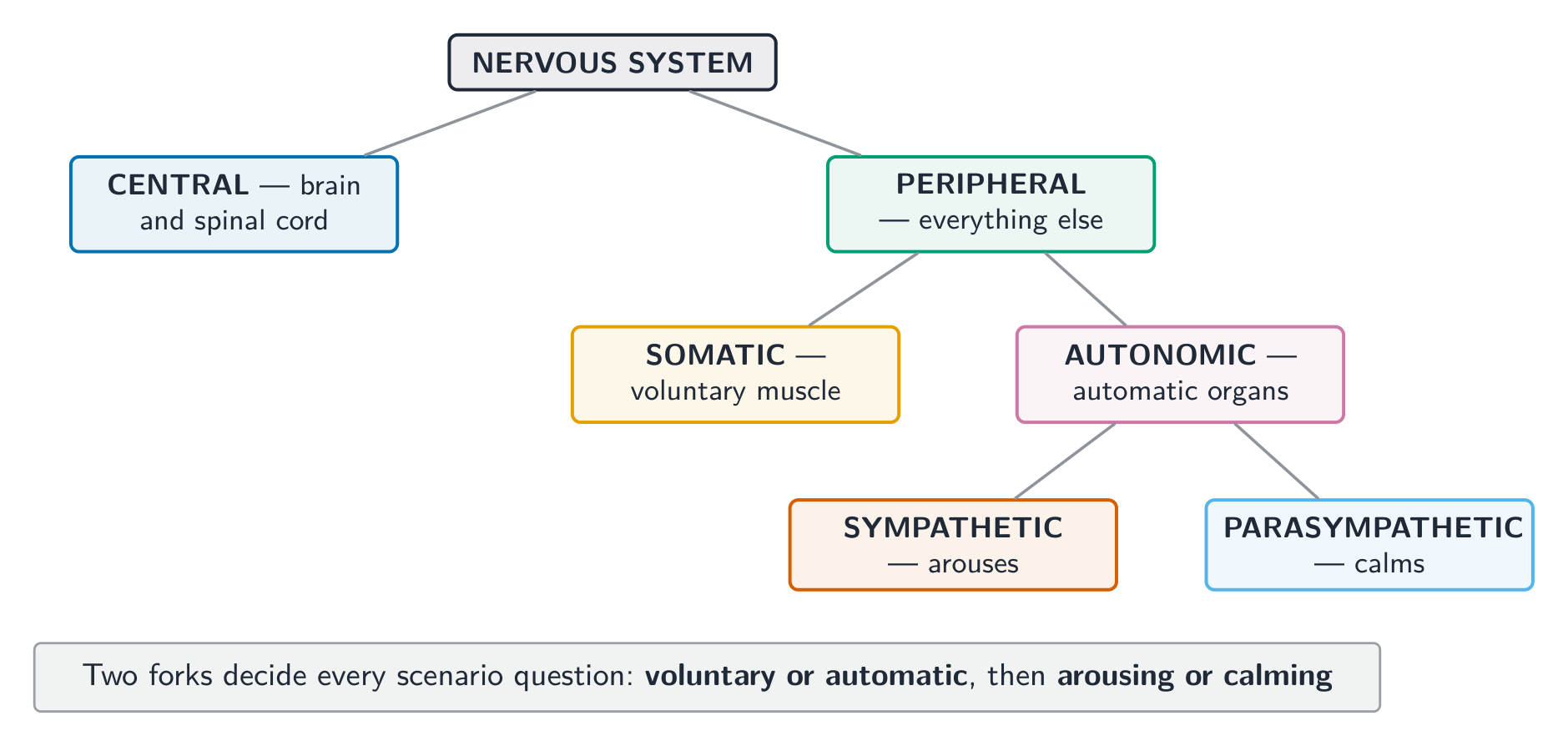
The nervous system 神经系统 carries information around the body. It has two main parts.

The central nervous system (CNS) 中枢神经系统 is the brain and the spinal cord 脊髓. It interacts with every process in the body.

The peripheral nervous system (PNS) 周围神经系统 relays messages between the CNS and the rest of the body. It divides again:

  • The somatic nervous system 躯体神经系统 controls voluntary 随意的 movement, such as raising your hand.
  • The autonomic nervous system 自主神经系统 controls involuntary 不随意的 processes, such as heartbeat and digestion. It has two branches that work against each other: the sympathetic nervous system 交感神经系统 prepares the body for action (the "fight or flight" response), and the parasympathetic nervous system 副交感神经系统 calms the body down afterwards.
עברית

המערכת העצבית מעבירה מידע בכל הגוף. יש לה שני חלקים עיקריים.

המערכת העצבית המרכזית (CNS) היא המוח וחוט השדרה. היא מתאימה לכל תהליך בגוף.

המערכת העצבית הפריפריאלית (PNS) מעבירה הודעות בין CNS לבין שאר הגוף. היא מחולקת שוב:

  • המערכת העצבית הגופנית שולטת בתנועה רצונית, כגון הרמת היד.
  • המערכת העצבית האוטונומית שולטת בתהליכים בלתי-רצוניים, כגון פעילות הלב והעיסה. יש לה שני ענפים הפועלים זה נגד זה: המערכת העצבית הסמפתית מכינה את הגוף לפעולה (תגובת "לחום או בריחה"), והמערכת העצבית הפרסמפתית מרגיעה את הגוף לאחר מכן.
שתי כריתות מחליטות על כל שאלת תרחיש: רצוני או אוטומטי, ואז מעורר או מרגיע
Explore · ⁨חקור⁩

Place each function on the nervous-system tree · ⁨הניחו כל פונקציה על עץ המערכת העצבית⁩

Two forks decide every scenario question: voluntary or automatic, then arousing or calming. · ⁨שתי מזלגות קובעות כל תרגיל מצבי: רצוני או אוטומטי, ולאחר מכן מעורר או מחקה.⁩

Vocabulary · ⁨מילון מונחים⁩ Train · ⁨אימון⁩
English עברית
behavior/bɪˈheɪvjə/ התנהגות
mental processes/ˈmentl ˈprəʊsesɪz/ תהליכים קוגניטיביים
Heredity/həˈredɪti/ יורשות
Environment/enˈvaɪrənmənt/ סביבה
Nature and nurture/ˈneɪtʃə ænd ˈnɜːtʃə/ גן וסביבה
evolutionary perspective/ɪvəˈluːʃənəri pəˈspektɪv/ זווית מבט אבולוציונית
Twin and adoption studies/twɪn ænd əˈdɒpʃn ˈstʌdiz/ מחקרים על תאומים ואימוץ
nervous system/ˈnɜːvəs ˈsɪstəm/ מערכת העצבים
central nervous system (CNS)/ˈsentrəl ˈnɜːvəs ˈsɪstəm/ מערכת העצבים המרכזית (CNS)
spinal cord/ˈspaɪnl kɔːd/ חוט השדרה
peripheral nervous system (PNS)/pəˈrɪfərəl ˈnɜːvəs ˈsɪstəm/ מערכת העצבים הפריפרית (PNS)
somatic nervous system/səˈmætɪk ˈnɜːvəs ˈsɪstəm/ מערכת העצבים הגוף
voluntary/ˈvɒləntəri/ רצוני
autonomic nervous system/ɔːtəˈnɒmɪk ˈnɜːvəs ˈsɪstəm/ מערכת העצבים האוטונומית
involuntary/ɪnˈvɒləntəri/ בלתי רצוני
sympathetic nervous system/ˌsɪmpəˈθetɪk ˈnɜːvəs ˈsɪstəm/ מערכת העצבים המושרית
parasympathetic nervous system/ˌpærəˌsɪmpəˈθetɪk ˈnɜːvəs ˈsɪstəm/ מערכת העצבים הפארא-מורידה
Neurons/ˈnjuːrɒnz/ נוירונים
Glial cells/ˈɡlaɪəl selz/ תאי גליה
dendrites/ˈdendraɪts/ דנדריתיות
cell body/sel ˈbɒdi/ גוף התא
axon/ˈæksɒn/ אלקסון
myelin sheath/ˈmaɪɪlɪn ʃiːθ/ מילוין
resting potential/ˈrestɪŋ pəˈtenʃl/ פוטנציאל מנוחה
threshold/ˈθreʃəʊld/ סף
depolarizes/diːˈpəʊlɑːraɪzɪz/ מתעורר (דפולריזציה)
all-or-none principle/ɔːl ɔː nɒn ˈprɪnsɪpl/ עקרון כול-או-ללא
refractory period/rɪˈfræktəri ˈpɪərɪəd/ תקופה בלתי תגובה
synapse/ˈsɪnæps/ סינפסה
reuptake/ˈruːpteɪk/ החזרה מחדש
multiple sclerosis/ˈmʌltɪpl skləˈrəʊsɪs/ סקלרוזיס רב-שכבתית
myasthenia gravis/ˌmaɪəsˈθiːnɪə ˈɡrævɪs/ מיאסטניה גרוויס
reflex arc/ˈriːfleks ɑːk/ קשת רפלקס
Sensory neurons/ˈsensəri ˈnjuːrɒnz/ נוירונים חושיים
interneurons/ˌɪntəˈnjuːrɒnz/ נוירונים ביניים
motor neurons/ˈməʊtə ˈnjuːrɒnz/ נוירונים מוטוריים
Neurotransmitters/ˈnjuːrətrænsmɪtəz/ נוירוטרנסמיטורים
excitatory/ekˈsɪtətəri/ גירויי
inhibitory/ɪnˈhɪbɪtəri/ מדכאי
dopamine/ˈdɒpəmiːn/ דופמין
serotonin/ˌserəˈtəʊnɪn/ סרוטונין
norepinephrine/ˈnɔːpaɪnfriːn/ נוראפינפרין
glutamate/ˈɡluːtəmeɪt/ גלוטמט
1.3

Neurons and How They Fire · ⁨נוירונים וכיצד הם משחררים אותות⁩

Syllabus · ⁨סיילבוס⁩
Learning ObjectiveEssential Knowledge

1.3.A
Explain how the structures and functions of typical neurons in the central nervous system affect behavior and mental processes.

  • 1.3.A.1 Two common types of neural cells in the brain are neurons (neural cells that transmit information) and glial cells (cells that provide structure, insulation, communication, and waste transport). These types of cells form the basis of the nervous system and are the building blocks of all behavior and mental processes.
  • 1.3.A.2 In the spinal cord, the reflex arc demonstrates how neurons within the central and peripheral nervous systems work together to respond to stimuli. Three types of neurons work together in the spinal cord to create a reflex arc: sensory neurons, motor neurons, and interneurons.

1.3.B
Explain how the basic process of neural transmission is related to behavior and mental processes.

  • 1.3.B.1 The process of neural transmission most commonly occurs in an orderly, systematic way and involves the all-or-none principle, depolarization, refractory period, resting potential, reuptake, and threshold. Disruptions to this process could lead to disorders such as multiple sclerosis or myasthenia gravis.
    • Exclusion Statement: The sodium-potassium pump is outside the scope of the AP Psychology Exam.
  • 1.3.B.2 Each neurotransmitter has specific function(s) related to behavior and mental processes, which may depend on the neurotransmitter’s location in the nervous system. Neurotransmitters generally communicate either excitatory (making an action potential more likely) or inhibitory (making an action potential less likely) messages. Neurotransmitters related to behavior and mental processes for study in AP Psychology are limited to dopamine, serotonin, norepinephrine, glutamate, GABA, endorphins, substance p, and acetylcholine.
    • Exclusion Statement: The AP Psychology Exam will only address the listed neurotransmitters in EK 1.3.B.2.
  • 1.3.B.3 Outside of the nervous system, hormones perform actions similar to neurotransmitters. Hormones related to behavior and mental processes for study in AP Psychology are limited to adrenaline, leptin, ghrelin, melatonin, and oxytocin.
    • Exclusion Statement: The AP Psychology Exam will only address the listed hormones in EK 1.3.B.3.
    • Exclusion Statement: Specific information about the glands of the endocrine system (with the exception of the pituitary gland as referenced in EK 1.4.A.4) is outside the scope of the AP Psychology Exam.

1.3.C
Explain how psychoactive drugs affect behavior and mental processes.

  • 1.3.C.1 Psychoactive drugs can influence neurotransmitter function in various ways throughout the neural communication process. Some act as agonists which encourage neural firing. Some act as antagonists which discourage neural firing. Some act as reuptake inhibitors which block the reabsorption of neurotransmitters back into the cell.
  • 1.3.C.2 Psychoactive drugs have psychological and physiological effects.
    • 1.3.C.2.i Stimulants, such as caffeine and cocaine, typically cause increased neural activity.
    • 1.3.C.2.ii Depressants, such as alcohol, typically cause decreased neural activity.
    • 1.3.C.2.iii Hallucinogens, such as marijuana, typically cause distortions in perception and/or cognition.
    • 1.3.C.2.iv Opioids, such as heroin, typically act as pain relievers.
  • 1.3.C.3 Psychoactive drug use can lead to tolerance and/or addiction. Addiction can create significant withdrawal symptoms if the psychoactive drugs are no longer consumed.

Source: College Board AP Course and Exam Description · ⁨מקור: תיאור הקורס והמבחן של College Board AP⁩

English

Two kinds of cell do the work. Neurons 神经元 transmit information. Glial cells 神经胶质细胞 provide structure, insulation, communication, and waste transport. Together they are the building blocks of all behavior and mental processes.

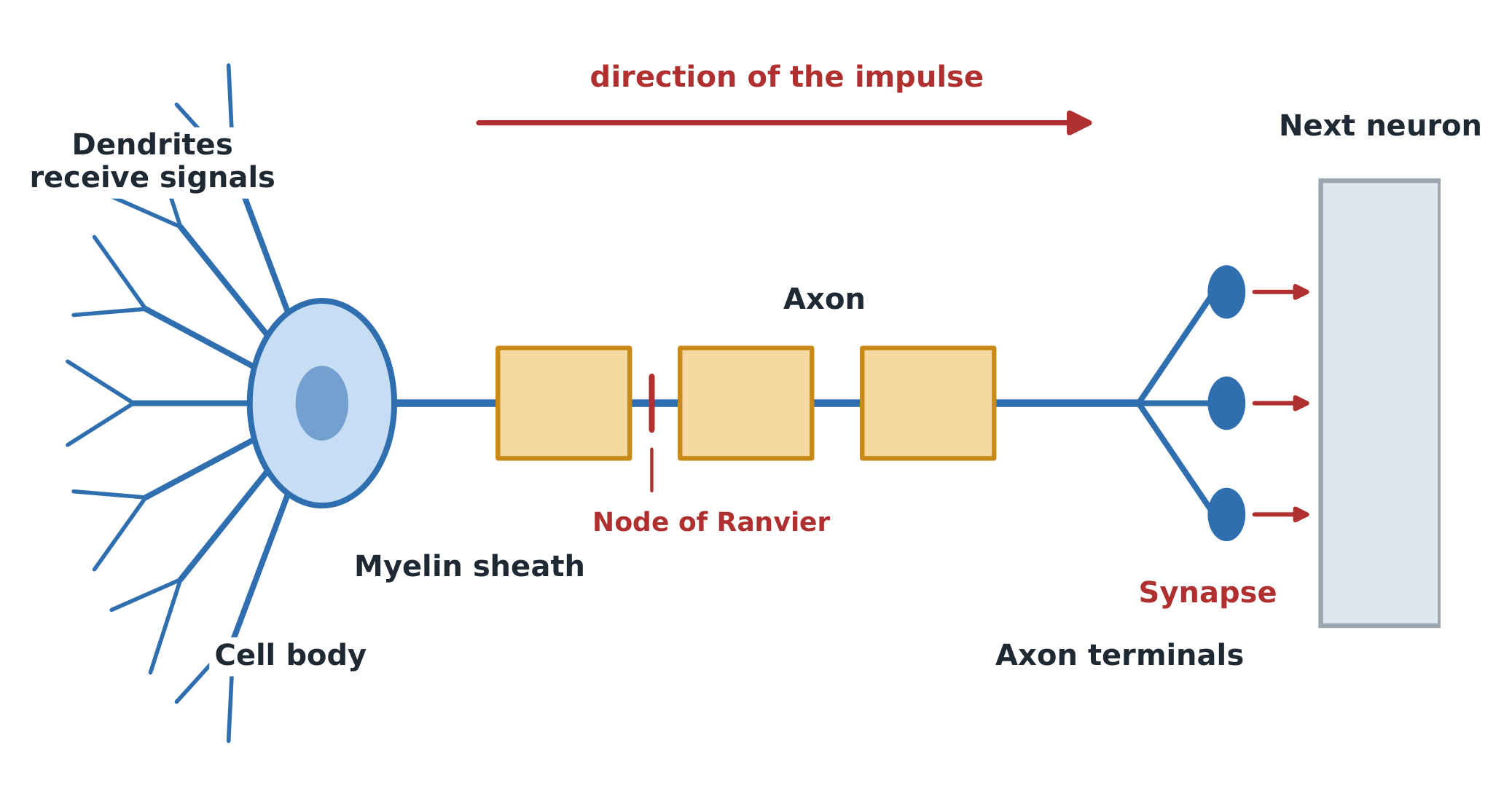
A neuron has dendrites 树突 that receive signals, a cell body 细胞体, and an axon 轴突 that carries the signal away. Many axons are wrapped in a myelin sheath 髓鞘, which speeds the signal up.

Neural transmission follows a set order:

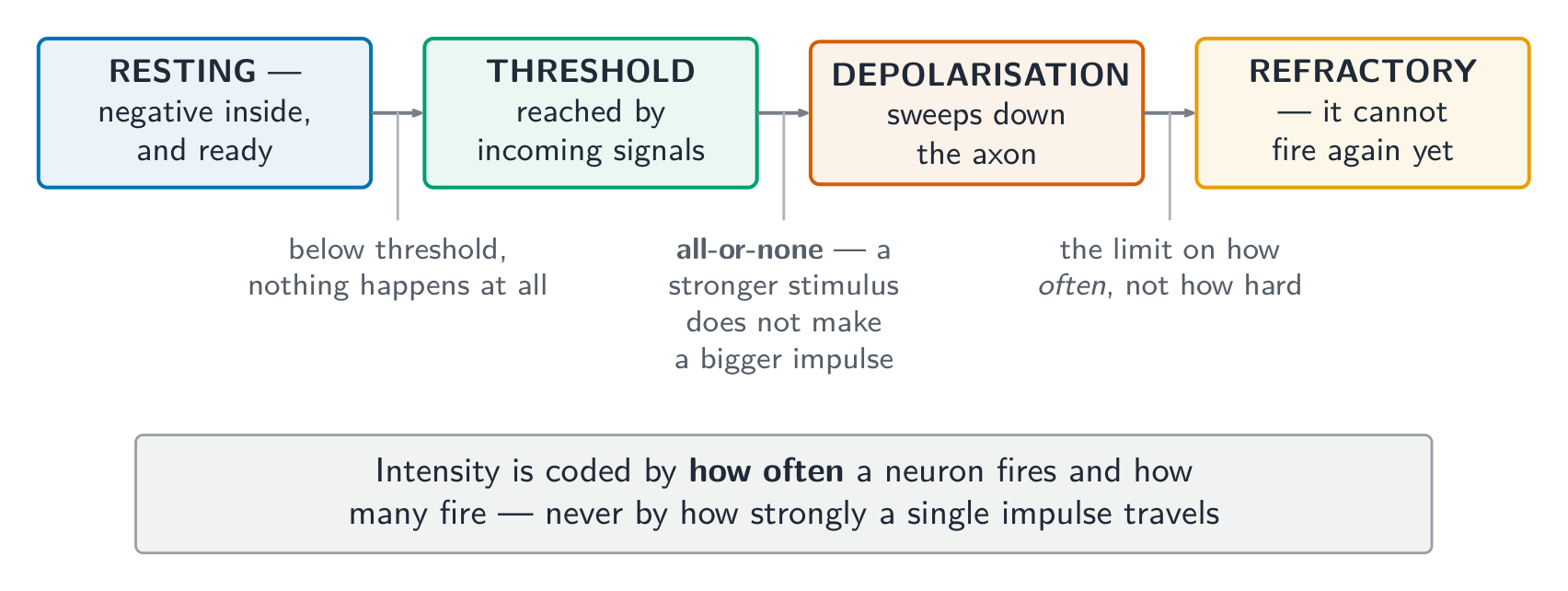
  • At rest the neuron holds a resting potential 静息电位, ready but not firing.
  • If incoming signals pass the threshold 阈限, the neuron depolarizes 去极化 and fires.
  • Firing follows the all-or-none principle 全或无原则: the neuron fires at full strength or not at all. A stronger stimulus makes it fire more often, not harder.
  • Straight after firing there is a refractory period 不应期 when the neuron cannot fire again.
  • At the synapse 突触, the gap between neurons, chemicals cross to the next cell. Leftover chemicals are taken back in a process called reuptake 再摄取.

Damage to this process can cause disorders such as multiple sclerosis 多发性硬化 or myasthenia gravis 重症肌无力.

In the spinal cord, the reflex arc 反射弧 shows the system working as a unit. Sensory neurons 感觉神经元 carry information in, interneurons 中间神经元 connect inside the cord, and motor neurons 运动神经元 carry the command out - all before the brain is involved.

עברית
תרשים מסומן של נוירון: דנדריות מקבלות אותות, גוף התא מאחד אותם, והאקסון ממשיך את הגירוי לסיבות
נוירון מקבל בדנדריות, משחרר לאורך האקסון, ומעביר את המסר חוצה הסינapse

שני סוגי תאים מבצעים את העבודה. נוירונים מעבירים מידע. תאי גליה מספקים מבנה, בידוד, תקשורת והובלת פסולת. יחד הם הבלוקים הבונים של כל התנהגות ותהליכים נפשיים.

לנוירון יש דנדריות המקבלות אותות, גוף תא, ואקסון שמעביר את האות הרחוק. אקסונים רבים עטופים במעטפת מיילין, המאיירה את האות.

העברת האותות הנוירלית עוקבת אחרי סדר קבוע:

  • במנוחה הנוירון שומר על פוטנציאל מנוחה, מוכן אך אינו משחרר.
  • אם האותות הנכנסות עוברות את הסף, הנוירון מתפולריזציה ומשחרר.
  • השחרור עוקב אחר עקרון הכל-או-לא: הנוירון משחרר בעוצמה מלאה או בכלל לא. גירוי חזק יותר גורם לו לשחרר יותר פעמים, ולא חזק יותר.
  • מיד לאחר השחרור יש תקופת מנוחה שבה הנוירון לא יכול לשחרר שוב.
  • בסינapse, הפער בין הנוירונים, חומרים חוצים לתא הבא. חומרים שנותרו נלקחים בחזרה בתהליך הנקרא מיחזור חוזר.

פגיעה בתהליך זה עלולה לגרום להפרעות כמו סקלרזה מרובה או מיאסטניה גראביס.

בעמוד השדרה, קשת הרפלקס מראה את המערכת פועלת כאחד. נוירונים סנסוריים מובילים מידע פנימה, נוירונים ביניים מתחברים בתוך העמוד, ונוירונים מוטוריים מובילים את ההוראה החוצה - הכל לפני מעורבות המוח.

עוצמה ממודה על ידי תדירות שחרורו של נוירון, לעולם לא על ידי עוצמת גירוי אחד
Explore · ⁨חקור⁩

Fire a neuron, step by step · ⁨להפעיל נוירון, צעד אחר צעד⁩

All-or-none: a stronger stimulus does not make a bigger impulse. Intensity is coded by how often, and by how many. · ⁨כל-או-שום: גירוי חזק יותר אינו יוצר פעולה מהירה גדולה יותר. עוצמה ממודה על ידי תדירות ועל ידי מספר.⁩

Watch lesson · ⁨צפה בשיעור⁩
1.3

Neurotransmitters, Hormones, and Drugs · ⁨נוירוטרנסמיטורים, הורמונים ותרופות⁩

Syllabus · ⁨סיילבוס⁩
Learning ObjectiveEssential Knowledge

1.3.A
Explain how the structures and functions of typical neurons in the central nervous system affect behavior and mental processes.

  • 1.3.A.1 Two common types of neural cells in the brain are neurons (neural cells that transmit information) and glial cells (cells that provide structure, insulation, communication, and waste transport). These types of cells form the basis of the nervous system and are the building blocks of all behavior and mental processes.
  • 1.3.A.2 In the spinal cord, the reflex arc demonstrates how neurons within the central and peripheral nervous systems work together to respond to stimuli. Three types of neurons work together in the spinal cord to create a reflex arc: sensory neurons, motor neurons, and interneurons.

1.3.B
Explain how the basic process of neural transmission is related to behavior and mental processes.

  • 1.3.B.1 The process of neural transmission most commonly occurs in an orderly, systematic way and involves the all-or-none principle, depolarization, refractory period, resting potential, reuptake, and threshold. Disruptions to this process could lead to disorders such as multiple sclerosis or myasthenia gravis.
    • Exclusion Statement: The sodium-potassium pump is outside the scope of the AP Psychology Exam.
  • 1.3.B.2 Each neurotransmitter has specific function(s) related to behavior and mental processes, which may depend on the neurotransmitter’s location in the nervous system. Neurotransmitters generally communicate either excitatory (making an action potential more likely) or inhibitory (making an action potential less likely) messages. Neurotransmitters related to behavior and mental processes for study in AP Psychology are limited to dopamine, serotonin, norepinephrine, glutamate, GABA, endorphins, substance p, and acetylcholine.
    • Exclusion Statement: The AP Psychology Exam will only address the listed neurotransmitters in EK 1.3.B.2.
  • 1.3.B.3 Outside of the nervous system, hormones perform actions similar to neurotransmitters. Hormones related to behavior and mental processes for study in AP Psychology are limited to adrenaline, leptin, ghrelin, melatonin, and oxytocin.
    • Exclusion Statement: The AP Psychology Exam will only address the listed hormones in EK 1.3.B.3.
    • Exclusion Statement: Specific information about the glands of the endocrine system (with the exception of the pituitary gland as referenced in EK 1.4.A.4) is outside the scope of the AP Psychology Exam.

1.3.C
Explain how psychoactive drugs affect behavior and mental processes.

  • 1.3.C.1 Psychoactive drugs can influence neurotransmitter function in various ways throughout the neural communication process. Some act as agonists which encourage neural firing. Some act as antagonists which discourage neural firing. Some act as reuptake inhibitors which block the reabsorption of neurotransmitters back into the cell.
  • 1.3.C.2 Psychoactive drugs have psychological and physiological effects.
    • 1.3.C.2.i Stimulants, such as caffeine and cocaine, typically cause increased neural activity.
    • 1.3.C.2.ii Depressants, such as alcohol, typically cause decreased neural activity.
    • 1.3.C.2.iii Hallucinogens, such as marijuana, typically cause distortions in perception and/or cognition.
    • 1.3.C.2.iv Opioids, such as heroin, typically act as pain relievers.
  • 1.3.C.3 Psychoactive drug use can lead to tolerance and/or addiction. Addiction can create significant withdrawal symptoms if the psychoactive drugs are no longer consumed.

Source: College Board AP Course and Exam Description · ⁨מקור: תיאור הקורס והמבחן של College Board AP⁩

English

Neurotransmitters 神经递质 are the chemicals that cross the synapse. Each has its own job, and the effect can depend on where in the nervous system it acts. A message is either excitatory 兴奋性的 (making firing more likely) or inhibitory 抑制性的 (making firing less likely).

Only these are examinable: dopamine 多巴胺 (reward and movement), serotonin 血清素 (mood and sleep), norepinephrine 去甲肾上腺素 (alertness), glutamate 谷氨酸 (the main excitatory transmitter), GABA γ-氨基丁酸 (the main inhibitory transmitter), endorphins 内啡肽 (pain relief), substance P P物质 (pain signalling), and acetylcholine 乙酰胆碱 (muscle movement and memory).

Hormones 激素 act outside the nervous system but do a similar job, travelling more slowly through the blood. Again only five are examinable: adrenaline 肾上腺素, leptin 瘦素 (reduces hunger), ghrelin 胃饥饿素 (increases hunger), melatonin 褪黑素 (sleep), and oxytocin 催产素 (bonding).

Psychoactive drugs 精神药物 change behavior by acting on neurotransmission in three ways:

  • An agonist 激动剂 encourages neural firing.
  • An antagonist 拮抗剂 discourages it.
  • A reuptake inhibitor 再摄取抑制剂 blocks reabsorption, leaving more transmitter in the synapse.

Drug categories: stimulants 兴奋剂 (caffeine, cocaine) increase neural activity; depressants 抑制剂 (alcohol) decrease it; hallucinogens 致幻剂 (marijuana) distort perception; opioids 阿片类药物 (heroin) relieve pain. Repeated use can lead to tolerance 耐受性, where more is needed for the same effect, and to addiction 成瘾, with withdrawal 戒断反应 symptoms when use stops.

עברית

נוירוטרנסמיטורים הם החומרים החוצים את הסינapse. לכל אחד מהם יש משימה משלו, והאפקט עשוי להיות תלוי במקום במערכת העצבים בו הוא פועל. המסר הוא או מגרה (הופך את השחרור לסביר יותר) או מעכב (הופך את השחרור לסביר פחות).

רק אלו נכללים בבחינות: דופמין (פרס ותנועה), סרוטונין (מצב רוח ושינה), נוראדרנלין (עירות), גלוטמט (הנוירוטרנסמיטר המגרה הראשי), GABA γ- (הנוירוטרנסמיטר המעכב הראשי), אנדרפינים (הקלה בכאב), חומר P P (אותות כאב), ואצטילכולין (תנועת שרירים וזיכרון).

הורמונים פועלים מחוץ למערכת העצבים אך מבצעים משימה דומה, נעים לאט יותר דרך הדם. שוב רק חמישה נכללים בבחינות: אדרנלין, לטין (מפחית רעב), גרלין (מגביר רעב), מלטונין (שינה), ואוקסיטוצין (קשרים).

תרופות פסיכו-אקטיביות משנות התנהגות על ידי פעולה על העברת האותות בשלושה דרכים:

  • אגוניסט מעודד פעילות נוירלית.
  • אנטגוניסט מדכא אותה.
  • מעכב ריסקרפציה חוסם ספיגה חוזרת, ומשאיר יותר מוליך בסינapse.

קטגוריות תרופות: מסרים (קפאין, קוקאין) מגדילים פעילות נוירלית; מדכאים (אלכוהול) מקטינים אותה; הALLUCINOGENS (מריחואנה) מעוותים תפיסה; אופיאידים (הרואין) מקלים על כאב. שימוש חוזר עלול להוביל ל-סבלנות, שבו נדרש כמות גדולה יותר לאותו אפקט, ול-תלות, עם תסמיני נסיגה כאשר השימוש נפסק.

Vocabulary · ⁨מילון מונחים⁩ Train · ⁨אימון⁩
English עברית
GABA/ˈɡɑːbə/ GABA
endorphins/enˈdɔːfɪnz/ אנדרופינים
substance P/ˈsʌbstəns piː/ חומר P
acetylcholine/ˈæsɪtɪlkəliːn/ אצטילכולין
Hormones/ˈhɔːməʊnz/ הורמונים
adrenaline/əˈdrenəlɪn/ אדרנלין
leptin/ˈleptɪn/ ליפטין
ghrelin/ˈdʒiːhrelɪn/ גרלין
melatonin/ˈmelətɒnɪn/ מלatonin
oxytocin/ˌɒksɪˈtɒsɪn/ אוקסיטוצין
Psychoactive drugs/ˌsaɪkəʊˈæktɪv drʌɡz/ חומרים פסיכו-אקטיביים
agonist/ˈæɡənɪst/ אגוניסט
antagonist/ænˈtæɡənɪst/ אנטגוניסט
reuptake inhibitor/ˈruːpteɪk ɪnˈhɪbɪtə/ מעכב ספיגה חוזרת
stimulants/ˈstɪmjʊlənts/ מפעילים
depressants/dɪˈpresənts/ מדכאים
hallucinogens/həˈluːsɪnədʒnz/ הולצינוגנים
opioids/ˈəʊpɪɔɪdz/ אופיאואידים
tolerance/ˈtɒlərəns/ סבילה
addiction/əˈdɪkʃn/ תלות
withdrawal/wɪθˈdrɔːl/ נסיגה
brain stem/breɪn stem/ גזע המוח
Watch lesson · ⁨צפה בשיעור⁩
1.4

The Brain · ⁨המוח⁩

Syllabus · ⁨סיילבוס⁩
English

Learning Objective 1.4.A: Explain how the structures and functions of the brain apply to behavior and mental processes.

  • 1.4.A.1 The brain stem (including the medulla) generally controls basic functioning such as breathing and heart rate.
  • 1.4.A.2 The reticular activating system and the brain’s reward center generally control alertness, some voluntary movement, eye movement, and some types of learning, cognition, and emotion.
  • 1.4.A.3 The cerebellum generally controls coordination of muscle movement, balance, and some forms of procedural learning.
  • 1.4.A.4 The cerebral cortex is divided into two hemispheres and includes the limbic system (thalamus, hypothalamus, pituitary gland, hippocampus, amygdala), corpus callosum, and the lobes of the cortex.
    • 1.4.A.4.i The occipital lobes generally control visual information processing and are located in the rear of the brain.
    • 1.4.A.4.ii The temporal lobes generally control auditory and linguistic processing and are located on the sides of the brain.
    • 1.4.A.4.iii The parietal lobes generally control association areas, which process and organize information, and the somatosensory cortex, which processes touch sensitivity. These lobes are located near the back crown of the brain.
    • 1.4.A.4.iv The frontal lobes, located just behind the forehead, generally control linguistic processing, higher-order thinking, and executive functioning, especially in the prefrontal cortex. The motor cortex is located at the rear of the frontal lobes and controls most types of skeletal movement.
  • 1.4.A.5 Split brain research, achieved by severing the corpus callosum (often a treatment for severe epilepsy), reveals that the right and left hemispheres of the brain may specialize in different activities and functions.
    • 1.4.A.5.i Areas of the brain that affect language are typically located in the left hemisphere and include Broca’s area (responsible for speech production) and Wernicke’s area (responsible for speech comprehension). Damage to these parts of the brain can lead to aphasia.
    • 1.4.A.5.ii Researchers test for cortex specialization with split-brain patients by showing information in each visual field, taking advantage of the brain’s contralateral hemispheric organization.
  • 1.4.A.6 Brain plasticity is the ability of the brain to rewire itself or modify or create new connections throughout development and generally allows for the function of a damaged part of the brain to be assumed by a different part of the brain.
  • 1.4.A.7 Research on the brain is done using scans (including EEG and fMRI), case studies, and surgical procedures (such as lesioning) to promote understanding of how the different structures of the brain work and how the brain functions together as a whole.
עברית

מטרות למידה 1.4.A: הסבר כיצד מבנים ותפקודי המוח חלים על התנהגות ותהליכים נפשיים.

  • 1.4.A.1 הגזע המוחי (כולל הנגיעה) שולט בדרך כלל בפונקציות בסיסיות כמו נשימה ודופק לב.
  • 1.4.A.2 מערכת ההפעלה הרטיקולרית ומרכז השכר במוח שולטים בדרך כלל בערנות, חלק מהתנועה הוולנטרית, תנועת העיניים וחלק מסוגי הלמידה, הקוגניציה והרגש.
  • 1.4.A.3 המוחון שולט בדרך כלל בקואורדינציה של תנועת שרירים, איזון ובסוגים מסוימים של לימודים פרוצדורליים.
  • 1.4.A.4 הקורטקס המוחי מחולק לשתי חצי כדורים וכולל את המערכת הלימבית (תalamus, היפותלמוס, בלוטת ההיפופיזה, היפוקמפוס, אמיגדלה), הגשר הקלולי ואיברי הקורטקס.
    • 1.4.A.4.i האיברים האוֹכִיּוֹת שולטים בדרך כלל בעיבוד מידע ויזואלי ונמצאים בגבול האחורי של המוח.
    • 1.4.A.4.ii האיברים הטמפורליים שולטים בדרך כלל בעיבוד אודיטורי ולשוני ונמצאים בצדדים של המוח.
    • 1.4.A.4.iii האיברים הפריטאלים שולטים בדרך כלל באזורי קישור, שעובדים מארגנים מידע, ובקורטקס סומטוסנסורי, שעובד רגישות מגע. איברים אלו נמצאים קרוב לקשת הגבולית של המוח.
    • 1.4.A.4.iv האיברים הפרונית, הנמצאים ממש מאחורי מצח, שולטים בדרך כלל בעיבוד לשוני, חשיבה ברמה גבוהה ותפקודים אקזקטיביים, במיוחד בקורטקס הפרפרונטי. הקורטקס המוטורי נמצא בגבול האחורי של האיברים הפרונים ושולט ברוב סוגי התנועת העצמות.
  • 1.4.A.5 מחקר על מוחות מפוצלים, שנעשה על ידי ניתוק הגשר הקלולי (לרוב טיפול לאפילפסיה חמורה), חושף שמערכות החצי כדור המוחי ימין ושמאל עשויות להתמחות בפעילויות ותפקודים שונים.
    • 1.4.A.5.i אזורים במוח המשפיעים על שפה נמצאים בדרך כלל בחצי הכדור השמאלי וכוללים את אזור ברוקה (האחראי על יצירת דיבור) ואזור וורניקה (האחראי על הבנת דיבור). פגיעה באזורים אלו במוח עלולה להוביל לאפאזיה.
    • 1.4.A.5.ii חוקרים בודקים התמחות בקורטקס אצל חולים עם מוחות מפוצלים על ידי הצגת מידע בכל שדה ראיה, תוך ניצול הארגון ההמיספרי הקונטרלאטרלי של המוח.
  • 1.4.A.6 גמישות מוחית היא יכולת המוח לחזור ארגון עצמו או לשנות וליצור קשרים חדשים לאורך התפתחות, ועלתה בדרך כלל לאפשרות לקבלת תפקוד של חלק פגוע במוח על ידי חלק אחר של המוח.
  • 1.4.A.7 מחקר על המוח נעשה באמצעות סריקות (כולל EEG ו-fMRI), מחקרי מקרה והליכים גופניים (כגון פגיעות) כדי לקדם הבנה כיצד מבנים שונים במוח עובדים וכיצד המוח פועל כאחד.

Source: College Board AP Course and Exam Description · ⁨מקור: תיאור הקורס והמבחן של College Board AP⁩

English

The brain is studied from the bottom up, because the lower structures handle the most basic jobs.

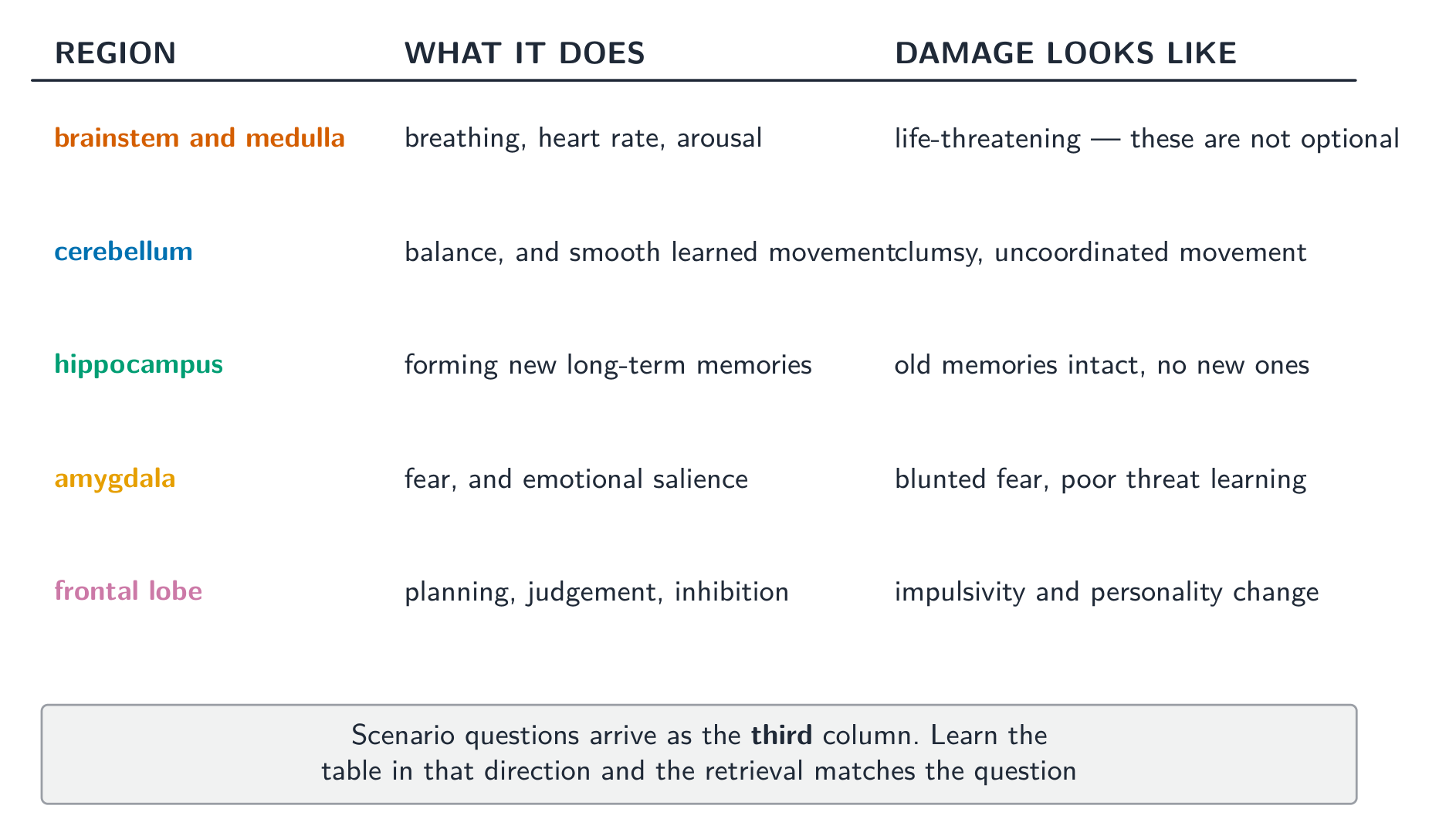
  • The brain stem 脑干, including the medulla 延髓, controls breathing and heart rate.
  • The reticular activating system 网状激活系统 controls alertness and arousal.
  • The cerebellum 小脑 controls coordination, balance, and some procedural learning 程序性学习.
  • The limbic system 边缘系统 sits inside the cerebral cortex and includes the thalamus 丘脑 (a relay station for the senses), the hypothalamus 下丘脑 (hunger, thirst, temperature), the pituitary gland 脑垂体, the hippocampus 海马体 (forming new memories), and the amygdala 杏仁核 (fear and emotion).

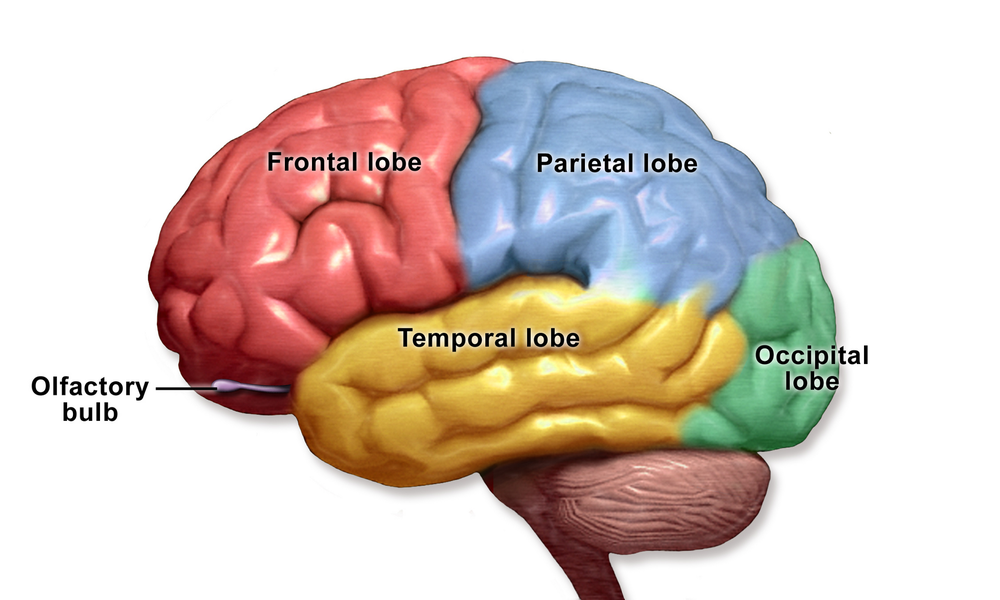
The cerebral cortex 大脑皮层 is divided into two hemispheres 半球 and four lobes: the occipital lobes 枕叶 process vision at the rear; the temporal lobes 颞叶 process hearing and language at the sides; the parietal lobes 顶叶 hold the somatosensory cortex 体感皮层 for touch; and the frontal lobes 额叶 handle higher-order thinking and executive function 执行功能.

Language sits mainly in the left hemisphere: Broca's area 布罗卡区 for speech production and Wernicke's area 韦尼克区 for comprehension.

Split-brain research 裂脑研究, done on patients whose corpus callosum 胼胝体 was cut to treat severe epilepsy, shows the two hemispheres can work independently. Researchers present information to one visual field 视野 at a time, because each field is processed by the opposite hemisphere.

Brain plasticity 大脑可塑性 is the brain's ability to rewire itself and form new connections, which supports recovery after damage. Research methods include EEG 脑电图 and fMRI 功能性磁共振成像 scans, case studies, and lesioning 损毁法.

עברית

המוח נחקר מהתחתית למעלה, מכיוון שמבנים תחתונים מטפלים במשימות הבסיסיות ביותר.

  • גזע המוח, הכולל את הגשר (medulla), שולט בנשימה ובקצב לב.
  • המערכת הרטיקולרית המפעילה שולטת ביערות ובגירוי.
  • המוח הקטן שולט בקואורדינציה, איזון ובסוג מסוים של למידה פרוצ'דורלית.
  • המערכת הלימבית ממוקמת בתוך הקורטקס המוחי וכוללת את התלאמוס (תחנת מעבר לחושים), את ההיפותרמוס (רעב, צמא, טמפרטורה), את בלוטת ההיפופיזה, את ההיפוקמפוס (יצירת זיכרונות חדשים) ואת האמיגדלה (פחד ותחושות).

הקורטקס המוחי מחולק לשתי חצאי כדור וארבעה לובות: הלובות העורפיים מעבדים ראיה באחור; הלובות החיציים מעבדים שמיעה ושפה בצדדים; הלובות הפאריוטליים מחזיקים את הקורטקס הסומטוסנסורי למגע; והלובות הקדמיים עוסקים בחשיבה גבוהה-דרגה ובפונקציה מבצעת.

שפה ממוקמת בעיקר בחצי הכדור השמאלי: אזור ברוקה לייצור דיבור ואזור ורניקה להבנה.

מחקר מוח מפוצל, שנעשה על חולים שבהם הגשר (corpus callosum) נחתך כדי לטפל באפילפסיה חמורה, מראה ששתי חצאי הכדור יכולות לפעול באופן עצמאי. חוקרים מציגים מידע בשדה ראייה אחד בכל פעם, מכיוון שכל שדה עובר עיבוד על ידי חצי הכדור הנגדי.

גמישות מוחית היא היכולת של המוח להישעבד את עצמו ולהיווצר קשרים חדשים, הדוממים התאוששות לאחר פגיעה. שיטות מחקר כוללות סריקי EEG וfMRI, מקרים בודדים ופגיעות (lesioning).

שאלות תרחיש נכנסות כעמודה השלישית - למד את הטבלה בכיוון זה
ארבעת הלובות של הקורטקס המוחי
Explore · ⁨חקור⁩

Match each deficit to the region · ⁨התאימו כל חיסור לאזור⁩

Scenario questions arrive as a deficit, so learn the table in that direction. · ⁨תרגילי מצב מגיעים כחיסור, לכן למדו את הטבלה בכיוון זה.⁩

Vocabulary · ⁨מילון מונחים⁩ Train · ⁨אימון⁩
English עברית
medulla/ˈmedʌlə/ עורקה
reticular activating system/reˈtɪkjʊlə ˈæktɪveɪtɪŋ ˈsɪstəm/ מערכת ההפעלה הרטיקולרית
cerebellum/ˌserɪˈbeləm/ מוח הקטן
procedural learning/prəˈsiːdʒərəl ˈlɜːnɪŋ/ למידה הליכתית
limbic system/ˈlɪmbɪk ˈsɪstəm/ מערכת הלימבית
thalamus/ˈθælæməs/ תאלמוס
hypothalamus/ˌhaɪpəʊˈθælæməs/ היפונית
pituitary gland/pɪˈtjuːɪtəri ɡlænd/ בלוטת היפופיזה
hippocampus/ˈhɪpəkæmpəs/ היפוקמפוס
amygdala/ˌæmɪɡˈdɑːlə/ מיgdala (אמידולה)
cerebral cortex/ˈserɪbrəl ˈkɔːteks/ קליפת המוח
hemispheres/ˈhemɪsfɪəz/ חצאי המוח
occipital lobes/ˈɒksɪpɪtl ləʊbz/ אונות עורפיים
temporal lobes/ˈtempərəl ləʊbz/ אונות לוחיים
parietal lobes/ˈpæraɪətl ləʊbz/ אונות קודקעיים
somatosensory cortex/ˈsɒmətəʊsənsəri ˈkɔːteks/ קורטיקס סומטוסנסורי
frontal lobes/ˈfrʌntl ləʊbz/ אונות קדמיים
executive function/eɡˈzekjuːtɪv ˈfʌŋkʃn/ תפקוד מנהיג
Broca's area/ˈbrəʊkəz ˈeərɪə/ אזור ברוקה
Wernicke's area/ˈwɜːnɪks ˈeərɪə/ אזור ורניקה
Split-brain research/splɪt breɪn rɪˈsɜːtʃ/ מחקר במוח מחולק
corpus callosum/ˈkɔːpəs ˈkælɒsəm/ גשר הקורפוס
visual field/ˈvɪʒuːəl fiːld/ שדה ראייה
Brain plasticity/breɪn plæˈstɪsɪti/ גמישות מוחית
EEG/ˌiː iː ˈdʒiː/ EEG
fMRI/ef ˌeˌmɑːˈraɪ/ fMRI
lesioning/ˈliːʒənɪŋ/ פגיעה
Consciousness/ˈkɒnʃəsnəs/ תודעה
1.5

Consciousness and Sleep · ⁨תודעה ושינה⁩

Syllabus · ⁨סיילבוס⁩
English

Learning Objective 1.5.A: Explain how the sleep/wake cycle affects behavior and mental processes throughout the day and night.

  • 1.5.A.1 Consciousness has varying levels of awareness of thoughts, feelings, behavior, and events in individuals’ internal and external worlds. Sleep and wakefulness are two types of consciousness.
  • 1.5.A.2 The sleep/wake cycle is a circadian rhythm, which in humans is about a 24-hour cycle. Jet lag and shift work are disruptions of the circadian rhythm.
  • 1.5.A.3 The stages of sleep are identified by their specific EEG patterns.
    • 1.5.A.3 .i NREM sleep occurs in Stages 1 through 3 and decreases in duration throughout the cycle. Hypnagogic sensations occur as one enters Initial Stage 1 sleep.
    • 1.5.A.3 .ii REM sleep is considered paradoxical because it produces waves similar to wakefulness, but the body is at its most relaxed. Dreaming typically occurs in REM sleep. The frequency of REM sleep typically increases as the cycle progresses. When deprived of REM sleep, REM rebound can occur.
  • 1.5.A.4 Theories regarding the structure and function of dreams include activation-synthesis and consolidation theory.
    • Exclusion Statement: The psychoanalytic theory of dreams is outside of the scope of the AP Psychology Exam.
  • 1.5.A.5 Memory consolidation and restoration are current theories about why sleep occurs. These theories suggest that sleep is useful for organizing and consolidating memories or restoring depleted resources used throughout a given day.
  • 1.5.A.6 Many disorders interrupt healthy sleep, and their effects on waking behavior and health vary. Sleep disruptions can affect physical and cognitive performance during wakefulness. Treating sleep disorders and following regular schedules for sleeping can improve waking performance and overall well-being. Disorders commonly studied in introductory psychology include insomnia, narcolepsy, REM sleep behavior disorder, sleep apnea, and somnambulism.
    • Exclusion Statement: The AP Psychology Exam will only address the listed disorders in EK 1.5.A.6.
עברית

מטרות למידה 1.5.A: הסבר כיצב מחזור השינה/ערנות משפיע על התנהגות ותהליכים נפשיים לאורך היום והלילה.

  • 1.5.A.1 מודעות כוללת רמות משתנות של תחושת מודעות למחשבות, רגשות, התנהגות ואירועים בעולם הפנימי והחיצוני של אנשים. שינה וערנות הן שני סוגים של מודעות.
  • 1.5.A.2 מחזור השינה/ערנות הוא קצב זמני-יומי, שבאדם הוא כמעגל של 24 שעות. דלדול זמן (Jet lag) ועבודה בתורות הם הפרעות בקצב הזמני-יומי.
  • 1.5.A.3 שלבי השינה מזוהים לפי דפוסי EEG הספציפיים שלהם.
    • 1.5.A.3 .i שינת NREM מתרחשת בשלבים 1 עד 3 ומתקצרת במשך מחזור השינה. תחושות היפנוגוגיות נוצרות כאשר אדם נכנס לשלב התחלתי 1 של שינה.
    • 1.5.A.3 .ii שינת REM נחשבת סותר-תוך כדי משום שהיא מייצרת גלים הדומים לשינה, אך הגוף נמצא ברמת הרפייה המקסימלית. חלומות מתרחשים בדרך כלל בשינת REM. התדירות של שינת REM עולה בדרך כלל ככל שהמחזור מתקדם. כאשר נחסר מאדם שינת REM, עשויה להתרחש "החזר ריבוי" של שינת REM.
  • 1.5.A.4 תיאוריות בנוגע למבנה ולפונקציה של חלומות כוללות את תיאוריית ההפעלה-סינתזה ותיאוריית הקיבוע.
    • הצהרת פסילה: התיאוריה הפסיכו-אנליטית של חלומות אינה נכללת בתחום הבחינה באפסייכולוגיה (AP Psychology Exam).
  • 1.5.A.5 קיבוע זיכרון ושחזור הם תיאוריות נוכחות לגבי סיבה לקיום השינה. תיאוריות אלו מציעות ששינה היא יעילה לארגון וקיבוע זיכרונות או לשחזור משאבים שנשחקו לאורך יום נתון.
  • 1.5.A.6 הפרעות רבות מפריעות לשינה בריאה, והשפעתן על התנהגות ובריאות בעירנות משתנות. הפרעות שינה יכולות להשפיע על ביצוע פיזי וקוגניטיבי בזמן עירנות. טיפול בהפרעות שינה ומעקב אחר טבלות שינה מסודרות יכולים לשפר את הביצוע בעירנות ואת הרווחיות הכללית. הפרעות הנלמדות באופן שגרתי בפסיכולוגיה מבואית כוללות: אובניה, נרקולפסיה, הפרעת התנהגות בשינת REM, אפnea שינה, ושינה הולכת (סומנומליה).
    • הצהרת פסילה: בחינת AP בסייכולוגיה תדון רק בהפרעות המפורטות בקוד EK 1.5.A.6.

Source: College Board AP Course and Exam Description · ⁨מקור: תיאור הקורס והמבחן של College Board AP⁩

English

Consciousness 意识 is awareness of internal and external events, and it varies in level.

The sleep/wake cycle is a circadian rhythm 昼夜节律 of about 24 hours. Jet lag 时差反应 and shift work disrupt it.

Sleep stages are identified by EEG patterns. NREM sleep 非快速眼动睡眠 covers stages 1 to 3; hypnagogic sensations 入睡幻觉 occur as you fall asleep. REM sleep 快速眼动睡眠 is called paradoxical sleep 异相睡眠 because the brain looks awake while the body is most relaxed, and most dreaming happens here.

Two examinable theories explain dreams: activation-synthesis theory 激活-综合理论 (the brain interprets random activity) and consolidation theory 巩固理论 (dreams reflect memory processing). Sleep itself is explained by memory consolidation 记忆巩固 and restoration 恢复 theories.

Note: the psychoanalytic theory of dreams is outside the exam's scope.

Sleep disorders disrupt waking behavior and health: insomnia 失眠, narcolepsy 发作性睡病, sleep apnea 睡眠呼吸暂停, somnambulism 梦游 (sleepwalking), and REM sleep behavior disorder 快速眼动睡眠行为障碍.

עברית

תודעה היא מודעות לאירועים פנימיים וחיצוניים, והיא משתנה ברמה.

מחזור השינה/עירות הוא קצב יומי-לילי (circadian rhythm) של כ-24 שעות. תזונת זמן ועבודה בסירוגין מפרעים אותו.

שלבי שינה מזוהים על ידי דפוסי EEG. שינת NREM מכסה את שלבים 1 עד 3; תחושות היפנוגוגיות מתרחשות בזמן שהיפול. שינת REM נקראת שינה פרדוקסלית מכיוון שהמוח נראה ער while הגוף רגוע ביותר, ורוב החלומות מתרחשים כאן.

שתי תיאוריות נבדקות מסבירות חלומות: תיאוריית ההפעלה והסינתזה – (המוח מפרש פעילות אקראית) ותיאוריית הייצוב (חלומות משקפים עיבוד זיכרון). השינה עצמה מסובה על ידי תיאוריית ייצוב הזיכרון ותיאוריית השחזור.

הערה: התיאוריה הפסיכו-אנליטית של חלומות אינה בתחום הבחינה.

הפרעות שינה מפריעות להתנהגות ולבריאות במצב ער: אלחוס, narcolepsy, אפנוea בשינה, סומנמליזם (הולך בשינה), והפרעת התנהגות בשלב REM.

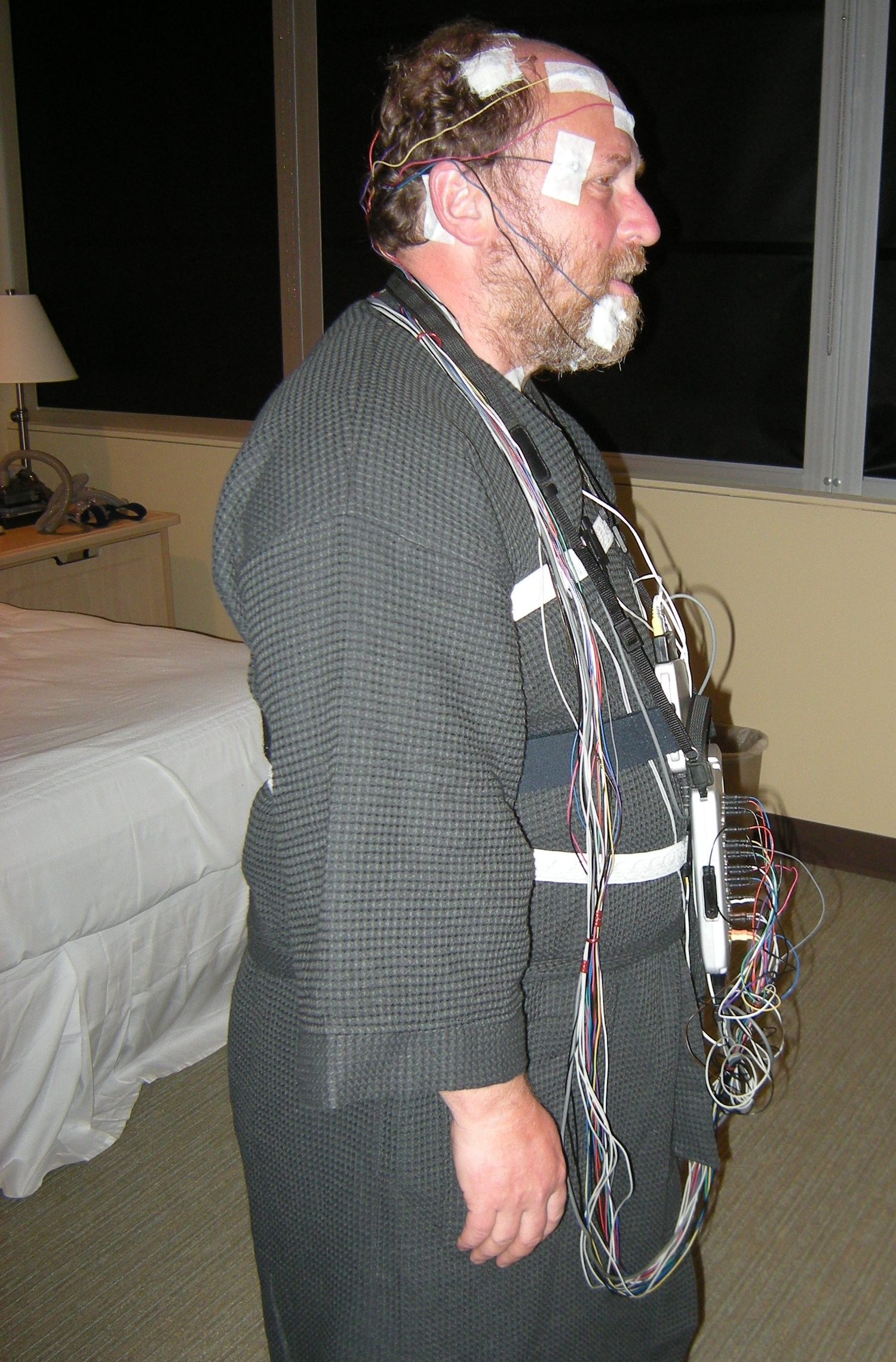
משתתף מחובר לרישום פוליסומנוגרפי - כך נראה המדידה בפועל של שלבי שינה
Vocabulary · ⁨מילון מונחים⁩ Train · ⁨אימון⁩
English עברית
circadian rhythm/sɜːˈkeɪdɪən ˈrɪðəm/ קצב יומי-לילי
Jet lag/dʒet læɡ/ הפרשי שעונים
NREM sleep/ˌenˈrem sliːp/ שינה ללא תנועת עיניים מהירה (NREM)
hypnagogic sensations/ˌhɪpnəˈɡɒɡɪk senˈseɪʃnz/ תחושות היפנוגוגיות
REM sleep/rem sliːp/ שינת REM
paradoxical sleep/ˌpærəˈdɒksɪkl sliːp/ שינה פארדוקסלית
activation-synthesis theory/ˌæktɪˈveɪʃn ˈsɪnθəsɪs ˈθɪəri/ תיאוריית האקטיבציה-סינתזה
consolidation theory/kənˌsɒlɪˈdeɪʃn ˈθɪəri/ תיאוריית החיזוק
memory consolidation/ˈmeməri kənˌsɒlɪˈdeɪʃn/ יישור זיכרון
restoration/ˌrestəˈreɪʃn/ שחזור
insomnia/ɪnˈsɒmnɪə/ חוסר שינה
narcolepsy/ˈnɑːkəʊlepsi/ נרקולפסיה
sleep apnea/sliːp əpˈnɪə/ אפnea שינה
somnambulism/sɒmˈnæmbjuːlɪzəm/ מרוחליה
REM sleep behavior disorder/rem sliːp bɪˈheɪvjə dɪˈsɔːdə/ הפרעת התנהגות בשינה REM
Sensation/senˈseɪʃn/ תחושה
transducing/trænsˈdjuːsɪŋ/ טרנסדוקציה
absolute threshold/ˈæbsəluːt ˈθreʃəʊld/ סף מוחלט
just-noticeable difference/dʒʌst ˈnəʊtɪsəbl ˈdɪfrəns/ הפרש גרידה מינימלי
Sensory adaptation/ˈsensəri ˌædæpˈteɪʃn/ הסתגלות חושית
Sensory interaction/ˈsensəri ˌɪntəˈrækʃn/ אינטראקציה חושית
Synesthesia/ˌsaɪnɪsˈθiːzɪə/ סנסטזיה
retina/ˈretɪnə/ רטינה
lens/lenz/ עדשה
visual accommodation/ˈvɪʒuːəl əˌkɒməˈdeɪʃn/ הסתגלות ויזואלית
nearsightedness/ˈnɪəsaɪtɪdnəs/ קוצר ראייה
farsightedness/ˈfɑːsaɪtɪdnəs/ קוצר ראייה מרחוק
Rods/rɒdz/ בצבי ראייה
Cones/kəʊnz/ קונות
fovea/ˈfəʊvɪə/ חריץ המרכזי
trichromatic theory/ˌtrɪkrəʊˈmætɪk ˈθɪəri/ תאוריה תלת-צבעונית
opponent-process theory/əˈpəʊnənt ˈprəʊses ˈθɪəri/ תאוריית התהליך המתנגד
afterimages/ˈæftərɪmɪdʒɪz/ דימויים אחריים
prosopagnosia/ˌprɒsəpəɡˈnəʊzɪə/ פרסופאגנוזיה
pitch/pɪtʃ/ גובה צליל
loudness/ˈlaʊdnəs/ עוצמת קול
place theory/pleɪs ˈθɪəri/ תורת המיקום
volley theory/ˈvɒli ˈθɪəri/ תורת הגל
frequency theory/ˈfriːkwənsi ˈθɪəri/ תורת התדר
Sound localization/saʊnd ˌləʊkəlaɪˈzeɪʃn/ מיקום קול
conduction deafness/kənˈdʌkʃn ˈdefnəs/ עיוורון הולכתי
sensorineural deafness/ˈsensɔːraɪnjuːrəl ˈdefnəs/ עיוורון חושי-עצבי
Olfaction/ɒlˈfækʃn/ ריחנות
Gustation/ɡʌˈsteɪʃn/ טעם
umami/juːˈmɑːmi/ אומאמי
oleogustus/ˈəʊləɡʌstəs/ אוליאוגוסטוס (טעם שומני)
gate control theory/ɡeɪt kənˈtrəʊl ˈθɪəri/ תורת השער
phantom limb/ˈfæntəm lɪm/ גוף פנטומי
vestibular sense/veˈstɪbjʊlə sens/ חוש השרות
semicircular canals/ˌsemɪˈsɜːkjʊlə kəˈnælz/ תעלות חצי-מעגליות
kinesthesis/ˈkaɪnsθəsɪs/ קינסתיזיה
1.6

Sensation · ⁨תחושה⁩

Syllabus · ⁨סיילבוס⁩
Learning ObjectiveEssential Knowledge

1.6.A
Explain how the process of sensation is related to behavior and mental processes.

  • 1.6.A.1 Sensation is the process of detecting information from the environment that meets a certain threshold and transducing stimuli into neurochemical messages for processing (perception) in the brain. The absolute threshold occurs when a stimulus can be detected at least 50% of the time.
  • 1.6.A.2 Detection of change in stimuli or diminished sensitivity to stimuli can be explained by the just-noticeable difference and sensory adaptation. Weber’s law describes the degree to which stimuli need to be different for the difference to be detected.
  • 1.6.A.3 The sensory systems constantly work together in a process called sensory interaction. Synesthesia is an experience of sensation in which one system of sensation is experienced through another.

1.6.B
Explain how the structures and functions of the visual sensory system relate to behavior and mental processes.

  • 1.6.B.1 The retina is the photosensitive surface at the back of the eye. Cells in the retina capture visual information that is transduced to the brain for processing. Evidence of incomplete images captured by the retina is demonstrated by the presence of the blind spot, where the visual nerve exits the eye. The brain fills in the gaps in the incomplete retinal images to perceive a relatively complete picture of the world.
  • 1.6.B.2 Visual stimuli are focused onto the retina by the lens via a process called accommodation. When this process is altered, nearsightedness or farsightedness can result.
  • 1.6.B.3 Cells that lie in the periphery of the eye and detect shapes and movement, but not color, are called rods. These cells are mainly activated in low-light environments. These cells play a role in light and dark adaptation.
  • 1.6.B.4 Color vision is explained by both the trichromatic theory and the opponent-process theory.
    • 1.6.B.4.i Photoreceptor cells located in the fovea of the eye that process color and detail are called cones. Researchers have identified blue (detecting short wavelengths), green (detecting medium wavelengths) and red (detecting long wavelengths) cones in the retina.
    • 1.6.B.4.ii Afterimages result when certain ganglion cells in the retina are activated while others are not. The ganglion cells involved in this opponent process are red/green, blue/ yellow/ and black/white.
    • 1.6.B.4.iii Color vision deficiency involves damage or irregularities to one or more cones or ganglion cells (red/green, blue/ yellow). Color vision deficiency includes dichromatism or monochromatism.
  • 1.6.B.5 Damage to parts of the brain responsible for vision (mainly the occipital lobes) can result in disorders such as prosopagnosia (face blindness) and blindsight.

1.6.C
Explain how the structures and functions of the auditory sensory system relate to behavior and mental processes.

  • 1.6.C.1 Sound occurs through the movement of air molecules at different wavelengths (called pitch) and amplitudes (called loudness).
  • 1.6.C.2 Theories that help explain pitch perception include place theory, volley theory, and frequency theory.
  • 1.6.C.3 Sound localization describes how we identify where sounds in our environment are coming from.
  • 1.6.C.4 Hearing difficulties can result from aging and various kinds of damage to auditory structures. Types of hearing loss include conduction deafness and sensorineural deafness.

1.6.D
Explain how the structures and functions of the chemical sensory systems relate to behavior and mental processes.

  • 1.6.D.1 Structures in the nose and brain process and/ or transduce olfactory stimuli. Smell is the only sense not processed first in the thalamus of the brain. Pheromones produce chemical messages for the olfactory system.
  • 1.6.D.2 Gustation is the sense of taste, and types of tastes include sweet, sour, salty, bitter, umami, and oleogustus.
  • 1.6.D.3 Structures in the tongue, mouth, and brain process and/or transduce basic tastes. The number of taste receptors on the tongue is related to how sensitive people are to tastes, classifying them as supertasters, medium tasters, or nontasters.
  • 1.6.D.4 The chemical senses interact to create the sensation of taste. Without the sense of smell, taste sensations are either muted or not experienced.

1.6.E
Explain how the structures and functions of the touch sensory system relate to behavior and mental processes.

  • 1.6.E.1 Structures within the skin and brain process and/or transduce touch stimuli. The sensation of “hot” is produced by the activation of warm and cold receptors in the skin.

1.6.F
Explain how the structures and functions of the pain sensory system relate to behavior and mental processes.

  • 1.6.F.1 Pain is processed both in the body and in the brain. Gate control theory is one attempt to describe the complexities of pain. Phantom limb sensation occurs when people who have lost limbs report sensation or pain where the limb used to be.

1.6.G
Explain how the structures and functions that maintain balance (vestibular) and body movement (kinesthetic) relate to behavior and mental processes.

  • 1.6.G.1 The vestibular sense controls balance and is primarily detected by the semicircular canals and structures in the brain.
  • 1.6.G.2 Kinesthesis the sense of one’s body movement. Kinesthesis allows the body to move in coordinated ways without having to look at the various parts of the body as it moves.

Source: College Board AP Course and Exam Description · ⁨מקור: תיאור הקורס והמבחן של College Board AP⁩

English

Sensation 感觉 is detecting information from the environment and transducing 转导 it into neural signals the brain can use. Detection needs a certain absolute threshold 绝对阈限.

  • The just-noticeable difference 最小可觉差 is the smallest change a person can detect.
  • Sensory adaptation 感觉适应 is reduced sensitivity to an unchanging stimulus - you stop noticing a smell.
  • Sensory interaction 感觉相互作用 means the senses work together. Synesthesia 联觉 is when one sense triggers another.

Vision. Light is focused onto the retina 视网膜 by the lens 晶状体 changing shape, a process called visual accommodation 视觉调节; when this fails the result is nearsightedness 近视 or farsightedness 远视. Rods 视杆细胞 lie in the periphery and detect shape and movement in low light. Cones 视锥细胞 sit in the fovea 中央凹 and detect colour and detail. Colour vision needs two theories: trichromatic theory 三色理论 (blue, green and red cones) and opponent-process theory 对立过程理论, which explains afterimages 后像. Damage to the occipital lobes can cause prosopagnosia 面孔失认症, or face blindness.

Hearing. Sound is air movement; wavelength gives pitch 音高 and amplitude gives loudness 响度. Pitch perception is explained by place theory 位置理论, volley theory 齐射理论, and frequency theory 频率理论. Sound localization 声源定位 tells us where a sound comes from. Hearing loss may be conduction deafness 传导性耳聋 or sensorineural deafness 感音神经性耳聋.

The chemical senses. Olfaction 嗅觉 is the only sense not relayed first through the thalamus. Gustation 味觉 covers sweet, sour, salty, bitter, umami 鲜味, and oleogustus 脂味. The two interact: without smell, taste is muted.

Touch, pain, and body position. Skin receptors transduce touch; "hot" comes from warm and cold receptors firing together. Pain is processed in body and brain, and gate control theory 闸门控制理论 explains why attention changes how much it hurts; phantom limb 幻肢 sensations show the brain's role. The vestibular sense 前庭觉 controls balance through the semicircular canals 半规管, and kinesthesis 动觉 is the sense of body movement.

Worked example (a real AP exam question). The 2025 Article Analysis Question asked students to "Identify the research method used in the study" and then to "Explain the extent to which the research findings may or may not be generalizable using specific and relevant evidence from the study." A full-mark answer to the second part names the limitation and ties it to evidence: "The findings may not generalize widely because participants were undergraduate students at one university, so the sample was not representative of the general population." Notice the shape: Explain needs a claim plus the evidence behind it. Naming the method alone answers part A, not part E.

עברית

תחושה היא גילוי מידע מהסביבה והמרתו ל אותות נוירונים שהמוח יכול להשתמש בהם. הגילוי דורש סף מוחלט מסוים.

  • ההבדל המרגיש הוא השינוי הקטן ביותר שניתן לגלות.
  • הסתגלות קוגניטיבית היא ירידה רגישותות לגירעון בלתי משתנה - אתה מפסיק להבחין בריח.
  • אינטראקציה קוגניטיבית משמעותה שהחושיים עובדים יחד. סינסתזיה היא מצב שבו חוש אחד מגרה חוש אחר.

ראייה. האור מתמקד ברטינה על ידי עדשה המשנה צורה, תהליך הנקרא הסתגלות ראייתית; כאשר זה נכשל התוצאה היא קוצר ראייה או הרחק ראייה. בלוטות נמצאות בקצה ומזהות צורה ותנועה באור נמוך. קונות יושבים בפיובה ומזהים צבע ועוד. ראיית צבע דורשת שתי תיאוריות: תיאוריה טריכרומטית (קונות כחולים, ירוקים ואדומים) ותיאוריית העיבוד המתנגד, שמסבירה צללים אחריים. נזק לקוטעי העורף יכול לגרום לפרוסופאגוזיה, או עיוורון לפנים.

שמיעה. קול הוא תנועת אוויר; אורך גל נותן גובה קול וגודל גל נותן עוצמת קול. תפיסת גובה קול מסובה על ידי תיאוריית המקום, תיאוריית הווליי, ותיאוריית התדר. מיקום קול אומר לנו מאיפה קול מגיע. אובדן שמיעה עשוי להיות עיוורון הולכה או עיוורון סנסורי-נוירוני.

החוש הכימי. חוש הריח הוא החוש היחיד שאינו מעביר מידע ראשונית דרך התיalamus. חוש הטעם מכסה מתוק, חמוץ, מלוח, מר, אומאמי, ואולאוגוסטוס. שני החושים משפיעים זה על זה: ללא ריח, הטעם משתמע.

מגע, כאב ותנועת גוף. קולטני העורף ממירים מגע; "חם" נוצר מפיצוץ סימולטאני של קולטני חום וקר. כאב מעובד בגוף ובמוח, ותיאוריית השער מסבירה מדוע קשב משנה את התחושה בכאב; תחושות גוף פנטומי מראות את תפקיד המוח. חוש הווסטיבולרי שולט באיזון דרך תעלות חצי-מעגליות, וקינשסטזיה היא חוש תנועת הגוף.

דוגמה מפורטת (שאלה אמיתית מבחן AP). שאלת ניתוח המאמר לשנת 2025 ביקשה מהתלמידים ל*"זיהות את שיטת המחקר בשימוש במחקר"* ולאחר מכן ל*"הסביר עד כמה ממצאי המחקר עשויים או לא עשויים להיות כלליים, בעזרת עדפות ספציפיות ורלוונטיות מהמחקר."*. תשובה מלאה לנקודה השנייה מציין את המגבלה וקושר אותה לעדות: "הממצאים עשויים שלא להתכלל רחוב כי המשתתפים היו סטודנטים לתואר ראשון באוניברסיטה אחת, ולכן הדוגמה אינה מייצגת את האוכלוסייה הכללית.". שימו לב לצורה: הסבר דורש טענה בנוסף לעדות שעומדת מאחוריה. זיהוי השיטה לבדה משיב על חלק A, אך לא על חלק E.

Watch lesson · ⁨צפה בשיעור⁩
1.6

Exam tips · ⁨טיפים לבחינות⁩

English
  • Learn only the listed neurotransmitters and hormones; the exam will not ask about others, and the endocrine glands are out of scope apart from the pituitary.
  • Keep sensation separate from perception: sensation is detecting and transducing, perception is interpreting (Unit 2).
  • The all-or-none principle means intensity is coded by how often a neuron fires, never by how strongly.
  • Match structure to job before you write: hippocampus forms memories, amygdala handles fear, cerebellum coordinates movement.
  • Sympathetic arouses, parasympathetic calms. If a question describes a racing heart, name the sympathetic branch.
  • Say what a scan can and cannot show. fMRI shows activity over time; EEG shows electrical patterns and identifies sleep stages.
עברית
  • למדו רק את הנוירוטרנסמיטורים וההורמונים הרשומים; הבחינה לא תשאל על אחרים, והבלוטות האנדוקריניות מחוץ לתחום פרט לבלוטת היפופיזה.
  • שמרו על הפרדה בין תחושה לתפיסה: תחושה היא גילוי והמרה, תפיסה היא פרשנות (יחידה 2).
  • עקרון הכל או כלום אומר שעוצמה מוכתבת על ידי כמה פעמים נוירון פולט, לעולם לא כמה חזק.
  • התאימו מבנה לתפקיד לפני הכתיבה: היפוקמפוס יוצר זיכרונות, האמיגדלה מטפלת בחשש, המוח הקטן מקדם תנועה.
  • סימפתטי מעורר, פרा-סימפתטי מרגיע. אם שאלה מתארת לב דופק, ציינו את הענף הסימפתטי.
  • אמרו מה סריקה יכולה ולא יכולה להראות. fMRI מראה פעילות לאורך זמן; EEG מראה דפוסים חשמליים ומזהה שלבי שינה.

Interactive lessons on this topic · ⁨שיעורים אינטראקטיביים בנושא זה⁩

Work through it step by step, with instant-check exercises. · ⁨לעבור על הדברים צעד אחר צעד, עם תרגילים לבדיקה מיידית.⁩

Past Papers · ⁨מבחני עבר⁩

More topics in AP Psychology · ⁨פסיכולוגיה - AP⁩ · ⁨נושאים נוספים בAP Psychology · ⁨פסיכולוגיה - AP⁩⁩

Log in or create account · ⁨היכנס או צור חשבון⁩

IGCSE, A-Level & AP