Four Ways to Live on a Continent
Introduit| English | Sens |
|---|---|
| nomadic | Moving from place to place with the seasons rather than living in one permanent settlement. |
| mixed economy/mɪkst ɪˈkɒnəmi/ | An economy combining market allocation and private ownership with government intervention and public provision. |
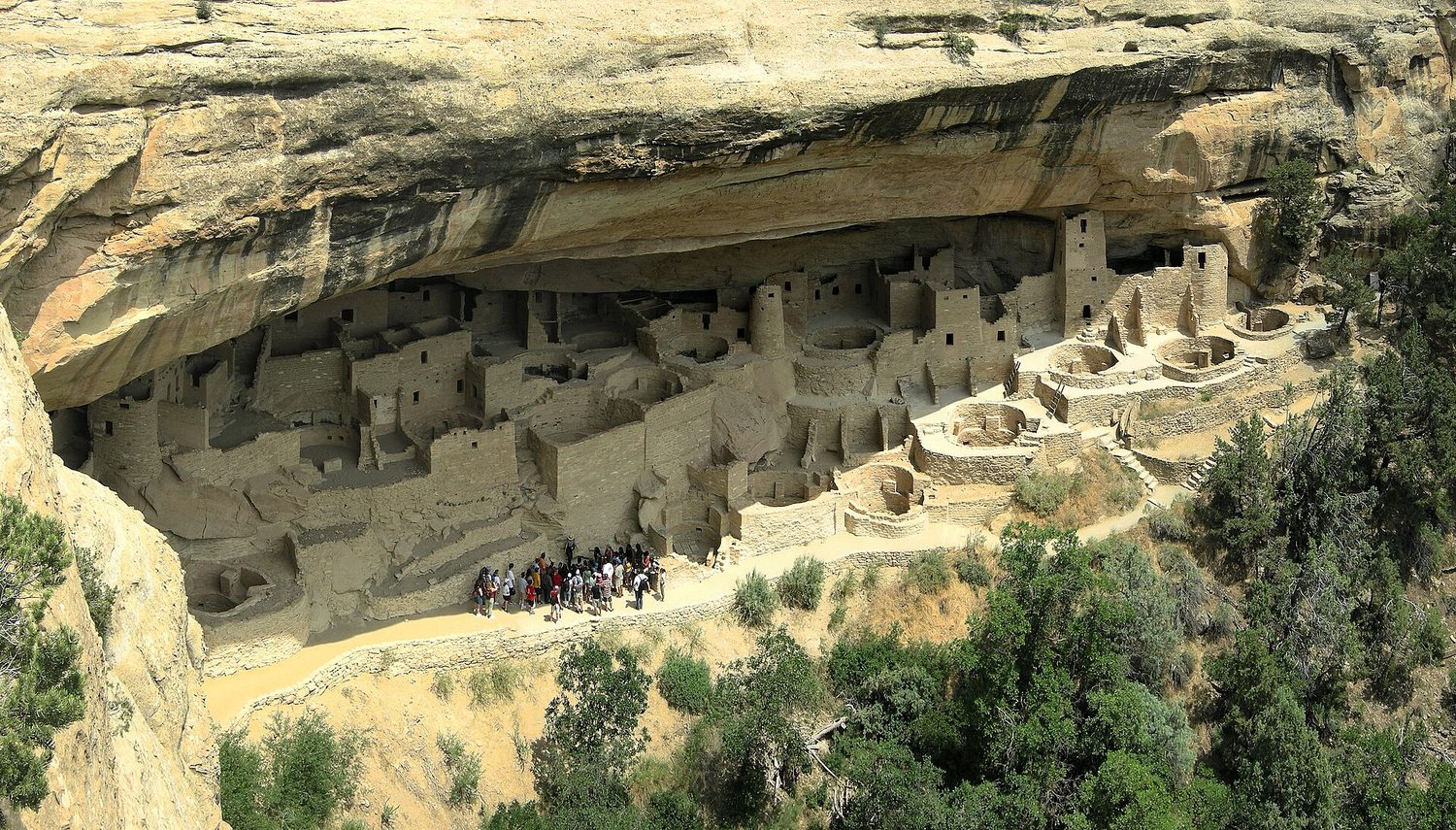
A palace in a cliff, about 1200
- Around 1200, Ancestral Puebloan families at Mesa Verde, in today's Colorado, built Cliff Palace under a sandstone overhang — about 150 rooms and 23 round ceremonial rooms called kivas. They farmed maize, beans and squash on the mesa above. By about 1300, after a long drought, they had left and moved south.
- Before 1492, North American peoples built very different societies, shaped by the environments they lived in.
Why did people leave Mesa Verde around 1300?
Difficulté 1/5 · 100 pièces + un petit bonus lors de la première réussite aujourd'hui
Farming depended on water.
Maize changed the Southwest
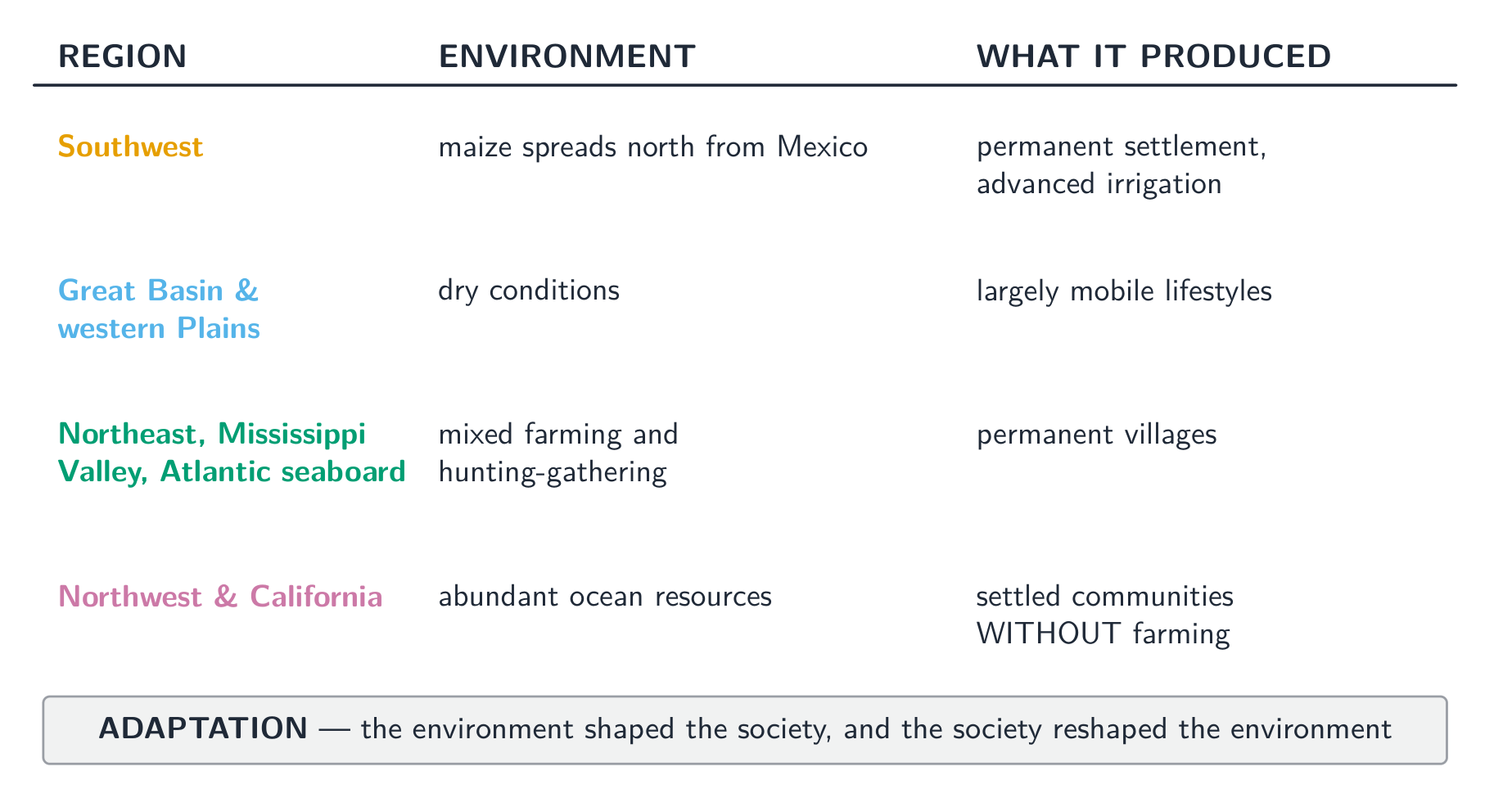
- Maize farming spread north from Mexico. In the dry Southwest, Pueblo peoples built irrigation channels and permanent towns of stone and adobe.
- Farming produced food surpluses, which supported larger populations and more complex societies.
Maize farming supported larger populations in the Southwest.
Difficulté 1/5 · 100 pièces + un petit bonus lors de la première réussite aujourd'hui
Surpluses supported towns.
Dry lands produced mobility
- In the Great Basin and on the Great Plains, water and farmland were scarce. Peoples moved with the seasons, hunting bison and gathering plants.
- They lived in small groups and carried their homes with them — a nomadic 游牧的 way of life.
Which regional pattern?
Sort each description into the CED's four regions.
Worked example: villages in the Northeast
- Environment: forests, rivers and fertile soil, with cold winters.
- Economy: a mixed economy 混合经济 of farming (women grew maize, beans and squash), hunting and fishing (mostly men).
- Society: the Haudenosaunee (Iroquois) lived in longhouses in permanent villages, and five nations formed a confederacy with a shared council.
Which describe the Haudenosaunee?
Difficulté 2/5 · 140 pièces + un petit bonus lors de la première réussite aujourd'hui
The Northeast pattern.
The Northwest coast
- Along the Pacific coast, rivers full of salmon and forests of cedar supported large permanent villages without farming.
- Wealthy families held potlatches — feasts where they gave away goods to show their status.
Match each region to its way of life.
Difficulté 2/5 · 140 pièces + un petit bonus lors de la première réussite aujourd'hui
Environment shaped society.
Comparing the regions
- Where farming or rich fishing produced surpluses, people settled in villages and towns; where resources were scattered, people moved.
- All regions traded with each other across long distances.
Where did people usually settle in villages?
Difficulté 1/5 · 100 pièces + un petit bonus lors de la première réussite aujourd'hui
Surplus allowed settlement.
Do not describe Native Americans as one group. Hundreds of nations, with different languages, economies and governments, lived in North America before 1492.
Before 1492, Native Americans formed one group with one way of life.
Difficulté 1/5 · 100 pièces + un petit bonus lors de la première réussite aujourd'hui
Hundreds of nations.
Maize farming supported permanent towns in the Southwest; dry lands in the Great Basin and Plains led to mobile hunting societies; mixed economies supported villages and confederacies in the Northeast; and salmon supported large villages on the Northwest coast. Environment shaped each society.
Explain how environment shaped two Native American societies before 1492.
Comparison.