Introduction to Optimization Problems
Introduit| English | Sens |
|---|---|
| optimization/ˌɒptɪmaɪˈzeɪʃn/ | optimisation |
| variable/ˈveərɪəbl/ | variable |
| objective function/ɒbˈdʒektɪv ˈfʌŋkʃn/ | fonction objectif |
| constraint/kənˈstreɪnt/ | contrainte |
Making something as big (or small) as possible
- What shape gives the largest area, the cheapest cost, the shortest time? These are optimization 最优化 problems.
- Calculus does the solving (5.11). Most marks are lost in the setup, so this lesson practises that.
Step 1: a variable and the objective
- Draw and label a picture. Choose a variable 变量 for what you control (a length, a radius).
- Write the quantity to maximize or minimize, the objective function 目标函数, using that variable.
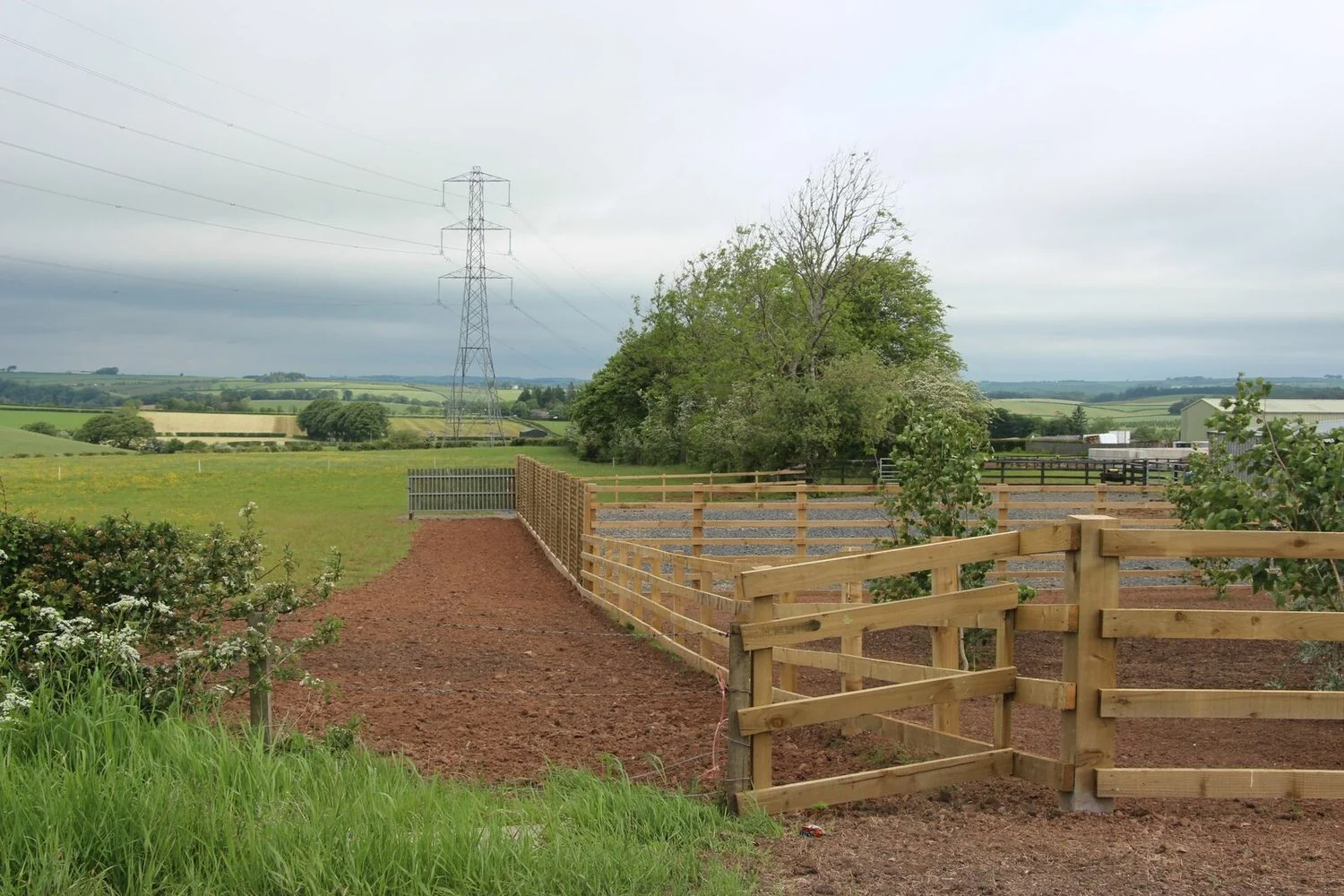
Fenced enclosures: optimization finds the dimensions that maximise area for a fixed fence length
In "maximize area with a fixed perimeter," the area is the...
Difficulté 1/5 · 100 pièces + un petit bonus lors de la première réussite aujourd'hui
You optimize the objective (area); the perimeter is the constraint.
Step 2: a constraint, then one variable
- A constraint 约束条件 is the fixed relationship (perimeter, volume, budget). Solve it for one variable and substitute into the objective.
- Then write the domain: the values that make sense (lengths $>0$, the material available).
A constraint equation is used to...
Difficulté 1/5 · 100 pièces + un petit bonus lors de la première réussite aujourd'hui
Solve the constraint for one variable and substitute.
The goal of the setup is to write the objective in terms of a ____ variable.
Difficulté 1/5 · 100 pièces + un petit bonus lors de la première réussite aujourd'hui
One variable ⇒ an ordinary extremum problem.
Order the optimization setup steps.
Difficulté 3/5 · 200 pièces + un petit bonus lors de la première réussite aujourd'hui
Variable, objective, constraint, substitute.
Fence against a wall. 40 m of fence makes a rectangular pen against a wall (no fence on the wall side).
- $x$ = each side at right angles to the wall, $y$ = the side parallel to it. Constraint: $2x+y=40$, so $y=40-2x$.
- Objective: $A=xy=40x-2x^2$, with domain $0<x<20$.
Area as one downward parabola
y = ax² + bx
For a rectangle with perimeter 20, the constraint turns the area into $A=10x-x^2$ — a downward parabola with a single peak to find.
With $2x+y=40$ (wall on one side), the area $A=xy$ becomes...
Difficulté 1/5 · 100 pièces + un petit bonus lors de la première réussite aujourd'hui
$y=40-2x$, so $A=x(40-2x)=40x-2x^2$.
Open box. Cut equal squares of side $x$ from the corners of a 20 cm × 20 cm sheet and fold up the sides.
- The base becomes $(20-2x)$ by $(20-2x)$ and the height is $x$.
- Objective: $V=x(20-2x)^2$, with domain $0<x<10$ (each cut must leave a base).
Squares of side $x$ are cut from the corners of a 30 cm × 16 cm sheet, and the sides are folded up into an open box. Which is the volume, with its domain?
Difficulté 1/5 · 100 pièces + un petit bonus lors de la première réussite aujourd'hui
Each side loses $2x$; the height is $x$. The shorter side needs $16-2x>0$, so $x<8$.
Two prices. A rectangular field of area 600 m² needs fencing. The side along the road costs $8 per m; the other three sides cost $4 per m. Set up the cost.
- $x$ = the road side, $y$ = the other side. Constraint: $xy=600$, so $y=\dfrac{600}{x}$.
- Cost: $C=8x+4x+4(2y)=12x+\dfrac{4800}{x}$, with domain $x>0$.
A rectangular plot of area 200 m² has one side $x$ along a river that needs no fence. The other three sides cost $5 per metre. Which is the cost?
Difficulté 1/5 · 100 pièces + un petit bonus lors de la première réussite aujourd'hui
The fenced sides are the far side $x$ and two sides $y=\tfrac{200}{x}$. $C=5\left(x+\tfrac{400}{x}\right)=5x+\tfrac{2000}{x}$.
A rectangle has perimeter 12 and you want the largest area. What objective, in one variable, should you optimise, and on what domain?
Half the perimeter is the sum of the two sides.
A rectangle of perimeter 12 has side $x$. Its area, in terms of $x$, is...
Difficulté 1/5 · 100 pièces + un petit bonus lors de la première réussite aujourd'hui
The two sides add to 6.
- The objective is what you optimize. The constraint only removes a variable. Don't maximize the constraint.
- Always write the domain. In 5.11 you check the endpoints, so you need them.
- Price each side separately when sides cost different amounts.
Noting the domain of the variable (e.g. $0<x<10$) is part of a correct optimization setup.
Difficulté 1/5 · 100 pièces + un petit bonus lors de la première réussite aujourd'hui
The domain bounds where a valid answer can be.
Set up an optimization problem in four parts: a labelled picture and a variable; the objective function; a constraint to reduce to one variable; the domain. Then it is a standard extremum problem.