Grammar, vocabulary and checking · Gramática, vocabulario y revisión
Show a range
- Use different tenses and sentence types — not the same one every time.
- Use a range of vocabulary; choose a better word than the easy one.
- Use synonyms to avoid repeating yourself.
A large word in the wrong sentence is still in the wrong sentence.
Mostrar variedad
- Usa diferentes tiempos verbales y tipos de oraciones — no repitas siempre la misma estructura.
- Emplea una amplia gama de vocabulario; elige una palabra más precisa que la obvia.
- Utiliza sinónimos para evitar la repetición.
Una palabra compleja en una oración inadecuada sigue siendo incorrecta.
Using the same easy words again and again earns the most marks. · Usar las mismas palabras fáciles una y otra vez obtiene la mayor calificación.
No — show a range and use synonyms. · No — muestra variedad y usa sinónimos.
Use ___ to avoid repeating a word (words with the same meaning). · Usa ___ para evitar repetir una palabra (palabras con el mismo significado).
Synonyms are words with the same meaning. · Los sinónimos son palabras con el mismo significado.
Write one sentence using a more interesting word than 'good'. · Escribe una oración usando una palabra más interesante que 'good'.
Example: 'The trip was wonderful.' · Ejemplo: 'The trip was wonderful.'
Upgrade each easy word — match it to a stronger synonym. · Mejora cada palabra fácil — empareja cada una con un sinónimo más fuerte.
One precise word can lift a whole sentence — examiners notice range. · Una palabra precisa puede elevar toda una oración: los examinadores notan la variedad.
Be accurate
- Check your grammar, spelling and punctuation.
- Common errors: subject–verb agreement, verb tenses, capital letters.
- Accuracy earns you language marks.
Language marks rest on two pillars: range and accuracy
Ser preciso
- Revisa tu gramática, ortografía y puntuación.
- Errores comunes: concordancia sujeto-verbo, tiempos verbales y mayúsculas.
- La precisión te asegura puntos en el idioma.
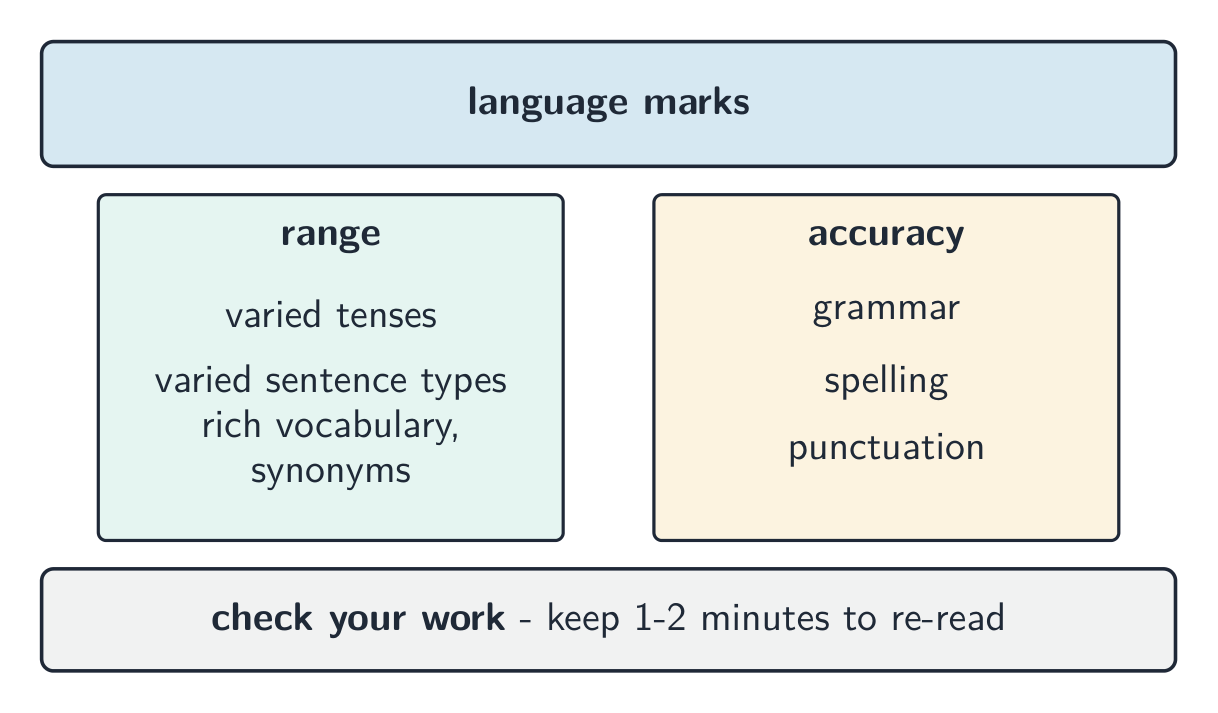
Los puntos del idioma se basan en dos pilares: variedad y precisión
Name that error · Identifica ese error
Spotting WHICH kind of error a sentence has is the first step of checking. · Detectar QUÉ tipo de error tiene una oración es el primer paso para revisar.
Check your work
- Leave one or two minutes at the end.
- Read your work again and fix small mistakes.
- Checking can save several marks.
Revisa tu trabajo
- Dedica uno o dos minutos al final.
- Lee tu trabajo nuevamente y corrige los pequeños errores.
- La revisión puede salvarte varios puntos.
Before you finish writing, you should… · Antes de terminar de escribir, debes…
Checking can save several marks. · La revisión puede ahorrar varias calificaciones.
A one-minute check, live
- Draft: "Yesterday I go to the market, and buy some fruit it was cheap."
- Tense sweep: Yesterday → went, bought.
- Punctuation sweep: two sentences are glued together — split them.
- Fixed: "Yesterday I went to the market and bought some fruit. It was cheap."
Revisión rápida de un minuto en vivo
- Borrador: "Yesterday I go to the market, and buy some fruit it was cheap."
- Barrido de tiempos verbales: Yesterday → went, bought.
- Barrido de puntuación: dos oraciones están unidas sin separación — sepáralas.
- Corregido: "Yesterday I went to the market and bought some fruit. It was cheap."
- Show a range of grammar and vocabulary.
- Be accurate; avoid repeating words (use synonyms).
- Always leave time to check your work.
- Demuestra variedad en gramática y vocabulario.
- Sé preciso; evita repetir palabras (usa sinónimos).
- Deja siempre tiempo para revisar tu trabajo.