Chromosomes, genes and proteins
Introducido| English | Significado |
|---|---|
| chromosomes/ˈkrəʊməsəʊmz/ | cromosomas |
| gene/dʒiːn/ | gen |
| DNA/ˌdiː en ˈeɪ/ | ADN |
| protein/ˈprəʊtiːn/ | proteína |
| characteristics/ˌkærɪktəˈrɪstɪks/ | características |
The instructions inside you
- Every cell carries a complete set of instructions for building and running your body.
- These instructions are stored in chromosomes 染色体, genes 基因 and DNA 脱氧核糖核酸.
A gene is:
Dificultad 1/5 · 100 monedas + un pequeño bono en el primer intento de hoy
A gene codes for one protein.
Chromosomes are made of a molecule called ______.
Dificultad 1/5 · 100 monedas + un pequeño bono en el primer intento de hoy
DNA stores the genetic code.
Chromosomes and genes
- Chromosomes are long threads of DNA, found in the nucleus.
- A gene is a section of DNA that codes for one protein 蛋白质.
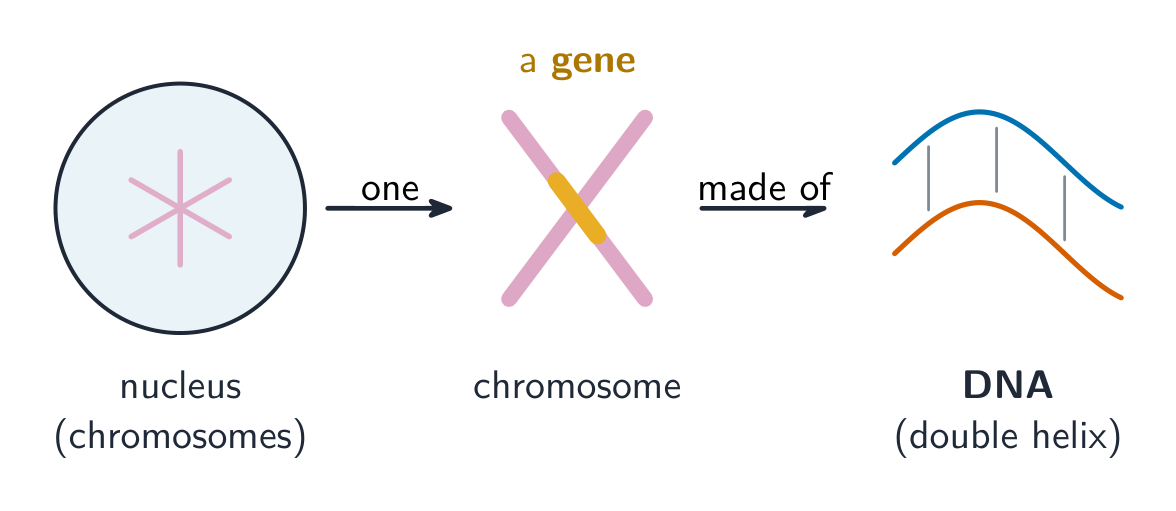
A chromosome is made of DNA and carries genes; a gene is a length of the DNA
From gene to protein
Step along the DNA template: each base pairs to an mRNA base, and every three bases (a codon) codes for one amino acid in the protein.
How many chromosomes are in a human body cell?
Dificultad 2/5 · 140 monedas + un pequeño bono en el primer intento de hoy
Body cells have 46 chromosomes (23 pairs).
How many chromosomes are in a human gamete?
Dificultad 2/5 · 140 monedas + un pequeño bono en el primer intento de hoy
Gametes have half — 23 — so fertilisation restores 46.
How many chromosomes
- Human body cells have 46 chromosomes (23 pairs).
- Gametes have 23 — half the number — so fertilisation restores 46.
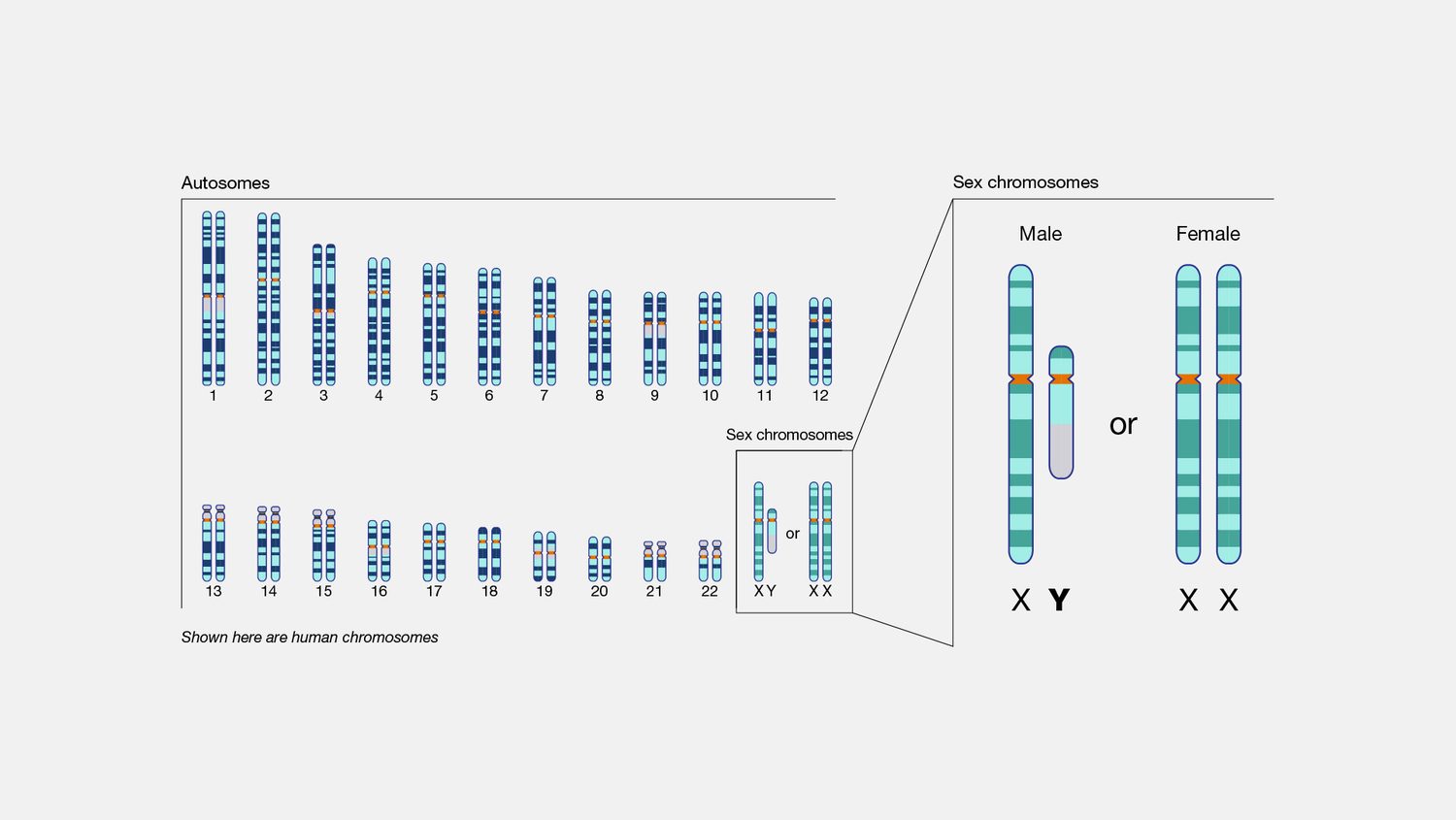
A human karyotype: 23 pairs of chromosomes, ending in XY for a male
Genes control characteristics by coding for:
Dificultad 1/5 · 100 monedas + un pequeño bono en el primer intento de hoy
Proteins (like enzymes) build and run the body.
Genes control proteins
- Genes code for proteins, and proteins build and run the body (e.g. enzymes).
- So genes, through the proteins they make, control your characteristics 特征.
Gene, chromosome and DNA are not the same. DNA is the molecule; a chromosome is a long coiled length of it; a gene is a short section of that DNA coding for one protein. They nest inside each other.
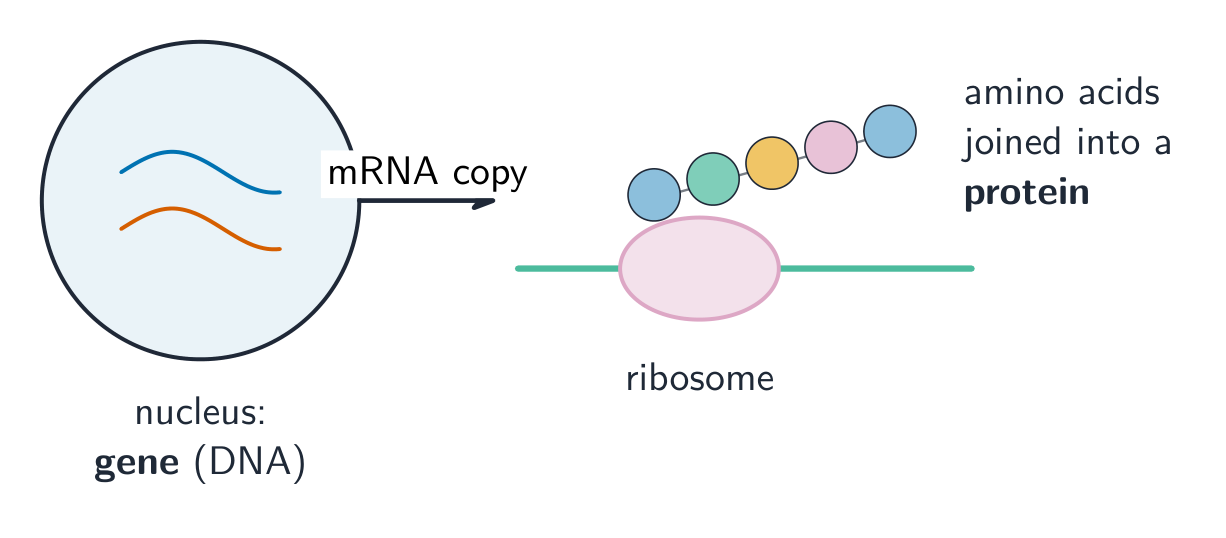
mRNA copies a gene, then a ribosome reads it to build a protein from amino acids
Worked example: from gene to eye colour
Put these in order, from largest to smallest, and explain how a gene leads to a characteristic: gene, chromosome, nucleus, DNA bases.
- Nucleus → chromosome (a long DNA molecule) → gene (a section of that DNA) → bases. The order of bases in a gene is a code for the order of amino acids in one protein.
- That protein does a job: for example an enzyme that makes the brown pigment in the iris. A different allele has a different base order, may give a protein that does not work, and so a different eye colour.
What is a gene?
Dificultad 1/5 · 100 monedas + un pequeño bono en el primer intento de hoy
A gene is a section of DNA on a chromosome; its base sequence codes for one protein.
Almost every body cell contains the same genes, but different cells use (express) different ones.
Dificultad 1/5 · 100 monedas + un pequeño bono en el primer intento de hoy
A muscle cell and a skin cell have the same DNA but switch on different genes to make different proteins.
You've got it
- chromosomes are threads of DNA in the nucleus; a gene is a section coding for one protein
- human body cells have 46 chromosomes; gametes have 23
- genes control characteristics through the proteins they code for
Write from this case
- A section of DNA codes for one chain of amino acids.
- The DNA is part of a chromosome in the nucleus.
What is that section called, and what do genes control?
One gene, one protein is the lesson's rule.
A gene is a section of DNA that codes for what?
Dificultad 1/5 · 100 monedas + un pequeño bono en el primer intento de hoy
The gene's product is a protein.