Tu plan de aprendizaje · Continuar · Revisar →
反而 (por el contrario / en cambio)
IntroducidoTu posición guardada se conserva en este navegador. Continuar no completa la lección ni responde sus preguntas.
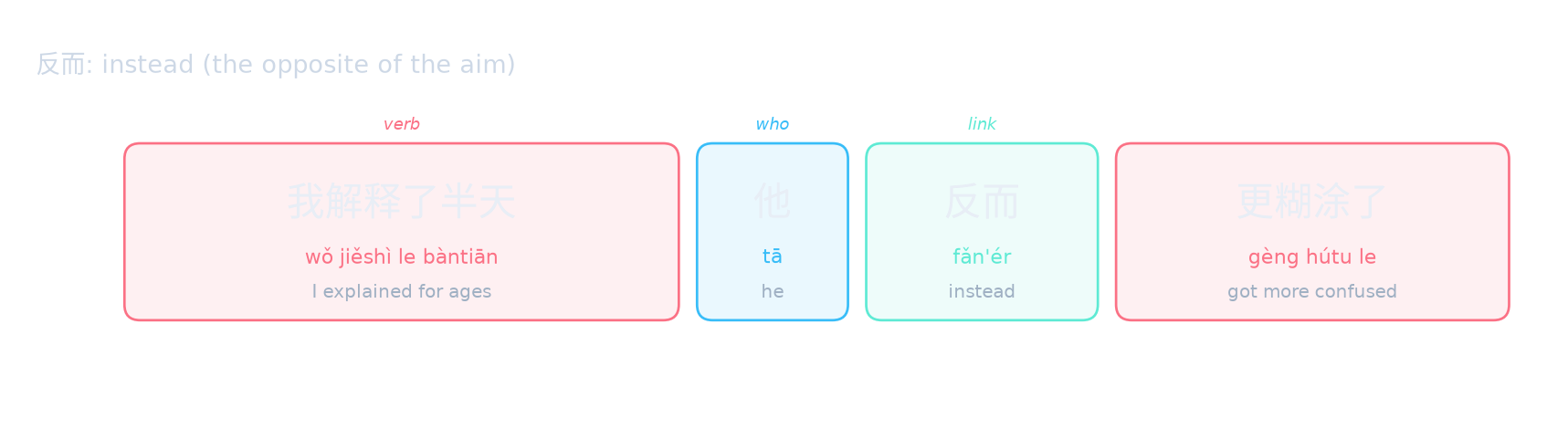
It backfired
- Intentaste ayudar a tu hermano pequeño con las matemáticas, pero se confundió más.
- I / me我explanation解释(completed / change)了half of the day半天,he他instead反而more更muddled糊涂(completed / change)了。 — "Expliqué durante mucho tiempo y solo se confundió más."
Subject + instead反而 + predicate
- instead反而 = "en cambio, por el contrario": el resultado va en dirección opuesta a la esperada.
- Va después del sujeto y antes del verbo: he他instead反而…, no instead反而he他….
take吃了medicine药,the illness病instead反而more更serious重了。
Complete: “After the rain, it got hotter instead.” 下了雨,天气____更热了。
Dificultad 1/5 · 100 monedas + un pequeño bono en el primer intento de hoy
反而 marks the opposite of what you'd expect.
not only不但not不 / didn't没…,instead反而…
- he他not only不但didn't没get angry生气,instead反而laughed笑(completed / change)了。 — "Lejos de enojarse, en realidad se rió."
- La primera mitad dice lo que no ocurrió; la segunda, lo opuesto que sí ocurrió.
he他not only不但didn't没get angry生气,instead反而laughed笑了。
Build: “Far from getting angry, he actually laughed.”
Dificultad 3/5 · 200 monedas + un pequeño bono en el primer intento de hoy
不但没…,反而….
Después del sujeto
- instead反而 es un adverbio: (literary) to rain雨instead反而more更big大(completed / change)了, no instead反而(literary) to rain雨more更big大(completed / change)了.
- Requiere una expectativa para contradecir; para un contraste simple usa but但是 / yet却.
Which sentence is correct?
Dificultad 1/5 · 100 monedas + un pequeño bono en el primer intento de hoy
不但没…,反而… with 反而 after the (omitted) subject.
instead反而 versus on the contrary相反
- instead反而 es un adverbio dentro de la cláusula: he他instead反而not不happy高兴(completed / change)了.
- on the contrary相反 significa "lo opuesto" o "por el contrario" al inicio de una oración: on the contrary相反,he他very很happy高兴.
on the contrary相反,he他very很happy高兴。
相反 can open a sentence followed by a comma.
Dificultad 1/5 · 100 monedas + un pequeño bono en el primer intento de hoy
True. 相反 can open a sentence, followed by a comma, to mean “on the contrary”: 他没生气,相反,他很高兴.
Resumen
- Sujeto + instead反而 + predicado = al contrario, por el contrario (lo opuesto a lo esperado).
- A menudo después de not only不但not不/didn't没…; on the contrary相反 introduce una oración.
Lee la referencia completa: Gramática HSK 5 — Oraciones con "pero".
You tried to help your little brother with maths, but he got more confused. Close the examples. Say a Mandarin response, then write it in Chinese. Explain briefly in English what the lesson’s pattern adds. Compare with the model, then change one detail and try again.
This is supported productive practice. Compare meaning and structure; your answer need not copy the model. A partner or teacher must hear the spoken response to comment on pronunciation.