Exchange Rates and Net Exports
Introducido| English | Significado |
|---|---|
| aggregate demand/ˈæɡrɪɡeɪt dɪˈmænd/ | Demanda agregada |
| net exports/net ˈekspɔːts/ | exportaciones netas |
| exports/ˈekspɔːts/ | Exportaciones |
| imports/ɪmˈpɔːts/ | importaciones |
From the exchange rate back to the economy
- An exchange-rate move feeds straight back into a country's trade.
- And trade feeds into the whole economy through aggregate demand.
- The chain: exchange rate → net exports → aggregate demand → output.
- Let's follow a strong currency through that chain.
Net exports equal exports minus ______.
Dificultad 1/5 · 100 monedas + un pequeño bono en el primer intento de hoy
NX = exports − imports.
When a currency appreciates, a country's exports become:
Dificultad 1/5 · 100 monedas + un pequeño bono en el primer intento de hoy
A stronger currency raises the foreign-currency price of exports.
A stronger currency lowers net exports
- When a currency appreciates, that country's goods become dearer for foreigners.
- At the same time, foreign goods become cheaper at home.
- So exports 出口 fall and imports 进口 rise.
- That lowers net exports 净出口, where $NX = \text{exports} - \text{imports}$.
Stronger or weaker currency?
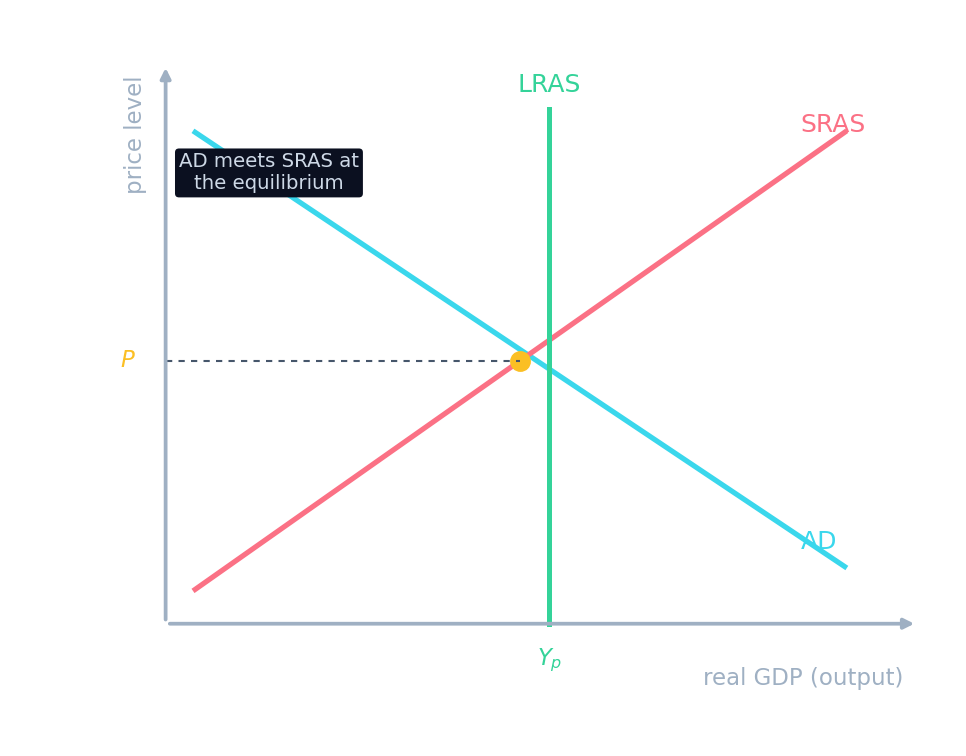
A stronger currency lowers net exports and shifts AD left; a weaker currency raises net exports and shifts AD right.
A stronger currency lowers net exports, so aggregate demand shifts:
Dificultad 1/5 · 100 monedas + un pequeño bono en el primer intento de hoy
Net exports are part of AD, so lower NX shifts AD left.
A weaker currency lowers net exports and shifts aggregate demand left.
Dificultad 1/5 · 100 monedas + un pequeño bono en el primer intento de hoy
False. A weaker currency makes exports cheaper and imports dearer, raising net exports and shifting AD right.
Net exports move aggregate demand
- Net exports are one component of aggregate demand 总需求.
- A stronger currency lowers net exports, shifting aggregate demand left (weaker output).
- A weaker currency raises net exports, shifting aggregate demand right (stronger output).
- So the exchange rate is a lever on the whole economy, not just trade.
A US machine rises from 900 to 1000 euros after the dollar appreciates. The likely result is:
Dificultad 1/5 · 100 monedas + un pequeño bono en el primer intento de hoy
A dearer machine loses foreign buyers — exports drop.
Order the chain from a stronger currency to weaker output.
Dificultad 3/5 · 200 monedas + un pequeño bono en el primer intento de hoy
Appreciation → trade worsens → NX falls → AD left.
Worked example
- Worked idea. The dollar appreciates sharply. A US machine that cost a European buyer 900 euros now costs 1000 euros — so Europe buys fewer. US exports fall.
- Meanwhile European goods look cheap to Americans, so US imports rise.
- Net exports drop, and US aggregate demand shifts left.
- This is why a very strong currency can slow an economy.
Worked example: a weaker yuan and Chinese output
The yuan depreciates against the dollar. Explain the effect on China's net exports, aggregate demand, real output and price level in the short run.
- Chinese goods become cheaper for Americans, so China's exports rise; US goods become dearer in China, so its imports fall. Net exports rise.
- Net exports are part of AD, so China's AD shifts right: in the short run, real output rises and the price level rises. US net exports move the other way.
The US dollar appreciates sharply. In the short run, US real output:
Dificultad 1/5 · 100 monedas + un pequeño bono en el primer intento de hoy
Exports fall and imports rise, cutting net exports.
Exports are 250b and imports are 310b. What are net exports, in billions? (Give the sign.)
Dificultad 2/5 · 140 monedas + un pequeño bono en el primer intento de hoy
250 − 310 = −60.
An exchange-rate change moves trade, then the economy. A stronger currency makes exports dearer and imports cheaper, so net exports ($NX = X - M$) fall. Because net exports are part of aggregate demand, a stronger currency shifts AD left (weaker output); a weaker currency shifts AD right.
Write from a machine priced at 500 euros
- After the dollar appreciates, a US machine rises from 400 euros to 500 euros.
- Say what happens to exports and aggregate demand.
After the dollar appreciates, a US machine that cost 400 euros now costs 500 euros. What is likely to happen to exports and to aggregate demand?
A higher foreign-currency price loses customers.
What does the rise to 500 euros do?
Dificultad 1/5 · 100 monedas + un pequeño bono en el primer intento de hoy
The dearer machine cuts exports, and net exports are part of aggregate demand. Other options — Exports rise (because 500 is a larger number); AD shifts right (because a strong currency always boosts spending).