Negación: there is not / there are not (contraídas there isn't / there aren't).
(有)There 没有isn't 任何any 牛奶milk.
No queda leche.
Interrogativo: Coloca is / are antes de there.
(有吗)Is (有)there 一家a 银行bank 附近near 这里here?
¿Hay un banco cerca de aquí?
Respuesta corta: Yes, there is. / No, there isn't.
Nota: En oraciones negativas e interrogativas es común usar any: Is there any water?
Te llamaré esta noche.
- ❌ ~~Here has many people.~~ → ✓ There are many people here. — El "hay" en chino indica existencia; en inglés se usa there is / there are, no se traduce literalmente con have.
- ❌ ~~There have a book on the desk.~~ → ✓ There is a book on the desk. — Después de there se usa is / are; no existe la construcción there have.
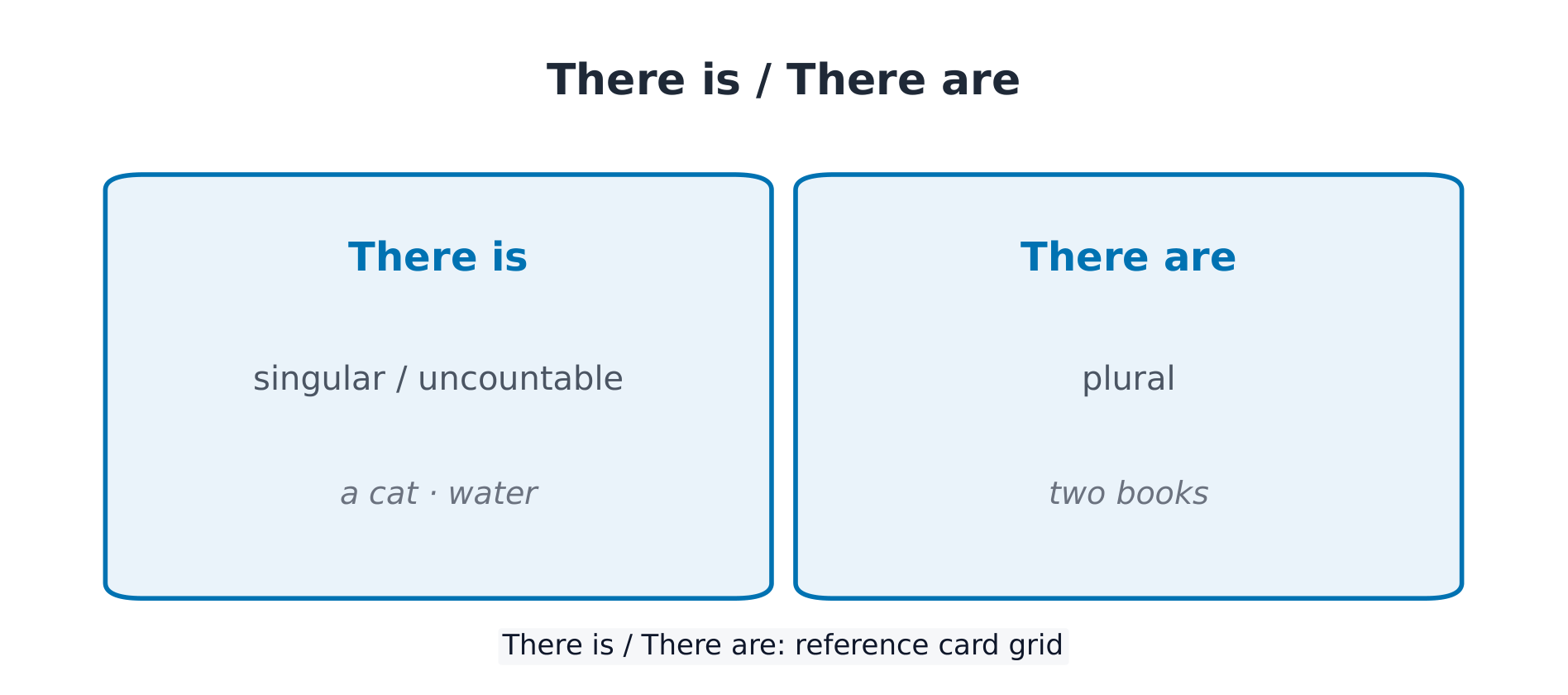
- ❌ ~~There is two cats.~~ → ✓ There are two cats. — Si el sustantivo que sigue es plural, se usa are.
- ❌ ~~There are a milk.~~ → ✓ There is some milk. — Milk es incontable: se usa there is + some, no a.