النظام الشمسي
مُقدَّم 16:59
فيزياء الفضاء
انظر إلى السماء في ليلة صافية، وقد ترى بضعة آلاف من النجوم. لكن هذا شبه لا شيء. شمسنا هي مجرد نجم واحد بين مائة مليار نجم في مجرتنا…
سرد باللغة الإنجليزية · ترجمة نصية بالإنجليزية و中文 يمكنك التبديل بينهما
In this lesson
| English | المعنى |
|---|---|
| Solar System/ˈsəʊlə ˈsɪstəm/ | المجموعة الشمسية |
| planets/ˈplænɪts/ | كواكب |
| asteroids/ˈæstərɔɪdz/ | كويكبات |
| comets/ˈkɒmɪts/ | مذنبات |
| rocky/ˈrɒki/ | صخرية |
| gas giants/ɡæs ˈdʒaɪənts/ | كواكب عملاقة غازية |
| satellites/ˈsætəlaɪts/ | أقمار |
| ellipses/ɪˈlɪpsɪz/ | قطع مكافئة |
| accretion/əˈkreʃn/ | تصاعد |
The Sun's family
- At the centre of the Solar System 太阳系 is one star — the Sun.
- Around it move eight planets 行星, plus moons, asteroids 小行星 and comets 彗星.
- Gravity holds the whole family together.
The eight planets
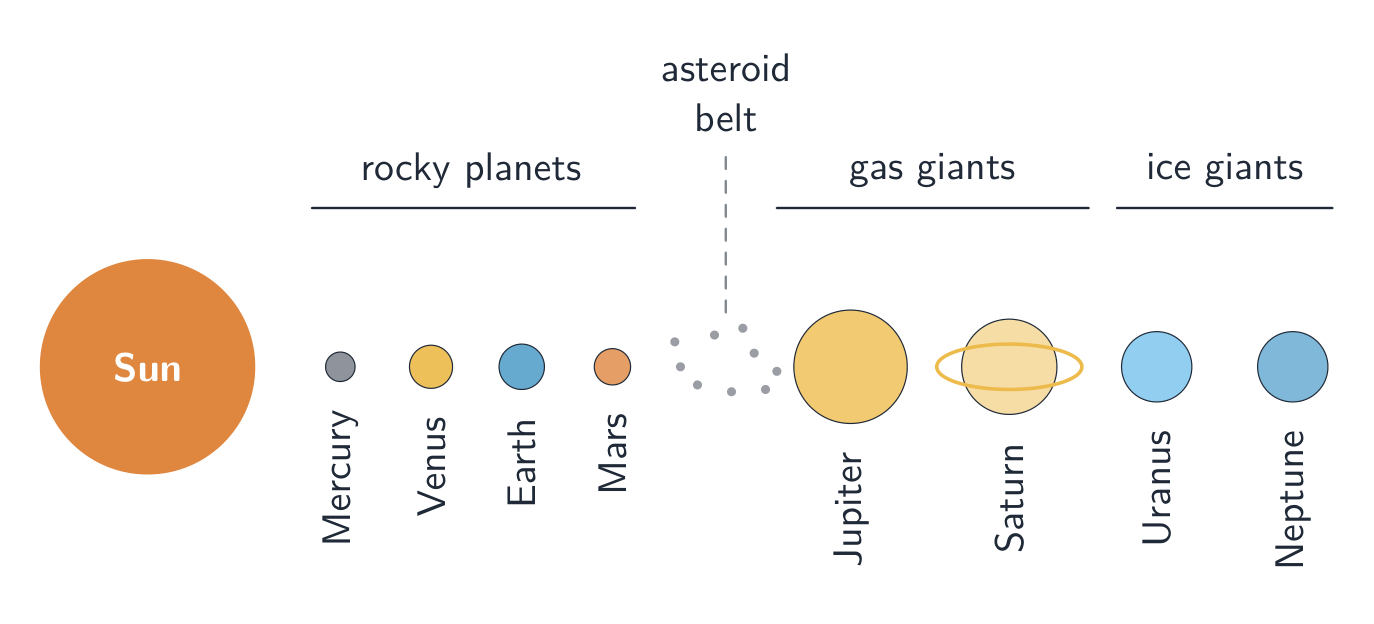
- In order from the Sun: Mercury, Venus, Earth, Mars, Jupiter, Saturn, Uranus, Neptune.
- The four inner planets are small and rocky 岩石.
- The four outer planets are large and gaseous (no solid surface).
- Jupiter and Saturn are gas giants 气态巨行星; Uranus and Neptune are ice giants.
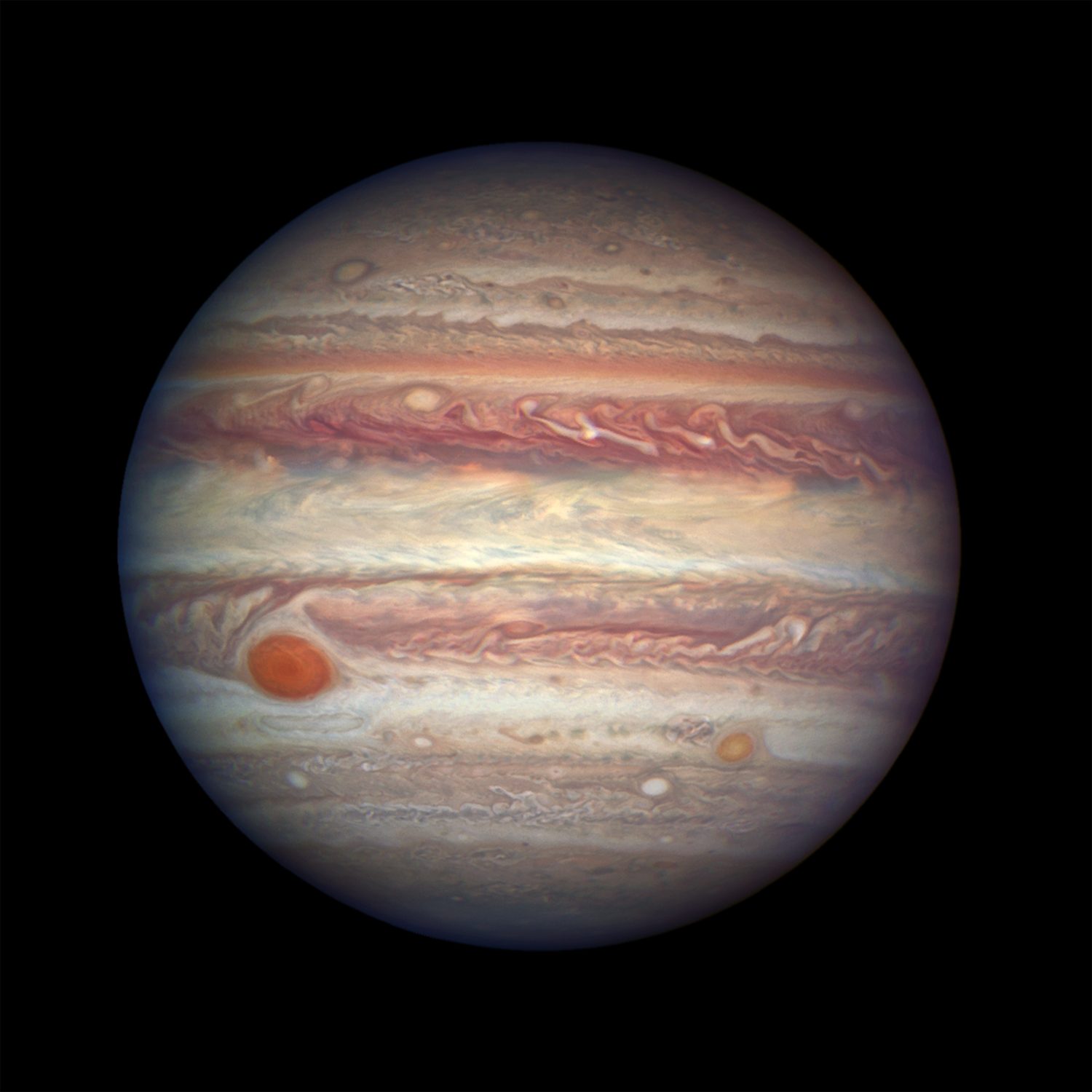
Jupiter, the largest planet, with its swirling bands of gas
شاهد سباق الكواكب
كلما كان الكوكب أقرب إلى الشمس، كان أسرع في مداره — عطارد في 88 يوماً، المشتري في 12 عاماً — لأن جاذبية الشمس أقوى بالقرب منها.
رتب هذه الكواكب، الأقرب إلى الشمس أولاً.
الصعوبة 3/5 · 200 عملة + مكافأة صغيرة عند الإنجاز الأول اليوم
من الشمس: عطارد، الزهرة، الأرض، المريخ، المشتري، زحل، أورانوس، نبتون — لذا من بين هذه، عطارد، الأرض، المشتري، نبتون.
كيف تختلف الكواكب الداخلية والخارجية؟
الصعوبة 1/5 · 100 عملة + مكافأة صغيرة عند الإنجاز الأول اليوم
الأربع كواكب الداخلية صغيرة وصخرية؛ الأربع كواكب الخارجية كبيرة وغازية (عمالقة غازية وعمالقة جليدية).
Other objects
- Dwarf planets (like Pluto) and asteroids — most asteroids lie in a belt between Mars and Jupiter.
- Moons (natural satellites 卫星) that orbit the planets.
- Comets — small icy bodies on very stretched orbits.
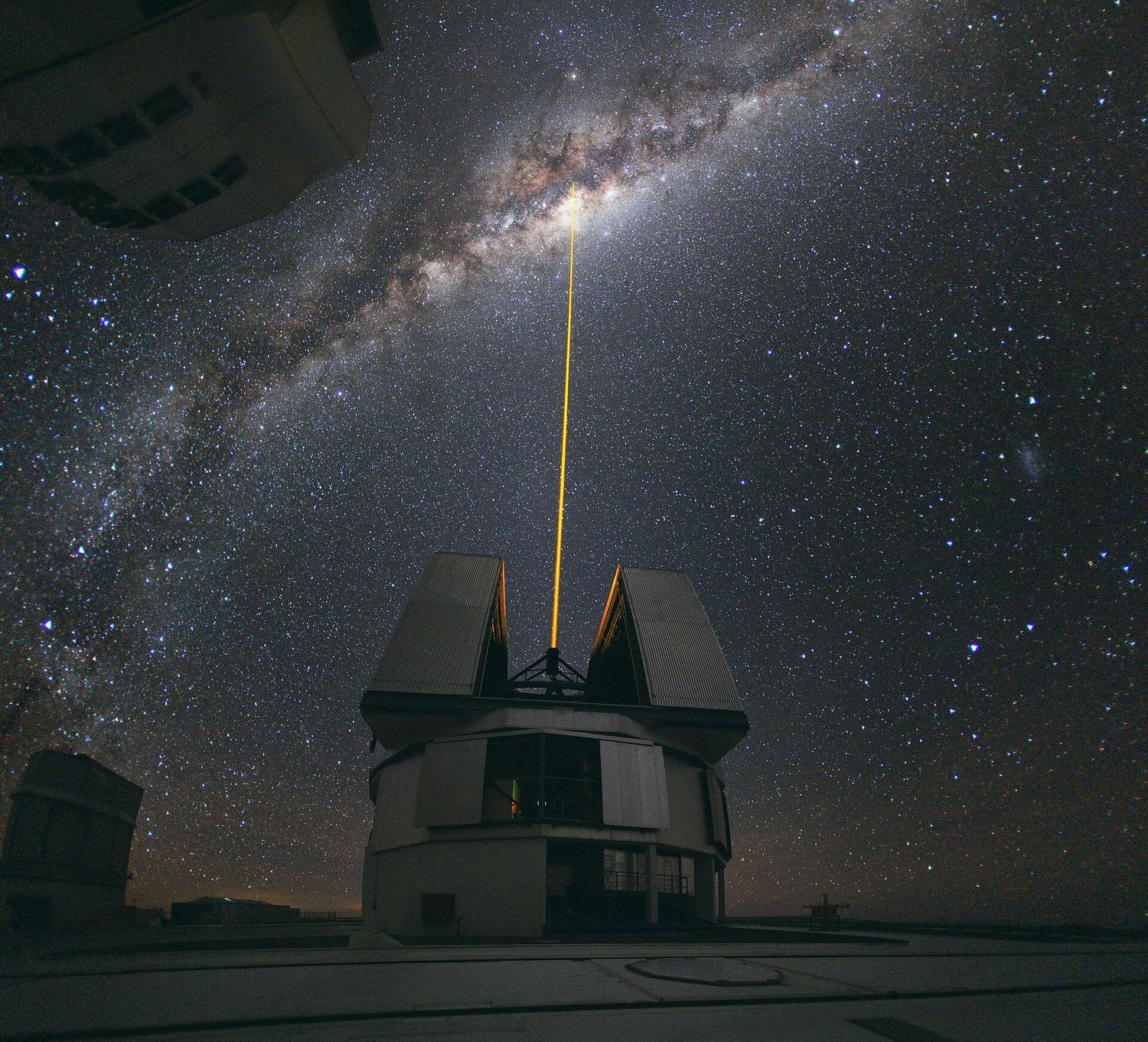
A giant telescope fires a laser to study the night sky
Orbits and gravity
- The Sun's gravity reaches out and keeps the planets in orbit; it is weaker further out, so outer planets orbit more slowly.
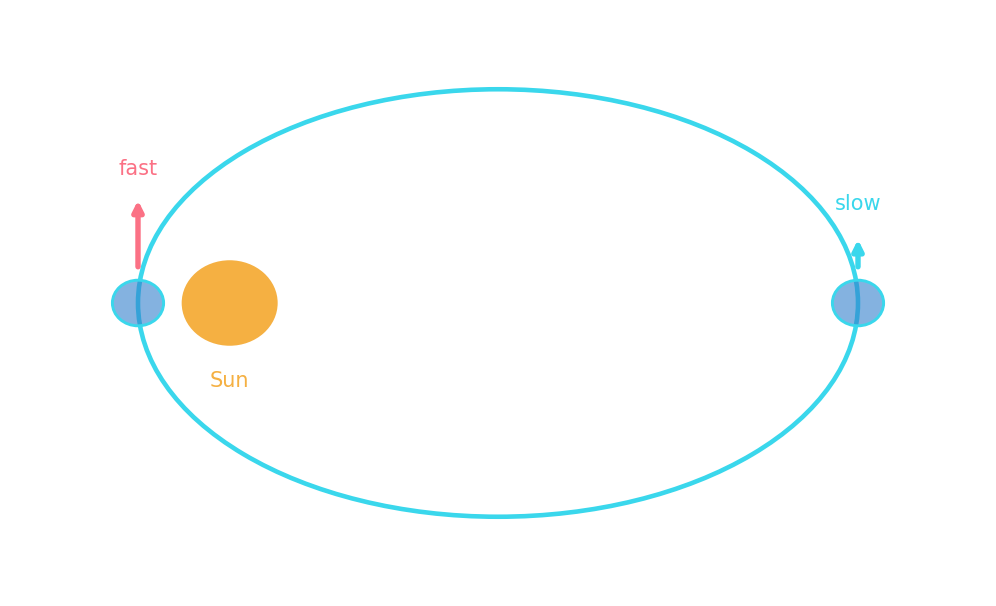
- Most orbits are ellipses 椭圆 (stretched circles), with the Sun at one focus (not the centre).
- A planet moves faster when closer to the Sun: as its gravitational PE falls, its kinetic energy rises (energy is conserved).
ما الذي يحافظ على الكواكب في مداراتها حول الشمس؟
الصعوبة 1/5 · 100 عملة + مكافأة صغيرة عند الإنجاز الأول اليوم
تحتوي الشمس على معظم كتلة النظام الشمسي، وتجذب جاذبيتها الكواكب إلى مداراتها.
يتحرك كوكب في مدار إهليلجي بسرعة قصوى عندما يكون:
الصعوبة 1/5 · 100 عملة + مكافأة صغيرة عند الإنجاز الأول اليوم
عندما يقترب الكوكب، تنخفض طاقته الكامنة الجاذبية وتزداد طاقته الحركية (الطاقة محفوظة)، لذا يزداد سرعته.
Light travel time and how it formed
- Space is huge, so we use light travel time: $\text{time} = \dfrac{\text{distance}}{\text{speed}}$, with light at $3.0 \times 10^8\ \text{m/s}$.
- Sunlight takes about 8 minutes to reach Earth.
- The Solar System formed by accretion 吸积: gravity pulled a spinning cloud of gas and dust into a disc; most fell to the centre to form the Sun, and the planets grew from the rest.
- Near the hot young Sun only rock and metal stayed solid → rocky inner planets; far out, gases collected too → giant outer planets.
The Solar System
تبعد الشمس حوالي $1.5 \times 10^{11}\ \text{m}$. كم تستغرق ضوئها للوصول إلى الأرض، بالثواني؟ (سرعة الضوء $3.0 \times 10^8\ \text{m/s}$)
الصعوبة 2/5 · 140 عملة + مكافأة صغيرة عند الإنجاز الأول اليوم
$\text{time} = \dfrac{d}{v} = \dfrac{1.5 \times 10^{11}}{3.0 \times 10^8} = 500\ \text{s}$ (حوالي 8 دقائق).
لماذا الكواكب الداخلية صخرية؟
الصعوبة 1/5 · 100 عملة + مكافأة صغيرة عند الإنجاز الأول اليوم
قرب الشمس الحارة، لم يتكثف الغاز — بل بقي الصخر والمعدن صلباً فقط، لذلك الكواكب الداخلية صخرية.
Worked examples
1. Jupiter is about $7.8 \times 10^{11}\ \text{m}$ from the Sun. Light takes $\dfrac{7.8 \times 10^{11}}{3.0 \times 10^8} = 2600\ \text{s}$, about $43$ minutes, to reach it.
2. Planet data show that planets further from the Sun have longer orbital periods and lower orbital speeds: the Sun's gravitational pull on them is weaker, and their orbits are longer.
Distances go from the centre. An orbit radius is measured from the centre of the Sun (or planet), not from its surface.
You've got it
- eight planets: four rocky inner, four gaseous outer (gas giants + ice giants)
- the Sun's gravity holds the planets; outer ones orbit slower
- orbits are ellipses with the Sun at a focus; planets move faster when closer
- light from the Sun takes ~8 min; the system formed by accretion of gas and dust
Write from the data: find the light-travel time
- A planet is 7.5 times 10 to the 11 metres from Earth. Light travels at 3.0 times 10 to the 8 metres per second.
- Find the travel time. The Sun's gravity holds the orbit.
كوكب يبعد 7.5 مرة × 10 أس 11 متر. كم تستغرق ضوؤه للوصول إلى الأرض بسرعة 3.0 مرة × 10 أس 8 متر في الثانية، وما الذي يحفظ الكوكب في مداره؟
7.5 مضروبة في 10 أس 11 مقسومة على 3.0 مضروبة في 10 أس 8 يساوي 2500 ثانية.
كم تستغرق الضوء من الوقت؟
الصعوبة 1/5 · 100 عملة + مكافأة صغيرة عند الإنجاز الأول اليوم
المسافة مقسومة على 3.0 مضروبة في 10 أس 8 تساوي 2500 ثانية. الخيارات الأخرى — 500 ثانية (نتيجة مثال الدرس للشمس عند 1.5 مضروبة في 10 أس 11 متر); 2500 ثانية (لأن الكواكب الخارجية تدور أسرع من الكواكب الداخلية).