Bond energy calculations
مُقدَّم| English | المعنى |
|---|---|
| chemical bonds/ˈkemɪkl bɒndz/ | الروابط الكيميائية |
| bond energies/bɒnd ˈenədʒiz/ | طاقات الروابط |
| endothermic/ˌendəʊˈθɜːmɪk/ | تفاعل ماص للحرارة |
| exothermic/eɡzəˈðɜːmɪk/ | تفاعل طارد للحرارة |
Energy in the bonds
- Where does a reaction's energy actually come from? From breaking and making chemical bonds 化学键.
- We can calculate the overall energy change from bond energies 键能.
Breaking chemical bonds:
الصعوبة 1/5 · 100 عملة + مكافأة صغيرة عند الإنجاز الأول اليوم
Breaking bonds takes energy in.
Making chemical bonds takes in energy.
الصعوبة 1/5 · 100 عملة + مكافأة صغيرة عند الإنجاز الأول اليوم
False. Making bonds releases energy (exothermic); breaking bonds takes in energy (endothermic).
Breaking and making bonds
- Breaking bonds absorbs energy (endothermic 吸热反应).
- Making bonds releases energy (exothermic 放热反应).
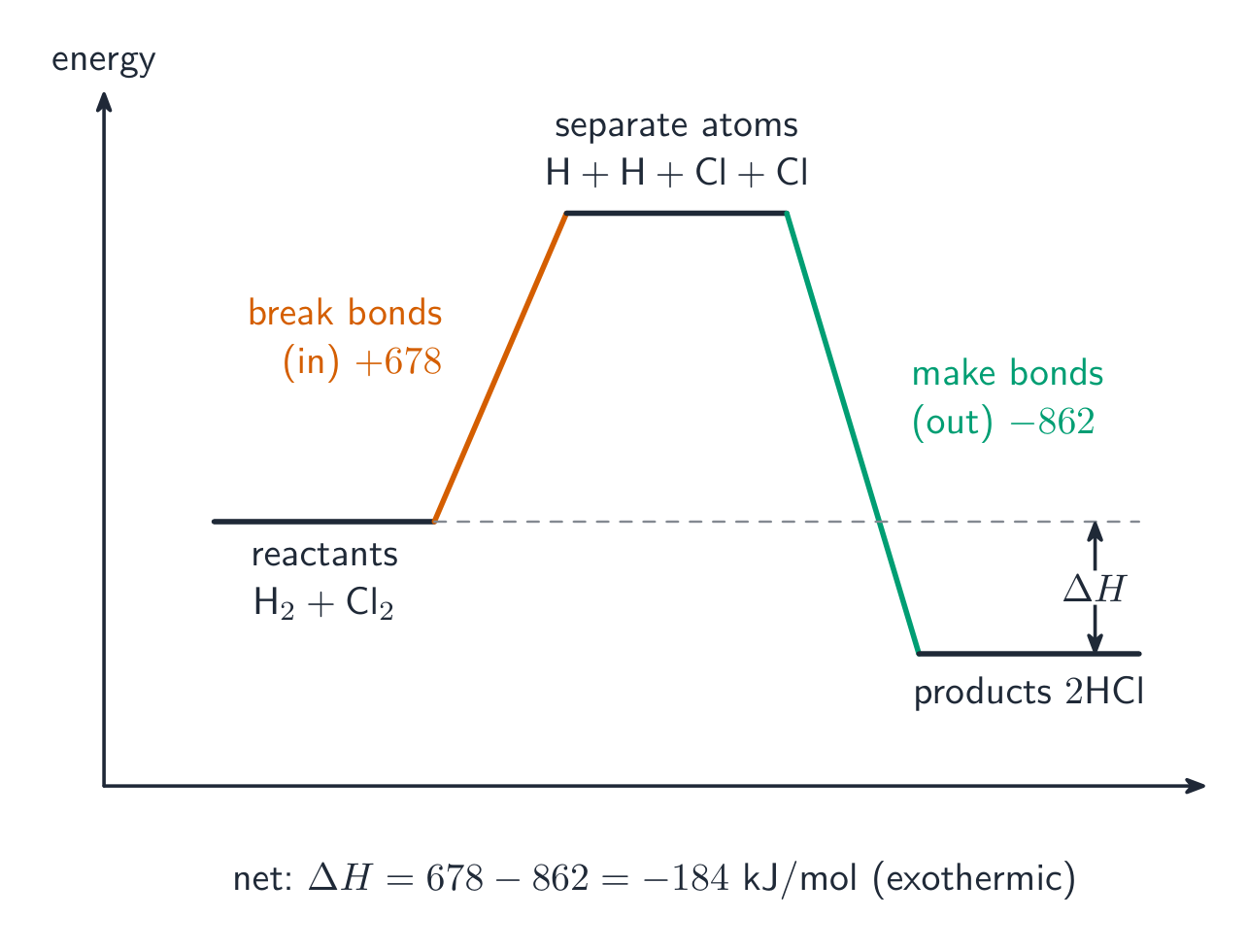
Breaking bonds takes energy in; making bonds gives energy out; the difference is the enthalpy change
Bonds broken need 500 kJ; bonds made release 700 kJ. What is the energy change (kJ)?
الصعوبة 2/5 · 140 عملة + مكافأة صغيرة عند الإنجاز الأول اليوم
500 − 700 = −200 kJ.
Energy change = energy to break bonds − energy released ______ bonds.
الصعوبة 1/5 · 100 عملة + مكافأة صغيرة عند الإنجاز الأول اليوم
Broken minus made gives the overall change.
The energy change
- Energy change = energy to break bonds − energy released making bonds.
- A negative answer means the reaction is exothermic; positive means endothermic.
Worked example. Bonds broken need 600 kJ; bonds made release 800 kJ. Energy change = 600 − 800 = −200 kJ. Negative, so the reaction is exothermic.
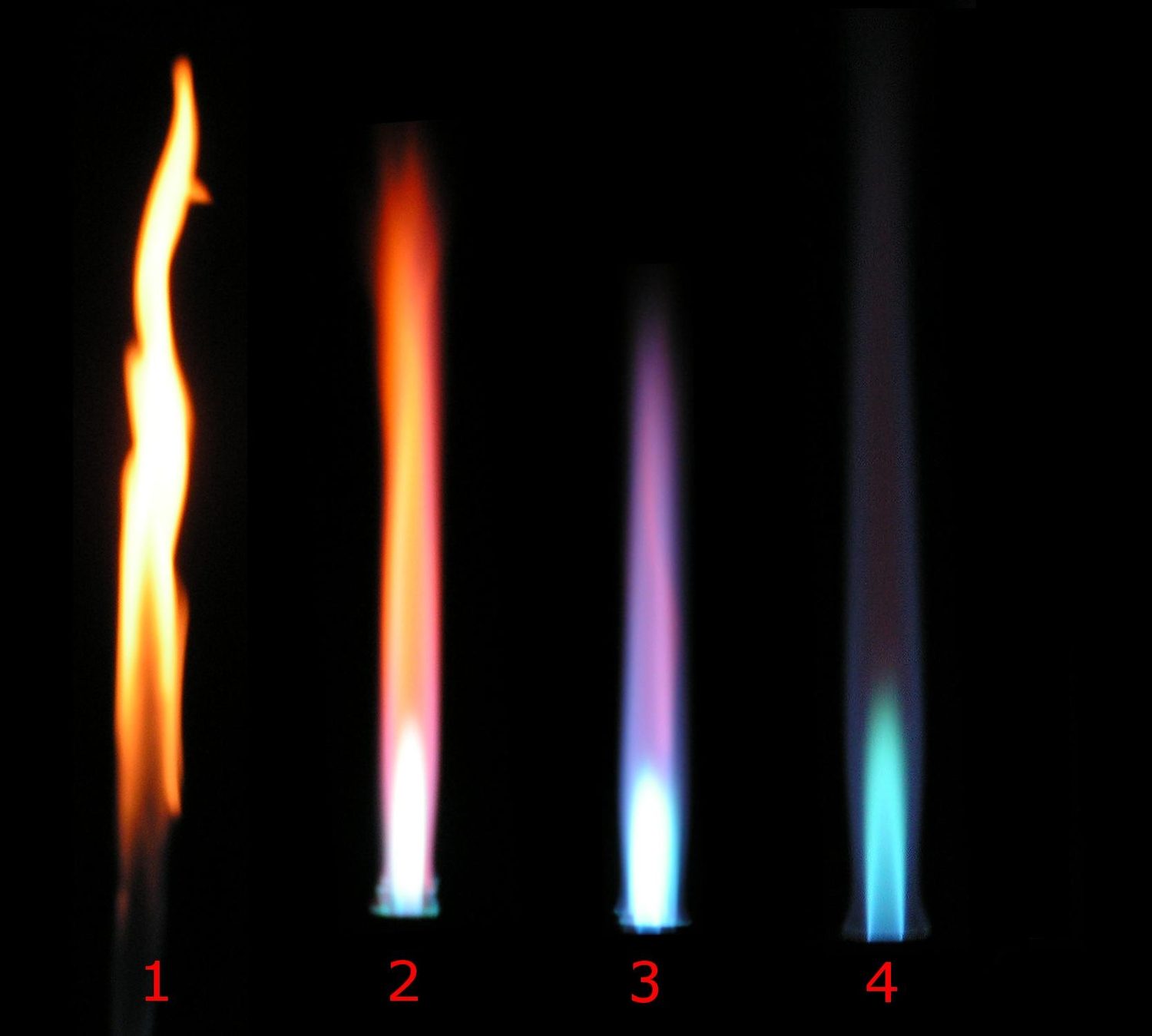
Breaking and making bonds transfers energy; the flame supplies it here
اقرأ ملف الطاقة
Breaking bonds takes energy IN; making bonds gives energy OUT. If more is released than absorbed the reaction is exothermic and ΔH is negative — products sit below reactants.
A negative energy change means the reaction is:
الصعوبة 1/5 · 100 عملة + مكافأة صغيرة عند الإنجاز الأول اليوم
Negative = energy released = exothermic.
Why the sign matters
- A negative energy change = energy released = exothermic.
- A positive energy change = energy absorbed = endothermic.
Breaking bonds takes energy in; making bonds gives energy out. Students often get this backwards. If more energy is released (making) than used (breaking), the reaction is exothermic overall.
Worked example: hydrogen and chlorine
| Bond | Bond energy / kJ per mol |
|---|---|
| H–H | 436 |
| Cl–Cl | 243 |
| H–Cl | 432 |
- Bonds broken: one H–H and one Cl–Cl = 436 + 243 = 679 kJ.
- Bonds made: two H–Cl = 2 × 432 = 864 kJ.
- Energy change = 679 − 864 = −185 kJ per mol: exothermic. Count every bond, using the numbers in front of each formula.
2H₂ + O₂ → 2H₂O. Bond energies (kJ per mol): H–H 436, O=O 498, O–H 464. Calculate the energy change. (Each water molecule has two O–H bonds.)
الصعوبة 2/5 · 140 عملة + مكافأة صغيرة عند الإنجاز الأول اليوم
Broken: 2 × 436 + 498 = 1370. Made: 4 × 464 = 1856. Change = 1370 − 1856 = −486 kJ per mol (exothermic).
In H₂ + Cl₂ → 2HCl, how many H–Cl bonds are made?
الصعوبة 2/5 · 140 عملة + مكافأة صغيرة عند الإنجاز الأول اليوم
Two HCl molecules form, each with one H–Cl bond.
You've got it
- breaking bonds absorbs energy; making bonds releases energy
- energy change = bonds broken − bonds made
- negative = exothermic; positive = endothermic
Write from the data given
- Breaking bonds takes in 400 kJ.
- Making bonds releases 250 kJ. The lesson case of 500 broken and 700 made is minus 200.
What is the energy change, and is the reaction exo or endo?
Energy change is energy in to break bonds minus energy out from making bonds.
What is the energy change?
الصعوبة 1/5 · 100 عملة + مكافأة صغيرة عند الإنجاز الأول اليوم
400 minus 250 is plus 150.