您的已保存位置保留在此浏览器中。恢复操作不会完成课程或回答其中的问题。
Tell an interviewer why your choice worked
- Goal: record a relevant answer, adapt when the follow-up changes, and use playback to improve one point of content and one thing you can hear. Start with the speaking task overview. A campus interviewer asks: Tell me about a time you solved a problem with other people. Answer with that experience — not a prepared speech about teamwork in general.
- In the real test the questions are spoken and your answers are recorded. Here the questions are written and you record your answers on this page. The written examples show how to develop an answer; they can't judge pronunciation, speed or hesitation, or test whether you understood a spoken question.
Your favourite speech may be excellent and still have arrived at the wrong interview.
Work out what kind of answer is needed
- Tell me about a time… needs one specific event. Which would you prefer…? needs a choice and reasons. Why might students…? asks for an explanation that can go beyond your own life.
- Take a moment to see what's being asked, then start with a relevant sentence you can control. There's no "start within one second" scoring rule.
把答题结构的每一部分与其作用配对。
难度 2/5 · 今日首次完成可获 140 金币及少量额外奖励
回答、理由和例子是灵活的规划辅助工具。考官可能会要求一种新的回应方式;不存在决定得分的“一秒法则”。
Develop one example instead of listing good qualities
- Question: Tell me about a time you solved a problem with other people. Model: Our club's room booking was cancelled. I asked the office for an accessible replacement while my classmate updated the invitations. We checked the new room together before sending the message, so everyone received one clear set of directions.
- The problem, who did what, and the result make it concrete. We were helpful, organised and very good gives labels without showing what happened.
你需要短暂思考的时间。哪种回应最能让你紧扣主题?
难度 1/5 · 今日首次完成可获 100 金币及少量额外奖励
短暂的思考停顿是可以接受的。应从一个相关要点开始,而不是等待完美的脚本;填充词是可选的,不会自动加分。
Change the answer when the question changes
- Follow-up: Would you handle the same problem differently now? Move from what happened to what you'd improve: I would confirm a backup room earlier, because finding one at the last minute delayed our invitation.
- Don't repeat the whole first answer. The new question asks you to reflect, so link your change to the difficulty you described.
背几个万能的高分答案,是很好的备考投入。
难度 1/5 · 今日首次完成可获 100 金币及少量额外奖励
完整的背诵式答案可能并未真正回答实际考题或其后续追问。应练习灵活的语言应对变体问题,而非依赖死记硬背。
Fix the meaning and keep going
- If you say the wrong day, a quick repair helps: On Tuesday — sorry, on Thursday — we checked the room. Correct the detail, then carry on with the idea.
- Fillers and repairs are tools, not bonus points. Don't start every answer with That's an interesting question if it only uses up time.
- Don't invent a personal story you can't explain just to fit a model. Choose an ordinary true example — or, when the question allows it, say clearly that you're imagining.
- Learn useful phrases in flexible pieces, then practise answering changed questions. We're not claiming a memorised phrase gets an automatic penalty.
把要说的话写出来,可以代替开口练习。
难度 1/5 · 今日首次完成可获 100 金币及少量额外奖励
A typed answer can be timed and can help plan content, but supplies no evidence of actual pronunciation, audible pauses or spoken pace. Record a spoken response to inspect those features.
Practise with a recording of what you said
- Record a first try without writing a full script. Listen for a direct answer, a reason and a specific detail. Would a follow-up need a different kind of answer?
- Try again with a new question and compare. Editing text improves written organisation; only the recording shows pauses, volume and how you actually speak.
Checked on 19 October 2026: ETS Speaking. The interview case and models were written for this course and are not rated.
A follow-up changes the job of your answer
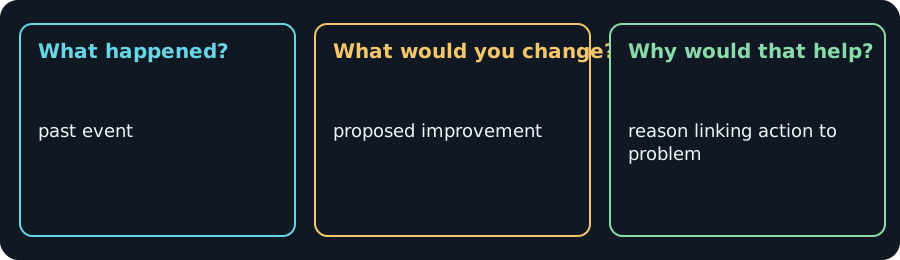
- "What happened?" asks about the past booking problem. "What would you change?" asks for an improvement now. Retelling the same story only answers the first.
- A good reflective answer: "I would confirm a backup room earlier because the late change delayed our invitations." The action is linked to the problem — no impressive invented event needed.

View the original follow-up case at full size
- Answer–reason–example is a flexible aid. A request to describe, compare or reflect may need a different shape.
- First decide the answer type: a specific event, a choice with reasons, or an explanation.
- Develop one example instead of listing qualities, and change your answer when the follow-up changes the question.
- Listen to the real recording to check how you spoke. These are our own self-checks; they don't convert to an official score.
Match the three distinctions from the worked case.
难度 2/5 · 今日首次完成可获 140 金币及少量额外奖励
A useful reflective reply is “I would confirm a backup room earlier because the late change delayed our invitations.” The action is linked to the problem; the answer needs no impressive invented event.
Which reply answers “What would you change next time?”?
难度 1/5 · 今日首次完成可获 100 金币及少量额外奖励
“What happened?” asks for the past room-booking problem. “What would you change?” asks for an improvement now. Repeating the same story answers only the first question. A useful reflective reply is “I would confirm a backup room earlier because the late change delayed our invitations.” The action is linked to the problem; the answer needs no impressive invented event.
Complete the worked-case label: What happened? → ____. Use the phrase in the diagram.
难度 1/5 · 今日首次完成可获 100 金币及少量额外奖励
Identify the question’s demand, give relevant detail and review the actual recording for spoken delivery.
A specific event shows what the help was
- Weaker (written): "I helped a student at the library. I was helpful and patient. Helping people is important, and students need many things. It was a good experience." It names an occasion but replaces actions with opinions; the listener still doesn't know what you did.
- Stronger (written): "A new student could not find the collection desk for a reserved book. I checked the floor guide with her and showed her which staircase led there. Before leaving, I asked her to point out the return route on the guide. That helped me check that I had explained the directions clearly." The actions and the small check show the help. This invented example has no model audio, rating or set speaking length.
A preference needs a reason that fits the task
- Weaker (written): "I prefer instructions in writing because they are good. Demonstrations are also good. Different students like different things. There are many ways to learn." It names a preference but gives no reason linked to using instructions.
- Stronger (written): "I prefer written instructions when I already know the basic task but need to check a detail. I can return to one step without asking someone to repeat the whole explanation. For an unfamiliar movement, though, I might first need a demonstration. My choice depends on what I need to learn." The opposite preference can work too, if it's developed. This compares written content, not a rated spoken answer.
Explain another view instead of repeating a slogan
- Weaker (written): "Students should always work together. Teamwork is essential. I like teamwork, so everyone should use it for every assignment." Repeating a value doesn't explain why a method suits a task or a person.
- Stronger (written): "Working together can help when students need to compare different explanations. Someone might still prefer an individual first attempt because it reveals what they can do without help. I would not treat that preference as a rejection of teamwork; it could be one stage before a useful discussion." It allows a different priority without claiming what all students think. The question decides the shape — there's no universal template.

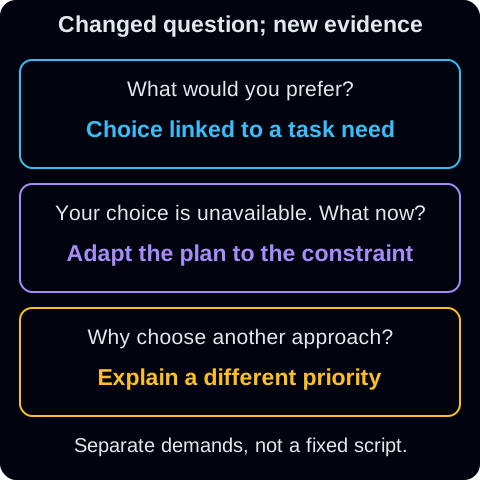
Guided choices — name the demand and the evidence
- Use the hints to tell apart an event, a reflection, a preference, a comparison and a possible explanation. Choose the development that answers the actual words; an impressive topic can't rescue an answer to the wrong question.
- These ten choices use written situations. They train understanding of the question, its scope and repairs — not listening or speaking. Read the feedback, find the deciding clue, and explain a fix before you move on.
原始写作情境: 讲述一次你帮助他人学习新任务的经历。
构思提示: 明确题目要求描述的是哪一过去事件。
问题: 哪个开头回应了这一要求?请选择一项答案。
难度 1/5 · 今日首次完成可获 100 金币及少量额外奖励
具体的教学事件包含人物、任务和情境。修正:将抽象的美德替换为可具体说明的普通事件。本次书面检查关注内容选择;无法提供听力识别或实际口语的证据。
原始书面情境: 在描述预订房间失败后,面试官提问:下次你会做出什么改变?
规划提示: 区分过去的事件与拟议的改进措施。
问题: 以下哪一项后续要点能承接上述追问?请选择一个答案。
难度 1/5 · 今日首次完成可获 100 金币及少量额外奖励
拟议的改变回应了反思要求,并关联了之前的困难。修正:从单纯复述转向有理有据的调整。本次书面检查关注内容选择;无法提供听力识别或实际口语的证据。
原始书面情境: 复习难题时,你更倾向于独自学习还是与他人合作?
规划提示: 寻找一个明确的选择及相关的解释。
问题: 以下哪项回答确立了可辩护的偏好?请选择一个答案。
难度 1/5 · 今日首次完成可获 100 金币及少量额外奖励
该回答陈述了学习路径及理由,并为后续的同伴互动留有余地。修正:直接回应选择而非仅罗列选项。本次书面检查关注内容选择;无法提供听力识别或实际口语的证据。
原始书面情境: 为什么学生在大型研讨课上可能不愿提问?
规划提示: 该问题旨在探究学生产生此种行为的原因。
问题: 以下哪项发展过程解释了可能的原因?请选择一个答案。
难度 1/5 · 今日首次完成可获 100 金币及少量额外奖励
一个合理的解释具有限定性,并未归因于所有学生。修正:将特定条件与可能的反应相联系。本次书面检查关注内容选择;无法提供听力识别或实际口语的证据。
原始书面情境: 比较通过电子邮件获取反馈与当面讨论反馈的优劣。
规划提示: 选择适用于两种方法的评判标准。
问题: 哪个方案同时涵盖了这两种方法?请选择一个答案。
难度 1/5 · 今日首次完成可获 100 金币及少量额外奖励
共享的评判标准允许对两种方法进行有意义的比较。修正:为每个选项使用相同的实际问题。此书面检查涉及内容选择;它无法提供听力识别或实际口语的证据。
原始书面情境: 你认为小组合作有助于学生学习吗?
规划提示: 检查主张的范围,而非形容词的强度。
问题: 哪一个主张留有合理限制的空间?选择一个答案。
难度 1/5 · 今日首次完成可获 100 金币及少量额外奖励
该条件明确了机制,而限制防止了未经支持的普遍性主张。修正:说明益处可能在何时以及如何发生。此书面检查涉及内容选择;它无法提供听力识别或实际口语的证据。
原始书面情境: 在回答时,你提到了星期一,但事件实际上发生在星期三。
规划提示: 听者需要准确的日期和持续的思路。
问题: 哪种修正最能保留原意?选择一个答案。
难度 1/5 · 今日首次完成可获 100 金币及少量额外奖励
简短的修正纠正了相关事实并让事件继续。修正:应纠正细节,而不是将修正本身作为一个新话题。此书面检查涉及内容选择;它无法提供听力识别或实际口语的证据。
原始书面情境: 你无法回忆起示例中所用工具的技术名称。
规划提示: 当标签不可用时,请解释含义。
问题: 哪种策略能保持示例的可理解性?选择一个答案。
难度 1/5 · 今日首次完成可获 100 金币及少量额外奖励
清晰的改写可以在不编造术语的情况下保留原意。修正:描述你实际使用的功能。这份书面检查关注内容选择;它无法提供听力识别或实际口语的证据。
原始书面情境: 你在听到第一次犹豫的录音后,写出了一个改进后的答案。
规划提示: 将计划中的语言与录制的表达区分开。
问题: 为了评估口语修改,还需要哪些证据?请选择一个答案。
难度 1/5 · 今日首次完成可获 100 金币及少量额外奖励
书面修改无法展示第二次口语尝试的表达。修正:请录制修改后的答案并对比实际发音。这份书面检查关注内容选择;它无法提供听力识别或实际口语的证据。
原始书面情境: 追问是:另一种方法是否在某些情况下可能效果更好?
规划提示: 寻找替代方案具有价值的条件。
问题: 哪个回应回应了这一变化后的要求?请选择一个答案。
难度 1/5 · 今日首次完成可获 100 金币及少量额外奖励
变更后的问题要求找出有利于替代方案的情境。修正:请找出这样的条件,而不是通过重复来辩护第一个答案。这份书面检查关注内容选择;它无法提供听力识别或实际口语的证据。
New choices — use the method without hints
- Try ten new written situations without reopening the planning examples. A follow-up may keep the topic but ask for a new view or a new limit. Repeating your last answer may not answer the new question.
- A correct written choice is preparation. Go on to the recorded questions below: only real speech lets you review your links, pauses and clarity. These are local practice choices with no official score.
原始书面情境: 描述一次你收到建议后改变计划的情况。
问题: 以下哪项发展最能回答问题?请选择一个答案。
难度 1/5 · 今日首次完成可获 100 金币及少量额外奖励
该答复将建议与具体的改变行动及后果相联系。修正:使变化可见,而非仅表扬建议。此书面检查涉及内容选择;它未提供听力识别或实际言语的证据。
原始书面情境: 学习陌生设备时,您更倾向于书面说明还是现场演示?
问题: 哪个答复给出了带有相关理由的偏好?请选择一个答案。
难度 1/5 · 今日首次完成可获 100 金币及少量额外奖励
该偏好将形式与实际的学习需求联系起来,而未制定普遍规则。修正:将选择与您需要理解的内容相连接。此书面检查涉及内容选择;它未提供听力识别或实际言语的证据。
原始书面情境: 什么可能使在线小组会议效果不佳?
问题: 哪个回答解释了一个可能出现的问题?请选择一个答案。
难度 1/5 · 今日首次完成可获 100 金币及少量额外奖励
该条件解释了参与可能变得困难的原因。修正:给出具体机制并限定其适用范围。此书面检查涉及内容选择;它未提供听力识别或实际言语的证据。
原始书面情境: 您描述了向导师求助解决问题的过程。后续提问为:您从那次经历中学到了什么?
问题: 哪个要点体现了从叙述到反思的转变?请选择一个答案。
难度 1/5 · 今日首次完成可获 100 金币及少量额外奖励
该答案指出了一个可迁移的经验及其重要性。修正:解释该事件如何改变了您的方法。此书面检查涉及内容选择;它未提供听力识别或实际言语的证据。
原始书面情境: 比较提前规划小组项目与边做边决定任务。
问题: 哪个回答使用了有意义的共同标准?请选择一个答案。
难度 1/5 · 今日首次完成可获 100 金币及少量额外奖励
两种方法均根据分配和适应工作的情况进行评估。修正:应比较后果而非重复偏好。此书面检查关注内容选择;它未提供听力识别或实际口语的证据。
原始书面情境: 你认为学生应该分享学习笔记吗?
问题: 哪一个回答在不过度夸大好处的情况下得到支持?选择一个答案。
难度 1/5 · 今日首次完成可获 100 金币及少量额外奖励
该陈述指出了可能的好处及其局限性。修正:应将获取笔记与理解笔记区分开来。此书面检查关注内容选择;它未提供听力识别或实际口语的证据。
原始书面情境: 你在举例时不小心说错了人名,随后发现了错误。
问题: 哪一个回应能清晰纠正指代错误?选择一个答案。
难度 1/5 · 今日首次完成可获 100 金币及少量额外奖励
简短的更正既确认了人物又保留了动作。修正:先纠正指代,再继续相关事件。此书面检查关注内容选择;它未提供听力识别或实际口语的证据。
原始书面情境: 题目询问尽管需要团体房间,校园为何仍保留一些安静的学习空间。
问题: 哪一个发展过程能针对该解释进行阐述?选择一个答案。
难度 1/5 · 今日首次完成可获 100 金币及少量额外奖励
回复解释了独特的需求,而非否定所有小组活动。修正:将空间与其目的联系起来。此书面检查涉及内容选择;它未提供听力识别或实际言语的证据。
原始书面情境: 你选择了独自准备。后续问题询问如果需要搭档你将如何工作。
问题: 哪个回应适应了新的限制条件?请选择一个答案。
难度 1/5 · 今日首次完成可获 100 金币及少量额外奖励
修订后的计划既尊重了所需的搭档要求,又保留了有益的单独准备环节。修正:在捍卫旧选择之前先回应新条件。此书面检查涉及内容选择;它未提供听力识别或实际言语的证据。
原始书面情境: 你有同一回答的两段录音和一份书面说明。
问题: 哪种比较可以为你的表达提供证据?请选择一个答案。
难度 1/5 · 今日首次完成可获 100 金币及少量额外奖励
只有实际的录音才能显示你口语尝试的变化。修正:指出具体特征并对比声音,而不是从文本推断。此书面检查涉及内容选择;它未提供听力识别或实际言语的证据。
Pair one — learning a skill, and what you'd change
- Record a true, ordinary experience of learning a useful skill. Then answer the changed follow-up in a separate recording. Keep the event in mind, but choose new information when asked what you'd do differently. You don't need an exceptional achievement.
- Stop and replay each answer before opening its written guidance. Use Record for a new take; My recording is the latest and Previous recording the one before. Compare them, then answer the changed question. Clear recordings deletes the takes on this device; it doesn't erase your saved practice history.
原始书面面试问题: 请讲述一次有人帮助你学习有用技能的经历。他们做了什么对你有所帮助?使用一个你可以解释的真实日常事件;这项技能不必令人印象深刻。
这是一道书面练习题,而非面试官音频或限时正式任务。请在不阅读完整脚本的情况下进行录音。停止播放“我的录音”,然后打开书面指导。录制修改后的版本,并将“我的录音”与“之前的录音”进行比较;清除录音会删除这些本地录制文件。系统不会自动提供语音或发音评分。
这是口语自评记录,不代表自动判定正确性、发音水平或TOEFL估分。同一问题的修订与新问题的回答能提供不同维度的证据。
针对上一回答的变换跟进问题: 如果你再次学习类似技能,你会怎么做以作改进?将你提出的改动与你刚才描述的事件联系起来。
这是一个书面练习问题,非面试官音频或限时正式任务。请脱稿录音。停止播放后,点击“我的录音”并打开书面指导。录制修订版本,并将“我的录音”与“之前的录音”进行对比;“清除录音”将删除这些本地录音文件。不提供自动语音或发音评分。
这是口语自评记录,不代表自动判定正确性、发音水平或TOEFL估分。同一问题的修订与新问题的回答能提供不同维度的证据。
Pair two — a preference with a new limit
- Explain which study space suits you for a difficult assignment. Then answer separately when that space isn't available. Keep the practical need behind your choice while changing what you'd do — the new limit is part of the question.
- Use short notes if you need them, not a script to read. The written examples appear after you record, and you confirm only after replaying your latest take. The page has no timer, speech recognition or pronunciation judgement. You need browser microphone access to record; reading alone can't complete these speaking activities.
原始书面面试问题: 面对一项困难的作业,你是更喜欢安静的房间还是嘈杂的共享自习室?请解释你的选择对该任务有何益处。相关的替代方案或限制条件可能有所帮助,但不需要固定的答案模式。
这是一个书面练习问题,非面试官音频或限时正式任务。请脱稿录音。停止播放后,点击“我的录音”并打开书面指导。录制修订版本,并将“我的录音”与“之前的录音”进行对比;“清除录音”将删除这些本地录音文件。不提供自动语音或发音评分。
这是口语自评记录,不代表自动判定正确性、发音水平或TOEFL估分。同一问题的修订与新问题的回答能提供不同维度的证据。
针对上一回答的变换跟进问题: 假设你偏好的自习室今天不可用,你将如何调整计划?请针对这一限制条件作出回应,而不仅仅是重申你喜欢哪个场所。
这是一个书面练习问题,非面试官音频或限时正式任务。请脱稿录音。停止播放后,点击“我的录音”并打开书面指导。录制修订版本,并将“我的录音”与“之前的录音”进行对比;“清除录音”将删除这些本地录音文件。不提供自动语音或发音评分。
这是口语自评记录,不代表自动判定正确性、发音水平或TOEFL估分。同一问题的修订与新问题的回答能提供不同维度的证据。
Pair three — a disagreement and another view
- Describe a small real disagreement about a shared task, and how you reached a decision. The follow-up asks why another approach could be reasonable. Explain the other priority without pretending you've completely changed your mind.
- Choose a harmless, ordinary event and leave out names and private details. A question asking for an experience needs a real event you can develop; a question about what someone might do allows an imagined answer. Don't quietly turn an invented event into a claim about your life.
原始书面面试题: 请讲述一次你和另一个人希望以不同方式完成共同任务的经历。你们是如何决定采取什么行动的?一次真实的小分歧就足够了;避免记录你不愿被录制的私人细节。
这是一个书面练习题,并非面试官音频或限时正式任务。请在不阅读完整脚本的情况下录音。停止播放“我的录音”,然后打开书面指导。重新录制修改版,并对比“我的录音”与“之前的录音”;清除录音会删除这些本地录音。系统不提供自动语音或发音评分。
这是口语自评记录,不代表自动判定正确性、发音水平或TOEFL估分。同一问题的修订与新问题的回答能提供不同维度的证据。
针对你上一回答的变更跟进提问: 为什么有人可能会合理地选择你最初未选的方法?请解释这一观点,即使你自己的偏好并未完全改变。
这是一个书面练习题,并非面试官音频或限时正式任务。请在不阅读完整脚本的情况下录音。停止播放“我的录音”,然后打开书面指导。重新录制修改版,并对比“我的录音”与“之前的录音”;清除录音会删除这些本地录音。系统不提供自动语音或发音评分。
这是口语自评记录,不代表自动判定正确性、发音水平或TOEFL估分。同一问题的修订与新问题的回答能提供不同维度的证据。
Use the method on a new question about taking part
- Try the two new written choices, then record your answer to the question about waiting until the end of a workshop to ask for help. Give one benefit and one drawback of waiting. This question needs its own evidence, not the room-booking story.
- Listen back and choose one precise improvement. "More fluent" is a direction, not a fix you can hear; "make the link between the delay and the missed step clear" is something you can compare in two recordings. These written questions don't reproduce the interviewer's voice or the official timing.
原始书面情境: 一名学生说:我总是等到研讨会结束才提问。采访者问:这种做法可能有什么缺点?
问题: 哪个回应回答了后续问题?请选择一个答案。
难度 1/5 · 今日首次完成可获 100 金币及少量额外奖励
新问题要求设定首选方法的限制。修正:说明在特定情境下等待的后果。此书面检查涉及内容选择;它未提供听力识别或实际口语的证据。
原始书面情境: 面试官询问新生是否应向高年级学生请教活动选择建议。
问题: 哪个答案能发展出平衡的观点?选择一个答案。
难度 1/5 · 今日首次完成可获 100 金币及少量额外奖励
回复将建议与可能的用途及相关的局限性联系起来。修正:核实建议是否适合个人及具体情境。此书面检查涉及内容选择;它未提供听力识别或实际口语的证据。
新的书面面试题: 有些学生在研讨会期间立即提问,而另一些则等到最后。等待提问的好处和局限性是什么?请结合相关情境阐述你的看法。
这是一个书面练习题,并非面试官音频或限时正式任务。请在不阅读完整脚本的情况下录音。停止播放“我的录音”,然后打开书面指导。重新录制修改版,并对比“我的录音”与“之前的录音”;清除录音会删除这些本地录音。系统不提供自动语音或发音评分。
这是口语自评记录,不代表自动判定正确性、发音水平或TOEFL估分。同一问题的修订与新问题的回答能提供不同维度的证据。
Come back later with a new example and real playback
- On another day, try the two written review choices and the separate recorded question about checking advice. Remember how you work out what a question asks, then use a new example. Revising an answer to the same question and answering a new one give you different evidence.
- Go back to the speaking overview to tell the task types apart, or to Listen and Repeat for its different job: saying back what you heard. A written plan isn't a listening test, and self-review isn't an examiner's mark or an official score.
Checked on 19 October 2026: ETS Speaking. All questions, situations and written examples were written for this course, separately from reserved test forms. This lesson has written questions and recordings on your device only — no interviewer or model audio, set answer length, adaptive simulation or automatic speech assessment.
原始书面情境: 你描述过尝试一种新的复习方法。下一个问题是:为什么另一名学生可能会拒绝该方法?
问题: 新回答应补充什么内容?选择一个答案。
难度 1/5 · 今日首次完成可获 100 金币及少量额外奖励
后续问题改变了视角。修正:识别需求上的相关差异,而不是将自己个人的偏好视为普遍适用。此书面检查涉及内容选择;它未提供听力识别或实际口语的证据。
原始书面情境: 你完成了一个录音回答,阅读了指导并计划了一次修正。
问题: 下一步骤中,哪一个测试的是迁移能力而非仅仅是对该回答的排练?选择一个答案。
难度 1/5 · 今日首次完成可获 100 金币及少量额外奖励
新题目询问该方法是否在熟悉的答案之外仍然有效。修正:区分同题复习与新题表现。此书面检查涉及内容选择;它未提供听力识别或实际口语的证据。
后续复习书面面试问题: 描述一种你用来检查建议是否适合自身情况的方法。为什么这种检查是有用的?如果需要,请提供一个相关例子来辅助说明该方法。
这是一个书面练习题,并非面试官音频或限时正式任务。请在不阅读完整脚本的情况下录音。停止播放“我的录音”,然后打开书面指导。录制复习版本并将“我的录音”与“之前的录音”进行比较;“清除录音”功能会删除这些本地录音。系统不提供自动语音或发音评分。
这是口语自评记录,不代表自动判定正确性、发音水平或TOEFL估分。同一问题的修订与新问题的回答能提供不同维度的证据。