| English | 释义 | 拼音 |
|---|---|---|
| solenoid/ˈsəʊlənɔɪd/ | 螺线管 | luó xiàn guǎn |
| d.c. motor/ˌdiː ˈsiː ˈməʊtə/ | 直流电动机 | zhí liú diàn dòng jī |
| motor effect/ˈməʊtə ɪˈfekt/ | 电动机效应 | diàn dòng jī xiào yìng |
| left-hand rule/left hænd ruːl/ | 左手定则 | zuǒ shǒu dìng zé |
| commutator/ˈkɒmjuːteɪtə/ | 换向器 | huàn xiàng qì |
电产生磁
- 一根携带电流的导线在它自己周围产生一个磁场。
- 把那根导线放在另一块磁铁的场中,它感受到一个力——每个电动机背后的想法。
- 这是电和磁相遇的地方。
一个电流的磁效应
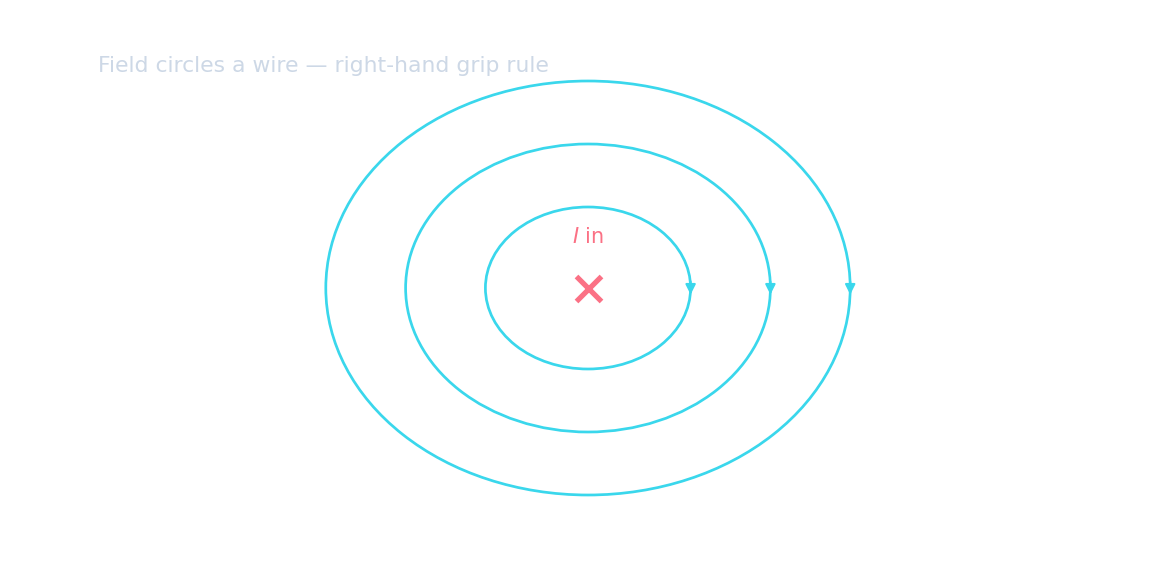
- 一根直导线中的电流在它周围产生圆形的场线;反转电流,场就反转。
- 一个螺线管(solenoid,一个长线圈)产生一个就像一块条形磁铁的场,有一个 N 和一个 S 极。
- 通过以下使它更强:更多电流、更多匝数,或一个软铁芯。
- 用在继电器和扬声器中。
一个直流电动机
The force that spins a motor
A current in a magnetic field is pushed at right angles to both — reverse the current or flip the magnet and it pushes the other way. That is what turns a motor.
The magnetic field of a solenoid (a long coil carrying current) looks like the field of:
难度 1/5 · 今日首次完成可获 100 金币及少量额外奖励
A solenoid produces a bar-magnet-like field, with a north pole at one end and a south at the other.
Which change makes an electromagnet stronger?
难度 1/5 · 今日首次完成可获 100 金币及少量额外奖励
More current, more turns, and a soft-iron core all make the field stronger.
电动机效应
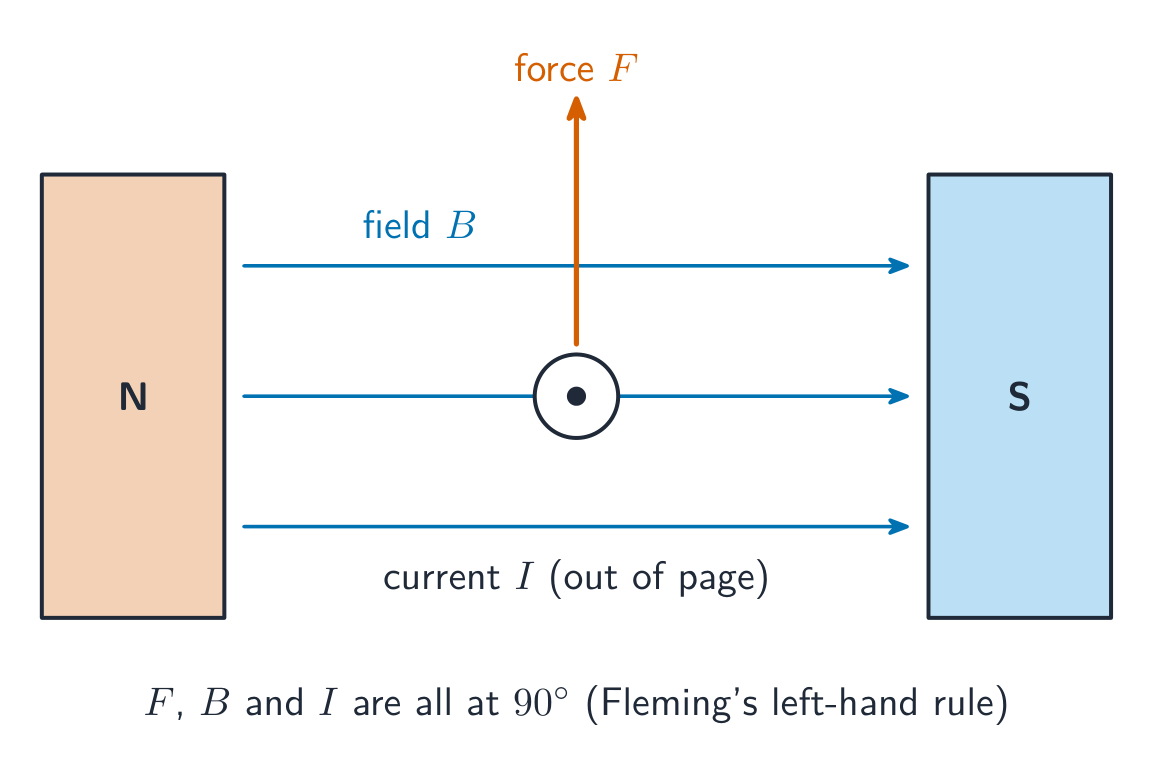
- 一根在磁场中的载流导线感受到一个力——电动机效应(motor effect)。
- 反转电流,或反转场,力就反转。
- 一个更大的电流或更强的场给出一个更大的力;当导线与场成直角时力最大。
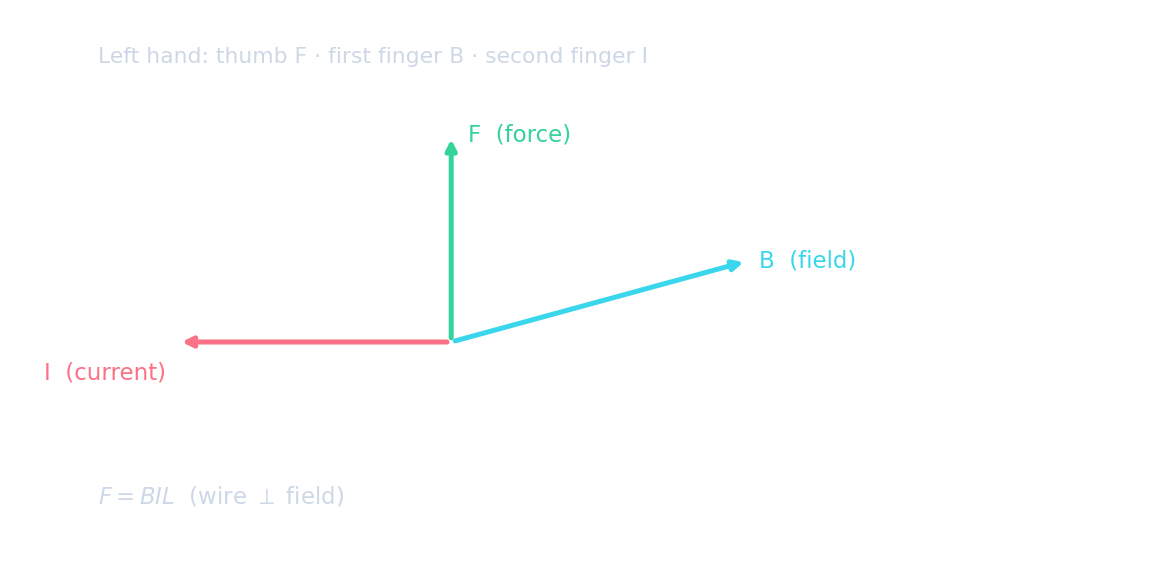
- 用左手定则找方向:拇指 = 力,食指 = 场(N→S),中指 = 电流。
In the motor effect, reversing the current direction:
难度 1/5 · 今日首次完成可获 100 金币及少量额外奖励
Reversing either the current or the field reverses the force. Reversing both leaves it unchanged.
In Fleming's left-hand rule, the thumb points in the direction of the:
难度 1/5 · 今日首次完成可获 100 金币及少量额外奖励
Thumb = force, first finger = field, second finger = current — all at right angles.
The force on a current-carrying wire is greatest when the wire is at right angles to the magnetic field.
难度 1/5 · 今日首次完成可获 100 金币及少量额外奖励
The force is largest when the wire is perpendicular to the field, and zero when the wire lies along the field.
Match each idea to what it describes.
难度 2/5 · 今日首次完成可获 140 金币及少量额外奖励
Each item links the term to its correct meaning.
直流电动机
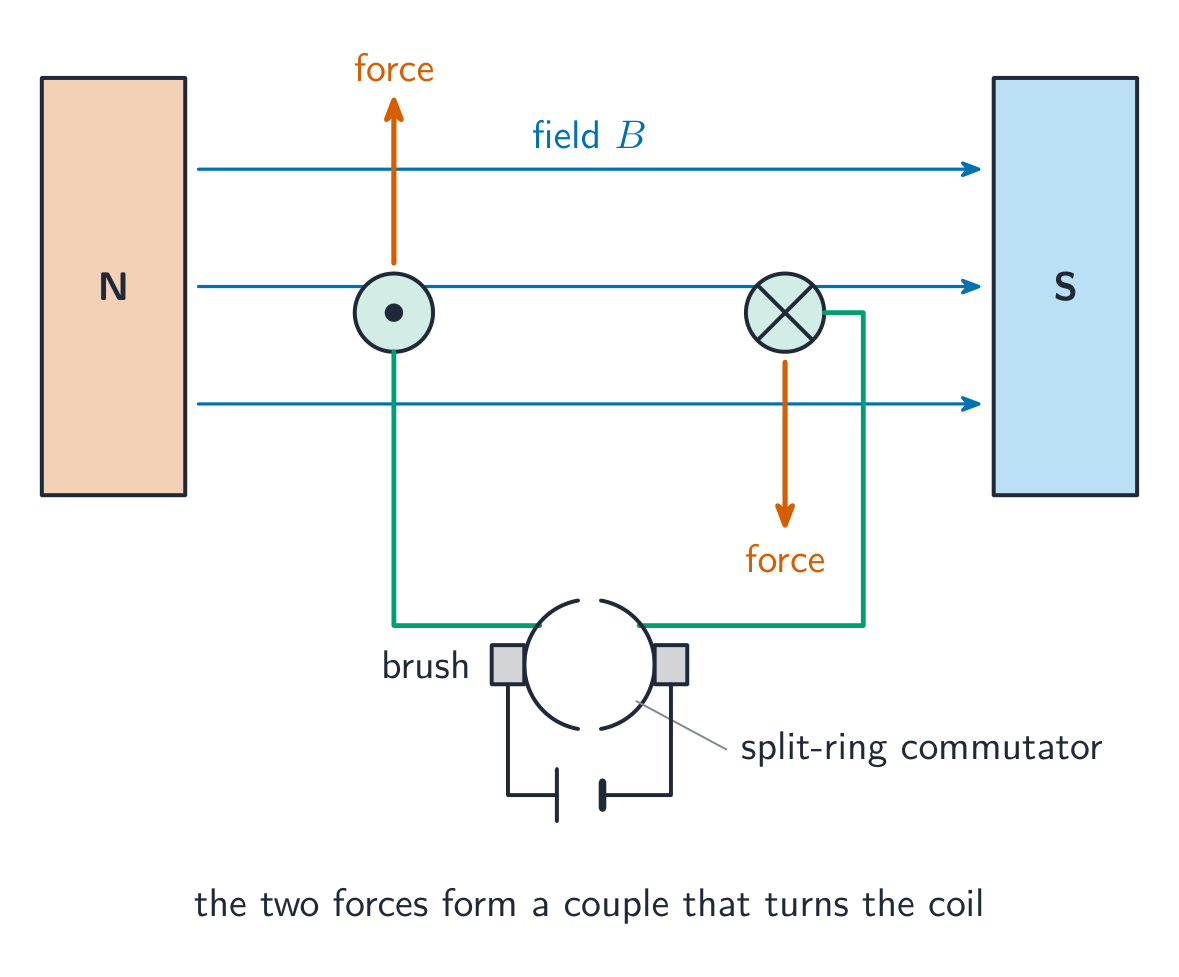
- 一个在场中的载流线圈感受到一个转动效应:它两侧上的力以相反的方向作用。
- 一个分裂环换向器(split-ring commutator)每半圈交换电流方向,所以线圈保持以同样的方式旋转。
- 转动效应随更多匝数、一个更大的电流,或一个更强的场而更大。
一根载流导线上的电动机效应
What is the job of the split-ring commutator in a d.c. motor?
难度 1/5 · 今日首次完成可获 100 金币及少量额外奖励
Without the commutator the coil would stop after half a turn. Swapping the current each half-turn keeps it rotating the same way.
例题
1。 导线在两磁极间向右通以电流,N极在上,S极在下(磁场方向向下)。左手定则:食指指向下(磁场),二指指向右(电流),拇指指向纸面内——即为受力方向。
2。 使直流电动机转速加快的三种方法:增大电流、增加线圈匝数、使用更强的磁铁。要反转转向,需改变电流方向或磁场方向(不可同时改变两者)。
电动机用左手,发电机用右手。 用手错误会导致方向相反。
你掌握了
- 一个电流产生一个磁场:绕一根导线的圆,一个螺线管的条形磁铁场
- 更强的电磁铁:更多电流、更多匝数、软铁芯
- 电动机效应:一根在场中携带电流的导线感受到一个力(左手定则)
- 一个直流电动机旋转;分裂环换向器每半圈反转电流
由反向电流为5安培的电路写出
- 一根导线载有5安培电流,且与磁场方向垂直。
- 说明改变一个方向的作用,以及同时改变电流和磁场方向会怎样。
A wire carries 5 A at right angles to a magnetic field. What happens to the force if only the current is reversed, and what happens if the current and the field are both reversed?
The left-hand rule uses current and field. Changing both inputs returns the thumb to the original side.
What does reversing only the current do?
难度 1/5 · 今日首次完成可获 100 金币及少量额外奖励
One of current or field reverses the force. Both together restore it.