Market research · 市场调研
| English | 中文 | Pinyin · 拼音 |
|---|---|---|
| market research/ˈmɑːkɪt rɪˈsɜːtʃ/ | 市场调研 | shì chǎng diào yán |
| secondary research/ˈsekəndəri rɪˈsɜːtʃ/ | 二手调研 | èr shǒu diào yán |
| primary research/ˈpraɪməri rɪˈsɜːtʃ/ | 一手调研 | yī shǒu diào yán |
| questionnaires/ˌkwestʃəˈneəz/ | 问卷 | wèn juǎn |
| quantitative/ˈkwɒntɪteɪtɪv/ | 定量 | dìng liàng |
| qualitative/ˈkwɒlɪteɪtɪv/ | 定性 | dìng xìng |
| sample/ˈsæmpl/ | 样本 | yàng běn |
| representative/ˌreprɪˈzentətɪv/ | 有代表性的 | yǒu dài biǎo xìng de |
| biased/ˈbaɪəst/ | 有偏的 | yǒu piān de |
Asking before you act
- Launching a product on a guess is risky. Smart businesses find out what customers want first.
- That is market research 市场调研.
行动前先询问
- 凭猜测推出一个产品是有风险的。聪明的企业先查明顾客想要什么。
- 那就是市场调研(market research)。
Market research cycle · 市场调研周期
Follow how a business turns customer data into a marketing decision. · 跟踪企业如何将客户数据转化为营销决策的过程。
Carrying out a new customer questionnaire is: · 执行新客户问卷是:
Primary research collects new first-hand data. · 一手研究收集新的原始数据。
Using existing data from the internet is: · 使用互联网现有数据是:
Secondary research uses data that already exists. · 二手研究使用已存在的数据。
Primary vs secondary research 二手调研
- Primary research 一手调研: new data collected first-hand (surveys, interviews, questionnaires 问卷). Specific but costly.
- Secondary research: existing data (reports, internet, sales records). Cheap and fast, but not tailored.
Market research: primary (first-hand) versus secondary (already exists)
一手对二手调研
- 一手调研(primary research):第一手收集的新数据(调查、访谈、问卷)。具体但昂贵。
- 二手调研(secondary research):现有数据(报告、互联网、销售记录)。便宜且快,但不是量身定制的。
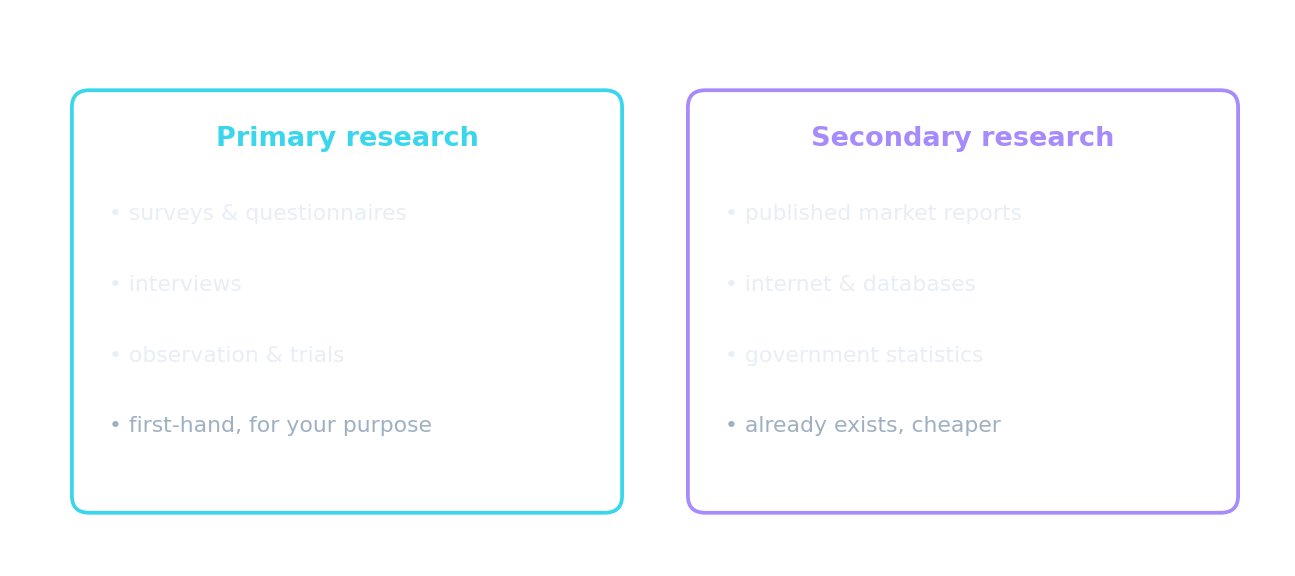
市场调研:一手(原始)对二手(已有)
Research that explores WHY customers feel as they do is: · 探索客户“为什么”这样感受的研究是:
Qualitative research captures opinions and reasons. · 定性研究捕捉观点和原因。
Quantitative 定量 vs qualitative 定性
- Quantitative: numbers — how many, how much.
- Qualitative: opinions and reasons — why customers behave as they do.
Primary research collects new data; secondary uses existing data
定量对定性
- 定量(quantitative):数字——多少个、多少钱。
- 定性(qualitative):意见和原因——顾客为什么那样行事。
A small or biased sample can give misleading research results. · 小样本或有偏样本会导致误导性的研究结果。
Sample quality affects reliability. · 样本质量影响可靠性。
A small group chosen to represent the whole market is a . · 被选出来代表整个市场的少量群体是一个。
Sampling avoids asking everyone. · 抽样避免了询问所有人。
Sampling 样本 and reliability
- A sample is a small group chosen to represent the whole market.
- A larger, more representative 有代表性的 sample gives more reliable results — but costs more.
Bad research misleads. If a sample is too small or not representative, or questions are biased 有偏的, the results can point a business the wrong way. Quality of research matters, not just quantity.
抽样与可靠性
- 一个样本(sample)是被选来代表整个市场的一个小群体。
- 一个更大的、更有代表性的样本给出更可靠的结果——但成本更高。
糟糕的调研会误导。 如果一个样本太小或没有代表性,或问题有偏见,结果就能把一个企业引向错误的方向。调研的质量重要,不只是数量。
You've got it
- primary research = new first-hand data; secondary = existing data
- quantitative = numbers; qualitative = opinions and reasons
- a representative sample gives reliable results — design matters
你掌握了
- 一手调研 = 新的第一手数据;二手 = 现有数据
- 定量 = 数字;定性 = 意见和原因
- 一个有代表性的样本给出可靠的结果——设计很重要