| English | 释义 | 拼音 |
|---|---|---|
| social and emotional learning/ˈsəʊʃl ænd ɪˈməʊʃənl ˈlɜːnɪŋ/ | 社会情感学习 | shè huì qíng gǎn xué xí |
| self-awareness/self əˈweənəs/ | 自我认知 | zì wǒ rèn zhī |
| self-management/self ˈmænɪdʒmənt/ | 自我管理 | zì wǒ guǎn lǐ |
| social awareness/ˈsəʊʃl əˈweənəs/ | 社会意识 | shè huì yì shí |
| relationship skills/rɪˈleɪʃənʃɪp skɪlz/ | 人际技能 | rén jì jì néng |
| responsible decision-making/rɪˈspɒnsɪbl dɪˈsɪʒn ˈmeɪkɪŋ/ | 负责任的决策 | fù zé rèn de jué cè |
Five skills in one school project
This is original GAC031-aligned practice for unit 3.1, Introduction to Social Emotional Learning. It does not reproduce an ACT assessment.
Four students want to make the library easier to use during exam week. Their first idea is a colourful “quiet zone” poster. At a meeting, one student says, “The poster looks nice, but people still cannot tell where group discussion is allowed.” The designer goes silent because the criticism feels personal.
Social and emotional learning 社会情感学习 (SEL) helps the group make a better decision. Five actions matter: self-awareness 自我认知 (notice your reaction), self-management 自我管理 (choose a useful response), social awareness 社会意识 (understand another person's need), relationship skills 人际技能 (work through disagreement), and responsible decision-making 负责任的决策 (compare consequences before acting).
A colourful poster cannot negotiate with a confused student.
哪两项行动能帮助图书馆小组运用社会情感学习?
难度 2/5 · 今日首次完成可获 140 金币及少量额外奖励
觉察自己的反应是自我认知;询问使用者是社会意识。沉默和价格本身都不足以支持决策。
Name the feeling; choose the next move
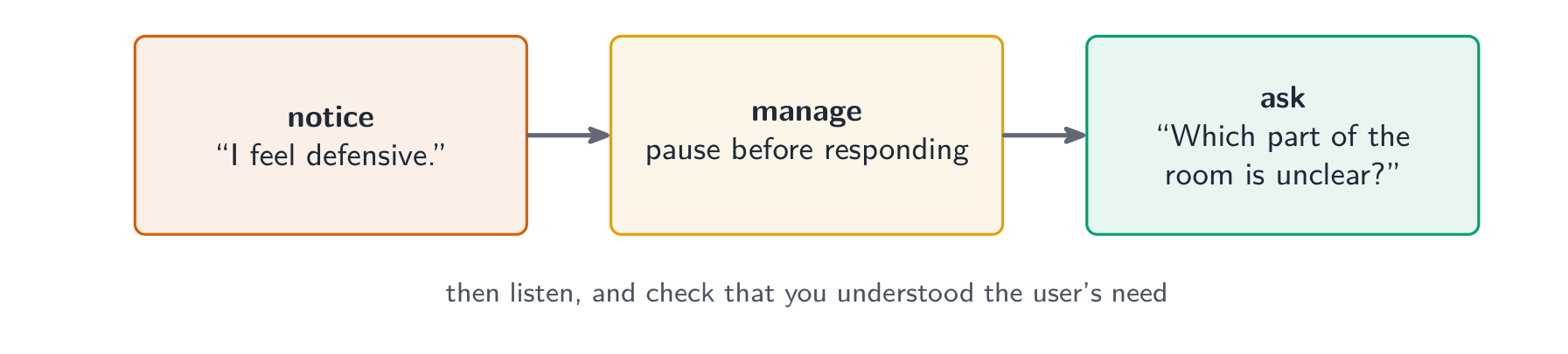
The designer feels embarrassed. A feeling is information, not an instruction. She can say, “I feel defensive because I spent time on this,” and still ask, “Which part of the room is unclear?” The first sentence shows self-awareness; the question shows self-management.
Pause → name → ask. “I am frustrated. I will take one breath, then ask which sign confused the visitor.” Pausing does not mean the criticism is correct; it makes a useful question possible.
队友说你的海报看不懂,哪种回应最有助于项目?
难度 1/5 · 今日首次完成可获 100 金币及少量额外奖励
具体提问把批评变成小组能使用的信息,也保留了之后讨论不同意见的空间。
Ask the people who will use the result
Students who need silence and groups who need to talk have different needs. Ask each group where they work now and what interrupts them. “Would a new poster help?” leads them towards the team's idea. “Where did you expect to be able to talk?” lets them describe their own experience. That is social awareness in action.
“你原本期望能在哪里交谈?”比“新海报会有帮助吗?”更具开放性。
难度 1/5 · 今日首次完成可获 100 金币及少量额外奖励
正确。关于海报的问题会将用户引向既定想法;开放性问题则允许他们描述自身的经历。
Turn disagreement into a test
One student wants more signs; another proposes a movable divider. Use the same questions for both: who benefits, what will it cost, and what can we try this week? Give one person the sign sketch, another the conversation with library staff, and another the user observations. Agree on a date to compare results.
Do not call silence agreement. Invite the quiet teammate to speak or give them time to write a view. Record why an idea was rejected, not a judgement about its author.
把行动和主要用到的技能配对。
难度 2/5 · 今日首次完成可获 140 金币及少量额外奖励
五个名称描述同一个项目里的不同做法,并不是给学生固定分类。
Decide, observe, revise
The team chooses a one-week trial of clearer signs for silent and discussion areas. It costs little and can be undone. They ask users whether they can find the right space. If the answer is no, they revise the signs; if signs cannot reduce noise, they revisit the divider.
Responsible decision-making compares effects, cost and reversibility. A project log can record need → option → reason → test → result → revision.
These five skills are actions, not personality types: notice your reaction, manage it, understand the user, work with the group, then choose a testable next step.
把小组的决策循环按顺序排列。
难度 3/5 · 今日首次完成可获 200 金币及少量额外奖励
从需求出发,并为下一次决定产生证据,这样的决策才有用。