| English | 释义 | 拼音 |
|---|---|---|
| questions/ˈkwestʃnz/ | 提问 | tí wèn |
| signposting/ˈsaɪnpəʊstɪŋ/ | 提示语 | tí shì yǔ |
| eye contact/aɪ ˈkɒntækt/ | 眼神交流 | yǎn shén jiāo liú |
A five-minute talk takes six minutes in rehearsal
- Your timed rehearsal reveals a problem while you can still fix it. Do not rely on speaking faster on the day.
- Protect the main claim and its evidence. Shorten repetition or optional detail, and check whether the brief includes time for questions.
你的五分钟排练比规定时间多出了90秒。你首先应该尝试什么?
难度 1/5 · 今日首次完成可获 100 金币及少量额外奖励
保护主要观点和证据,同时删除与其无关的内容。
Rehearse in a way that fits you
- Practise aloud with the slides, transitions and any demonstration. Stand or sit as appropriate; use the same access arrangements you will use on the day.
- Time each section. For a five-minute talk, one possible plan is 30 seconds opening, 180 seconds evidence, 60 seconds interpretation and 30 seconds conclusion.
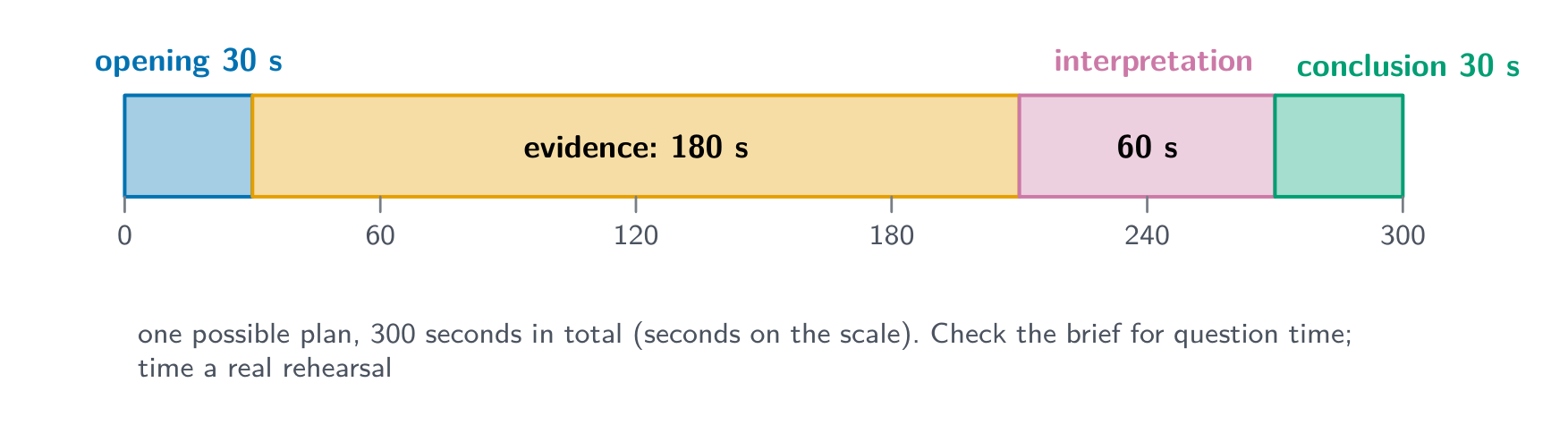
开场白、证据和解读分别耗时30、180和60秒。在一段300秒的演讲中,还剩下多少秒?
难度 2/5 · 今日首次完成可获 140 金币及少量额外奖励
在此示例计划中,300 − (30 + 180 + 60) = 30秒用于结论部分。
Give listeners a route through the talk
- Signposting 提示语 tells listeners where they are: “First, our method”; “Now, the result”; “Finally, the limitation”. Pause at transitions.
- Define an unfamiliar term, then connect it to an example. Speak clearly at a pace your audience can follow and test this with a listener.
哪些做法有助于听众跟上过渡环节?请选择所有适用项。
难度 2/5 · 今日首次完成可获 140 金币及少量额外奖励
结构和停顿为跟随或重新加入提供了途径。加快速度可能会使困惑加剧。
Describe the evidence aloud
- Say the main finding and important labels: “The vertical axis counts students; the bus bar is 18.” Do not assume everybody can read the screen.
- Reading a key quotation or number aloud may help. Avoid reading every bullet without explanation; provide a transcript or notes when needed.
Slide: “18 of 30 used the bus.” Spoken explanation: “That is 60% of our respondents. We asked one class, so the result does not represent every student in the city.”
切勿大声朗读关键引文或图表数值。
难度 1/5 · 今日首次完成可获 100 金币及少量额外奖励
口述关键文本可提升信息获取效率。应解释其含义,而非脱离语境逐字朗读每张幻灯片内容。
Answer the question you can support
- Listen to the questions 提问, clarify if needed, and answer using your evidence. If the data is missing, say exactly what was not measured.
- Eye contact 眼神交流 can help some audiences, but is not a requirement for every speaker. Face the audience when possible, use a clear microphone and offer a realistic follow-up.
“We did not measure ticket cost” is an honest answer. Do not invent a number or promise a follow-up you cannot deliver. Presentation advice does not guarantee a particular assessment mark.
您的调查未测量票价成本。面对涉及费用的问题时,应如何作答?
难度 1/5 · 今日首次完成可获 100 金币及少量额外奖励
指出证据缺失之处。若条件允许,可提出后续步骤,但绝不可用猜测替代缺失数据。
在调查仅记录出行方式而未记录费用的情况下,回答“公交用户花费更少吗?”
难度 3/5 · 今日首次完成可获 200 金币及少量额外奖励
示例:“我们仅记录了出行方式,未记录消费情况,因此本调查无法回答此问题;我们需要费用数据。”
Use feedback to change one thing
- Ask a listener what they understood, where they lost the thread and whether the evidence supported your claim. Adjust one problem, then rehearse again.
- Record a short practice talk if you have permission. Check time, a clear transition, an audible explanation of the visual and one evidence-based question response.
Rehearse → time → get feedback → revise. Explain visual evidence aloud and distinguish what you know from what you did not measure.
Further guidance: W3C accessible presentations.
将排练中遇到的问题与有效的后续复习措施相匹配。
难度 2/5 · 今日首次完成可获 140 金币及少量额外奖励
根据观察到的问题选择改进方案。没有任何单一技巧能解决所有表达问题。
同伴记住了“60%的城市学生乘坐公交车”。而您的样本仅为一个班级。您应进行哪些修正?
难度 1/5 · 今日首次完成可获 100 金币及少量额外奖励
同伴过度概括了结论。请解释:18的30仅指代受访者,并非整个城市的人口。