Changes in Policies and Economic Conditions · 政策与经济状况的变化
| English | 中文 | Pinyin · 拼音 |
|---|---|---|
| interest rates/ˈɪntrest reɪts/ | 利率 | lì lǜ |
| inflation/ɪnˈfleɪʃn/ | 通货膨胀 | tōng huò péng zhàng |
| income/ˈɪŋkʌm/ | 收入 | shōu rù |
| monetary policy/ˈmʌnɪtəri ˈpɒlɪsi/ | 货币政策 | huò bì zhèng cè |
| Fiscal policy/ˈfɪskl ˈpɒlɪsi/ | 财政政策 | cái zhèng zhèng cè |
What moves the exchange rate
- Several forces shift currency demand and supply, moving the exchange rate.
- The big three: interest rates, inflation, and income.
- Government policy works through these same channels.
- Learn the three and you can predict almost any exchange-rate move.
什么让汇率变动
- 几种力量移动货币的需求和供给,从而移动汇率。
- 三大因素:利率、通胀和收入。
- 政府政策通过这同样的渠道起作用。
- 学会这三个,你几乎能预测任何汇率变动。
If a country raises its interest rates (others steady), its currency tends to: · 如果一个国家提高利率(其他国家不变),其货币倾向于:
Higher bond returns attract foreign money, raising currency demand. · 更高的债券回报吸引外国资金,抬高货币需求。
Higher domestic inflation than the rest of the world tends to make a currency: · 国内通胀高于世界其他地区,倾向于让货币:
Dearer goods lose foreign buyers, so demand for the currency falls. · 更贵的商品失去外国买家,所以对货币的需求下降。
Interest rates and inflation
- A change in interest rates 利率: raise them, and foreign investors want your bonds — they demand your currency, so it appreciates.
- A difference in inflation 通货膨胀: higher inflation at home makes your goods dearer, so foreigners buy fewer — demand falls and the currency depreciates.
- So high rates strengthen a currency; high inflation weakens it.
利率与通胀
- 利率(interest rates)的变化:提高利率,外国投资者想要你的债券——他们需要你的货币,所以它升值。
- 通货膨胀(inflation)的差异:国内更高的通胀让你的商品更贵,所以外国人买得更少——需求下降,货币贬值。
- 所以高利率增强货币;高通胀削弱货币。
Does it appreciate or depreciate the dollar? · 它让美元升值还是贬值?
Higher domestic interest rates appreciate a currency; higher inflation or higher income (more imports) depreciate it. · 更高的国内利率使货币升值;更高的通胀或更高的收入(更多进口)使它贬值。
When a country's income booms and imports surge, its currency tends to depreciate because residents: · 当一国收入激增、进口猛涨,其货币倾向于贬值,因为居民:
Buying imports means offering your currency — supply rises, the rate falls. · 购买进口品意味着拿出本币——供给上升,汇率下降。
Income
- A change in income 收入: when a country's income grows, its residents buy more imports.
- To buy imports they supply more of their own currency, which tends to depreciate it.
- A booming economy can therefore weaken its own currency through extra imports.
- Notice this one works through the supply side, not demand.
收入
- 收入(income)的变化:当一个国家的收入增长,其居民买更多进口品。
- 为购买进口品,他们供给更多自己的货币,这倾向于让它贬值。
- 因此繁荣的经济会通过额外的进口削弱自己的货币。
- 注意这一条通过供给侧起作用,而非需求。
Contractionary monetary policy, by raising interest rates, tends to strengthen a currency. · 紧缩性货币政策通过提高利率,倾向于增强货币。
Higher rates pull in foreign money that must buy the currency. · 更高的利率吸引必须购买该货币的外国资金。
Which changes would appreciate a currency? (Select all that apply) · 哪些变化会让货币升值?(选出所有正确项)
Higher rates and bond demand raise currency demand; inflation and imports weaken it. · 更高的利率和债券需求抬高货币需求;通胀和进口削弱它。
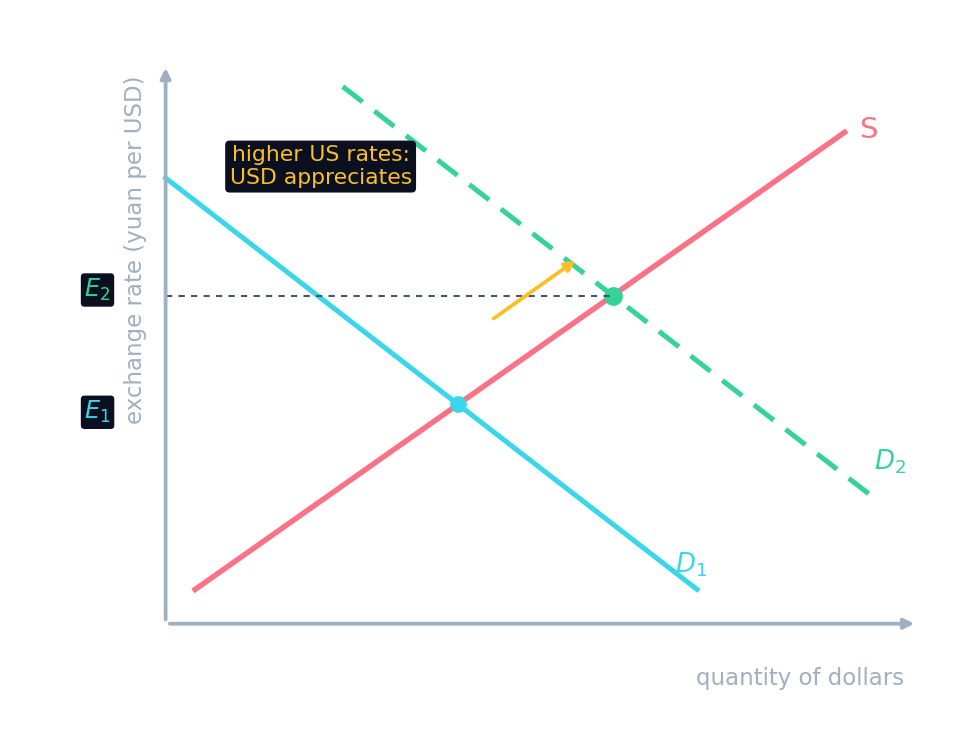
The US raises rates while others hold steady. The demand for dollars shifts: · 美国加息而其他国家不变。对美元的需求:
Investors buy dollars to hold higher-paying US bonds — demand right, dollar up. · 投资者买美元以持有回报更高的美国债券——需求右移,美元上升。
Policy works the same way
- Contractionary monetary policy 货币政策 raises interest rates and tends to strengthen the currency.
- Fiscal policy 财政政策 that raises interest rates (through government borrowing) can do the same.
- Worked idea. The US central bank raises rates while others hold steady. Global investors move money into higher-paying US bonds, buying dollars first. Demand for dollars shifts right and the dollar appreciates.
- Higher interest rates draw in foreign money and lift the currency.
政策以同样的方式起作用
- 紧缩性货币政策(monetary policy)提高利率,倾向于增强货币。
- 提高利率的财政政策(fiscal policy,通过政府借款)也能做到。
- 例题。 美国央行加息而其他国家按兵不动。全球投资者把钱转入回报更高的美国债券,先买美元。对美元的需求右移,美元升值。
- 更高的利率吸引外国资金并抬高货币。
The exchange rate shifts with interest rates (higher → appreciate), inflation (higher → depreciate), and income (higher → more imports → depreciate). Policy works through these: contractionary monetary policy raises rates and strengthens the currency, as foreign investors buy it to hold higher-paying bonds.
汇率随利率(更高 → 升值)、通货膨胀(更高 → 贬值)和收入(更高 → 更多进口 → 贬值)变动。政策通过这些起作用:紧缩性货币政策提高利率并增强货币,因为外国投资者买入它以持有回报更高的债券。