| English | 释义 | 拼音 |
|---|---|---|
| Green Revolution/ɡriːn ˌrevəˈluːʃn/ | 绿色革命 | lǜ sè gé mìng |
| high-yield varieties/haɪ jiːld vəˈraɪətiz/ | 高产品种 | gāo chǎn pǐn zhǒng |
| biodiversity/ˌbaɪəʊdaɪˈvɜːsɪti/ | 生物多样性 | shēng wù duō yàng xìng |
A revolution in yields
- The Green Revolution 绿色革命 (mid-1900s) hugely raised food output.
- It introduced high-yield varieties (HYVs) 高产品种 of seeds.
- Combined with fertilisers, pesticides, and irrigation, yields soared.
绿色革命主要通过引入...来提高粮食产量
难度 1/5 · 今日首次完成可获 100 金币及少量额外奖励
高产品种,加上化肥和灌溉,推动了绿色革命。
Where it helped
- It helped countries like India and Mexico avoid mass famine.
- More food from the same land seemed to defeat Malthus.
- It fed a fast-growing world population.
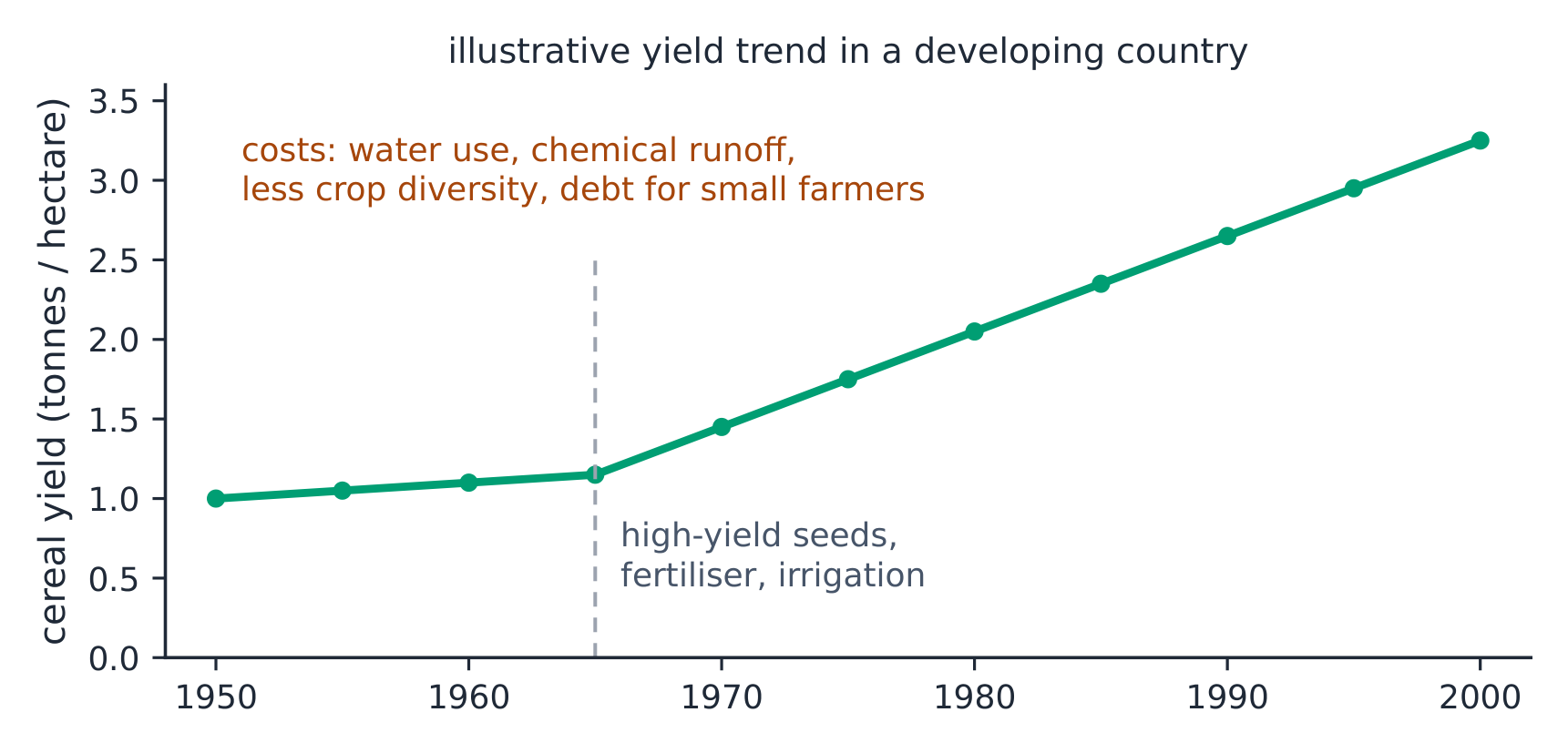
The Green Revolution raised yields, with environmental and social costs (illustrative)
绿色革命帮助印度等国避免了大规模饥荒。
难度 1/5 · 今日首次完成可获 100 金币及少量额外奖励
更高产量养活了快速增长的人口并防止了饥荒。
The costs
- HYVs need expensive fertiliser, pesticide, and water — costly for poor farmers.
- Chemicals can pollute soil and water; irrigation can deplete rivers.
- It favoured large farms and reduced crop biodiversity 生物多样性.
绿色革命的益处或代价?
将每个结果分类为绿色革命的益处或代价。
依赖化学肥料和灌溉的农业会降低作物____,导致品种减少。
难度 1/5 · 今日首次完成可获 100 金币及少量额外奖励
绿色革命偏向少数高产作物,削减了生物多样性。
选择所有绿色革命的代价。
难度 2/5 · 今日首次完成可获 140 金币及少量额外奖励
污染、水资源枯竭和债务是代价;防止饥荒是益处。
将每个结果与其性质相匹配。
难度 2/5 · 今日首次完成可获 140 金币及少量额外奖励
防止饥荒 = 益处;污染 = 代价;HYVs(高产品种)= 工具。
The Green Revolution is a double-edged story. It saved millions from famine and brought environmental and social costs — chemical pollution, water depletion, debt for small farmers, and lost biodiversity. On the exam, give both the benefits and the costs.
In 1960s India, new high-yield wheat and rice, plus fertiliser and irrigation, doubled harvests and prevented famine. But decades later, some regions face depleted groundwater, chemical-damaged soil, and indebted small farmers — the Green Revolution's costs.
The Green Revolution raised yields with high-yield varieties, fertiliser, pesticide, and irrigation, preventing famine and feeding a growing population. But it brought costs: chemical pollution, water depletion, debt for small farmers, and lost biodiversity.
Write from this case
- A district harvested 2 tonnes of grain per hectare.
- After new seeds, irrigation, and fertilizer, it harvested 4 tonnes on the same land.
产量发生了什么变化?
4是2的两倍,在相同的土地上。
产量是如何变化的?
难度 1/5 · 今日首次完成可获 100 金币及少量额外奖励
新种子和投入品提高了每公顷的产出。