Money and banking · 货币与银行
| English | 中文 | Pinyin · 拼音 |
|---|---|---|
| barter/ˈbɑːtə/ | 物物交换 | wù wù jiāo huàn |
| medium of exchange/ˈmiːdɪəm ɒv eksˈtʃeɪndʒ/ | 交换媒介 | jiāo huàn méi jiè |
| unit of account/ˈjuːnɪt ɒv əˈkaʊnt/ | 记账单位 | jì zhàng dān wèi |
| store of value/stɔː ɒv ˈvæljuː/ | 价值储藏 | jià zhí chǔ cáng |
| commercial banks/kəˈmɜːʃl bæŋks/ | 商业银行 | shāng yè yín háng |
| central bank/ˈsentrəl bæŋk/ | 中央银行 | zhōng yāng yín háng |
| interest rate/ˈɪntrest reɪt/ | 利率 | lì lǜ |
| lender of last resort/ˈlendə ɒv læst rɪˈzɔːt/ | 最后贷款人 | zuì hòu dài kuǎn rén |
| money supply/ˈmʌni səˈplaɪ/ | 货币供给 | huò bì gōng jǐ |
What money actually does
- We take money for granted — but a working economy needs something everyone trusts to swap for goods. Strip money away and you're back to barter 物物交换.
- Money, and the banks that create and move it, are the plumbing of the whole economy.
货币实际做什么
- 我们把货币视为理所当然——但一个运作的经济需要每个人都信任、能换商品的某种东西。剥去货币,你就回到以物易物。
- 货币,以及创造和移动它的银行,是整个经济的管道。
Economics case lab · 经济学案例实验室
Classify real examples by the economic idea they show. · 根据所展示的经济学概念对真实案例进行分类。
Match each function of money to its meaning. · 将货币的每种功能与其含义匹配。
The four classic functions of money. · 货币的四大经典职能。
The functions of money
Commercial banks 商业银行 take deposits and make loans, creating most of the money in the economy
货币的功能

商业银行吸收存款并发放贷款,创造经济中的大部分货币
Using money to compare the value of different goods is its role as a: · 用货币比较不同商品的价值是其作为______的作用。
A unit of account lets us measure and compare values. · 记账单位使我们能够衡量和比较价值。
Commercial banks create money when they make loans. · 商业银行通过发放贷款创造货币。
Lending creates new deposits — most money is bank-created credit, not cash. · 贷款创造新存款——大部分货币是银行创造的信贷,而非现金。
Which is a role of the central bank? · 哪项是中央银行的职能?
The central bank sets rates, regulates banks and acts as lender of last resort. · 中央银行设定利率、监管银行并充当最后贷款人。
Banks and the central bank 中央银行
- Commercial banks take deposits and make loans — and in lending, they create money (credit).
- The central bank sets interest rates 利率, is the lender of last resort 最后贷款人, and regulates the banking system.
The interest rate set by the demand for and supply of money
银行与中央银行
- 商业银行(commercial banks)吸收存款并发放贷款——而在放贷中,它们创造货币(信用)。
- 中央银行(central bank)设定利率,是最后贷款人(lender of last resort),并监管银行系统。
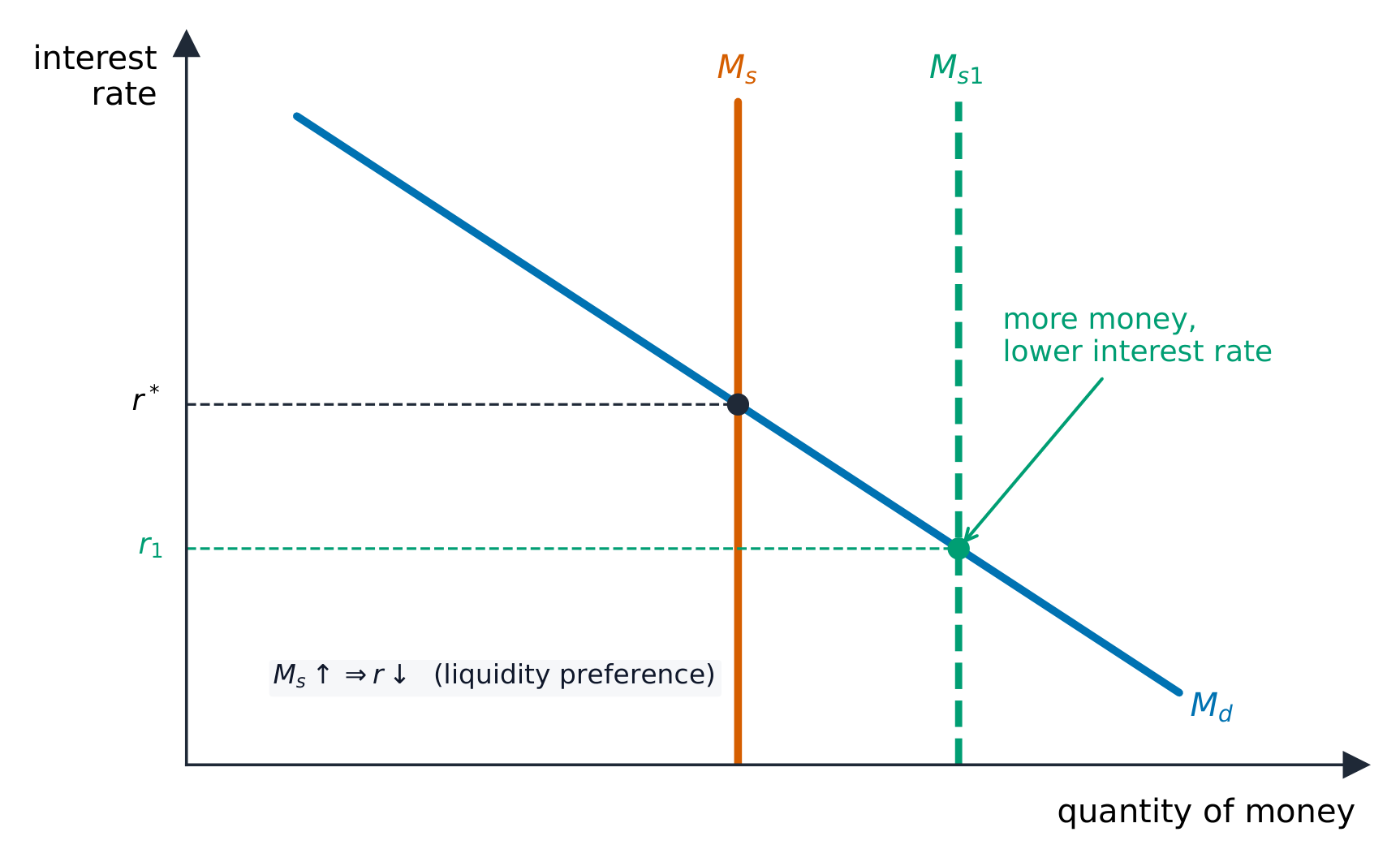
由货币的需求和供给决定的利率
The interest rate is the price of ______ money. · 利率是______资金的价格。
It is what borrowers pay (and savers receive). · 这是借款人支付(储蓄人获得)的成本。
Interest rates and the money supply 货币供给
- The interest rate is the price of borrowing money; the money supply is the total money in the economy.
- The central bank adjusts these to control inflation and support the economy (monetary policy).
Banks create most money. Most money isn't cash printed by the state — it's bank deposits created when commercial banks lend. That's why regulating lending matters.
利率与货币供给
- 利率是借钱的价格;货币供给是经济中的总货币。
- 中央银行调整这些以控制通货膨胀并支持经济(货币政策)。
银行创造大部分货币。 大部分货币不是国家印的现金——它是商业银行放贷时创造的银行存款。那就是为什么监管放贷重要。
You've got it
- money's four functions: medium of exchange, unit of account, store of value, standard of deferred payment
- commercial banks create money by lending; the central bank sets rates + is lender of last resort
- the interest rate is the price of borrowing; the money supply is total money
你掌握了
- 货币的四个功能:交换媒介、计价单位、价值储藏、延期支付标准
- 商业银行通过放贷创造货币;中央银行设定利率 + 是最后贷款人
- 利率是借款的价格;货币供给是总货币