Consumer and producer surplus · 消费者剩余与生产者剩余
| English | 中文 | Pinyin · 拼音 |
|---|---|---|
| consumer surplus/kənˈsuːmə ˈsɜːpləs/ | 消费者剩余 | xiāo fèi zhě shèng yú |
| welfare/ˈwelfeə/ | 福利 | fú lì |
| producer surplus/prəˈdjuːsə ˈsɜːpləs/ | 生产者剩余 | shēng chǎn zhě shèng yú |
| total welfare/ˈtəʊtl ˈwelfeə/ | 总福利 | zǒng fú lì |
| price control/praɪs kənˈtrəʊl/ | 价格管制 | jià gé guǎn zhì |
| deadweight loss/ˈdedweɪt lɒs/ | 无谓损失 | wú wèi sǔn shī |
The bonus you get on every purchase
- You'd have paid £5 for that coffee — but it costs £3. That extra £2 of value is yours to keep. Economists call it consumer surplus 消费者剩余.
- Surplus measures the welfare 福利 a market creates — for buyers and sellers alike.
你每次购买得到的奖励
- 你本愿意为那杯咖啡付 £5——但它只花 £3。那额外的 £2 价值归你保留。经济学家把它叫做消费者剩余(consumer surplus)。
- 剩余测量一个市场创造的福利(welfare)——对买家和卖家都一样。
Consumer surplus
- Consumer surplus = the gap between what buyers are willing to pay (the demand curve) and what they actually pay (the price).
- On the diagram it's the triangle below demand and above the price.
Consumer surplus sits below the demand curve and above the price; producer surplus 生产者剩余 sits above supply and below the price.
消费者剩余
- 消费者剩余 = 买家愿意支付的(需求曲线)和他们实际支付的(价格)之间的差距。
- 在图上它是需求曲线之下、价格之上的三角形。
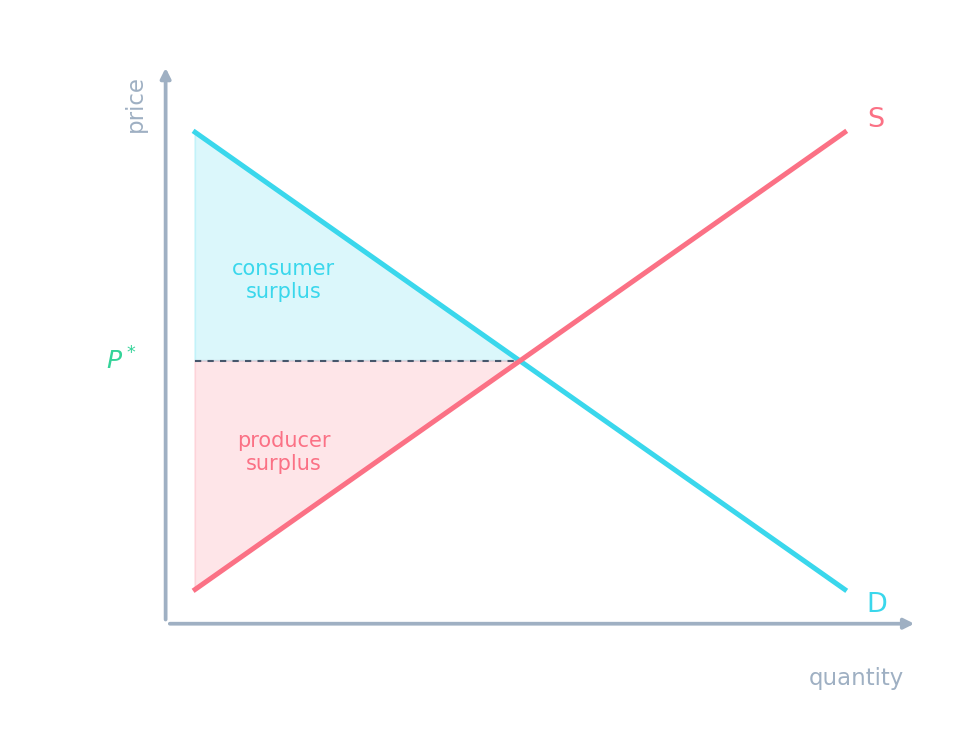
消费者剩余位于需求曲线之下、价格之上;生产者剩余位于供给之上、价格之下。
Demand & supply · 需求与供给
Surplus sits between the curves and the going price. · 剩余位于曲线与现行价格之间。
Consumer surplus is the difference between: · 消费者剩余是以下两者之间的差:
It is the value buyers get above the price — the area below demand and above price. · 它是买家在价格之上获得的价值——需求之下、价格之上的面积。
Producer surplus
- Producer surplus = the gap between the price firms receive and the minimum they'd accept (the supply curve).
- It's the triangle above supply and below the price.
Consumer surplus and producer surplus at the market equilibrium
生产者剩余
- 生产者剩余(producer surplus)= 企业收到的价格和它们愿意接受的最低(供给曲线)之间的差距。
- 它是供给之上、价格之下的三角形。
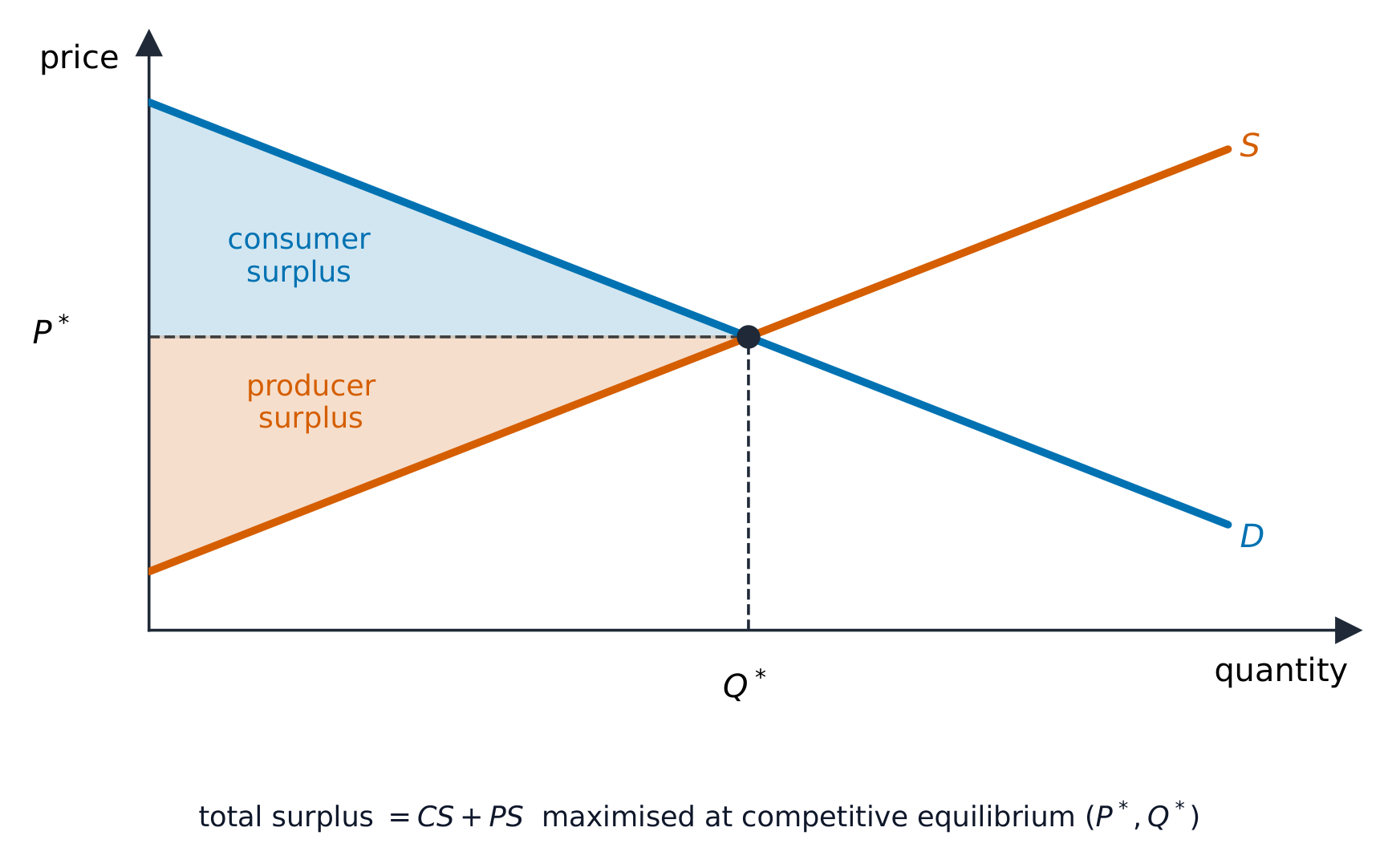
市场均衡处的消费者剩余和生产者剩余
Producer surplus is shown on the diagram as the area: · 生产者剩余在图上显示为以下面积:
Producer surplus = price received minus minimum acceptable (the supply curve). · 生产者剩余 = 收到的价格减去最低可接受(供给曲线)。
Match each surplus to its area on the diagram. · 把每种剩余与它在图上的面积配对。
Consumers gain above the price up to the demand curve; producers gain below the price down to supply. · 消费者在价格之上直到需求曲线获益;生产者在价格之下直到供给获益。
Total welfare 总福利
- Total welfare (economic surplus) = consumer surplus + producer surplus.
- At the free-market equilibrium this total is maximised — one reason economists prize competitive markets.
A price control 价格管制 shrinks total surplus. A price ceiling or floor moves the market away from equilibrium, creating a deadweight loss 无谓损失 — surplus that simply disappears.
总福利
- 总福利(total welfare,经济剩余)= 消费者剩余 + 生产者剩余。
- 在自由市场均衡处这个总量被最大化——经济学家珍视竞争市场的一个原因。
一项价格管制缩小总剩余。 一个价格上限或下限把市场移离均衡,造成一个无谓损失(deadweight loss)——干脆消失的剩余。
Total welfare (consumer surplus + producer surplus) is maximised at the free-market equilibrium. · 总福利(消费者剩余 + 生产者剩余)在自由市场均衡处最大化。
At equilibrium the sum of the two surpluses is largest; moving away creates deadweight loss. · 在均衡时两种剩余之和最大;偏离会造成无谓损失。
A price control creates a loss of surplus called a ______ loss. · 一项价格管制造成一种剩余的损失,叫做______损失。
Moving away from equilibrium destroys some total surplus — deadweight loss. · 偏离均衡摧毁一些总剩余——无谓损失。
You've got it
- consumer surplus = below demand, above price (buyers' bonus)
- producer surplus = above supply, below price (sellers' bonus)
- total welfare = CS + PS, maximised at the free-market equilibrium
你掌握了
- 消费者剩余 = 需求之下、价格之上(买家的奖励)
- 生产者剩余 = 供给之上、价格之下(卖家的奖励)
- 总福利 = CS + PS,在自由市场均衡处最大化