Compare two things before you buy, and talk about what has already happened. A than / compared to比 B + adjective compares two things; most最 picks out the most and (prefix indicating ordinal…第 counts first, second, third. already已经……(completed / change)了 and still / also / even还not / haven't没……(and …? / softener)呢 say "already" and "not yet", and to be / is是……(modifier / structural particle)的 asks and tells how, when or where something that already happened was done.
任务二、三、九 · Events, objects and shopping comparisons
HSK 2 · 知识点 2
3:51
HSK 2 · 事件、物品与购物比较
比较、计数与已然状态。“比B+形容词”表比较;“本”和“件”计新物;“已经…了”表已完成。“比”句内不加“很”。两者…
英文讲解与普通话例句 · 字幕与原声同步
2.1
一目了然
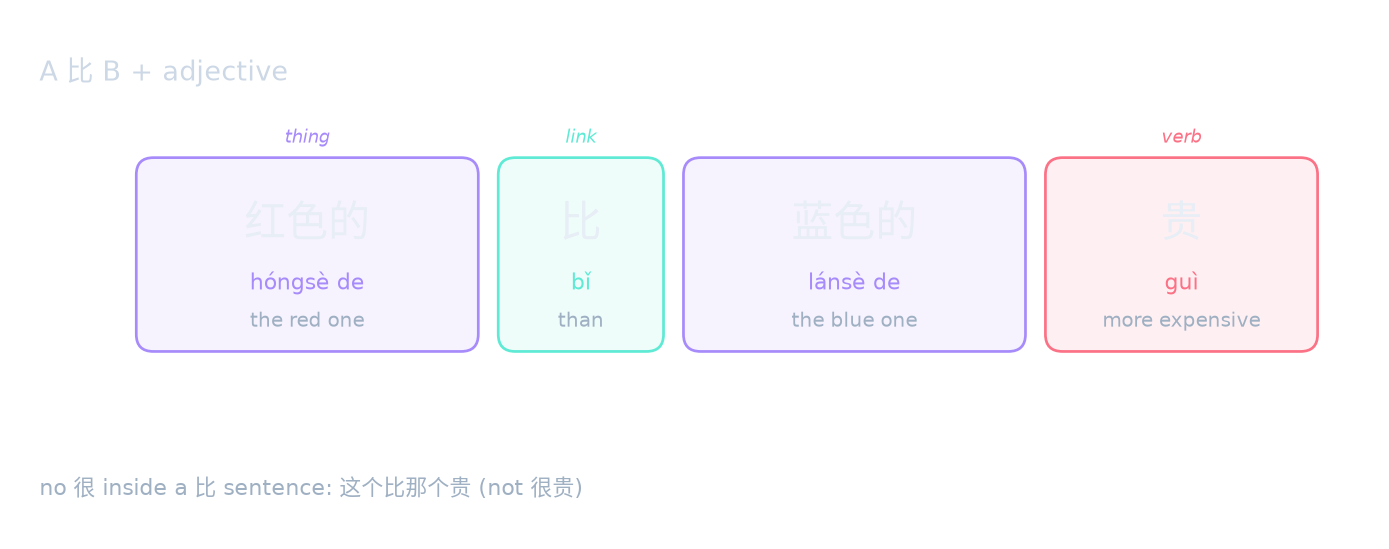
- 1. A than / compared to比 B + adjective – A is more … than B: this这个than / compared to比that那个expensive贵。
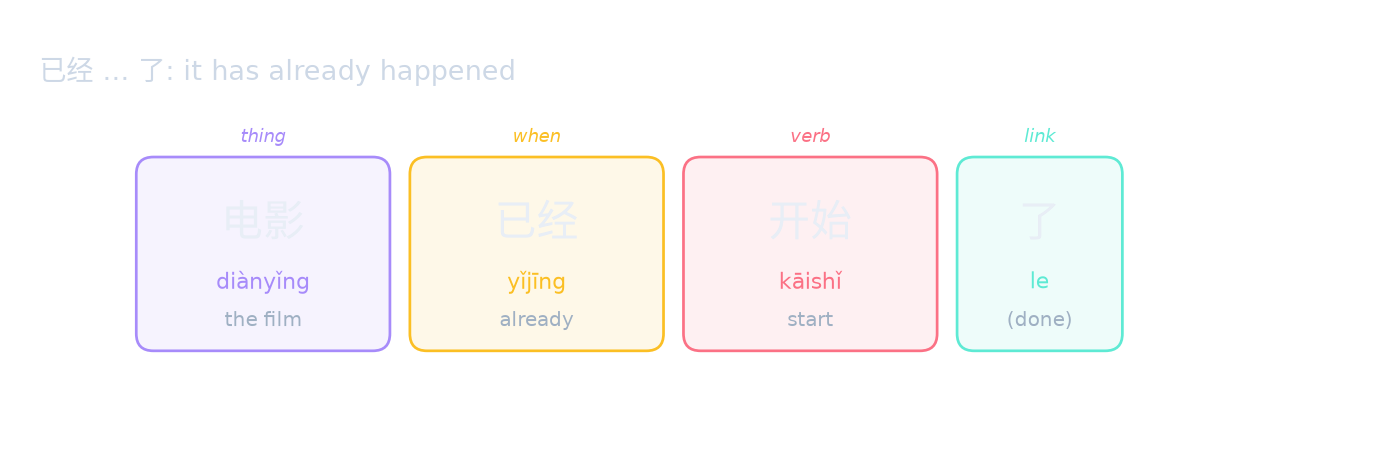
- 2. already已经……(completed / change)了 and still / also / even还not / haven't没……(and …? / softener)呢 – already and not yet: film; movie电影already已经to start开始(completed / change)了。
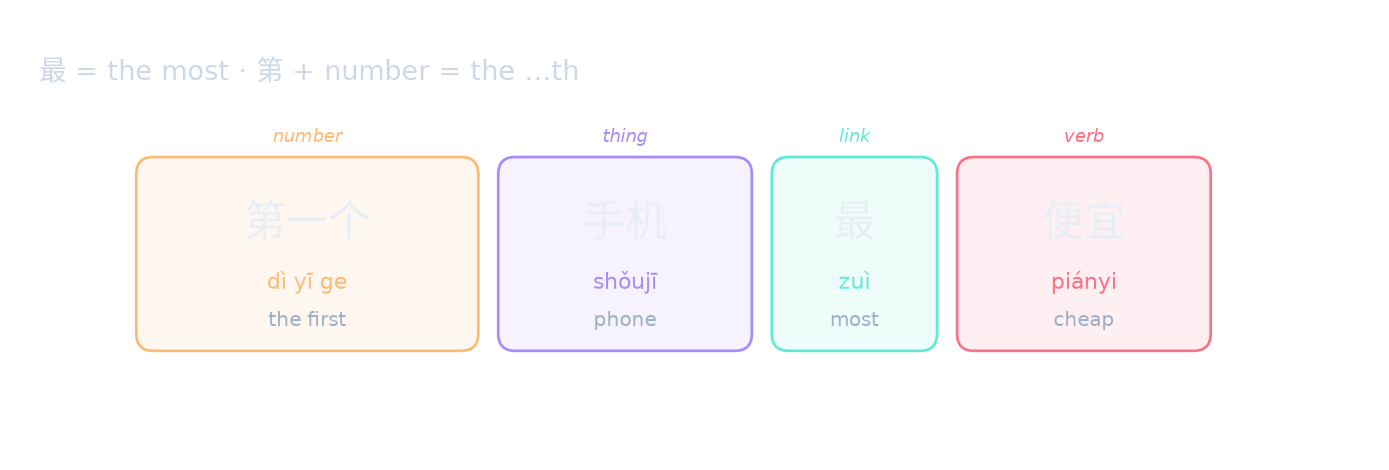
- 3. most最 and (prefix indicating ordinal…第 – the most, and first, second, third: 第一个mobile phone手机most最cheap便宜。
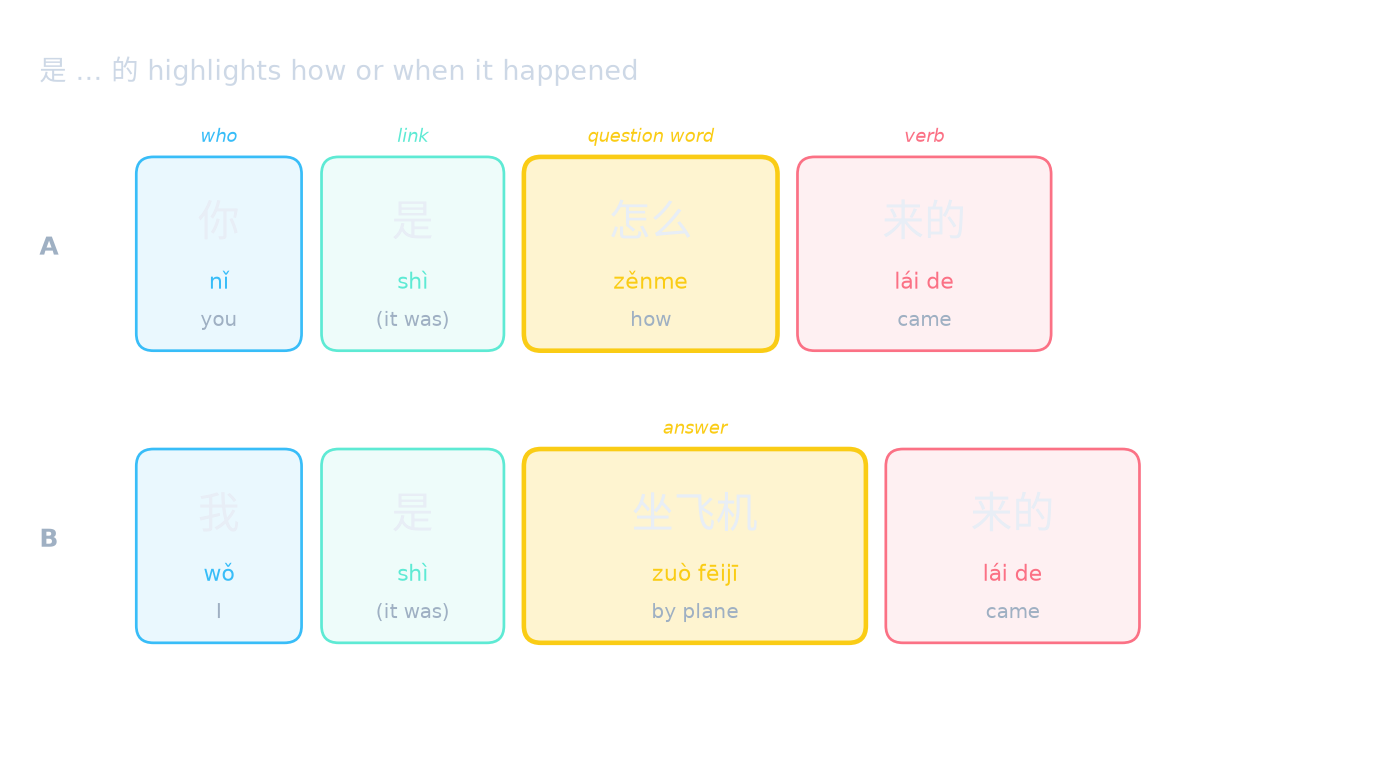
- 4. to be / is是……(modifier / structural particle)的 – how, when and where it happened: you你to be / is是how / why怎么to come来(modifier / structural particle)的?
2.2
1. 购买前比较两件物品
Describe a difference and ask about the preferred item.
Key sentences
- red (color)红色(modifier / structural particle)的cup杯子than / compared to比blue (color)蓝色(modifier / structural particle)的expensive贵。 Hóngsè de bēizi bǐ lánsè de guì. – The red cup is more expensive than the blue one.
- blue (color)蓝色(modifier / structural particle)的more更cheap便宜。 Lánsè de gèng piányi. – The blue one is even cheaper.
- red (color)红色(modifier / structural particle)的than / compared to比blue (color)蓝色(modifier / structural particle)的expensive贵五块money钱。 – The red one costs five yuan more than the blue one.
- but但是I / me我more更to like喜欢red (color)红色。 Dànshì wǒ gèng xǐhuan hóngsè. – But I like red better.
How it works
A than / compared to比 B + adjective means "A is more … than B". The adjective follows than / compared to比 B directly; degree / adjective linker很 and very非常 are not used there. To say by how much, add the difference at the end: expensive贵五块money钱.
more更 means "even more" or "more": more更cheap便宜, more更to like喜欢.
Colour + (modifier / structural particle)的 stands for "the … one": red (color)红色(modifier / structural particle)的 (the red one).

Watch out
- wrong: this这个than / compared to比that那个degree / adjective linker很expensive贵 → this这个than / compared to比that那个expensive贵.
- Check the numbers before you choose the adjective: the cheaper item takes cheap便宜.
Words in context
- than / compared to比 bǐ – than, comparison. this这个than / compared to比that那个expensive贵。
- expensive贵 guì – expensive. this这个degree / adjective linker很expensive贵。
- cheap便宜 piányi – cheap / inexpensive. that那个more更cheap便宜。
- color颜色 yánsè – colour. you你to like喜欢what什么color颜色?
- but但是 dànshì – but. cheap便宜,but但是太小。
Reading
red (color)红色(modifier / structural particle)的cup杯子二十块money钱,blue (color)蓝色(modifier / structural particle)的cup杯子十五块money钱。red (color)红色(modifier / structural particle)的than / compared to比blue (color)蓝色(modifier / structural particle)的expensive贵,but但是林安more更to like喜欢red (color)红色。
Speaking
Compare two fictional cups by price. Ask which colour a partner prefers.
| 汉字 | 拼音 | English |
|---|---|---|
| 比 | bǐ | than; to compare |
| 贵 | guì | expensive |
| 便宜 | pián yi | cheap |
| 但是 | dàn shì | but |
| 非常 | fēi cháng | very |
| 颜色 | yán sè | color |
2.3
2. 已经……了和还没……呢——表示已经发生和尚未发生
Form: already已经 + verb / state + (completed / change)了 · still / also / even还not / haven't没 + verb + (and …? / softener)呢
- film; movie电影already已经to start开始(completed / change)了。 Diànyǐng yǐjīng kāishǐ le. – The film has already started.
- already已经十点(completed / change)了。 Yǐjīng shí diǎn le. – It's already ten o'clock.
- he / him他already已经学了两年Chinese language汉语(completed / change)了。 – He has been studying Chinese for two years (and still is).
- I / me我still / also / even还not / haven't没to have a meal吃饭(and …? / softener)呢。 Wǒ hái méi chī fàn ne. – I haven't eaten yet.
How it works. already已经 yǐjīng (already) goes before the verb, and (completed / change)了 closes the sentence. It says something has happened by now, often sooner than expected. With a time or age it says a point has been reached: already已经十点(completed / change)了, he / him他already已经二十岁(completed / change)了.
With a length of time and two (completed / change)了 (学了两年Chinese language汉语(completed / change)了), the action is still going on.
Not yet. The opposite is still / also / even还not / haven't没……(and …? / softener)呢. Do not combine already已经 with not / haven't没.
Questions. you你already已经to buy tickets买票(completed / change)了(yes/no ?)吗? or you你to buy tickets买票(completed / change)了not have / haven't没有?
Watch out
- wrong: to start开始already已经(completed / change)了 → already已经to start开始(completed / change)了.
- wrong: I / me我already已经not / haven't没to eat吃 → I / me我still / also / even还not / haven't没to eat吃(and …? / softener)呢.

| 汉字 | 拼音 | English |
|---|---|---|
| 已经 | yǐ jīng | already |
| 还 | hái | still; also |
| 开始 | kāi shǐ | to begin |
2.4
3. 最和第——表示最高程度以及第一、第二、第三
Form: most最 + adjective / verb · (prefix indicating ordinal…第 + number (+ measure word + noun)
- 第一个mobile phone手机most最cheap便宜。 Dì yī ge shǒujī zuì piányi. – The first phone is the cheapest.
- I / me我most最to like喜欢apple苹果。 Wǒ zuì xǐhuan píngguǒ. – I like apples best.
- this这to be / is是I / me我the first time第一次to come来Beijing北京。 Zhè shì wǒ dì yī cì lái Běijīng. – This is my first time in Beijing.
How it works.
- most最 zuì means "the most" and picks one out of a group: had better; best最好 (best), most最cheap便宜 (cheapest), most最to like喜欢 (like most). No than / compared to比 is needed.
- (prefix indicating ordinal…第 dì turns a number into an order: first第一 (first), second第二 (second), 第三天 (the third day). Keep the measure word before the noun: 第二个student学生, 第三本书.
| 三个student学生 | 第三个student学生 |
|---|---|
| three students | the third student |
Watch out
- After (prefix indicating ordinal…第, "two" is two二: second第二 (wrong: 第两).
- the first time第一次 means "the first time": I / me我the first time第一次吃饺子.

| 汉字 | 拼音 | English |
|---|---|---|
| 最 | zuì | most |
| 手机 | shǒu jī | mobile phone |
| 第一 | dì yī | first |
2.5
4. 是……的——说明事情发生的方式、时间和地点
Form: (to be / is是) + when / how / where / with whom + verb + (modifier / structural particle)的
- you你to be / is是how / why怎么to come来(modifier / structural particle)的? Nǐ shì zěnme lái de? – How did you get here?
- I / me我to be / is是坐飞机to come来(modifier / structural particle)的。 Wǒ shì zuò fēijī lái de. – I came by plane.
- you你to be / is是at / in在where哪儿to buy买(modifier / structural particle)的? Nǐ shì zài nǎr mǎi de? – Where did you buy it?
- I / me我is not / no不是yesterday昨天to come来(modifier / structural particle)的。 Wǒ bú shì zuótiān lái de. – I didn't come yesterday.
How it works. Use to be / is是……(modifier / structural particle)的 when everyone already knows that something happened, and you want to ask or tell a detail of it: when, how, where or with whom. The detail goes right after to be / is是; (modifier / structural particle)的 follows the verb.
| (completed / change)了 | to be / is是……(modifier / structural particle)的 |
|---|---|
| reports that it happened: 他来(completed / change)了 | stresses a detail of a known event: he / him他to be / is是yesterday昨天to come来(modifier / structural particle)的 |
In speech to be / is是 is often left out (I / me我yesterday昨天to come来(modifier / structural particle)的), but (modifier / structural particle)的 must stay. The negative puts not不 before to be / is是.
Watch out
- to be / is是……(modifier / structural particle)的 is only for the past. A plan is wrong: I / me我to be / is是tomorrow明天to go去(modifier / structural particle)的 → I / me我tomorrow明天to go去.
- wrong: I / me我to be / is是坐飞机to come来 → keep the (modifier / structural particle)的.

2.6
练习
Cover the teaching pages before you answer. The answers are at the end.
1. Compare two things before buying
1. Listening. A partner reads the script for this question from the answers aloud. Which is cheaper in the recording?
- A. That cup
- B. They cost the same
- C. This cup
2. Reading. Why might Lin An still choose the red cup?
- A. She prefers its colour
- B. The text says blue is broken
- C. It is cheaper
3. Complete “This is more expensive than that”: this这个…………that那个expensive贵。
4. Match each word with its meaning in this unit.
-
(1) than / compared to比
-
(2) expensive贵
-
(3) cheap便宜
-
(4) color颜色
-
(5) but但是
-
A. but
-
B. colour
-
C. cheap / inexpensive
-
D. than, comparison
-
E. expensive
5. Write a comparison and then a preference. Write your answer in Chinese, then say it aloud.
6. red (color)红色(modifier / structural particle)的than / compared to比blue (color)蓝色(modifier / structural particle)的expensive贵。red (color)红色 means red, blue (color)蓝色 blue and expensive贵 expensive. Which cup costs more?
- A. They must cost the same
- B. The blue cup
- C. The red cup
7. A red notebook costs thirty yuan and a blue notebook twenty. First identify the higher price. Which sentence preserves the relation? expensive贵 means expensive and cheap便宜 inexpensive.
- A. red (color)红色(modifier / structural particle)的than / compared to比blue (color)蓝色(modifier / structural particle)的cheap便宜。
- B. red (color)红色(modifier / structural particle)的than / compared to比blue (color)蓝色(modifier / structural particle)的expensive贵。
- C. blue (color)蓝色(modifier / structural particle)的than / compared to比red (color)红色(modifier / structural particle)的expensive贵。
8. Read: big大cup杯子二十块money钱,small小cup杯子十五块money钱。林安more更to like喜欢small小cup杯子。cup杯子 means cup. Which account preserves cost and preference?
- A. The small cup costs less; Lin An prefers the small cup.
- B. The small cup costs more; Lin An prefers the small cup.
- C. The small cup costs less; Lin An prefers the large cup.
9. Invent two items with different prices. Write one than / compared to比 comparison and a fictional customer’s preference. Ask which item costs more and which the customer prefers. Give a possible preference that does not simply follow the price. Speak the questions and replies or write both roles. Write your answer in Chinese, then say it aloud.
2. already已经……(completed / change)了 and still / also / even还not / haven't没……(and …? / softener)呢 – already and not yet
10. Complete: “I have already eaten.” I / me我…………to have a meal吃饭(completed / change)了。
11. A friend asks if you have bought the tickets. You have not. Which reply fits?
- A. I / me我already已经没买(completed / change)了。
- B. I / me我to buy买already已经(completed / change)了。
- C. I / me我still / also / even还not / haven't没to buy买(and …? / softener)呢。
12. True or false? he / him他already已经学了两年Chinese language汉语(completed / change)了 suggests he is still studying Chinese now. If false, correct it.
13. Build: “The film has already started.”
Put in order: film; movie电影 / to start开始 / already已经 / (completed / change)了。
14. Your friend is checking a party plan. Say two things you have already done and one you have not done yet. Use already已经……(completed / change)了 and still / also / even还not / haven't没……(and …? / softener)呢. Write your answer in Chinese, then say it aloud.
3. most最 and (prefix indicating ordinal…第 – the most, and first, second, third
15. Complete: “the second student” …………二个student学生
16. Which sentence says “I like apples the most”?
- A. I / me我to like喜欢most最apple苹果。
- B. I / me我than / compared to比to like喜欢apple苹果。
- C. I / me我most最to like喜欢apple苹果。
17. True or false? 三个student学生 and 第三个student学生 mean the same thing. If false, correct it.
18. Build: “This is my first time in Beijing.”
Put in order: 这是 / to come来Beijing北京。 / the first time第一次 / I / me我
19. Describe three dishes in a restaurant. Say which one is the cheapest, which one you like most, and that it is your first time here. Use most最 and (prefix indicating ordinal…第. Write your answer in Chinese, then say it aloud.
4. to be / is是……(modifier / structural particle)的 – how, when and where it happened
20. Complete: “I came yesterday.” I / me我to be / is是yesterday昨天to come来…………。
21. Build: “I came by plane.”
Put in order: to come来(modifier / structural particle)的。 / I / me我 / 坐飞机 / to be / is是
22. Match each sentence to the detail it stresses.
-
(1) I / me我to be / is是yesterday昨天to come来(modifier / structural particle)的。
-
(2) I / me我to be / is是坐火车to come来(modifier / structural particle)的。
-
(3) I / me我to be / is是at / in在Beijing北京to buy买(modifier / structural particle)的。
-
(4) I / me我to be / is是with / and跟mum; mother妈妈one / a一get up / (start, become)起来(modifier / structural particle)的。
-
A. with whom
-
B. where
-
C. how
-
D. when
23. You want to know where your friend bought her bag. Which question fits?
- A. you你to be / is是at / in在where哪儿to buy买(modifier / structural particle)的?
- B. you你at / in在where哪儿to buy买to be / is是(modifier / structural particle)的?
- C. you你to buy买(modifier / structural particle)的at / in在where哪儿to be / is是?
24. Your friend is at the door. You tell your mum the news: “Xiao Wang is here!” Which fits?
- A. 小王来(completed / change)了!
- B. 小王来(modifier / structural particle)的(completed / change)了!
- C. 小王to be / is是to come来(modifier / structural particle)的!
- D. 小王to be / is是to come来(completed / change)了(modifier / structural particle)的!
25. “I didn't come by plane.” Which is correct?
- A. I / me我is not / no不是坐飞机to come来(modifier / structural particle)的。
- B. I / me我not不坐飞机to come来(modifier / structural particle)的。
- C. I / me我not / haven't没to be / is是坐飞机to come来(modifier / structural particle)的。
- D. I / me我to be / is是not不坐飞机to come来(modifier / structural particle)的。
26. True or false? I / me我to be / is是tomorrow明天坐飞机to go去(modifier / structural particle)的 is a good way to describe a plan for tomorrow. If false, correct it.
27. A classmate asks about your last trip. Say when you went, how you travelled and who you went with. Use to be / is是……(modifier / structural particle)的. Write your answer in Chinese, then say it aloud.
2.7
混合练习
These questions mix the patterns and use new situations.
28. Which sentence is correct?
- A. this这个than / compared to比that那个degree / adjective linker很expensive贵。
- B. this这个than / compared to比that那个expensive贵。
- C. this这个than / compared to比that那个to be / is是expensive贵。
29. Choose already已经……(completed / change)了 or still / also / even还not / haven't没……(and …? / softener)呢: The film has already started. / The film has not started yet.
30. Your friend arrived yesterday. Ask how they came.
31. Say "the first phone is the cheapest".
32. Find and fix the problem. A big bag costs eighty yuan and a small bag fifty. A classmate says small小(modifier / structural particle)的比大(modifier / structural particle)的expensive贵. Correct the comparison.
33. Use it yourself. Choose one of the bags and give one reason for and one reason against.
2.8
答案与解析
Mark your work, then correct each mistake in your own words.
1. Compare two things before buying
1. Script: this这个cup杯子十块钱,that那个十五块money钱。this这个than / compared to比that那个cheap便宜。
C. This cup
十块 is less than 十五块, so this这个 is cheaper.
2. A. She prefers its colour
more更to like喜欢red (color)红色 states a preference despite the higher price.
3. than / compared to比
than / compared to比 introduces the comparison standard.
4. (1) D: than / compared to比 = than, comparison; (2) E: expensive贵 = expensive; (3) C: cheap便宜 = cheap / inexpensive; (4) B: color颜色 = colour; (5) A: but但是 = but
Use the example sentences to check each word’s meaning in context.
5. Model answer: red (color)红色(modifier / structural particle)的than / compared to比blue (color)蓝色(modifier / structural particle)的expensive贵,but但是I / me我more更to like喜欢red (color)红色。
Check your answer:
- Make the comparison direction clear.
- Give a preference separately.
- Use but但是 only where it marks a contrast.
6. C. The red cup
The item before than / compared to比 is described as more expensive than the comparison item after than / compared to比. Reversing them reverses the claim; the sentence does not establish anyone’s preference.
7. B. red (color)红色(modifier / structural particle)的than / compared to比blue (color)蓝色(modifier / structural particle)的expensive贵。
Thirty exceeds twenty, so the red notebook is more expensive. The other options reverse the price relation. Check both the order of the items and the adjective.
8. A. The small cup costs less; Lin An prefers the small cup.
The small cup costs fifteen versus twenty for the large one, so it costs less. more更to like喜欢small小cup杯子 names Lin An’s preference for the small cup. The other choices change either the price relation or the preferred item; her reason is not stated.
9. Model answer: Possible account: red (color)红色(modifier / structural particle)的cup杯子二十块money钱,blue (color)蓝色(modifier / structural particle)的十五块money钱。red (color)红色(modifier / structural particle)的than / compared to比blue (color)蓝色(modifier / structural particle)的expensive贵,but但是I / me我more更to like喜欢red (color)红色。The red cup costs more but the speaker prefers it. The preference may differ for another person; the account does not state why.
How to revise: If your adjective contradicts the prices, compare the numbers again and reverse either the item order or the adjective as needed. If you inferred preference from price, add an explicit preference statement instead.
Check your answer:
- Keep both prices and the comparison consistent.
- Put the compared items in the intended order around than / compared to比.
- Name whose preference is being described.
- Avoid inventing a reason or a rule for all customers.
If your adjective contradicts the prices, compare the numbers again and reverse either the item order or the adjective as needed. If you inferred preference from price, add an explicit preference statement instead.
2. already已经……(completed / change)了 and still / also / even还not / haven't没……(and …? / softener)呢 – already and not yet
10. already已经
already已经 comes before the verb, and (completed / change)了 ends the sentence.
11. C. I / me我still / also / even还not / haven't没to buy买(and …? / softener)呢。
“Not yet” is still / also / even还not / haven't没 + verb + (and …? / softener)呢. already已经 does not combine with not / haven't没 for this meaning.
12. True.
True. With a length of time and a final (completed / change)了, the action has gone on for two years and continues.
13. film; movie电影already已经to start开始(completed / change)了。
Subject + already已经 + verb + (completed / change)了.
14. Model answer: I / me我already已经to buy买fruit水果(completed / change)了,also也already已经to make a telephone call打电话(completed / change)了。I / me我still / also / even还not / haven't没to prepare a meal做饭(and …? / softener)呢。
Check your answer:
- My “already” sentences put already已经 before the verb and end with (completed / change)了.
- My “not yet” sentence uses still / also / even还not / haven't没 + verb + (and …? / softener)呢.
- I did not combine already已经 with not / haven't没.
- I tried another version with different tasks or a time (already已经八点(completed / change)了).
3. most最 and (prefix indicating ordinal…第 – the most, and first, second, third
15. (prefix indicating ordinal…第
(prefix indicating ordinal…第 before a number makes an ordinal; the measure word (measure word)个 still comes before the noun.
16. C. I / me我most最to like喜欢apple苹果。
most最 goes before the verb to like喜欢. No than / compared to比 is needed when you pick out the most.
17. False.
False. 三个student学生 is a quantity (three students); 第三个student学生 is an order (the third student).
18. this这to be / is是I / me我the first time第一次to come来Beijing北京。
the first time第一次 means “the first time” and comes before the action.
19. Model answer: 第一个dish (of food); vegetable菜most最cheap便宜。I / me我most最to like喜欢第三个dish (of food); vegetable菜。this这to be / is是I / me我the first time第一次to come来here这儿。
Check your answer:
- I used most最 before an adjective or to like喜欢 to pick one out.
- My ordinal numbers use (prefix indicating ordinal…第 + number + measure word.
- I used second第二, not 第两.
- I tried another version with different items, such as phones or books.
4. to be / is是……(modifier / structural particle)的 – how, when and where it happened
20. (modifier / structural particle)的
to be / is是……(modifier / structural particle)的 frames the detail yesterday昨天; (modifier / structural particle)的 comes after the verb to come来.
21. I / me我to be / is是坐飞机to come来(modifier / structural particle)的。
to be / is是 + how (坐飞机) + verb + (modifier / structural particle)的.
22. (1) D: I / me我to be / is是yesterday昨天to come来(modifier / structural particle)的。 = when; (2) C: I / me我to be / is是坐火车to come来(modifier / structural particle)的。 = how; (3) B: I / me我to be / is是at / in在Beijing北京to buy买(modifier / structural particle)的。 = where; (4) A: I / me我to be / is是with / and跟mum; mother妈妈one / a一get up / (start, become)起来(modifier / structural particle)的。 = with whom
The detail sits between to be / is是 and the verb.
23. A. you你to be / is是at / in在where哪儿to buy买(modifier / structural particle)的?
to be / is是 + where (at / in在where哪儿) + verb + (modifier / structural particle)的 asks about the place of a past action.
24. A. 小王来(completed / change)了!
News that something happened → (completed / change)了. to be / is是……(modifier / structural particle)的 is for a detail (when, how, where, with whom) of known news.
25. A. I / me我is not / no不是坐飞机to come来(modifier / structural particle)的。
not不 goes before to be / is是, and to be / is是 cannot be dropped in the negative.
26. False.
False. to be / is是……(modifier / structural particle)的 is for actions that have already happened. For a plan, say I / me我tomorrow明天坐飞机to go去.
27. Model answer: I / me我to be / is是last month上个月to go去(modifier / structural particle)的。I / me我to be / is是坐火车to go去(modifier / structural particle)的,to be / is是with / and跟I / me我older brother哥哥to go去(modifier / structural particle)的。
Check your answer:
- Each sentence puts the detail after to be / is是 and (modifier / structural particle)的 after the verb.
- I described a trip that has already happened.
- If I dropped to be / is是, I kept (modifier / structural particle)的.
- I tried another version with a different trip or detail.
Scripts and models for section 1
Listening script. this这个cup杯子十块钱,that那个十五块money钱。this这个than / compared to比that那个cheap便宜。 – This cup costs ten yuan and that one fifteen. This one is cheaper.
Reading in English. The red cup costs twenty yuan and the blue one fifteen. Red is more expensive, but Lin An prefers red.
Speaking model. A: red (color)红色(modifier / structural particle)的than / compared to比blue (color)蓝色(modifier / structural particle)的expensive贵。you你to like喜欢what什么color颜色? B: I / me我to like喜欢blue (color)蓝色。
Mixed practice
28. B. After A than / compared to比 B, put the adjective directly; degree / adjective linker很 and to be / is是 do not go there.
29. film; movie电影already已经to start开始(completed / change)了。film; movie电影still / also / even还not / haven't没to start开始(and …? / softener)呢。
30. you你to be / is是how / why怎么to come来(modifier / structural particle)的?to be / is是……(modifier / structural particle)的 asks about the way an action that already happened was done.
31. 第一个mobile phone手机most最cheap便宜。(prefix indicating ordinal…第 + number counts order; most最 + adjective means "the most".
32. Fifty is less than eighty, so say small小(modifier / structural particle)的比大(modifier / structural particle)的cheap便宜, or turn it round: big大(modifier / structural particle)的than / compared to比small小(modifier / structural particle)的expensive贵.
33. Model answer. 我要small小(modifier / structural particle)的。small小(modifier / structural particle)的比大(modifier / structural particle)的cheap便宜,but但是to have no room to put sth放不下I / me我(modifier / structural particle)的book书。The small one is cheaper, but it cannot hold my books.
Review later. Tomorrow, compare two other things, then swap A and B and change the adjective.
出了什么问题?只有网站团队能看到这些信息。
该知识点的互动课程
逐步完成,配合即时检查练习。