Kế hoạch học tập của bạn · Tiếp tục · Ôn tập →
不料 (unexpectedly — written)
Đã giới thiệuVị trí đã lưu của bạn vẫn nằm trong trình duyệt này. Việc tiếp tục sẽ không hoàn thành bài học hay trả lời các câu hỏi của nó.
Who would have thought
- You left work early to get home for your mother's birthday dinner. Then the motorway closed.
- I我measure word for books本want / think / miss想early早点儿go home回家,unexpectedly不料on the road路上to block up (a road, pipe…堵(completed / change)了两个hour小时。 — "I meant to get home early, but unexpectedly I was stuck in traffic for two hours."
- Goal: tell how a plan was upset by something unexpected with unexpectedly不料, a written word for "unexpectedly".
Plan,unexpectedly不料 + surprise
- unexpectedly不料 (búliào) = "unexpectedly, who would have thought". The first clause gives the plan or expectation; unexpectedly不料 starts the clause with what happened instead.
- unexpectedly不料 usually comes before the subject: he他to think以为考得correct不错,unexpectedly不料achievement成绩很差。 — "He thought he had done well, but his result turned out to be poor."
I我meant to本想early早点儿go home回家,unexpectedly不料on the road路上there was a jam堵车了。
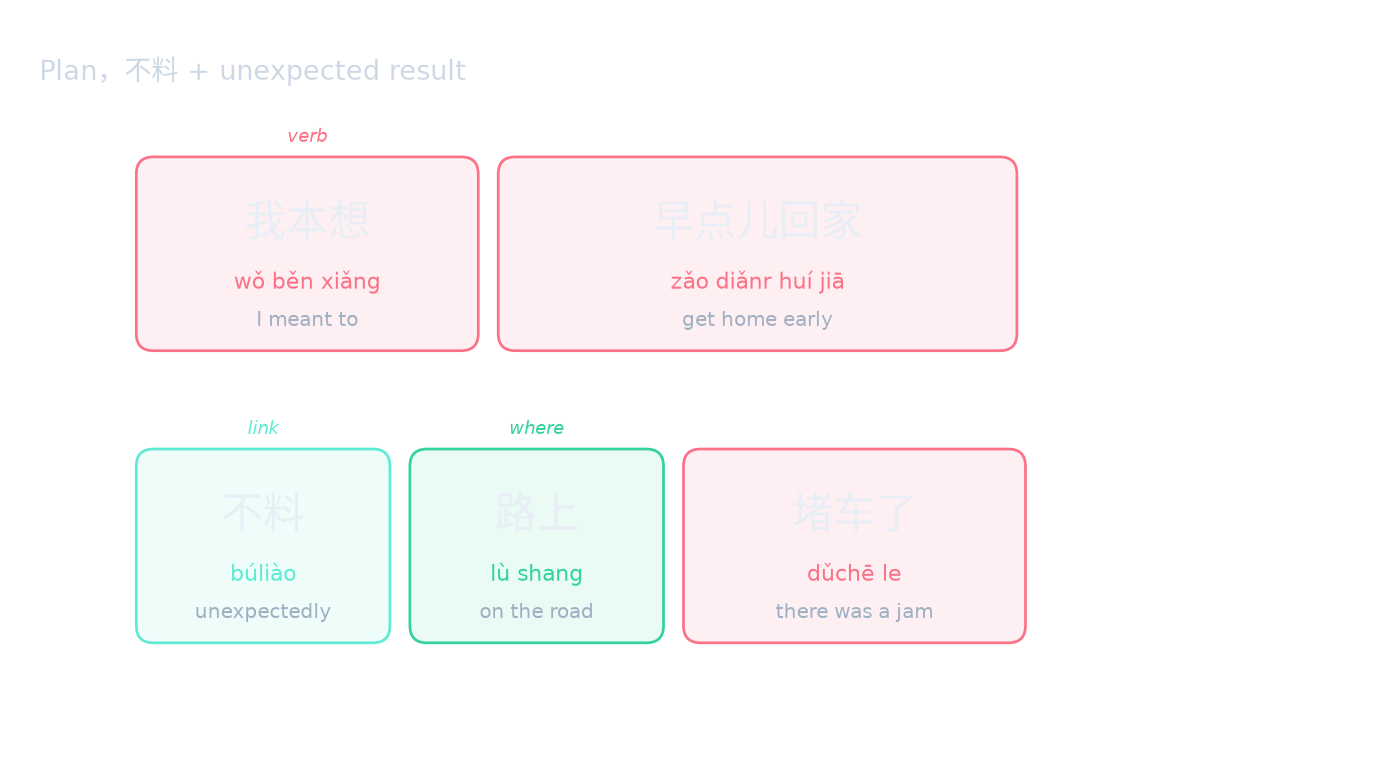
Complete: “I meant to get home early, but unexpectedly there was a traffic jam.” 我本想早点儿回家,____路上堵车了。
Độ khó 1/5 · 100 xu + phần thưởng nhỏ khi hoàn thành lần đầu tiên hôm nay
Plan first, then 不料 + what happened instead.
In stories
- unexpectedly不料 is common in written stories: he他just刚go out出门,unexpectedly不料under; below; next (week)下to rise起(completed / change)了heavy rain大雨。 — "He had just stepped out when, to his surprise, it began to pour."
- who would have thought谁知 / didn't expect没想到 mean the same in speech: didn't expect没想到on the road路上so much这么to block up (a road, pipe…堵。 — "I didn't expect the traffic to be so bad."
he他just刚go out出门,unexpectedly不料began to fall下起了heavy rain大雨。
Build: “He had just stepped out when it began to pour.”
Độ khó 3/5 · 200 xu + phần thưởng nhỏ khi hoàn thành lần đầu tiên hôm nay
不料 opens the clause with the surprise.
unexpectedly不料 starts the clause; unexpectedly竟然 doesn't
- unexpectedly不料 goes at the start of its clause: ✓ unexpectedly不料he他not / haven't没to come来。 unexpectedly竟然 / unexpectedly居然 go after the subject: ✓ he他unexpectedly竟然not / haven't没to come来。 ✗ he他unexpectedly不料not / haven't没to come来.
- unexpectedly不料 needs an expectation in the first clause; it doesn't start a story by itself: ✗ unexpectedly不料today今天to rain下雨(completed / change)了 (with nothing before it).
Which sentence is correct?
Độ khó 1/5 · 100 xu + phần thưởng nhỏ khi hoàn thành lần đầu tiên hôm nay
不料 starts its clause, before the subject, after the expectation.
“He actually didn't come!” (surprise, after the subject) 他____没来!
Độ khó 1/5 · 100 xu + phần thưởng nhỏ khi hoàn thành lần đầu tiên hôm nay
竟然 goes after the subject and shows surprise.
unexpectedly不料, unexpectedly竟然 and didn't expect没想到
- didn't expect没想到 = didn't expect, spoken: didn't expect没想到you你also也to come来(completed / change)了! — "I didn't expect you to come too!"
- unexpectedly竟然 = surprisingly (shows the speaker's surprise); unexpectedly不料 = narrates a turn of events, written.
没想到 is a spoken way to say 不料.
Độ khó 1/5 · 100 xu + phần thưởng nhỏ khi hoàn thành lần đầu tiên hôm nay
没想到 and 谁知 work like 不料 in speech.
Recap
- Plan / expectation,unexpectedly不料 + what happened = unexpectedly (written; before the subject).
- unexpectedly竟然 / unexpectedly居然 go after the subject; didn't expect没想到 is spoken.
Read the full reference: HSK 6 grammar — Adverbs.
Write two sentences for a story: a character's plan for the weekend, then what unexpectedly happened (不料).
Your answer need not copy the model.