Kế hoạch học tập của bạn · Tiếp tục · Ôn tập →
动不动就 (at the slightest thing)
Đã giới thiệuVị trí đã lưu của bạn vẫn nằm trong trình duyệt này. Việc tiếp tục sẽ không hoàn thành bài học hay trả lời các câu hỏi của nó.
Angry at every little thing
- Your new manager loses his temper over tiny things: a late email, a wrong font.
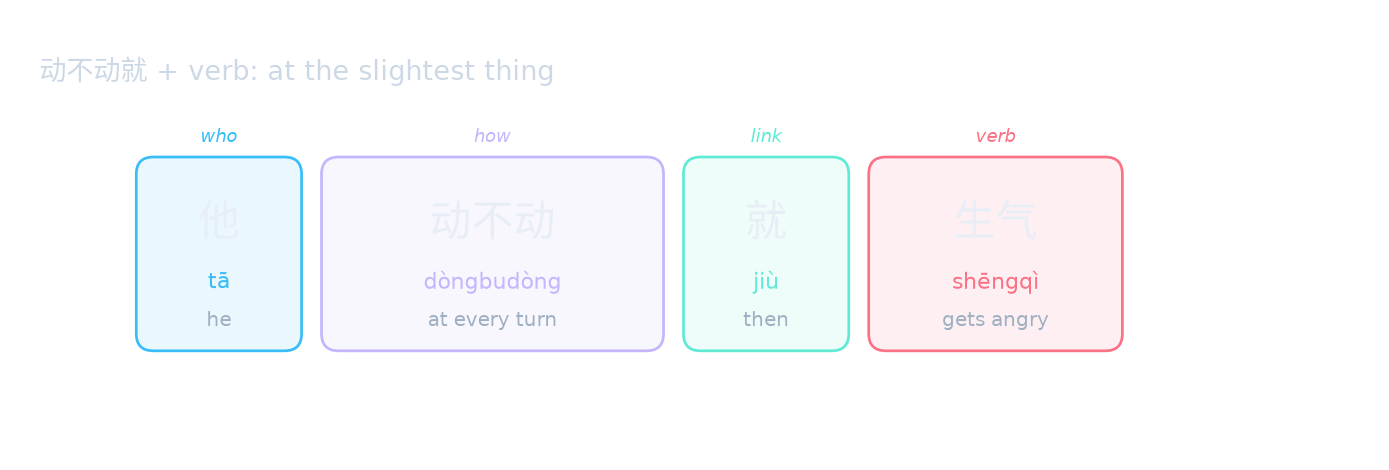
- he他at every turn动不动then就get angry生气。 — "He gets angry at the slightest thing."
- Goal: complain about a habit that happens too easily and too often with at every turn动不动then就 + verb.
at every turn动不动 + then就 + verb
- at every turn动不动 (dòngbudòng) = "at the slightest thing, all the time". then就 almost always follows, then the action.
- this这child孩子at every turn动不动then就to cry哭。 — "This child cries at the slightest thing."
he他at every turn动不动then就get angry生气。
Complete: “This child cries at the slightest thing.” 这孩子动不动____哭。
Độ khó 1/5 · 100 xu + phần thưởng nhỏ khi hoàn thành lần đầu tiên hôm nay
动不动 is always followed by 就.
A complaint, not praise
- at every turn动不动 shows the speaker doesn't like the habit: now现在(modifier / structural particle)的young people年轻人at every turn动不动then就to exchange换to work; job工作。 — "Young people these days change jobs at the drop of a hat."
- you你don't别at every turn动不动then就say说"no way不行"。 — "Don't keep saying 'no' to everything."
you你don't别at every turn动不动then就say说no way不行。
Build: “Young people change jobs at the drop of a hat.”
Độ khó 3/5 · 200 xu + phần thưởng nhỏ khi hoàn thành lần đầu tiên hôm nay
Subject + 动不动 + 就 + verb.
动不动就 shows the speaker doesn't like the habit.
Độ khó 1/5 · 100 xu + phần thưởng nhỏ khi hoàn thành lần đầu tiên hôm nay
It complains that something happens too easily and too often.
Keep then就, keep it negative
- Don't drop then就: ✓ he他at every turn动不动then就to arrive late迟到。 ✗ he他at every turn动不动to arrive late迟到.
- It criticises, so with a good action it means "too much" (he他at every turn动不动then就to help帮don't别person人,oneself自己(modifier / structural particle)的matter事all / both都not / haven't没to do; to make做to finish完). To praise a habit, use often经常: ✓ he他often经常to help帮助other people别人。 — "He often helps others."
You want to PRAISE him for helping people. Which sentence fits?
Độ khó 1/5 · 100 xu + phần thưởng nhỏ khi hoàn thành lần đầu tiên hôm nay
动不动就 criticises; for praise, use 经常.
Which sentence is correct?
Độ khó 1/5 · 100 xu + phần thưởng nhỏ khi hoàn thành lần đầu tiên hôm nay
Keep 就 between 动不动 and the verb.
at every turn动不动then就 or always总是?
- always总是 = always, neutral or slightly negative: he他always总是to arrive late迟到。 — "He's always late."
- at every turn动不动then就 adds "at the smallest reason, too easily" and sounds more annoyed.
Recap
- Subject + at every turn动不动 + then就 + verb = at the slightest thing (a complaint).
- Always with then就; not for good habits (use often经常).
Read the full reference: HSK 6 grammar — Adverbs.
Complain to a friend about a roommate with two bad habits. Use 动不动就 twice.
Your answer need not copy the model. A partner or teacher must hear the spoken response to comment on pronunciation.