Kế hoạch học tập của bạn · Tiếp tục · Ôn tập →
始终 (all along / from start to finish)
Đã giới thiệuVị trí đã lưu của bạn vẫn nằm trong trình duyệt này. Việc tiếp tục sẽ không hoàn thành bài học hay trả lời các câu hỏi của nó.
He never said a word
- At a two-hour family dinner, your quiet cousin sat in the corner the whole time.
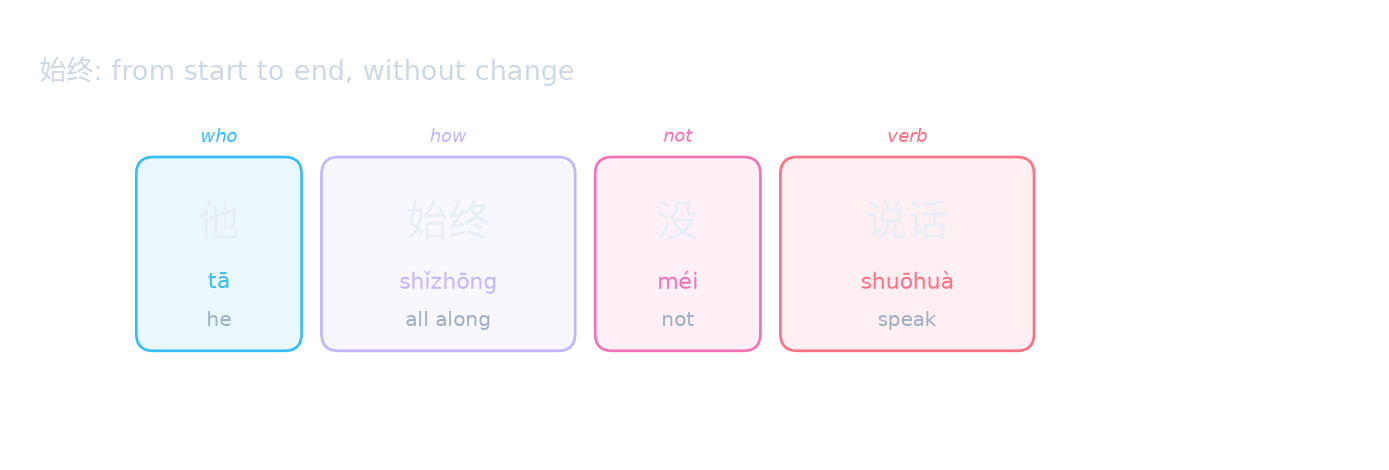
- he他all along始终not没speak说话。 — "He didn't say a word from start to finish."
- Goal: say something stayed the same from beginning to end with all along始终, and keep it apart from all along一直.
all along始终 + verb
- all along始终 (shǐzhōng) = "from start to finish, all along". It covers a whole period and says nothing changed.
- It is common with negatives: all along始终not没 / all along始终not不 = never, the whole time. I / me我all along始终not不clear明白he他why?为什么to walk走。 — "I never understood why he left."
he他all along始终not没speak说话。
Complete: “He didn't say a word the whole time.” 他____没说话。
Độ khó 1/5 · 100 xu + phần thưởng nhỏ khi hoàn thành lần đầu tiên hôm nay
始终没 = never, from start to finish.
我始终不明白 means "I never understood (the whole time)".
Độ khó 1/5 · 100 xu + phần thưởng nhỏ khi hoàn thành lần đầu tiên hôm nay
始终不 / 始终没 = never, from start to finish.
Keeping a position or feeling
- all along始终 often describes an attitude that never changed: she她all along始终believe相信herself自己can能succeed成功。 — "She always believed she could succeed."
- so much这么many years多年,he他all along始终to be / is是I / me我had better; best最好(modifier / structural particle)的friend朋友。 — "All these years, he has always been my best friend."
she她all along始终believe相信herself自己can能succeed成功。
Build: “She always believed she could succeed.”
Độ khó 3/5 · 200 xu + phần thưởng nhỏ khi hoàn thành lần đầu tiên hôm nay
Subject + 始终 + verb.
Not for a set time ahead
- all along始终 is not used with a set future time span. Use all along一直: ✓ tomorrow明天I / me我all along一直to be at home在家。 — "I'll be at home all day tomorrow." ✗ tomorrow明天I / me我all along始终to be at home在家.
- all along始终 goes before the verb, after the subject: ✓ he他all along始终not不to agree同意。 ✗ all along始终he他not不to agree同意 (in speech).
“Go straight ahead and you will see the bank.” Which word fits? ____往前走,就能看到银行。
Độ khó 1/5 · 100 xu + phần thưởng nhỏ khi hoàn thành lần đầu tiên hôm nay
Only 一直 can mean "straight on".
“I'll be at home all day tomorrow.” Which is right?
Độ khó 1/5 · 100 xu + phần thưởng nhỏ khi hoàn thành lần đầu tiên hôm nay
With a set future time span, use 一直. 始终 is not used that way.
all along始终 or all along一直?
- Often both work: he他all along一直 / all along始终not没to come来。 — "He never came (the whole time)."
- Only all along一直 can mean "straight on" or go with a set future time: all along一直往前走。 — "Go straight ahead." all along始终 stresses that nothing changed from start to finish.
Recap
- all along始终 + verb = all along, from start to finish; all along始终not没 / not不 = never (the whole time).
- For a set future time (tomorrow明天, next month下个月) or "straight ahead", use all along一直.
Read the full reference: HSK 5 grammar — Adverbs.
Describe someone whose opinion never changed during a long discussion. Use 始终 twice: once with 不 or 没, once with a verb like 相信 or 认为.
Your answer need not copy the model. A partner or teacher must hear the spoken response to comment on pronunciation.