Xung đột như các Giá trị Đối lập
Đã giới thiệu| English | Ý nghĩa |
|---|---|
| Conflict/ˈkɒnflɪkt/ | xung đột |
The definition is about values, not fighting
- Conflict 冲突 is tension between competing values — either within a character (internal or psychological conflict) or with outside forces that obstruct a character (external conflict).
- Competing values is the load-bearing phrase.
- Two people who dislike each other are not in conflict until something they each value is at stake.
An internal conflict needs no sword; deciding whether to tell the truth can keep a whole novel awake.
Xung đột được định nghĩa là sự căng thẳng giữa...
Độ khó 1/5 · 100 xu + một phần thưởng nhỏ cho lần hoàn thành đầu tiên trong ngày
Hai người ghét nhau không nằm trong xung đột cho đến khi các giá trị bị đặt vào bàn cân.
Texts carry more than one
- A text may contain multiple conflicts, and often two or more intersect.
- Intersect means they share a character, a choice, or a stake.
- Finding the intersection is usually more valuable than listing the conflicts.
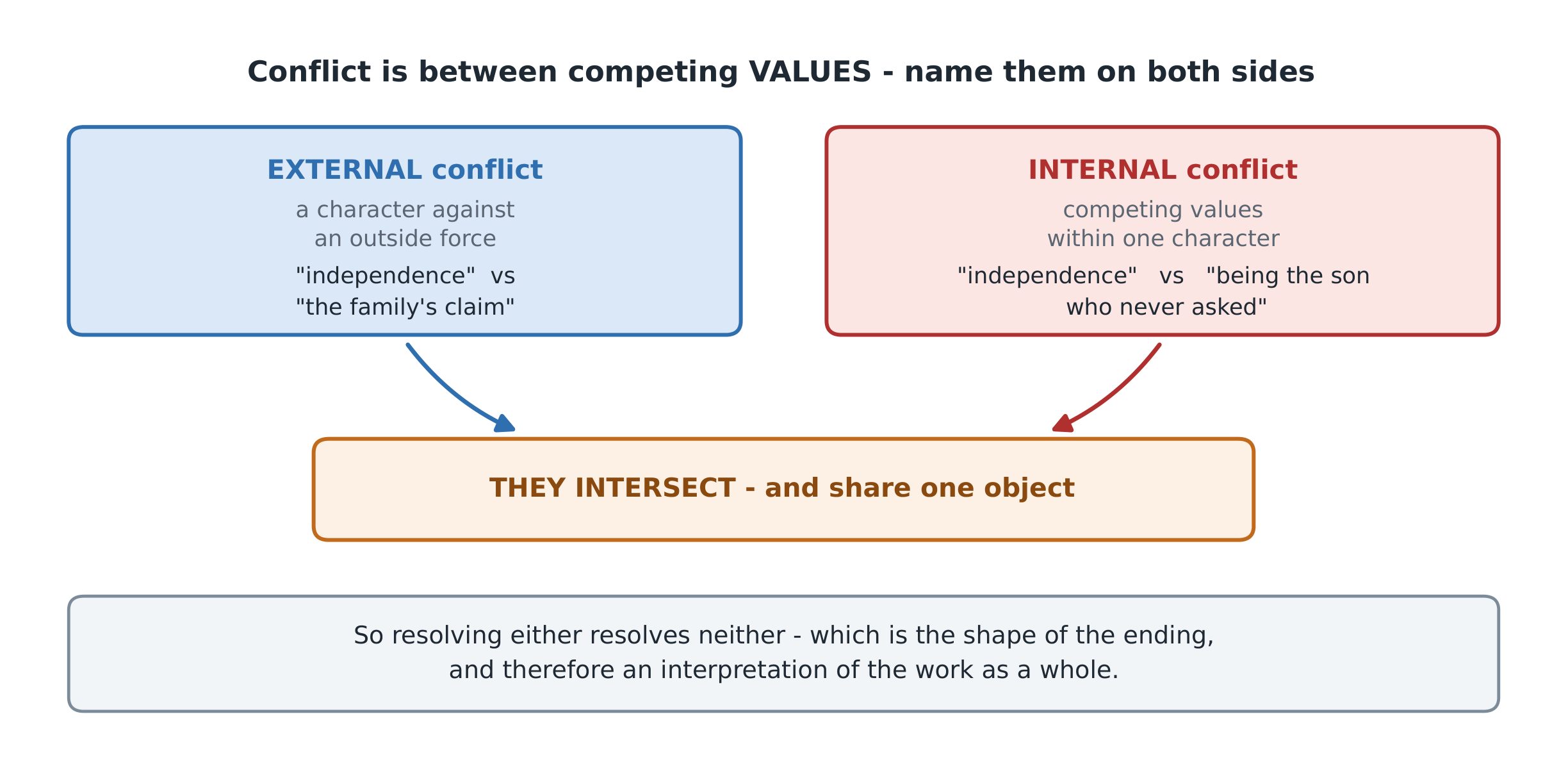
A primary conflict heightened by an intersecting one is the standard shape of a novel or play
Chọn tất cả các tuyên bố của CED về xung đột.
Độ khó 2/5 · 140 xu + một phần thưởng nhỏ cho lần hoàn thành đầu tiên trong ngày
Nhiều xung đột là quy luật, và nơi chúng giao thoa chính là điểm cần viết.
Intersection heightens
- A primary conflict can be heightened by the presence of additional conflicts that intersect with it.
- So a second conflict is not a distraction from the main one — it raises its temperature.
- The scene where two conflicts meet is almost always the scene worth writing about.
Nội tâm, bên ngoài, hay một sự mâu thuẫn?
Sắp xếp mỗi căng thẳng theo danh mục của CED.
Một xung đột bổ sung làm phân tâm khỏi xung đột chính và làm yếu nó đi.
Độ khó 1/5 · 100 xu + một phần thưởng nhỏ cho lần hoàn thành đầu tiên trong ngày
Một xung đột giao thoa làm tăng cường xung đột chính — nó nâng cao nhiệt độ.
A conflict needs two values named, not one. "He is in conflict with his father" names an opponent, not a conflict. "He values the farm's survival; his father values not being pitied" names the tension — and only that version can be developed with evidence.
Nối mỗi quan sát với những gì nó là.
Độ khó 2/5 · 140 xu + một phần thưởng nhỏ cho lần hoàn thành đầu tiên trong ngày
Điều thứ ba không phải là lỗi viết — khoảng trống chính là xung đột.
Inconsistencies as evidence
- Inconsistencies in a text may create contrasts that represent conflicts of values or perspectives.
- A character who says one thing and does another is not badly written; the gap is the conflict.
- So an inconsistency is a place to look, not an error to explain away.
Một xung đột chỉ được mô tả một nửa cho đến khi bạn nêu ____ các giá trị đối lập.
Độ khó 1/5 · 100 xu + một phần thưởng nhỏ cho lần hoàn thành đầu tiên trong ngày
"Anh ta đang xung đột với cha mình" nêu một đối thủ, không phải là một xung đột.
A conflict pass
- For each conflict, name both values — a conflict with one named value is half-described.
- Mark it internal or external, and find where two of them intersect.
- List the inconsistencies; each one is a candidate conflict you have not named yet.
Internal: she values her own work against her duty to stay. External: the bank values repayment against her keeping the house. They intersect on one decision — to sell — and the second conflict is what makes the first unbearable rather than merely difficult.
Conflict is tension between competing values, internal (within a character) or external (with obstructing forces). A text may hold multiple conflicts that intersect, and an intersecting conflict heightens the primary one. Inconsistencies can represent conflicts of values or perspectives.